-
-
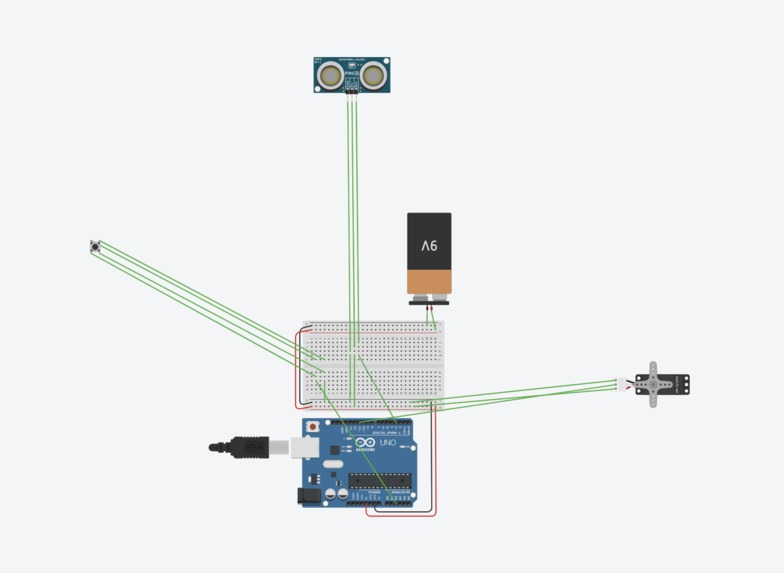
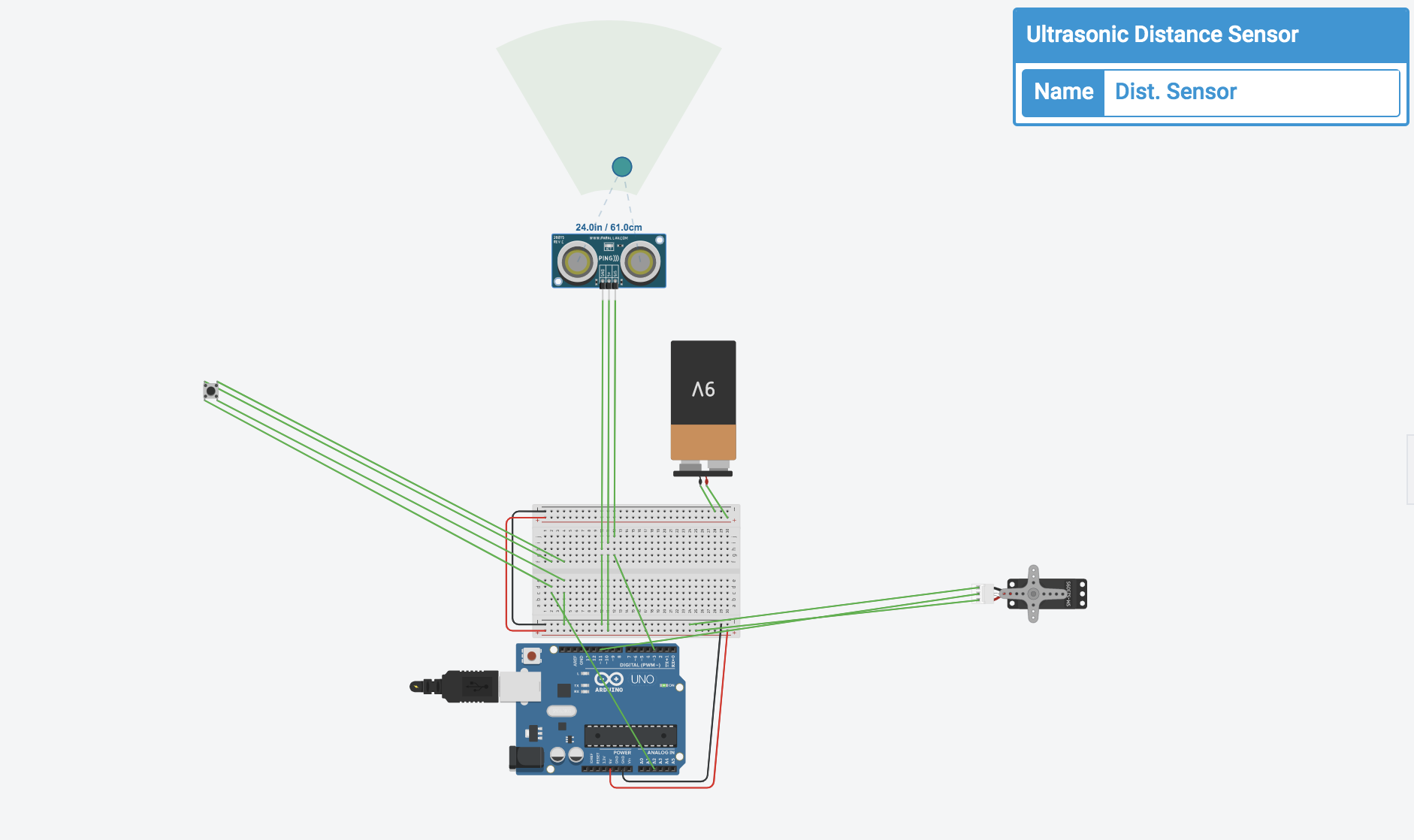
Our Final Circuit Design
-
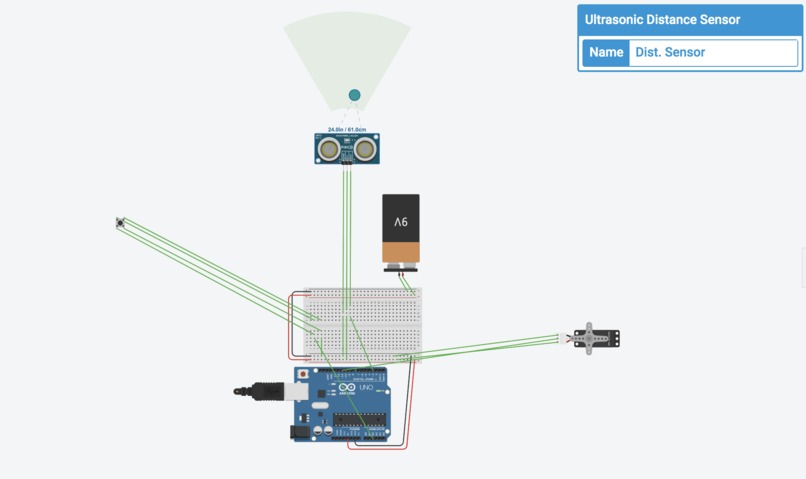
Circuit configured for demonstration
-
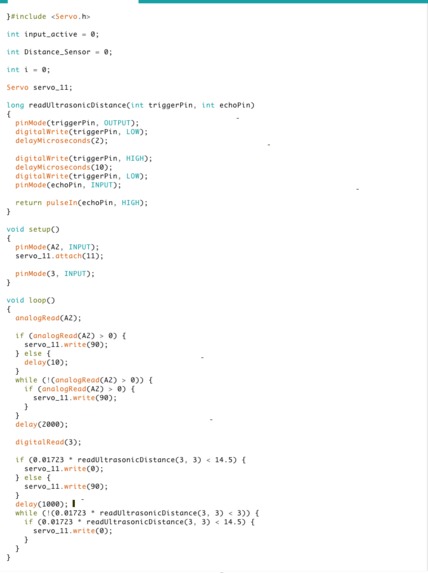
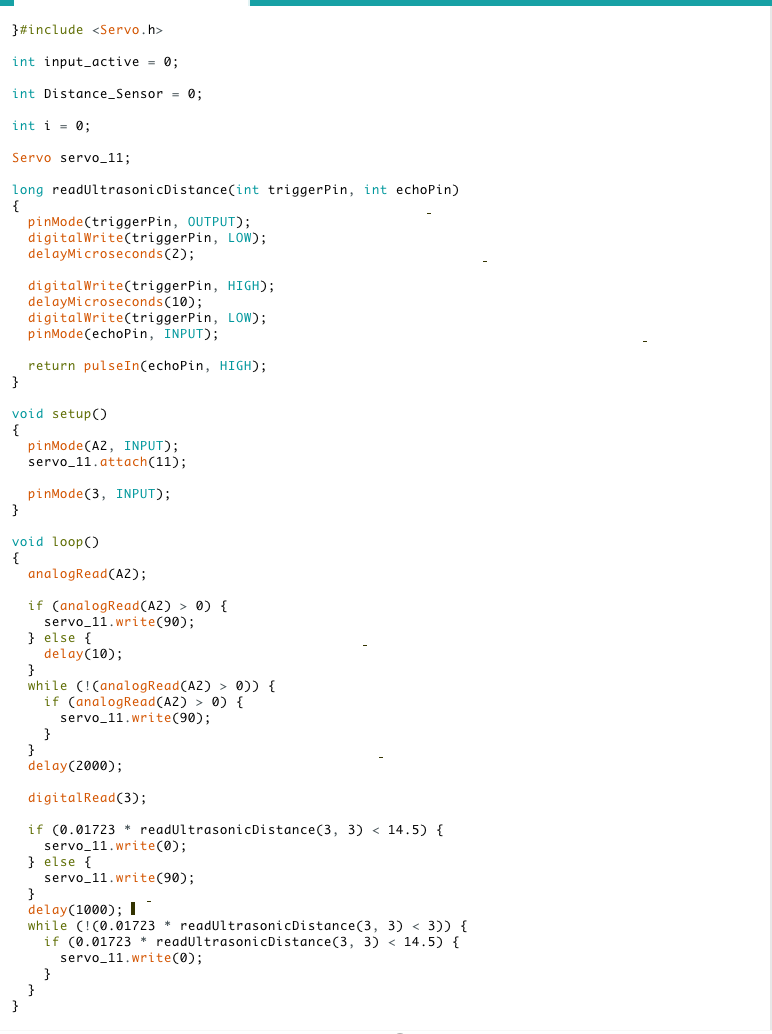
Arduino code for our system
Idea
Our Idea was to design and build a system that facilitates automatic plant watering using the Arduino and what we learned this semester to accomplish such a task. Originally we had planned to include 2 humidity/water sensors as well as a servo actuator that would turn the valve on a pipe to allow watering. The idea was when the sensor at the bottom of the pot got too dry it would send a signal to the Arduino and servo to pump water then a sensor at the top would be responsible for shutoff time when it sensed the presence of water in the top of the plant. The system would be powered by a 9V battery and be completely self sufficient. TinkerCAD forced us to make some adjustments due to limitations on what types of sensors could be integrated but all in all we stayed true to the vision and built up an easy, convenient watering system.
Build Process
The build process was an interesting and challenging one. Both Alex and myself do not come from an engineering/compsci background and on top of that I find that I am a very hands on learner so online projects have proved difficult. Our ability to build circuits was fairly strong after the semester in the lab however this represented our first time coding a project from the ground up by ourselves which proved to be quite the test. Furthermore, we had to be very adaptable during the final build process as TinkerCAD lacked many of the sensors and much of the equipment available to us in the lab. Our initial design had to be changed but it worked out and in the end we were able to adapt and overcome.
Hardware and Software
We utilized the Arduino IDE to develop software and the Arduino UNO board to act as the "brain" of our system (it was the only programmable piece of the system). Our sensors include a push button to start the flow of water and an ultrasonic distance sensor to stop flow with the final actuator being a micro servo that, in real life, would be connected to a pipe and valve so that it could control the flow of water to the plant. Beyond that we made use of a 9V battery to power the system and breadboard to simplify wiring and allow the components to be spread out, as they would be if we were to implement this system in real life.
What Would Change in the Lab?
Had we been able to construct such a system in the laboratory we would have been able to fully honor our initial design which included 2 water/humidity sensors sending signals to the Arduino rather than one button and one ultrasonic distance sensor. Furthermore it would have been cool to use the tools available in the lab to actually implement the hardware so we had a functioning system. This would likely have involved laser cutting brackets for the components, setting up a valve in the water pipe and attaching the servo to it as well as actually having a plant to water!

Log in or sign up for Devpost to join the conversation.