-
-
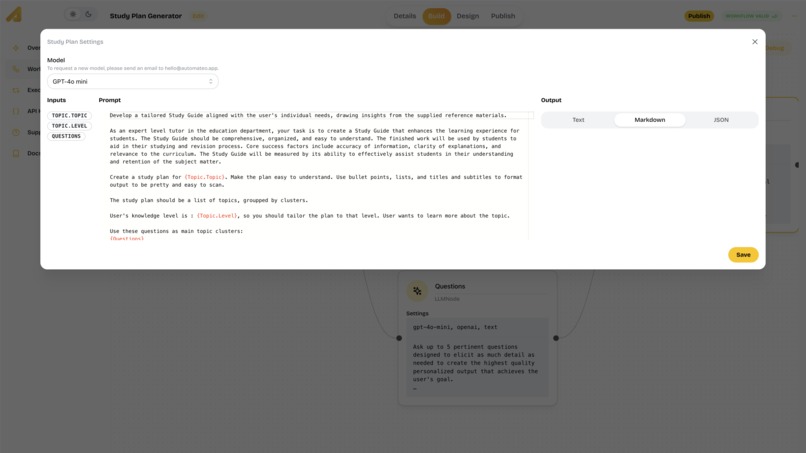
Prompt editor
-
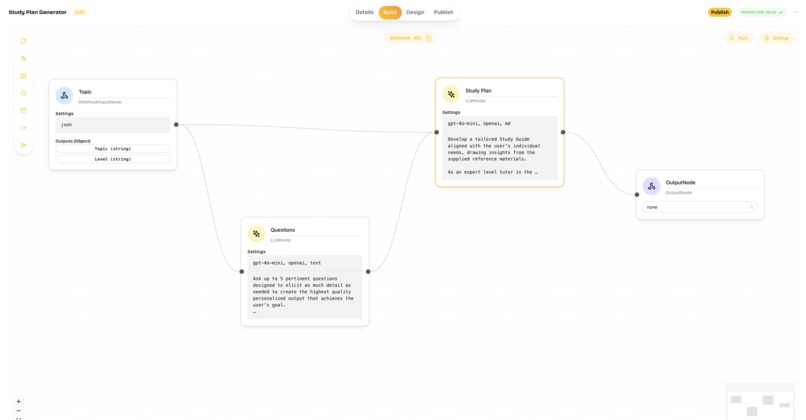
Workflow Builder
-
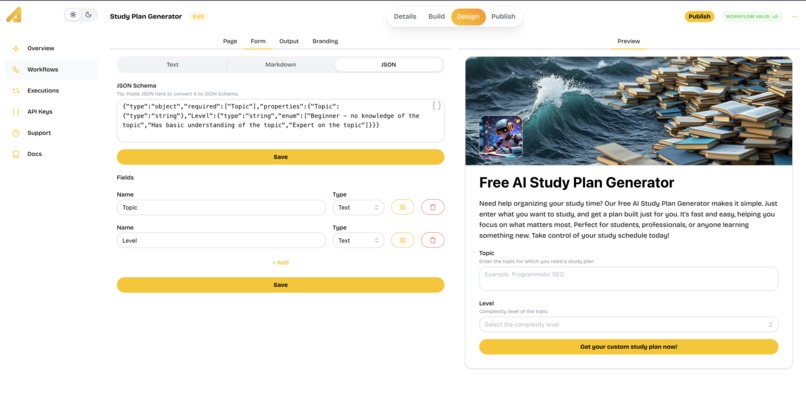
AI App Builder
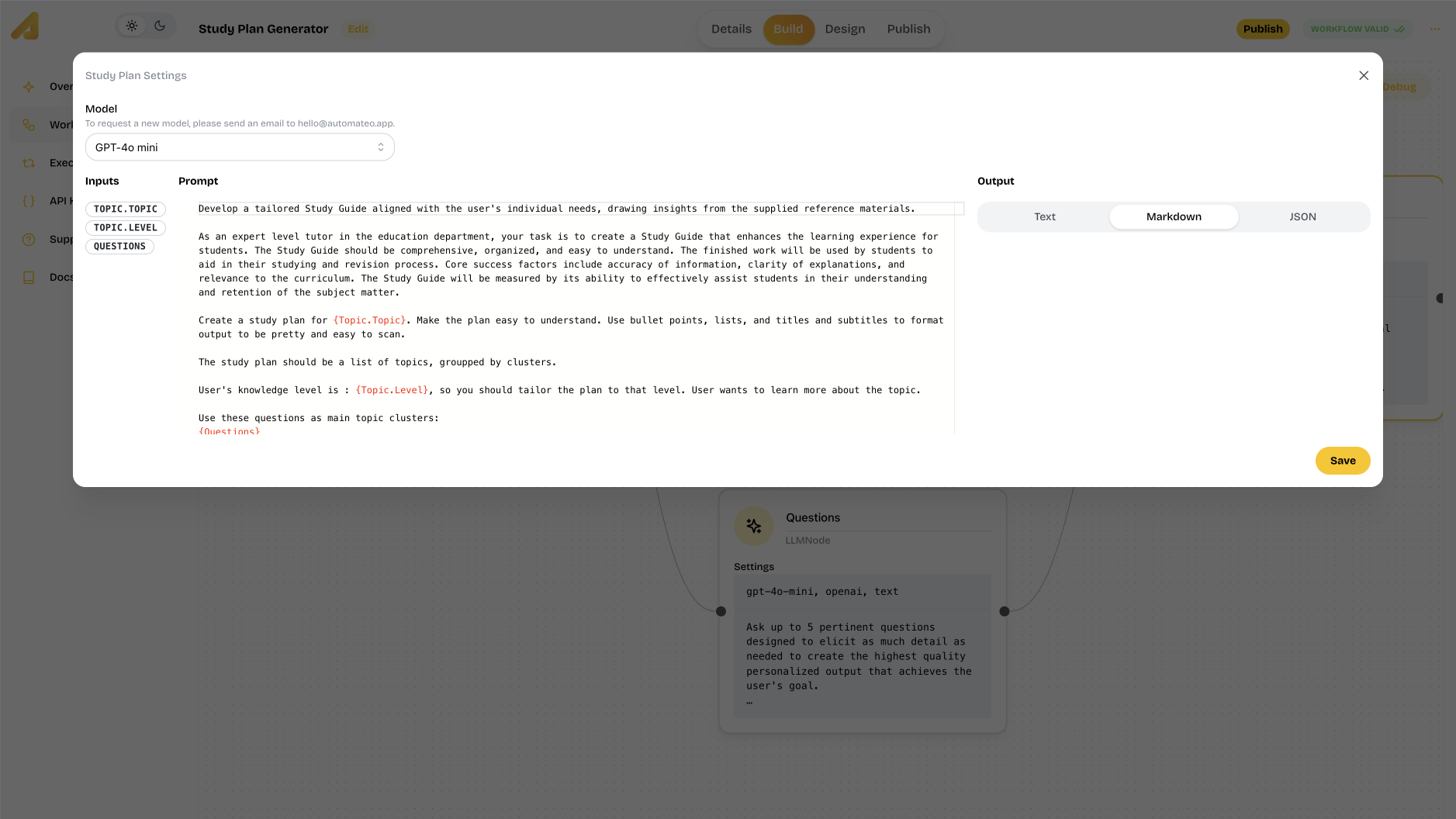
Inspiration
The inspiration behind Automateo came from the need to simplify the process of building and deploying AI-powered applications. Many developers and solopreneurs want to leverage AI but are often held back by the complexity of integrating large language models into their workflows. Automateo was created to solve this pain point, offering a no-code platform that turns ideas into functional apps, without the need for technical expertise.
What it does
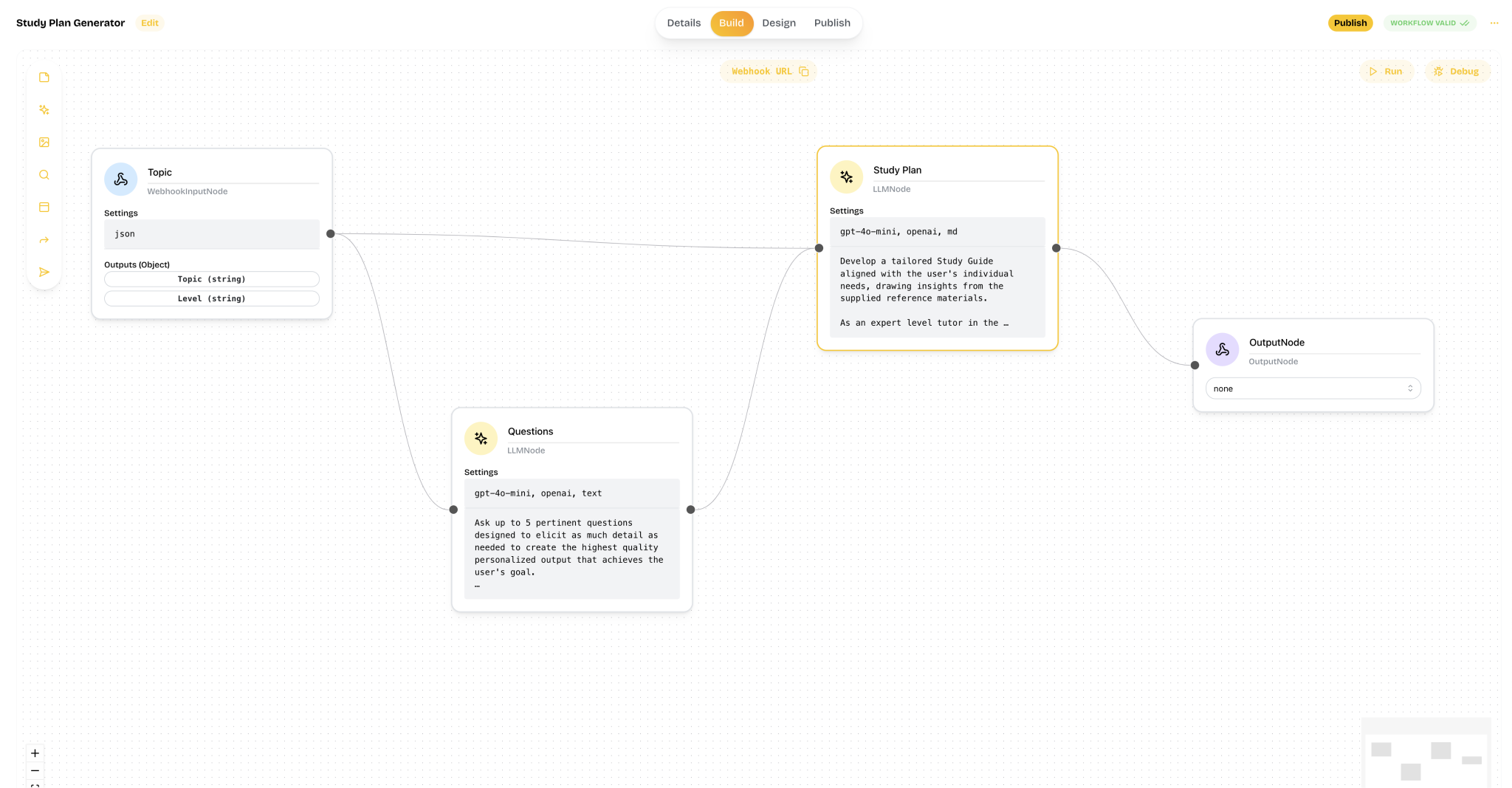
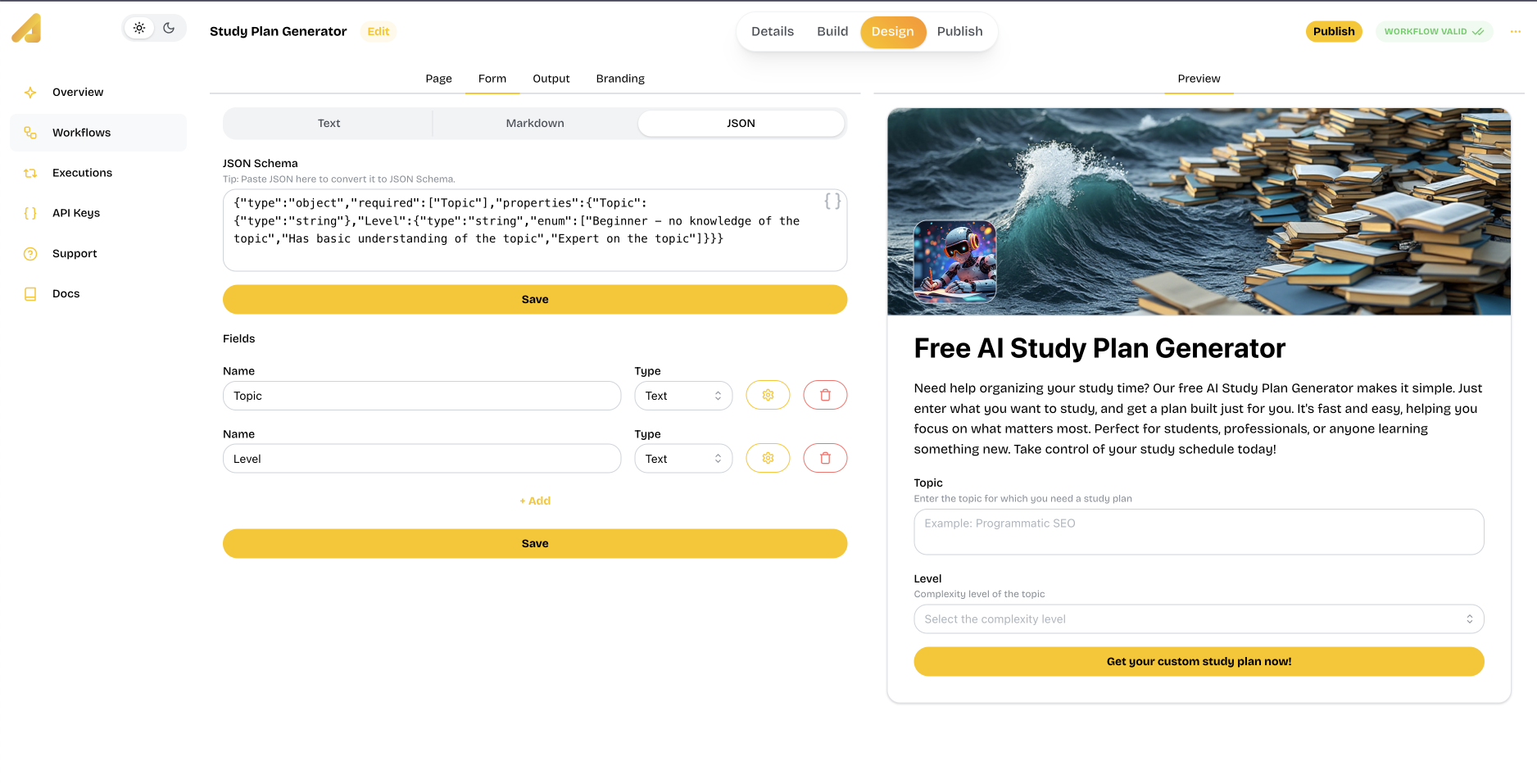
Automateo allows users to build AI-powered apps through customizable workflows that connect inputs, AI prompts, and outputs. It enables users to create no-code apps, automate complex processes, and integrate AI into their existing solutions effortlessly. Workflows can be published as standalone apps with an automatic user interface, making it easy to share and use in a wide range of applications.
How I built it
Automateo was built using a combination of Next.js and React for the frontend, and Laravel with PHP on the backend. The platform integrates with large language model APIs like OpenAI to power the AI capabilities. Redis is used for queue management, and the app is deployed in a cloud-based infrastructure using Laravel Forge.
Challenges I ran into
One of the biggest challenges was optimizing the platform to handle multiple workflows in parallel without causing delays. Getting LLMs to output content that always conforms to the given JSON schema was tricky. Another challenge was making the platform intuitive for users with no coding experience while keeping it powerful enough for developers.
Accomplishments that I'm proud of
I'm proud of successfully building a platform that allows non-technical users to create and deploy their own AI-powered apps. It was also a major accomplishment to design a system that integrates with popular LLMs while maintaining the flexibility to publish workflows as fully functional apps. Building Automateo to solve real-world problems for indie hackers and small businesses has been incredibly rewarding.
What I learned
Through building Automateo, I learned the importance of balancing simplicity with power. Creating a no-code platform requires making it easy to use, but also versatile enough for a variety of use cases. I also gained a deeper understanding of how to work within the constraints of LLMs, such as token limits, and optimize for performance when handling multiple workflows.
What's next for Automateo
Next, Automateo will focus on expanding its integrations to support more third-party services, making it easier to connect with external tools and data sources. I also plan to introduce more customizable templates and workflows to provide users with even more flexibility. There will also be improvements to the publishing process, giving users more control over how their AI apps are shared and used by others.

Log in or sign up for Devpost to join the conversation.