-
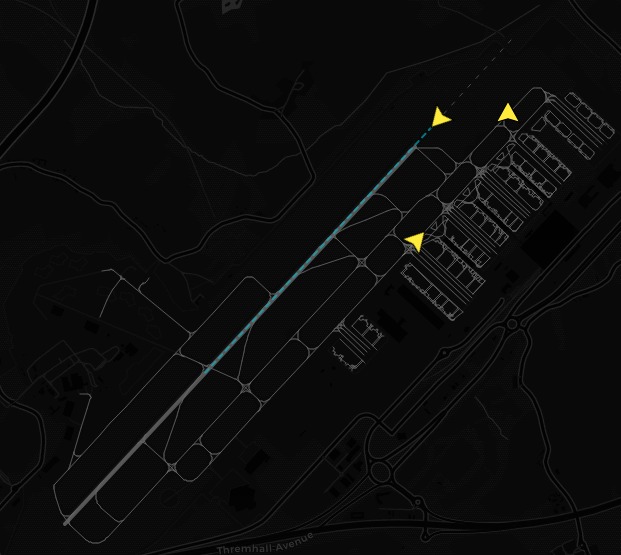
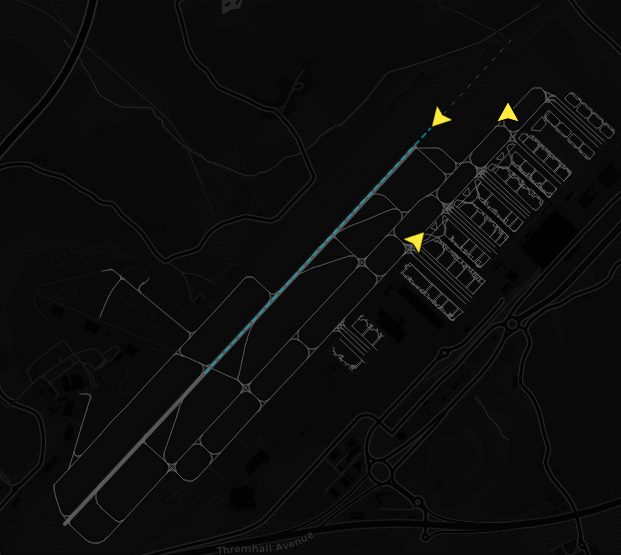
Screenshot of the Surface Movement Radar featuring aircraft taxiing, and one landing.
-
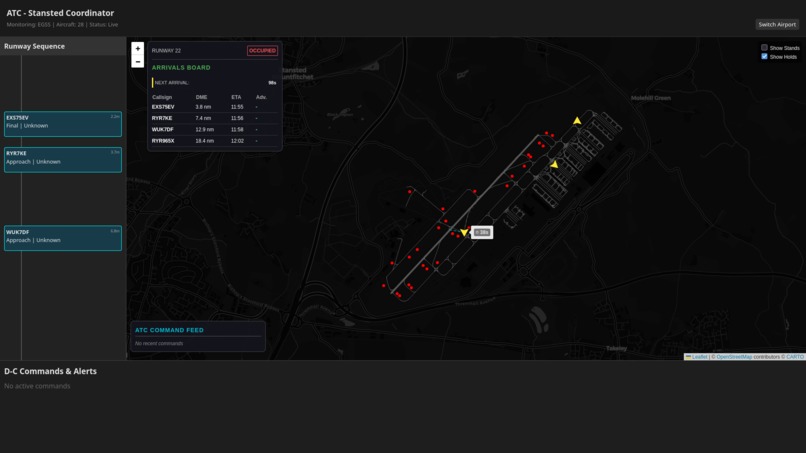
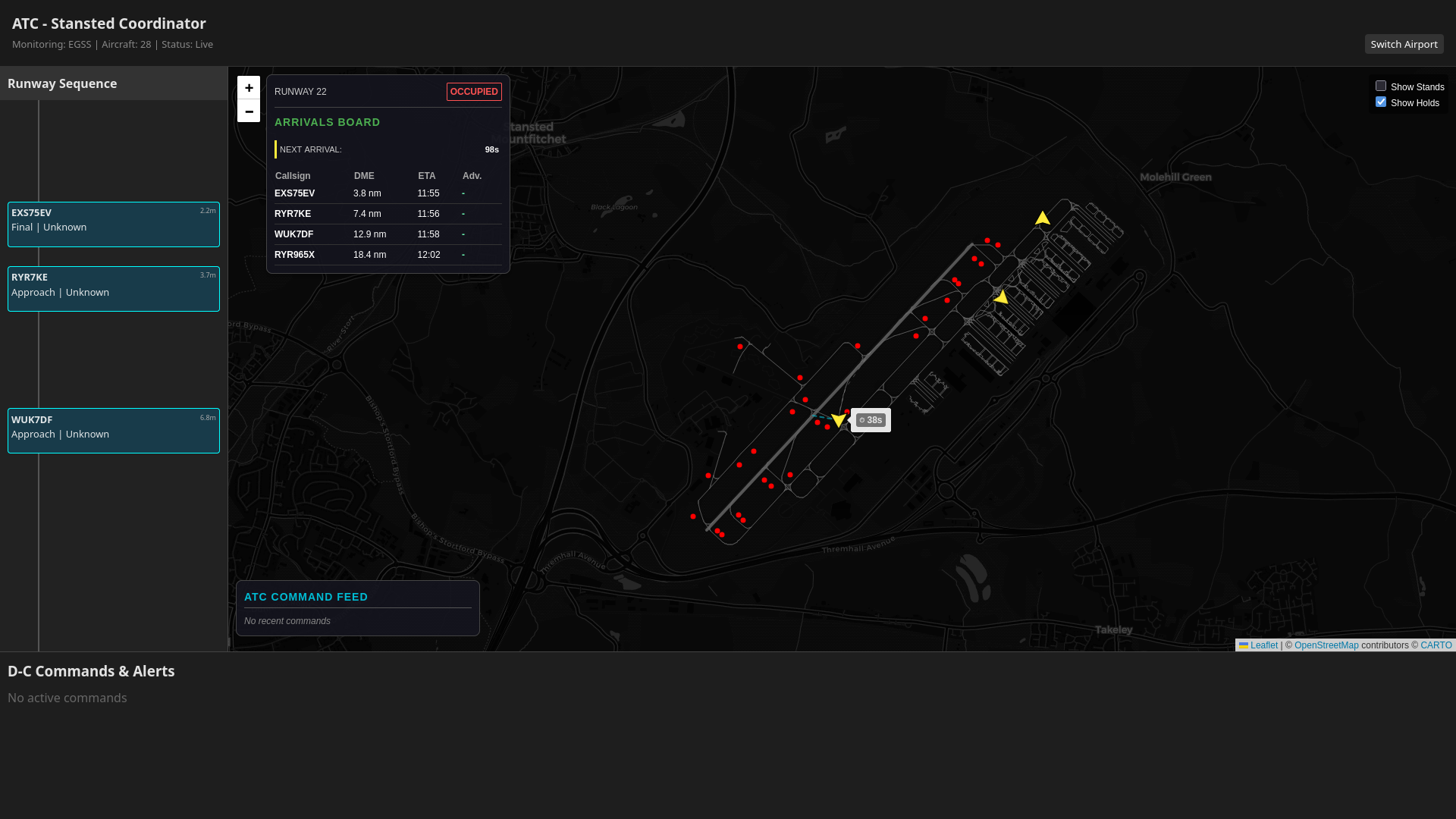
Screenshot of program featuring incoming runway sequence column on the left, and the terminal display/ surface movement radar on the right
-
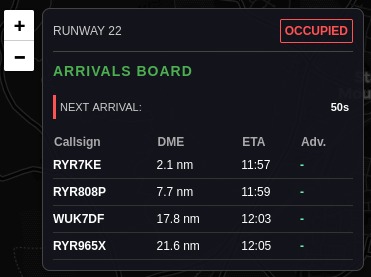
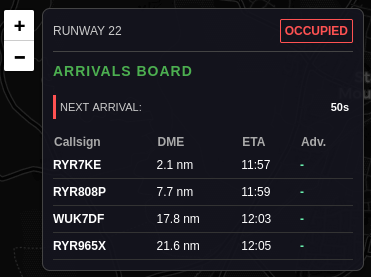
Incoming arrival list featuring estimated times and runway occupancy details
-
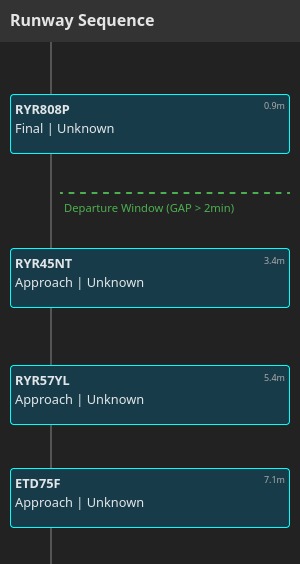
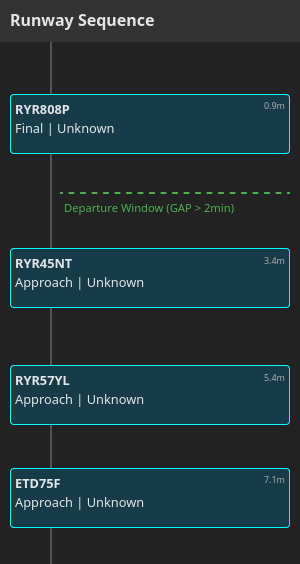
Runway sequence column featuring spacings between aircraft to allow quick awareness of spacings between aircraft.
Automated Traffic Coordinator
What it does
The Automated Traffic Coordinator is a visualisation tool acting as a Surface Movement Radar (SMR) and Terminal Approach display. The goal is to reduce airport delays by drawing attention to specific congestion points. It actively monitors aircraft spacing and runway occupancy, and specifies how traffic should be ordered to maximise efficiency and minimise ground delays.
Why
The project was inspired by a real-world travel experience. A friend of mine took a flight that had a flight time of 1 hour and 40 minutes, but upon arrival at Heathrow, they were stuck taxiing for an hour and a half, followed by another hour wait for luggage. The fact that the delays on the ground lasted longer than the flight itself highlighted a pretty big inefficiency in airport coordination that this software aims to address.
How we built it
I built this system using Rust for the 'blazing fast performance' backend to handle live ADS-B data streams, and TypeScript for the responsive frontend interface. I developed it with the assistance of Antigravity as an AI pair programmer. The project was chosen specifically to help me learn and implement Rust features like async runtimes and strict type safety in a real-world context, while also diving deep into the technical domain of Air Traffic Control.
What we learnt
Through building this, I learnt valuable lessons about the complexity of the Air Traffic Control environment, with regards to how Approach Control and Ground Control interact. By a technicality, I mastered some advanced areas of Rust, learning how to manage complex, concurrent state safely and efficiently.
What's next for Automated Traffic Coordinator
The next step is to expand the system's scope beyond the immediate terminal area. With specific goals being sequencing and flight plan analysis across the main upper and lower UK airways. This would allow the system to optimise traffic flow hundreds of miles out, ensuring aircraft arrive at the terminal area already perfectly sequenced, rather than just managing them once they arrive.
Built With
- ads-b
- antigravity
- rust
- typescript
- vite

Log in or sign up for Devpost to join the conversation.