Inspiration
In many public places, managing parking manually often leads to confusion, longer waiting times, and mismanagement of available spaces. Without a proper system, it becomes difficult to track vehicle entries, check slot availability, and calculate parking charges accurately. This not only causes inconvenience to customers but also increases the workload on staff and can result in financial discrepancies for the organization. To overcome these challenges, there is a need for a reliable and automated parking management system that can store and process data efficiently. The system should ensure smooth vehicle movement, quick access to information, and secure handling of parking records while minimizing human errors.
What it does
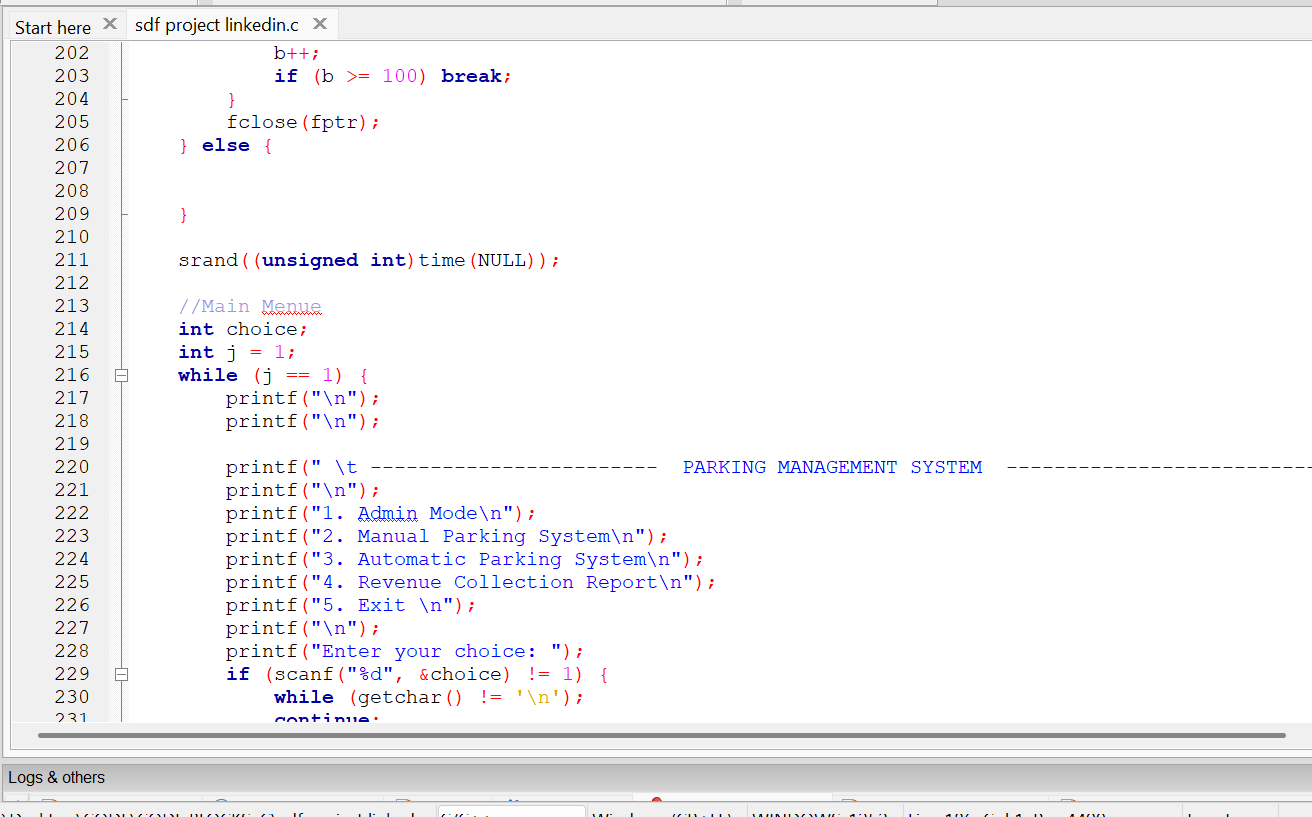
The Parking Database Management System focuses on improving the parking experience for both users and administrators by automating essential tasks. The system covers the entire process—from a vehicle’s entry to exit—by recording details like vehicle type, time of entry, parking slot availability, and final payment. It is designed to work in two modes: Manual Mode, where staff at the counter assist customers, and Automatic Mode, where users can independently access the system through a QR code. The project also includes features like generating a parking slip or digital message for the customer and calculating charges based on the time spent in the parking area.
How we built it
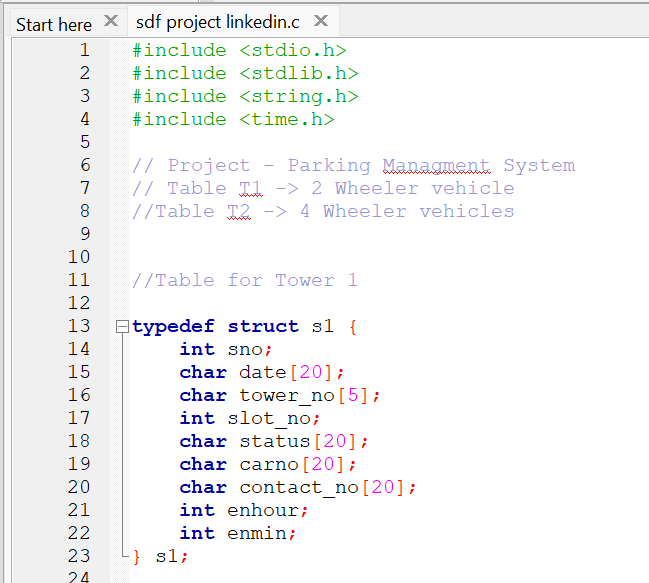
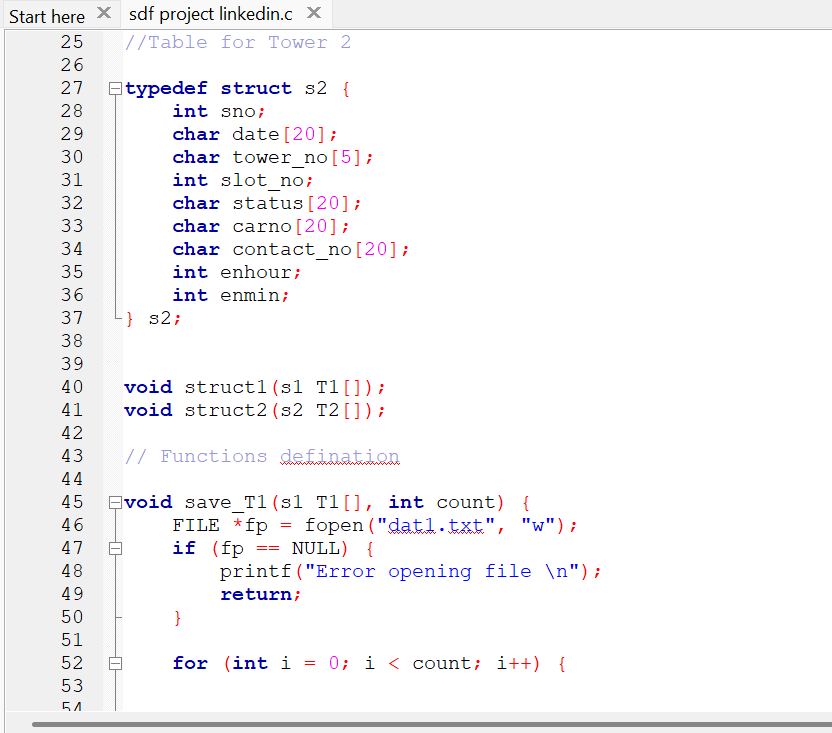
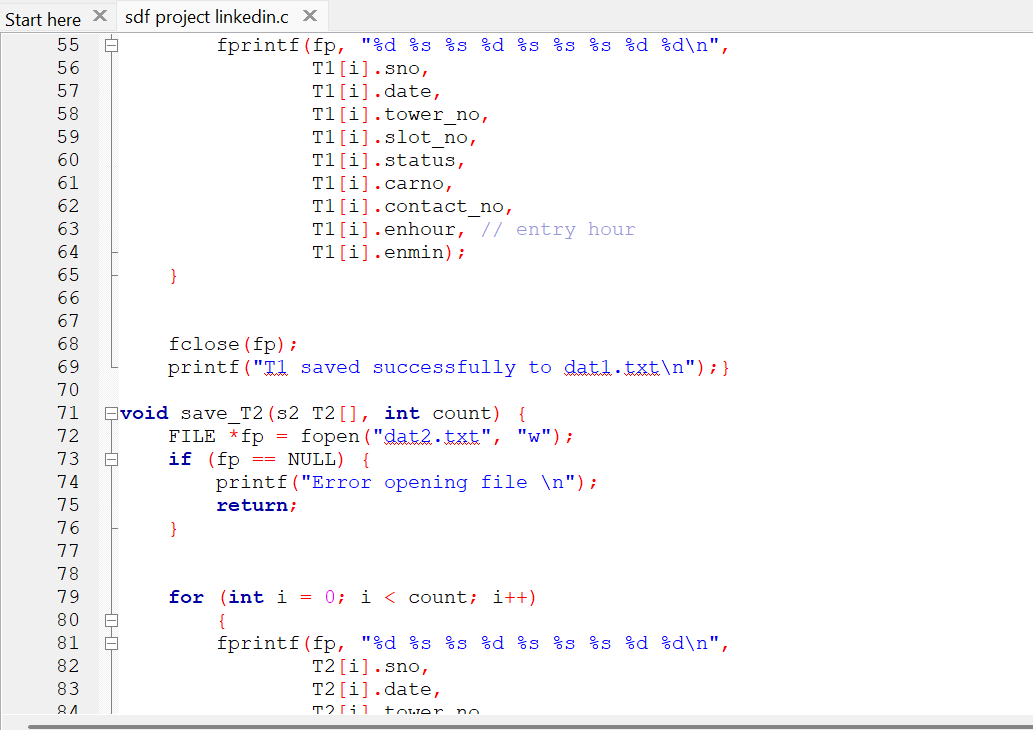
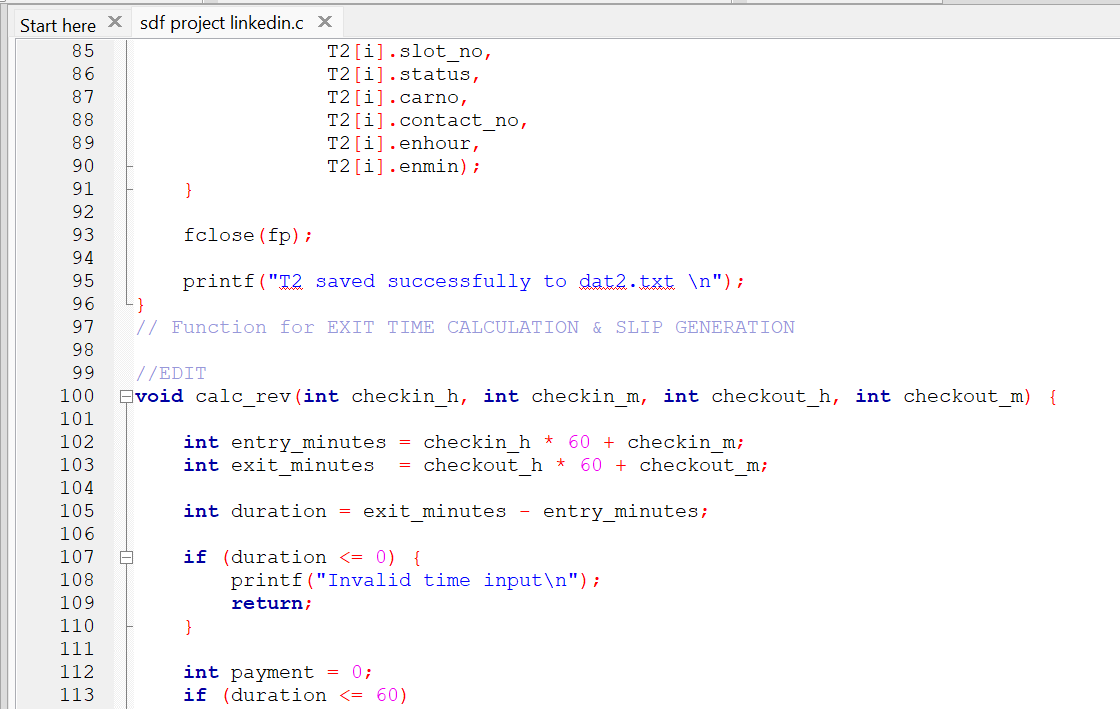
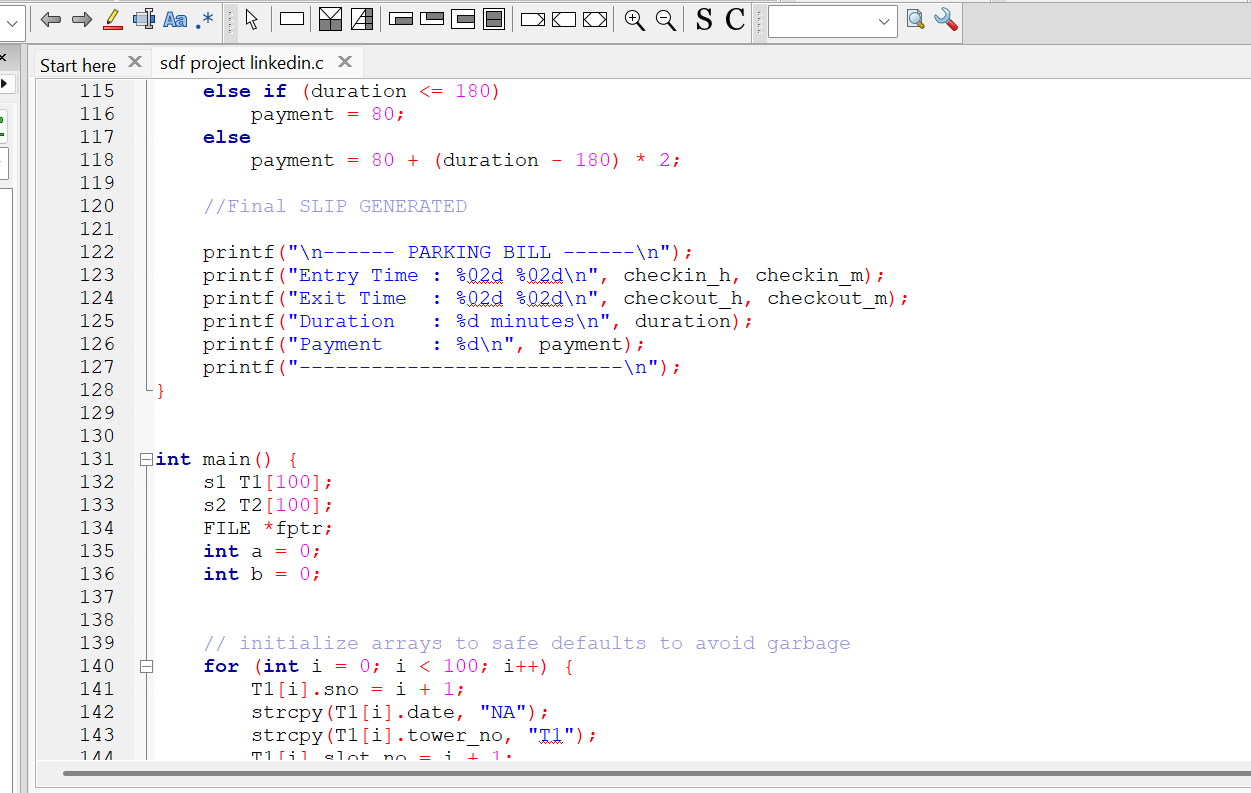
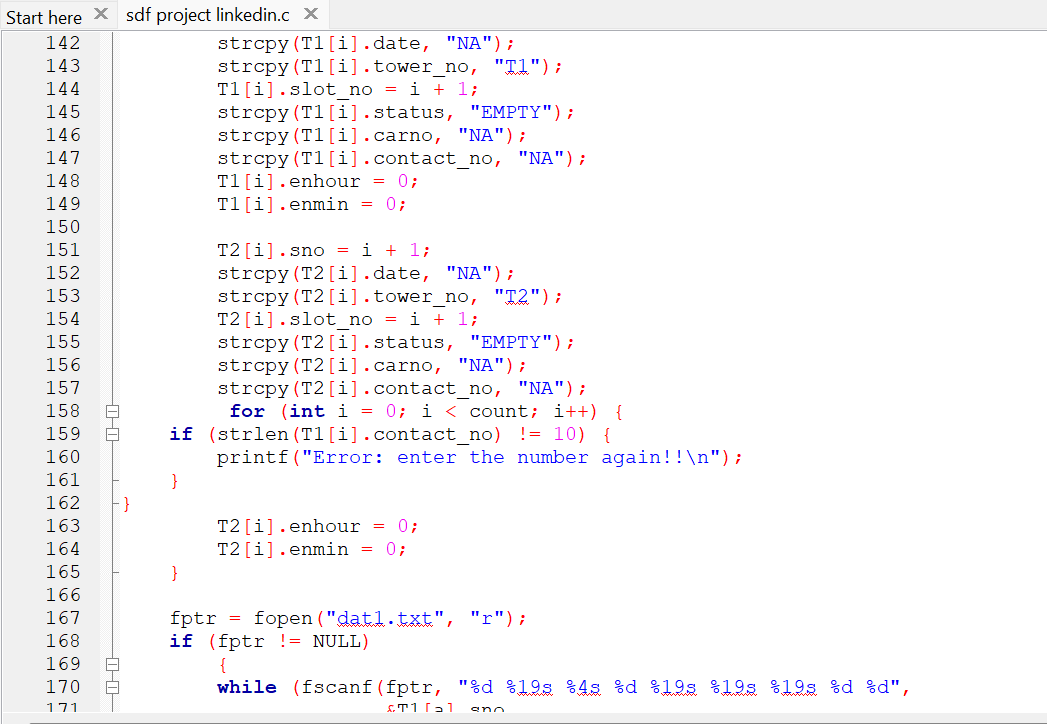
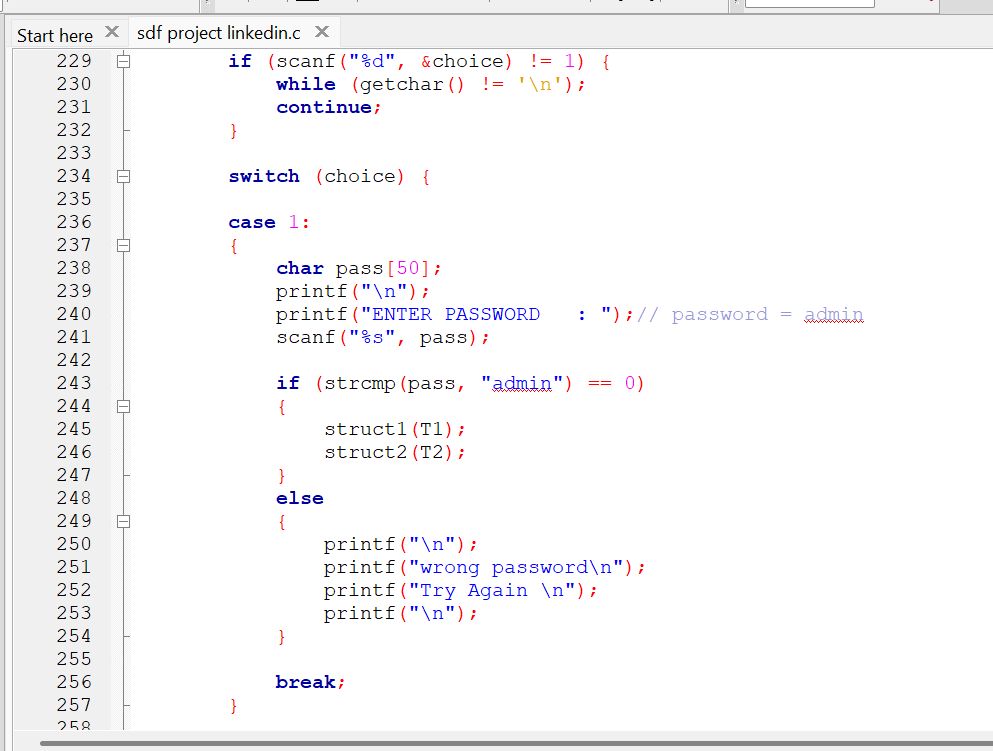
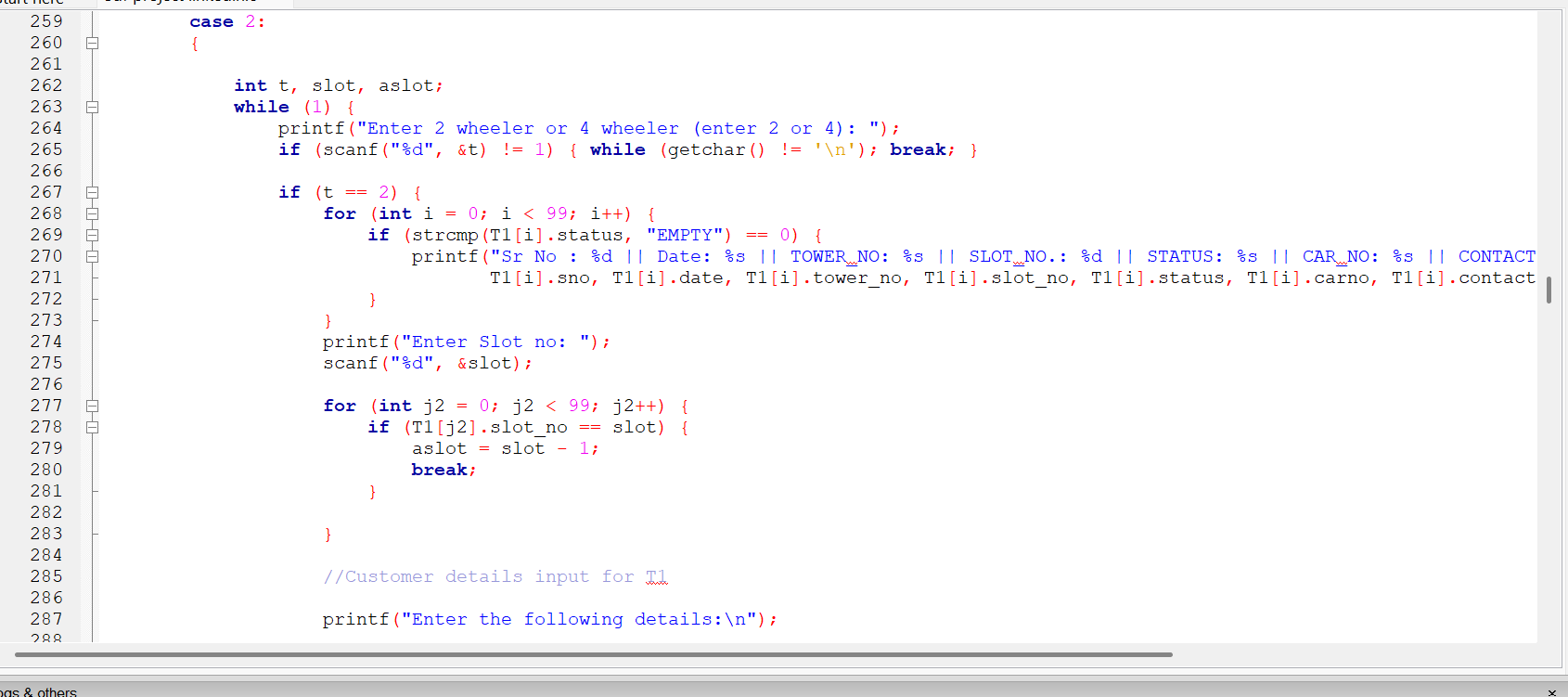
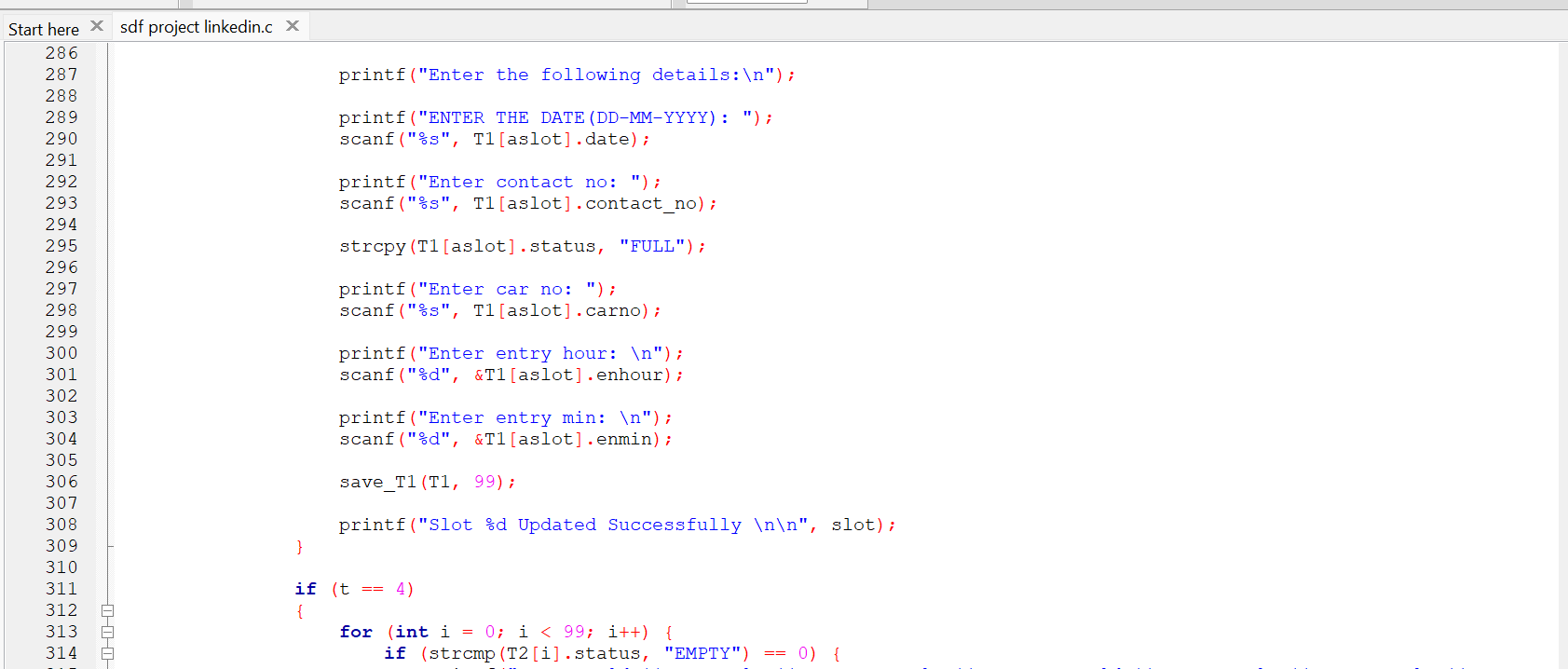
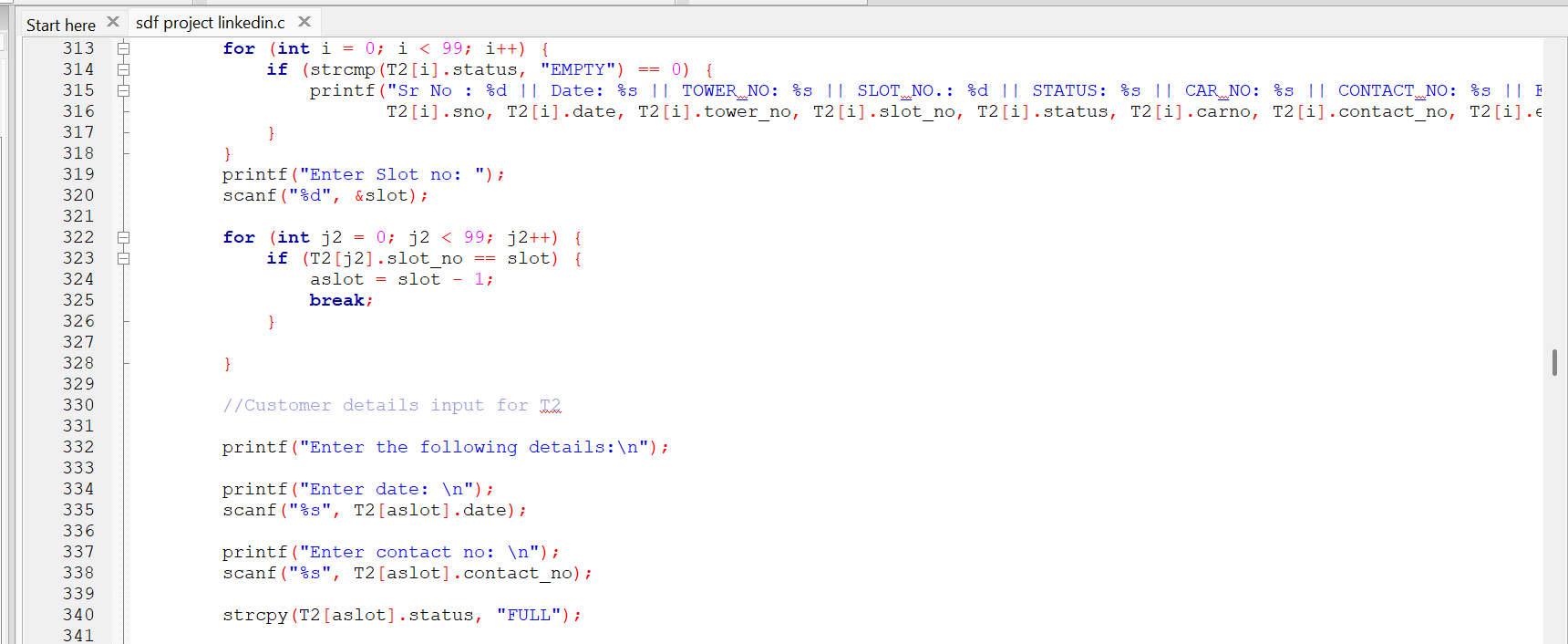
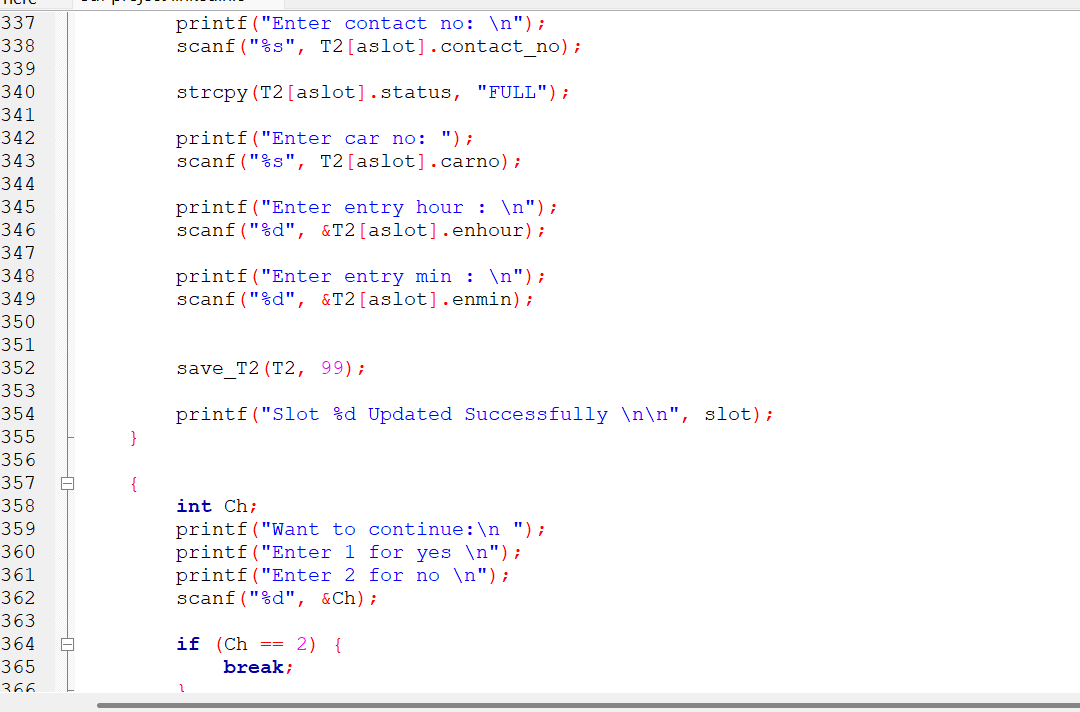
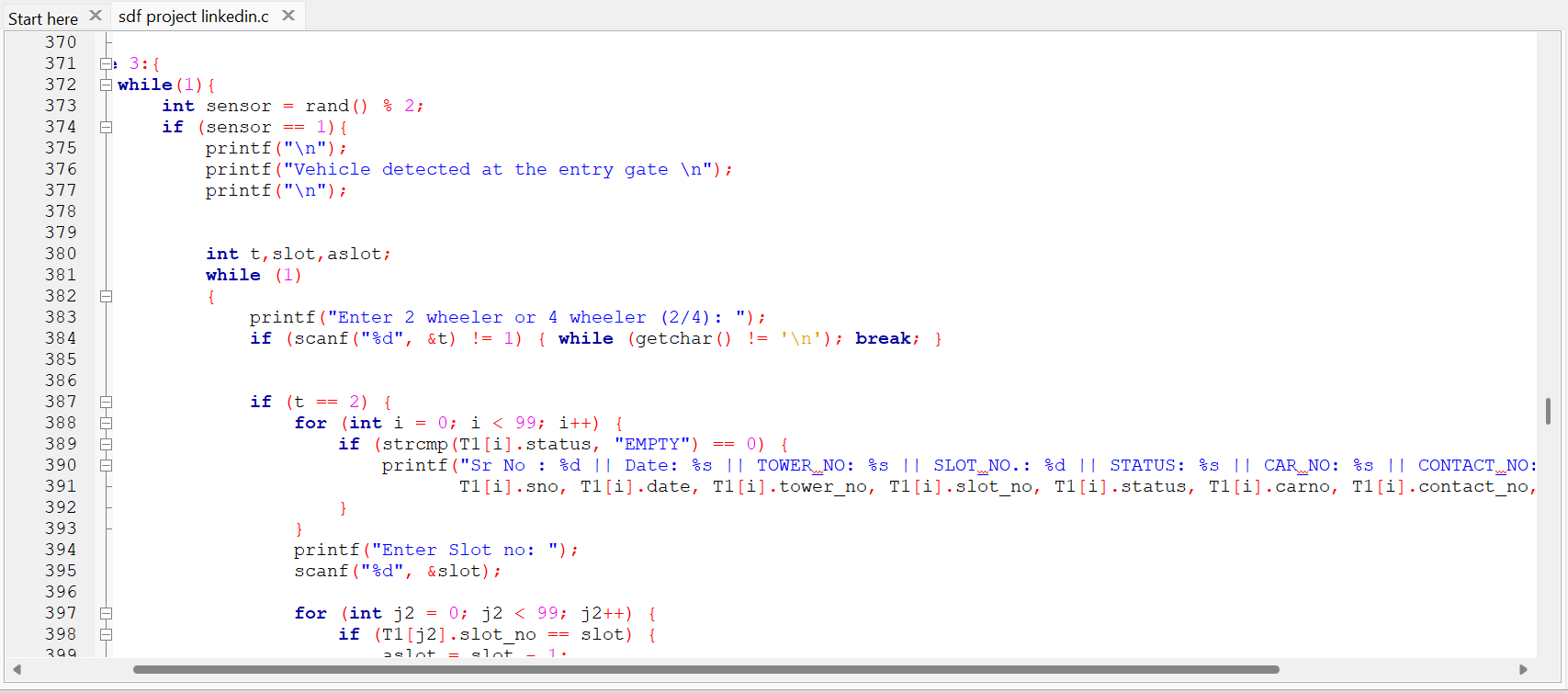
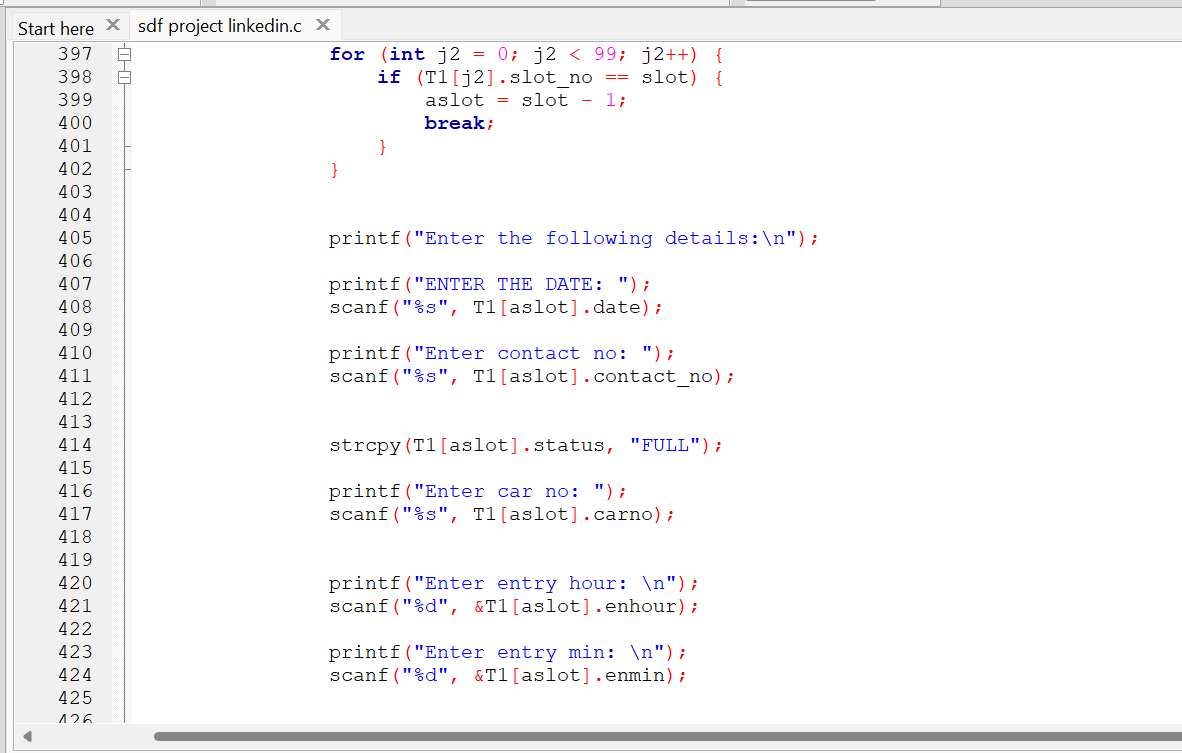
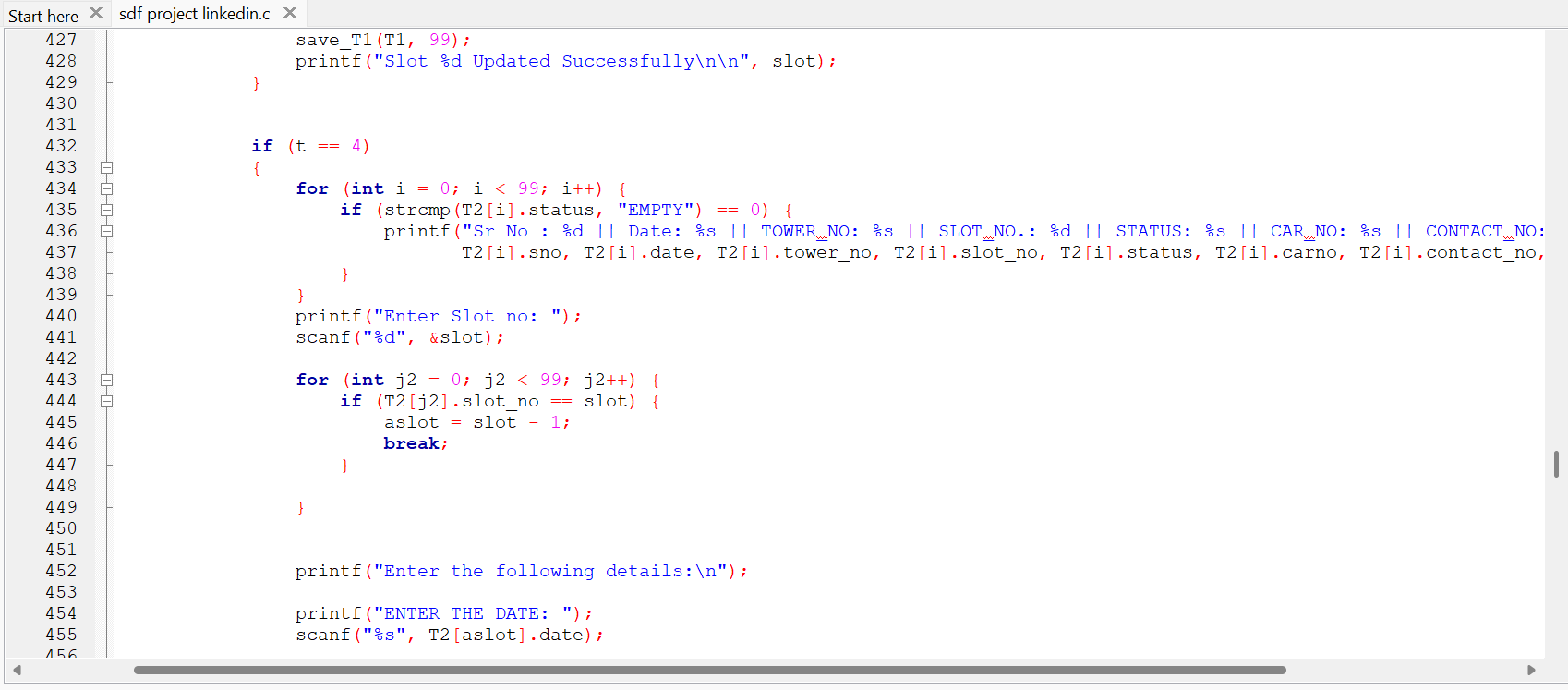
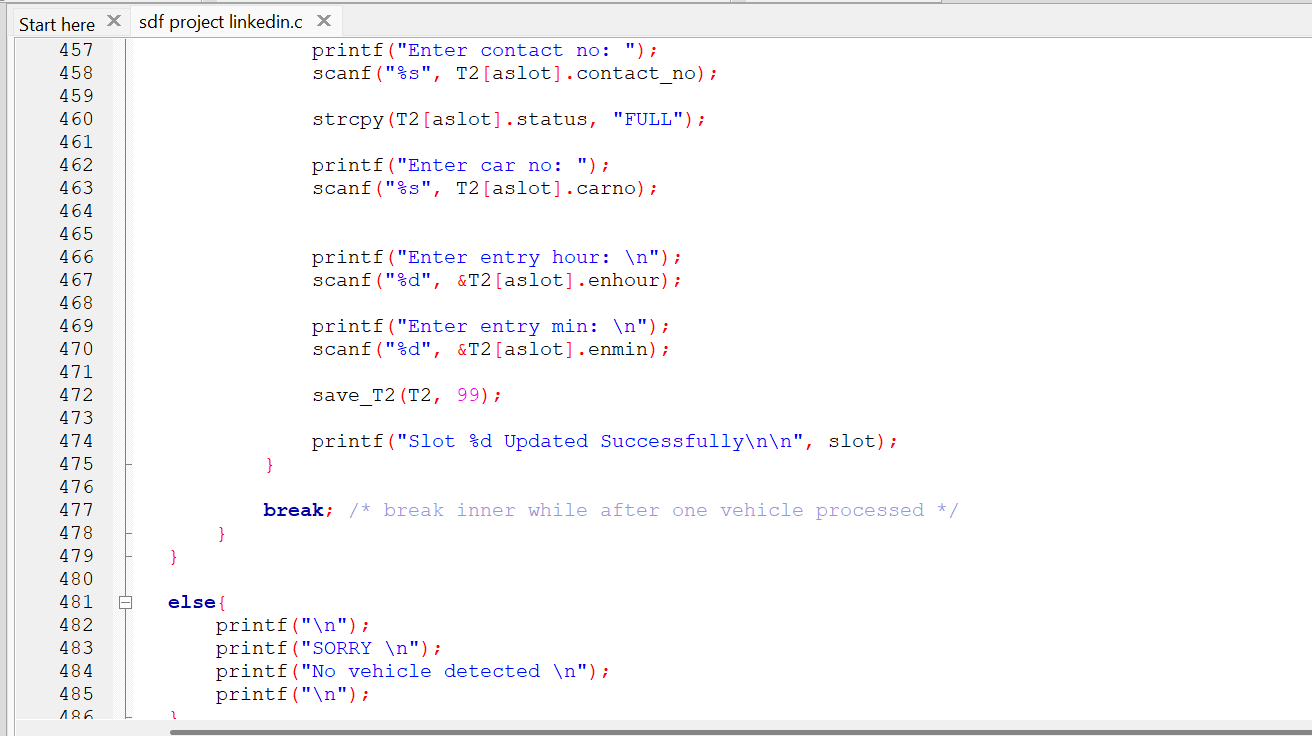
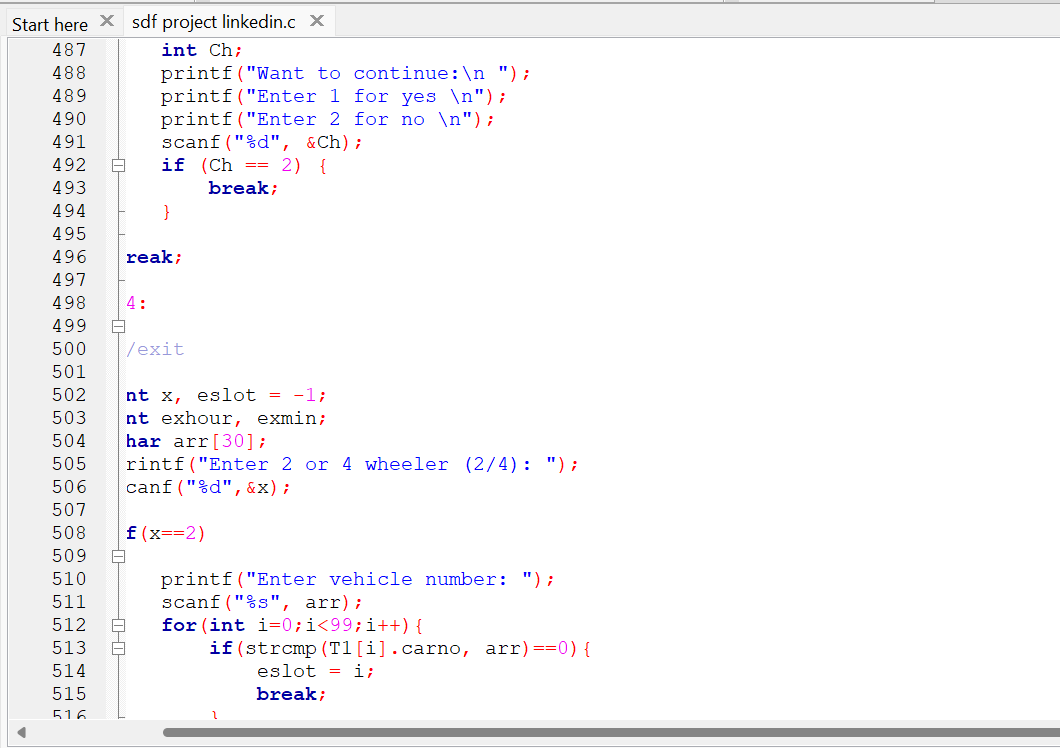
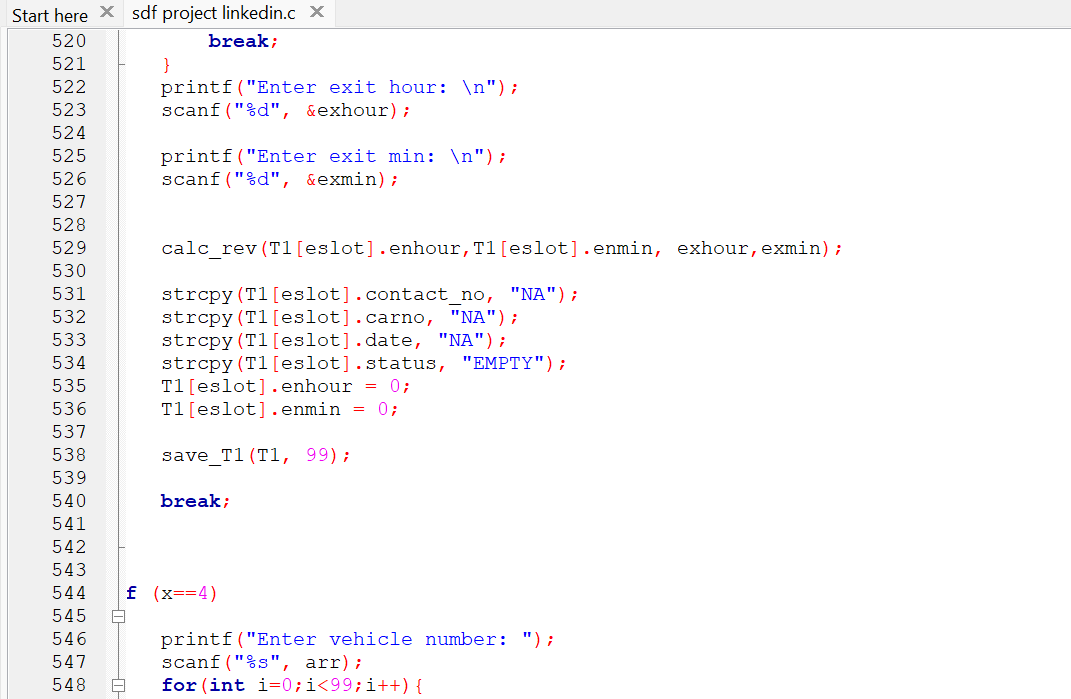
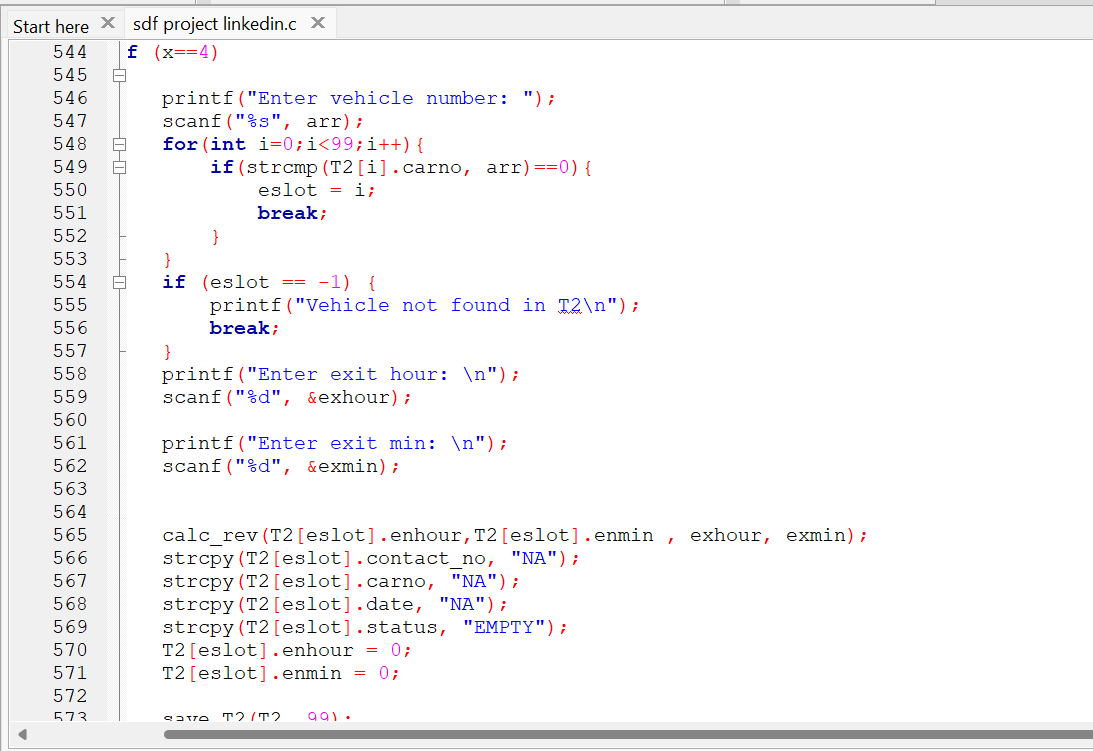
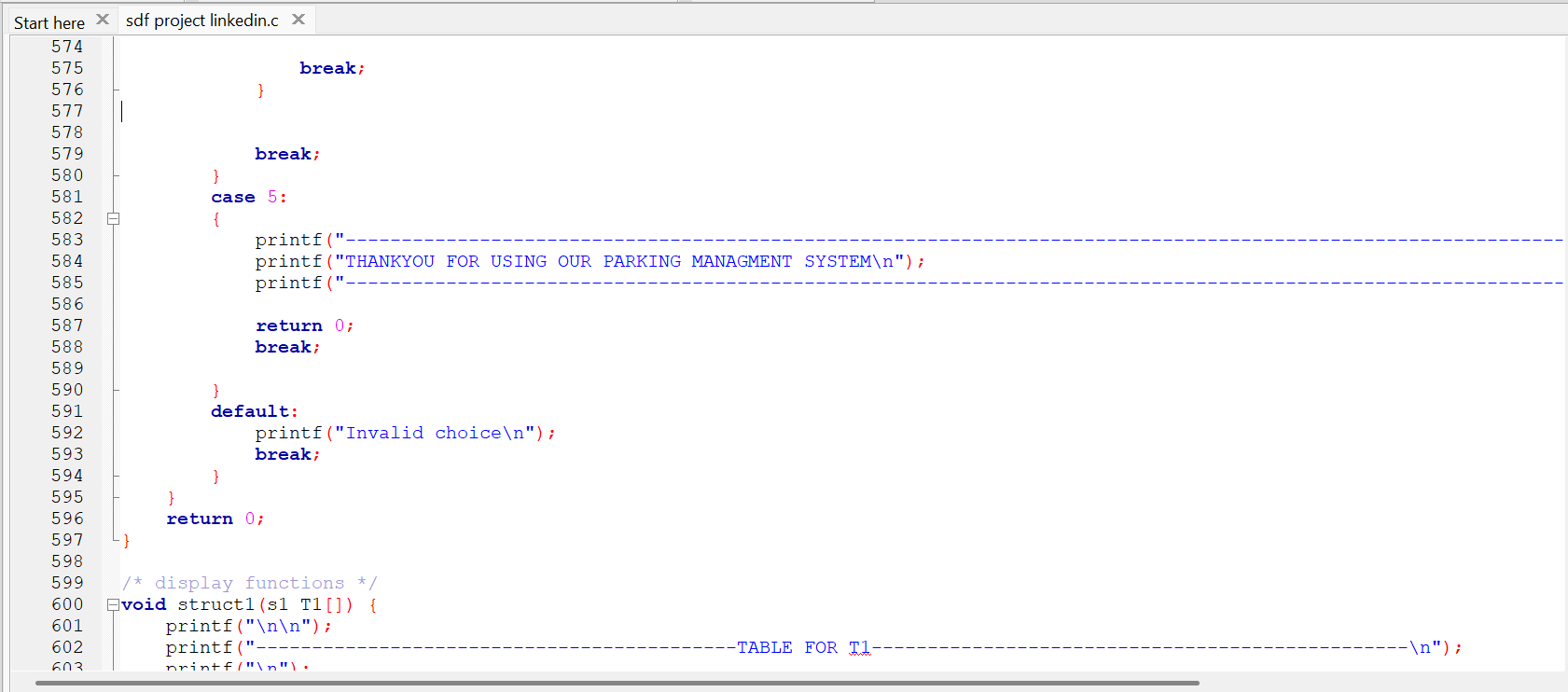
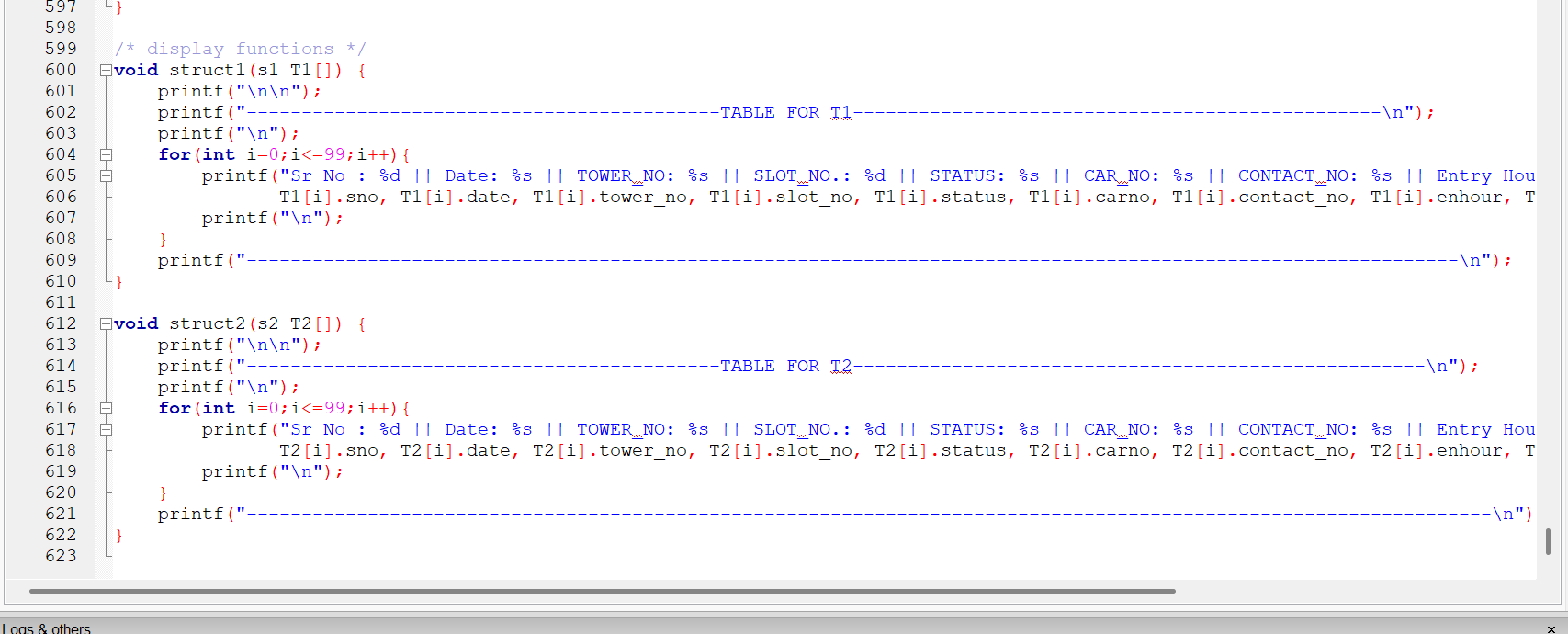
we build it using basic yet powerful c programming concepts in code blocks application using functions , structures , arrays , strings , variables , operators etc.
Challenges we ran into
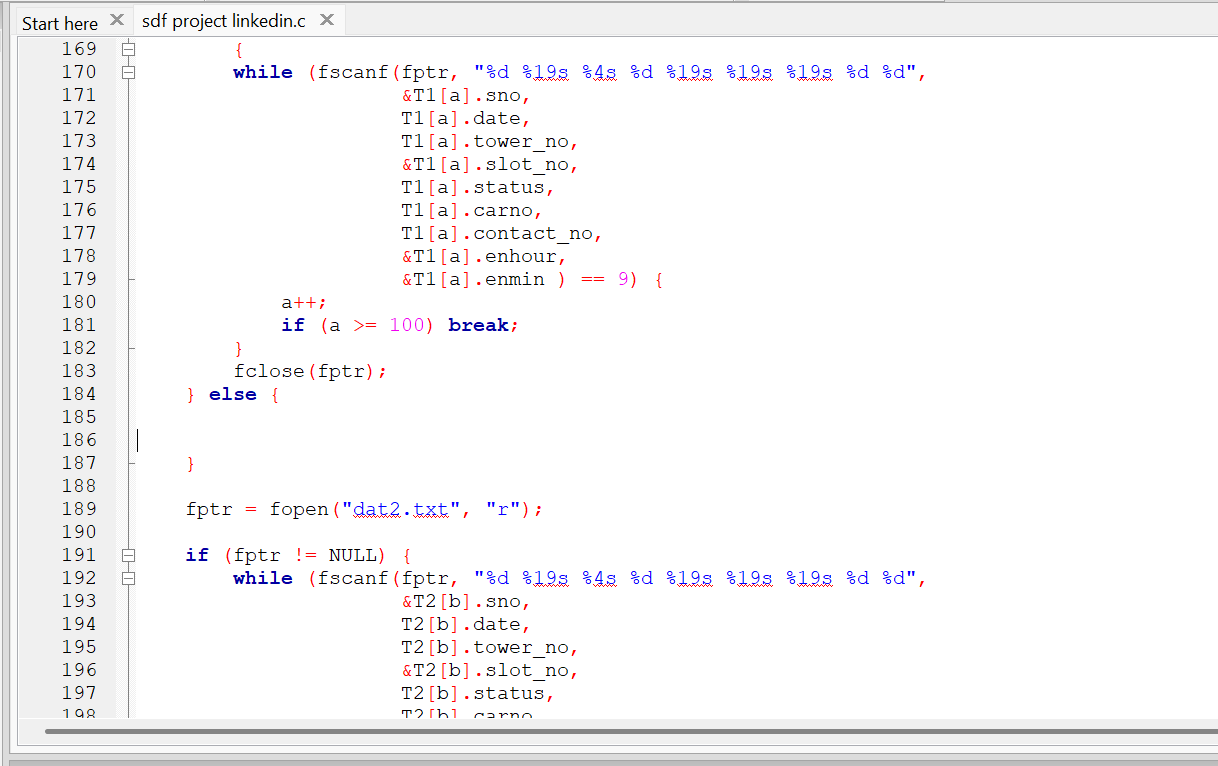
Faced multiple bugs while implementing structures and logic; debugging was stressful because it wasn’t always clear where the issues were. Referred to coding resources on YouTube, especially Code with Harry and Chandler’s explanations, to understand the logic better. Pointer misusage errors, I initially passed values instead of addresses, which caused incorrect data updates .Solved by properly using *ptr and &variable, Incorrect time calculations ,Entry and exit times were not converting properly to minutes, file handling read/write issues, Faced errors when opening files in the wrong mode, Corrected them using "a", "r", "w" modes carefully. Sometimes the exit sensor triggered at the wrong time, fixed by reseeding srand(time() and adding a condition to stabilize detection .Used AI tools to break down errors and fix repeated issues quickly and effectively.
Accomplishments that we're proud of
Finally are code was working and we were able to generate parking slips with payment for both manual and automatic modes which saved time , reduced parking stress, and made the overall system efiicient.
What we learned
It was all about bringing everything together. We summed up all the concepts we had learned— structures, functions, recursive functions, arrays, pointers, and dynamic memory allocation—and connected them through file handling to build a complete system. We created three separate files to manage data efficiently: • one file to store manual parking records, • another to handle automatic parking entries, • and a third admin file that maintains all updated records, including vehicle details, duration of stay, and calculated parking fees. Using pointers, we managed memory effectively while passing structured data across functions.The final phase involved executing the complete codebase, debugging logical and runtime errors, validating file operations using functions such as fopen(), fprintf(), and fscanf(), and ensuring accurate data flow across modules. This step reinforced the importance of modular programming, memory handling, and data consistency in real-world C applications. . Most importantly, this project boosted my confidence as a programmer and helped me think like a developer. With all modules successfully integrated and tested, our Automated Parking Management System is now complete, functional, and ready for use, marking a meaningful milestone in my learning journey.
What's next for Automated Parking Database Management System
In future we can use automatic sensors at the booth to detect the vehicle and its time and can automatically generate slip and update the space filling to the server which is only accessible to the admin .
Built With
- codeblocks
- cprogramming
- github

Log in or sign up for Devpost to join the conversation.