-
-
Lickometer
Inspiration
Oral drug administration to laboratory animals is a common task in biomedical research, and each animal may have a different required daily drug dosage. Doing this manually is a monotonous and tedious task that should be automated to save time for research labs. However, in the case of laboratory rats, they must be group-housed (at least 2 rats per cage) due to their social nature and group housing is needed for their emotional well-being. This means that the task of automatically dispensing drugs for these rats becomes more complicated because the needs of each rat in the cage are different and have to be kept track of - we cannot simply put the desired amount of drugs in the cage and hope that the rats will negotiate with each other and take their fair share. Therefore, I would like to automate this process by building a drug administration system that can dispense the right daily amount of drugs for each rat and keep track of their daily progress. For simplicity, the drug will be dissolved into some kind of liquid that the rats can drink.
What it does
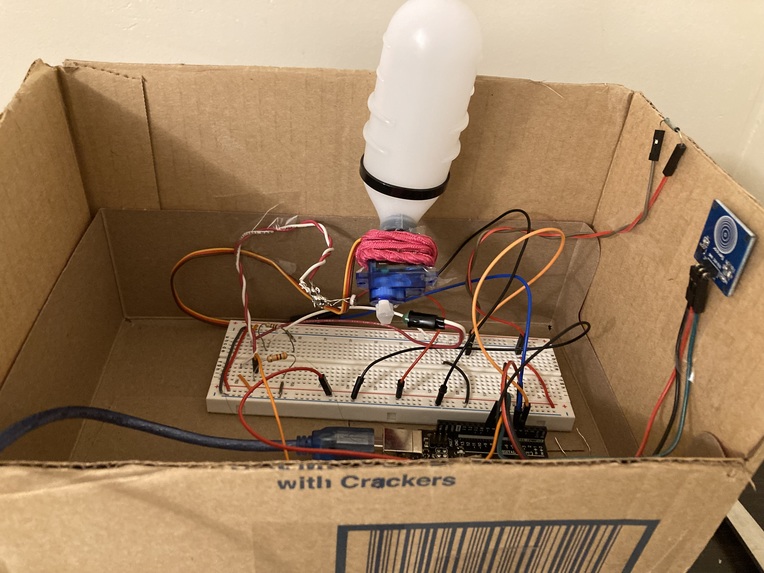
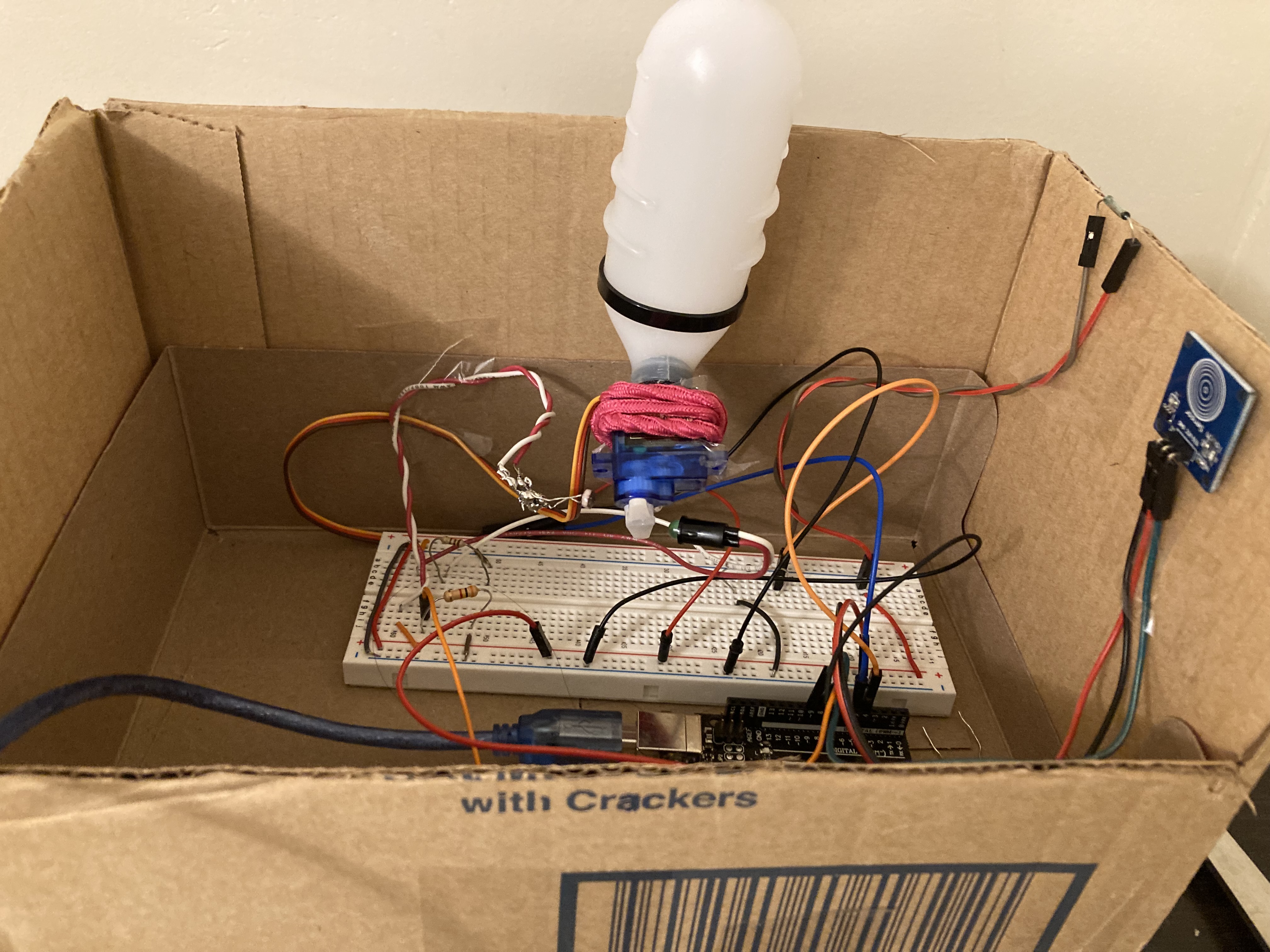
I designed and constructed an automated oral drug administration system for group-housed laboratory rats. To simplify the problem, I assumed that there were 2 rats per cage and each needed a different daily drug dosage. The rats were distinguished from each other by attaching a magnetic bracelet to one of them and using a Hall effect sensor to detect which rat is using the system. The system was able to administer the right amount of drug to each rat, as calculated by the number of licks detected by a home-made lickometer made from an LED light and a photoresistor. The progress of each rat was logged to the monitor and the drug limit for each rat was reset every day
How we built it
- To distinguish between 2 rats, I attached a magnetic bracelet to one of them (call this one Rat 2) and used a Hall effect sensor to detect this magnetic field. Rat 1 was the one without the bracelet and did not trigger the sensor
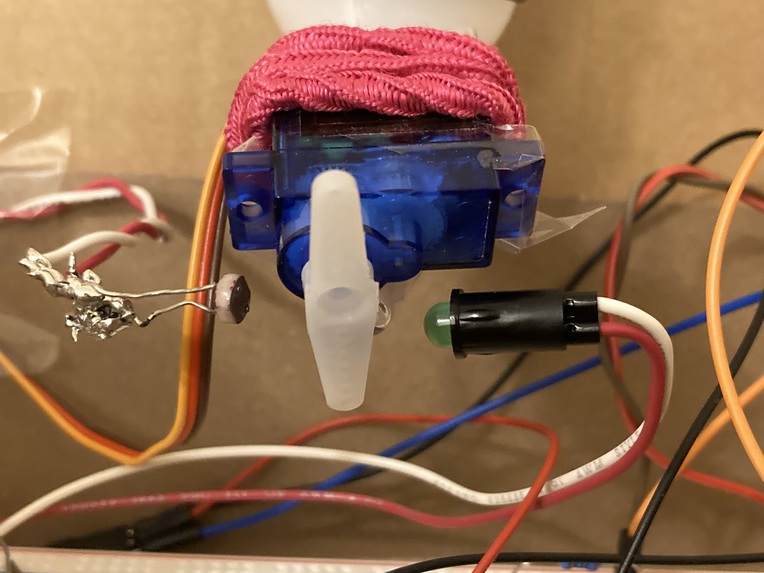
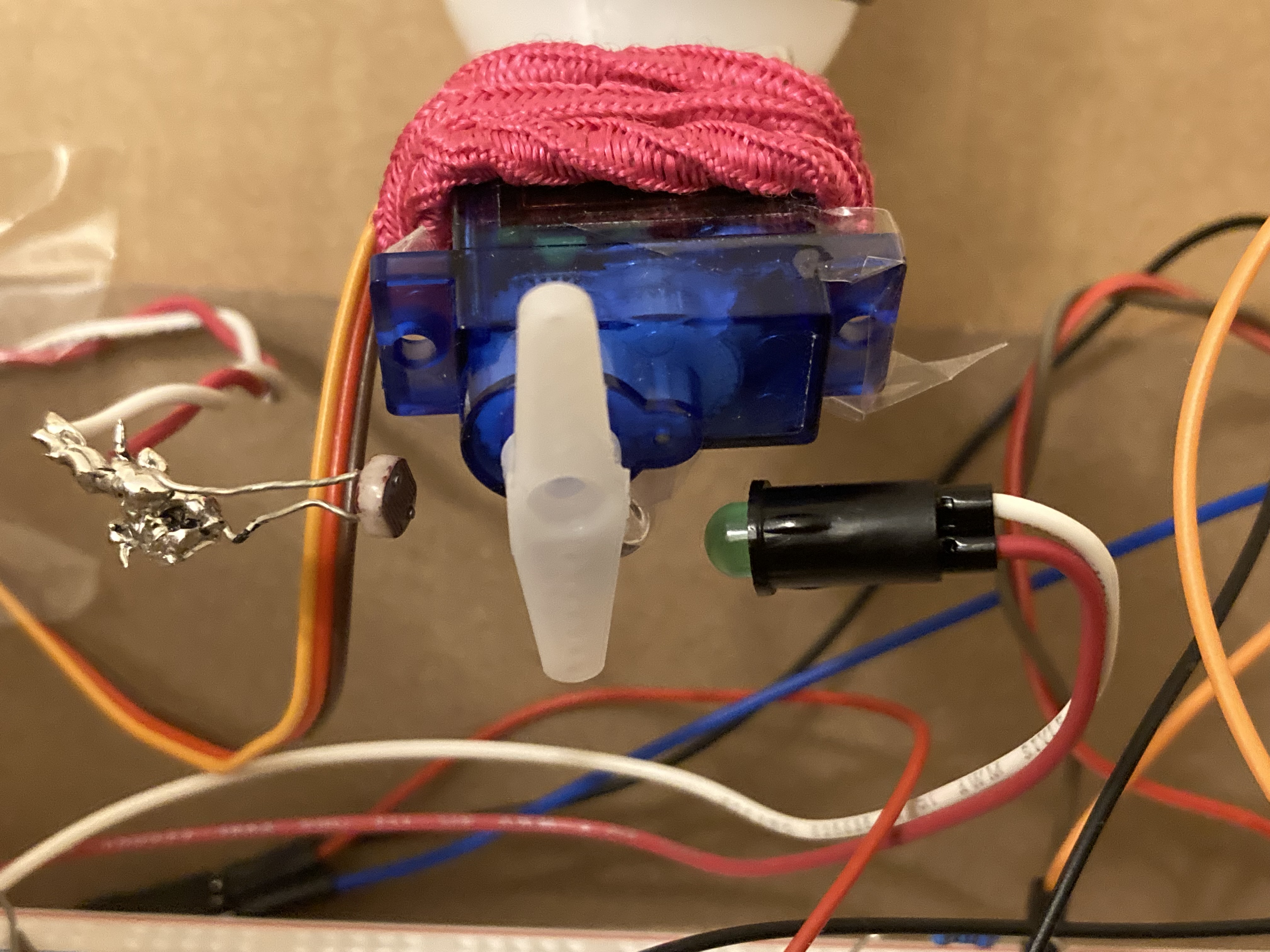
- To make sure that the rats didn’t over-consume the liquid, a servo motor was used as an opening/closing door that either exposed or covered the water bottle spout opening depending on whether the rat identified had reached its daily limit. If not, when the rat held on to the spout and triggered the touch sensor, the opening was exposed to allow the rat to consume the liquid. If the daily limit had been reached, the door would stay closed even if the rat touched the sensor.
- To keep track of how much liquid is consumed, I originally intended to use a liquid level sensor but had issues with the sensor not being sensitive enough to the change in liquid level in the bottle. Furthermore, having water near the electronics was risky since it could ruin the electronics during prototyping. For these reasons, I opted to make a lickometer that counted the number of licks and inferred the amount of liquid from that instead. The lickometer was made from an LED light and a photoresistor facing each other with space in-between for the rat’s tongue. When the rat licked the spout opening, the photoresistor detected low light when the tongue was out and brighter light when the tongue was in the rat’s mouth. This helped to identify a lick.
- The progress of the rats were logged to the serial monitor (which rat was drinking, how much liquid was left to be consumed for each rat, which rat had finished, whether the system was reset)
- The amount of liquid each rat had consumed and the daily limit were stored in EEPROM
What I learned
From this project, I learned how to design and construct an embedded system from scratch and how to improvise solutions when things don’t go as planned. What particularly went well for me was the opening/closing mechanism and the EEPROM part, but other things were more difficult than I expected. I had trouble figuring out how to use a three-wire Hall effect sensor but was able to switch to a two-wire one that worked better. As mentioned in the results section, I also ran into issues with the liquid level sensor, which was less sensitive than I previously thought. However, I was proud that I was able to overcome this problem by making my own lickometer by simply using an LED and a photoresistor. Even though the current lickometer setup is still a bit unstable, this can be addressed by 3D printing custom-made parts to keep the components in place. An issue I did not anticipate was the difference in lighting between my room (where I did the prototyping) and the lab (where I did the demo). Because the lighting in my room is much more dim than the lighting in the lab, I had to use different resistors for the voltage divider circuit to get reliable readings for the digital pin to switch between high and low. The next step for this project could be to build a database that kept track of the time at which the rats consumed the drugs to identify any interesting patterns
Demo
https://drive.google.com/drive/folders/1egFtHIVApjknSZ4SlAslxlhBc2t2mXWz?usp=sharing

Log in or sign up for Devpost to join the conversation.