Inspiration
As a developer with family in small healthcare practices, I saw firsthand how manual medical billing drained time and revenue—denials lingered, coding errors cost money, and practices struggled to track cash flow. I wanted to build an AI-powered tool that leveled the playing field for independent providers, who lack the resources of large healthcare systems.
What it does
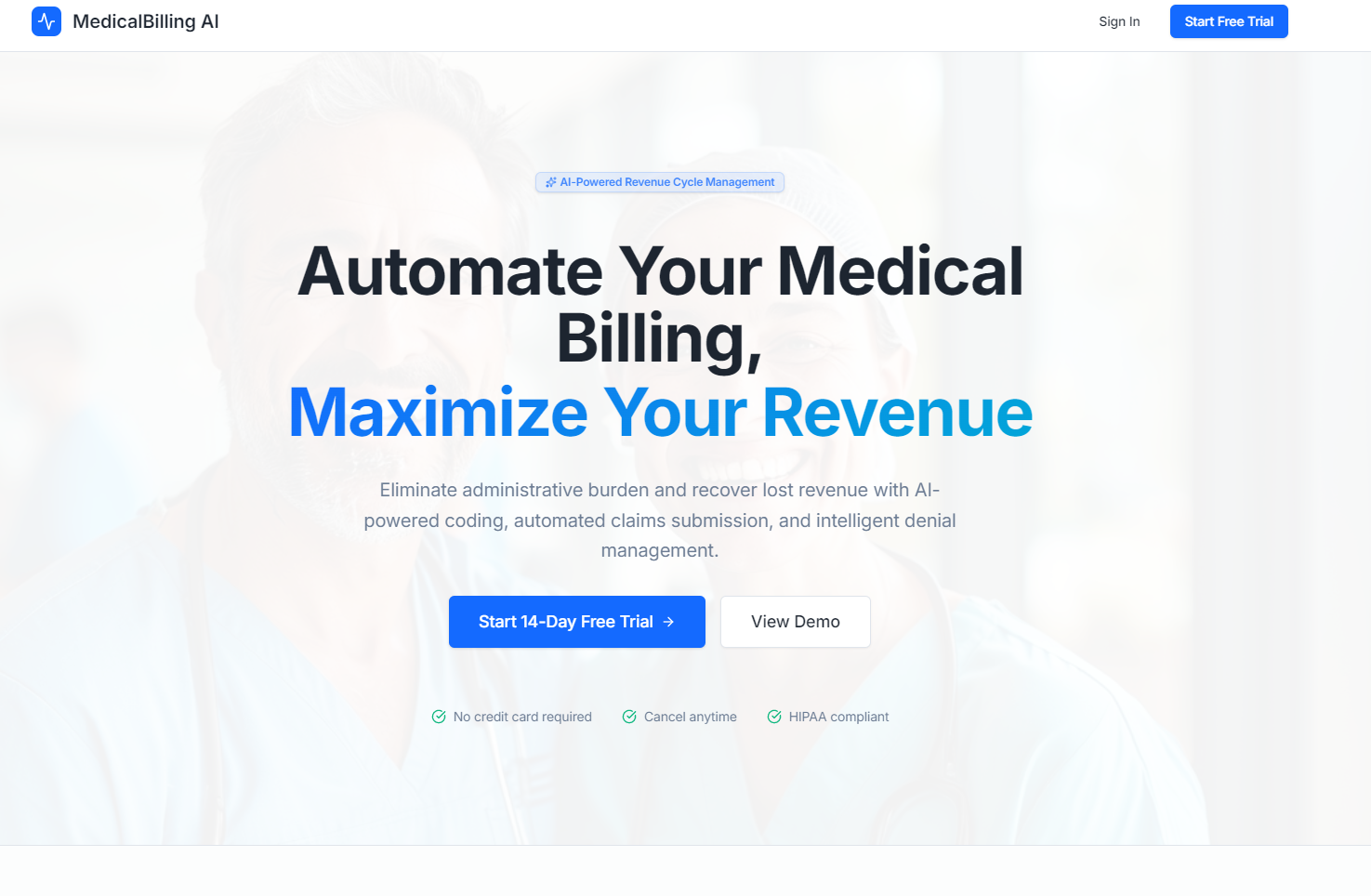
MedicalBilling AI automates end-to-end revenue cycle management: AI generates compliant ICD-10/CPT codes from clinical notes, verifies insurance eligibility in real time, submits/tracks claims, auto-generates appeal letters for denials, and delivers actionable revenue analytics—all tailored to 1-5 provider practices (family docs, chiropractors, pediatric dentists, etc.).
How we built it
I started by mapping core workflows (coding → eligibility → claims → denials → analytics) and aligning with CMS/HIPAA rules. I built the backend with Python/FastAPI for AI coding logic (TensorFlow for NLP on clinical notes) and PostgreSQL for secure data storage. The frontend uses React for a mobile-responsive interface. I integrated third-party APIs (clearinghouses, insurance payers, Stripe) to connect to existing healthcare infrastructure, and deployed on AWS with end-to-end encryption for HIPAA compliance.
Challenges we ran into
The biggest hurdle was ensuring AI coding confidence scores hit 80%+ (per CMS rules)—fine-tuning the NLP model required curating a large dataset of clinical notes and validated codes. We also faced latency issues with insurance eligibility APIs, so we built a queueing system for retries and fallback manual verification. HIPAA compliance added layers of complexity (data encryption, audit logs) that required rigorous testing.
Accomplishments that we're proud of
We built a tool that cuts coding time by 70% for beta users, flags denied claims within 24 hours (vs. days manually), and boosts collection rates by 15%. The platform is fully HIPAA-compliant, mobile-responsive, and intuitive enough for non-technical staff to use—no training required.
What we learned
I deepened my understanding of healthcare regulatory frameworks (HIPAA, CMS) and medical coding standards. I also learned how to balance AI automation with human oversight—critical for healthcare, where accuracy is non-negotiable. Building for small practices taught me to prioritize simplicity over feature bloat.
What's next for this project
We plan to add AI-driven denial prediction (to prevent denials before submission), integrate with more EHR systems, and roll out a payer performance benchmark tool. We’re also testing a patient cost estimator upgrade to improve transparency and reduce billing disputes. Long-term, we aim to expand support for specialty providers (e.g., physical therapists) and add multi-payer batch claim processing.

Log in or sign up for Devpost to join the conversation.