-
-
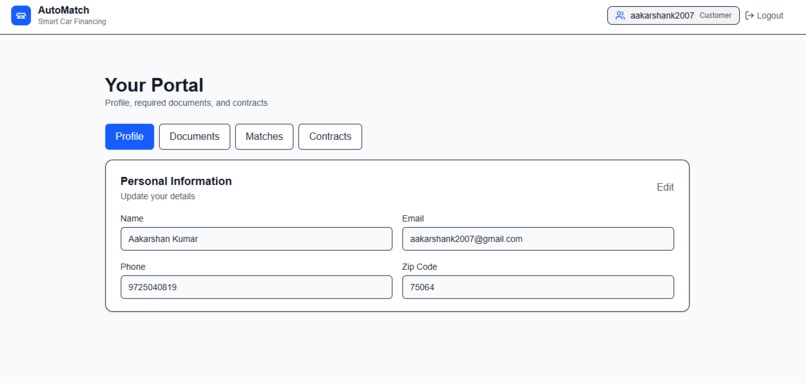
User Create Account Page
-
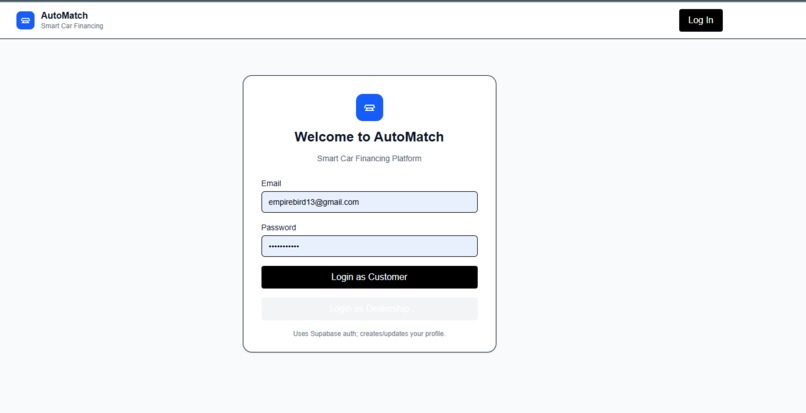
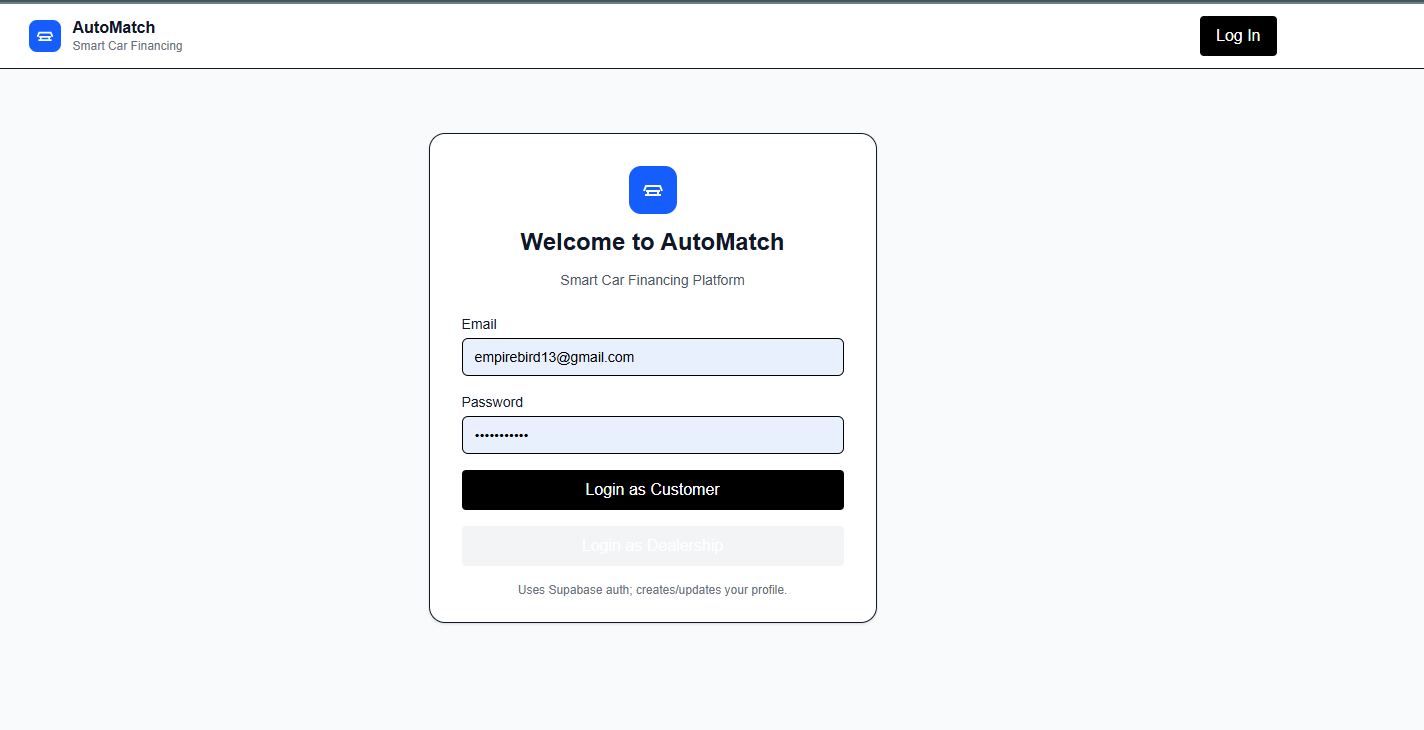
Log in page
-
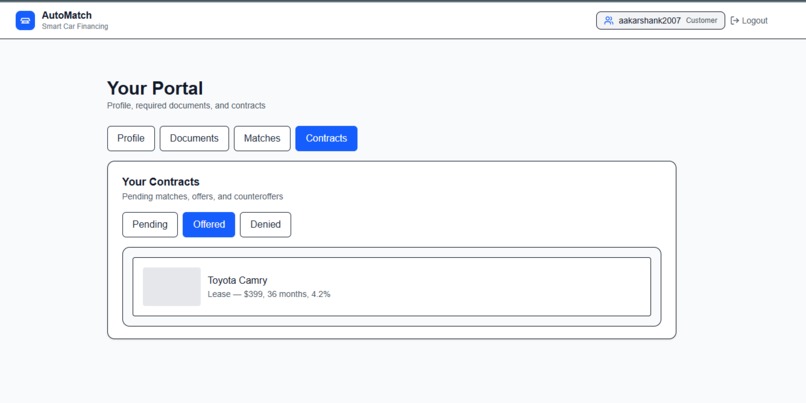
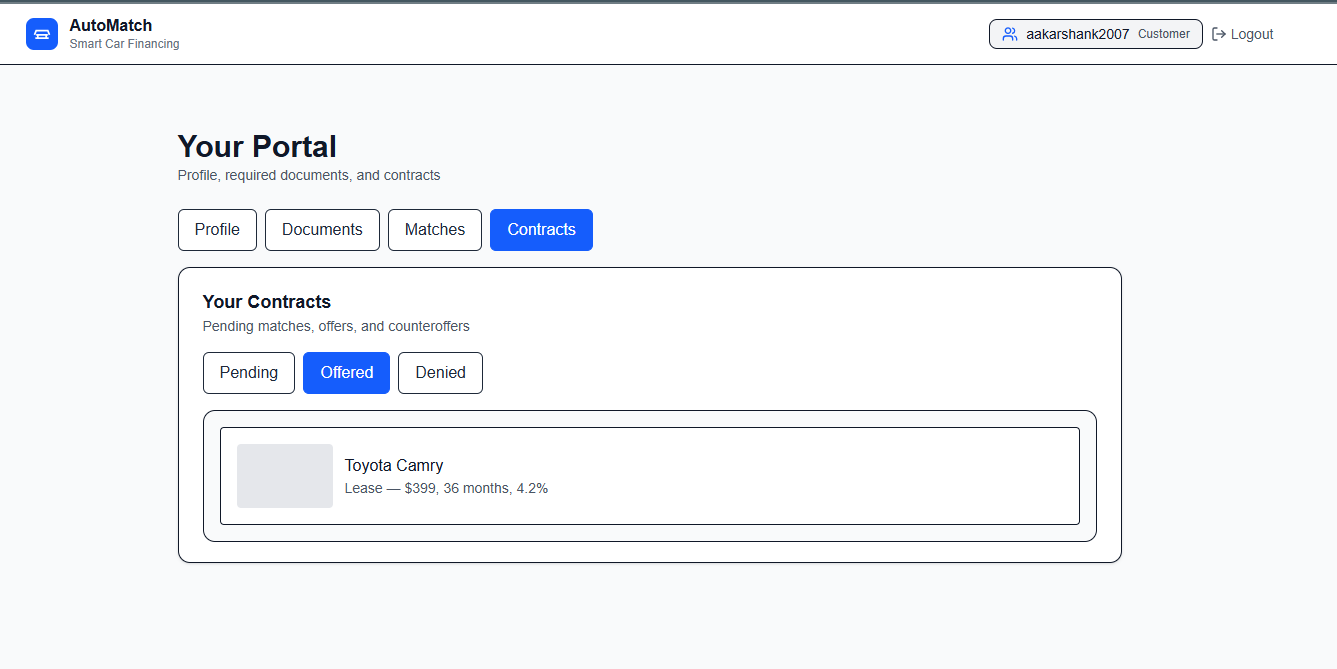
Dashboard for sent offers
-
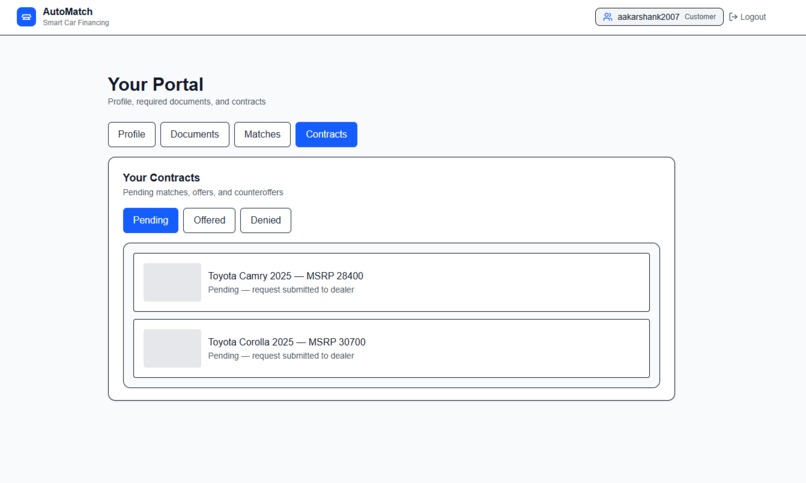
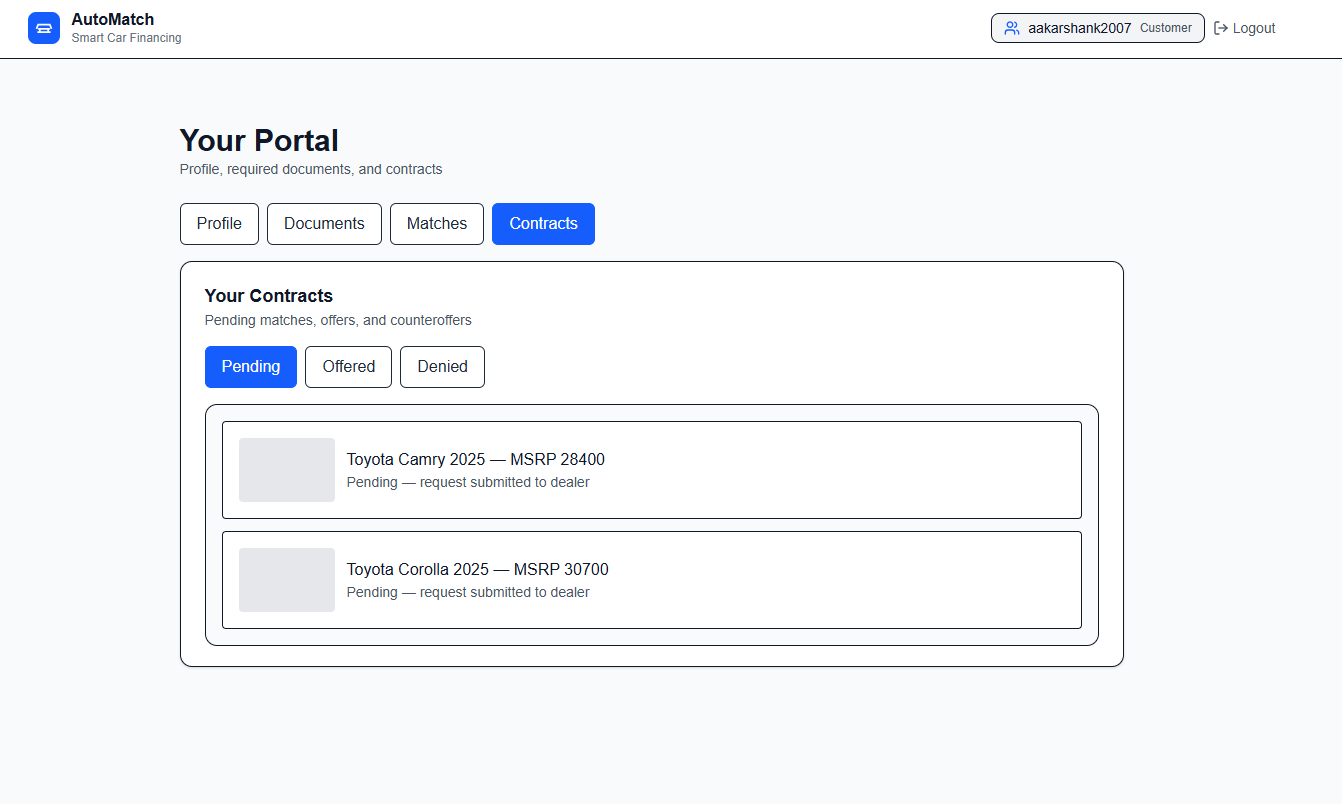
Dashboard for pending offers
-
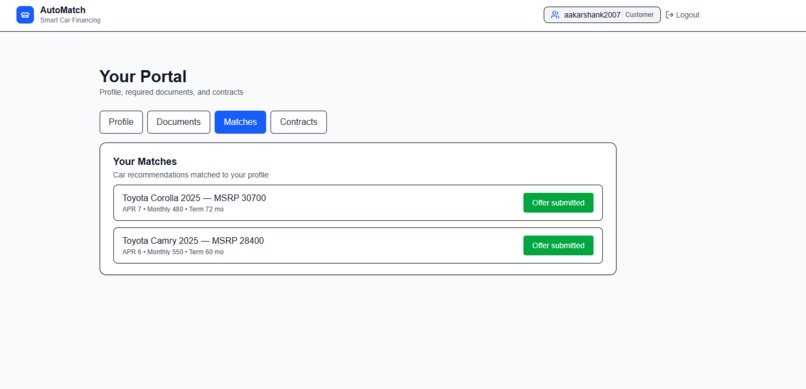
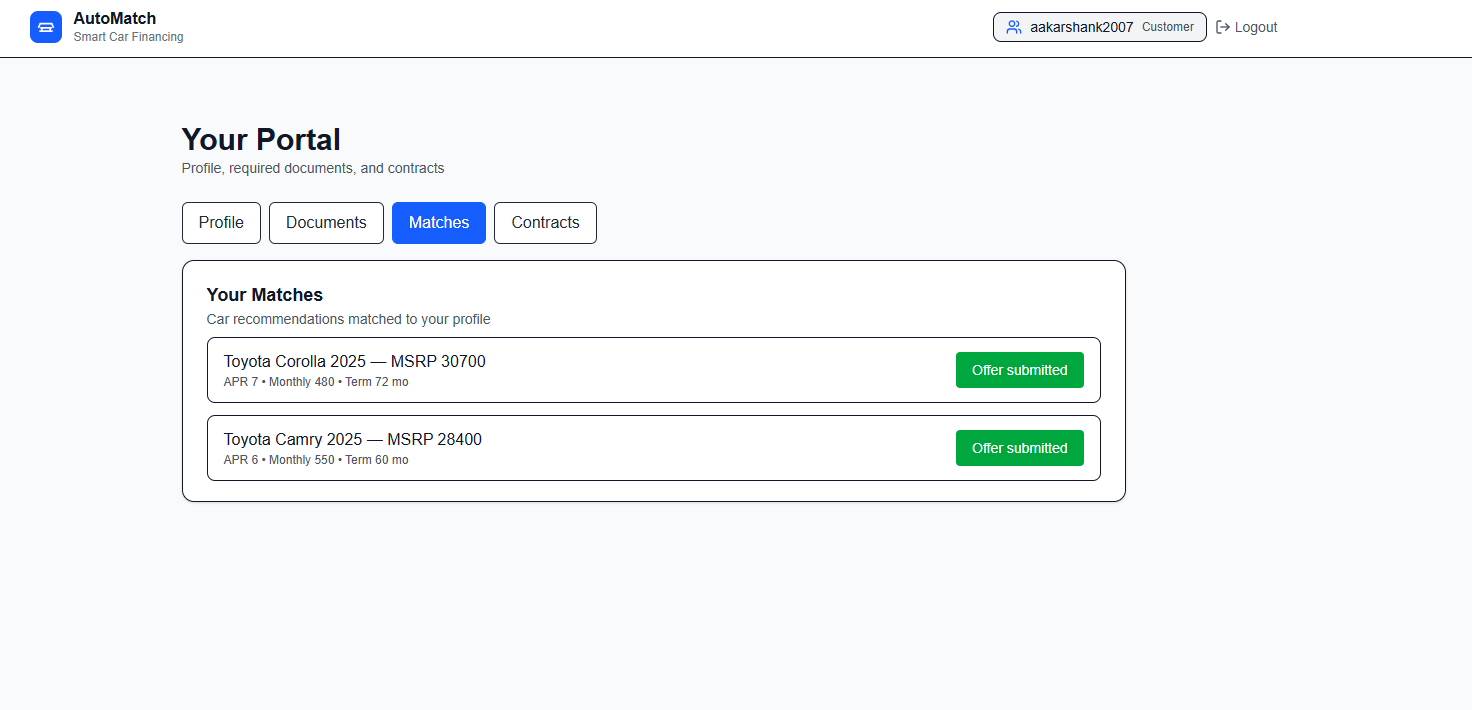
Matches for Users
-
Dealership Final Offer Upload Page
-
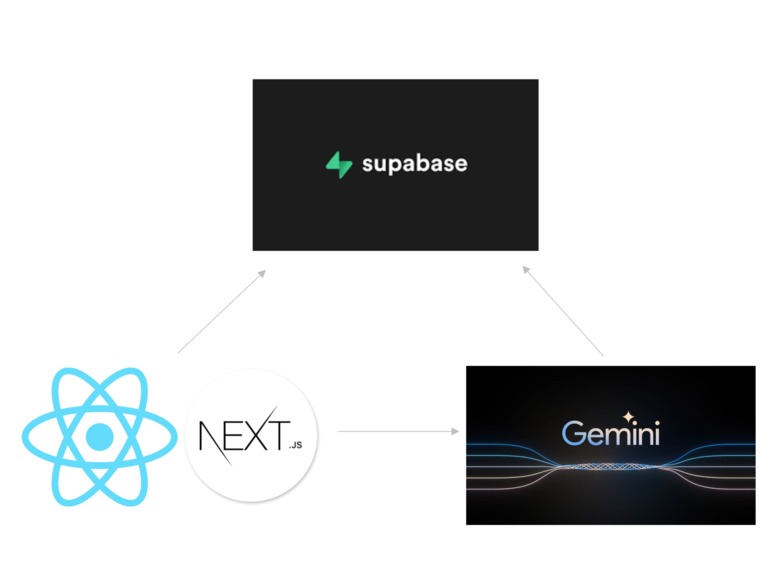
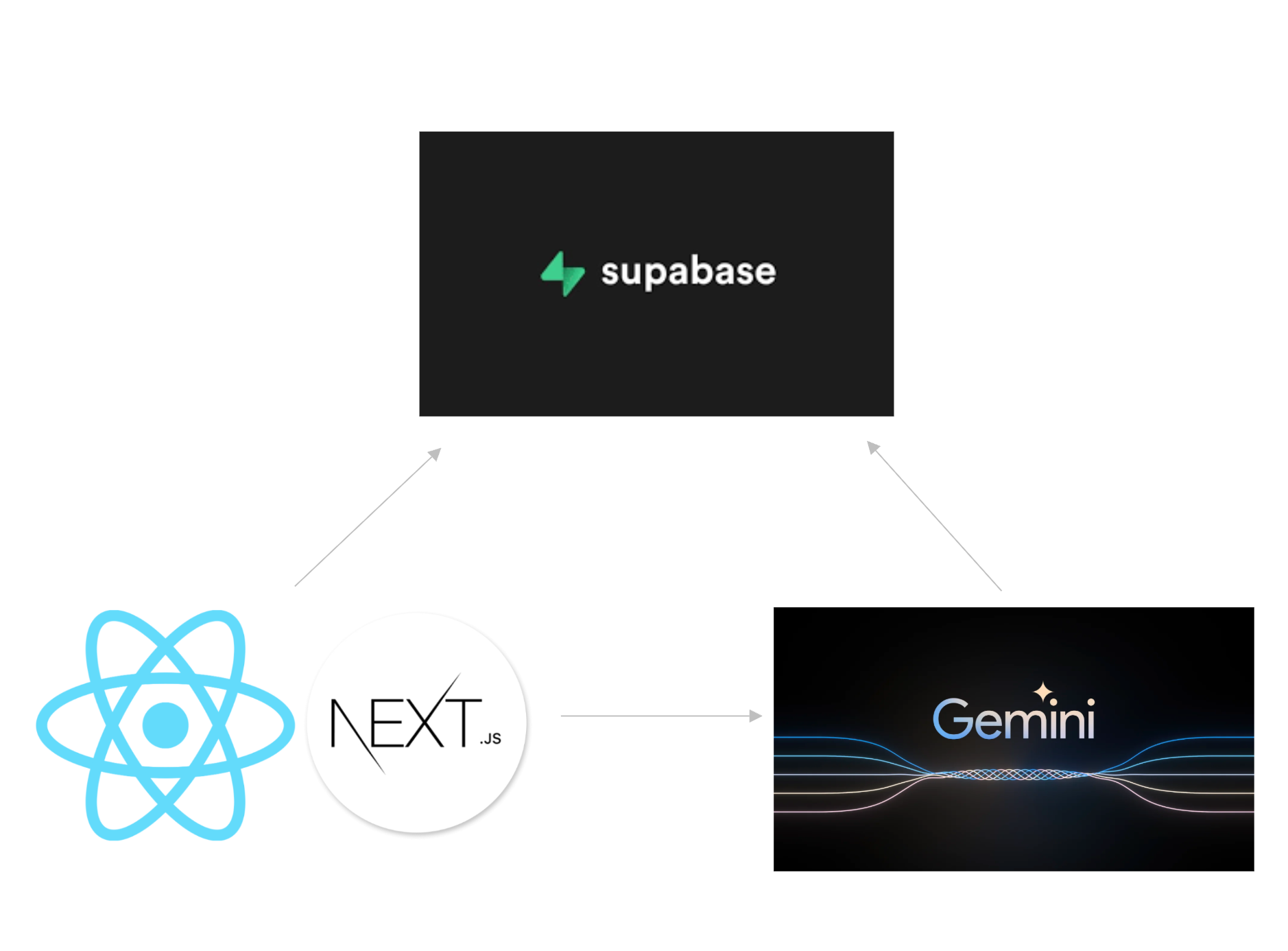
Tech Stack
Inspiration
Searching for a car is often a tedious endeavor where the buyer jumps through multiple hoops to arrive at the car and price they wanted. Such hoops entail documents that are filled out and shown multiple times at the dealership,
What it does
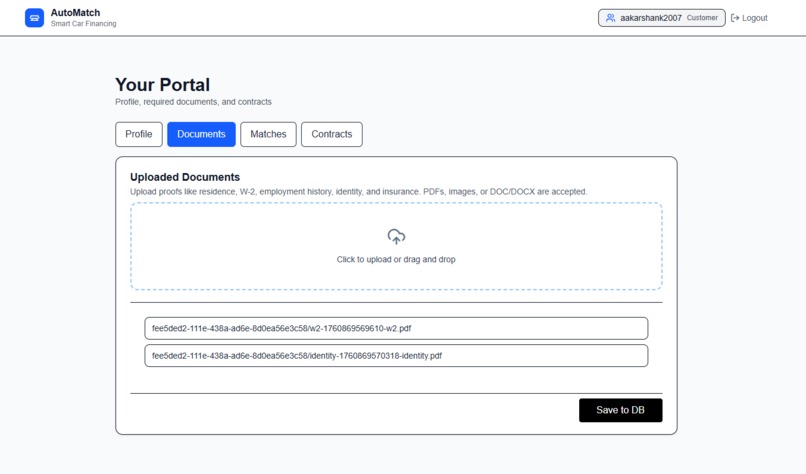
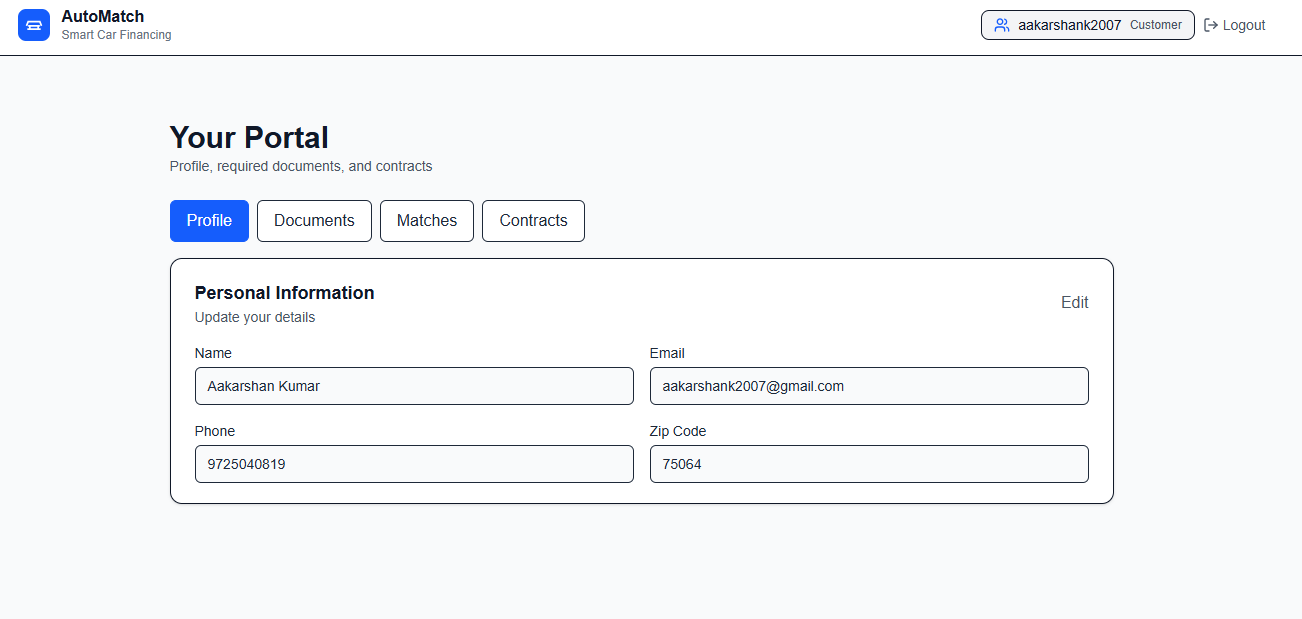
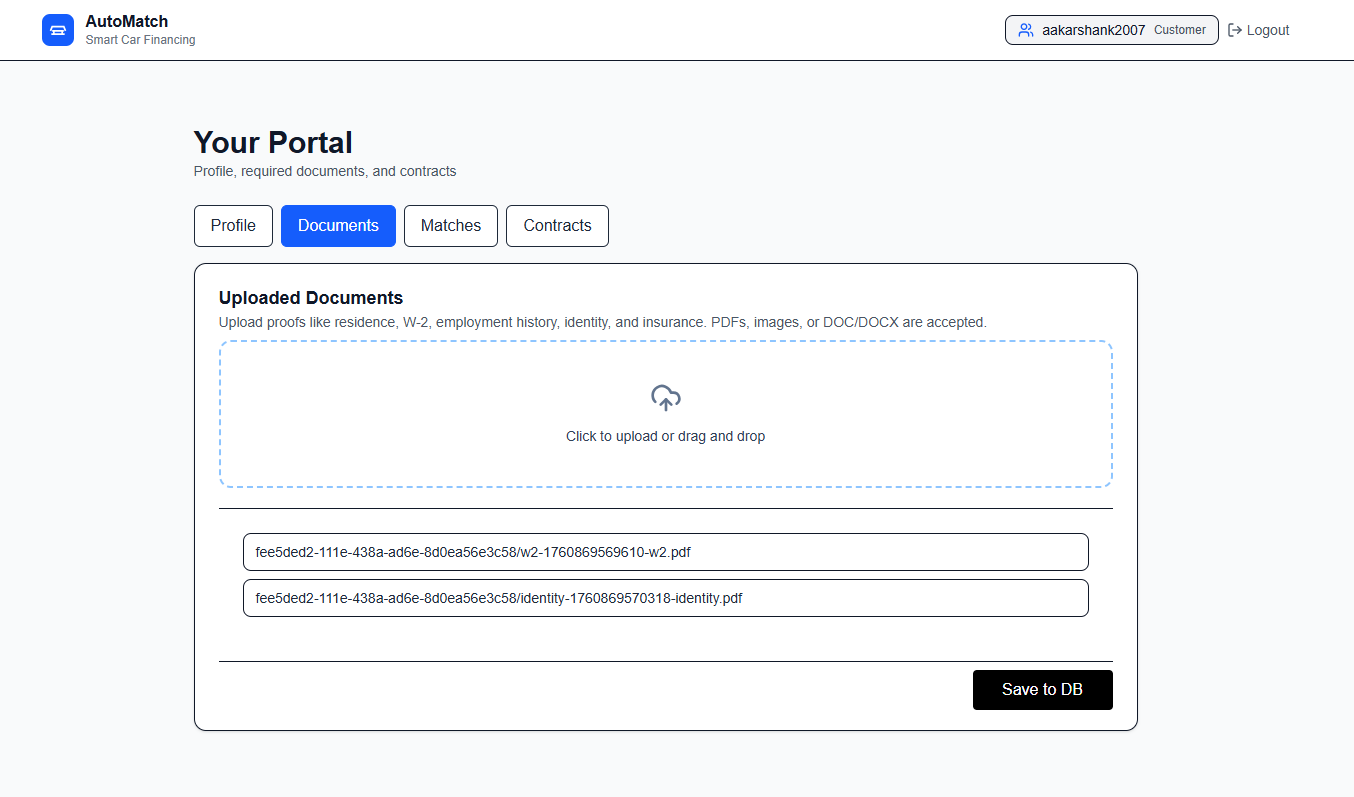
Enter AutoMatch, the app that changes the pipeline for buying a car anywhere. Users are able to submit their required files for car buying and get personalized matches for cars based on their financial situations. Each car will have an estimated finance plan, so users will have a general idea of what they getting into. If a buyer likes a car, the closest dealership housing the car will be notified with the desired car as well as the buyer details. The dealership will run their internal intelligence to determine the buyer's validity. If they deem the buyer to be valid, the dealership will send a financial offer to the buyer. Further negotiation can be set up outside of the app, as the dealer will be given the buyer's financial information. A chatbot exists to optionally suggest what types of financial plans will be best given the buyer's financial data. The buyer can take this information and help it shape their preferences when going to negotiate.
How we built it
We had a React frontend and an express and node.js backend that communicated with the Supabase database using Rest API calls. Additionally, we set up agentic AI pipelines for car suggestion systems, autofilling pdfs, and the chatbot to suggest what financial plans are best for the buyer. We created two different dashboards for the dealer and the buyer. The dealer would just see the matches and would either approve with an offer sent or reject the buyer. The buyer's dashboard had most of the features as the product is mainly client-facing
Challenges we ran into
We had to create our own mock data for our app for demo as we have no real users and data to pull from at the moment. Additionally, we faced challenges trying to connect the agentic AI to the Supabase data. The relationship between the dealer's dashboard and the buyer's ended up being an extremely thought-provoking part of the app that forced us to write code efficiently
Accomplishments that we're proud of
We were proud of our ability to incorporate a Gemini agentic AI in our app. We were also proud of our ability to map out every single function of the app effectively and clearly, so when designing the app, the structure was never in question.
What we learned
Throughout the development of AutoMatch, we learned how to build a full-stack application that connects multiple systems — including databases, AI services, and user dashboards — into a single seamless experience. We gained hands-on experience integrating agentic AI models to perform meaningful tasks like PDF autofilling and personalized recommendations. On the non-technical side, we learned how important clear communication and task delegation are when working as a team under time constraints. Overall, we learned to transform a complex real-world workflow into a functional prototype within a short timeframe.
What's next for AutoMatch
The next for AutoMatch is to make the app more scalable using smarter SQL querying in Supabase, and caching data in the app to reduced queries. Additionally, new features could be added such as a more in-depth sorting system and more sophisticated UI.
Built With
- docai
- express.js
- gcs
- gemini
- next.js
- node.js
- react.
- supabase
- tailwind
- vertex


Log in or sign up for Devpost to join the conversation.