-
-
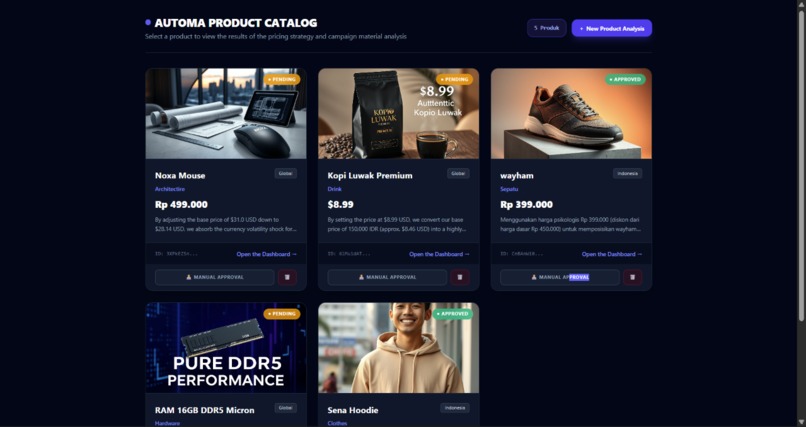
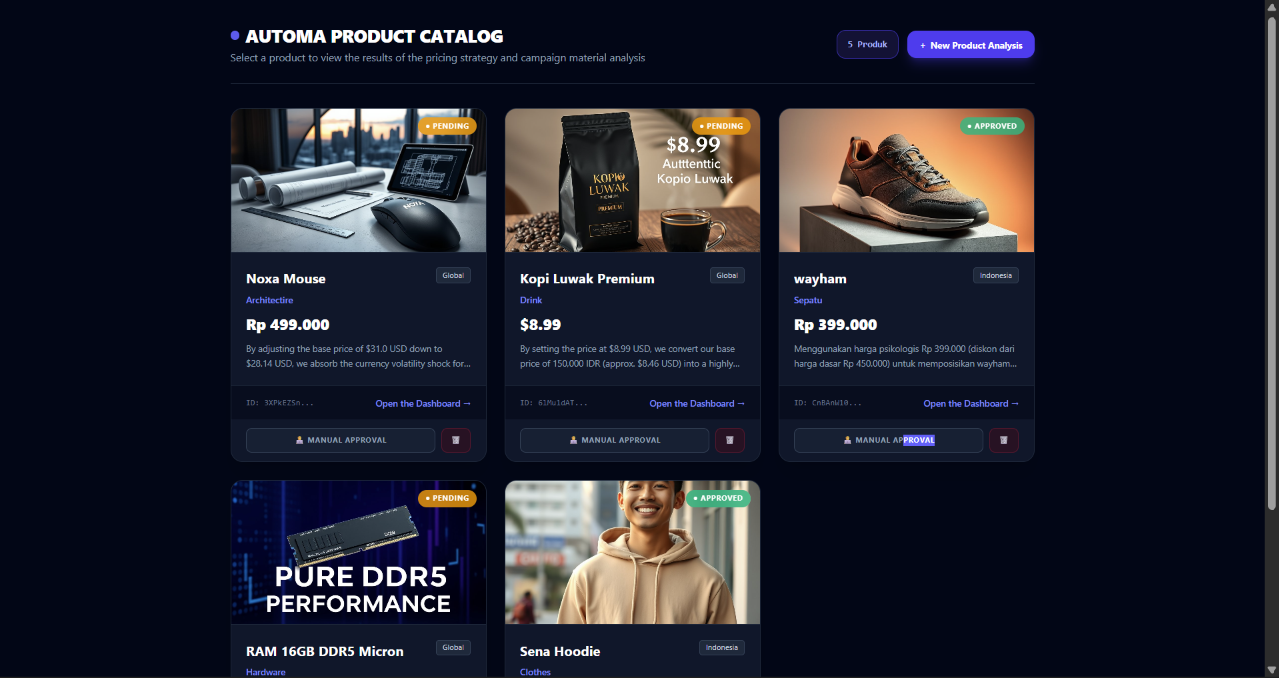
Automa Product List Page
-
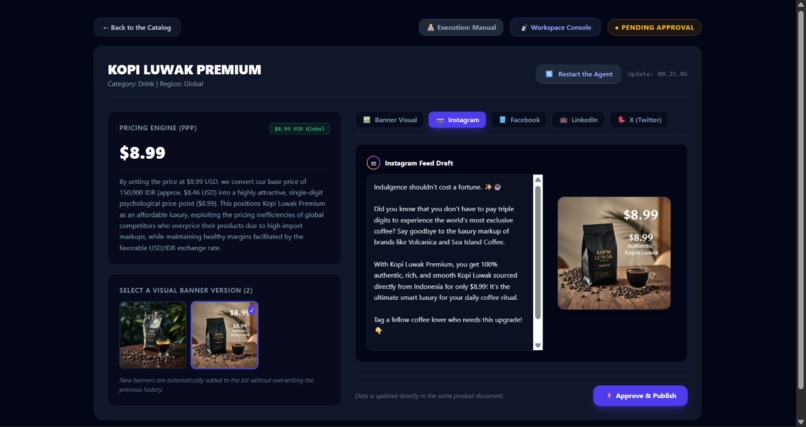
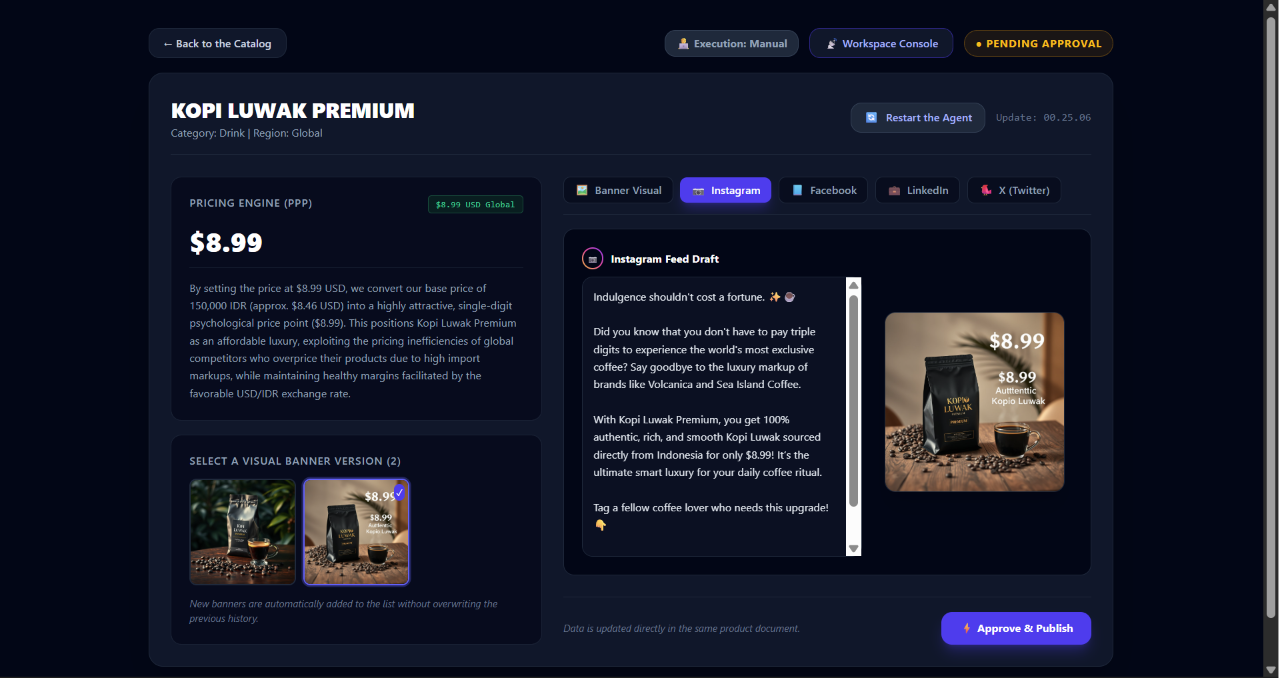
Product Detail Dashboard
-
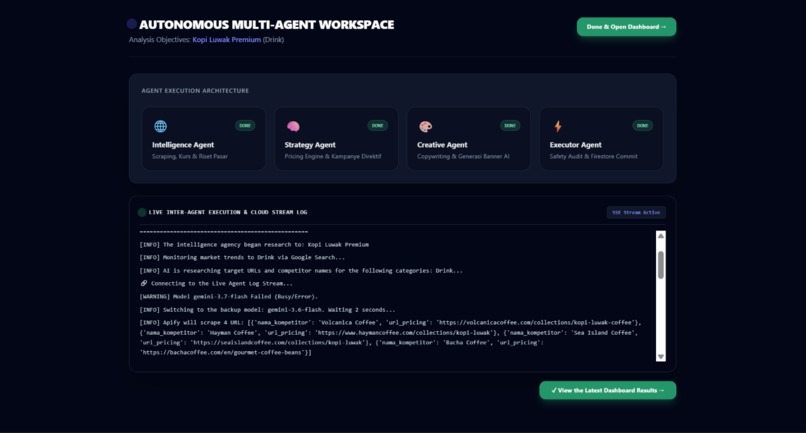
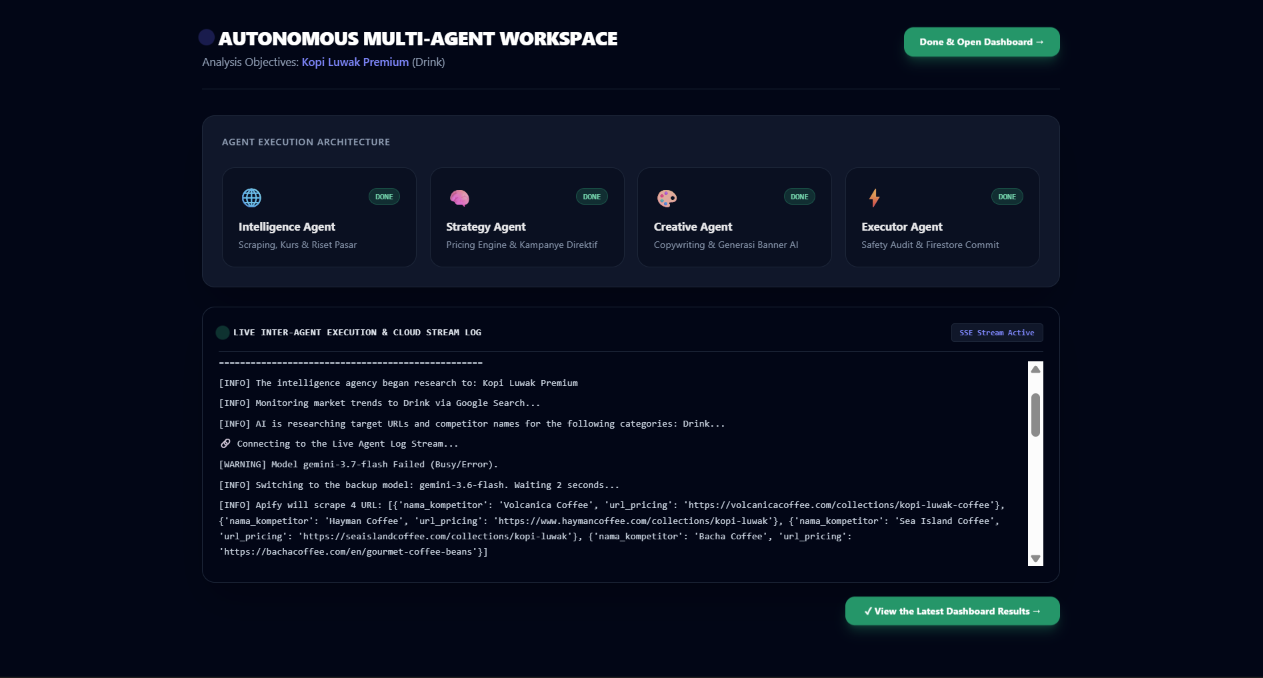
Agent Workspace Page
-
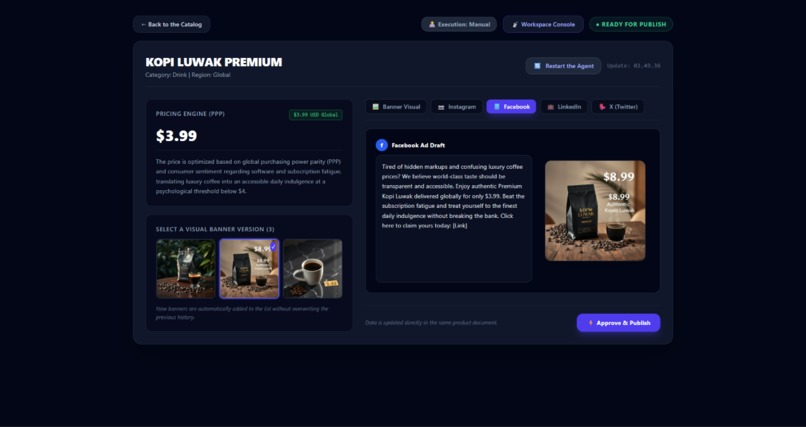
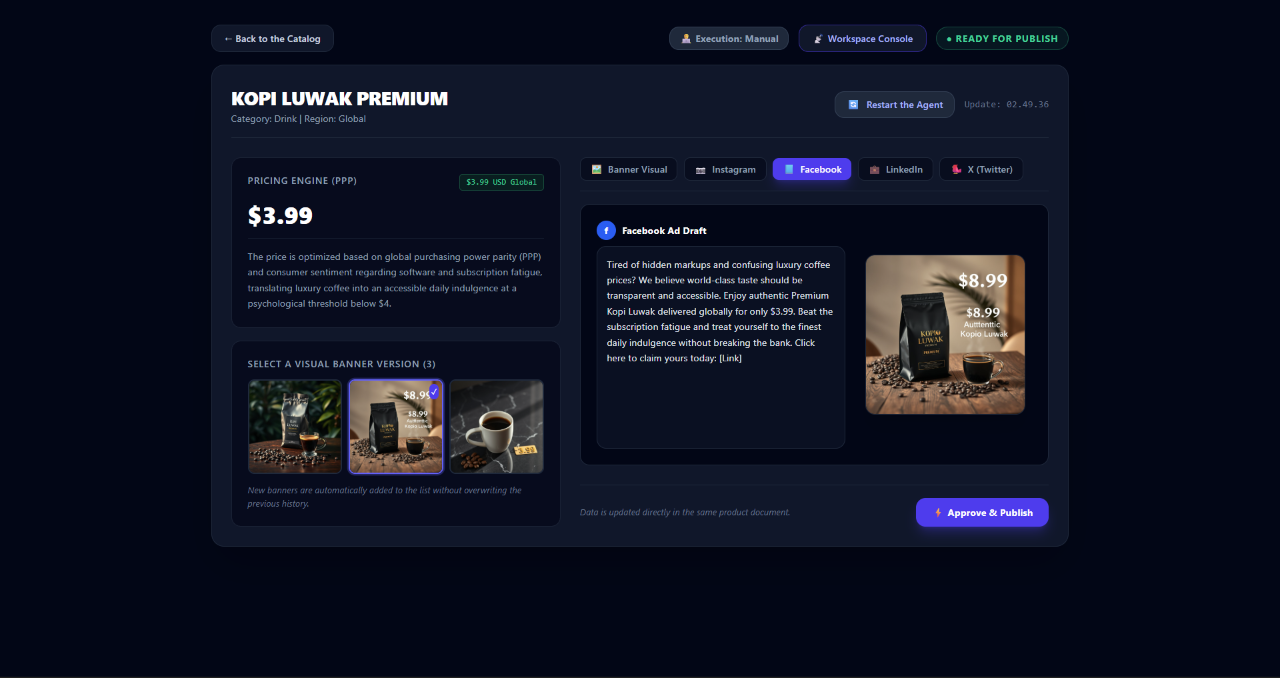
Product Detail Dashboard After Reanalyze
-
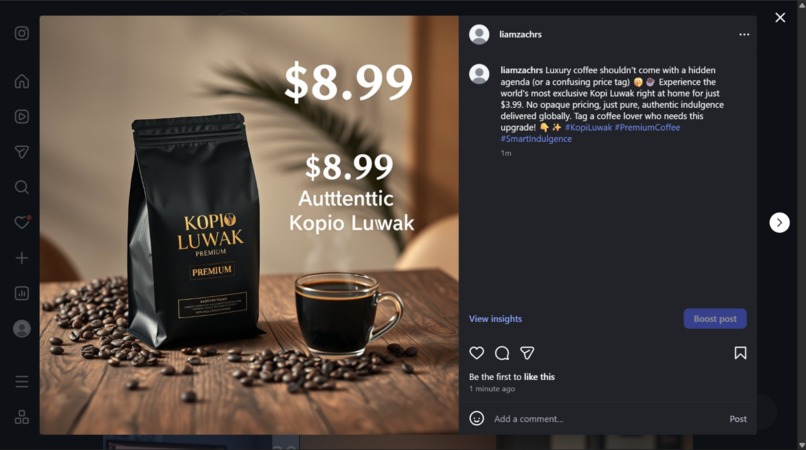
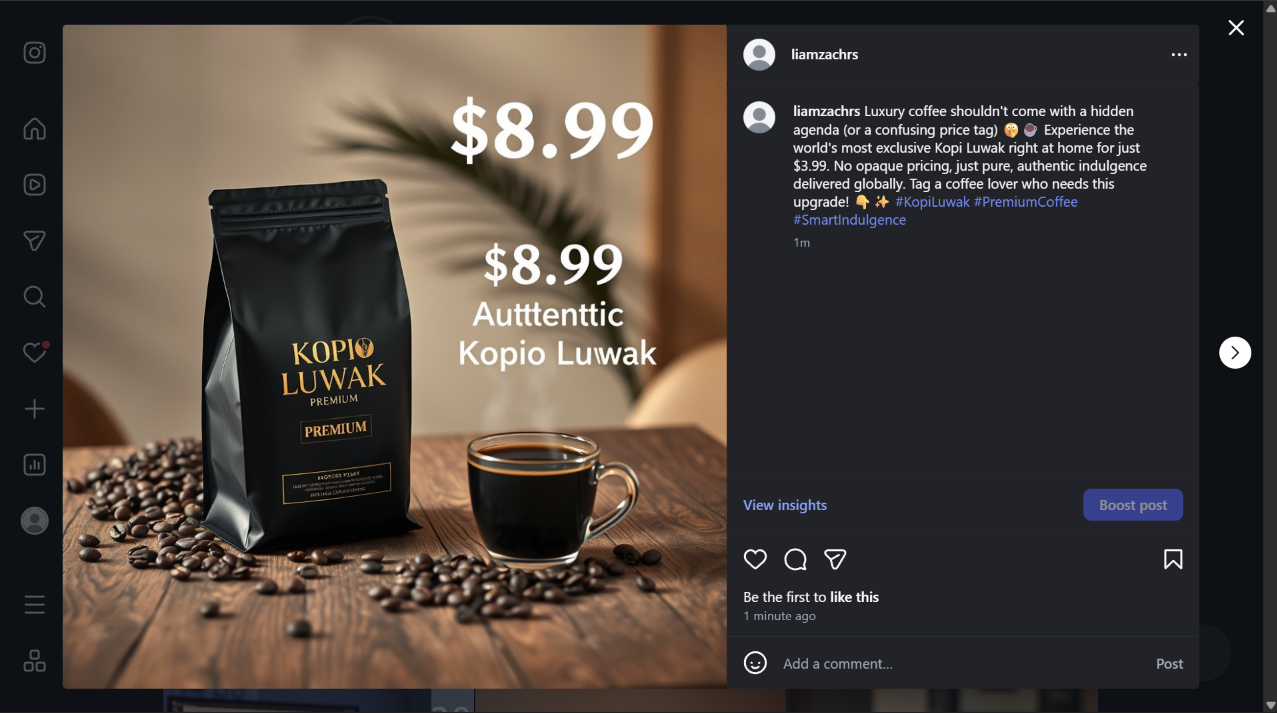
Instagram Publication
-
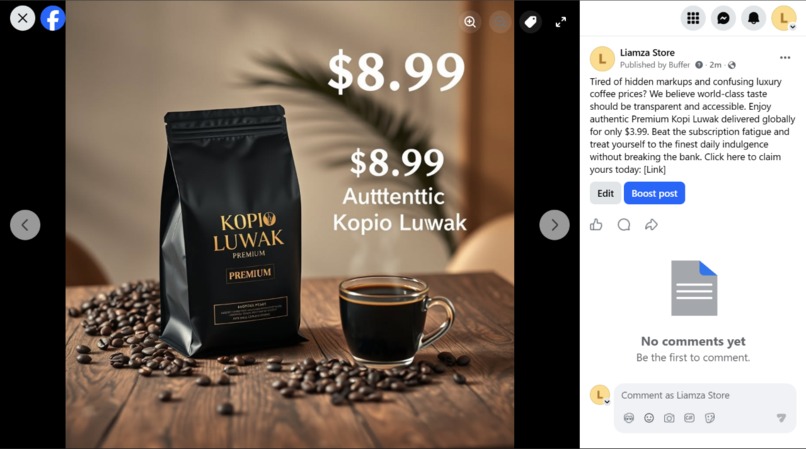
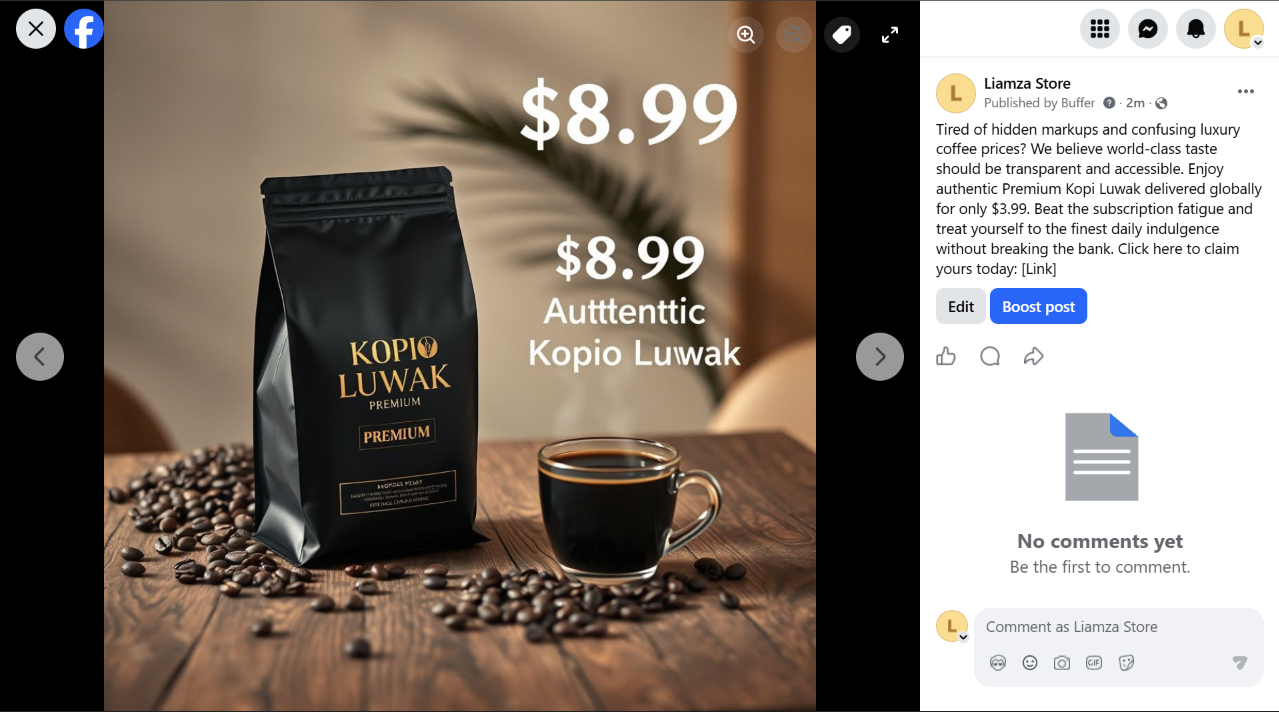
Facebook Publication
-
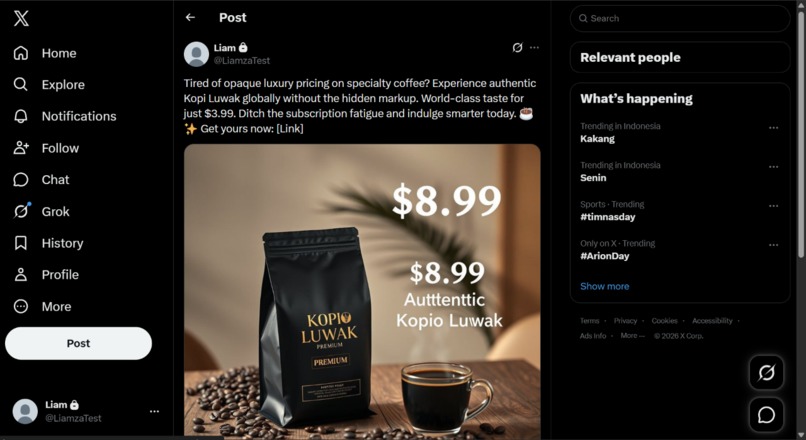
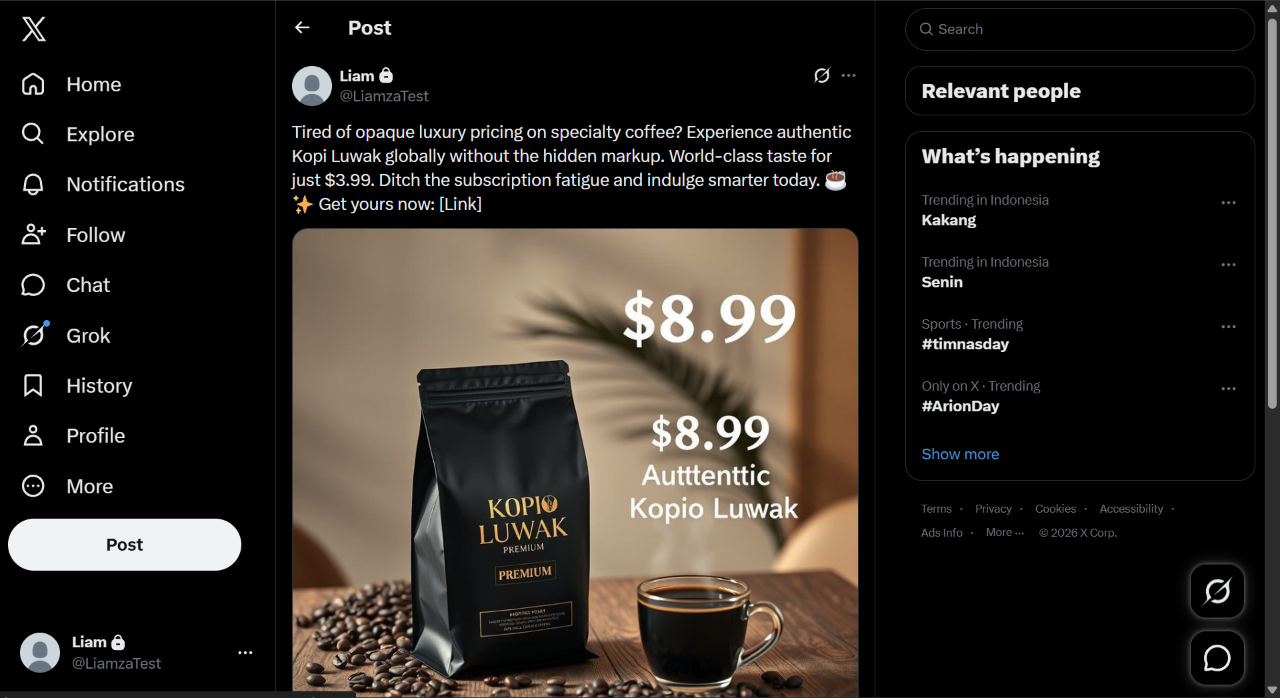
X Publication
-
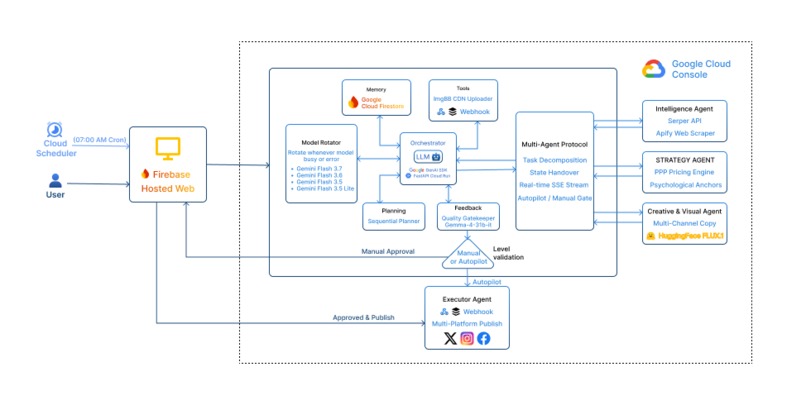
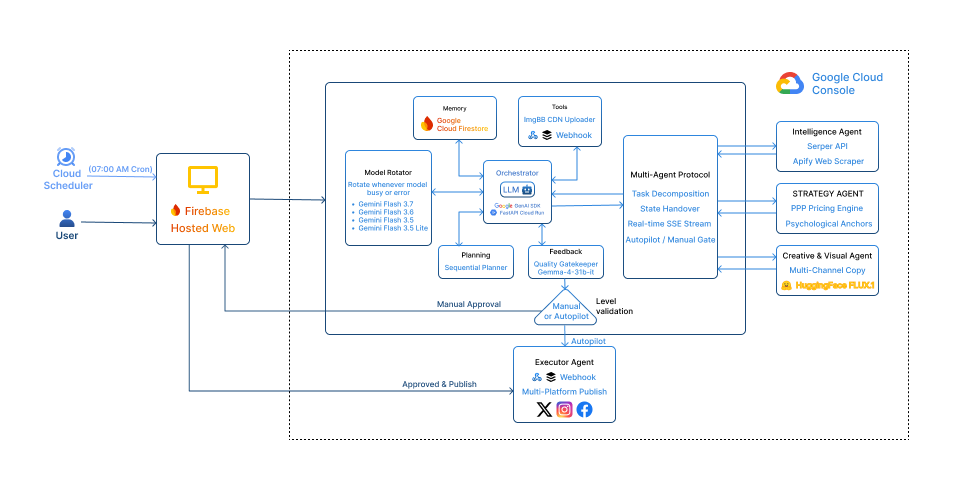
Automa Arsitecture Diagram
Inspiration
So, the inspiration struck when I wanted to try selling and promoting my products, but I realized it wasn’t as easy as I’d imagined. I saw people and my friends trying to do the same thing as me, and they were facing the same challenges, so I realized that many aspiring entrepreneurs, new brands, and even large companies still struggle to enter the digital market due to the complexity of launching and managing comprehensive marketing campaigns.
Conducting competitor intelligence, calculating region-specific Purchasing Power Parity (PPP), crafting localized multi-platform copy, and rendering high-converting promotional banners are traditionally fragmented, manual, and time-intensive tasks.
We built Automa to transform complex, multi-step marketing operations into an autonomous, self-healing multi-agent pipeline designed with enterprise-grade resilience.
What it does
Automa coordinates a sequential pipeline of specialized autonomous AI agents to execute end-to-end marketing workflows:
Intelligence Agent: Gathers competitive context by analyzing product metadata, retrieving Google Search SERP insights via Serper API, and scraping marketplace price benchmarks using Apify.
Strategy Agent: Calculates optimal pricing corridors by applying dynamic Purchasing Power Parity (PPP) adjustments and psychological price anchoring tailored to target regional markets.
Creative Agent: Synthesizes positioning intelligence into tailored, multi-channel copy optimized for Instagram, LinkedIn, X, and Facebook.
Visual Agent: Transforms strategic positioning prompts into visual promotional banners using Hugging Face FLUX.1, automatically offloading raw binary assets to ImgBB CDN to persist lightweight HTTPS image URLs.
Executor Agent & Quality Gatekeeper: Evaluates generated campaign materials against safety and quality metrics before committing records to persistent storage.
Dual-Mode Autonomy: Supports granular human-in-the-loop control through an Autopilot vs. Manual Approval toggle. In Autopilot mode, daily campaigns evaluate automatically via Google Cloud Scheduler triggers at 07:00 AM WIB and dispatch webhooks to Make.com for automated social media distribution.
How we built it
Frontend: React (Vite) styled with Tailwind CSS, deployed on Firebase Hosting with real-time Server-Sent Events (SSE) log streaming.
Backend & Orchestration: Built with FastAPI (Python 3.10+) and containerized on Google Cloud Run for serverless scalability.
Model Resilience (Model Rotator): A custom fallback mechanism rotating between Google Gemini 3.5 Flash-Lite/3.5/3.6/3.7.
State & Storage: Google Cloud Firestore for structured campaign storage, execution metadata, and autonomous approval states.
Challenges we ran into
Firestore Document Limits: Direct binary and Base64 storage of high-resolution AI banners quickly neared the 1MB Firestore document limit. We resolved this by integrating an automated CDN upload pipeline through ImgBB to store lightweight image URLs.
Real-time Streaming on Cloud Run: SSE event delivery initially suffered from gateway buffering timeouts on managed containers. Adding explicit non-buffering response headers and configuring container request timeouts stabilized the continuous live-agent stream.
Schema Consistency: Resolving Pydantic request validation exceptions across currency inputs required normalizing input types into flexible numeric primitives.
Accomplishments that we're proud of
- Delivering an end-to-end autonomous multi-agent pipeline that transitions from raw product input to live rendered creative assets in a few minutes.
- Building a resilient multi-model routing layer integrating both Google Gemini and Google Gemma.
- Achieving a fully decoupled cloud deployment combining Firebase Hosting, Google Cloud Run, and Google Cloud Firestore.
What we learned
Decoupled Multi-Agent Architecture: Designing agents with strict role boundaries (Intelligence, Strategy, Creative, Visual, and Executor) prevents prompt drift, ensures predictable JSON schemas, and facilitates clean state handover across the execution pipeline.
Agentic AI & Dynamic Collaboration: Autonomous collaboration requires robust inter-agent protocols—passing contextual outputs downstream so subsequent agents (like pricing strategy and copy generation) can build upon verified market intelligence in real time.
Core Orchestration & Resilience: Effective orchestration goes beyond simple chaining; it requires active state monitoring, real-time Server-Sent Events (SSE) telemetry, and multi-model fallback routing (Gemini $\leftrightarrow$ Gemma) to handle latency and rate limits gracefully.
Serverless Cloud Scalability: Leveraging cloud-native primitives like Google Cloud Run and Cloud Scheduler enables autonomous cron pipelines to execute reliably in production without manual intervention or persistent compute overhead.
Full-Stack Cloud Integration: Connecting a React client on Firebase Hosting with a containerized FastAPI backend on Cloud Run and Firestore taught us how to optimize payload sizes (using CDN offloading via ImgBB) and handle bidirectional async data flows seamlessly.
What's next for Automa - Autonomous Multi-Agent Marketing Orchestrator
Integrating real-time conversion tracking and A/B test feedback loops directly into the Strategy Agent. Expanding external webhooks to direct integrations with Shopify, WooCommerce, and TikTok Shop APIs, and Linkedin API.

Log in or sign up for Devpost to join the conversation.