-
-
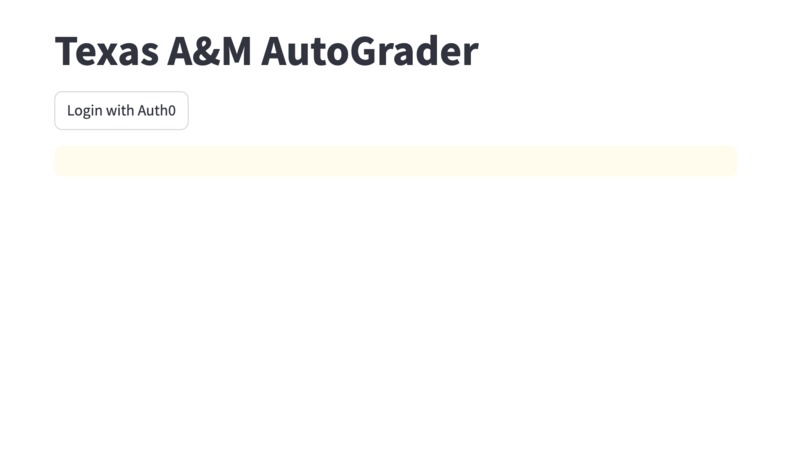
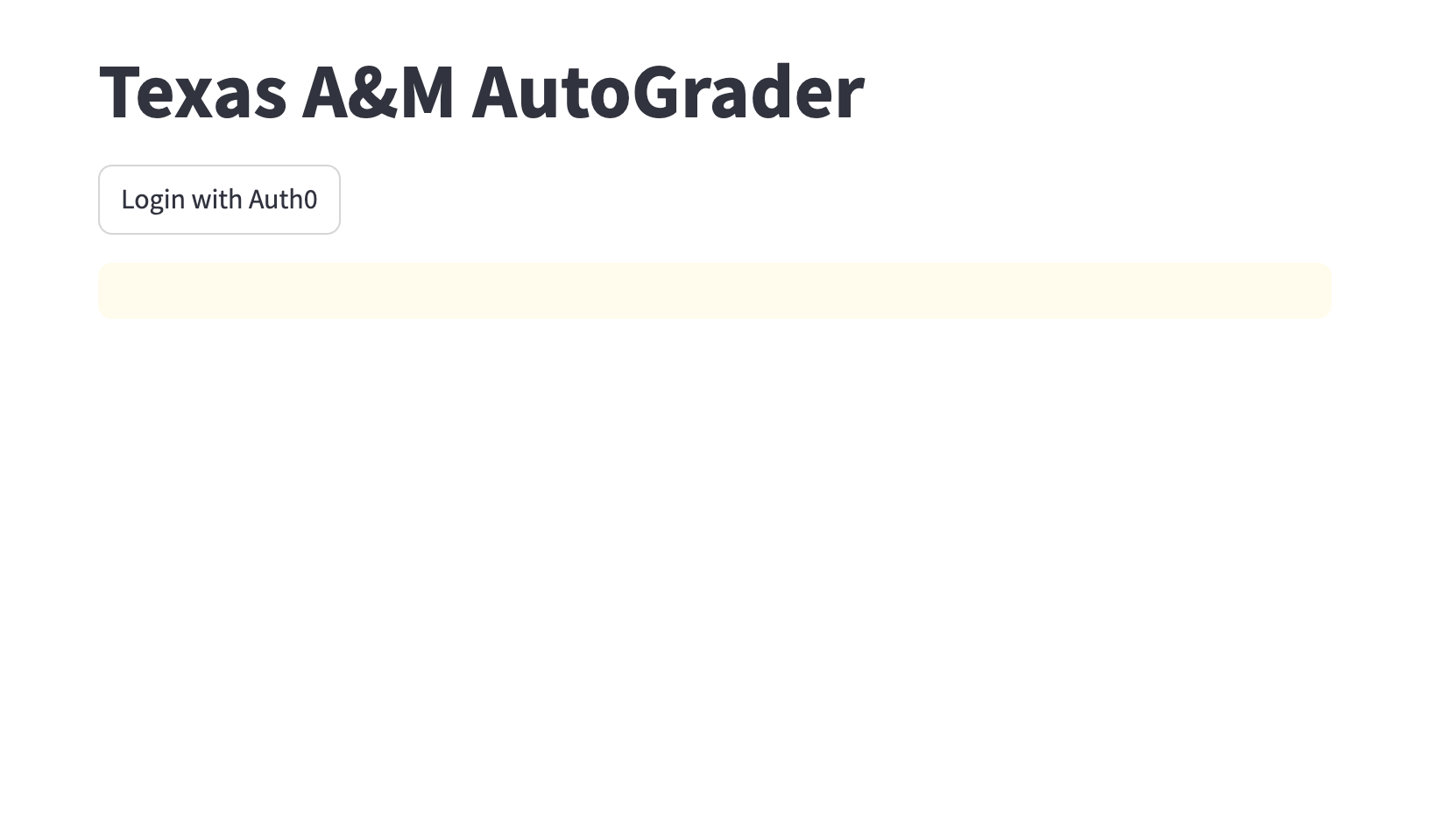
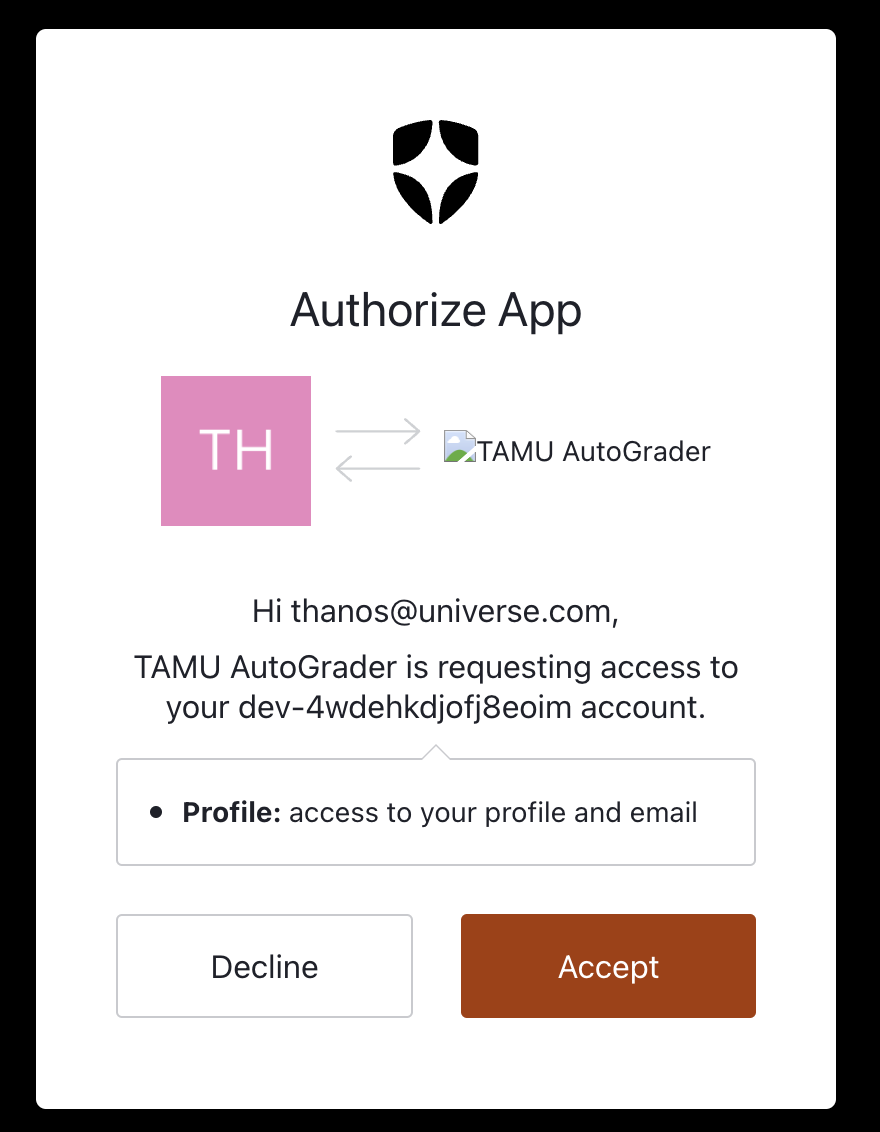
Login/Register with Auth0
-
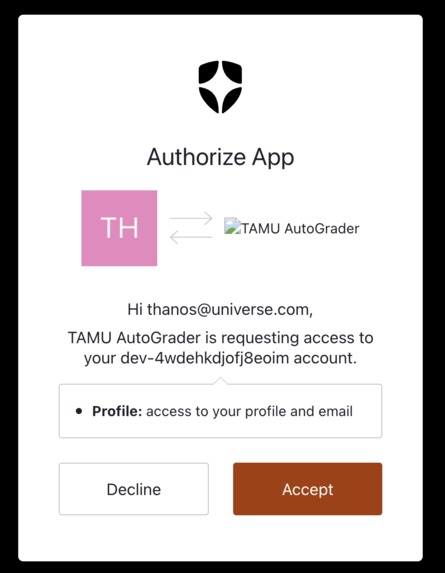
Login/Register with Auth0
-
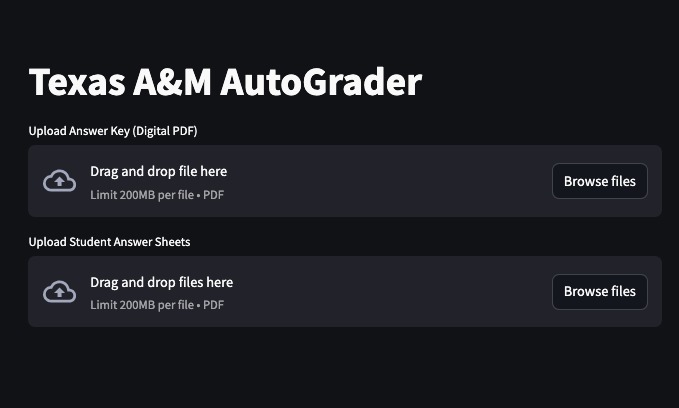
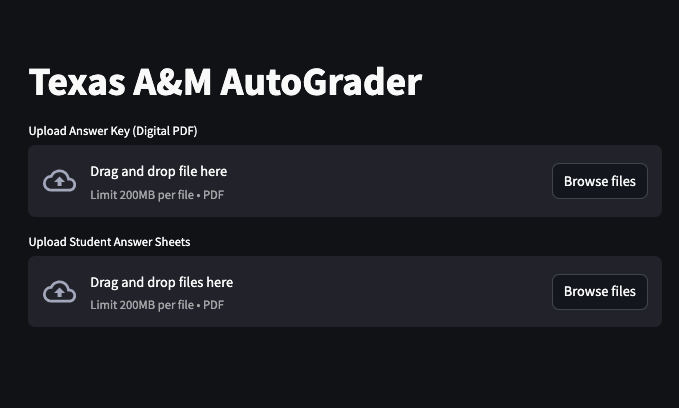
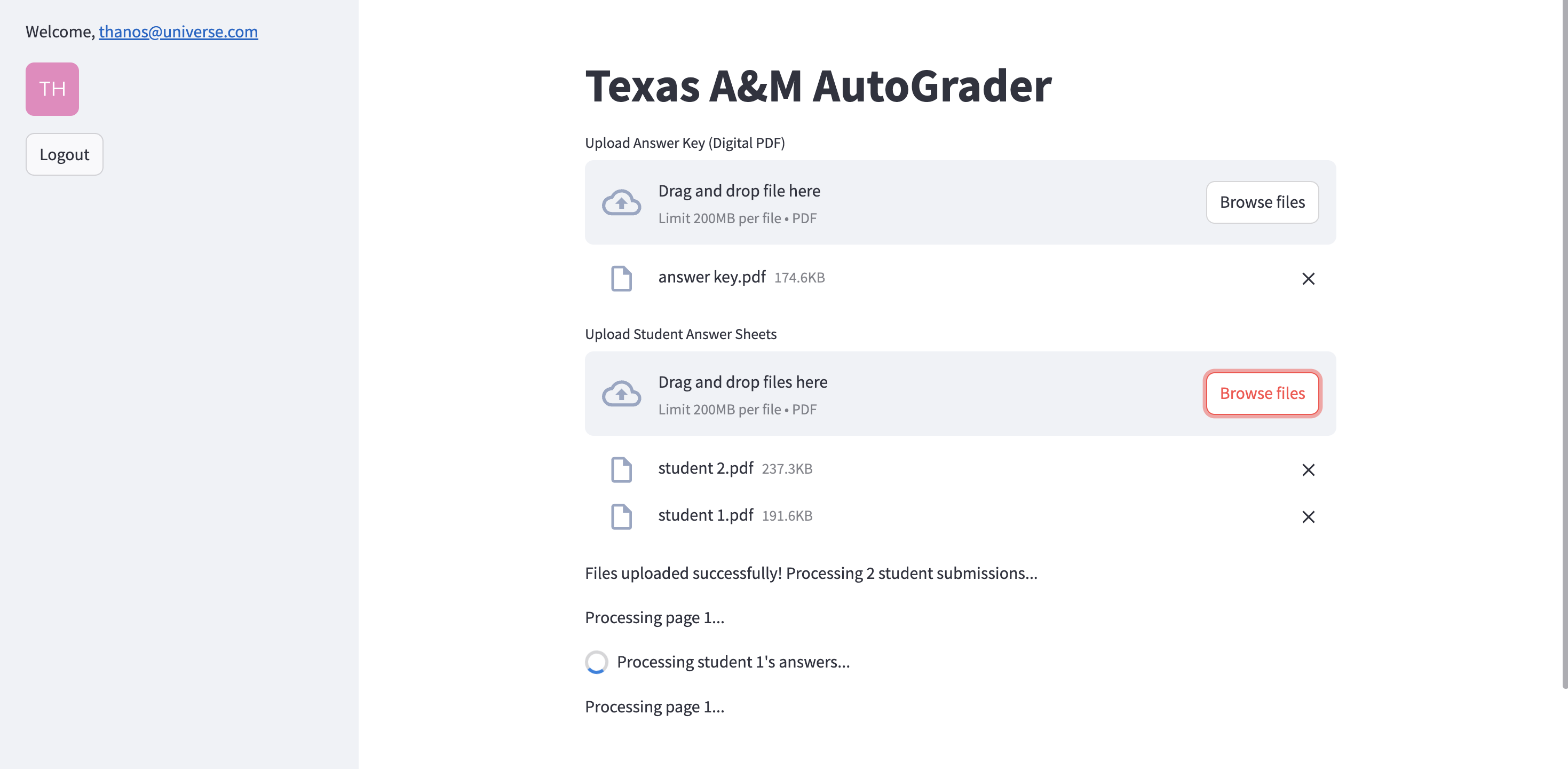
Upload answer and students' submissions
-
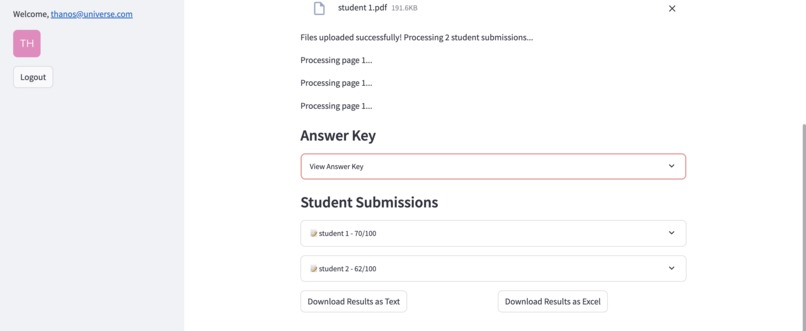
Upload answer and students' submissions
-
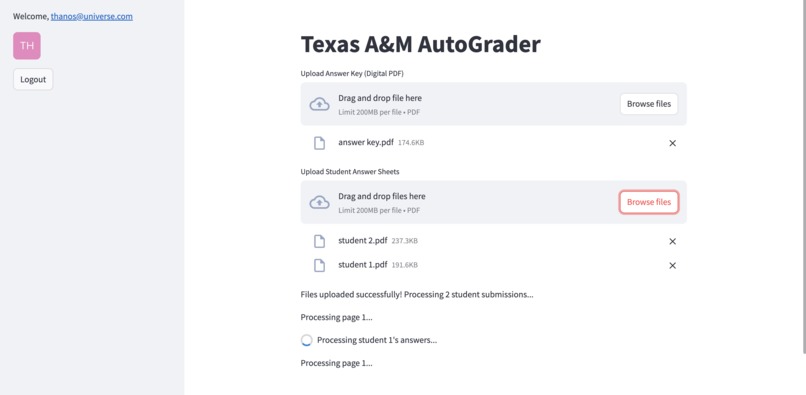
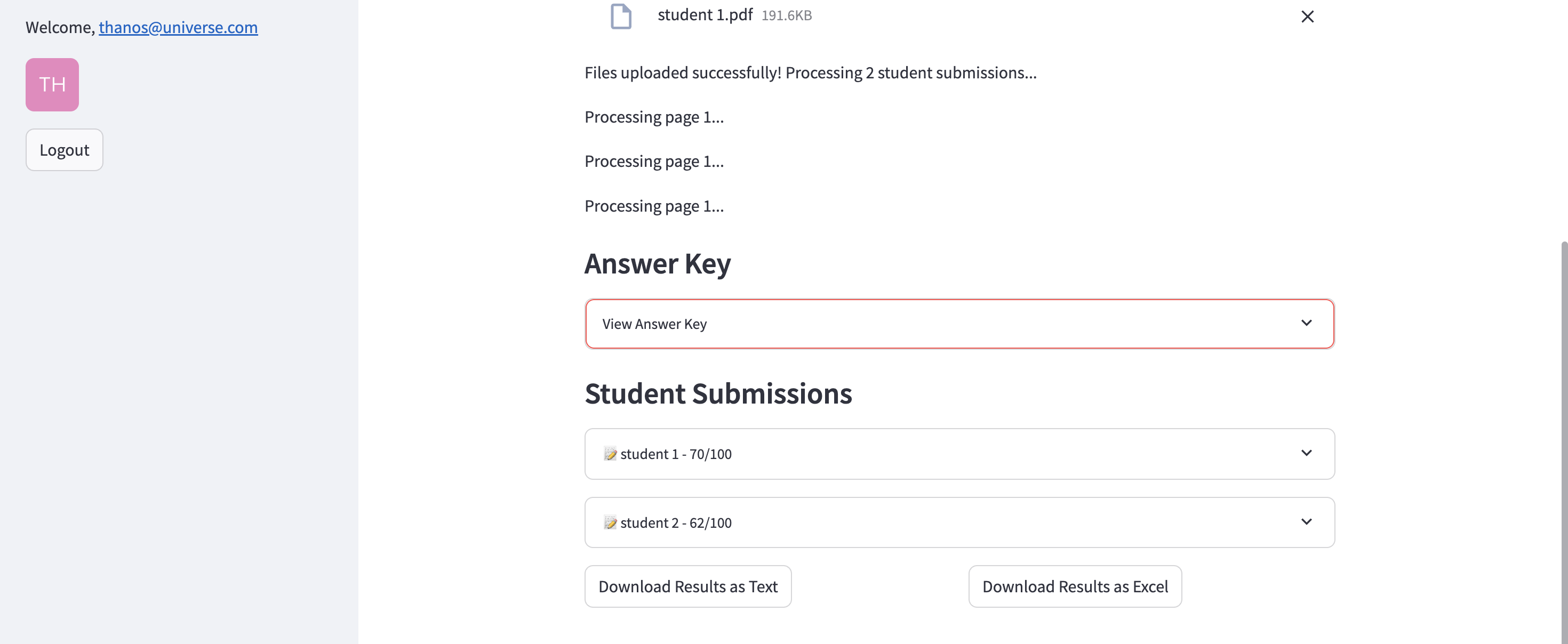
Wait for automated scoring
-
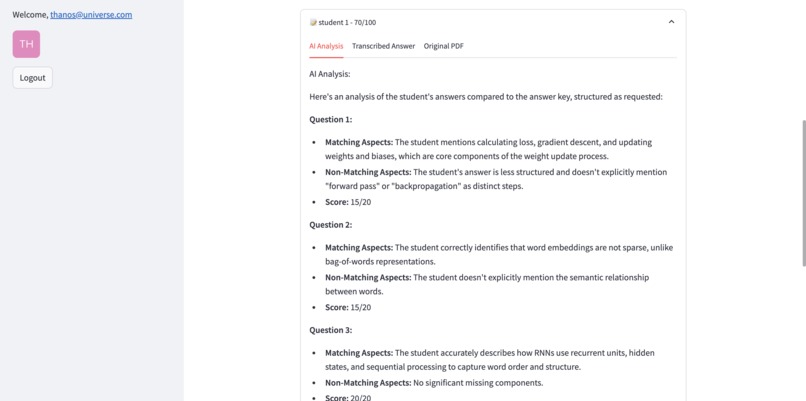
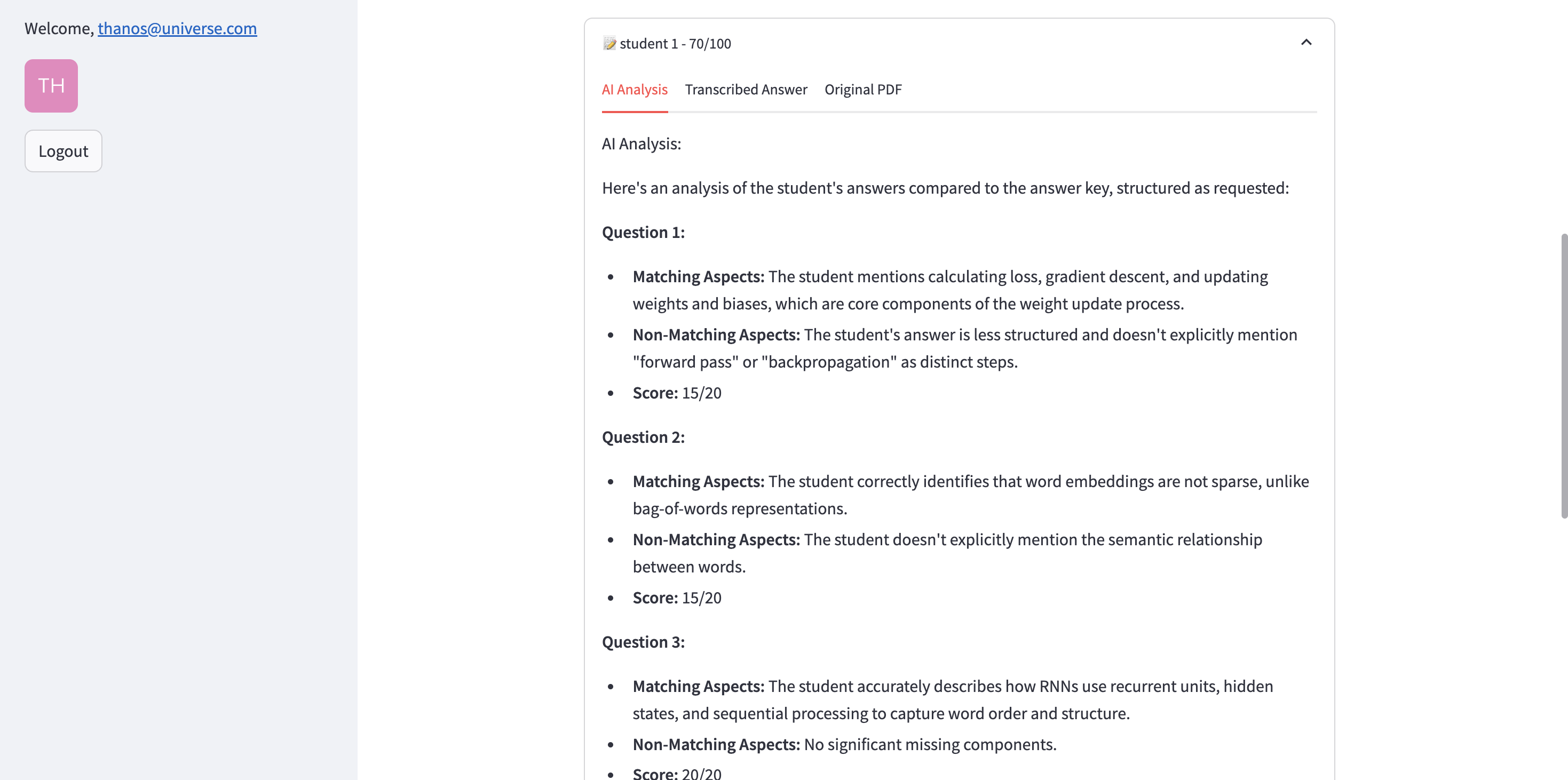
Automated question-wise analysis of student's mistakes
Inspiration
Grading handwritten student responses is time-consuming and prone to inconsistencies. We wanted to create a solution that automates this process while maintaining accuracy, efficiency, and fairness.
What We Learned
Throughout this project, we gained valuable insights into AI-powered handwriting recognition, model evaluation, and workflow automation. Additionally, we explored the challenges of integrating AI into real-world educational applications.
How We Built It
We developed Texas A&M AutoGrader using:
- Google's Gemini AI for analyzing and comparing handwritten responses
- Python/Streamlit to build a interactive UI and backend for processing submissions
- Auth0 for secure user authentication and management
The AI model extracts text from handwritten responses, compares it with a digital answer key, and assigns scores based on predefined grading criteria.
Challenges Faced
- Handwriting Variability: Different handwriting styles affected accuracy, requiring fine-tuning and preprocessing.
- Performance Optimization: Processing multiple student submissions simultaneously demanded efficient backend optimization.
- Integration Issues: Ensuring smooth interaction between the AI model, backend, and front-end required extensive debugging and testing.
Despite these challenges, we successfully built an AI-powered grading tool that simplifies the grading process for educators.

Log in or sign up for Devpost to join the conversation.