-
-
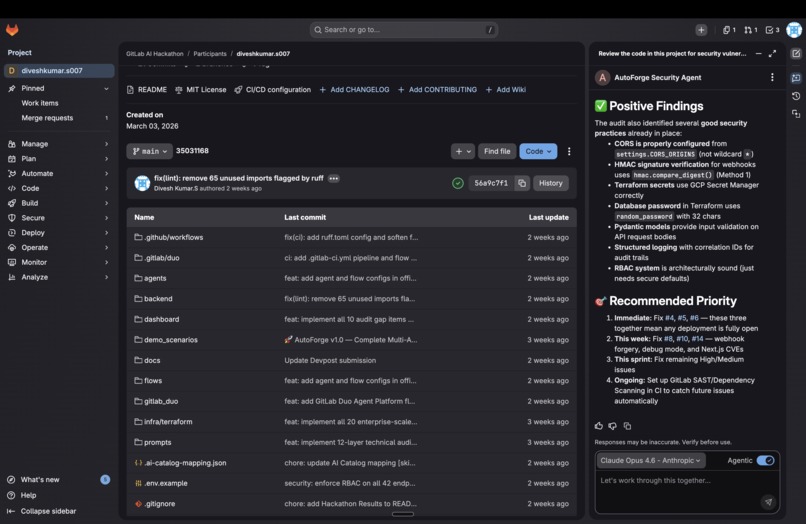
AutoForge — Multi-Agent DevOps AI System 3 Agents • 3 Flows • Native GitLab Execution
-
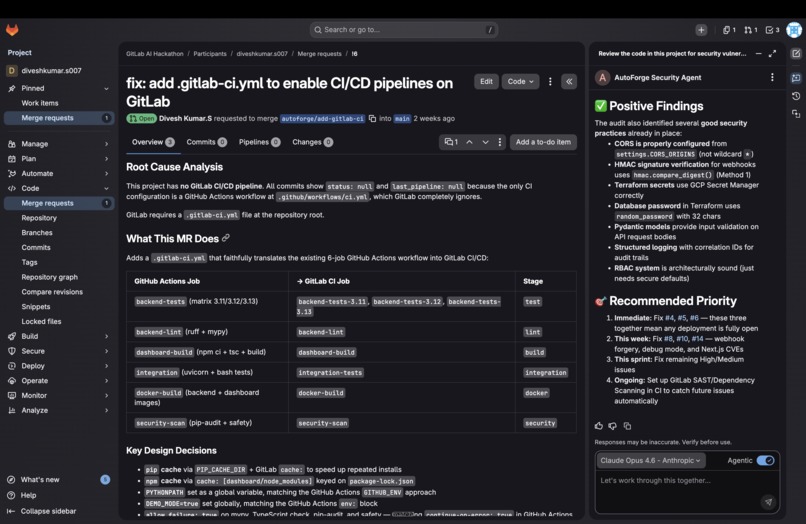
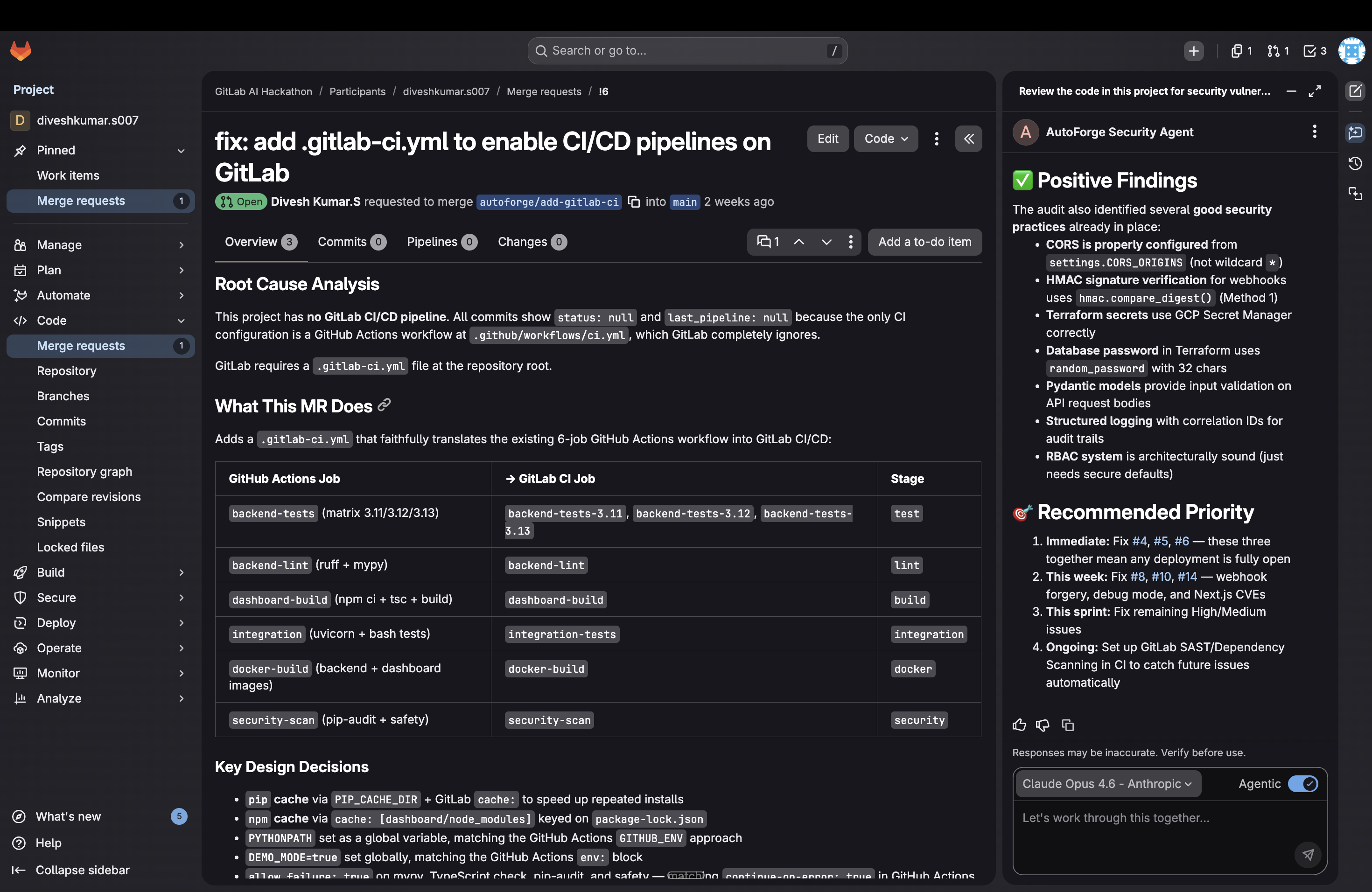
SRE Agent Auto-Fix Diagnoses and fixes CI/CD failures automatically
-
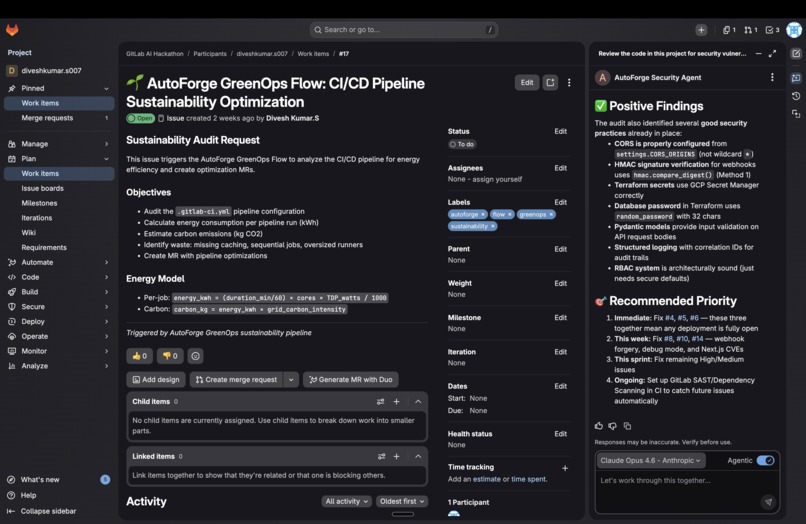
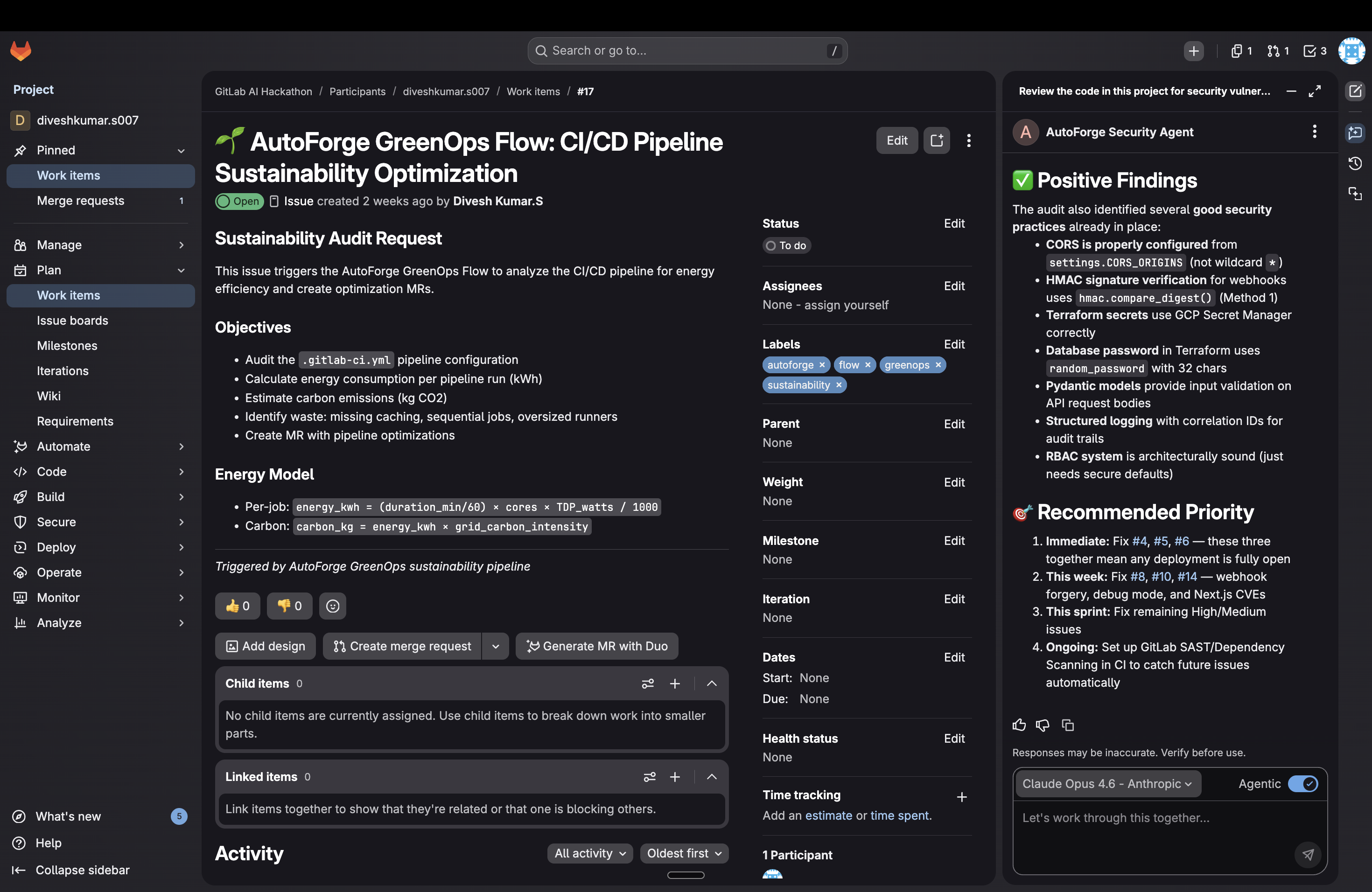
GreenOps Intelligence Tracks carbon footprint and optimizes pipelines
-
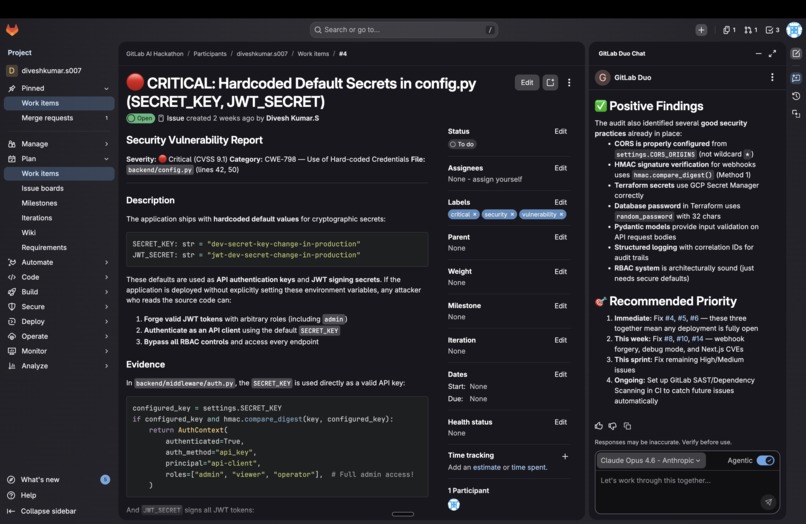
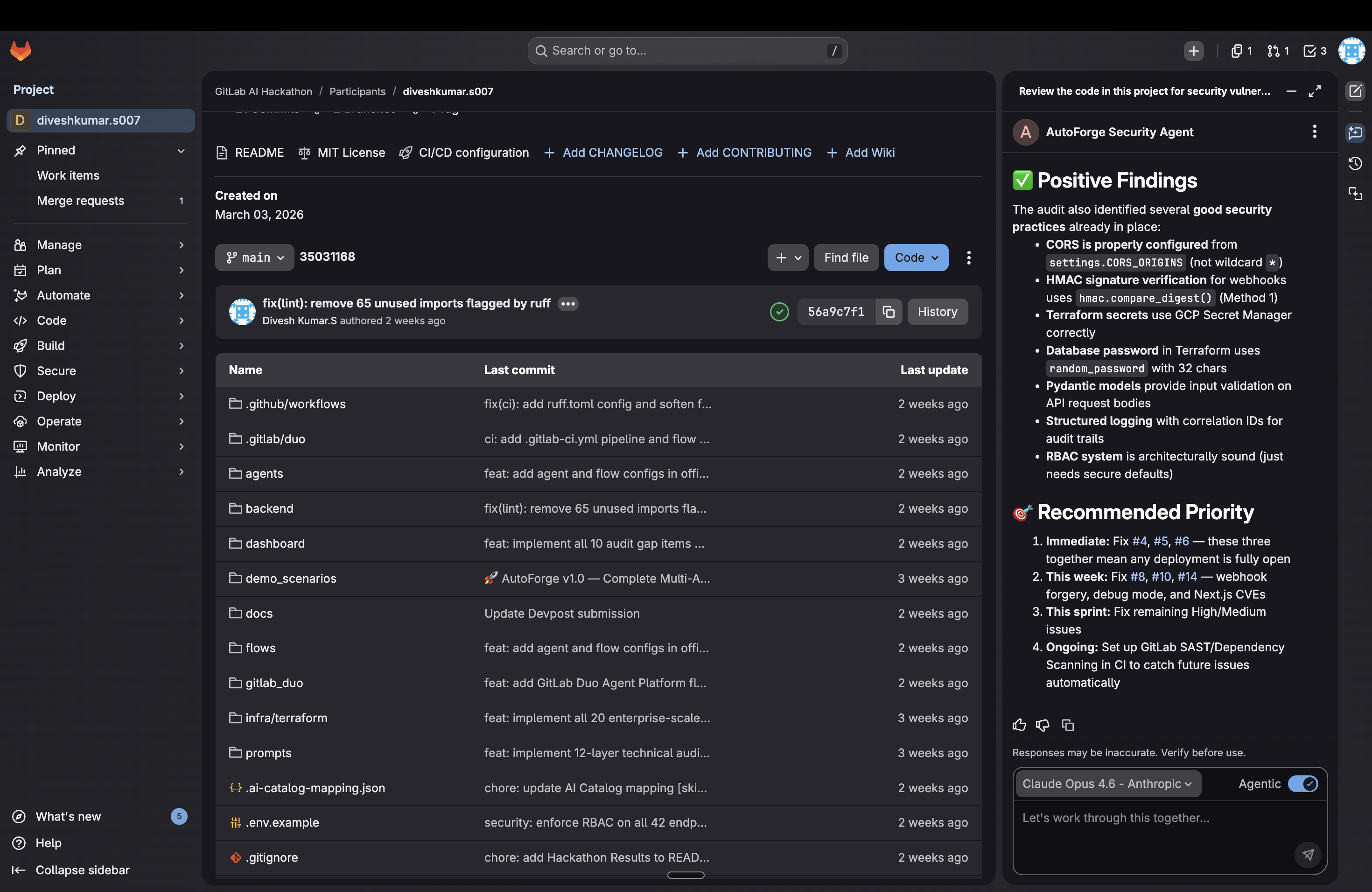
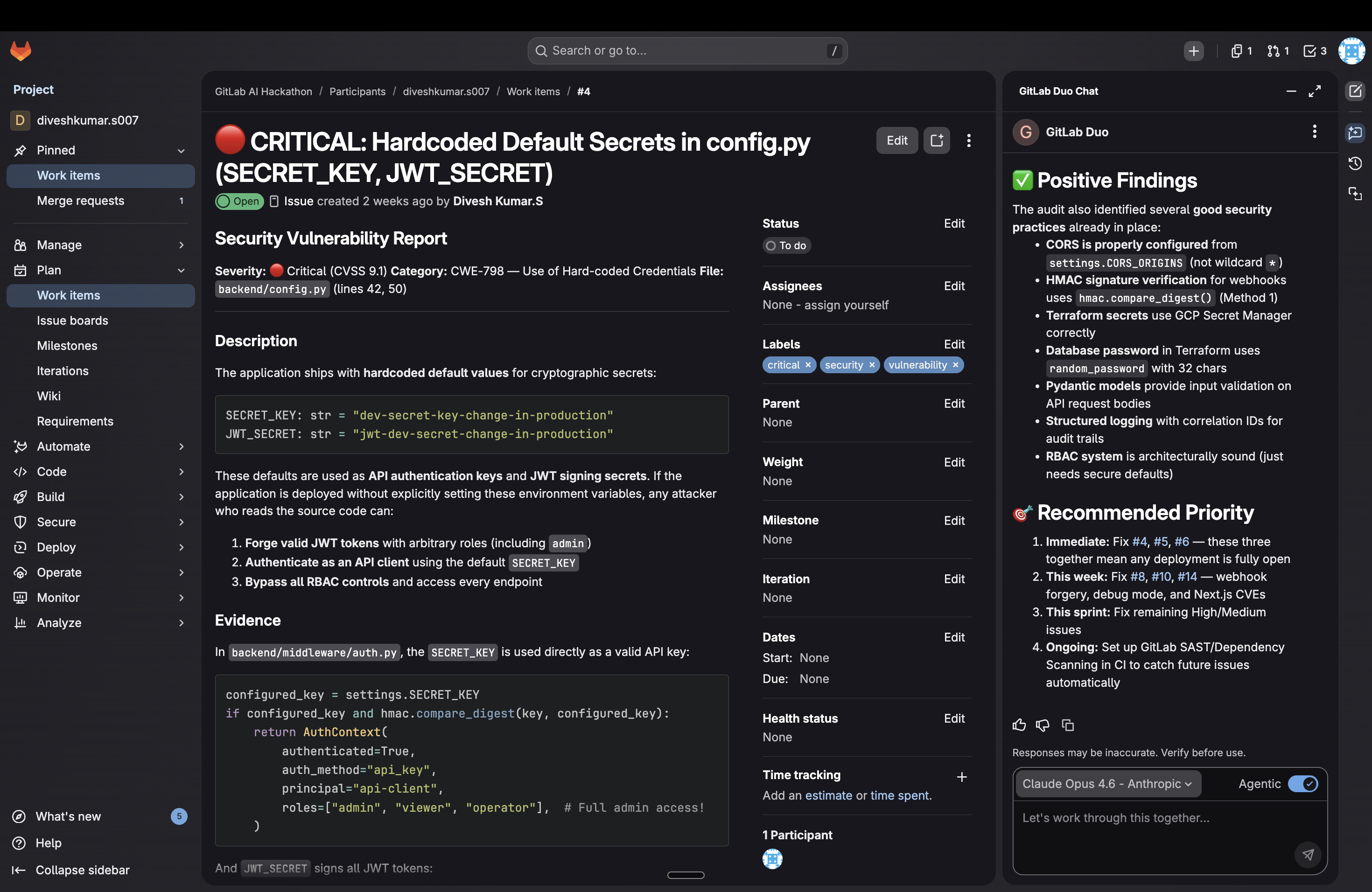
Security Agent Detection Identified critical vulnerabilities automatically
Inspiration
DevOps teams spend over 40% of their time on reactive work — debugging CI/CD failures, fixing vulnerabilities, and manually reviewing pipelines. These are repetitive, pattern-heavy tasks, making them ideal for automation.
Most AI tools today act as assistants — chatbots that suggest fixes but don’t take action. We wanted to go further:
What if AI could act like a team of engineers — investigating problems, making decisions, and fixing issues autonomously inside GitLab?
With the GitLab Duo Agent Platform, this became possible. AutoForge embeds AI agents directly into the development workflow — not as external tools, but as active participants.
We also introduced a GreenOps perspective, proving that CI/CD pipelines can be measured and optimized for sustainability, not just performance.
What it does
AutoForge transforms GitLab into a self-healing DevOps system using three specialized AI agents:
🛠 SRE Agent
- Detects and analyzes CI/CD pipeline failures
- Uses structured reasoning (Tree-of-Thought) to identify root causes
- Automatically creates fix merge requests
🔐 Security Agent
- Scans code for vulnerabilities (OWASP, CVEs, injection flaws)
- Assesses severity and generates patches
- Creates issues and remediation fixes
🌱 GreenOps Agent
- Measures pipeline energy consumption using real calculations
- Estimates carbon footprint (kWh → CO₂)
- Suggests optimizations for efficiency and sustainability
These agents are orchestrated through flows, which allow them to:
- React to triggers (@mentions, assignments)
- Coordinate multi-step reasoning
- Execute actions autonomously inside GitLab
Why this is different
AutoForge is not just another AI tool — it acts, not assists:
- No chat prompts → Triggered by real GitLab events
- No suggestions → Creates real merge requests & issues
- No external tools → Runs entirely inside GitLab
- Not single-agent → Coordinated multi-agent system
This shifts DevOps from:
❌ Manual debugging → ✅ Autonomous resolution
How we built it
AutoForge is built entirely on the GitLab Duo Agent Platform using:
- Custom AI agents defined in YAML
- Multi-step orchestration flows
- Built-in Anthropic Claude models
- Native GitLab tools (MRs, issues, pipelines)
Each agent follows a 5-phase cognitive pipeline: Perceive → Reason → Plan → Act → Reflect
This allows structured, explainable decision-making instead of simple prompt-response behavior.
Challenges we ran into
- GitLab hackathon CI restrictions required adapting to trigger-based flows
- Limited documentation for Duo GraphQL APIs required experimentation
- Designing consistent structured reasoning outputs (Tree-of-Thought)
- Balancing accuracy vs simplicity in GreenOps energy calculations
Accomplishments that we're proud of
- Built a complete multi-agent system with 3 agents + 3 flows
- Successfully triggered real workflows inside GitLab
- Generated actual merge requests, issues, and pipeline fixes
- Implemented sustainability tracking using real energy models
- Achieved full native integration with GitLab Duo (no external infra)
What we learned
We learned that AI becomes truly powerful when it moves beyond assistance into execution.
By embedding agents directly inside developer workflows, we enabled AI to:
- Understand context
- Make decisions
- Take real actions
This represents a shift toward autonomous software engineering systems.
What's next
- Learning loops using past fixes
- Cross-project intelligence
- Human-in-the-loop approvals
- Additional agents (QA, Code Review, Docs)
- Carbon analytics dashboard
AutoForge is just the beginning of self-operating DevOps systems.
Built With
- anthropic-claude-(via-gitlab-duo)
- gitlab-ai-catalog-(flow-registry-v1)
- gitlab-ci/cd
- gitlab-duo-agent-platform
- multi-agent
- python
- tree-of-thought-reasoning
- yaml


Log in or sign up for Devpost to join the conversation.