-
-
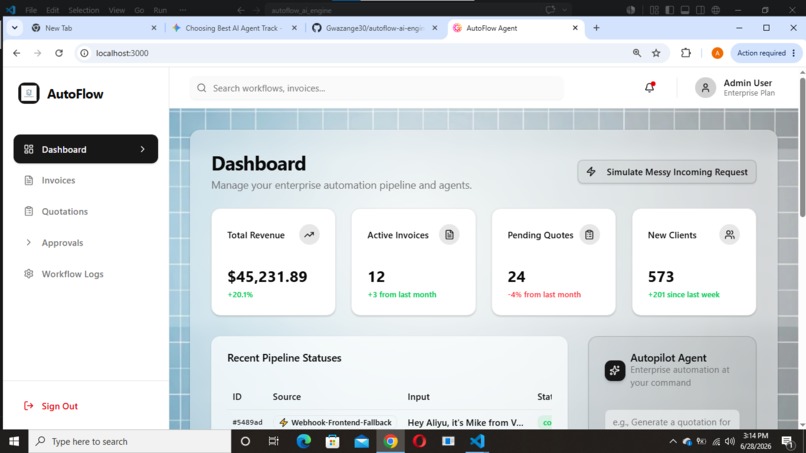
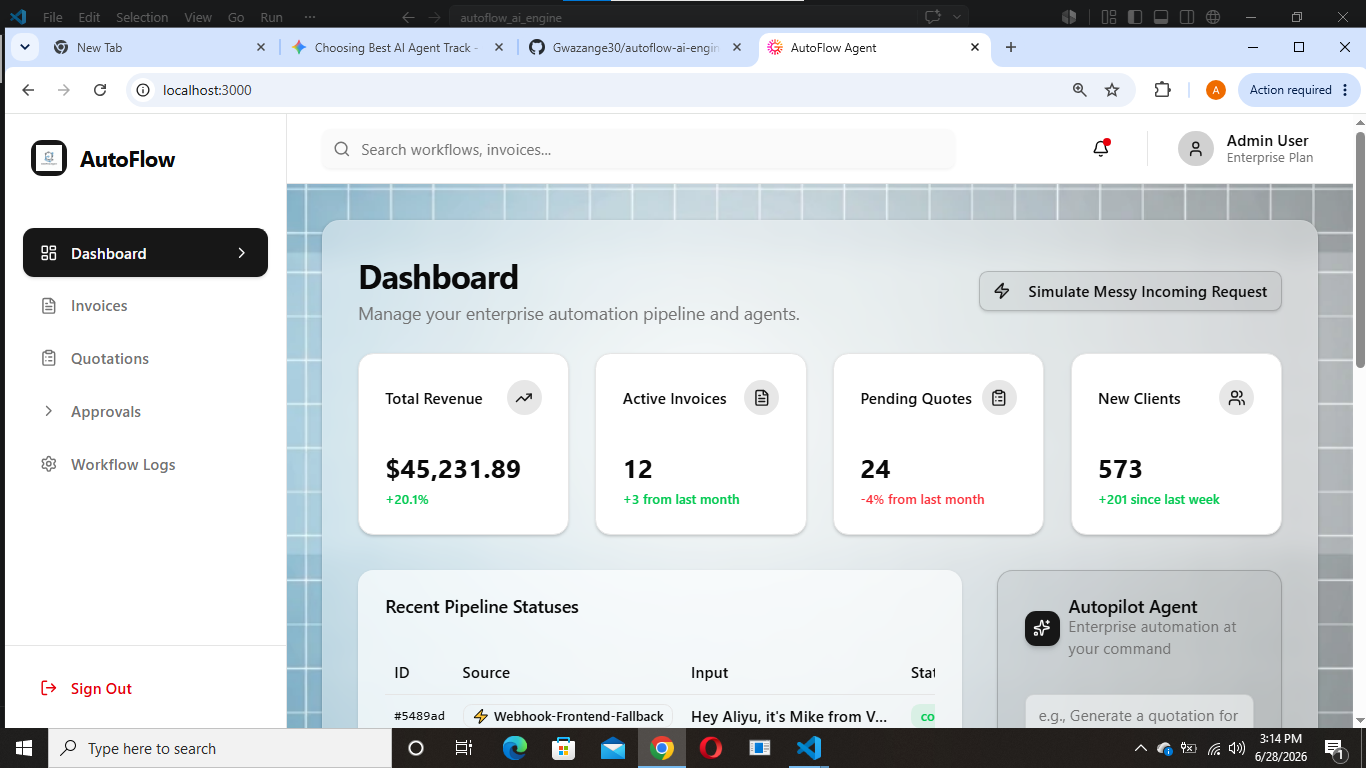
Live operational workspace showing structured real-time metrics and the automated requests ingestion engine.
-
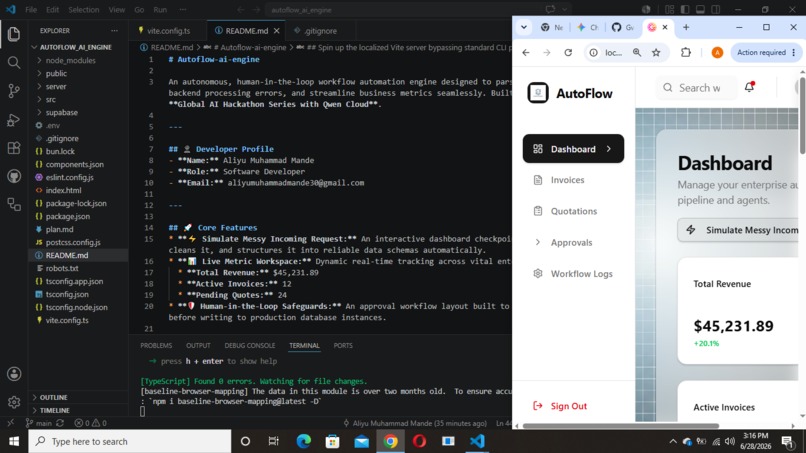
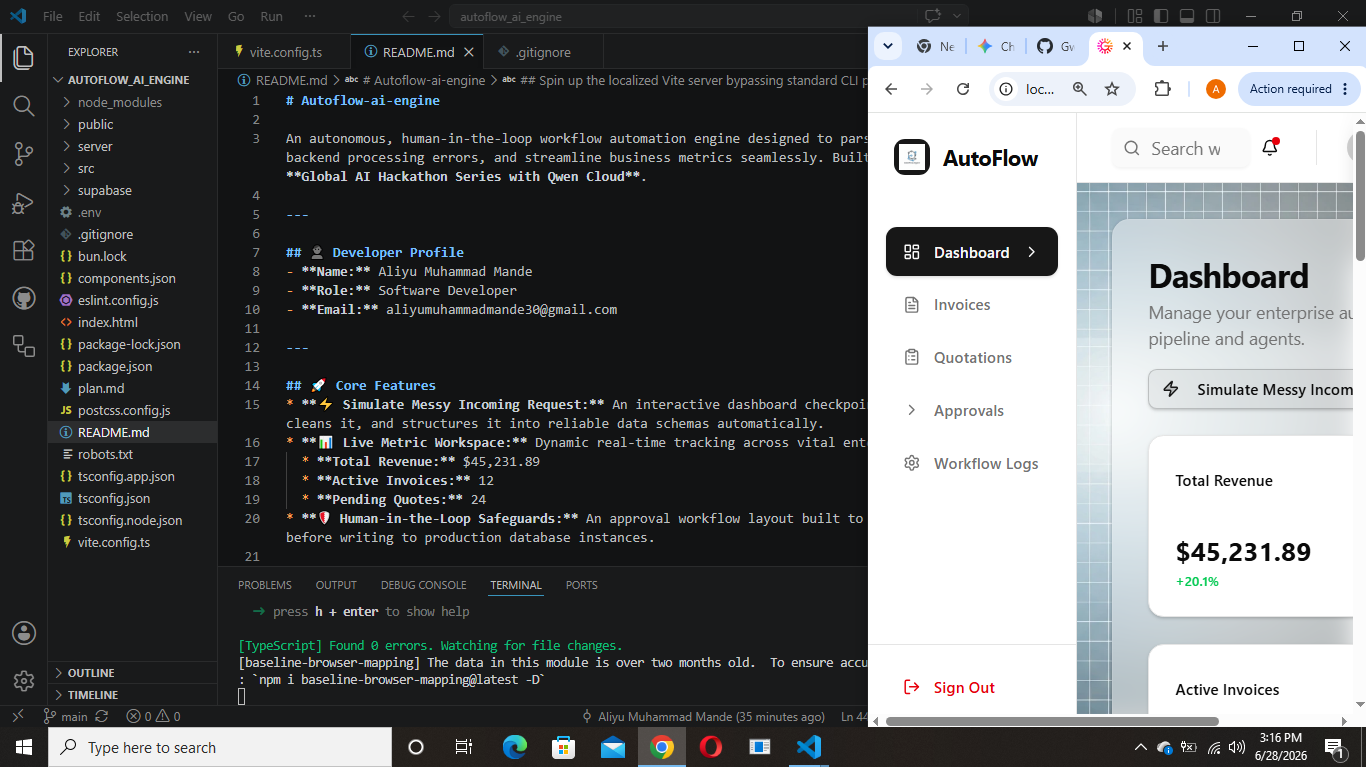
showing the code-base
Inspiration
Manual data entry and chaotic, unformatted back-office requests cost enterprise companies hundreds of lost hours and introduce massive pipeline processing bugs. We wanted to build an automated solution that acts as a secure, smart middleman—taking messy business requests and turning them into instantly actionable, structured databases with absolute precision.
What it does
Autoflow-ai-engine is an autonomous, human-in-the-loop workflow pipeline. When an enterprise receives unstructured user documentation or unformatted client inquiries, our application dynamically parses, sanitizes, and maps that information directly into active databases. Users can effortlessly track operations in real-time through a dedicated workspace layout featuring total revenue indicators, active invoice counts, and quote management pipelines.
How we built it
The core backend processing engine utilizes advanced workflow automation schema structures. The user interface was developed using a fast Vite build pipeline on a strong foundation of React and TypeScript to guarantee absolute type-safety across incoming requests. For reliable data storage and pipeline integrity, we integrated Supabase.
Challenges we ran into
One major hurdle was stripping out generic, rigid cloud templates and refactoring localized asset plugins to ensure that our internal state pipeline initialized flawlessly without breaking when handling simulated manual requests. Tuning the live layout to cleanly sync real-time state changes on click without heavy latency drops was also an iterative debugging process.
Accomplishments that we're proud of
We are incredibly proud of building a fully responsive, enterprise-ready data dashboard that isn't just a static display, but a functional end-to-end automation runtime environment. Achieving crisp state synchronization for invoices, quotes, and finances under strict type schemas was a massive victory.
What we learned
We gained deep insights into structuring modular configuration workflows through our package.json setup, managing production dependencies efficiently, and organizing clean data-parsing models that map unstructured incoming assets cleanly into tabular data states.
What's next for Autoflow-ai-engine
Next, we want to integrate native machine learning transformers directly into our parsing logic to enable real-time semantic analysis on incoming business request texts, alongside expanding the analytics layout to include automated weekly financial reporting hooks.
Built With
- css3
- html5
- javascript
- node.js
- react
- supabase
- typescript
- vite



Log in or sign up for Devpost to join the conversation.