
AutoCode for Codex
AutoCode turns Codex from a session-based coding agent into a persistent, modular project system.
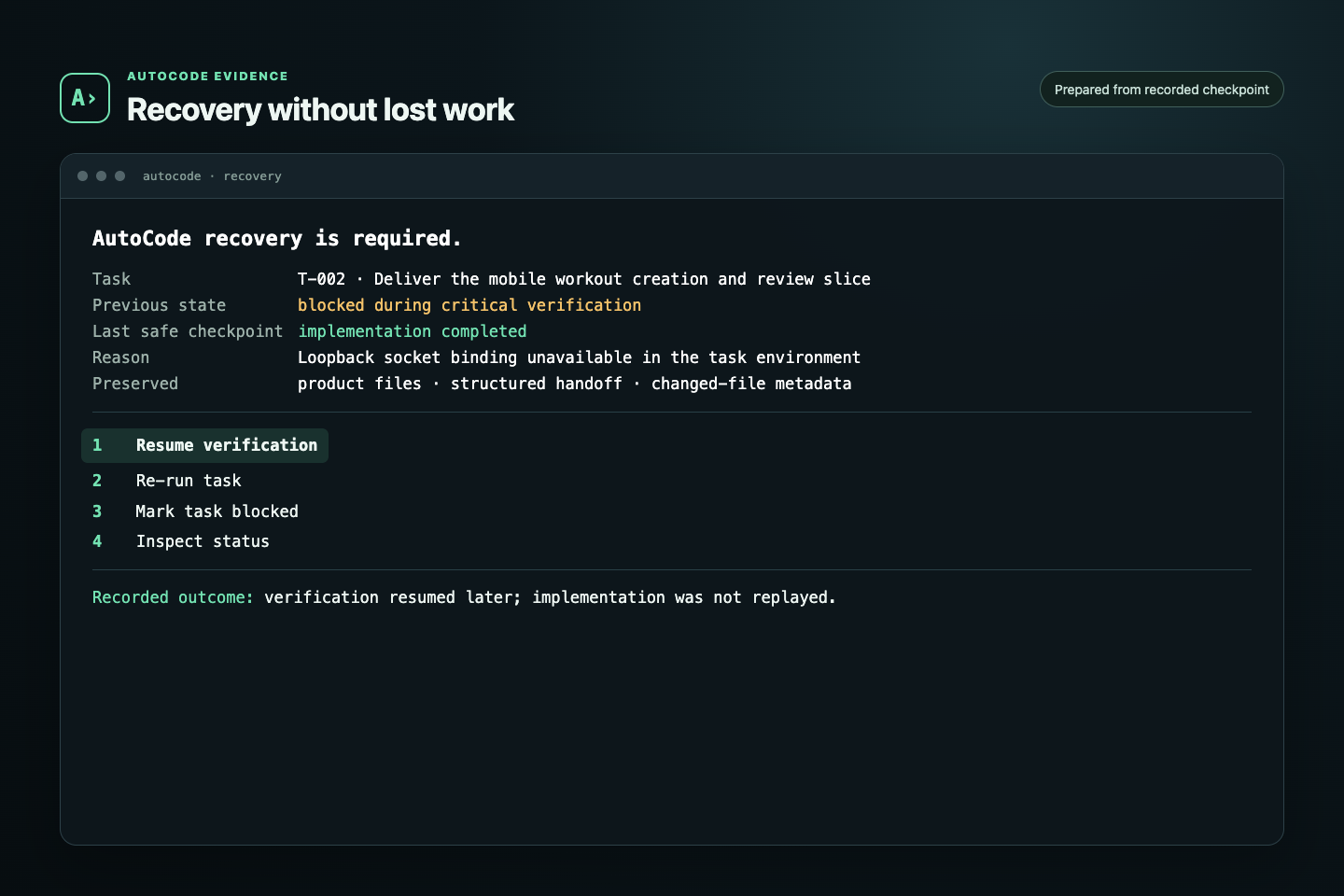
Coding agents are excellent at completing individual tasks, but longer software projects introduce a different problem: goals drift, context gets lost between sessions, verification becomes inconsistent, and interrupted work is difficult to resume. I built AutoCode to manage that project-level layer.
Inspiration
The idea came from repeatedly switching between Codex, project files, terminal output, testing tools, and separate planning conversations.
A normal workflow was too linear:
- Explain the goal.
- Ask an AI to create a plan.
- Copy the plan into another session.
- Implement one part.
- inspect the result manually.
- Explain the current state again.
- Decide what should happen next.
I wanted to reduce that coordination overhead without simply giving one enormous prompt to an autonomous coding agent.
AutoCode therefore treats Codex as a powerful worker inside a larger deterministic project process.
What AutoCode does
A user enters a high-level project goal. AutoCode then:
- converts the goal into a bounded project specification;
- identifies modules, constraints, requirements, and success criteria;
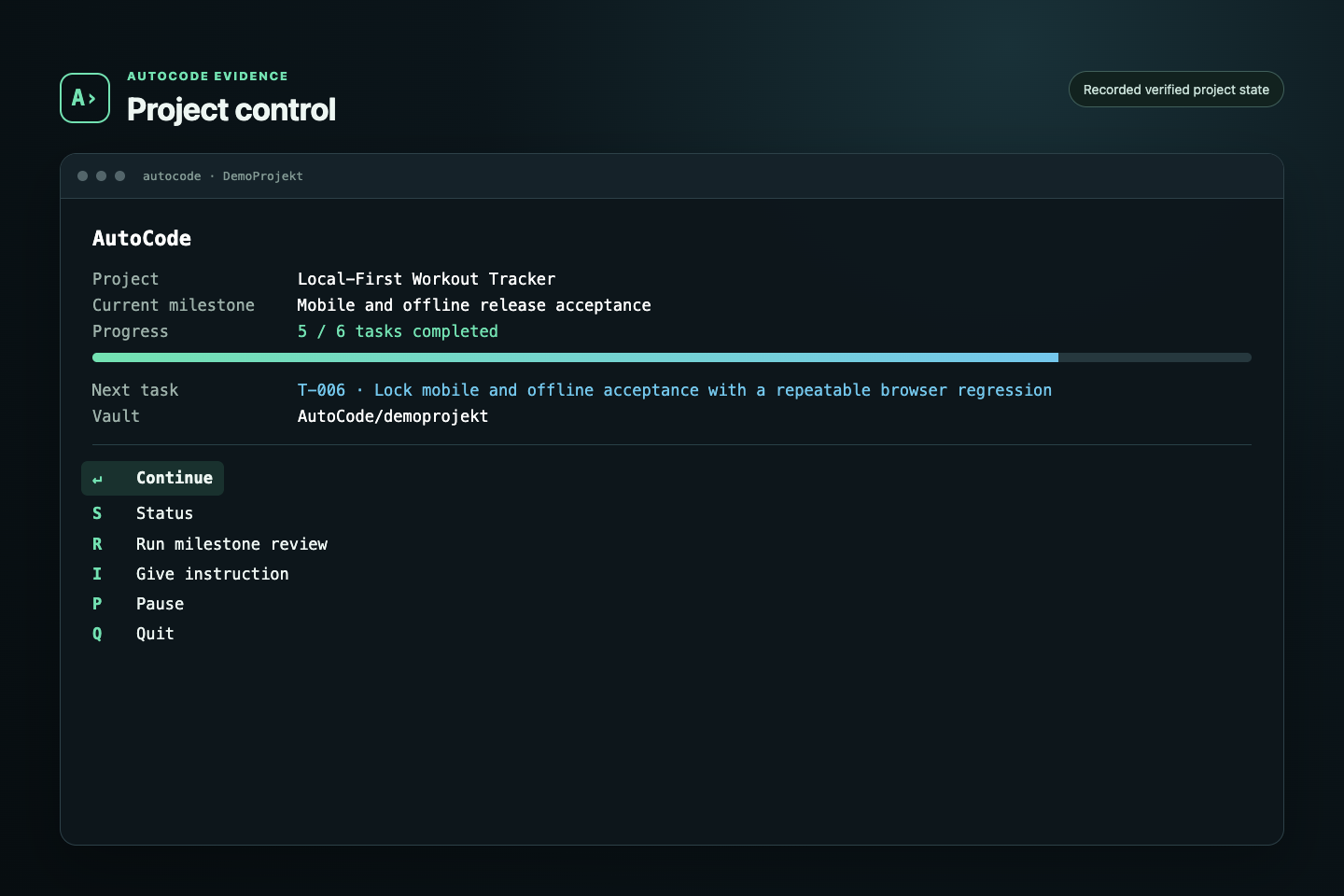
- creates a dependency-aware task graph;
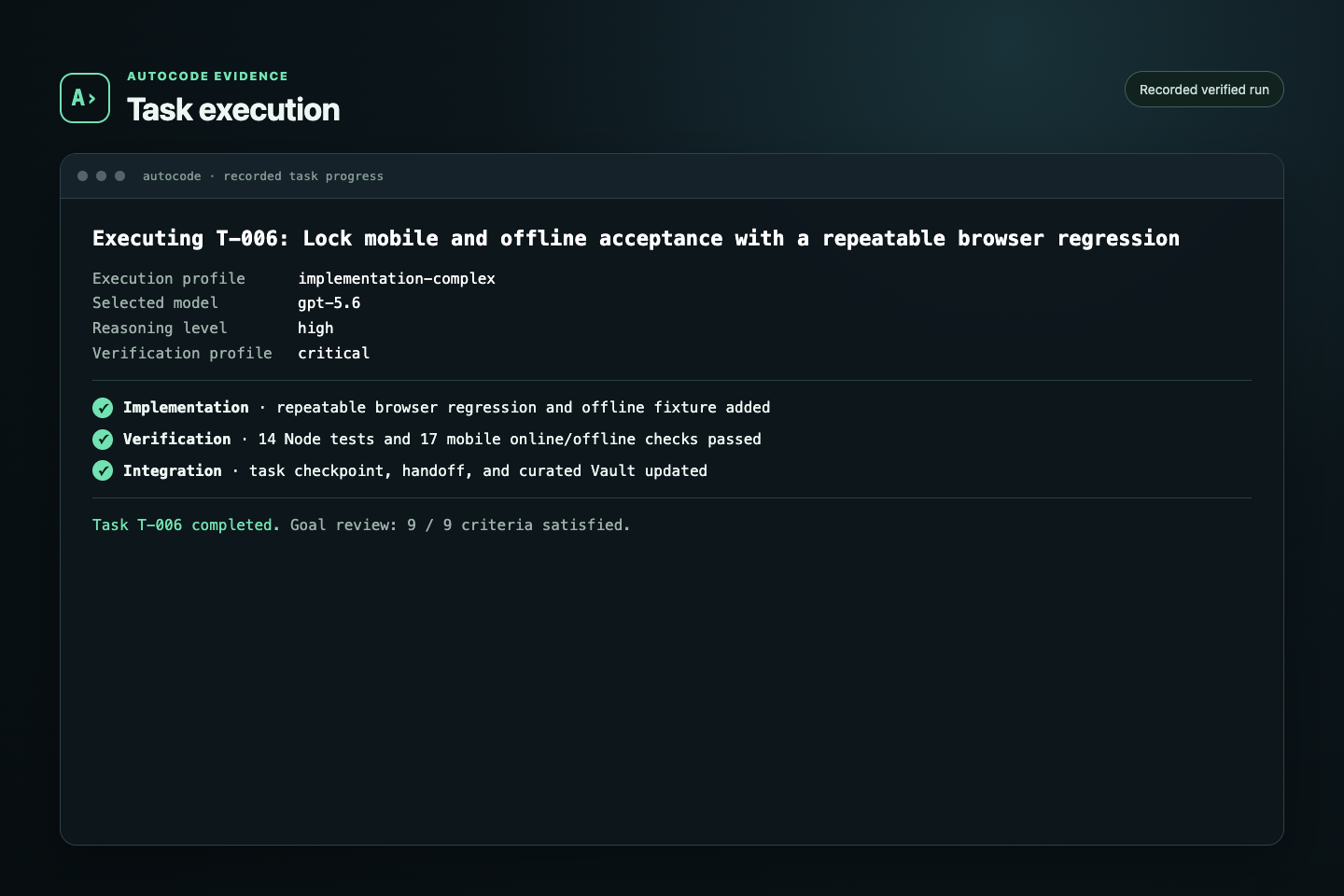
- selects an appropriate Codex execution profile for each task;
- compiles only the relevant project, module, and task context;
- starts fresh Codex worker sessions;
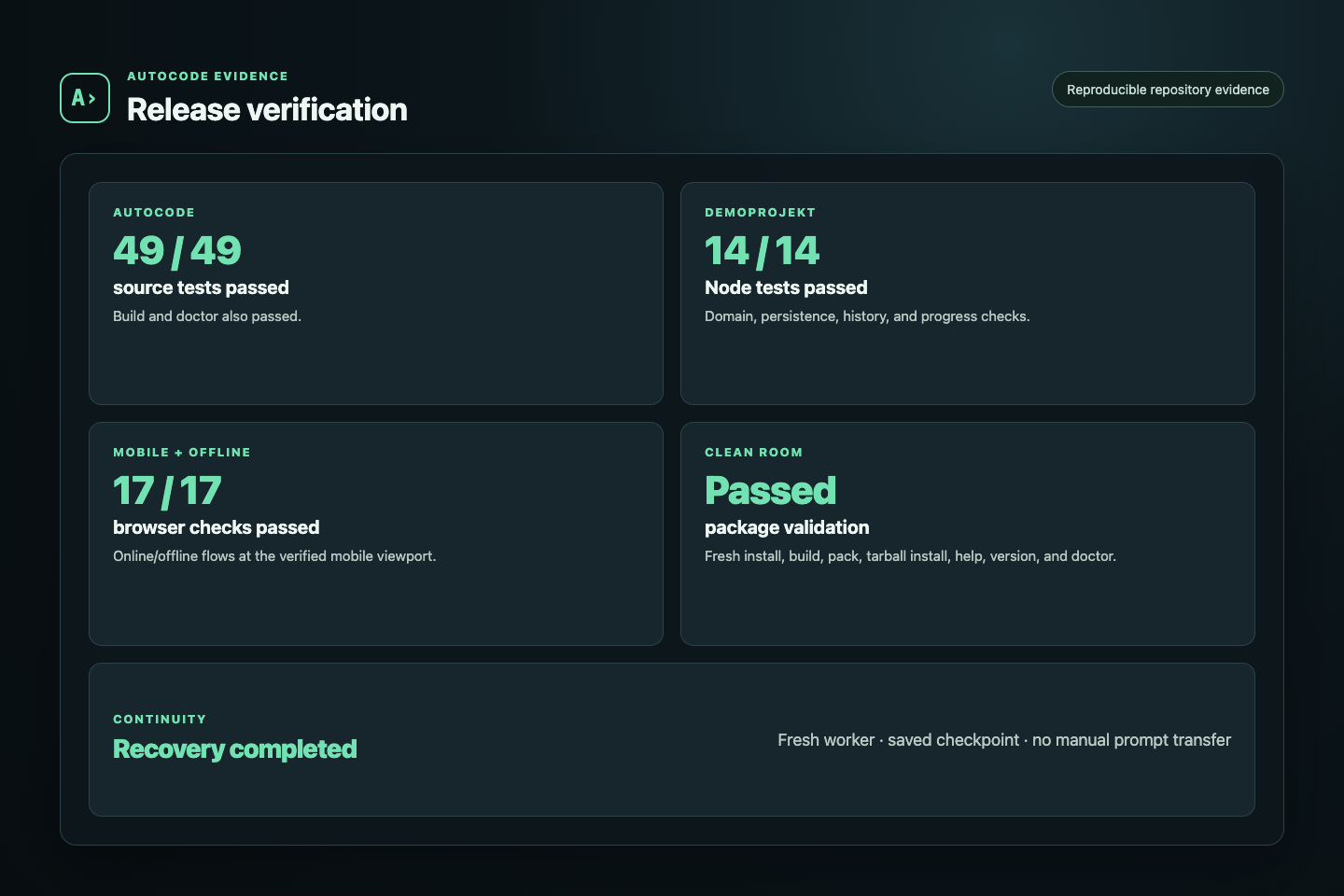
- verifies completed work proportionately;
- preserves recoverable checkpoints;
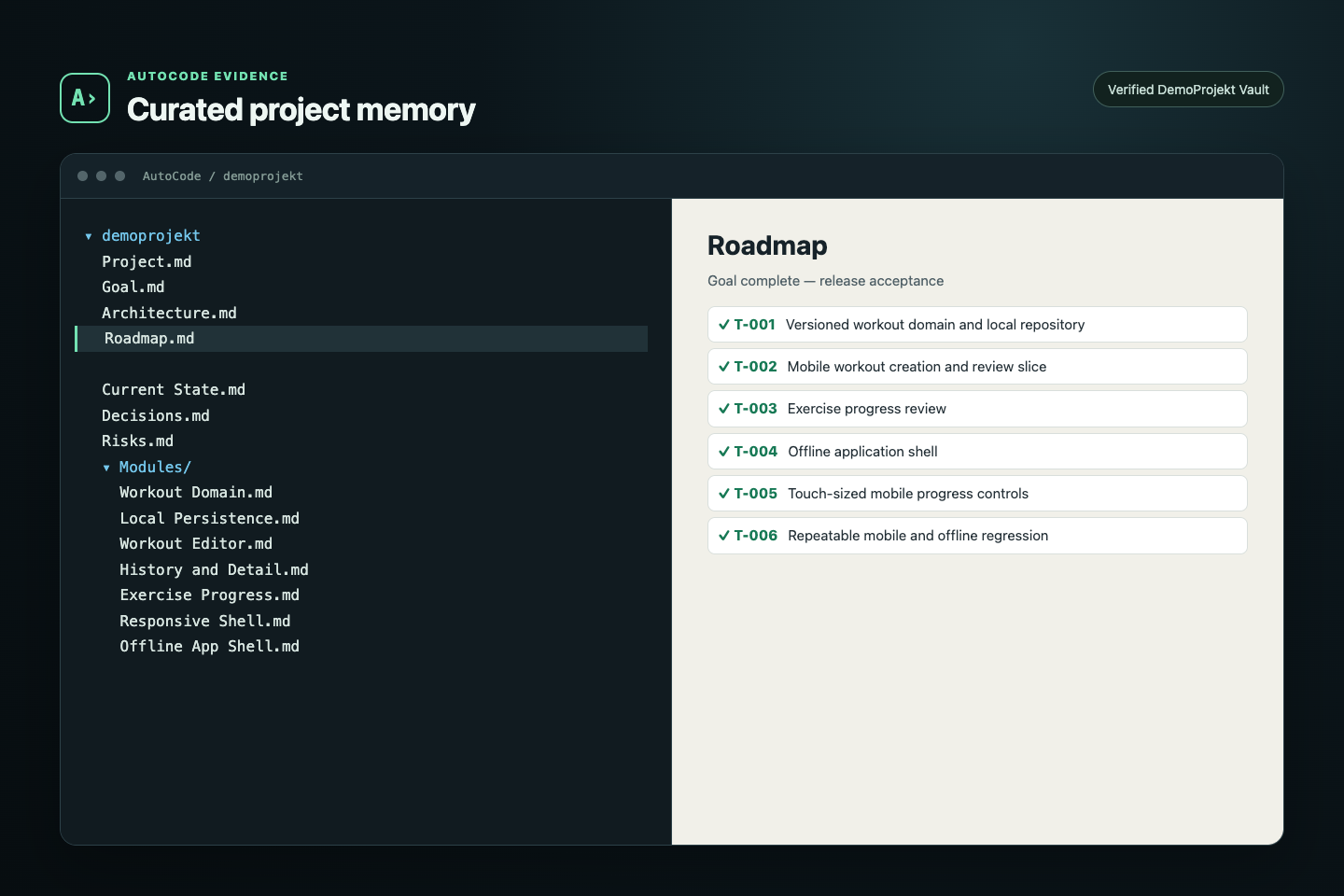
- updates a curated Obsidian project knowledge base;
- evaluates milestones against the original goal;
- converts milestone findings directly into subsequent tasks.
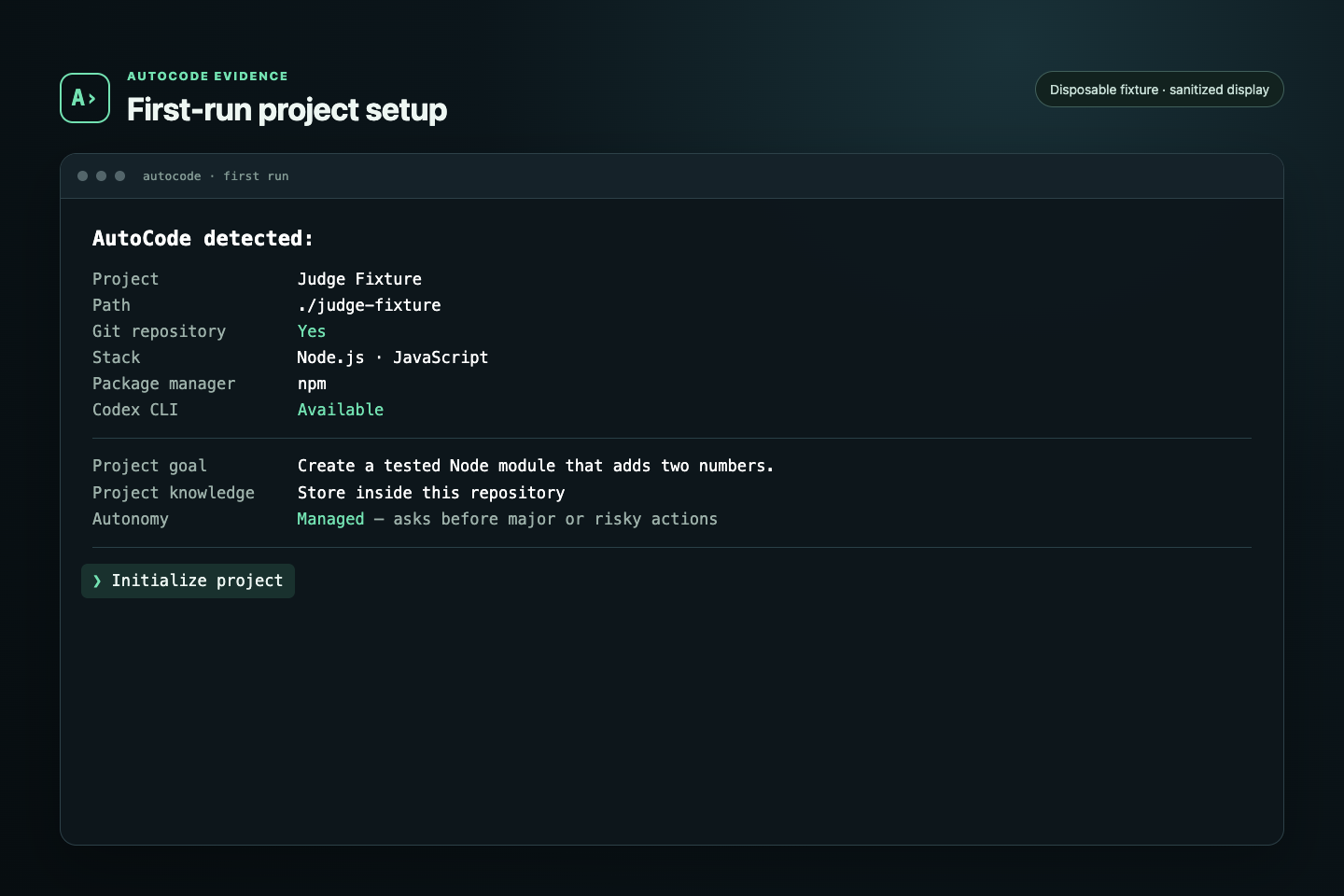
The normal entry point is intentionally simple:
cd /path/to/project
autocode
Built With
- agents
- ai
- automation
- cli
- developer
- git
- gpt-5.6
- json
- local-first
- markdown
- node.js
- obsidian
- openai
- playwright
- testing
- tools
- typescript


Log in or sign up for Devpost to join the conversation.