
Team YuYu
What our device does
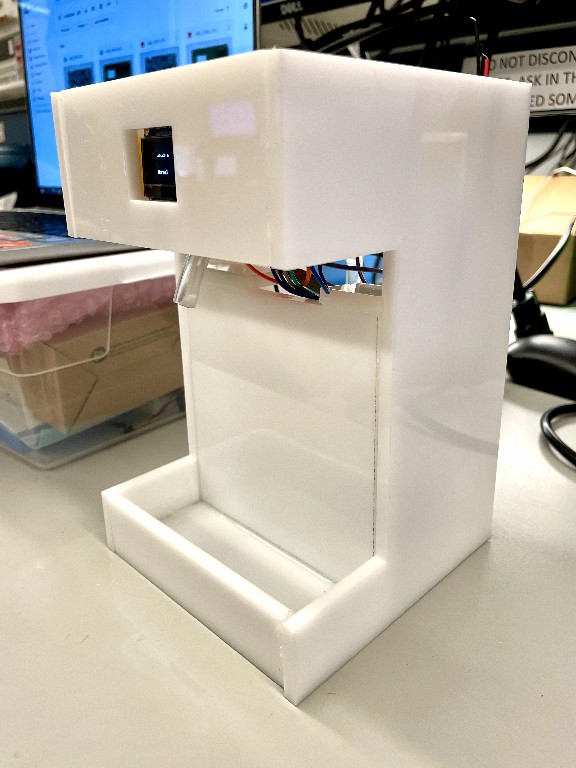
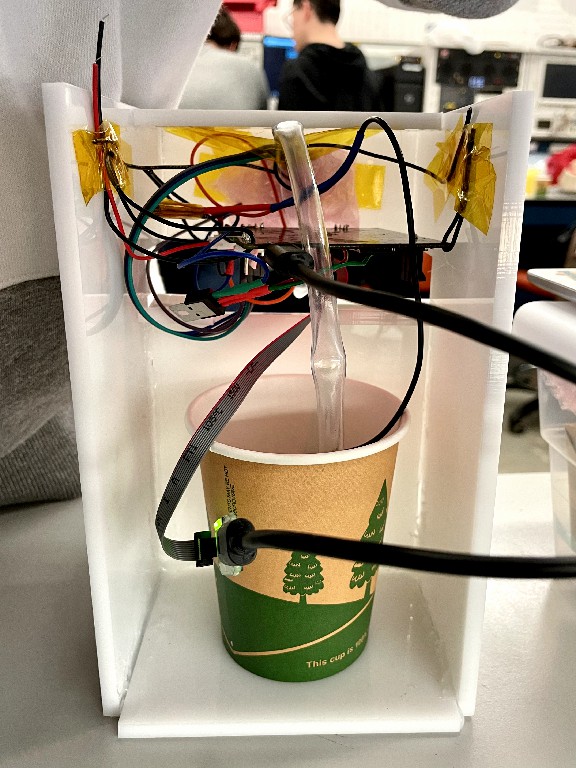
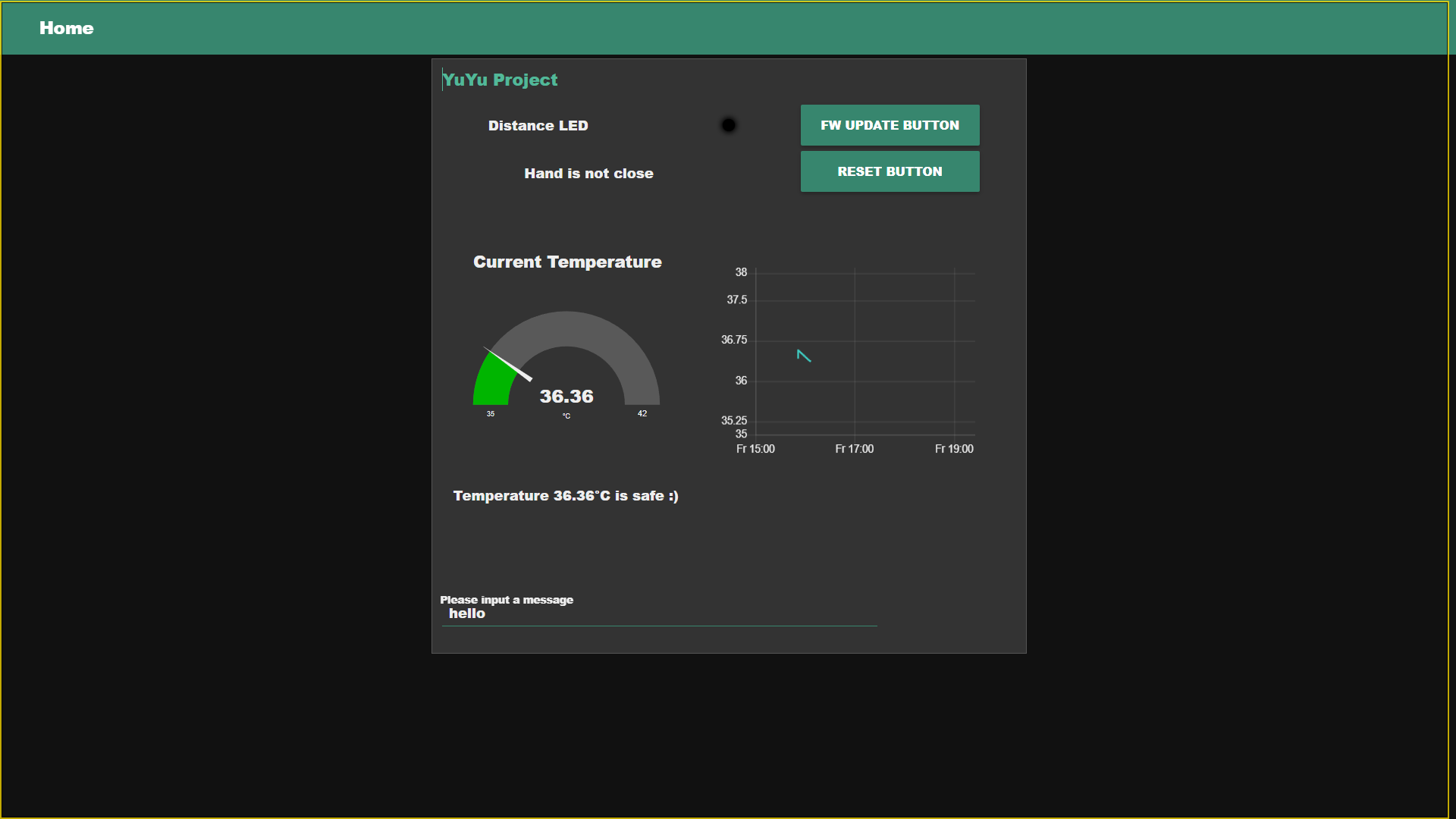
Our project is an IoT automated hand sanitizing dispenser, which we call AutoClean. Despite the name, it does much more than just dispense hand sanitizer. AutoClean also features a temperature sensor that can accurately measure body temperature from a safe distance, making it an ideal tool for screening people for signs of illness. When a high temperature is detected, an alert is sent to online page, allowing user to take appropriate action and prevent the spread of disease.
Inspiration
Our inspiration for the project came from the need for a hygienic and convenient solution for maintaining hand hygiene for personal needs. With the ongoing pandemic, the importance of hand hygiene has been emphasized more than ever before. We wanted to develop a product that could help people maintain their hand hygiene while also being user-friendly and accessible. With the pandemic still a concern, many individuals have turned to regular temperature checks as a precautionary measure. However, existing temperature screening devices on the market can be inconvenient to use, requiring physical contact and often taking a long time to give a reading. By combining our expertise in sensing technology and IoT, we were able to develop AutoClean - a device that not only dispenses hand sanitizer automatically but also features an advanced temperature sensing system that can detect body temperature from a safe distance. Our goal with AutoClean is to make hand hygiene and temperature screening more accessible and convenient, while also alerting the user in case of temperature abnormalities.
How it works
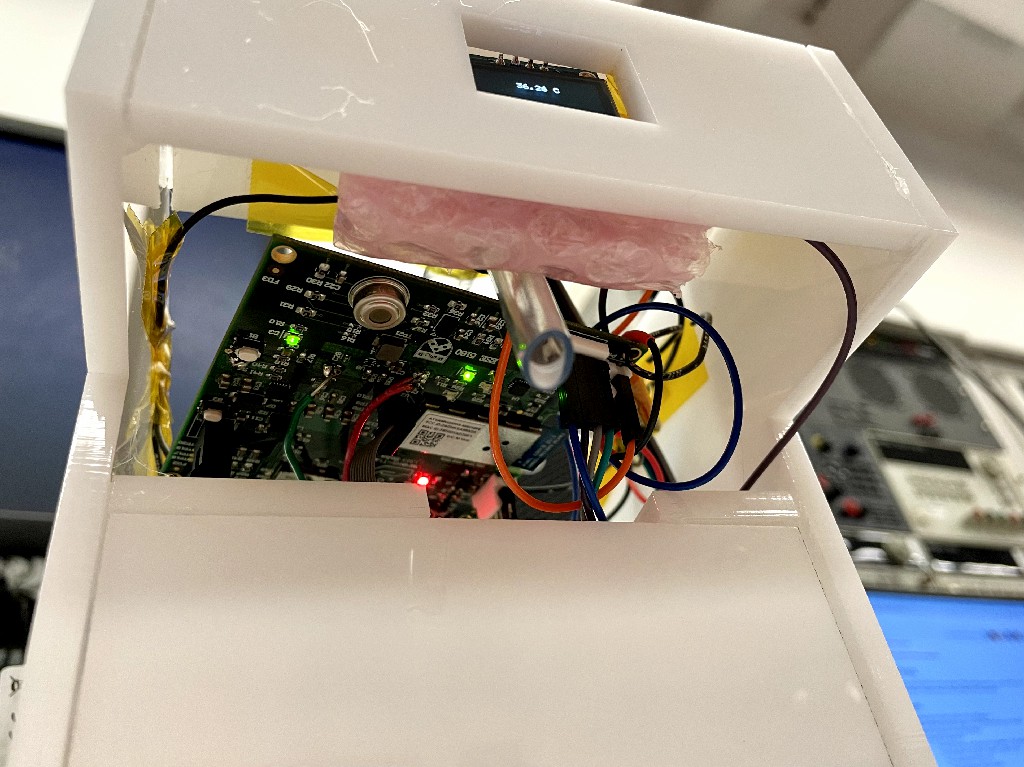
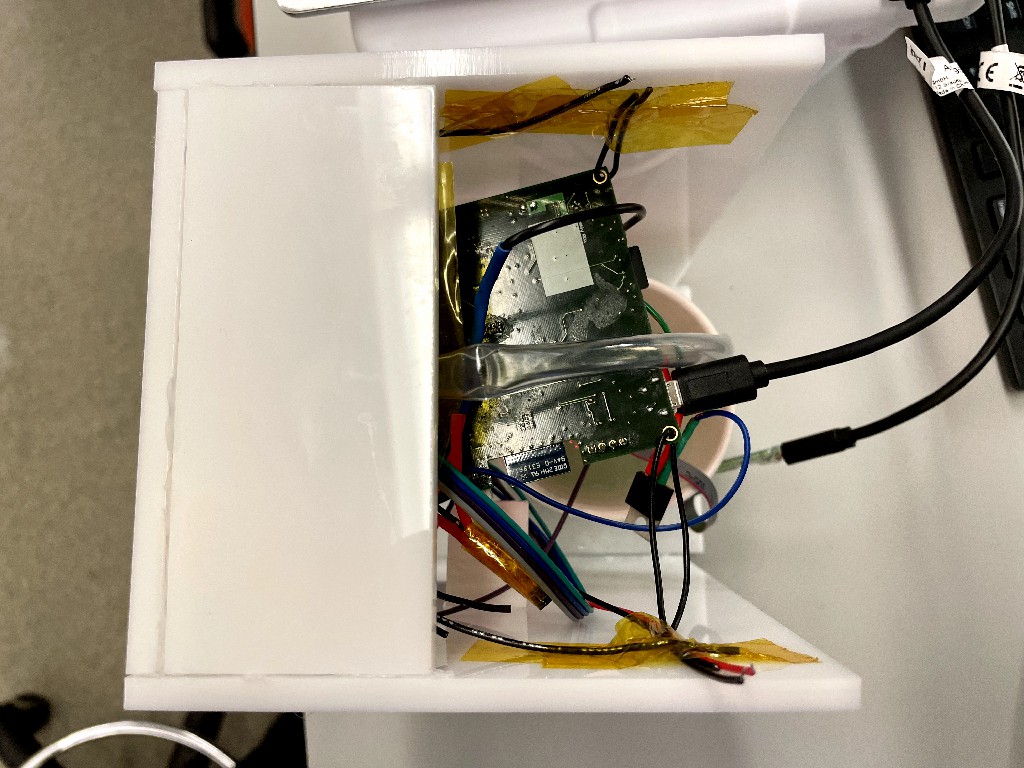
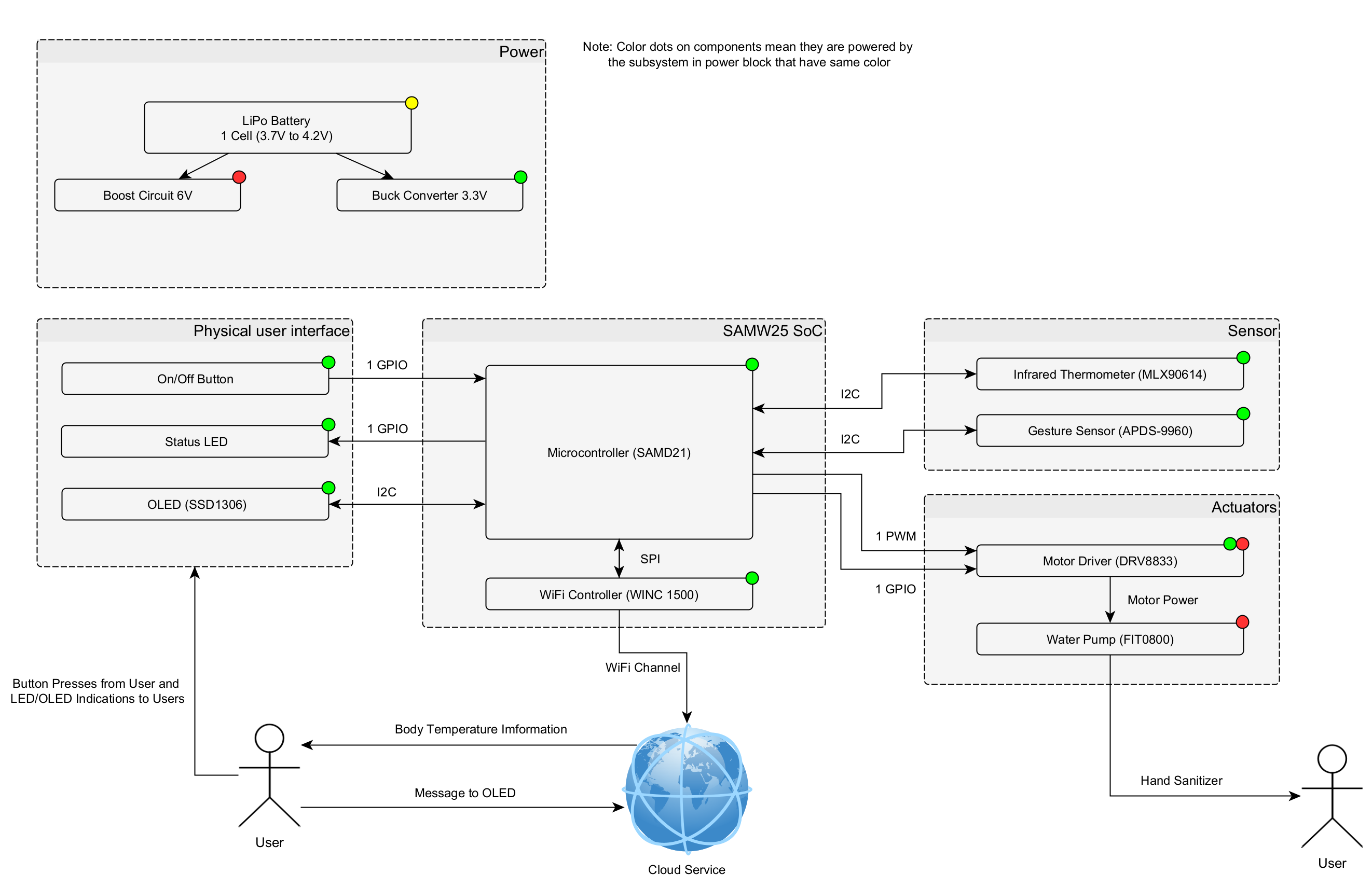
The system operates on either a USB or battery power supply, which is then boosted or bucked to provide 6V and 3.3V voltage levels. The 3.3V level powers the gesture sensor that detects the presence of a hand. When a hand is detected, the system activates an infrared temperature sensor to measure the person's temperature. The temperature data is then displayed on an OLED screen. Once the temperature measurement is complete, the system controls a water pump to dispense hand sanitizer automatically. The hand sanitizer is stored in a reservoir and is pumped out through a pipe when triggered by the system. The system is designed to be touchless, promoting better hygiene practices and reducing the risk of cross-contamination. Overall, the system includes critical components such as the gesture sensor, infrared temperature sensor, OLED screen, water pump, and motor driver, all of which work together to create an efficient and effective automatic hand sanitizer dispenser and temperature measurement system.
Challenge
During the development of our project, we faced several challenges that required us to think creatively and troubleshoot effectively. One of the first issues we encountered was with I2C and PWM communication, which caused intermittent failures in our sensor readings and actuator control. We had to optimize our code and adjust the timing parameters to ensure reliable communication.
Another challenge we faced was with the design of the buck circuit, which had to convert the input voltage to the required output voltage for our sensors and actuators. We had to carefully select the components and adjust the circuit parameters to ensure stable and efficient operation.
The third challenge we encountered was with the water pump driver, which had to provide sufficient flow and pressure to dispense the disinfectant solution effectively. We had to experiment with different driver circuits and adjust the pump speed and flow rate to optimize the performance.
The fourth challenge we faced was with the task size in the FREERTOS operating system, which caused stack overflow errors and system crashes. We had to restructure our code and optimize our memory usage to prevent these errors and ensure stable operation.
Lastly, we encountered difficulties with using the bootloader to update the firmware, as it required careful management of the memory and program addresses. We had to carefully follow the bootloader specifications and adjust our code to ensure compatibility and reliability. Overall, these challenges helped us develop our problem-solving skills and learn valuable lessons in designing and implementing embedded systems.
What we learned
Developed a deeper understanding of electronics and circuit design through designing and prototyping a complex system.
Gained experience in programming microcontrollers and integrating sensors and actuators into a cohesive system.
Learned the importance of effective project management and communication within a team.
Gained knowledge on best practices for testing and troubleshooting complex electronic systems.
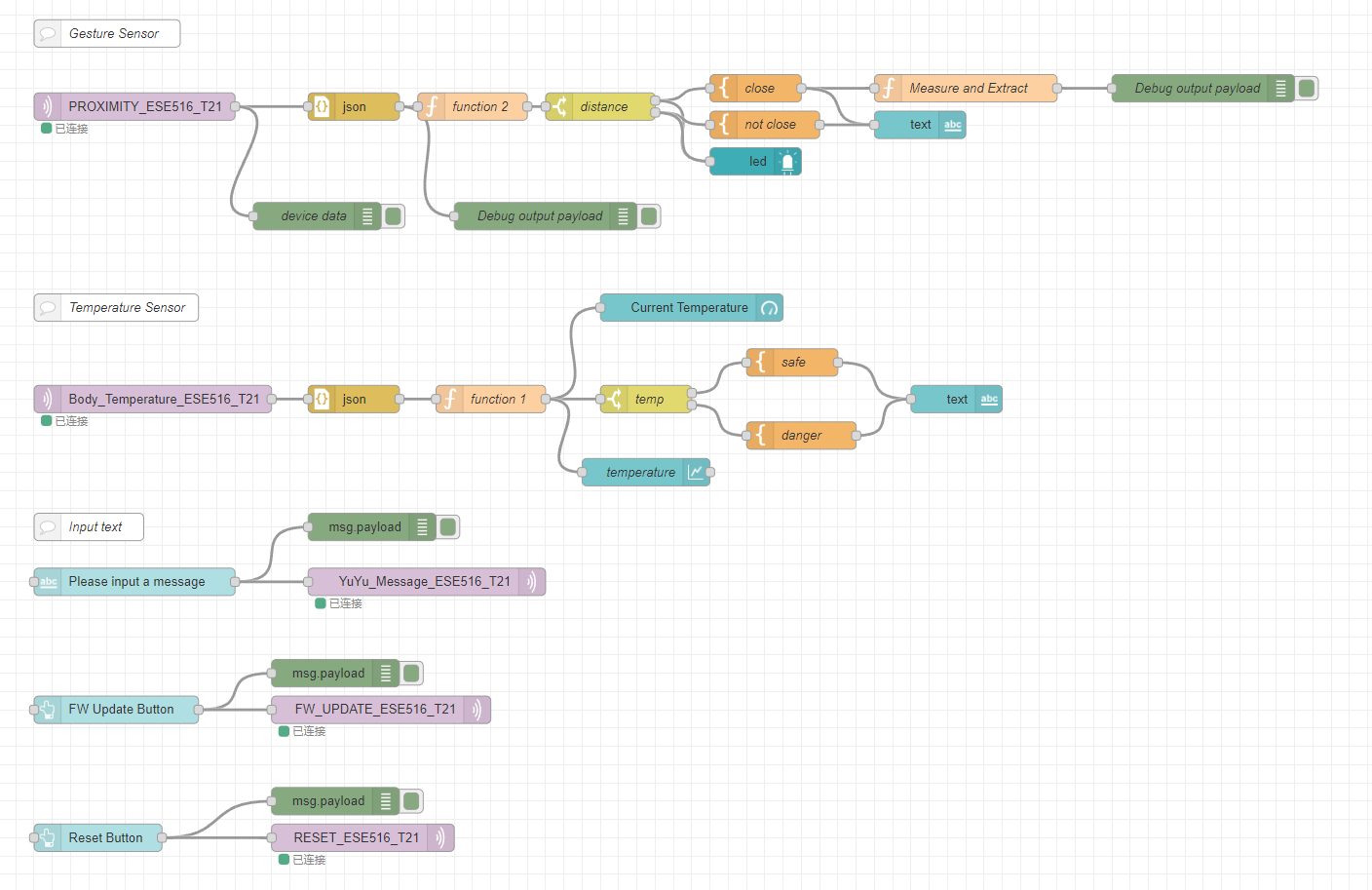
Gained experience in creating and hosting a UI interface using Node-RED, as well as utilizing MQTT for embedded systems.
Next Steps
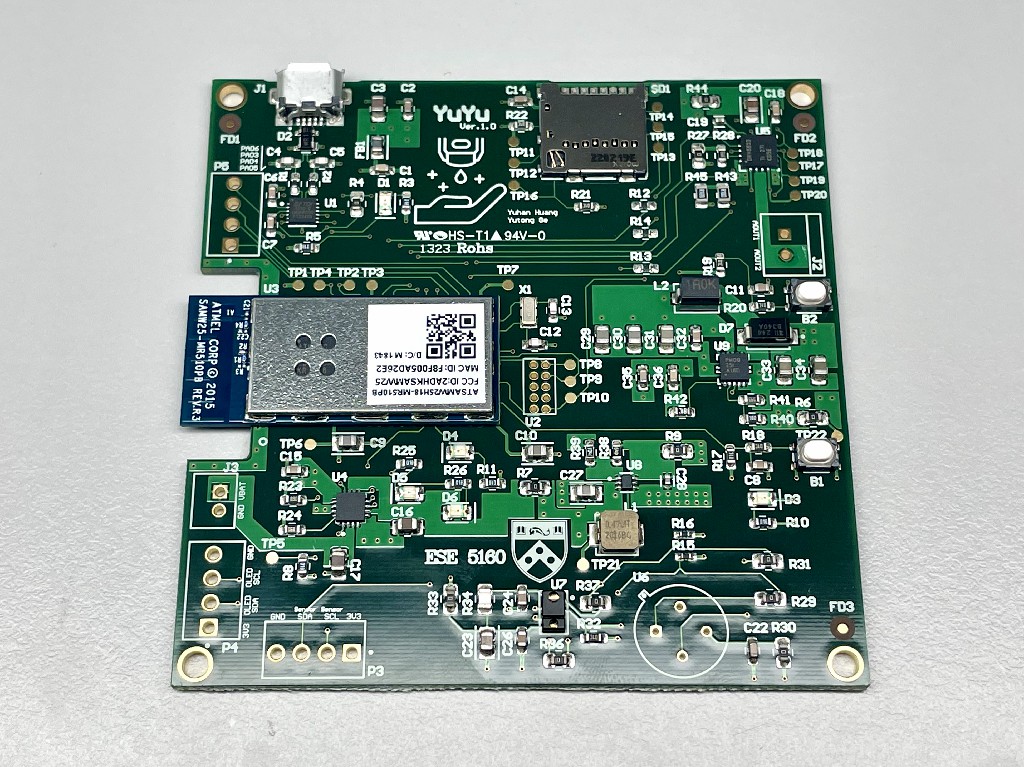
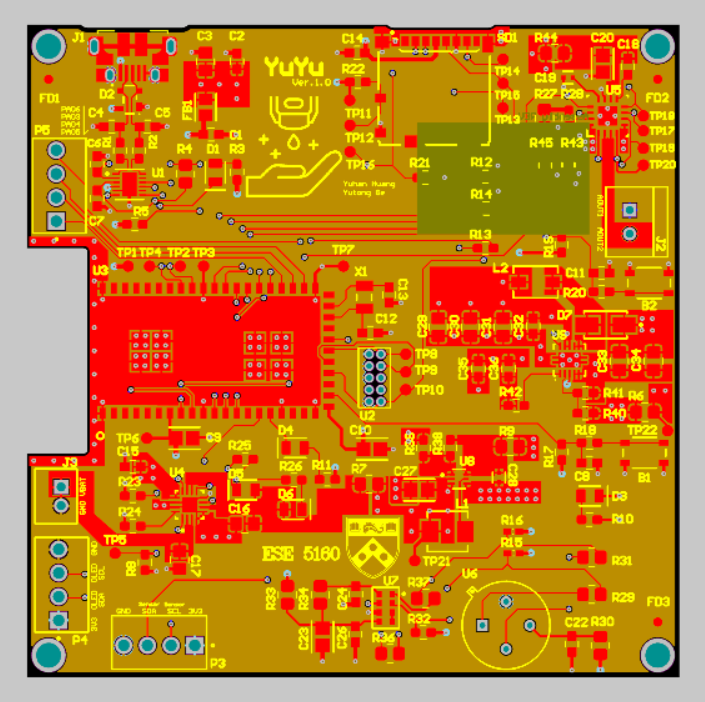
In the future, we will optimize the design of the buck circuit and add over-current protection to the circuit. We will also redesign the position and quantity of the connectors to facilitate external DuPont wires. In addition, we will also look to optimize the shape of the board to better integrate it into our prototype modeling.


Log in or sign up for Devpost to join the conversation.