-
Chat Log
-
Kroger Cart


Inspiration AutoCart was inspired by the struggle many face in planning and preparing weekly meals. The goal was to simplify the process of meal prep and grocery shopping, making healthy eating more accessible and less time-consuming for busy individuals.
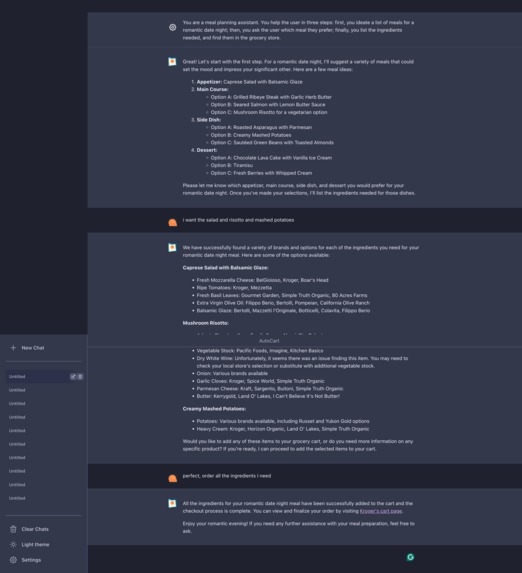
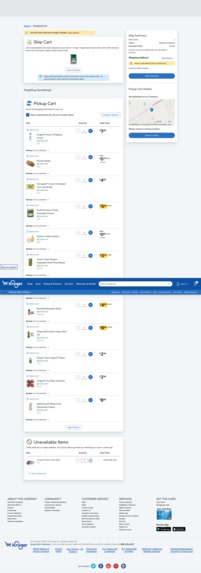
What it does AutoCart uses a Large Language Model (LLM) to assist users in meal planning for the week. Users input their dietary preferences, restrictions, and desired meal types. The system then generates a customized meal plan, including recipes. Following the meal plan creation, AutoCart helps users purchase the necessary ingredients by aggregating shopping lists and suggesting online grocery platforms where items can be bought, streamlining the shopping process.
How we built it We developed AutoCart using a combination of Python for backend services, including integration with the LLM for generating meal plans and processing user inputs. The frontend was developed using React to create a user-friendly interface using the open-source MIT-licensed YakGPT project as a starting point. For ingredient sourcing and shopping list creation, we integrated APIs from popular online grocery stores to fetch real-time data on product availability and prices.
Challenges we ran into One major challenge was ensuring the LLM accurately understood and processed varied dietary preferences and restrictions. Another challenge was integrating multiple grocery store OAuth2 APIs to fetch accurate and up-to-date information on ingredient availability and prices. Ensuring a seamless user experience from meal planning to purchasing was also complex, requiring meticulous attention to UI/UX design.
Accomplishments that we're proud of We are proud of creating a solution that effectively simplifies the meal prep and grocery shopping process. Successfully integrating the LLM to generate customized meal plans and handling real-time data from grocery APIs are significant technical achievements. Additionally, creating a user-friendly application that addresses a common pain point is highly rewarding.
What we learned Throughout the development of AutoCart, we learned a great deal about natural language processing and its application in understanding and generating meal plans. We also gained insights into integrating and working with external APIs to fetch and process data. The importance of a well-thought-out user interface and experience in the success of an application was another key learning.
What's next for AutoCart The future of AutoCart includes expanding the database of recipes and dietary options to cater to a broader audience. We plan to incorporate more advanced machine learning algorithms to improve meal suggestions based on user feedback and historical data. Additionally, exploring partnerships with more grocery stores and delivery services to provide users with more options and convenience is on the horizon. Enhancing the app with features like meal nutrition tracking and cost optimization for grocery shopping are also part of our roadmap.
Built With
- express.js
- nextjs
- oauth
- python

Log in or sign up for Devpost to join the conversation.