-
-
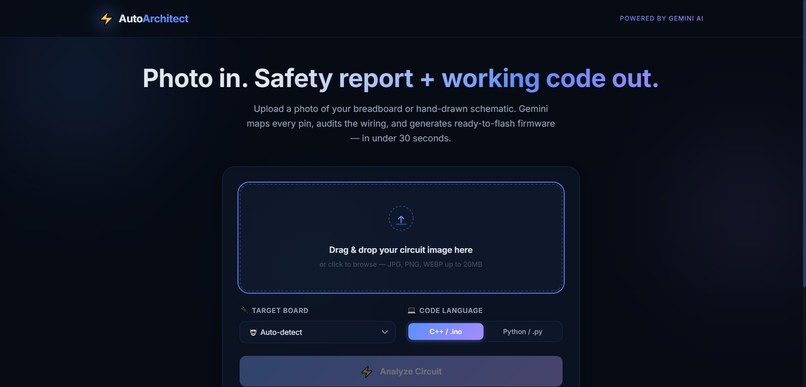
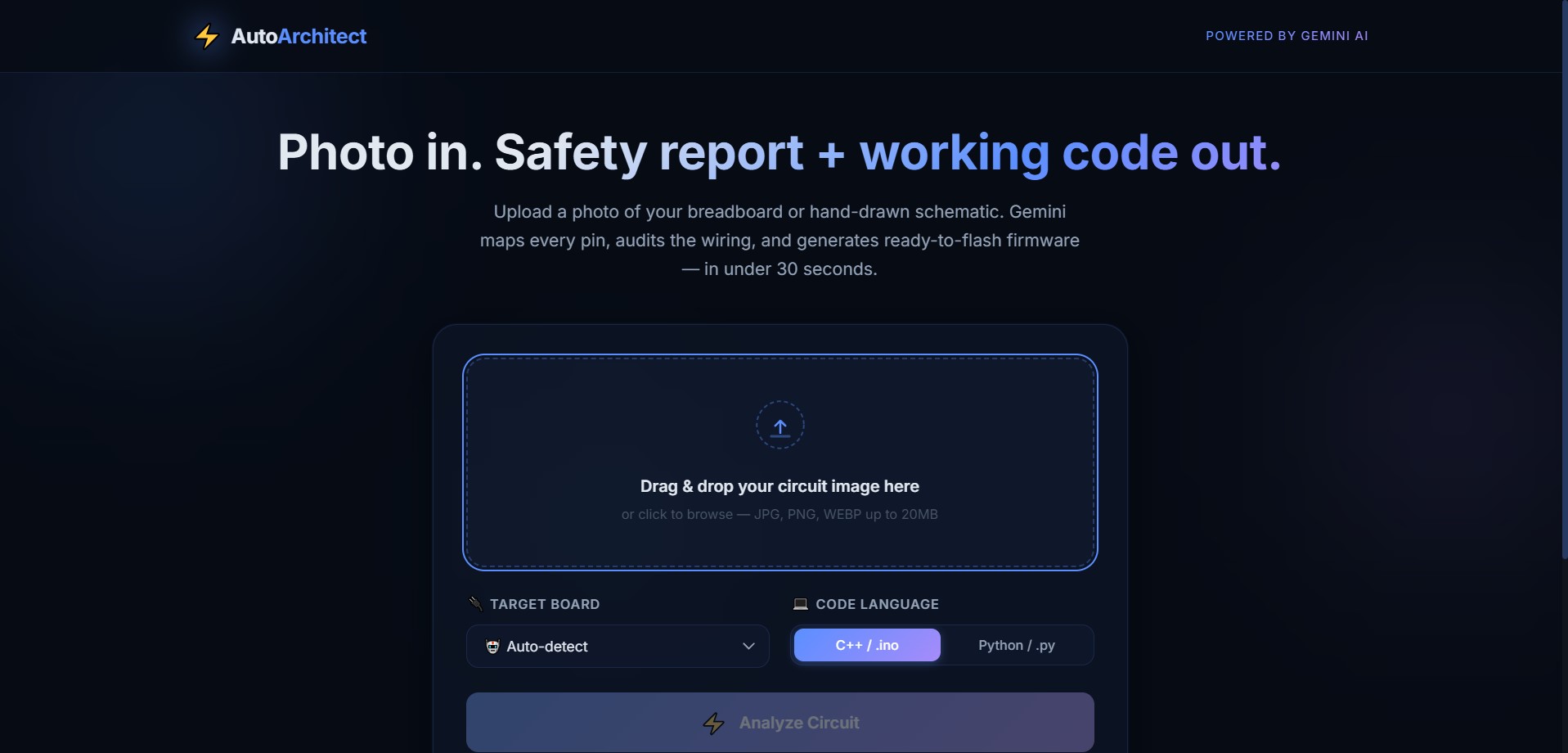
Homepage
-
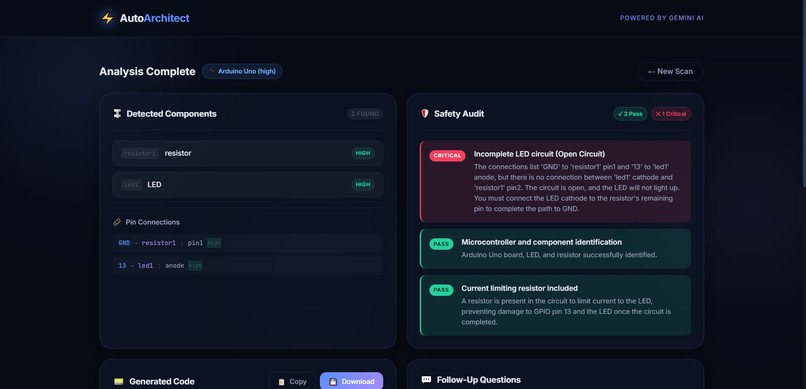
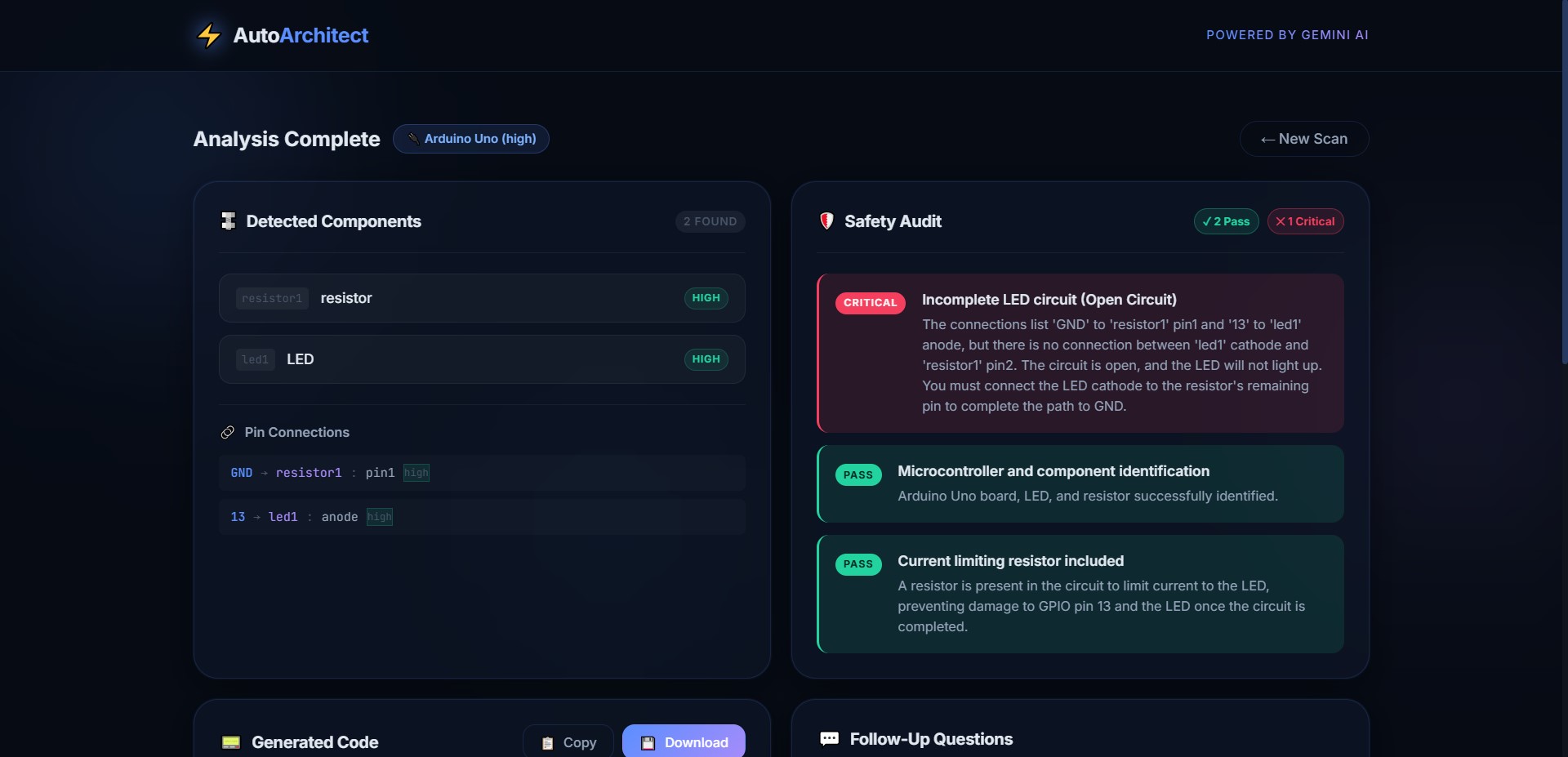
Components, Safety
-
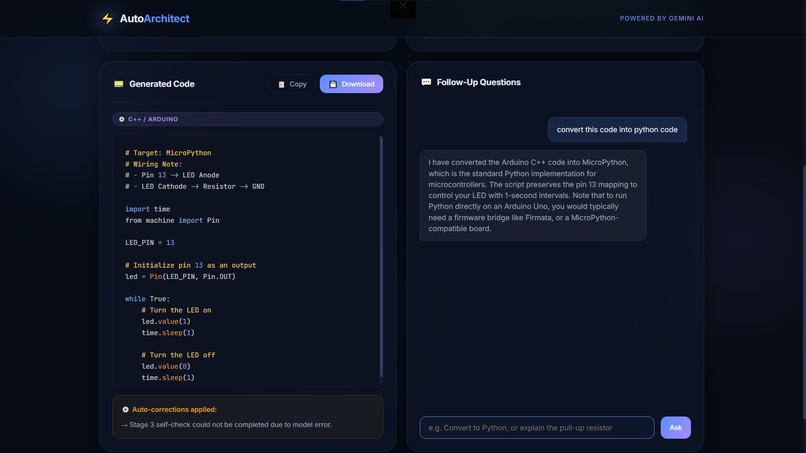
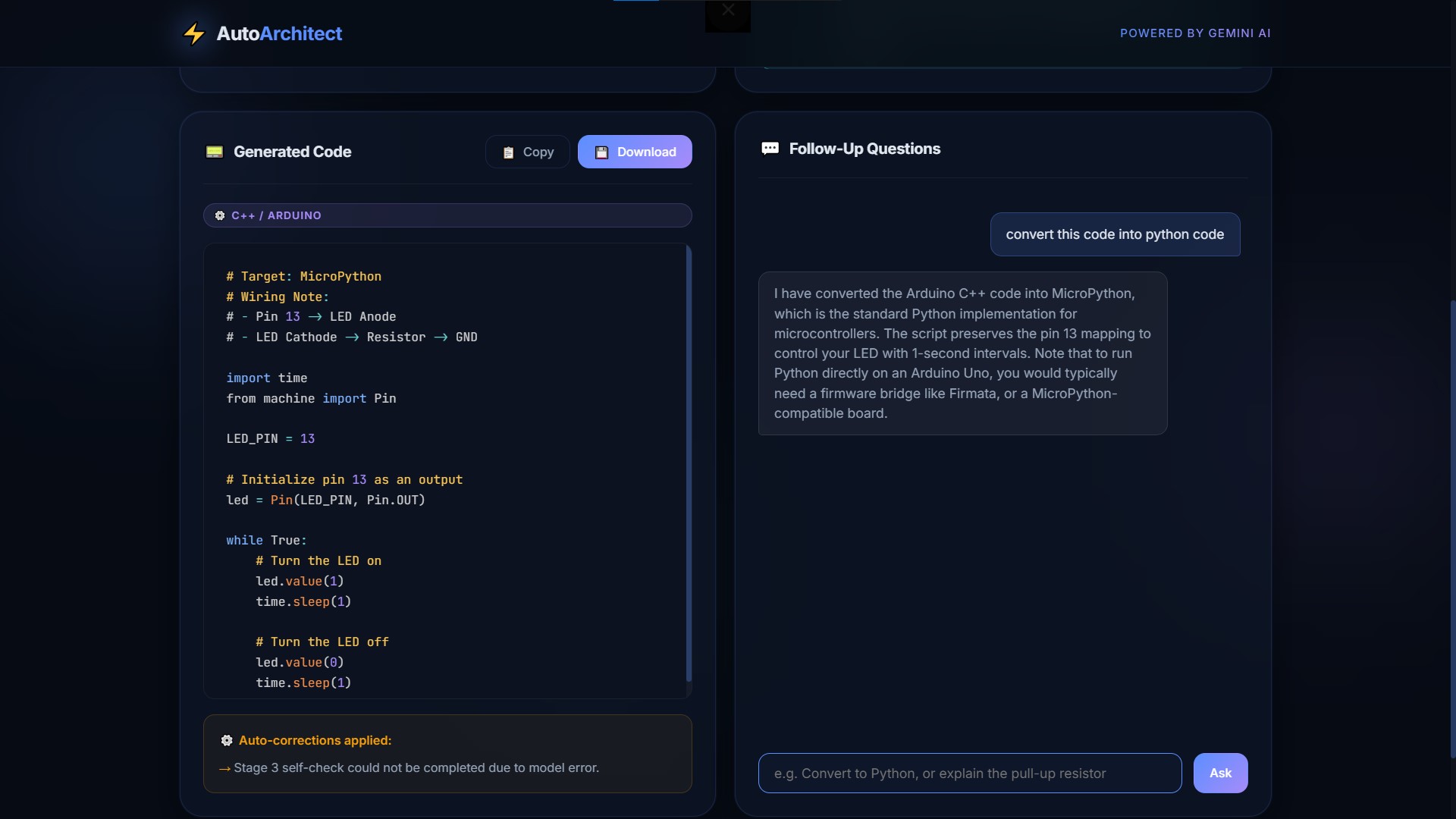
Code Generation and Refine chat system
-
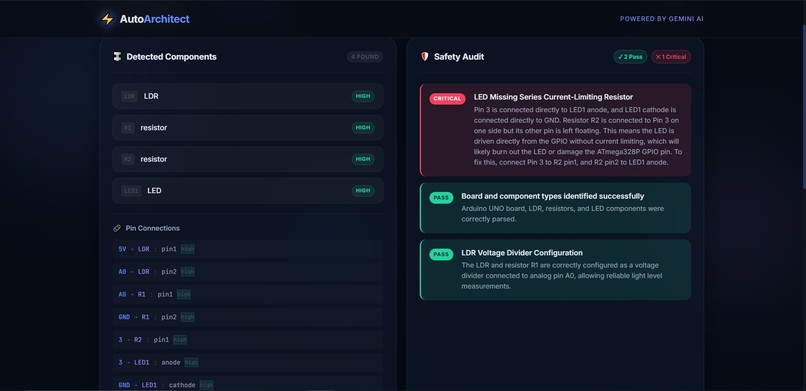
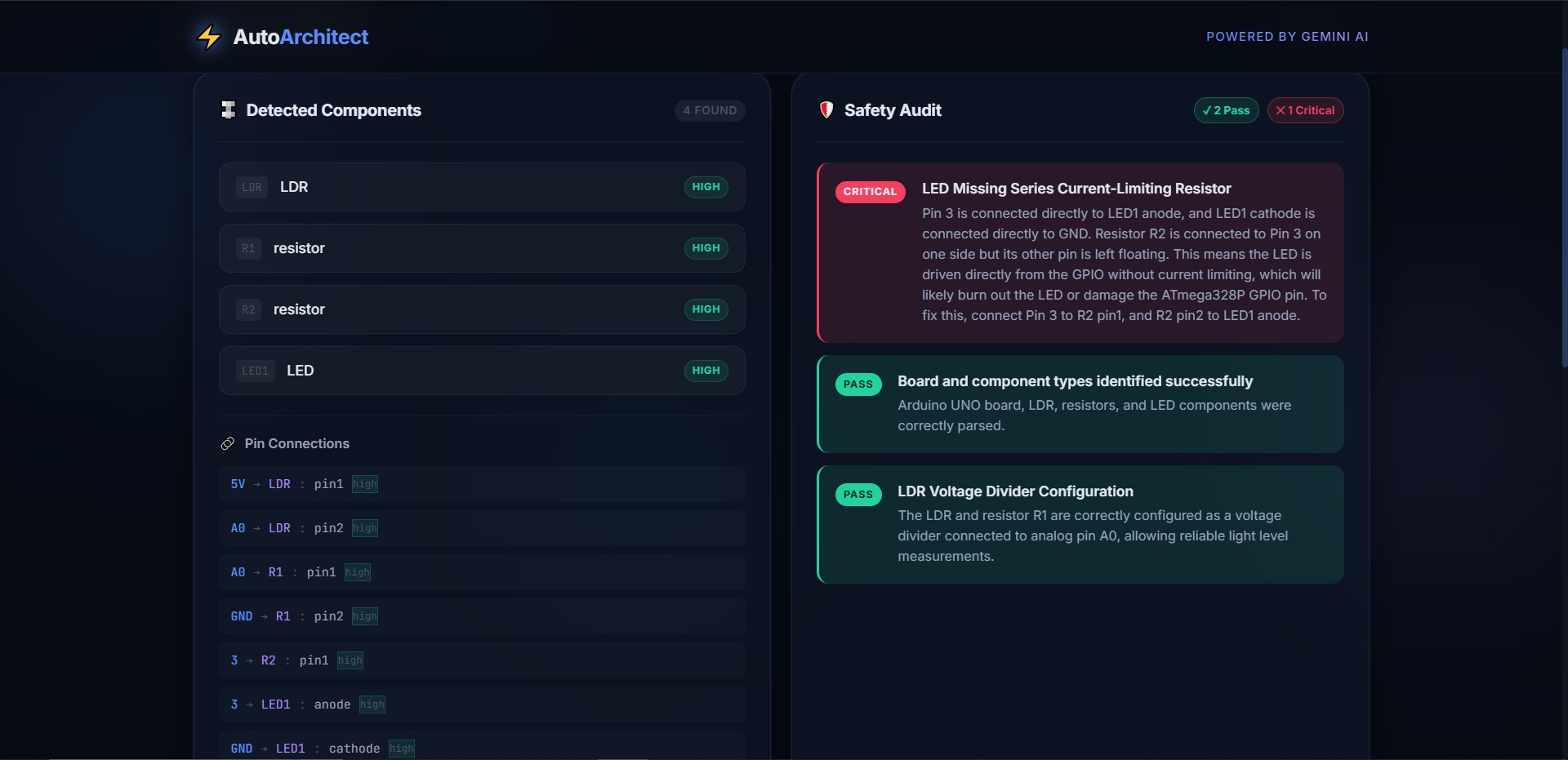
Output
Inspiration
Hardware prototyping often involves a frustrating cycle of wiring, debugging, searching datasheets, and writing repetitive firmware before a project even starts working. Students, hobbyists, and hackathon participants frequently spend more time troubleshooting than building. We wanted to create an AI-powered engineering assistant that bridges the gap between hardware assembly and functional embedded software.
What it does
AutoArchitect transforms a single photo of a breadboard circuit or schematic into a complete engineering report. It automatically identifies the microcontroller, components, and wiring connections, performs a safety audit to detect common electrical mistakes such as voltage mismatches, missing pull-up resistors, or unsafe wiring, and generates ready-to-flash Arduino (C++) or MicroPython firmware using the detected pin configuration. Users can also refine the generated code through an interactive AI assistant without re-uploading the circuit.
How we built it
We built AutoArchitect as a web application using Node.js, Express, HTML, CSS, and JavaScript, powered by Google's Gemini API. Rather than relying on a single AI prompt, we designed a three-stage AI pipeline:
Circuit Understanding – Gemini Vision extracts the board type, components, and wiring into structured JSON. Engineering Analysis – The extracted circuit is validated against embedded systems safety rules while generating firmware tailored to the detected hardware. Verification – A final AI validation step checks that every generated GPIO and pin reference matches the detected circuit before returning the result.
This multi-stage architecture makes the system more reliable and trustworthy than direct image-to-code generation.
Challenges we ran into
One of the biggest challenges was accurately interpreting wiring from a single image while minimizing incorrect assumptions. We also had to ensure consistent structured JSON responses from multimodal AI, build an effective safety-rule engine for embedded systems, and maintain pin-level consistency between detected hardware and generated firmware through an automated verification stage.
Accomplishments that we're proud of
We're proud of building a complete end-to-end AI engineering workflow that converts a single circuit image into a structured hardware description, performs an engineering safety audit, generates production-ready embedded firmware, and validates its own output—all within seconds. Instead of simply generating code, AutoArchitect understands and verifies hardware before producing firmware.
What we learned
This project taught us how to combine multimodal AI, structured prompting, engineering knowledge, and validation pipelines into a practical real-world application. We also gained valuable experience designing reliable AI workflows that prioritize accuracy, safety, and user trust rather than relying on a single generative AI response.
What's next for AutoArchitect
Our roadmap includes supporting additional microcontrollers and sensors, improving circuit recognition accuracy with larger datasets, adding visual circuit annotations and repair suggestions, integrating live datasheet validation through Google Search Grounding, and expanding the platform into a comprehensive AI assistant for electronics education, prototyping, and embedded system development.
Why this version is stronger
Compared to the original, this version:
Emphasizes engineering verification rather than just AI-generated code. Highlights the three-stage AI architecture, which is your main technical innovation. Uses language that judges appreciate: structured pipeline, validation, reliability, trustworthiness, and engineering workflow. Clearly differentiates AutoArchitect from generic "AI code generation" projects.

Log in or sign up for Devpost to join the conversation.