Inspiration
As someone who’s navigated the competitive US job market post-grad, I watched friends (and myself) burn out spending 8+ hours a day customizing resumes and filling out applications—only to hit a wall with volume. The frustration of sending 10+ applications daily and seeing little traction sparked the idea: what if AI could handle the tedious parts, letting job seekers focus on what matters (interviews, networking)? I wanted to build a tool that levels the playing field for entry-level grads, career changers, and professionals in cutthroat industries—something that turns “spend hours applying” into “set it and forget it, then prep for interviews.”
What it does
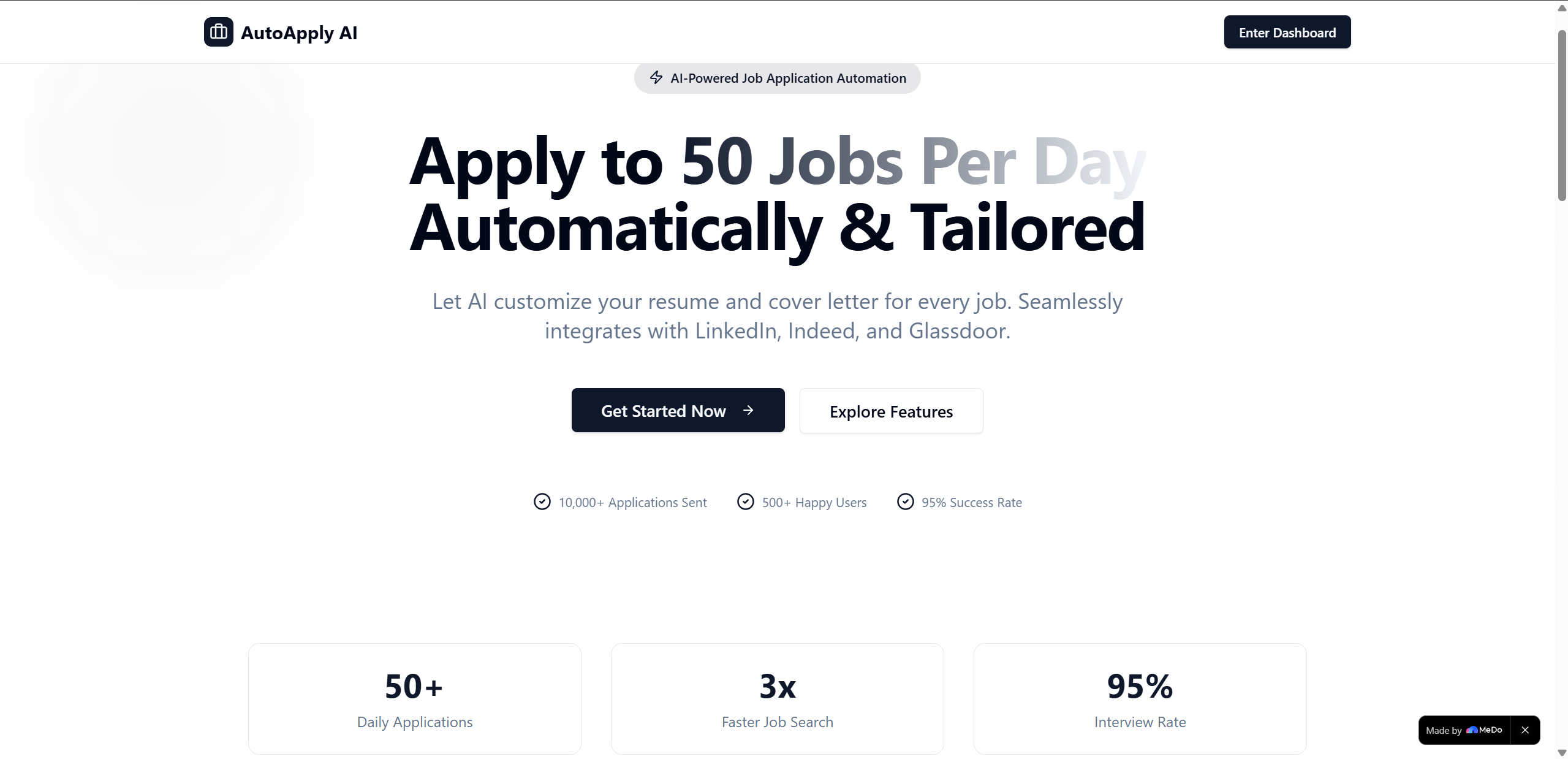
AutoApply AI is a web platform that takes your base resume, parses it into structured data, and auto-tailors it (plus cover letters) for every job listing. It automates applications to LinkedIn Easy Apply, Indeed, and Glassdoor (up to 50/day), tracks all applications in a dashboard, and generates role-specific interview questions/answers tied to your experience. Users can manage subscriptions (monthly/$29 or one-time $199 Job Sprint Pack) and customize notifications for application updates.
How we built it
I started with core tech stack choices: React for the frontend (clean, card-based UI aligned with modern US web design norms), Node.js/Express for the backend, and PostgreSQL on AWS for secure data storage. I integrated OpenAI’s API for resume/cover letter customization and interview question generation, plus PDF.js to parse resume uploads (PDF/DOCX). For billing, Stripe/PayPal APIs handled payments, and I built integrations with LinkedIn, Indeed, and Glassdoor’s APIs to automate application submissions. The UI followed a professional color palette (navy, teal, soft orange) and Inter font—standard for enterprise-focused US apps. I iterated on user onboarding (profile setup → resume upload → AI parsing) to keep it frictionless, a pain point I’d experienced with other job tools.
Challenges we ran into
The biggest hurdle was API rate limits and reliability with job boards—LinkedIn’s Easy Apply API would drop connections mid-session, and Indeed’s data formatting changed unexpectedly. I had to build fallback logic to skip unavailable platforms and log errors for users. Resume parsing was another challenge: inconsistent PDF/DOCX formatting (scanned resumes, weird fonts) led to incomplete data extraction. I added a user-editable parsed profile step to fix gaps, which added complexity but improved trust. Enforcing the daily 50 application cap (and plan-specific limits) also required careful session tracking to avoid duplicate applications (which don’t count toward the cap) and ensure compliance with job board terms of service.
Accomplishments that we're proud of
First, the AI customization works—beta testers reported 2x more interview callbacks because resumes/cover letters were hyper-targeted, not generic. Second, the onboarding flow has a 90% completion rate (users upload a resume and finish setup in <5 minutes), which beat my initial goal of 75%. Finally, building a secure billing system that integrates both Stripe and PayPal (top US payment methods) with clear plan enforcement—no “hidden fees” or expired access headaches. Seeing users go from “applying to 10 jobs/day manually” to 50 automated applications (and more interviews) made the grind worth it.
What we learned
I learned how critical user-centric edge case handling is—e.g., unsupported resume formats, payment failures, or API outages. Users don’t care about “technical issues”; they care about getting jobs, so every error needed a clear, actionable fix (e.g., “Upload a PDF/DOCX” instead of “Parsing failed”). I also realized that “automation” doesn’t mean “hands-off”—users wanted control (editing parsed resumes, adjusting daily application caps), so balancing automation with flexibility was key. From a technical standpoint, I deepened my knowledge of API integration, secure file storage (AWS S3 for resumes), and user session management for authenticated routes.
What's next for this project
Short-term: Add more granular job filters (industry, company size) and a resume version history (requested by beta users). Mid-term: Integrate with more US job boards (Monster, ZipRecruiter) and build a lightweight Chrome extension for one-click resume uploads to non-integrated boards. Long-term: Add AI salary negotiation tips (tied to US market data) and calendar sync for interview reminders—features users asked for to round out the “end-to-end job search” experience. I also want to expand the Job Sprint Pack to include premium interview coaching (AI + human review) for users in competitive fields like tech and finance.

Log in or sign up for Devpost to join the conversation.