Inspiration
The UK used car parts market is worth over £2.8 billion, yet it still relies on outdated platforms like eBay and Facebook Marketplace. Buyers often struggle to find the correct parts for their vehicles, leading to wasted time, money, and a lack of trust in listings. At the same time, scrapyards and dismantlers have thousands of usable parts that are difficult to list and sell efficiently. We wanted to build a solution that modernises this space and removes uncertainty from car part compatibility.
What it does
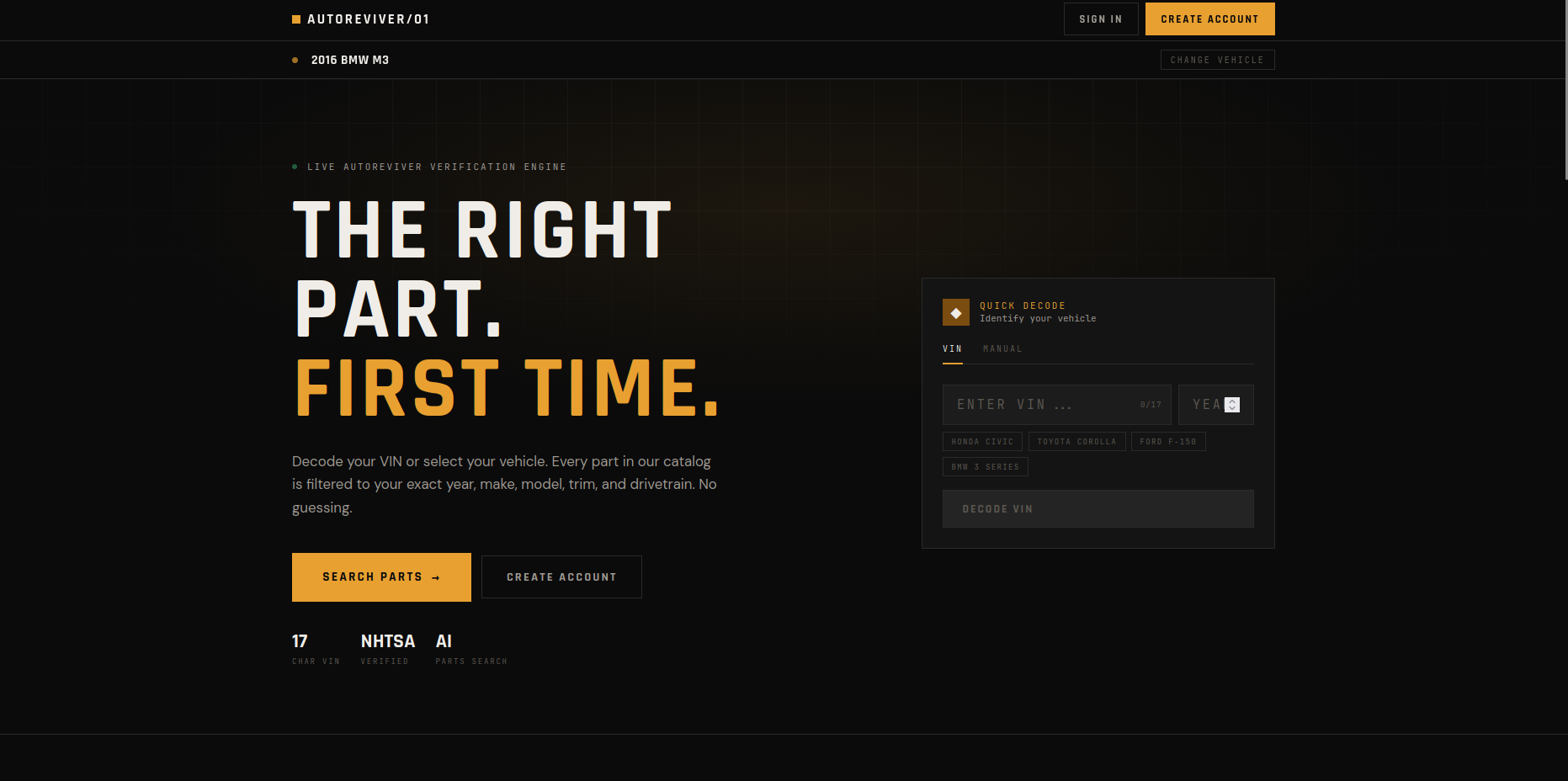
Auto-Reviver is a web platform that helps users find the correct car parts with confidence.
It allows users to:
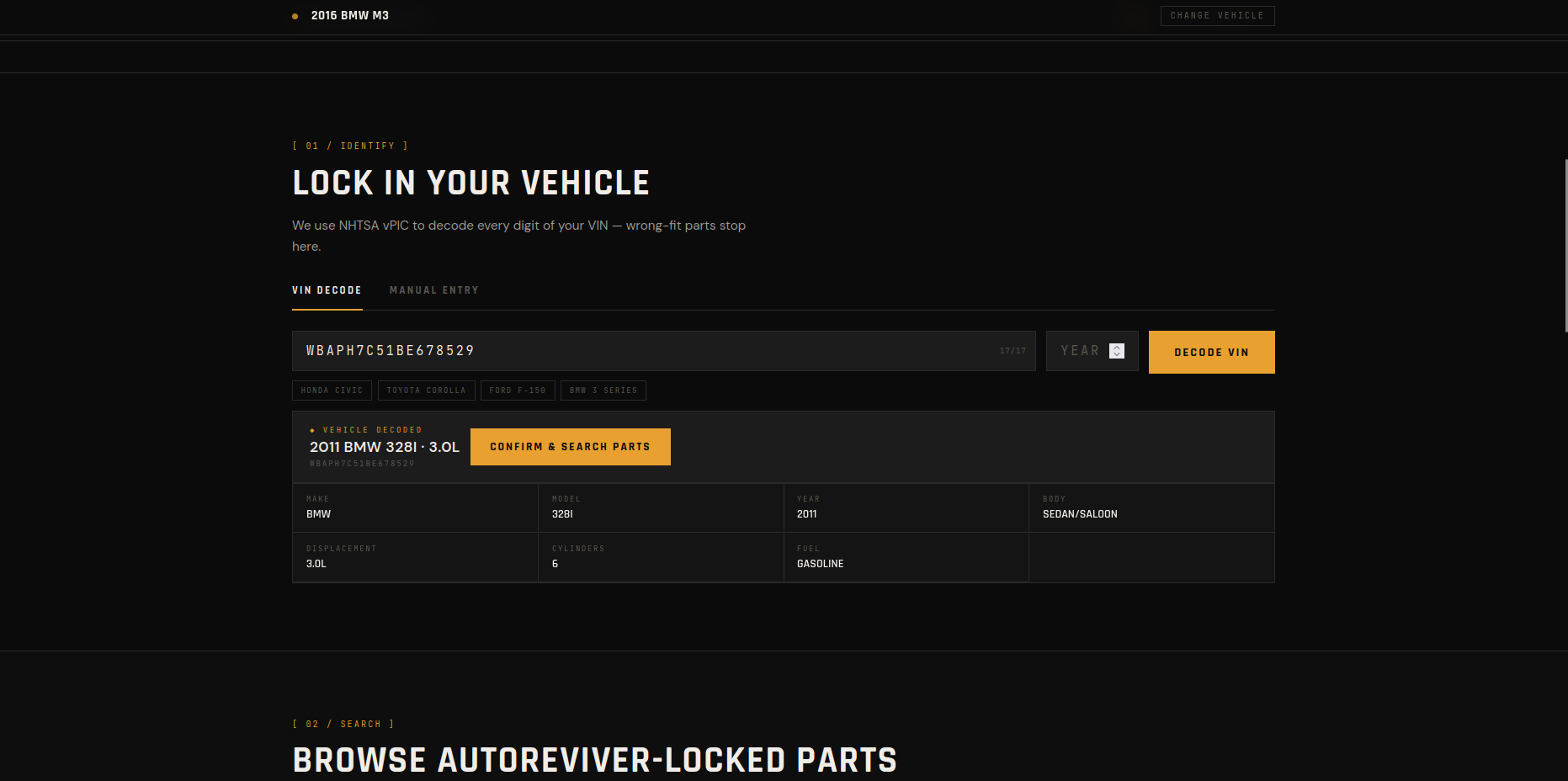
- Decode VIN numbers to retrieve exact vehicle details
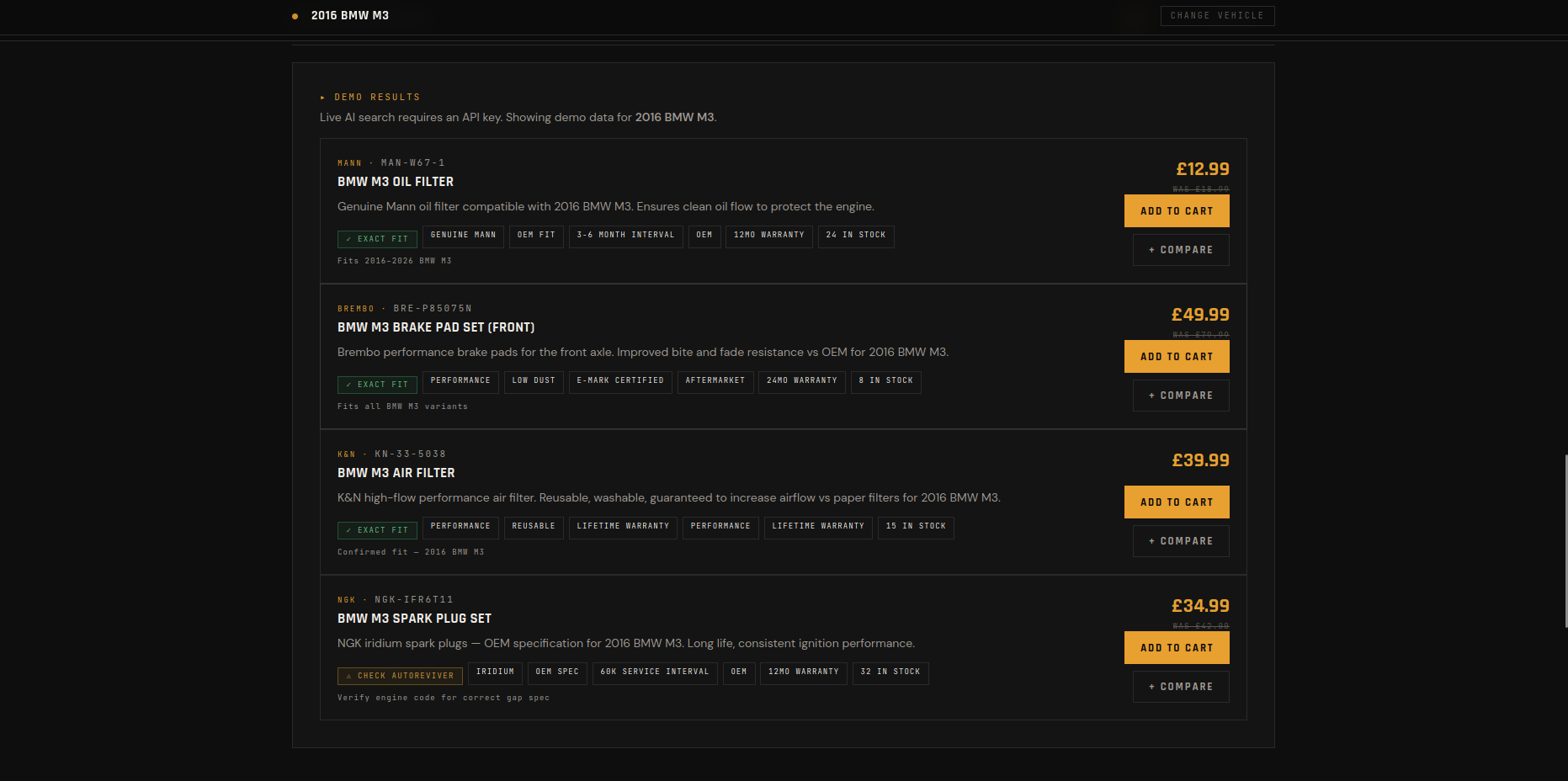
- Automatically filter and show compatible car parts
- Search for parts tailored to a specific vehicle
- Use image-based part recognition to identify unknown components
- Support sellers with better listing and categorisation tools
The goal is to remove guesswork and make car part buying and selling more accurate and reliable.
How we built it
We built Auto-Reviver as a web application using HTML, CSS, and JavaScript.
- VIN decoding is powered by the NHTSA vPIC API
- Vehicle data is used to filter compatible parts
- A prototype image recognition system helps identify parts from photos
- The frontend displays results dynamically based on user input
- We structured the system to simulate a full marketplace workflow between buyers and sellers
Challenges we ran into
One of the biggest challenges was handling accurate vehicle-to-part matching. Different trims, years, and engine types make compatibility complex.
We also faced difficulties with:
- Structuring VIN data into usable filters
- Designing a system that could scale beyond a simple prototype
- Working with image-based part recognition without a full ML model
- Keeping the interface simple while handling complex backend logic
Accomplishments that we're proud of
We are proud that we managed to build a working end-to-end prototype that demonstrates:
- Real VIN decoding into structured vehicle data
- A functional compatibility-based search system
- Early-stage image recognition concept for parts
- A clean and simple user interface that simulates a real product
Most importantly, we turned a real-world industry problem into a working technical solution within a short timeframe.
What we learned
Through building Auto-Reviver, we learned how complex real-world vehicle data can be and how important data standardisation is in marketplaces.
We also improved our skills in:
- Working with external APIs
- Structuring full-stack web applications
- Designing user flows for non-technical users
- Building prototypes under time constraints
What's next for Auto-Reviver
Next, we plan to expand Auto-Reviver into a fully functional marketplace by:
- Improving VIN decoding accuracy and coverage
- Training a dedicated AI model for part image recognition
- Integrating live scrapyard inventory systems
- Adding user accounts and seller dashboards
- Building a mobile app for easier on-the-go part identification
- Introducing trust and verification systems for listings
Our long-term vision is to become the infrastructure layer for the used car parts industry.

