-
AutoMedic Logo
-
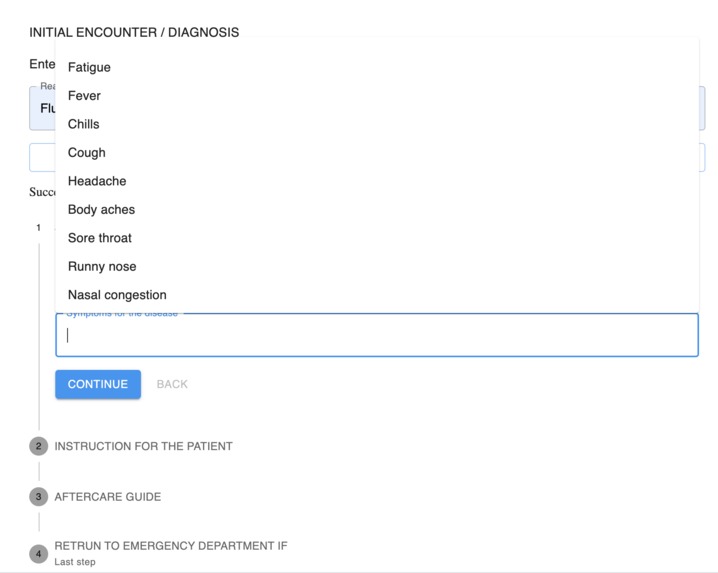
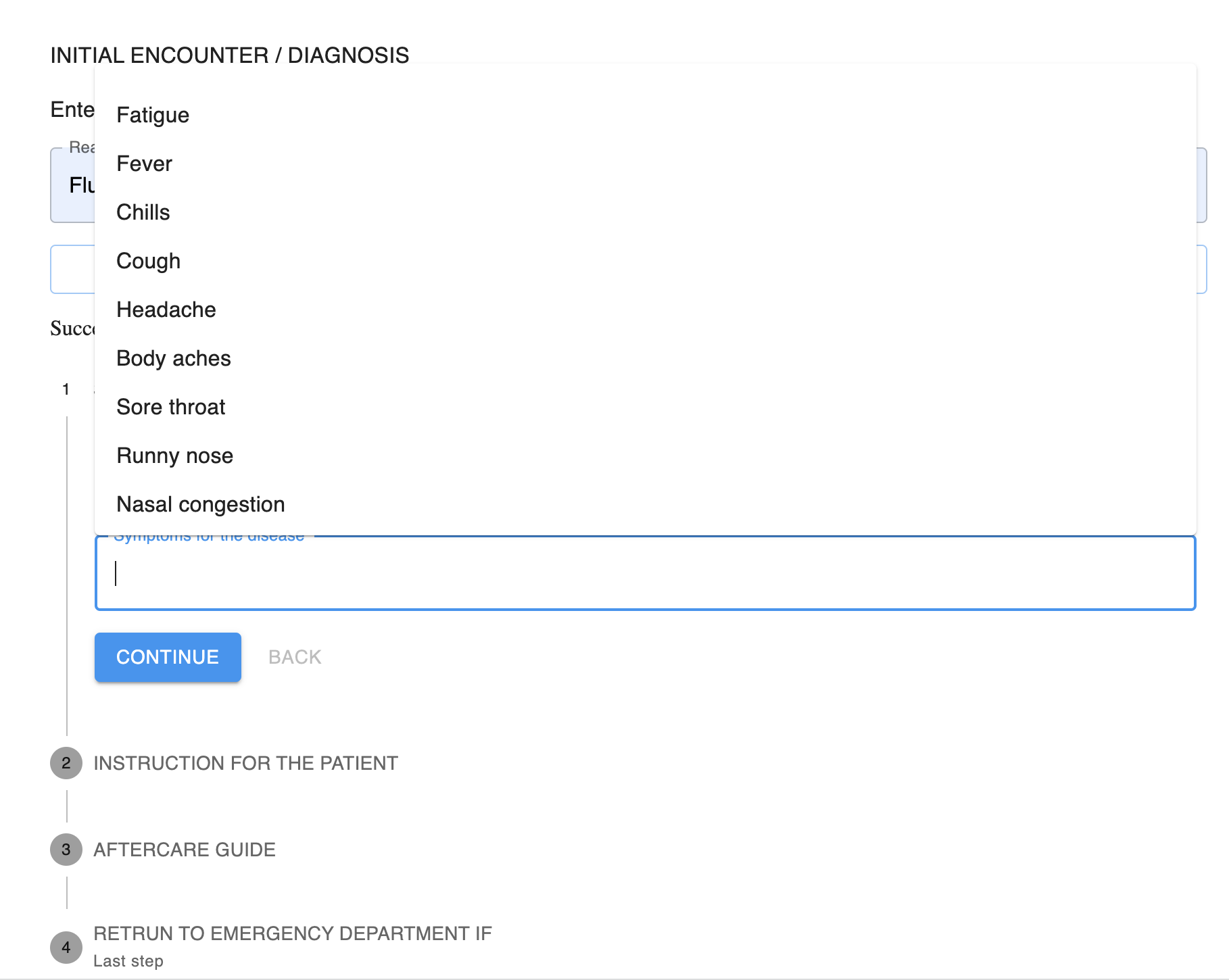
Example auto-generated drop-down selection
-
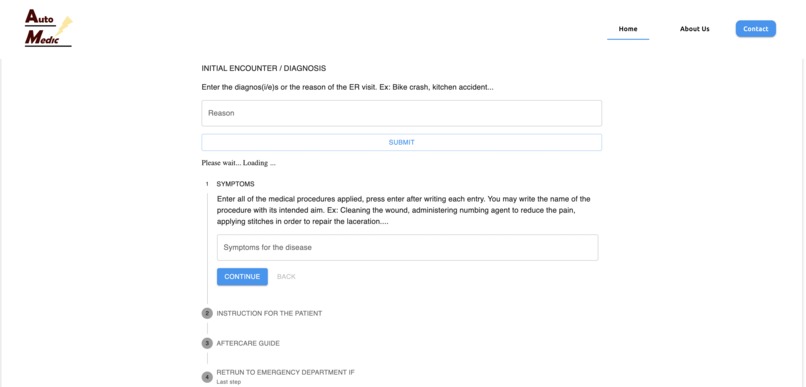
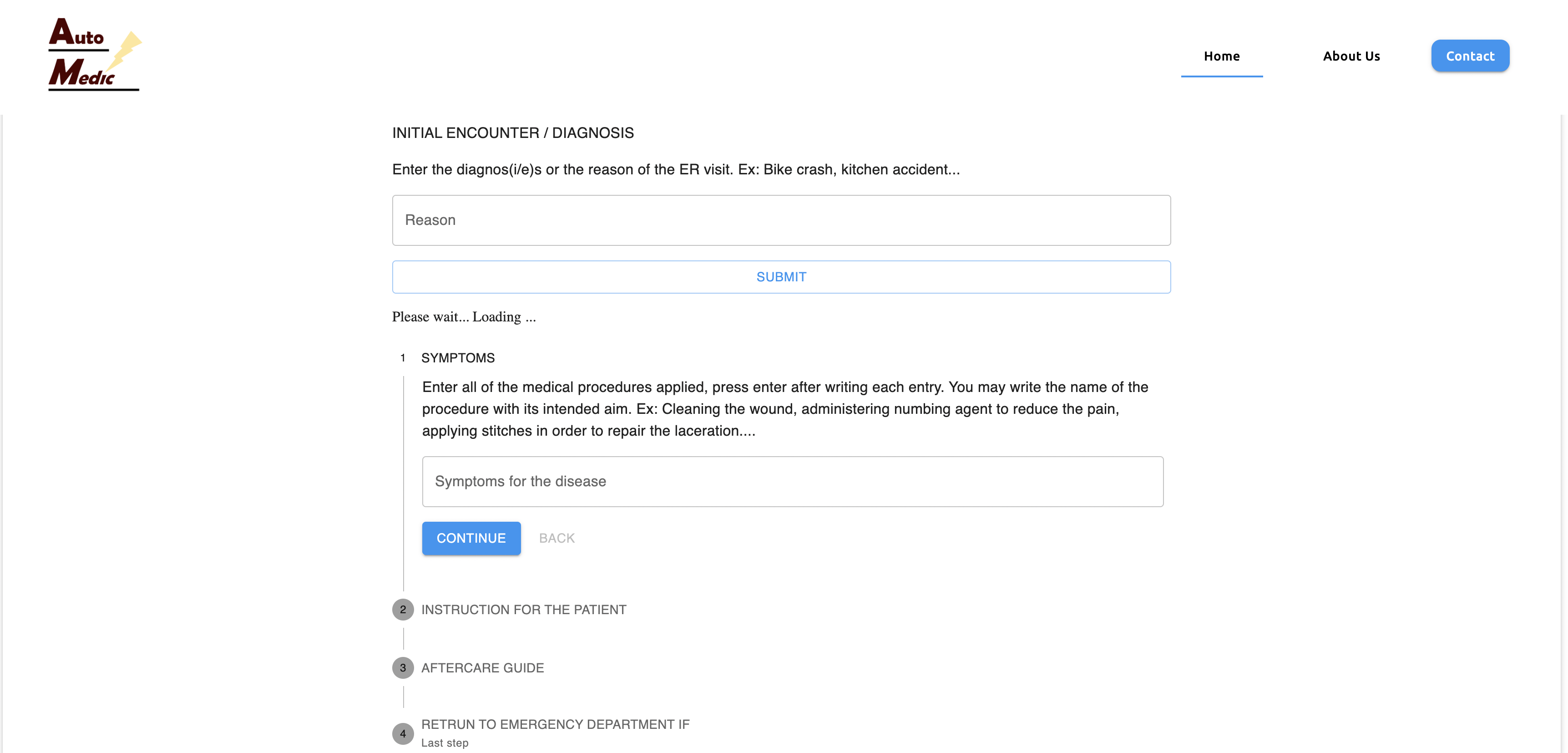
User input area
-
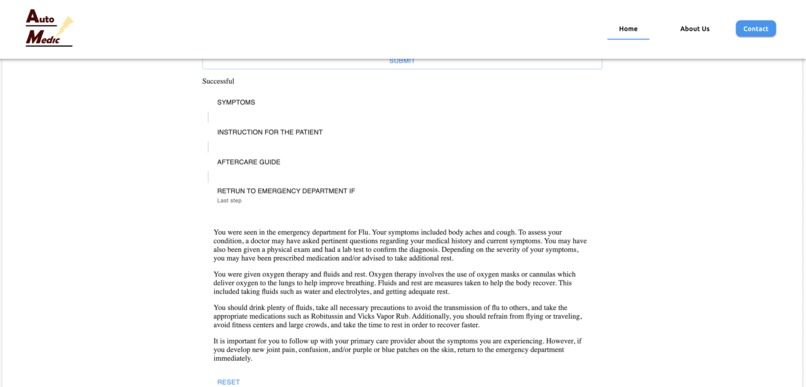
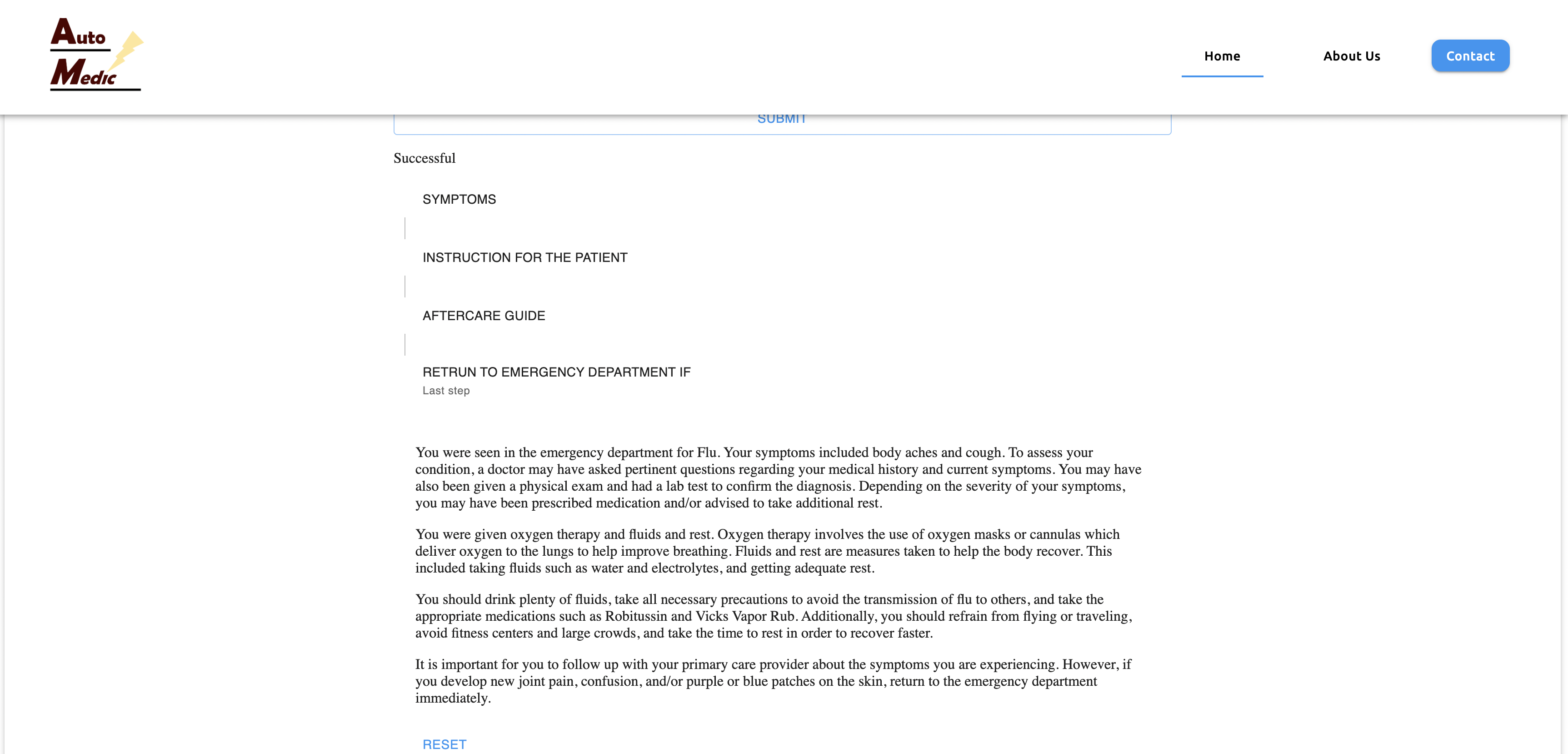
Example summary generation
-
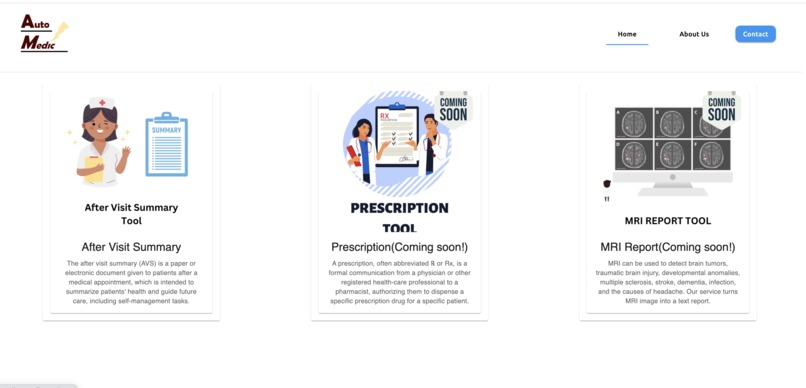
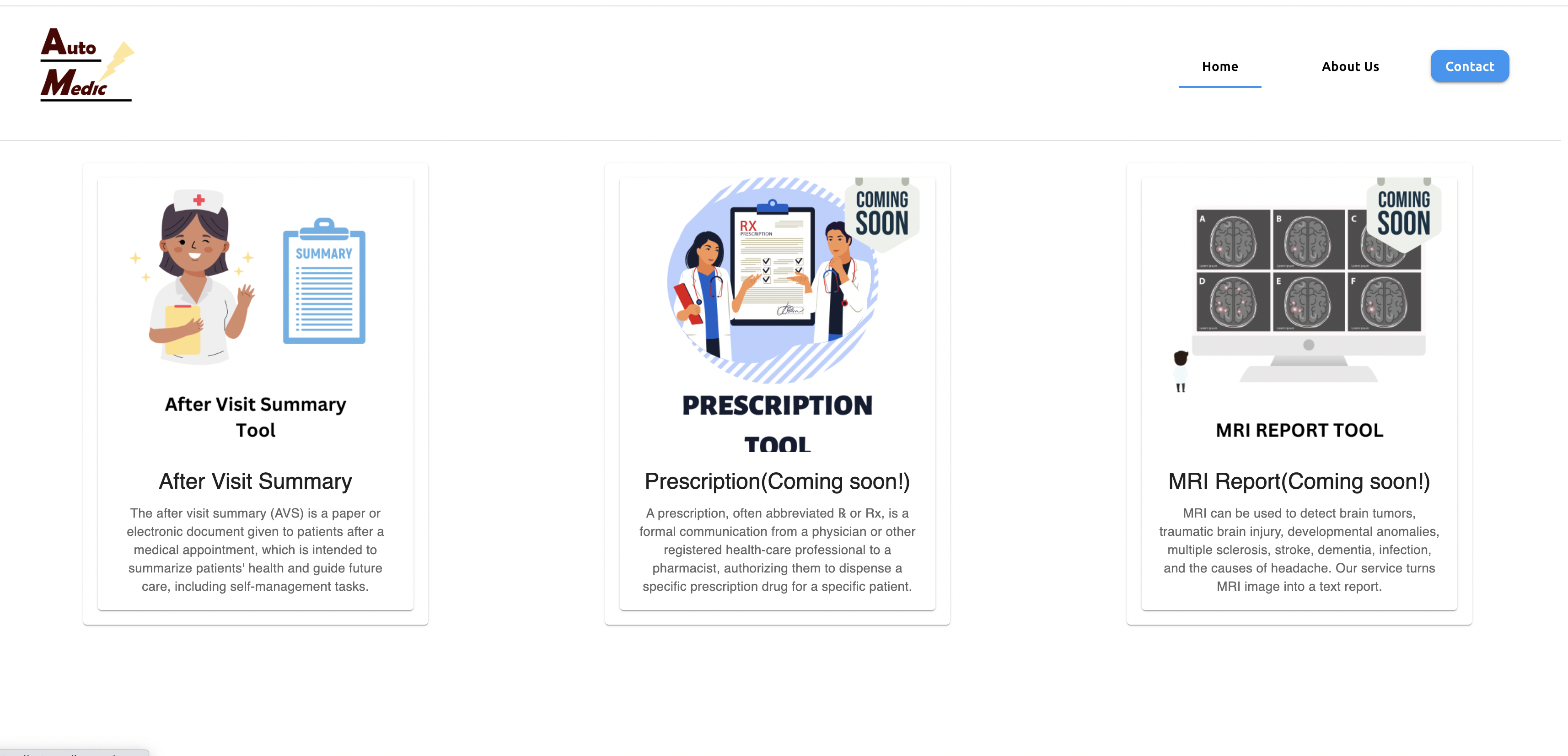
Front page
Inspiration
We were inspired to create our product because of one of our teammate's recent experience in our healthcare system. After a particularly bad bike accident, he went to the emergency department to be checked on but faced egregious wait times due to inefficiencies within the hospital. Unfortunately, the medical staff is so occupied with administrative work such as filling out forms, that their valuable time, which could be spent with patients, is drawn thin. We hoped to make something that could address this issue, which will both lower costs of operation and increase patient satisfaction.
What it does
Our product is a web page that uses the language model GPT-3 to expedite the process of creating patient visit summaries. The UI prompts the user to simply enter a few words or phrases pertaining to the patient's situation - their initial incident, symptoms, and treatments - and the model, along with our back-end, works to synthesize it all into a summary.
How we built it
Much of the beauty of this project lies in the UI, which streamlines the whole process. The web page was built using React with components from Google's Material UI to easily integrate front- and back-end. We also used OpenAI's GPT-3 playground to test various queries and eventually decide on the exact ones that would be used within the React framework.
Challenges we ran into
Working with GPT-3 proved to be a trickier task than expected. The language model was often rather fickle, producing content that we found to be irrelevant or even incorrect. Even more confounding was formatting the results we got. We tried a variety of methods of generating the multi-paragraph structure that we wanted, yet all of them had some sort of inconsistency. Ultimately, we realized that the reliability we needed depended on more simplicity, and thus came up with simpler, but more streamlined queries that got the job done consistently.
Accomplishments that we're proud of
We are proud of having built a product from scratch while implementing cutting-edge natural language technology. It was exciting to see the components of our site develop from its planning stages and then come together as an actual product that can feasibly be deployed for actual use.
What we learned
Having been so entranced by ChatGPT recently, we learned how to integrate large language models into applications for ourselves. It turns out that it was much more difficult than just typing a question into ChatGPT, and designing the pipeline became a valuable learning experience.
What's next for Untitled
Despite having such a niche application, our project has many possibilities for expansion. We can further optimize the process with better, perhaps more specifically trained language models that will be able to predict possible symptoms or treatments for an incident. Additionally, we can expand our concept and product to other similar administrative tasks that take up the valuable time of medical workers, helping to expedite many more facets of our healthcare system.


Log in or sign up for Devpost to join the conversation.