-
-
-
-
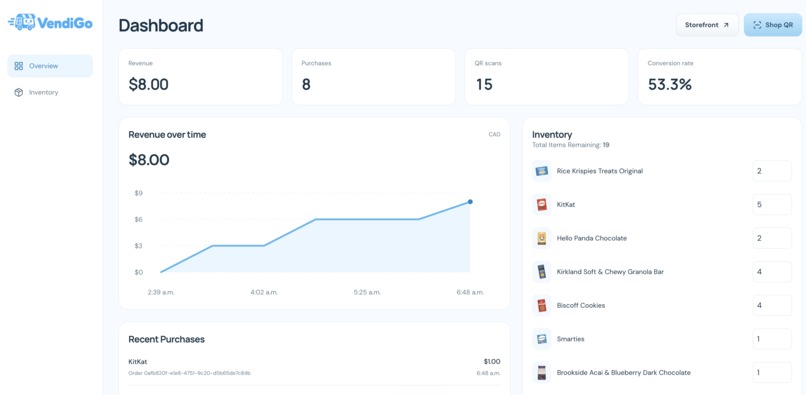
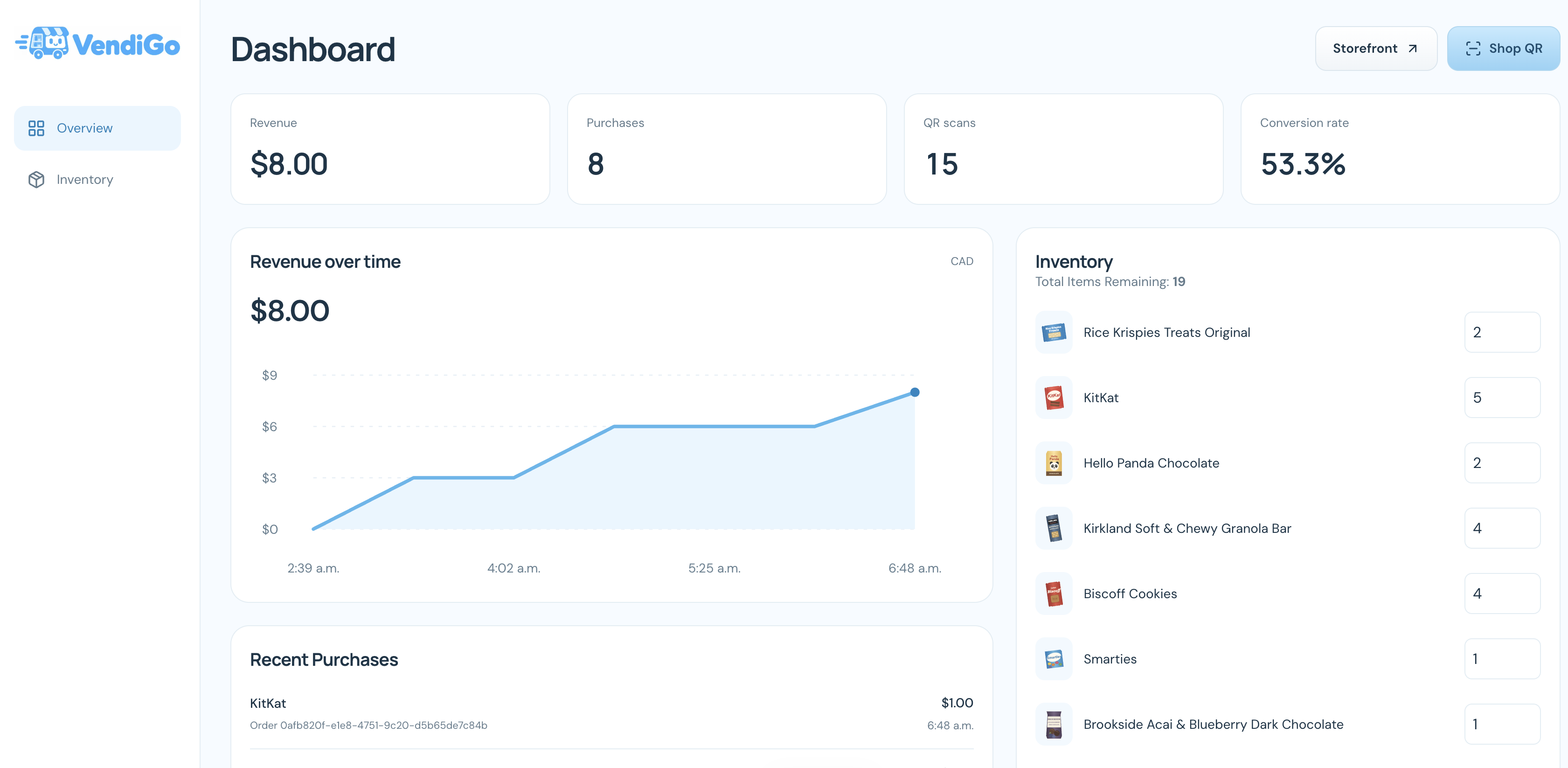
SaaS Dashboard (for business)
-
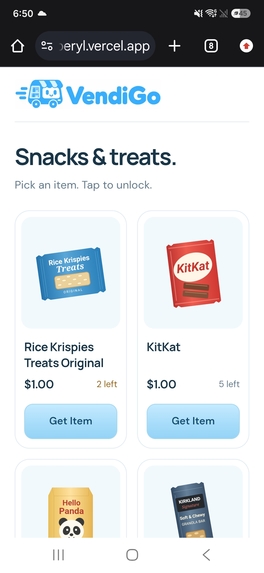
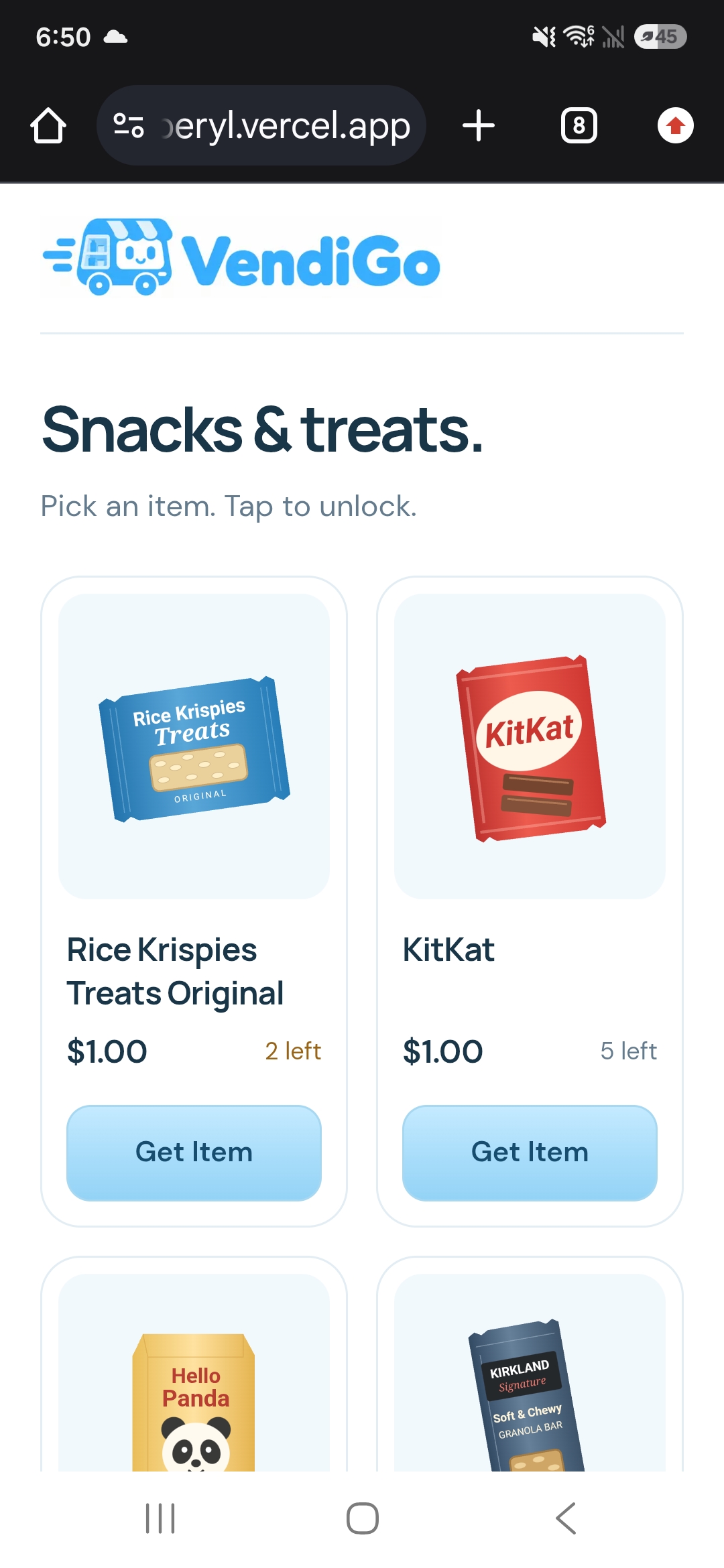
Menu (for consumer)
-
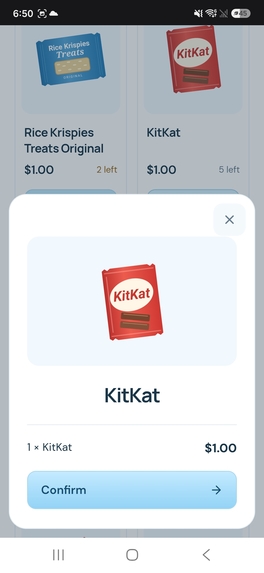
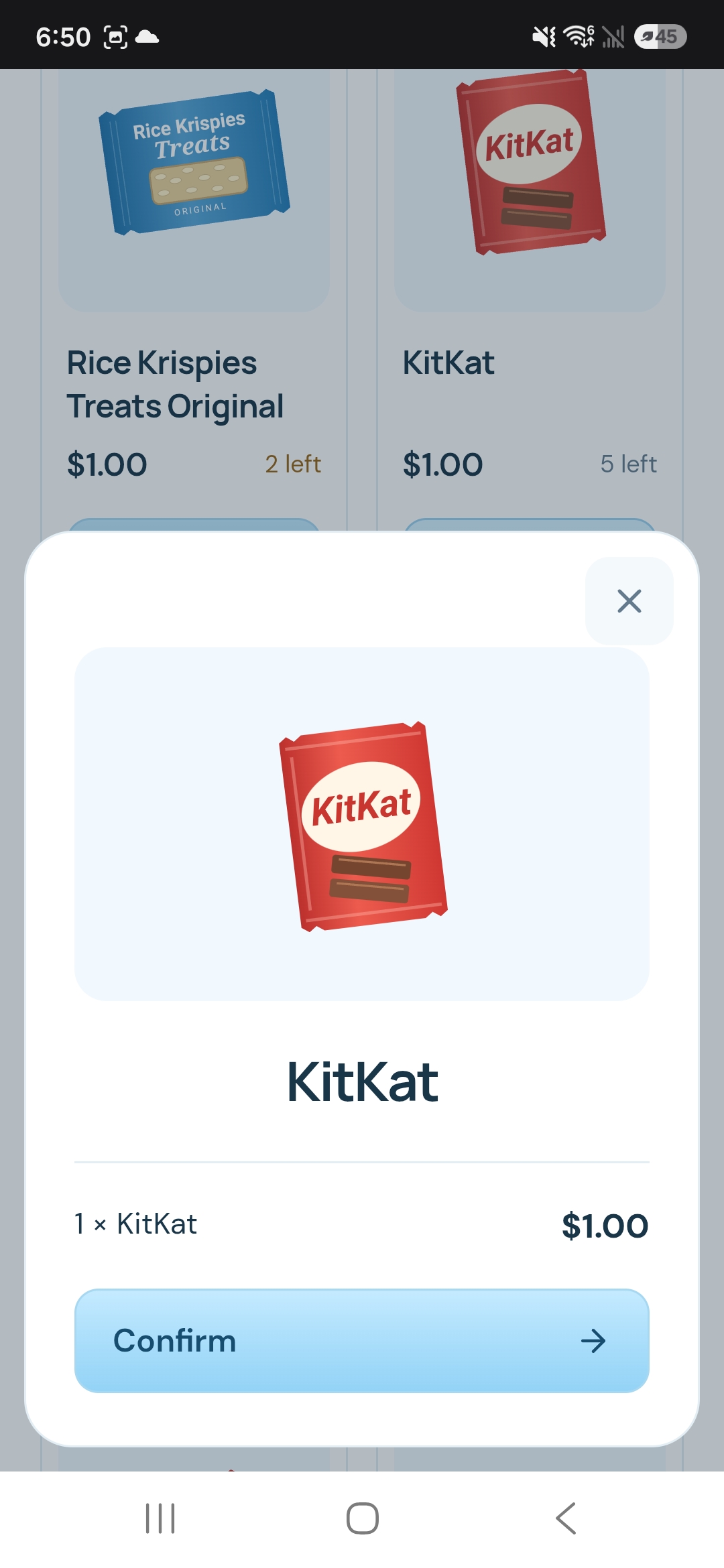
Confirm checkout (for consumer)
-
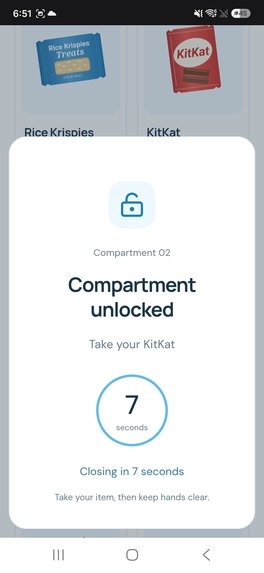
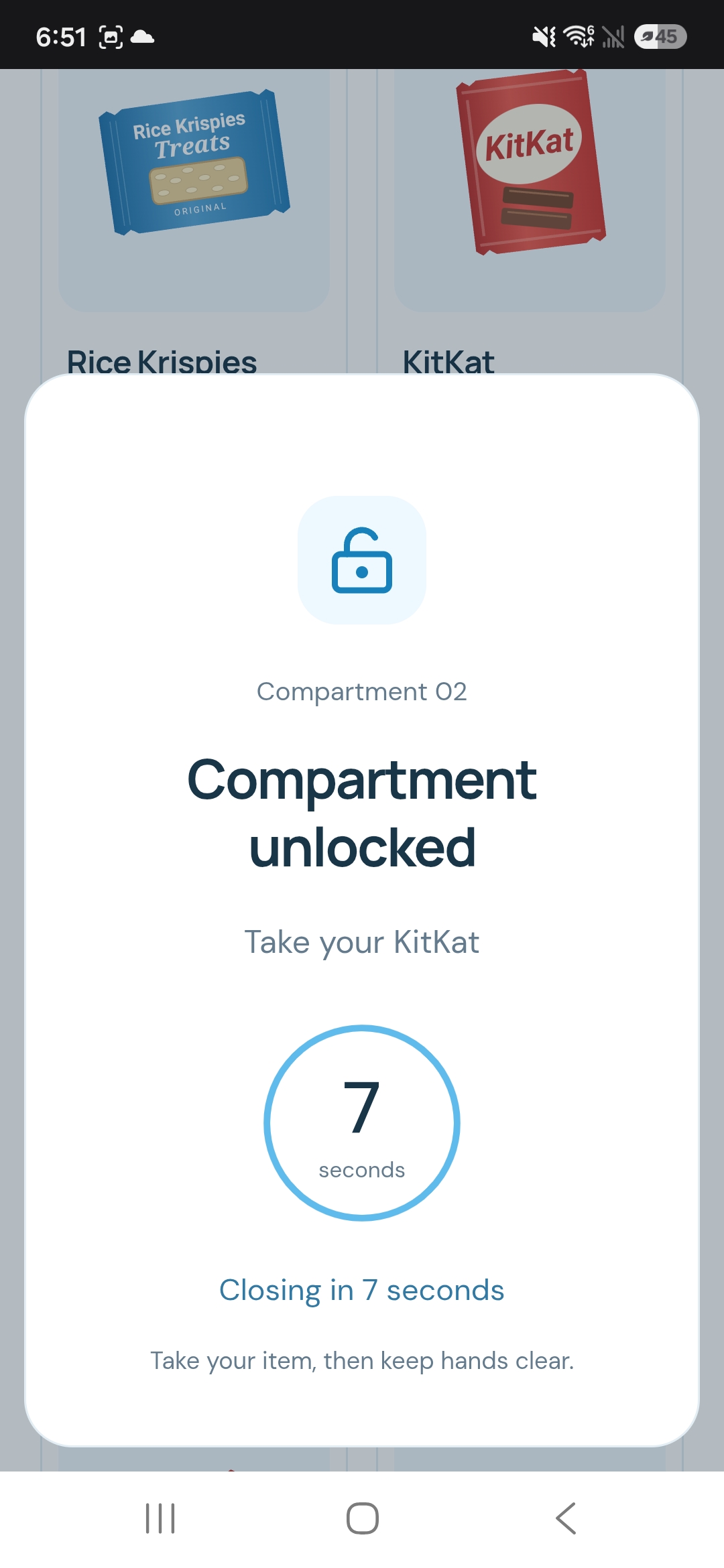
Lid countdown (for consumer)
-
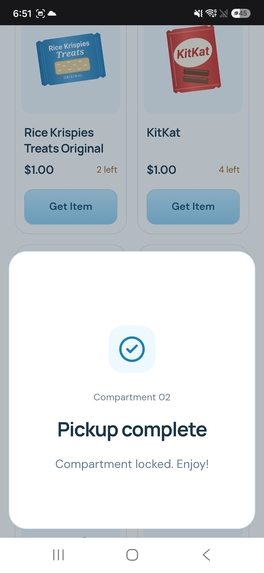
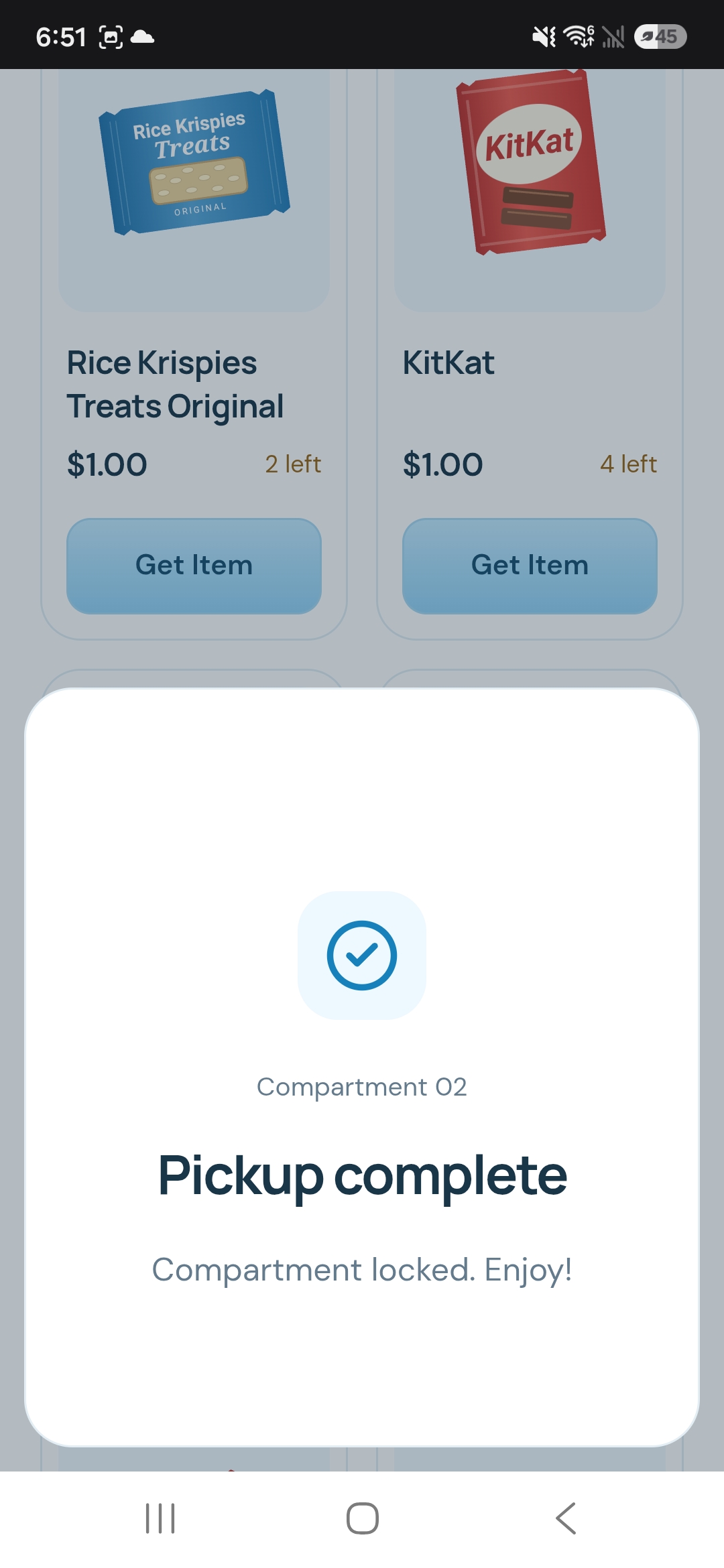
Pickup complete (for consumer)
-
-
Inspiration
At crowded events like stadiums, festivals, and hackathons, buying food often means leaving your seat, finding a booth, and waiting in line. Human vendors can bring products directly to customers, but they are expensive to operate and difficult to scale.
We wanted to build a storefront that could move directly to where demand is.
Business model
VendiGo is built for food and beverage brands, event venues, festivals, and stadiums. We make money through deployment fees for each event, transaction fees on every sale, and recurring SaaS subscriptions for access to the operator dashboard, inventory management, sales analytics, and demand data.
What it does
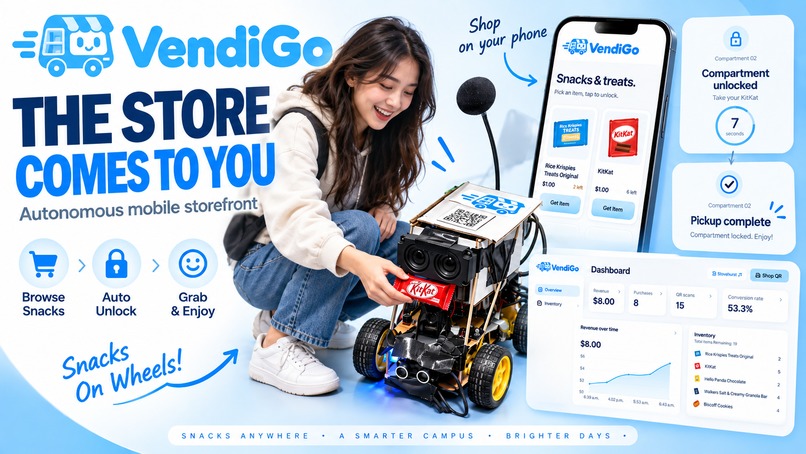
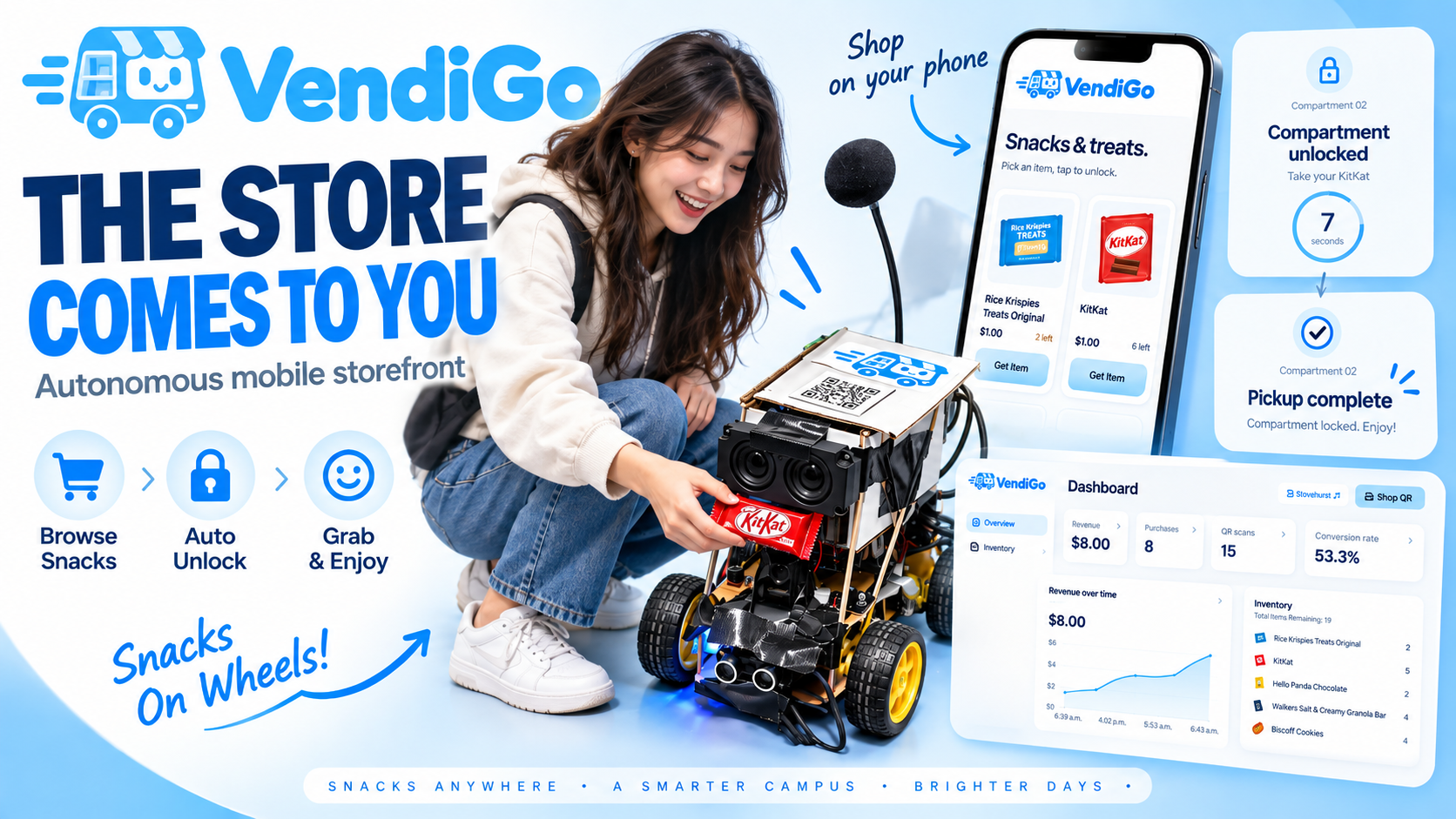
VendiGo is an autonomous mobile storefront for crowded events.
It drives toward customers, uses a voice agent to advertise products and answer questions using live inventory data, and lets customers purchase items through a QR-based storefront.
When a purchase is made, inventory updates automatically. Operators can monitor purchases, inventory levels, and customer activity through a dashboard.
How we built it
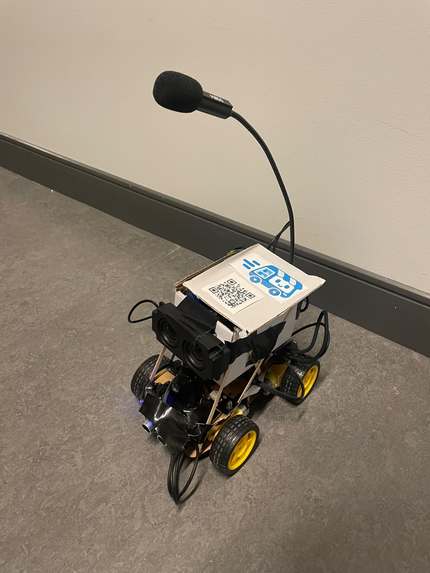
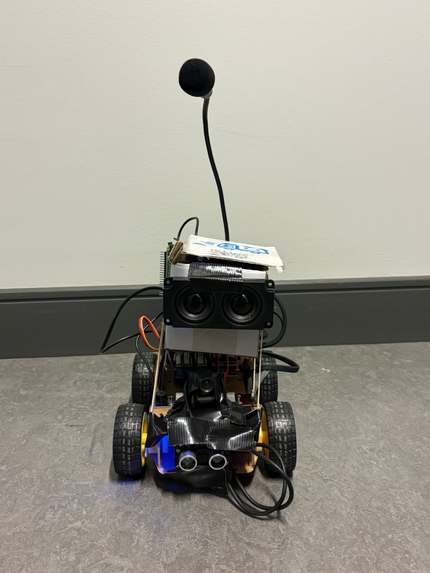
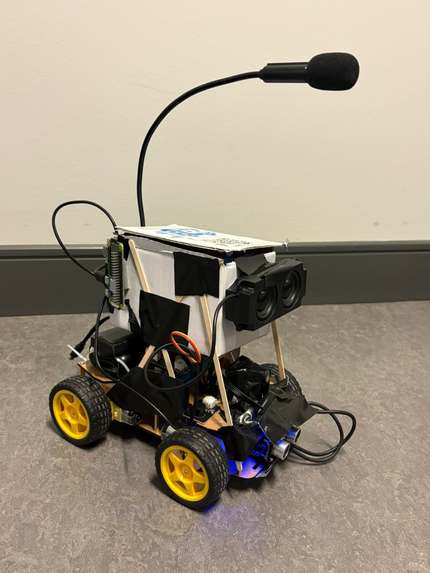
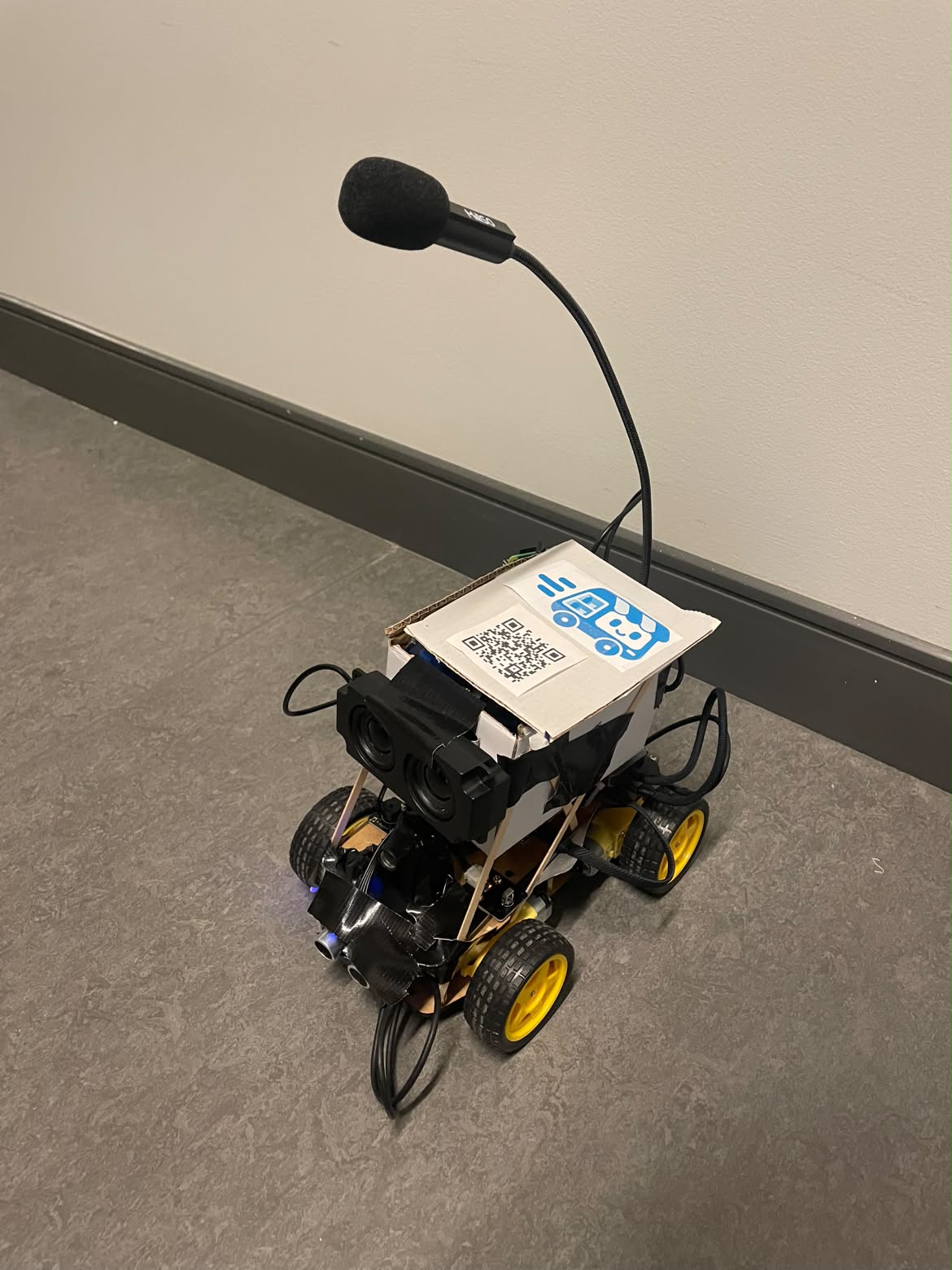
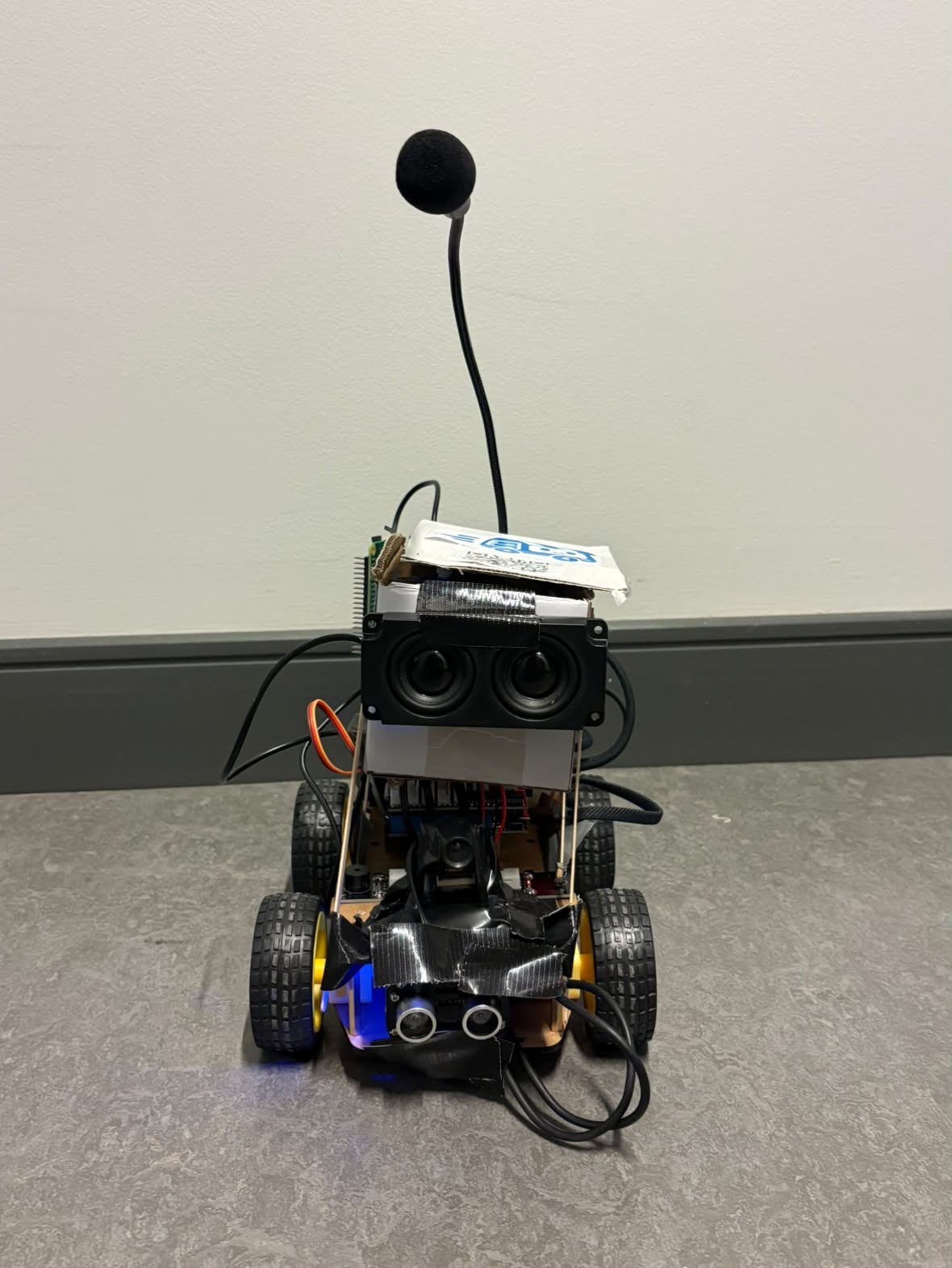
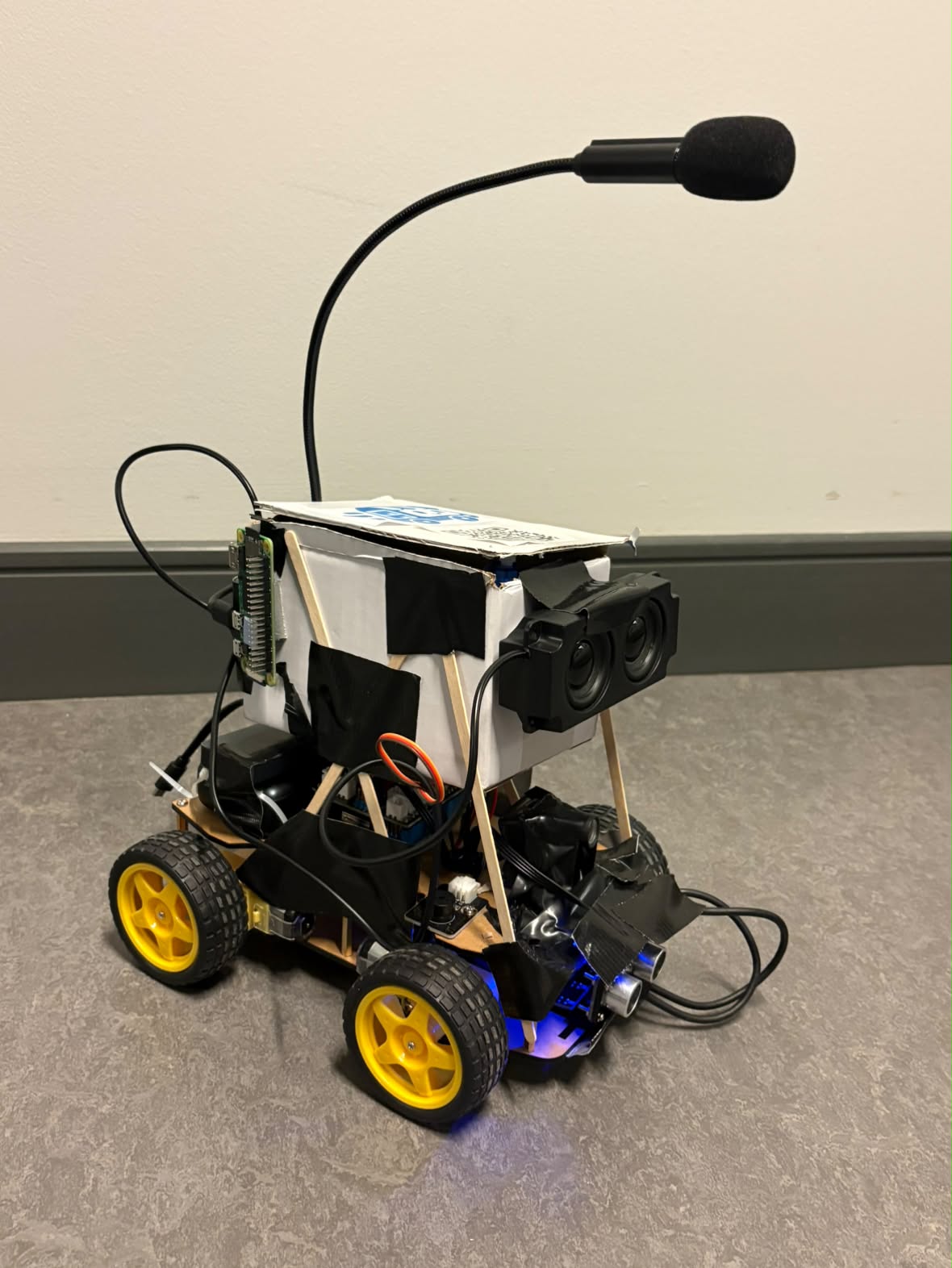
We built VendiGo on an ACEBOTT robotic car platform, using an ESP32 for low-level motor control and a Raspberry Pi for navigation, voice interaction, and system coordination. We added a custom microphone and speaker setup so Vendi can continuously listen and talk with nearby customers, using ElevenLabs for speech and GPT-5.6 Luna for conversation with live inventory context.
The robot also includes an automatically opening product compartment that unlocks during checkout and closes after pickup. On the software side, a Next.js web app powers the QR storefront, live inventory, purchase flow, analytics, and operator dashboard, tying the hardware and customer experience into one autonomous retail system.
Challenges we ran into
Our biggest challenge was coordinating autonomous navigation, voice interaction, and the checkout flow into one seamless experience.
We also had to manage microphone and speaker timing, keep inventory synchronized after purchases, and connect live inventory data to the voice agent so it would not recommend sold-out products.
Accomplishments that we're proud of
We brought robotics, conversational AI, and commerce together into one working prototype.
Customers can speak directly with VendiGo, ask what products are available, and purchase from the robot, while operators can monitor inventory and purchases through a live dashboard.
What we learned
We learned how to connect hardware, web software, and conversational AI into a single real-world system.
We also learned how important latency, timing, state management, and clear interactions become when software has to interact with people through a physical robot.
What's next for VendiGo
We want to deploy VendiGo at real events and eventually sell the system to large food and beverage companies, event venues, festivals, and sports stadiums.
Next, we plan to improve autonomous navigation and speech recognition in noisy crowds, integrate live payments, support more products and languages, and use historical sales and location data to predict where demand will be highest so Vendigo can autonomously move to the areas where it is most likely to make a sale.
Built With
- arduino
- electrical
- esp32
- esp32-cam
- nextjs
- python
- raspberry-pi
- speaker


Log in or sign up for Devpost to join the conversation.