Inspiration
Millions of people face everyday injustices—unfair landlords, unresponsive companies, workplace mistreatment—but most don’t know how to formally speak up. Legal help is expensive, and writing a clear, professional case letter can be intimidating. We wanted to build a tool that empowers anyone, regardless of background, to document their story and get results—without needing legal expertise. That’s how AutoCase was born.
What it does
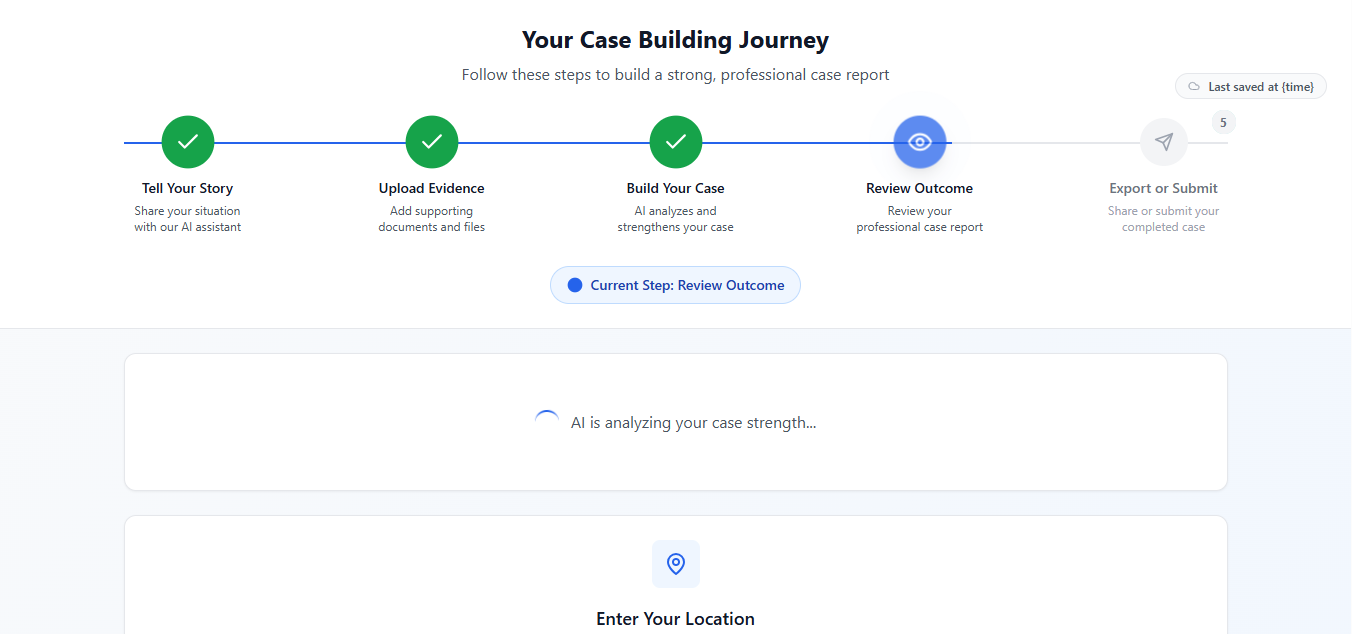
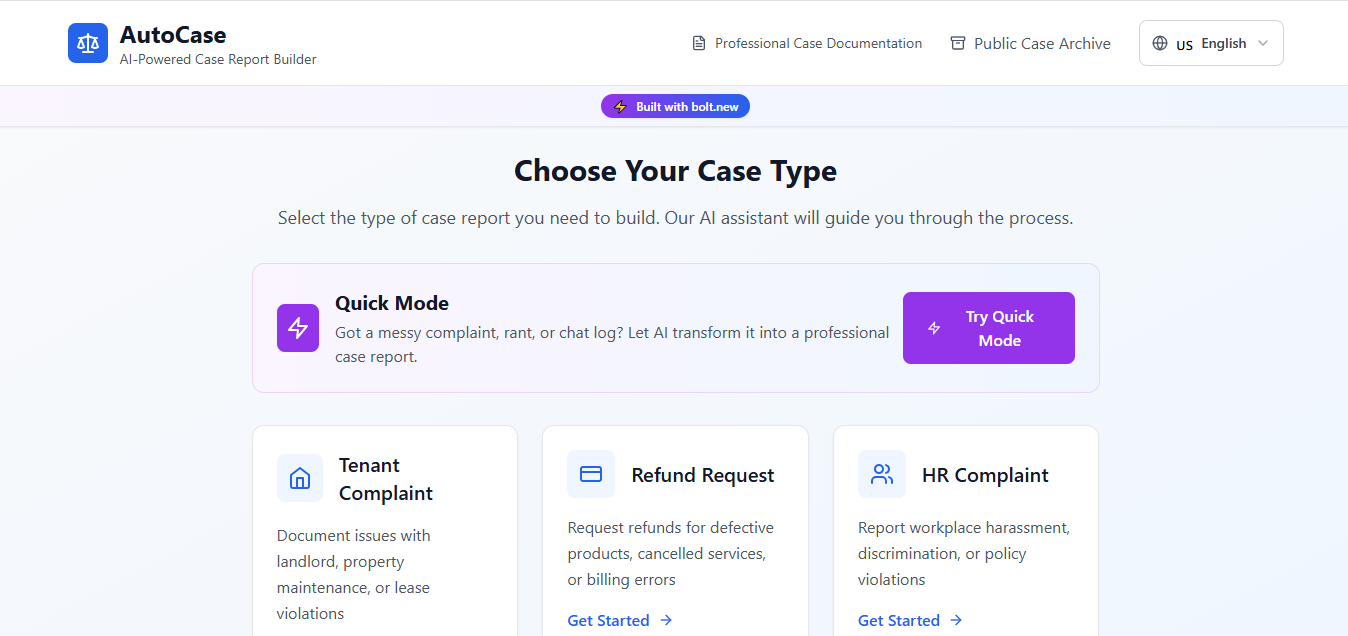
AutoCase is an AI-powered platform that helps users build structured case reports and dispute letters for scenarios like tenant issues, refund requests, HR complaints, and more. It guides users step-by-step through telling their story, uploading evidence, and generating a legally coherent letter. It also includes advanced features like voice input, document analysis, confidence scoring, submission suggestions, and roleplay coaching with AI.
How we built it
We built AutoCase using a large language model (LLM) as the core reasoning engine to collect, analyze, and generate case documents based on user input. The frontend was developed using modern web tools and styled for accessibility. We integrated OCR for analyzing document uploads, used embeddings for document context extraction, and added multi-language support. We designed the UX as a friendly multi-step journey with autosave and smart nudges.
Challenges we ran into
- Balancing professional output with plain, accessible language for non-legal users.
- Handling vague or emotional user inputs and converting them into coherent, structured content.
- Managing multiple data types (text, audio, files) in a single smooth workflow.
- Ensuring the AI does not hallucinate legal advice while still providing relevant policy references.
Accomplishments that we're proud of
- Built a fully functioning AI system that genuinely helps users feel empowered in difficult situations.
- Created a scalable architecture for handling different case types with adaptable templates.
- Developed a role-playing AI coach to simulate the opposing party, helping users strengthen their arguments.
- Integrated multilingual support and accessibility-first design principles.
What we learned
- How to build AI products that go beyond chat and genuinely solve user pain points.
- The importance of structure and emotional intelligence in AI-generated legal communication.
- How to unify voice input, document uploads, and generative models into a coherent experience.
- Realizing the power of AI to amplify access to justice for underrepresented people.
What's next for AutoCase - AI-Powered Case Report Builder
- Integration with local government and NGO APIs to enable one-click submissions and follow-up tracking.
- More case templates: immigration appeals, school incident reports, medical billing disputes, etc.
- Partner with legal aid organizations to train case-specific models with curated data.
- Build a public, anonymized archive of real-world case examples to help future users learn from past wins.


Log in or sign up for Devpost to join the conversation.