🧠 Inspiration
We were deeply moved by the millions of individuals with mobility disabilities around the world who face daily struggles simply to move around comfortably and independently. During our research, we discovered that only 5–15% of people who need wheelchairs actually have access to one that suits their environment or body. In rural areas especially, traditional wheelchairs fail to address terrain instability and lack features that support independence. We wanted to design a solution that could provide comfort, confidence, and freedom to those who need it the most—affordably and effectively.
🚀 What it does
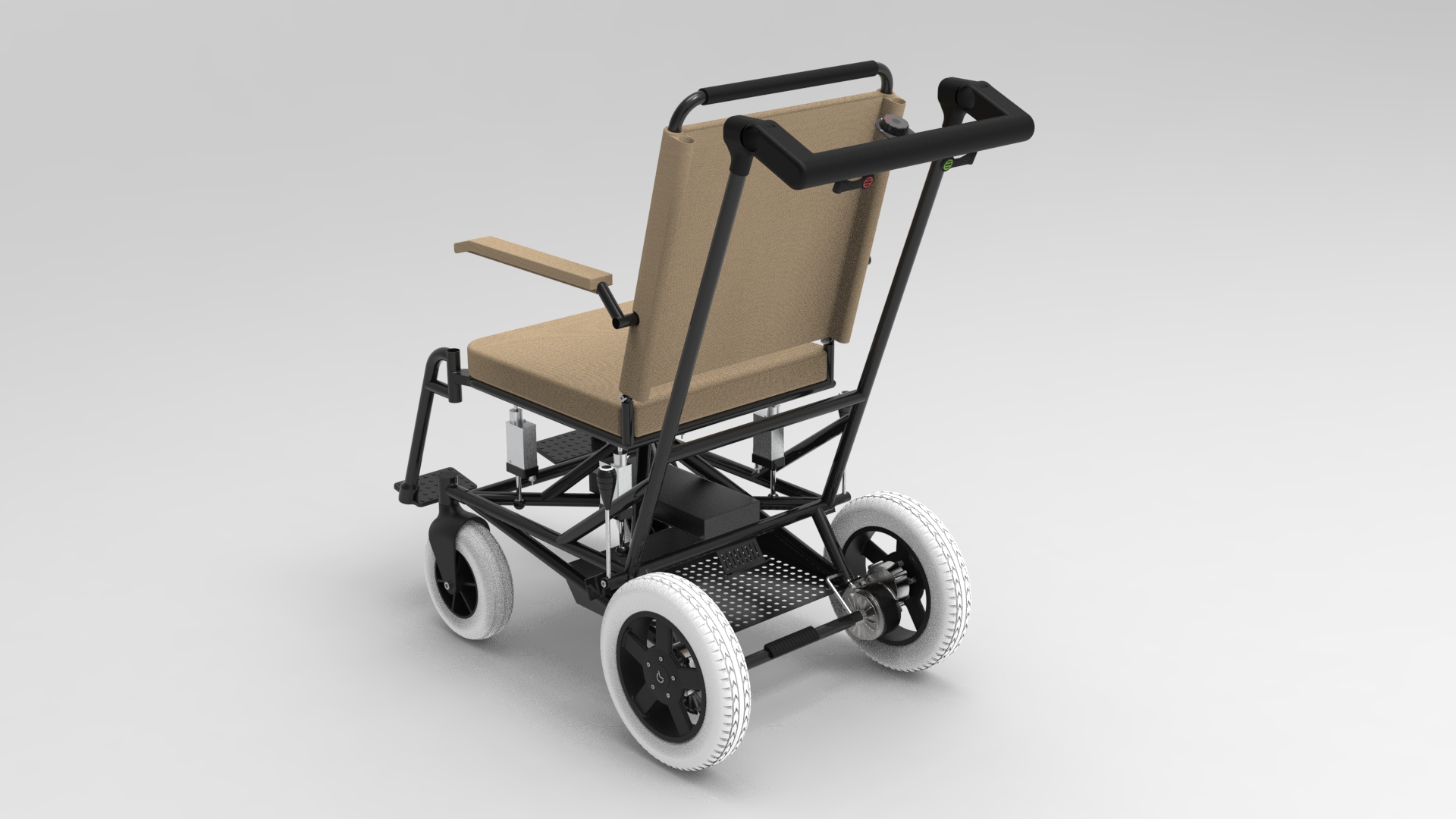
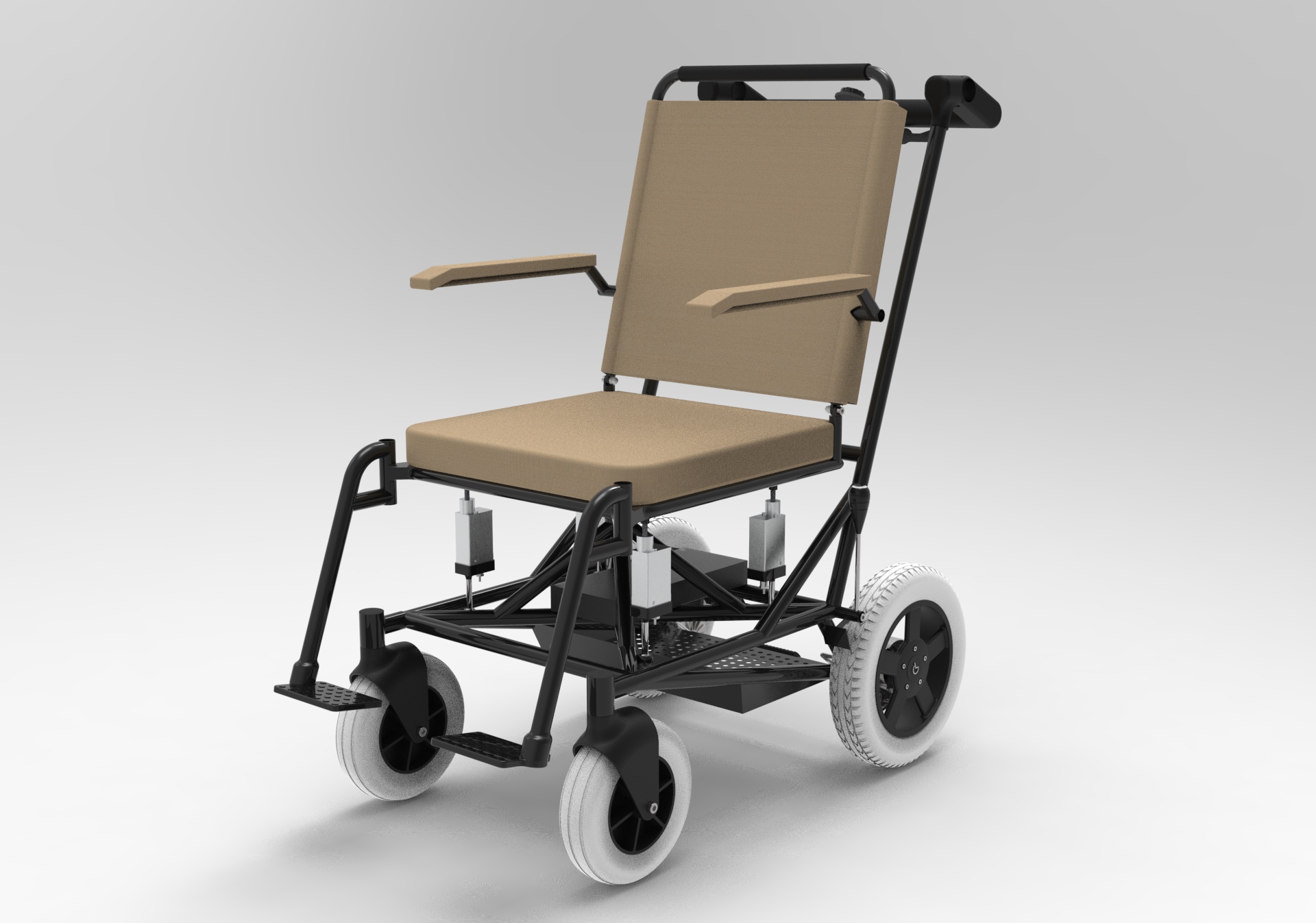
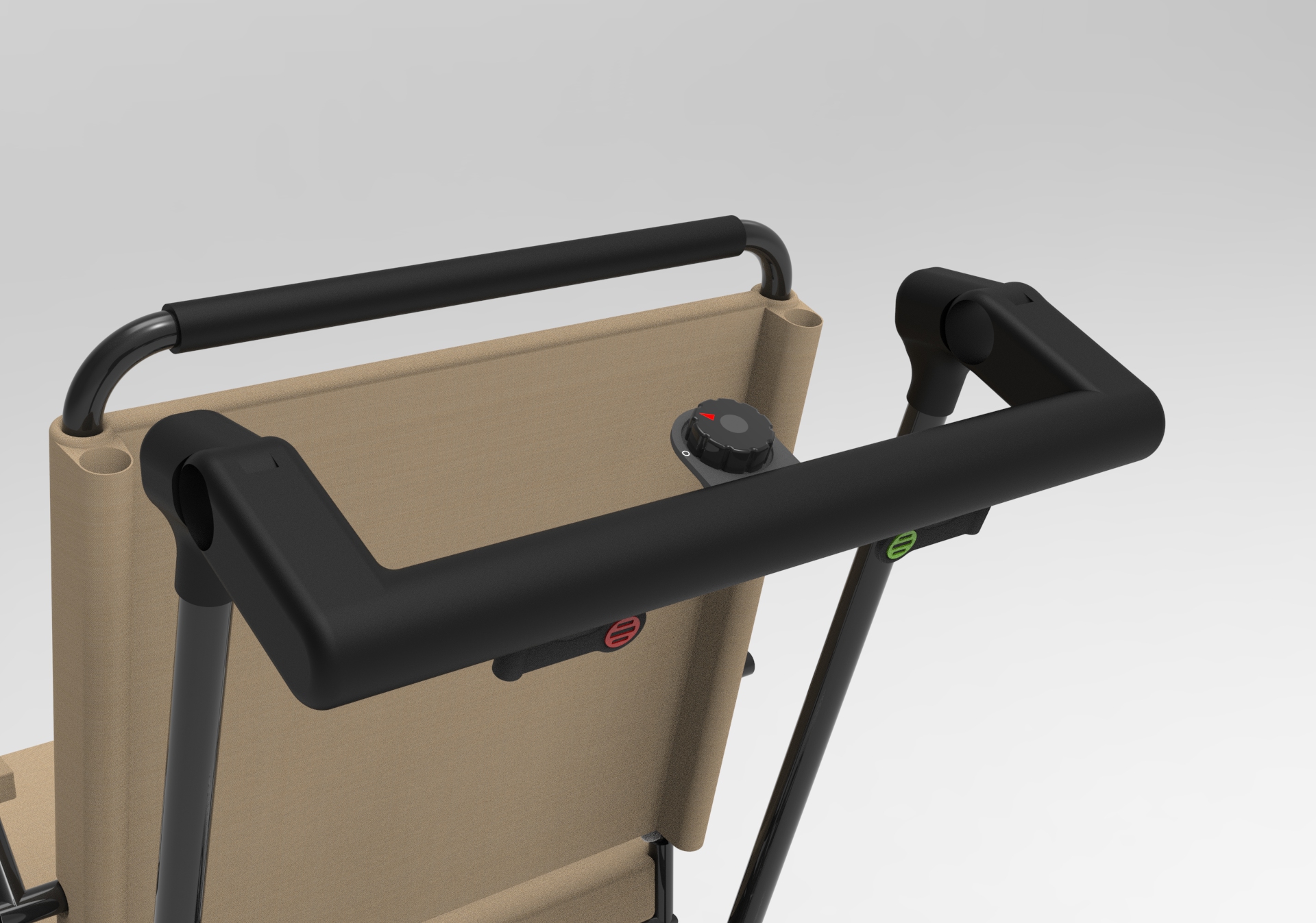
The Auto-Assist Mobility Chair is a CAD-designed smart wheelchair that offers:
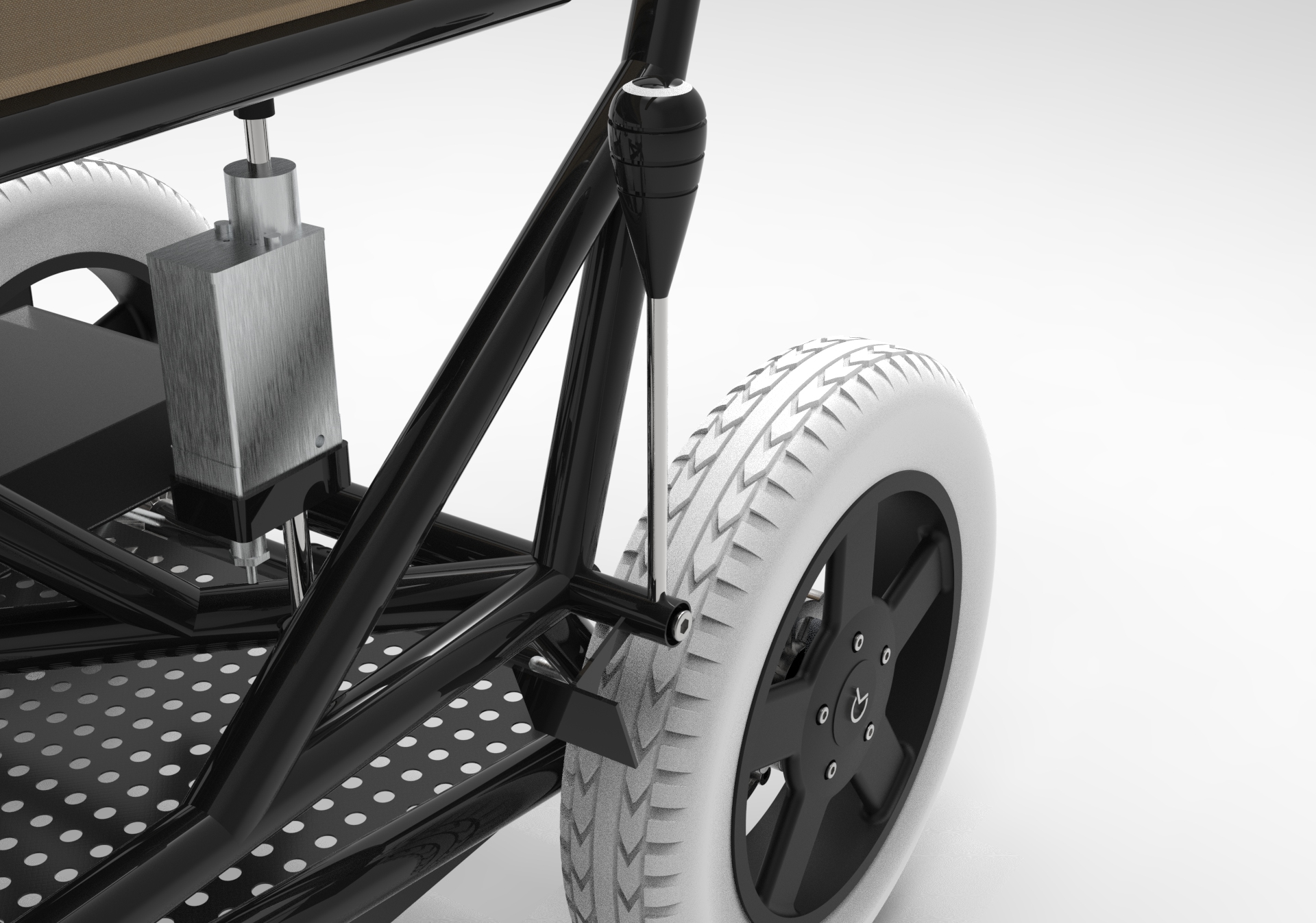
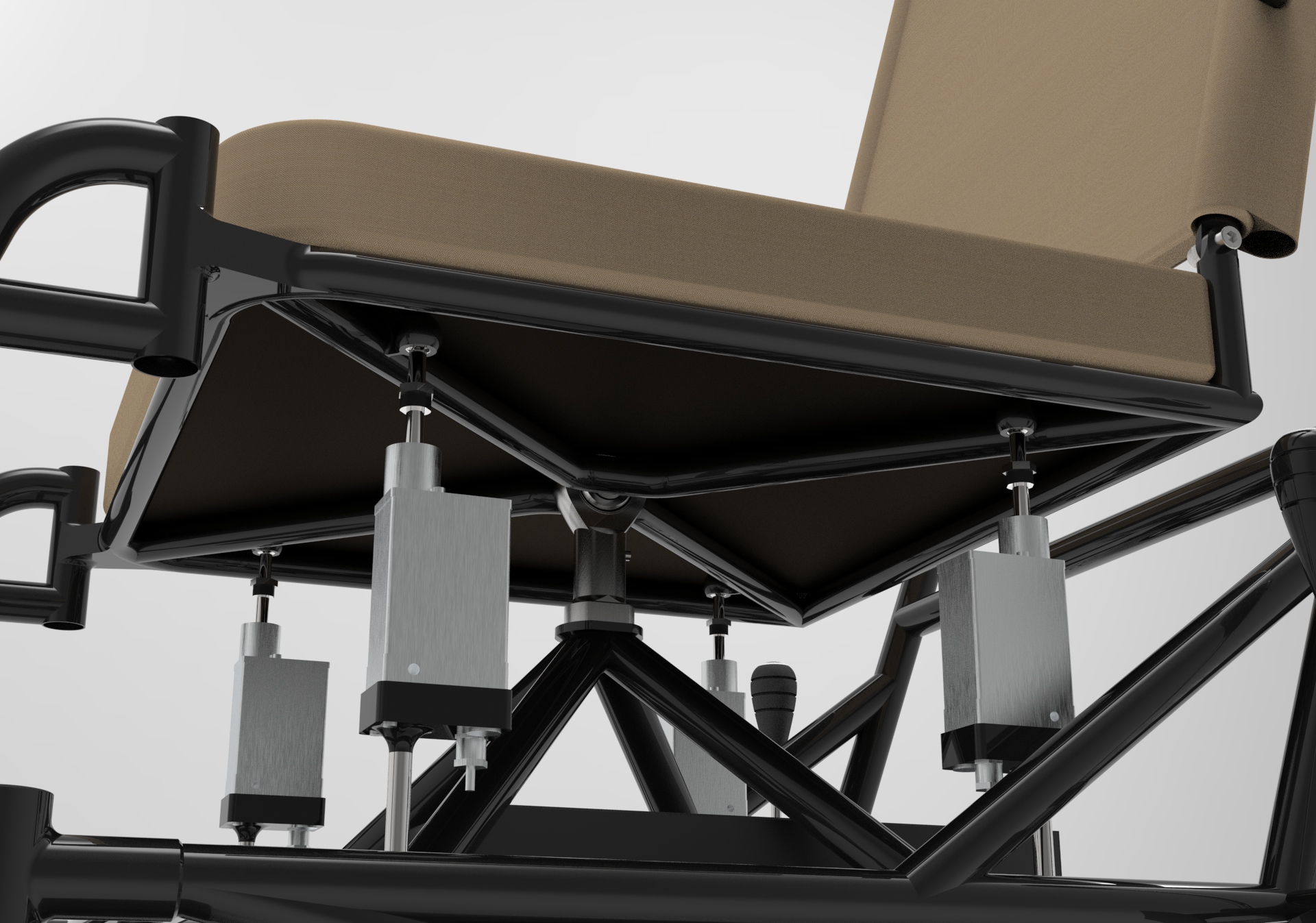
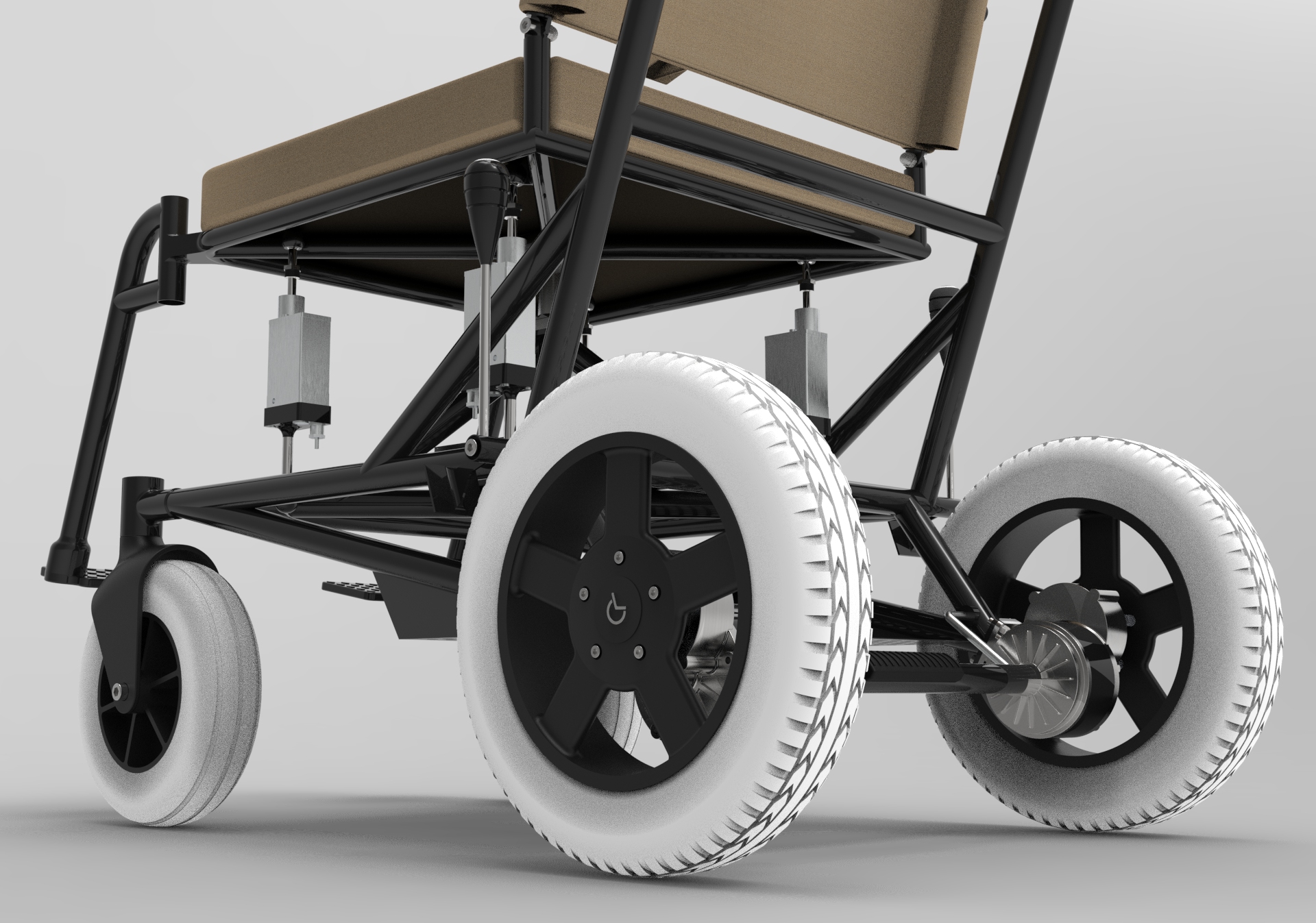
- Shock-absorbing suspension for rough terrain
- Ergonomic support to reduce pain from long usage
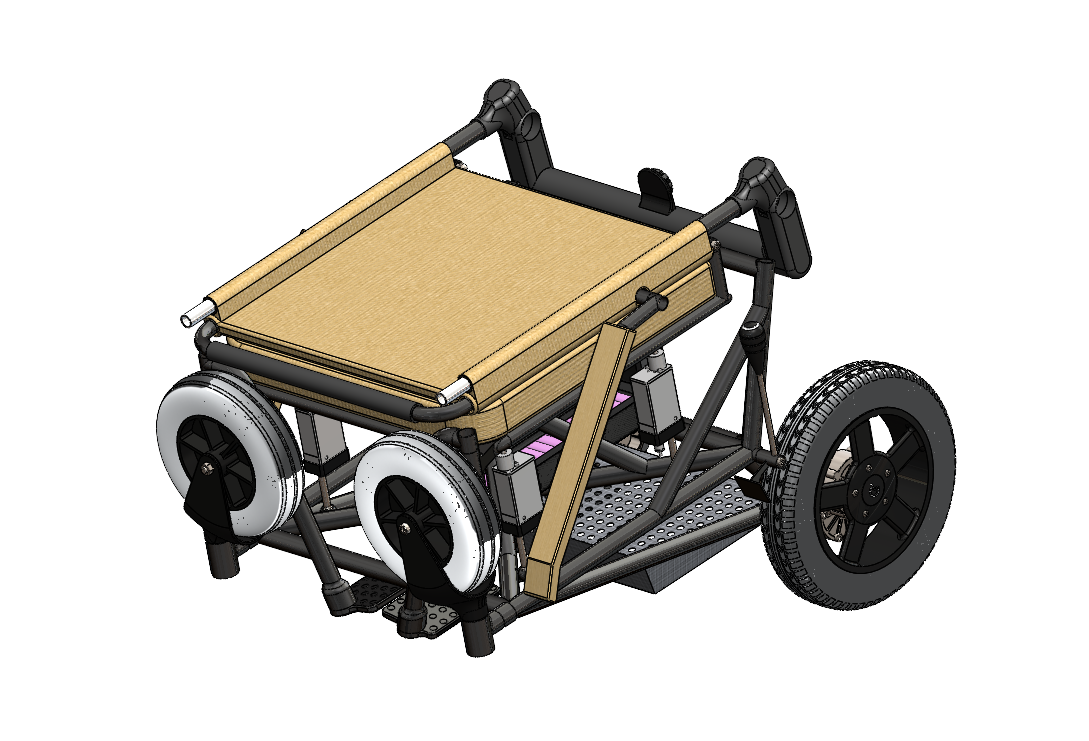
- Foldable armrests for easy side transfers
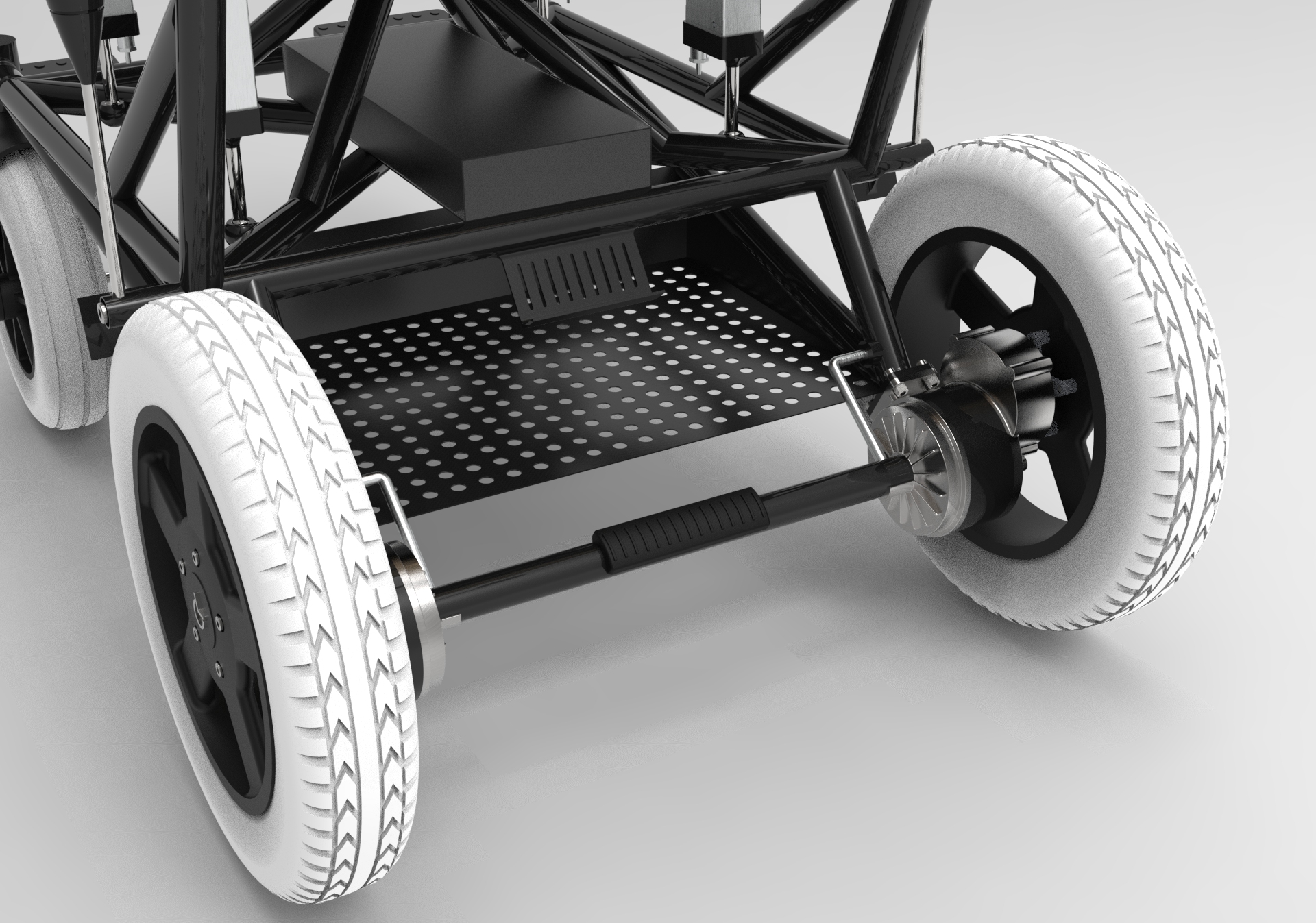
- Rear-wheel drive compatibility for future motor upgrades
- Modular, low-cost frame ideal for local manufacturing
It’s designed to work in urban and rural settings, is customizable, and prioritizes comfort and independence for the user.
🛠️ How we built it
We followed the design thinking process:
Empathize – We listened to real wheelchair users and NGOs to understand their daily pain points.
Define – Focused on key issues: terrain adaptability, posture discomfort, dependency on others.
Ideate – Brainstormed creative solutions, such as integrating a suspension system.
CAD Modeling – Used Fusion 360 (or your CAD tool) to design, simulate, and render every part:
Custom frame geometry
Shock absorber placements
Realistic motion joints and seat design
Finalization – Ran structural simulations and design validation tests, ensuring it could be produced efficiently.
🚧 Challenges we ran into
Balancing comfort with cost-efficiency: It was difficult to ensure a comfortable suspension and backrest system while keeping the materials affordable.
Space constraints for suspension: Integrating shock absorbers beneath the seat without compromising seat height or folding capabilities was complex.
Future adaptability: Designing the chair to be manually operable now but compatible with electric motors in the future required modular thinking and clean CAD structuring.
Ergonomic accuracy: Fine-tuning angles for back support, armrests, and seat height to match real-world anatomy was time-consuming and needed iterations.
🏅 Accomplishments that we're proud of
We successfully designed a fully-featured wheelchair using CAD that solves real-world challenges.
Integrated shock-absorbing suspension—a feature rarely found in low-cost wheelchairs.
Built a modular, open-source design that can be adapted for motorization or locally manufactured using simple tools.
Created a meaningful project with social impact, not just a concept model.
📚 What we learned
Empathy is engineering’s greatest tool. Talking to real users shaped every feature we built.
How to use CAD tools for real-world constraints, not just aesthetics.
The importance of modularity in assistive design—futureproofing matters.
How to merge technical design with emotional storytelling to build solutions that resonate with people and judges alike.
🔮 What's next for Auto-Assist
💡 Motorization Module: Add a detachable motor and joystick control system.
🧪 Real-world prototyping: Partner with NGOs to 3D print and field test in villages and small towns.
🌍 Open-source release: Make the design available to schools, nonprofits, and hospitals so it can be adapted and reproduced globally.
💬 Voice assistant integration (future scope): For those with limited arm movement.
🎓 Use this project to inspire other young innovators to design with purpose.

Log in or sign up for Devpost to join the conversation.