-
-
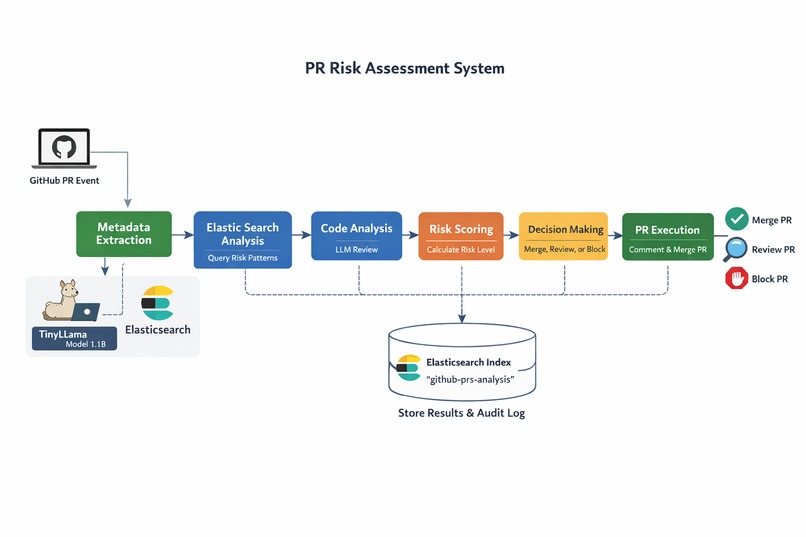
Architecture Diagram
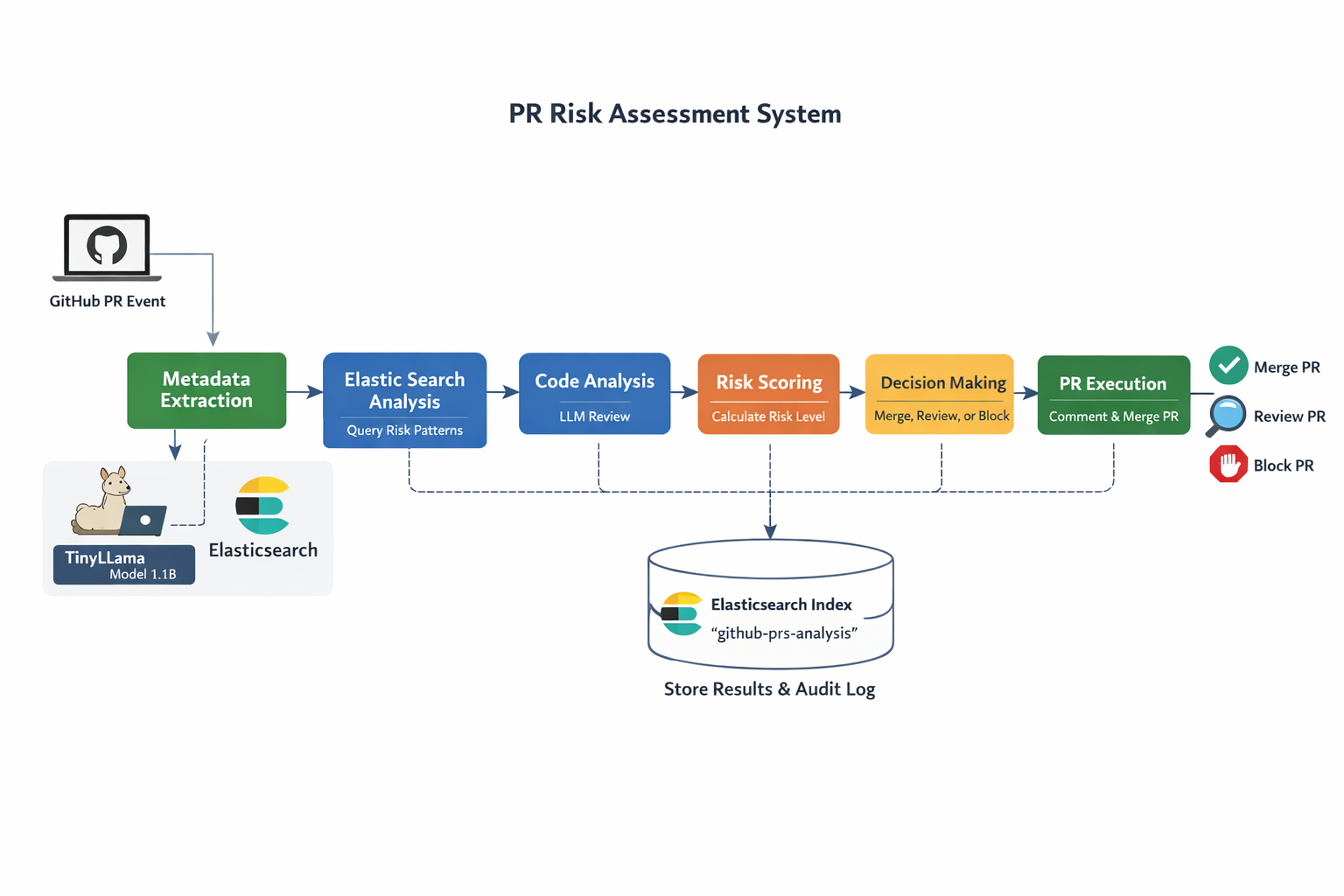
Inspiration
Managing large codebases with multiple contributors can be risky—manual PR reviews are time-consuming, and security or complexity issues can slip through. We wanted to automate risk assessment and provide developers with faster, smarter decisions.
What it does
The agent analyzes pull requests for code complexity, potential security risks, and risky patterns using AI and Elasticsearch. It calculates a risk score and recommends whether to merge, review, or block the PR, even adding comments or auto-merging safe changes.
How we built it
We used LangGraph for workflow orchestration, a local LLM for code analysis, and Elasticsearch and Agent Builder for contextual search across PR history. GitHub APIs handle PR metadata, comments, approvals, and merges, while a risk model quantifies overall PR safety.
Challenges we ran into
Handling large PR patches in chunks for analysis. Integrating AI outputs with actionable PR decisions reliably. Ensuring Elasticsearch queries returned relevant context for better risk scoring.
Accomplishments that we're proud of
Automated end-to-end PR risk assessment pipeline. Seamless integration with GitHub for comments, approvals, and merges. Smart AI-based code analysis that highlights security risks and complexity.
What we learned
Chunking and prompt design are key when analyzing large code diffs with LLMs. Combining AI insights with structured metrics produces more reliable PR decisions. Elastic-powered context retrieval can enhance AI analysis for better accuracy.
What's next for GitHub PR Risk Assessment Agent
Support multi-language codebases and framework-specific security rules. Add predictive analytics to forecast PR risk trends over time. Integrate with CI/CD pipelines for real-time risk alerts and automated workflows.
Built With
- elasticsearch
- hugging-face
- langgraph
- llm
- python
- transformer


Log in or sign up for Devpost to join the conversation.