SpectrumSpeak - Autism Communication Aid
Inspiration
The inspiration for SpectrumSpeak came from recognizing the communication challenges faced by individuals on the autism spectrum and their families. We wanted to create a comprehensive, accessible digital tool that empowers users to express themselves more effectively, understand social situations better, and find calming strategies when needed. Our goal was to build something that truly supports the autism community by addressing real-world communication barriers with empathy and understanding.
What it does
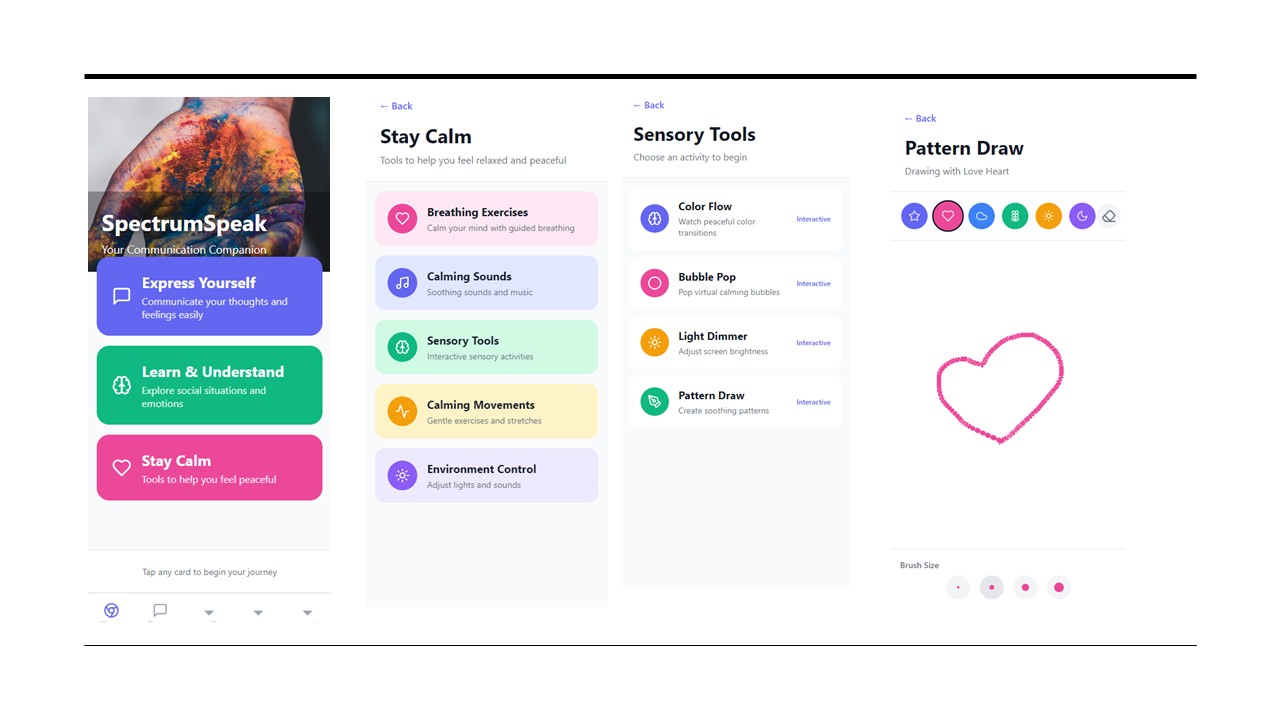
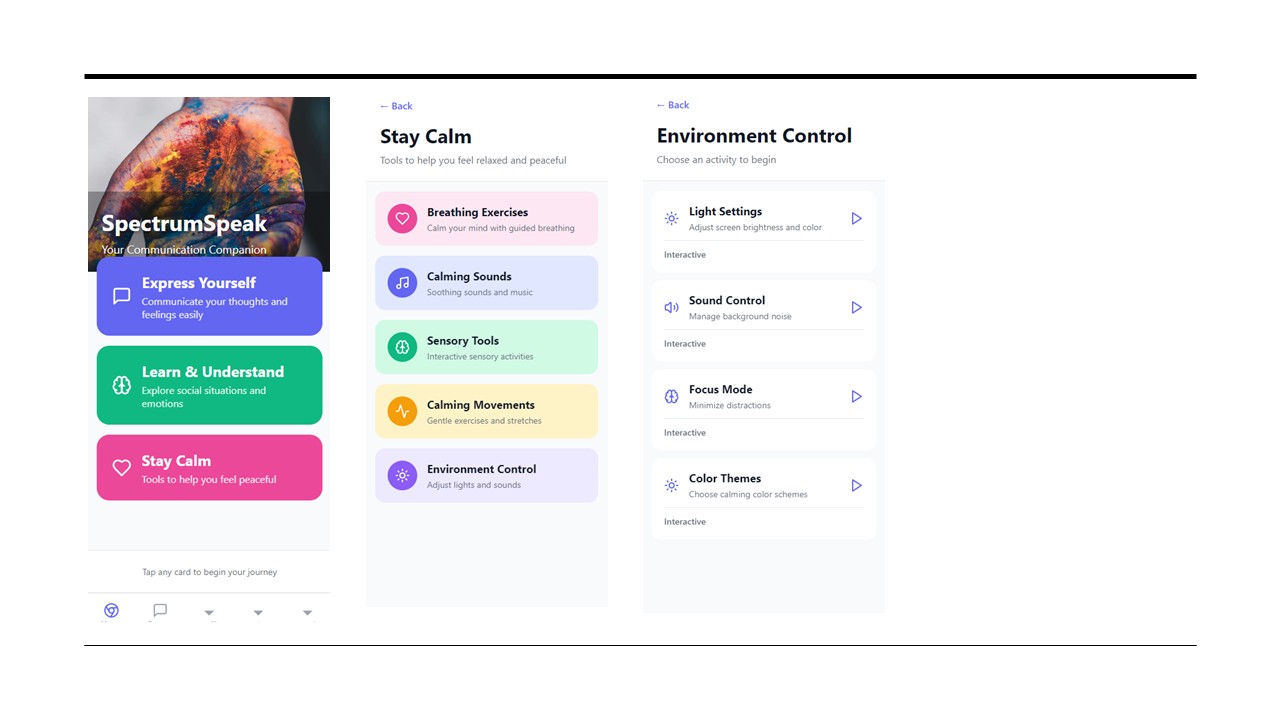
SpectrumSpeak is a React Native mobile application designed as a comprehensive communication companion for individuals with autism. The app features three main modules:
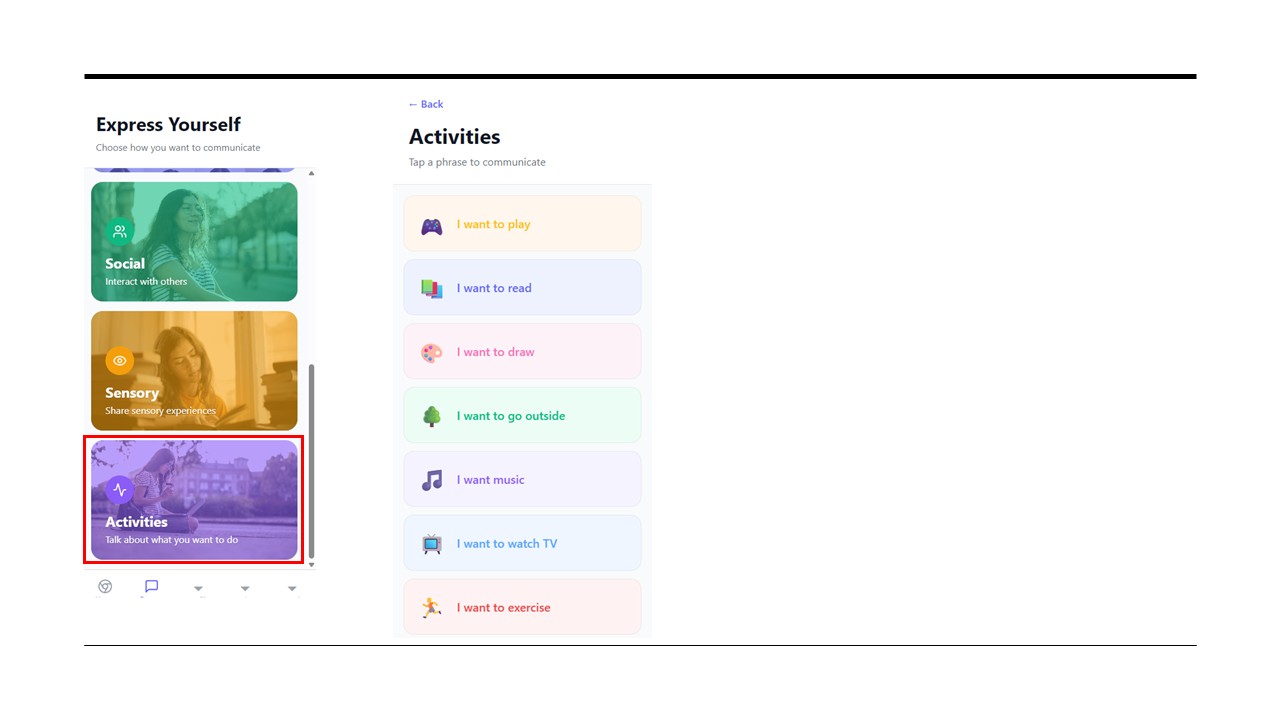
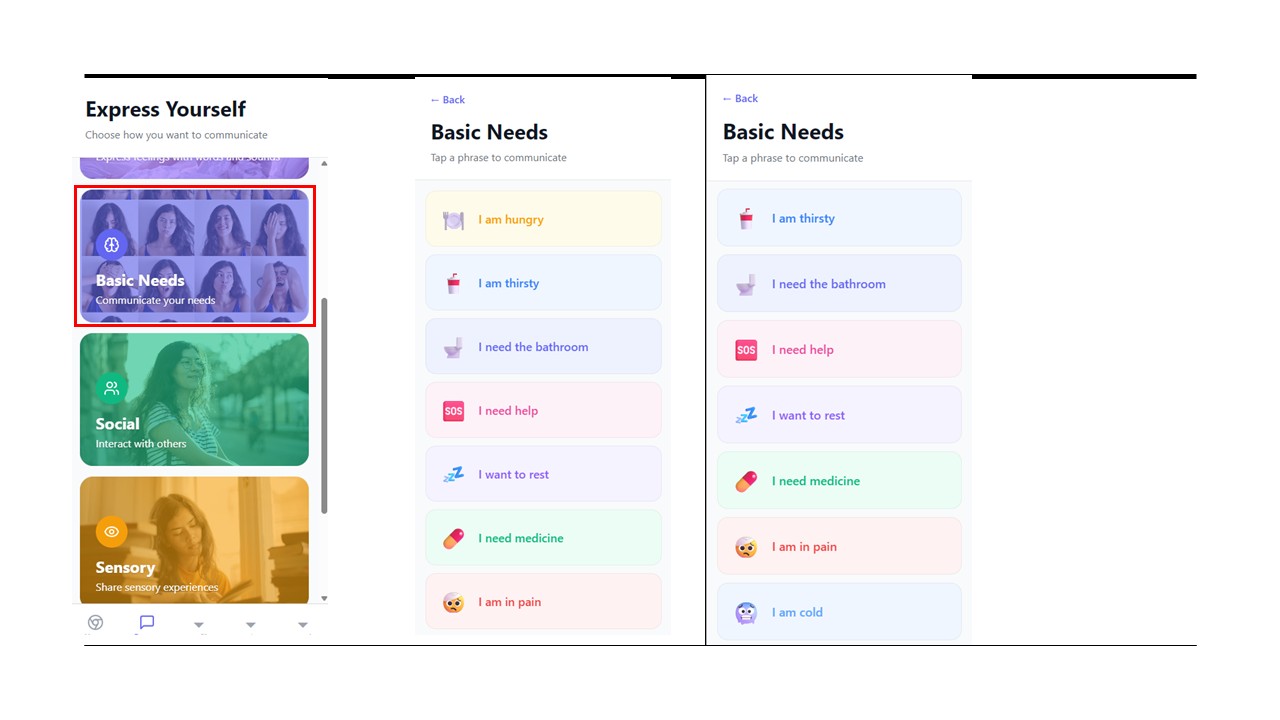
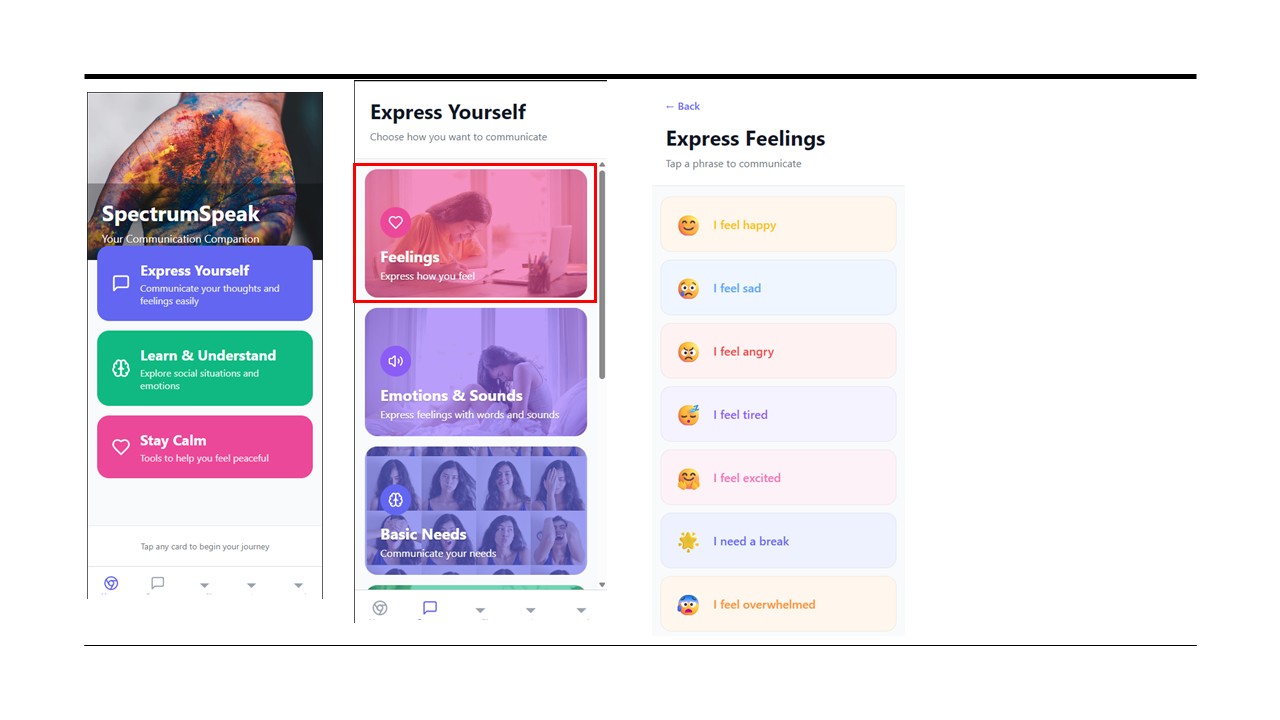
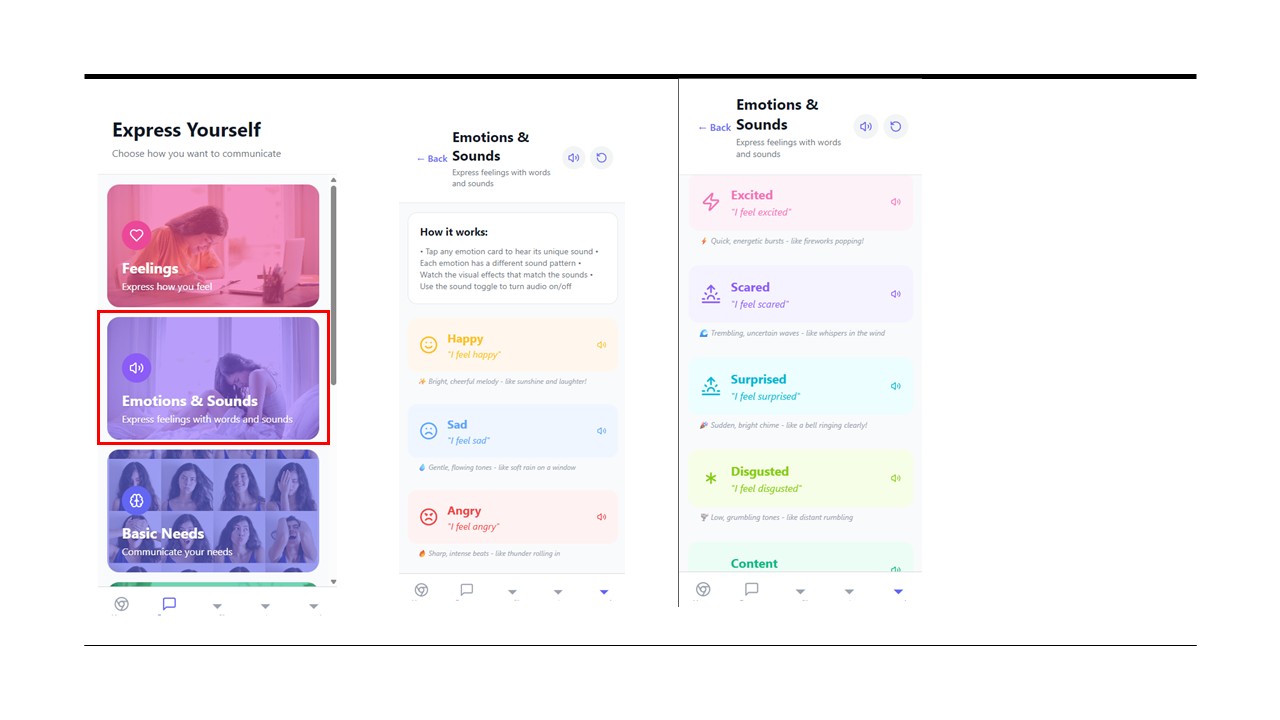
Express
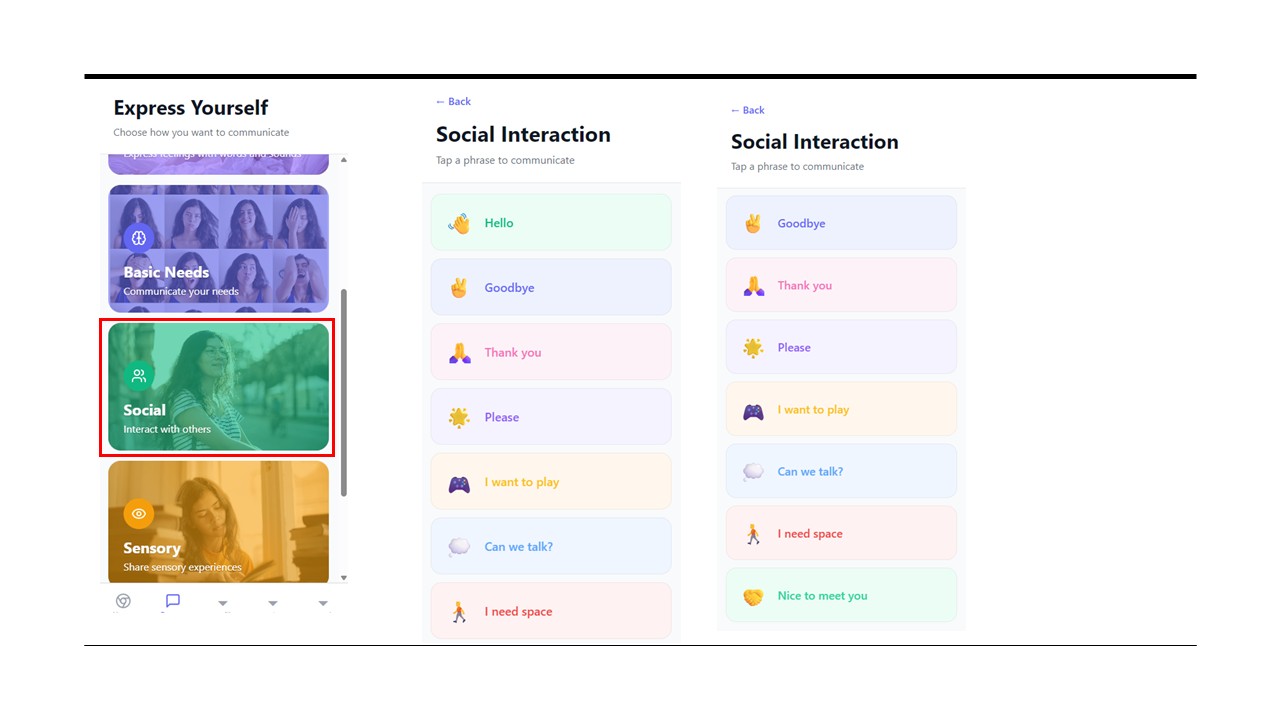
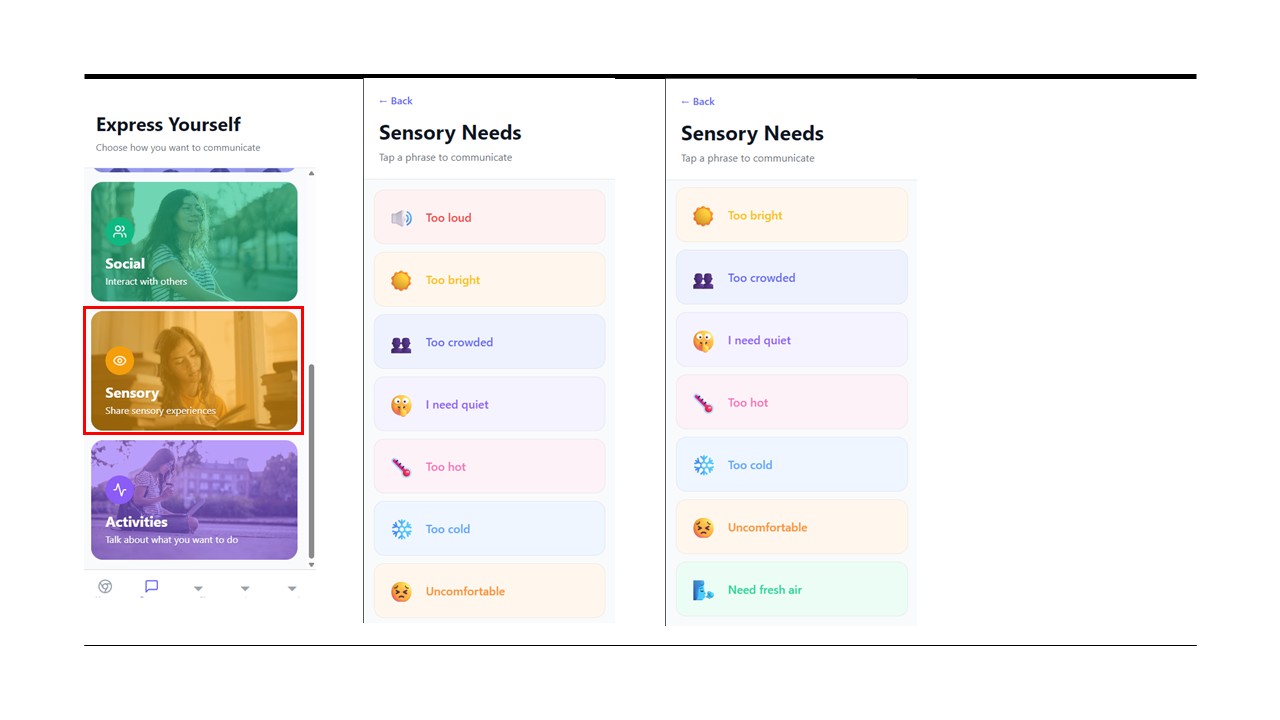
Helps users communicate their thoughts, feelings, and needs through categorized interfaces including:
- Feelings and emotions with visual and audio support
- Basic needs communication
- Social interaction tools
- Sensory experience sharing
- Activity preferences
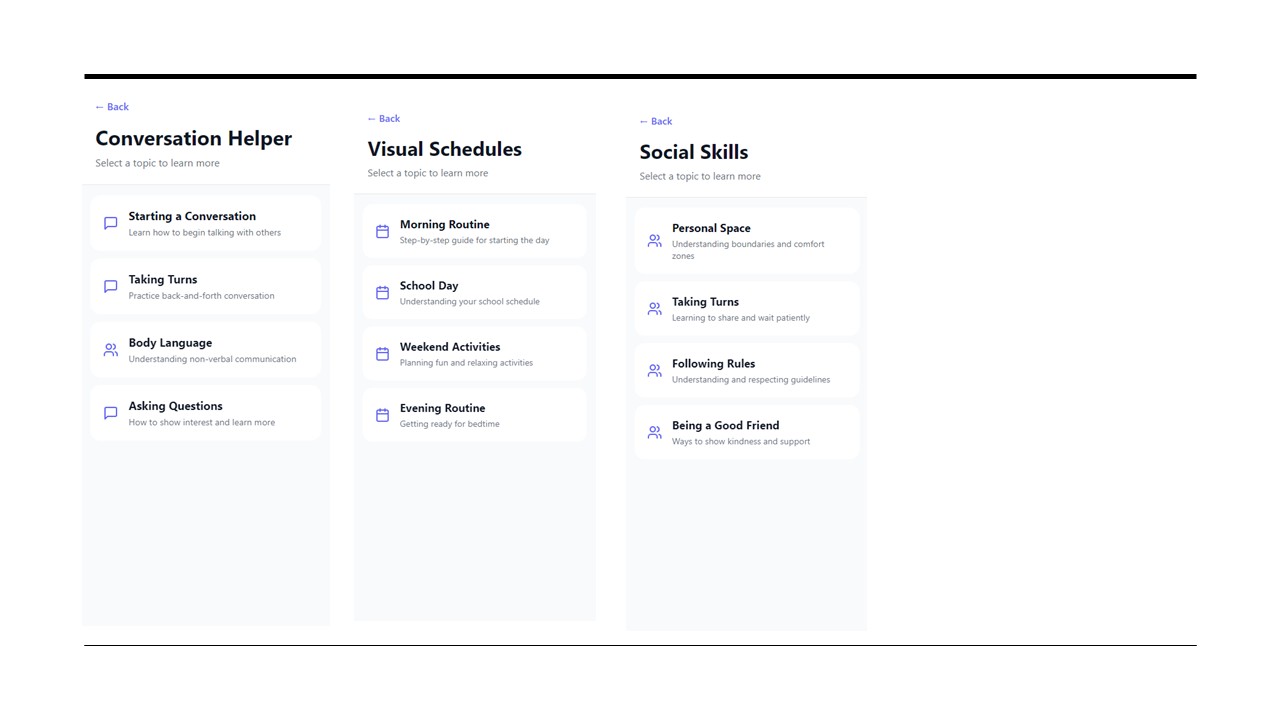
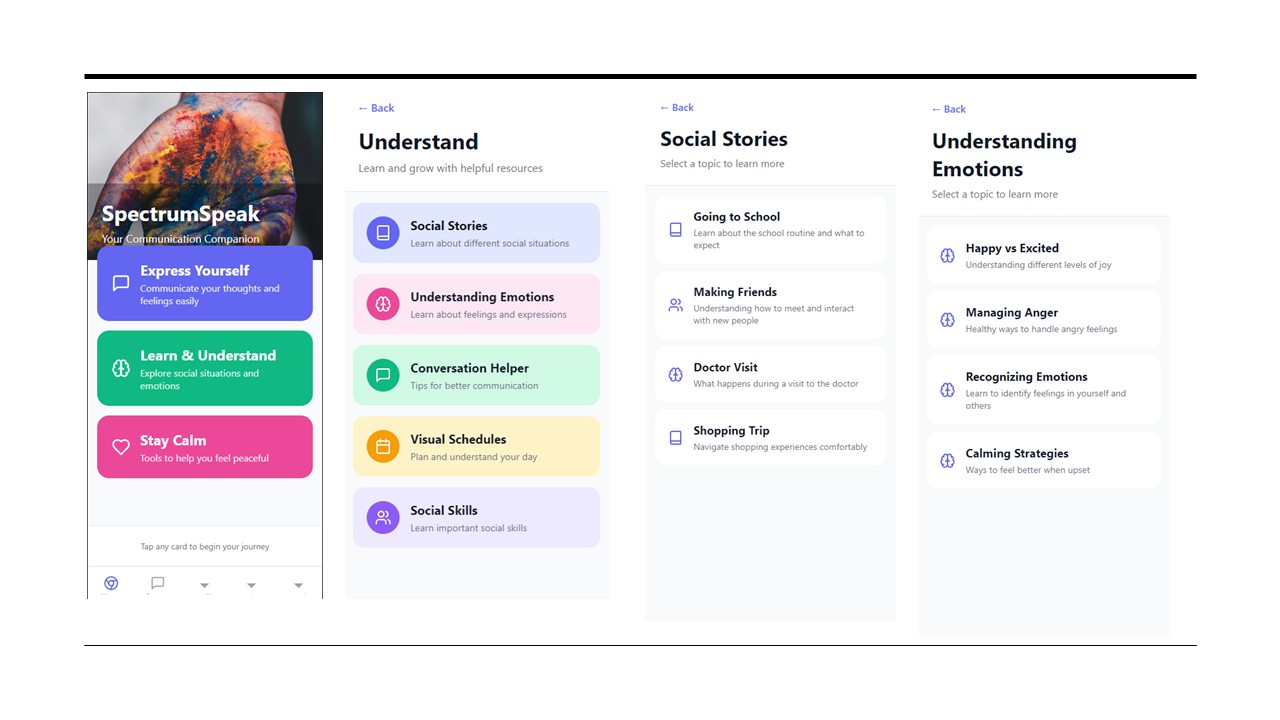
Understand
Provides educational resources and tools for learning social skills:
- Social stories for different situations
- Emotion recognition and understanding
- Conversation helpers and communication tips
- Visual schedules for daily planning
- Social skills training modules
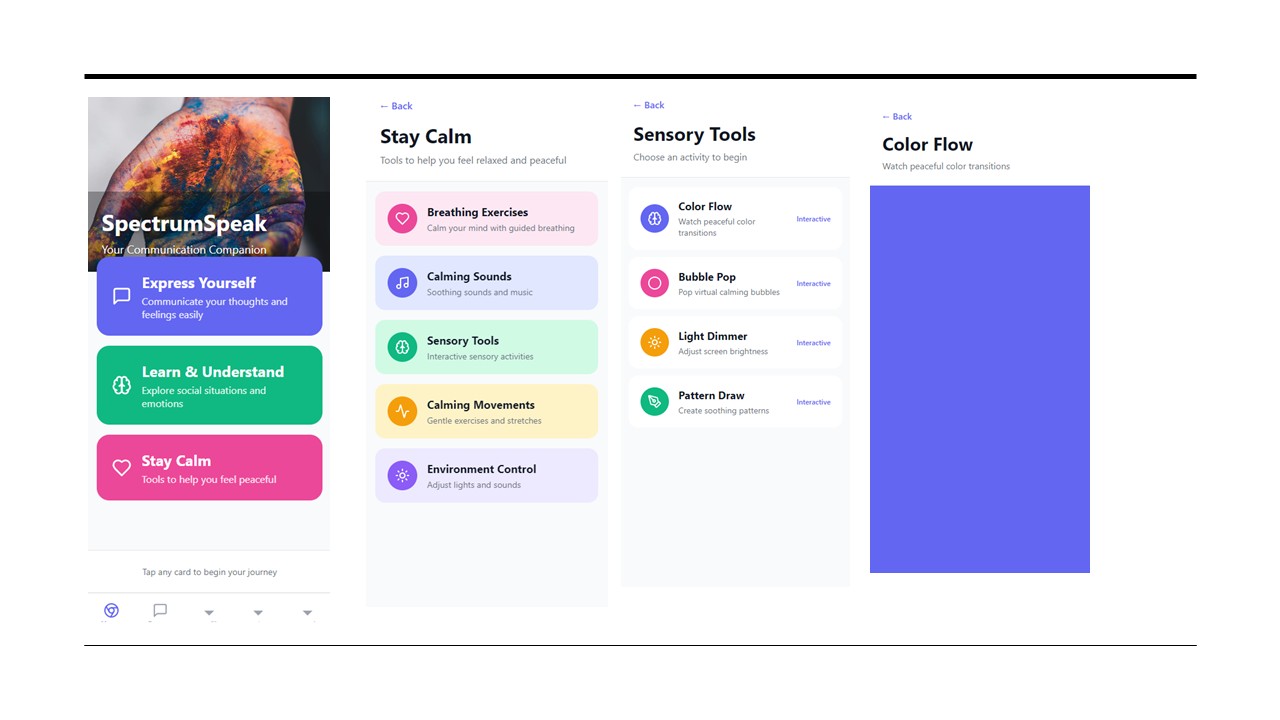
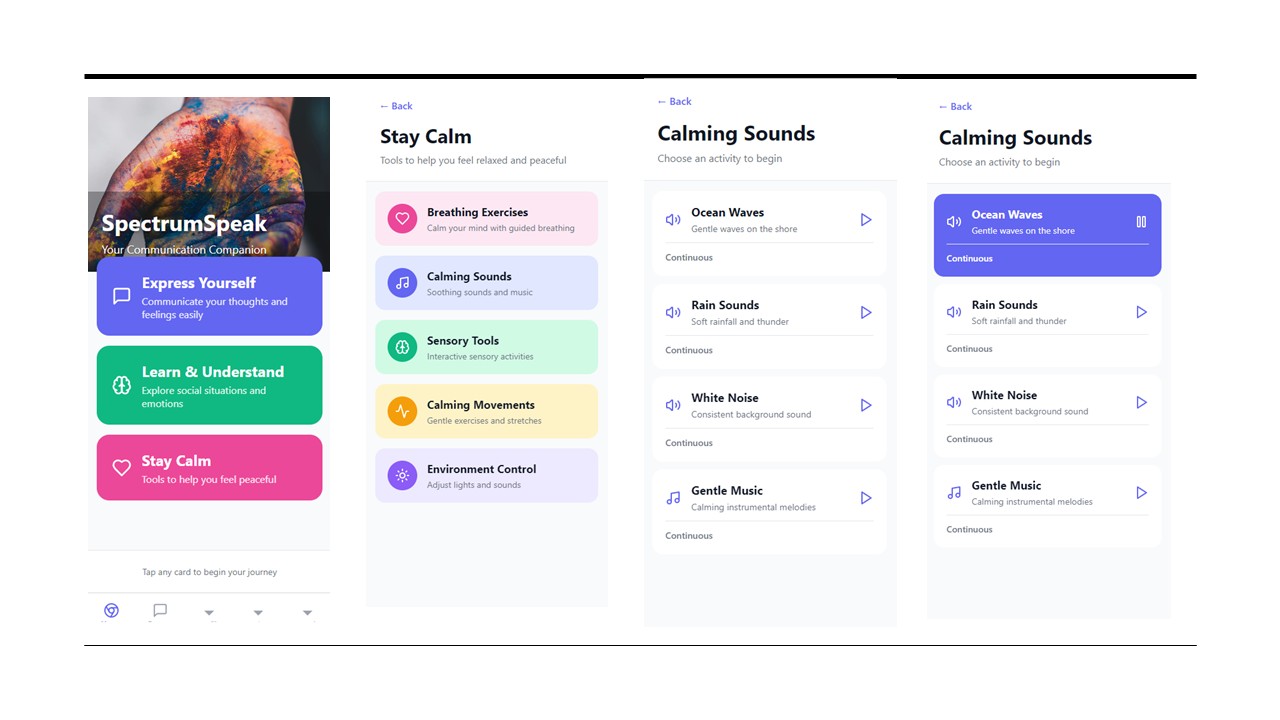
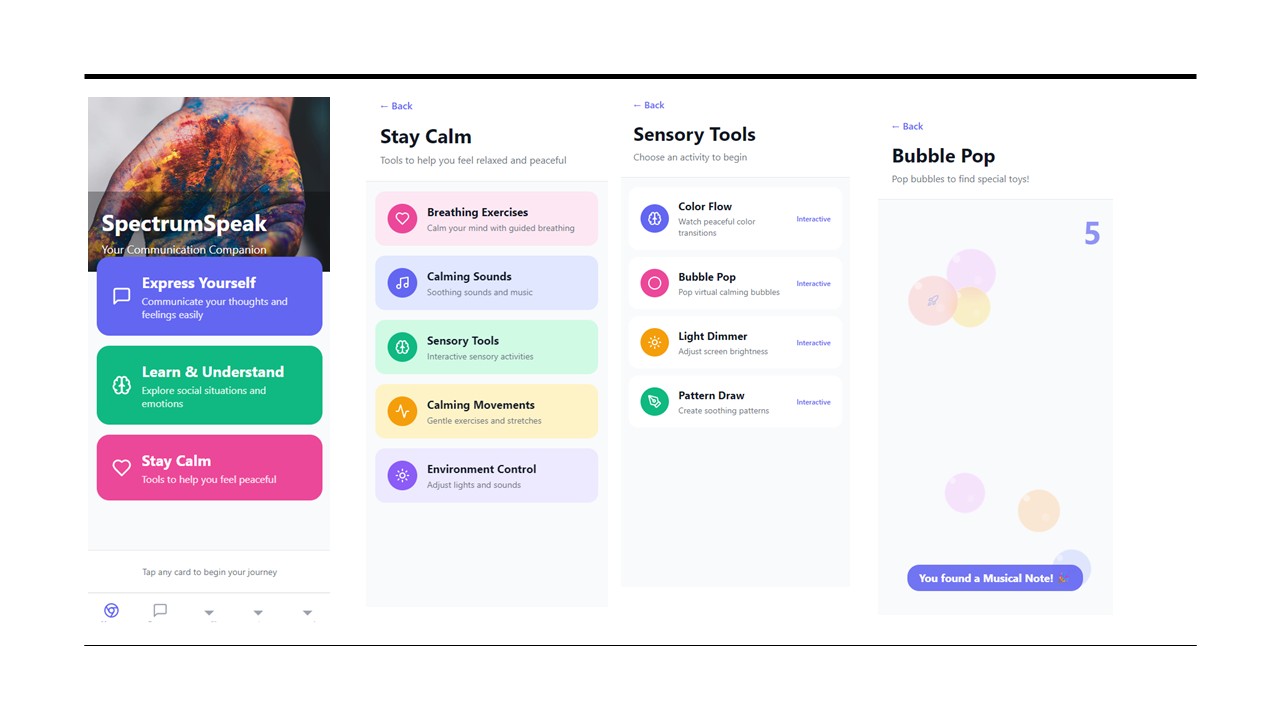
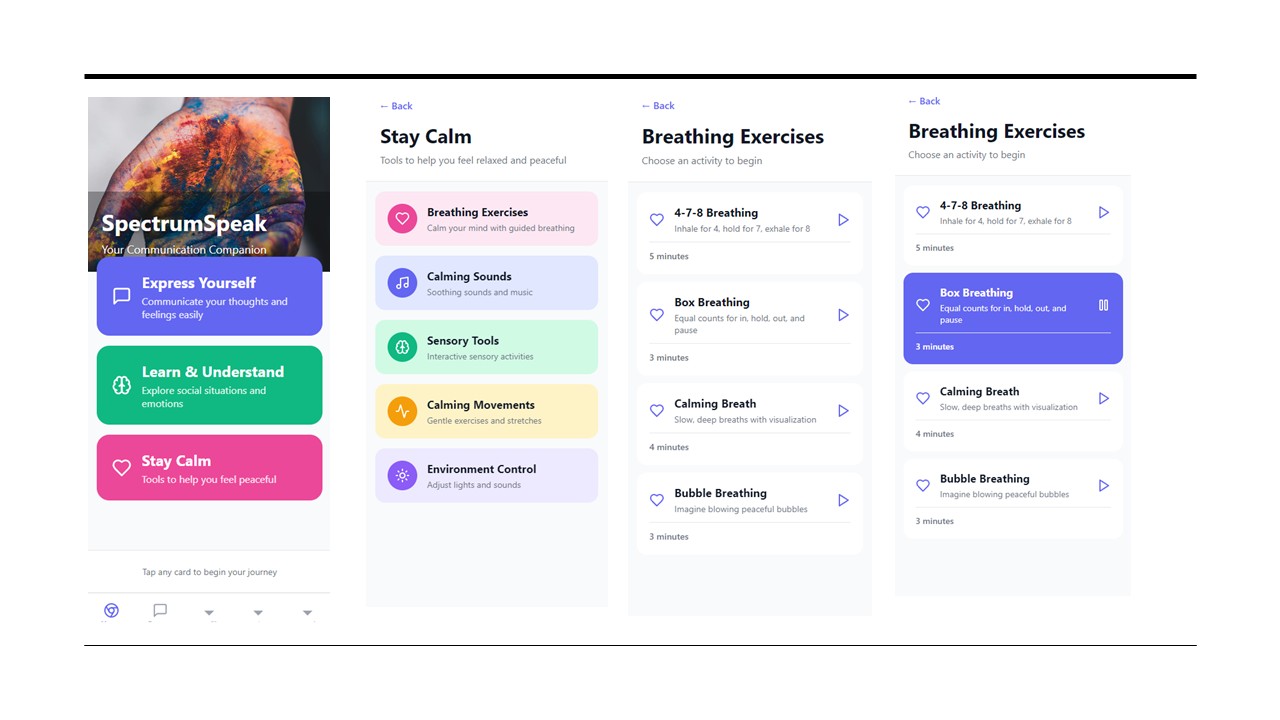
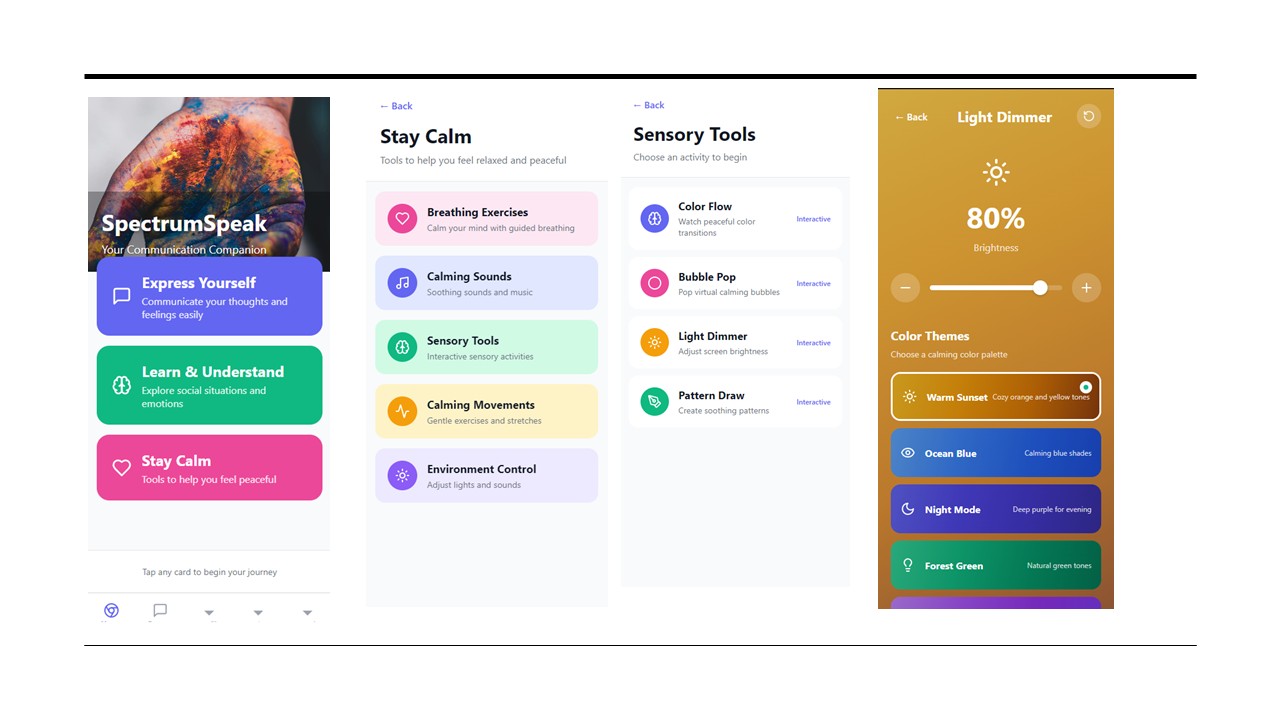
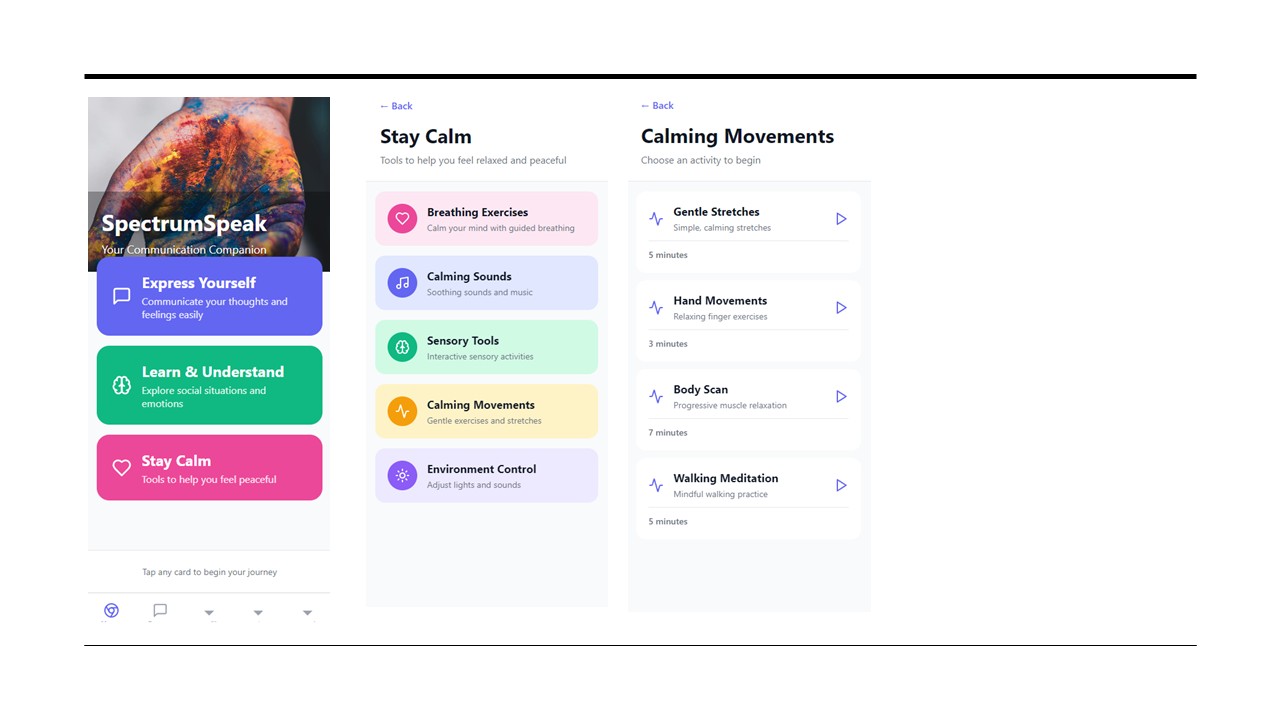
Stay Calm
Offers sensory regulation and calming tools:
- Guided breathing exercises
- Calming sounds and music
- Interactive sensory tools (color flow, bubble pop, light dimmer, pattern drawing)
- Gentle movement exercises
- Environment control features
The app is built with accessibility in mind, featuring large touch targets, clear visual hierarchies, customizable settings, and multi-modal feedback including audio and haptic responses.
How we built it
SpectrumSpeak was built using modern React Native development practices.
Technology Stack
- React Native with Expo framework for cross-platform compatibility
- TypeScript for type safety and better code maintainability
- Expo Router for navigation management
- Expo AV for audio/speech functionality
- Expo Haptics for tactile feedback
- Lucide React Native for consistent iconography
Architecture
- Component-based architecture with reusable UI elements
- Custom hooks for settings management and audio feedback
- Internationalization support through i18n-js
- Accessibility wrapper components for enhanced usability
- Platform-specific styling and interactions
Design Principles
- Clean, intuitive interface with consistent color coding
- Large, easy-to-tap interactive elements
- Visual feedback and smooth animations
- Customizable settings for individual needs
- Multi-sensory feedback integration
Challenges we ran into
- Accessibility Implementation: Creating truly accessible interfaces required careful consideration of screen readers, keyboard navigation, and various assistive technologies. We had to ensure all interactive elements were properly labeled and navigable.
- Sensory Sensitivity Considerations: Designing for users with sensory processing differences meant balancing visual appeal with the need to avoid overwhelming stimuli. We implemented customizable settings for brightness, sounds, and haptic feedback.
- Cross-Platform Consistency: Ensuring the app worked seamlessly across iOS, Android, and web platforms while maintaining native feel and performance required platform-specific optimizations.
- User Experience Research: Understanding the diverse needs within the autism community required extensive research and consideration of different communication styles, sensory preferences, and cognitive approaches.
Accomplishments that we're proud of
- Comprehensive Feature Set: We successfully created a full-featured app that addresses multiple aspects of autism support — communication, learning, and regulation — in a single, cohesive platform.
- Accessibility-First Design: The app incorporates extensive accessibility features including proper ARIA labels, keyboard navigation, customizable text sizes, and multi-modal feedback.
- Interactive Sensory Tools: We implemented engaging sensory regulation tools like the bubble pop game, color flow animations, and pattern drawing that provide real therapeutic value.
- Scalable Architecture: The modular design allows for easy expansion and customization, making it possible to add new features and adapt to different user needs.
- Cross-Platform Success: Achieved consistent functionality across mobile and web platforms, making the app accessible to users regardless of their preferred device.
What we learned
- User-Centered Design is Critical: Building for the autism community taught us the importance of involving end users throughout the development process and considering diverse needs and preferences.
- Accessibility is Not Optional: We learned that accessibility features benefit all users, not just those with specific needs, and should be integrated from the beginning rather than added as an afterthought.
- Sensory Considerations Matter: Understanding how different sensory inputs affect users helped us create more thoughtful interactions and customization options.
- Technology as Support, Not Replacement: The app works best when it complements human interaction and professional support rather than trying to replace it entirely.
What's next for Autism Communication Aid
- AI-Powered Personalization: Implement machine learning to adapt the app's interface and suggestions based on individual usage patterns and preferences.
- Professional Dashboard: Create a companion web portal for caregivers, teachers, and therapists to track progress and customize settings remotely.
- Community Features: Add safe, moderated community spaces where users and families can share experiences and support each other.
- Extended Communication Tools: Develop more sophisticated AAC (Augmentative and Alternative Communication) features including symbol-based communication and phrase building.
- Integration with Wearables: Connect with smartwatches and other wearable devices for discrete communication triggers and biometric-based calm alerts.
- Expanded Language Support: Add support for multiple languages and cultural adaptations to serve diverse communities globally.
- Research Partnership: Collaborate with autism research institutions to gather usage data (with consent) that could inform both app improvements and broader autism research.
- Offline Functionality: Enhance offline capabilities to ensure the app remains functional in areas with limited internet connectivity.

Log in or sign up for Devpost to join the conversation.