-
-
Introduction
-
Exercise section
-
Benefits
Author Your Path
Inspiration
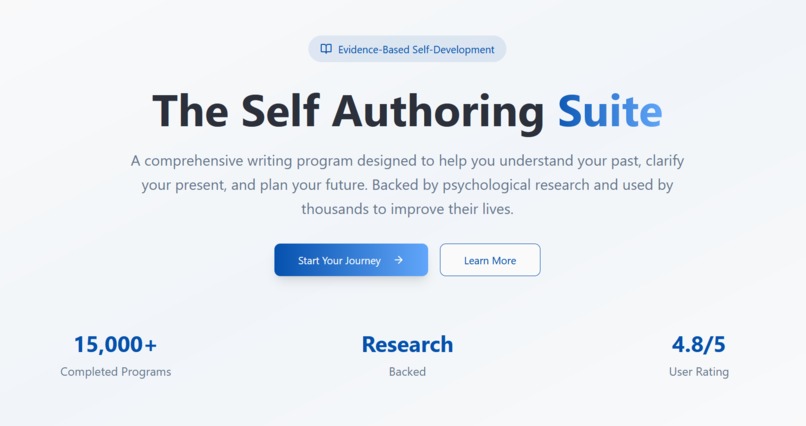
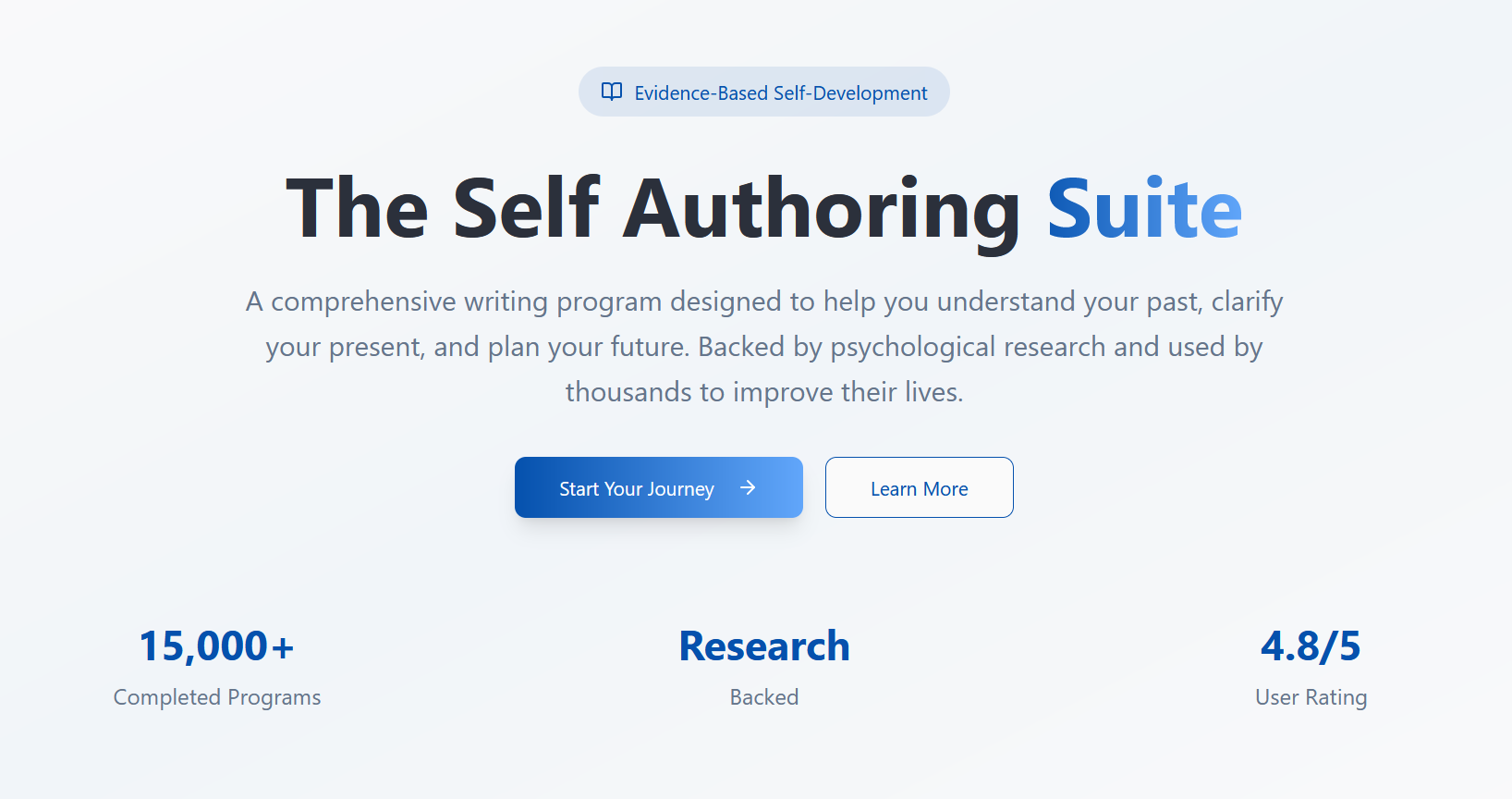
The inspiration for "Author Your Path" comes from the groundbreaking psychological research on self-authoring and narrative therapy. Drawing from the work of Dr. Jordan Peterson and his colleagues at the University of Toronto, this project was inspired by the proven benefits of structured self-reflection and goal-setting through writing. The idea emerged from recognizing that many people struggle with understanding their past, clarifying their present circumstances, and creating meaningful plans for their future. By providing a digital platform for the evidence-based Self Authoring Suite, we aimed to make this powerful tool accessible to anyone seeking personal growth and self-understanding.
What it does
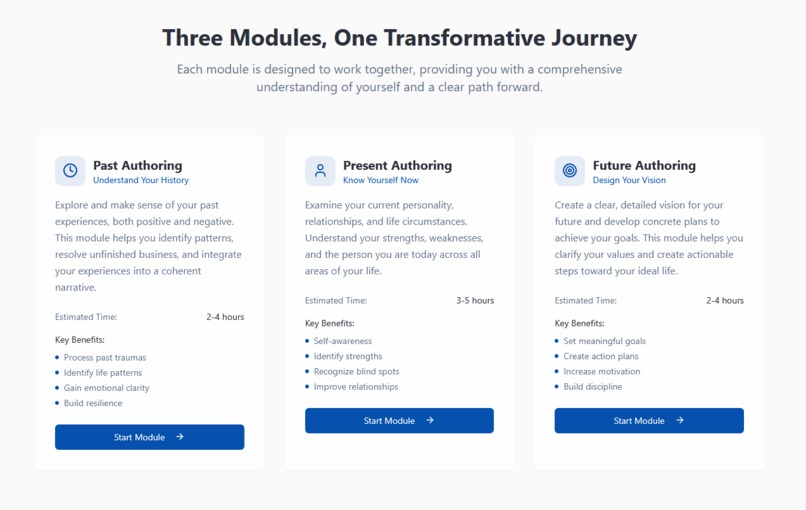
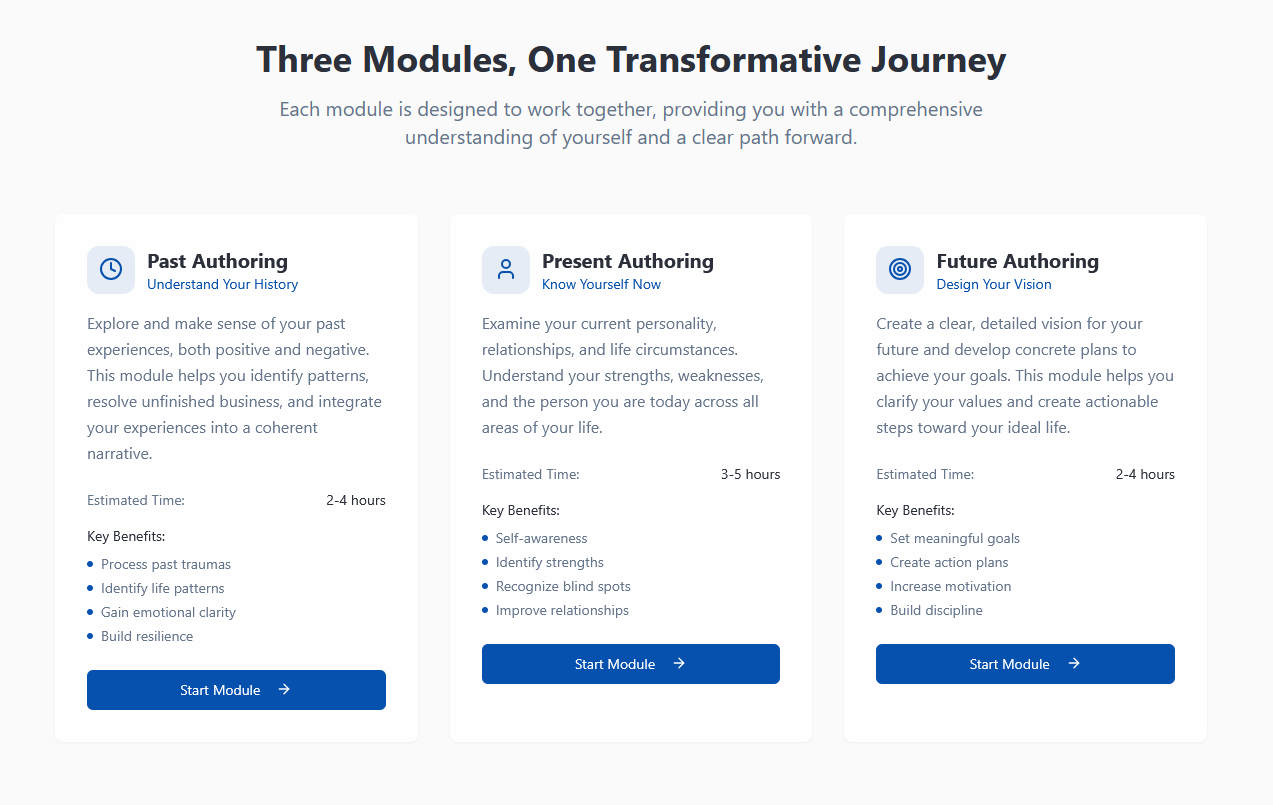
"Author Your Path" is a comprehensive web-based self-development platform that guides users through three interconnected writing modules:
Past Authoring: Helps users explore and make sense of their personal history, both positive and negative experiences. Users reflect on significant events, relationships, and moments that shaped who they are today, identifying patterns and learning from their experiences.
Present Authoring: Enables users to examine their current personality, relationships, career, health, and life circumstances with honesty and clarity. This module focuses on understanding strengths, weaknesses, and current life patterns.
Future Authoring: Assists users in creating a detailed, specific vision for their ideal life 3-5 years from now. Users design their future across all important life areas and develop concrete plans to achieve their goals.
The platform provides structured guidance through reflection questions, saves progress locally, and offers a clean, distraction-free writing environment that encourages deep self-reflection.
How we built it
The application was built using modern web technologies with a focus on user experience and accessibility:
Frontend Framework: React 18 with TypeScript for type safety and robust component architecture Build Tool: Vite for fast development and optimized production builds UI Framework: shadcn/ui components built on Radix UI primitives for accessible, customizable interfaces Styling: Tailwind CSS for responsive, utility-first styling with custom design tokens Routing: React Router DOM for seamless navigation between modules State Management: React hooks and local storage for progress persistence Form Handling: React Hook Form with Zod validation for robust form management Notifications: Sonner and custom toast components for user feedback
Architecture Decisions:
- Client-side storage using localStorage to ensure privacy and offline capability
- Responsive design that works across desktop, tablet, and mobile devices
- Progressive enhancement with graceful fallbacks
- Component-based architecture for maintainability and reusability
Development Tools:
- ESLint for code quality and consistency
- TypeScript for type safety and better developer experience
- PostCSS for CSS processing and optimization
- Docker for containerized deployment
Challenges we ran into
Data Persistence: One of the primary challenges was implementing reliable progress saving without requiring user accounts or server-side storage. We solved this by using localStorage with comprehensive error handling and user feedback.
User Experience Design: Balancing the need for comprehensive reflection questions with an interface that doesn't feel overwhelming required careful UX design. We implemented progressive disclosure and clear visual hierarchy to guide users through the process.
Content Structure: Organizing the extensive reflection questions and instructions in a way that feels supportive rather than intimidating required multiple iterations of content design and user flow optimization.
Cross-Platform Compatibility: Ensuring the writing experience works seamlessly across different devices and browsers, especially handling text input and storage limitations on mobile devices.
Performance Optimization: Managing the large amount of text content and ensuring smooth interactions even with extensive user writing required careful attention to component rendering and state management.
Accomplishments that we're proud of
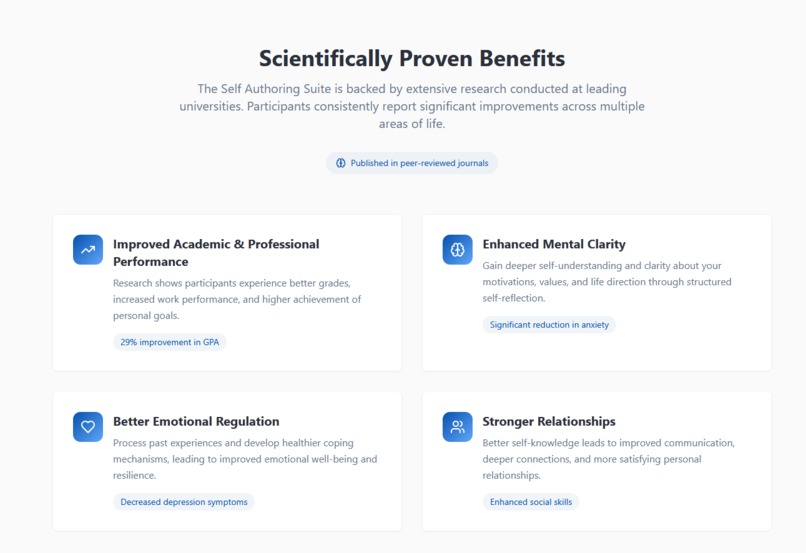
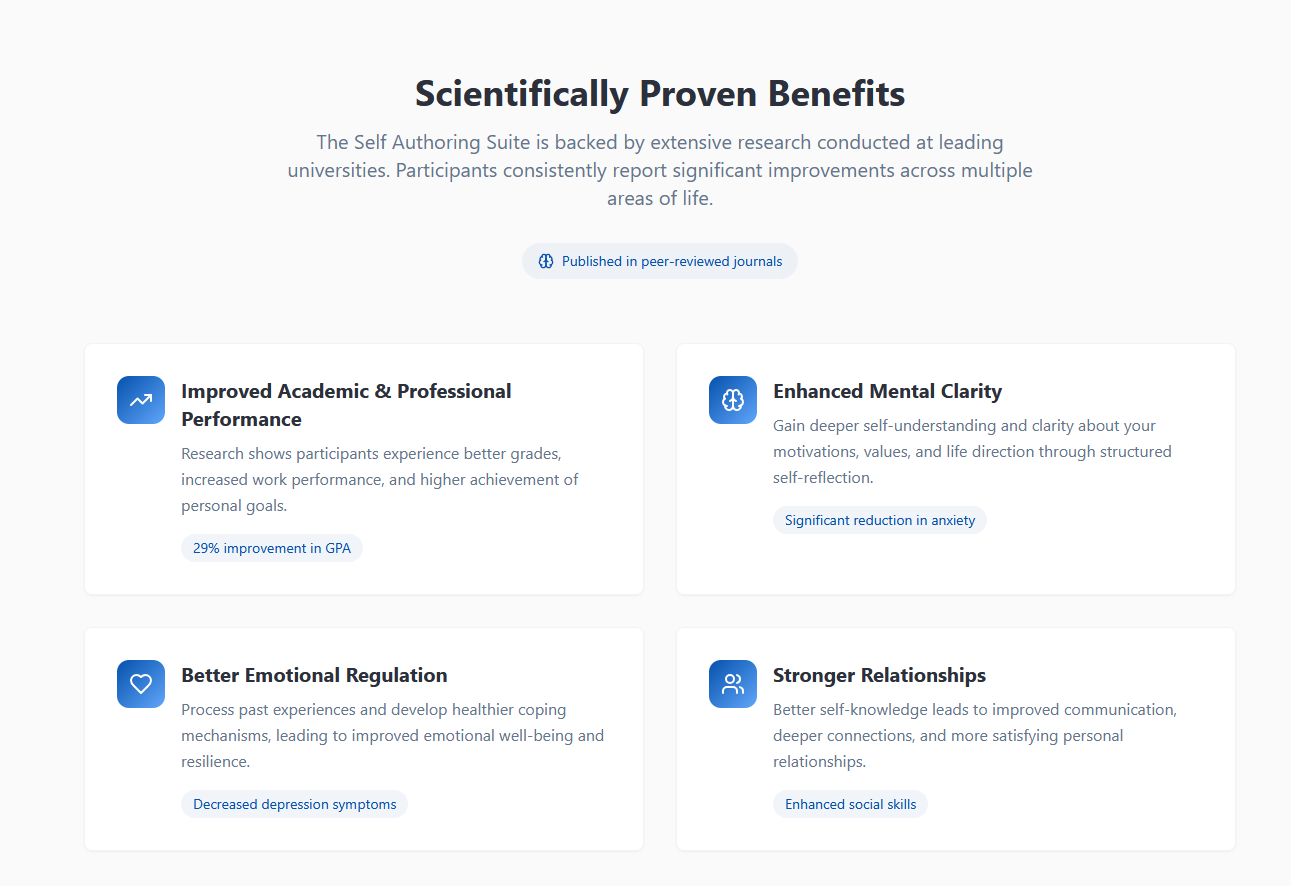
Evidence-Based Approach: Successfully translated peer-reviewed psychological research into an accessible digital format that maintains the integrity of the original methodology.
User-Centric Design: Created an intuitive, distraction-free writing environment that encourages deep reflection and sustained engagement with the material.
Privacy-First Architecture: Built a system that keeps user data completely private by storing everything locally, addressing a key concern for personal development applications.
Accessibility: Implemented comprehensive accessibility features including keyboard navigation, screen reader support, and high contrast design elements.
Responsive Experience: Delivered a seamless experience across all device types, making personal development work possible anywhere.
Research Integration: Successfully incorporated the statistical benefits and research findings into the user interface to build credibility and motivation.
What we learned
The Power of Structured Reflection: Through building this platform, we gained deep appreciation for how structured writing exercises can facilitate personal growth and self-understanding.
User Privacy Concerns: We learned that users are particularly sensitive about privacy when it comes to personal development tools, reinforcing our decision to use local storage.
Progressive Enhancement: The importance of building features that work incrementally, allowing users to engage at their own pace without feeling overwhelmed.
Content Design: How crucial it is to present complex psychological concepts in accessible, actionable language that encourages rather than intimidates users.
Technical Architecture: The benefits of choosing modern, maintainable technologies that can scale with user needs while maintaining performance.
Research Translation: The challenge and importance of accurately translating academic research into practical, user-friendly applications.
What's next for Author Your Path
Enhanced Analytics: Implement privacy-preserving analytics to help users track their writing progress, word counts, and completion patterns over time.
Goal Tracking Integration: Add features to help users break down their future authoring goals into actionable steps with progress tracking and reminders.
Export and Sharing Options: Provide secure ways for users to export their work or selectively share insights with trusted advisors or therapists.
Mobile App Development: Create native mobile applications to provide an even more seamless writing experience on smartphones and tablets.
Community Features: Develop optional, privacy-respecting community features where users can share insights and support each other's growth journeys.
AI-Powered Insights: Integrate ethical AI tools to help users identify patterns in their writing and suggest areas for deeper exploration.
Professional Integration: Create features for therapists, coaches, and counselors to use the platform with their clients while maintaining strict privacy controls.
Multilingual Support: Expand the platform to support multiple languages, making evidence-based self-development accessible to a global audience.
Research Collaboration: Partner with academic institutions to continue validating and improving the platform's effectiveness through ongoing research studies.## Inspiration
What it does
How we built it
Challenges we ran into
Accomplishments that we're proud of
What we learned
What's next for Author your path
Built With
- javascript
- supabase

Log in or sign up for Devpost to join the conversation.