


Inspiration
Author’s Measure grew from a real book-editing process. A writer brought together decades of sermons, notes, research, outlines, conversations, and AI-generated drafts. The AI systems could write fluently, but they sometimes had not fully read the sources, introduced interpretations the writer had not stated, changed the voice or genre, mishandled speculation, or overlooked confidential material.
The writer repeatedly had to ask: What did you actually read? Which source supports this? Is this my idea, a reasonable inference, or something AI added?
That human editorial process became Author’s Measure.
What it does
Author’s Measure is a source-accountable AI editor for serious nonfiction. It does not replace the author or silently rewrite a manuscript.
The writer provides a project foundation, selected sources, and a draft chapter or substantial section. The application then:
- Records which sources were actually reviewed.
- Tracks source coverage at the paragraph level.
- Compares possible publishing formats.
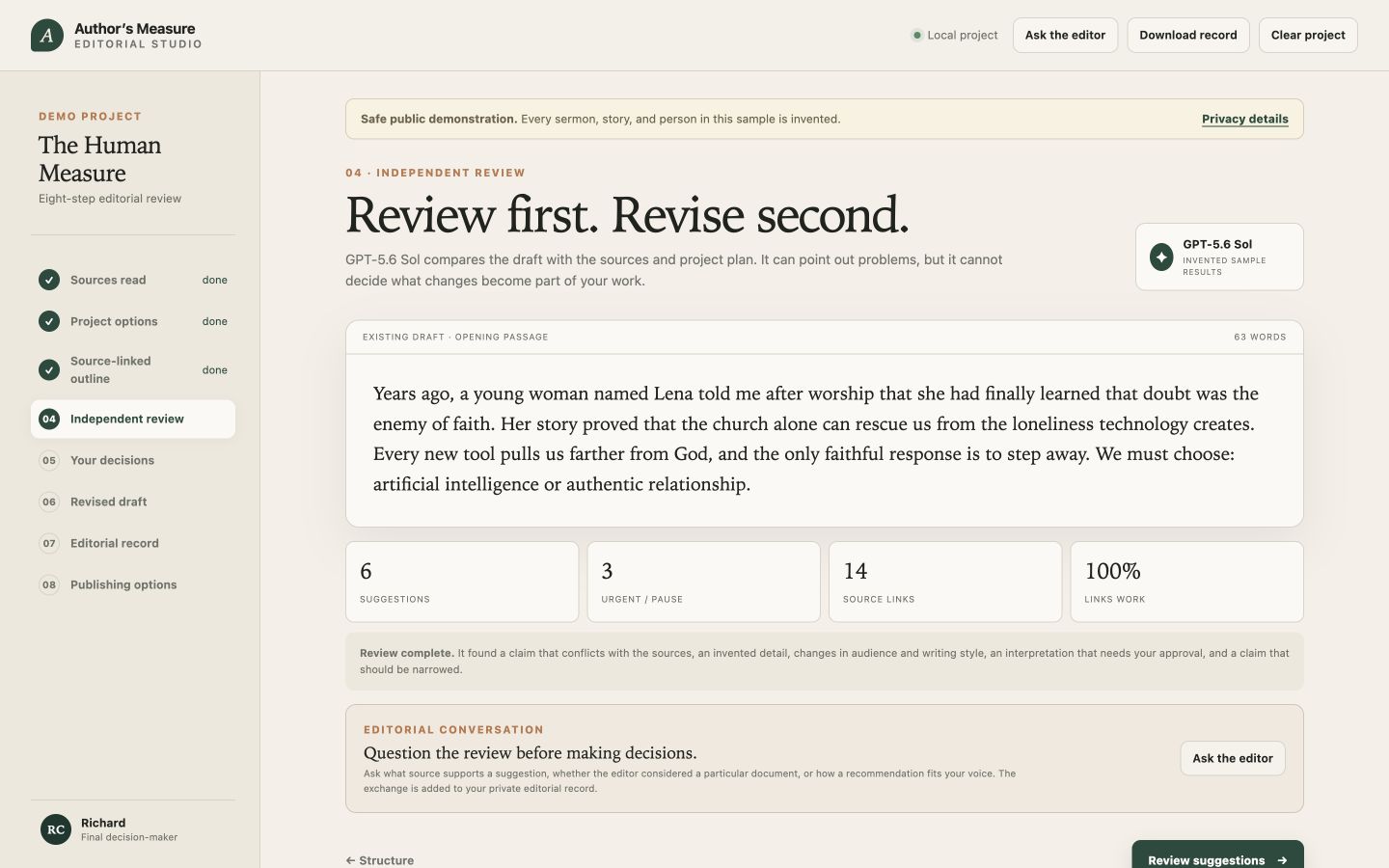
- Checks the draft against the sources and project brief.
- Flags unsupported claims, inference, voice or genre drift, audience concerns, and confidentiality risks.
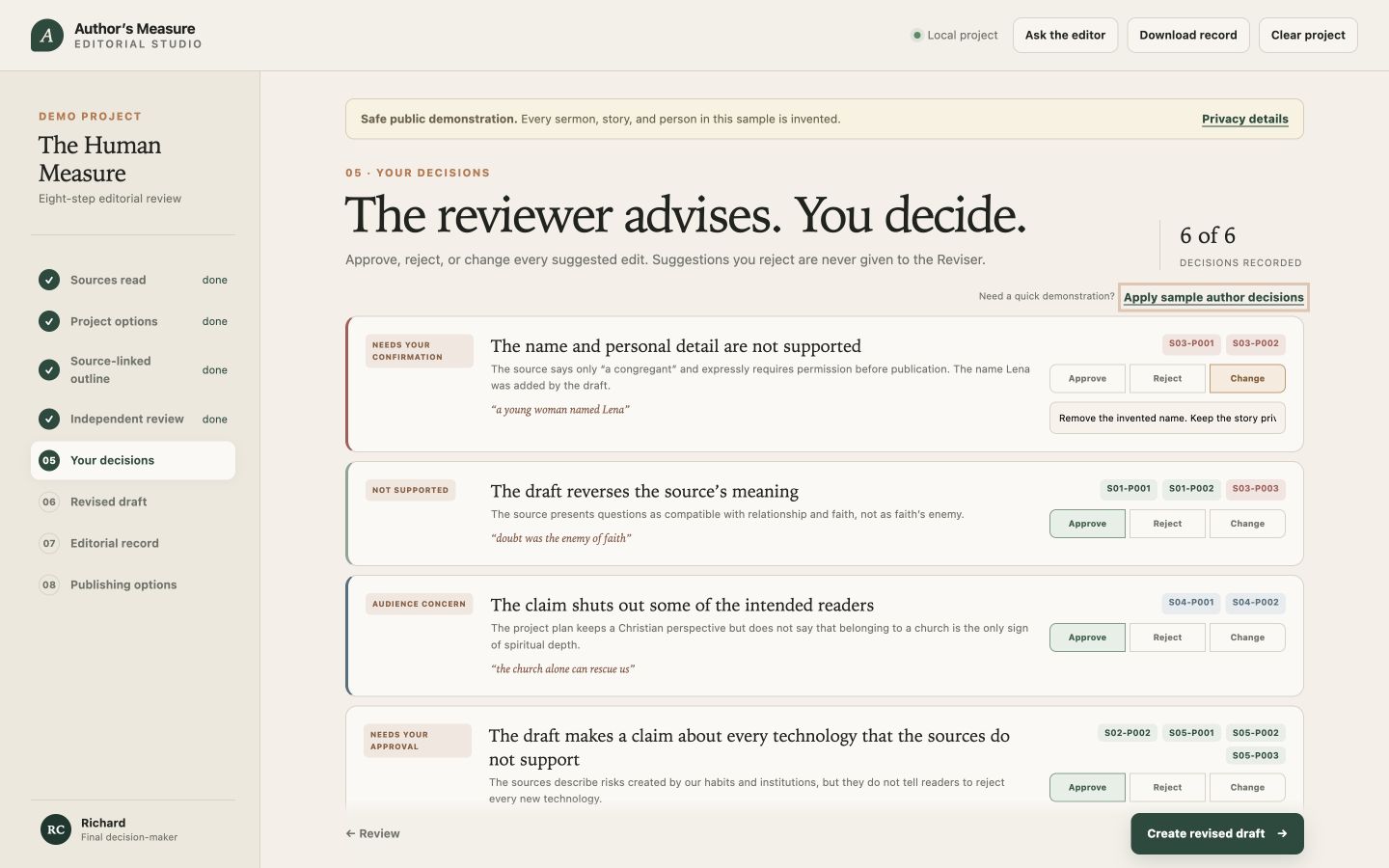
- Lets the writer approve, reject, modify, or question every finding.
- Redrafts using only the findings the writer approved.
- Shows what came from the author, the sources, inference, and AI.
The author remains the final authority.
How we built it
The working prototype uses a browser-based JavaScript interface and a Node.js server. It includes five invented sample sources and one external draft, allowing judges to experience the complete workflow without exposing private manuscript material.
The optional live mode uses the OpenAI Responses API with GPT-5.6 Sol. The Independent Critic and Redrafter are separate calls with separate responsibilities. Structured outputs require evidence references to match real source-section IDs, and rejected findings are blocked from reaching the Redrafter.
The application can also run with a clearly labelled deterministic demonstration fixture, so the entire workflow remains testable without an API key.
Codex with GPT-5.6 helped turn a writer’s real editorial decision process into product requirements, architecture, interface, tests, documentation, privacy boundaries, deployment, and the demonstration video.
GPT-5.6 Sol serves two carefully separated runtime roles: Independent Critic and Redrafter. It first assesses the draft against the approved sources and brief. Only after the human writer makes decisions can it produce a revision, and it receives only approved or modified findings.
Challenges we ran into
The hardest challenge was making traceability enforceable rather than merely promising it. The application had to verify source coverage, resolve every evidence reference, keep criticism separate from rewriting, and prevent rejected advice from entering the revision.
A second challenge was privacy. The public repository and demonstration use entirely invented material. They contain no unpublished manuscript, private transcripts, identifiable pastoral stories, or personal source archive.
Accomplishments that we're proud of
We built and tested a complete eight-stage editorial workflow, including source-coverage gates, evidence-linked findings, author approval controls, editorial conversation, approval-faithful revision, and an authorship record.
The result demonstrates a different relationship with AI: editorial counsel without surrendering authorship.
What we learned
Trust does not come only from better prose. It comes from visible source coverage, separated editorial roles, explicit human decisions, and a record of how the manuscript changed.
What's next for Author's Measure
Future versions could support larger source libraries, document ingestion, whole-manuscript continuity checks, additional publishing formats, collaborative editorial teams, and outlet-aware publishing guidance—while preserving the same human approval boundaries.
Built With
- codex
- css
- gpt-5.6
- html
- javascript
- node.js
- openai-responses-api
- structuredoutputs

Log in or sign up for Devpost to join the conversation.