-
-
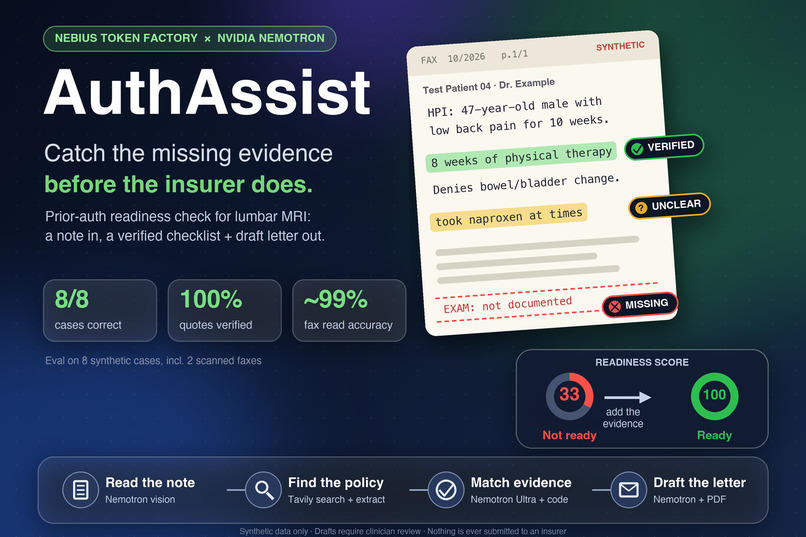
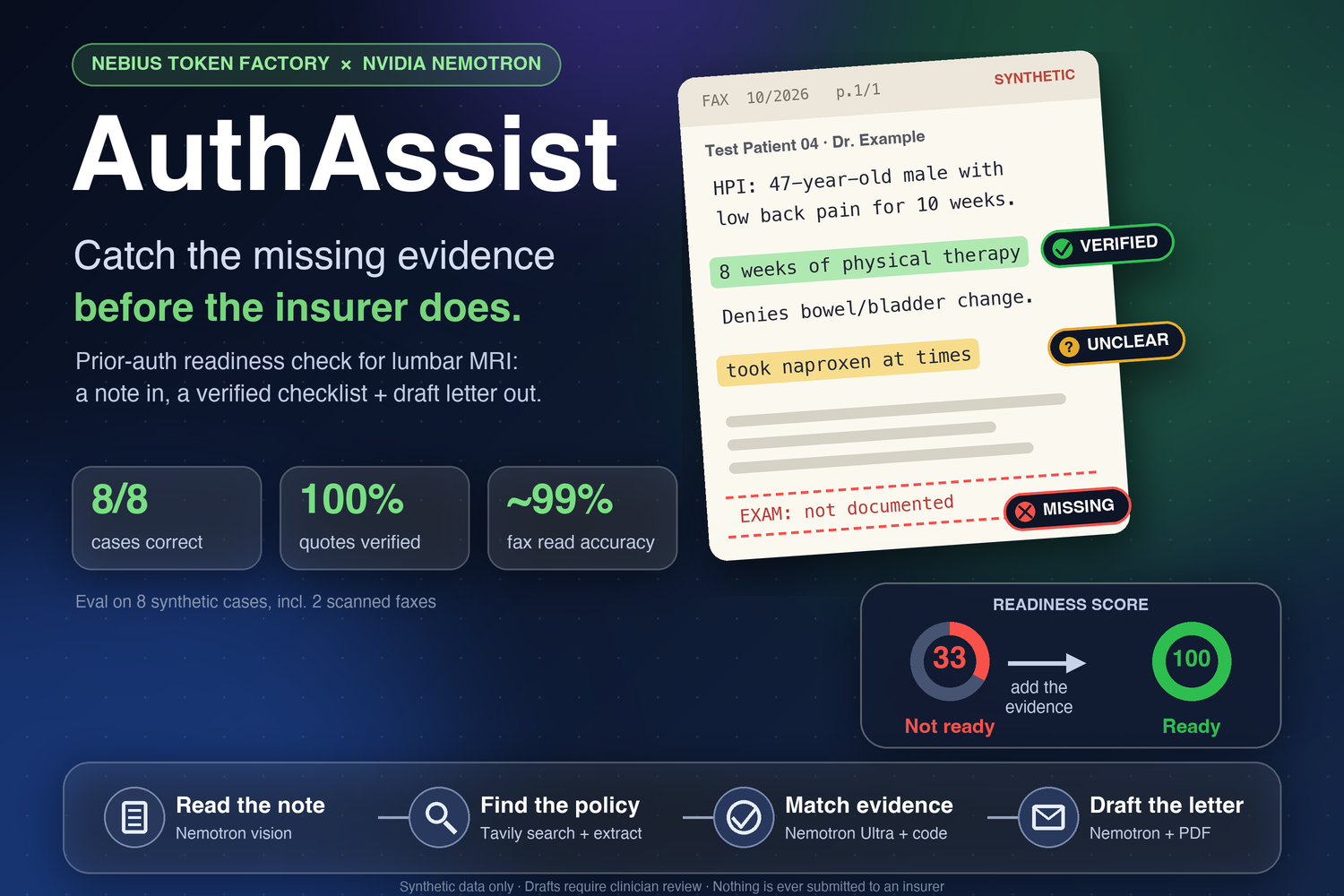
The overview thumbnail: before-and-after score, the tilted evidence note, and the proof tiles
-
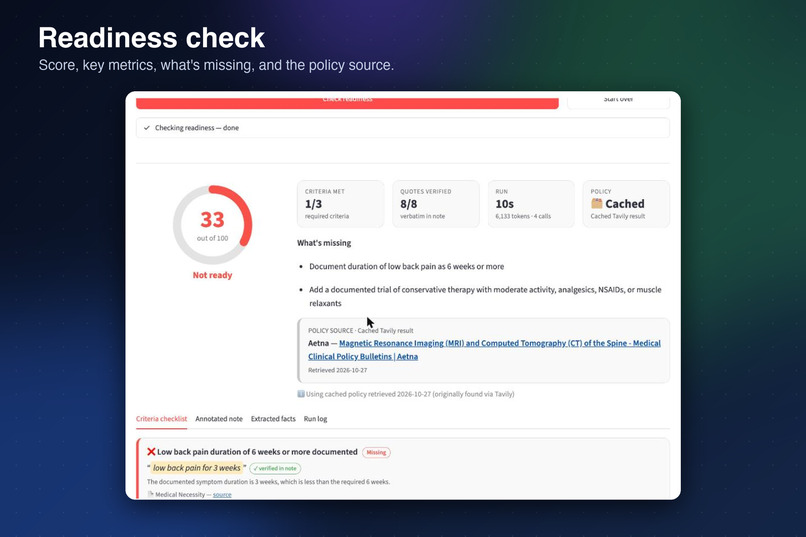
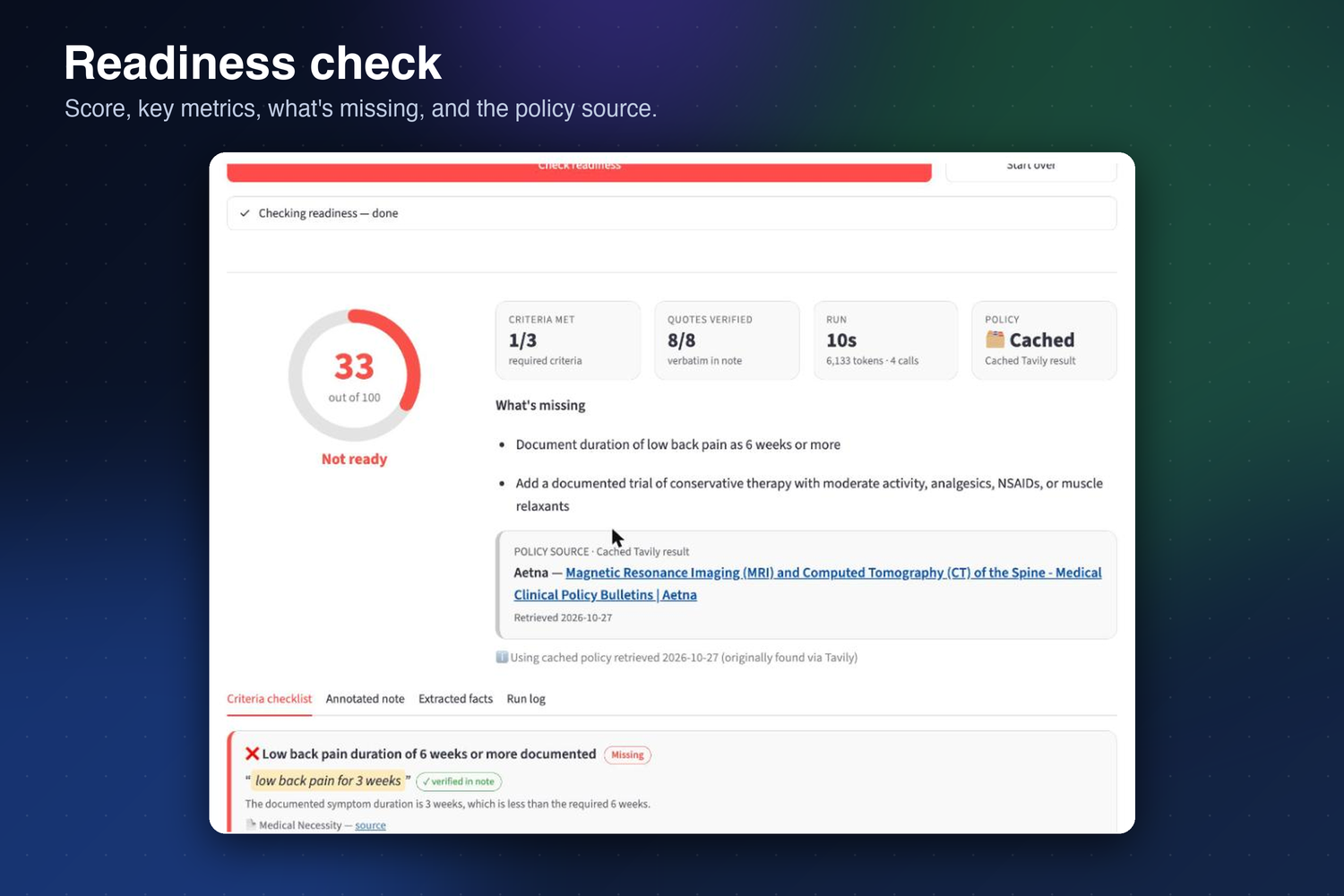
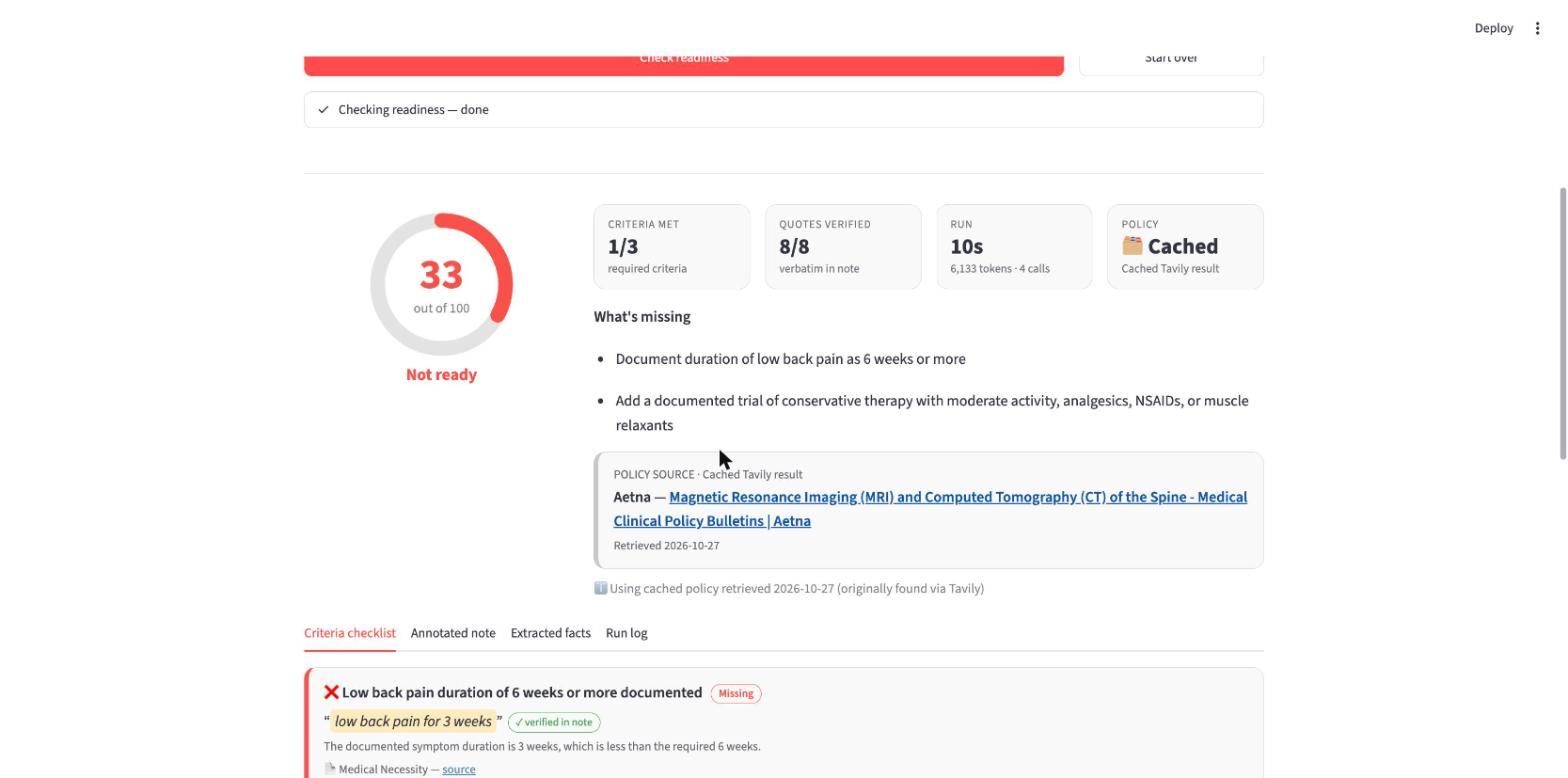
The real UI: score ring, metric tiles, what's missing, and the policy source
-
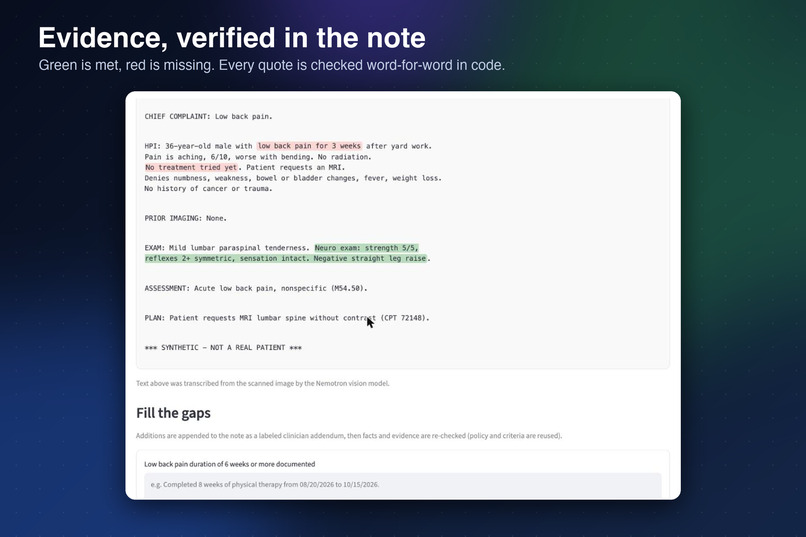
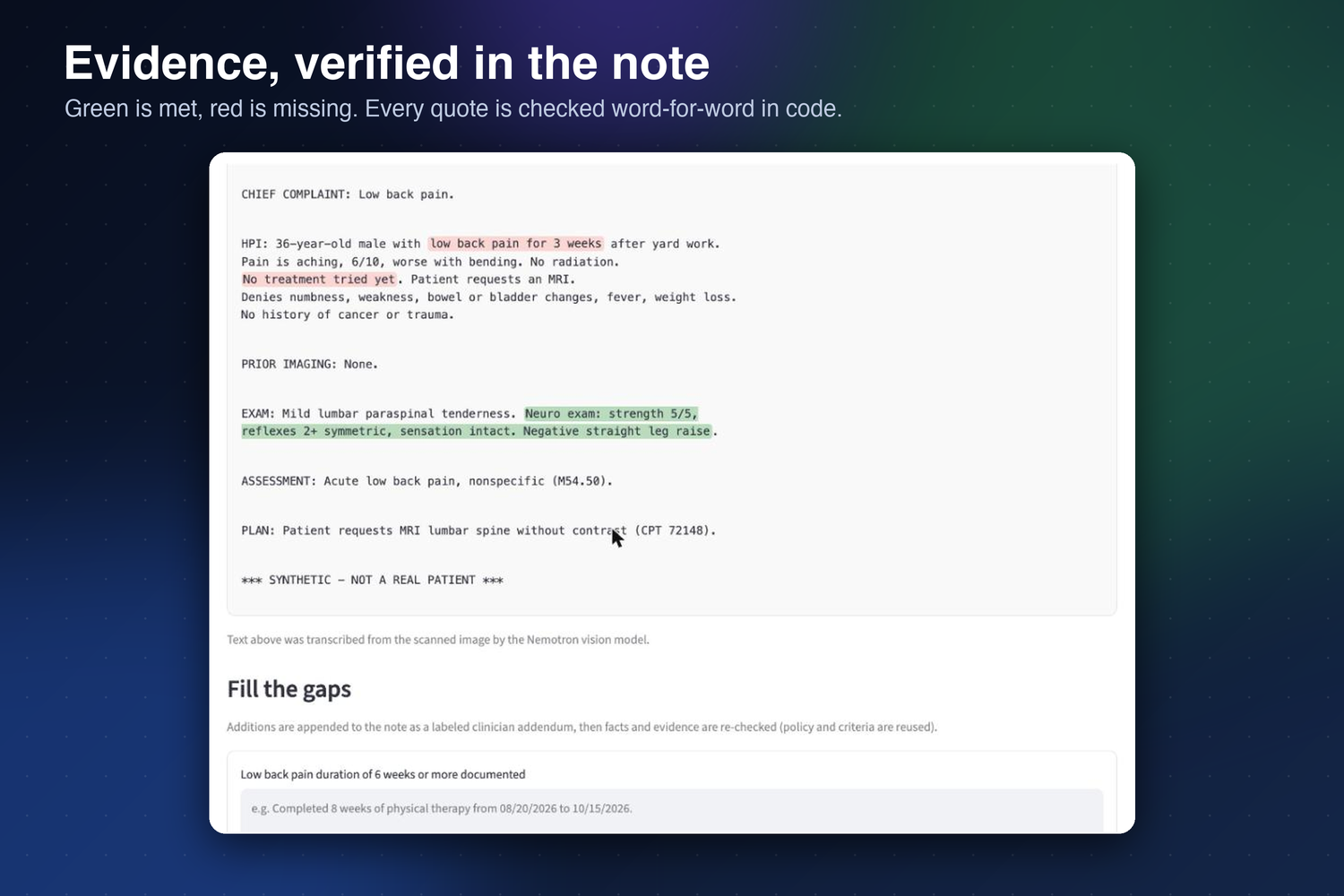
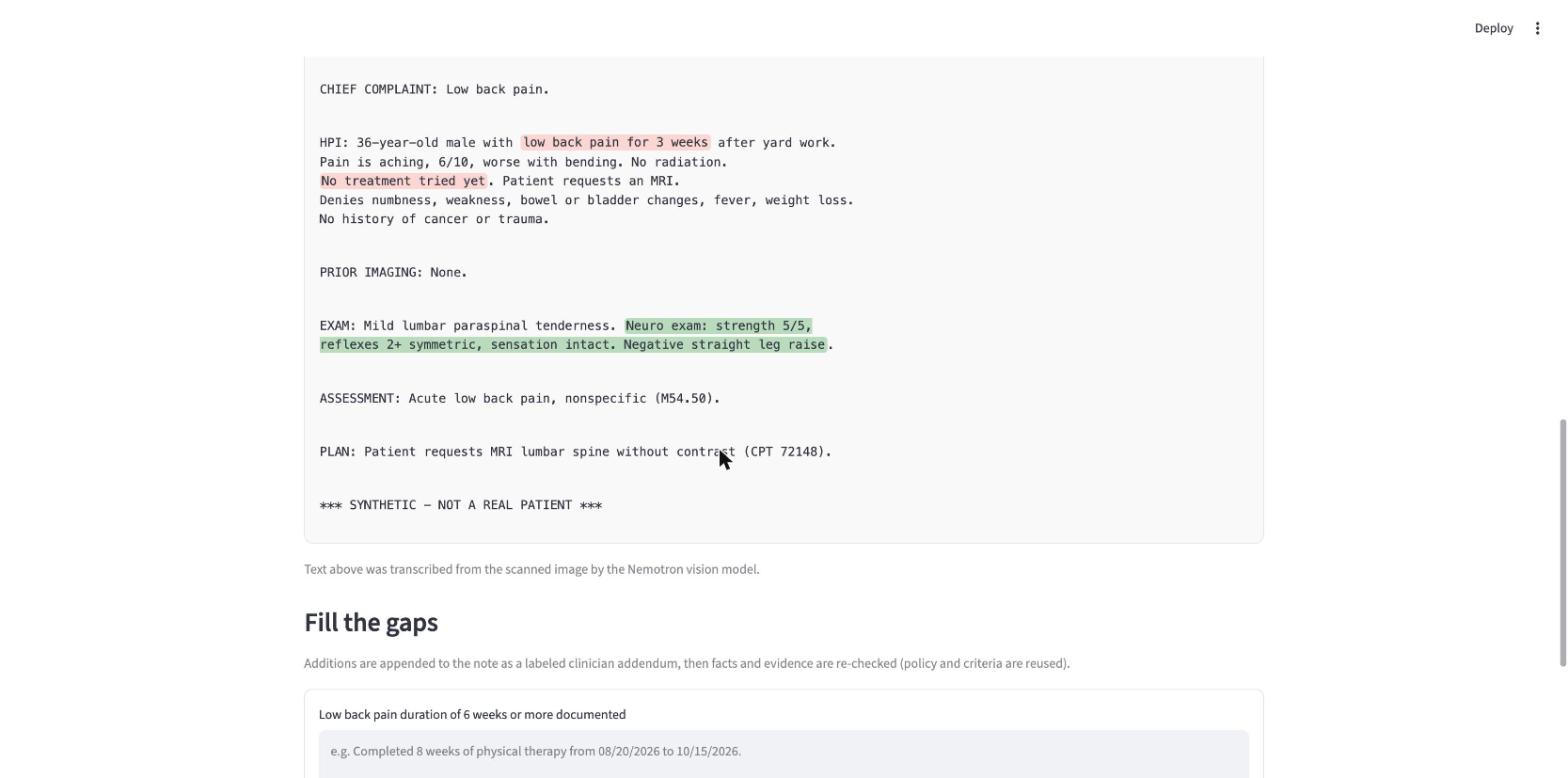
The scanned fax with quotes highlighted in place (green met, red missing)
-
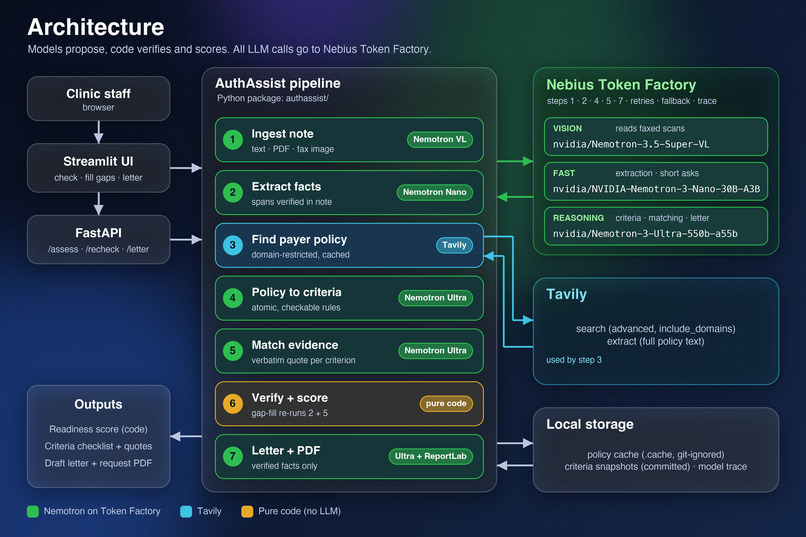
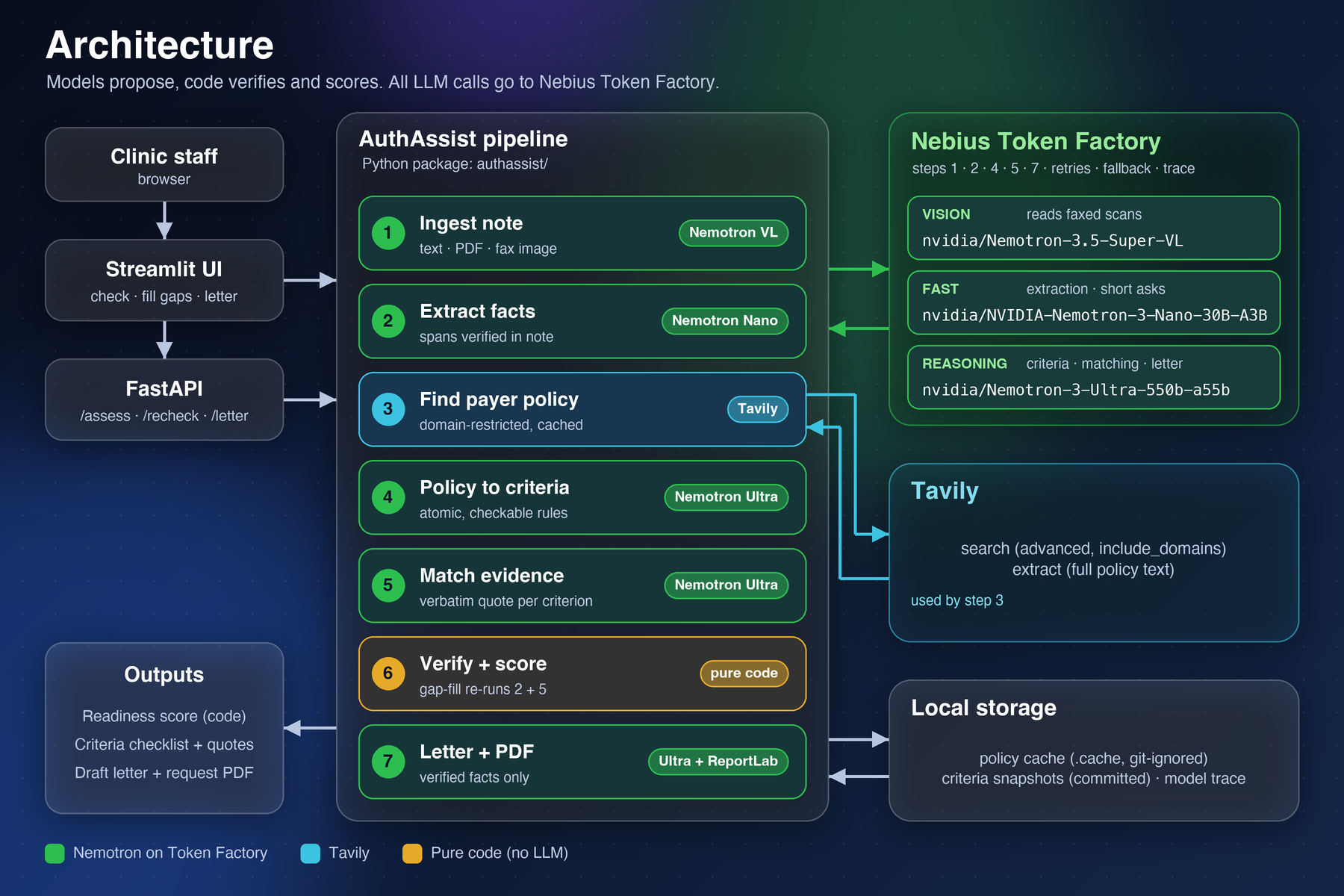
The architecture diagram
-
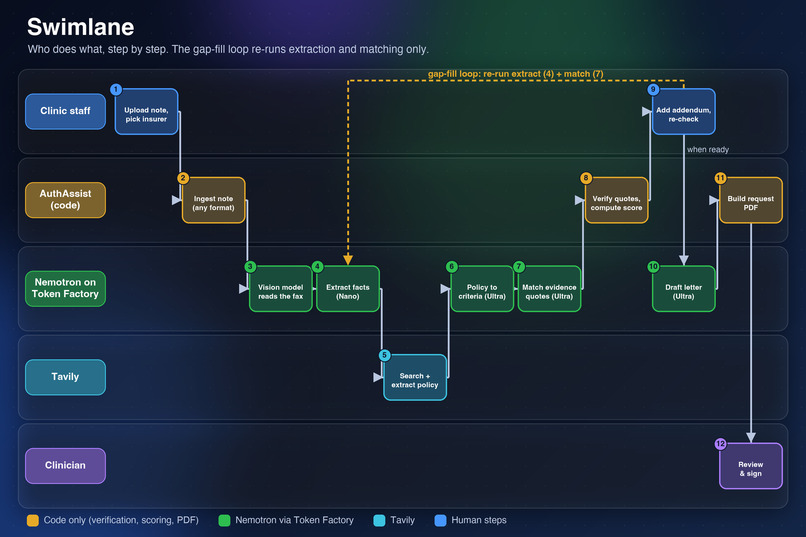
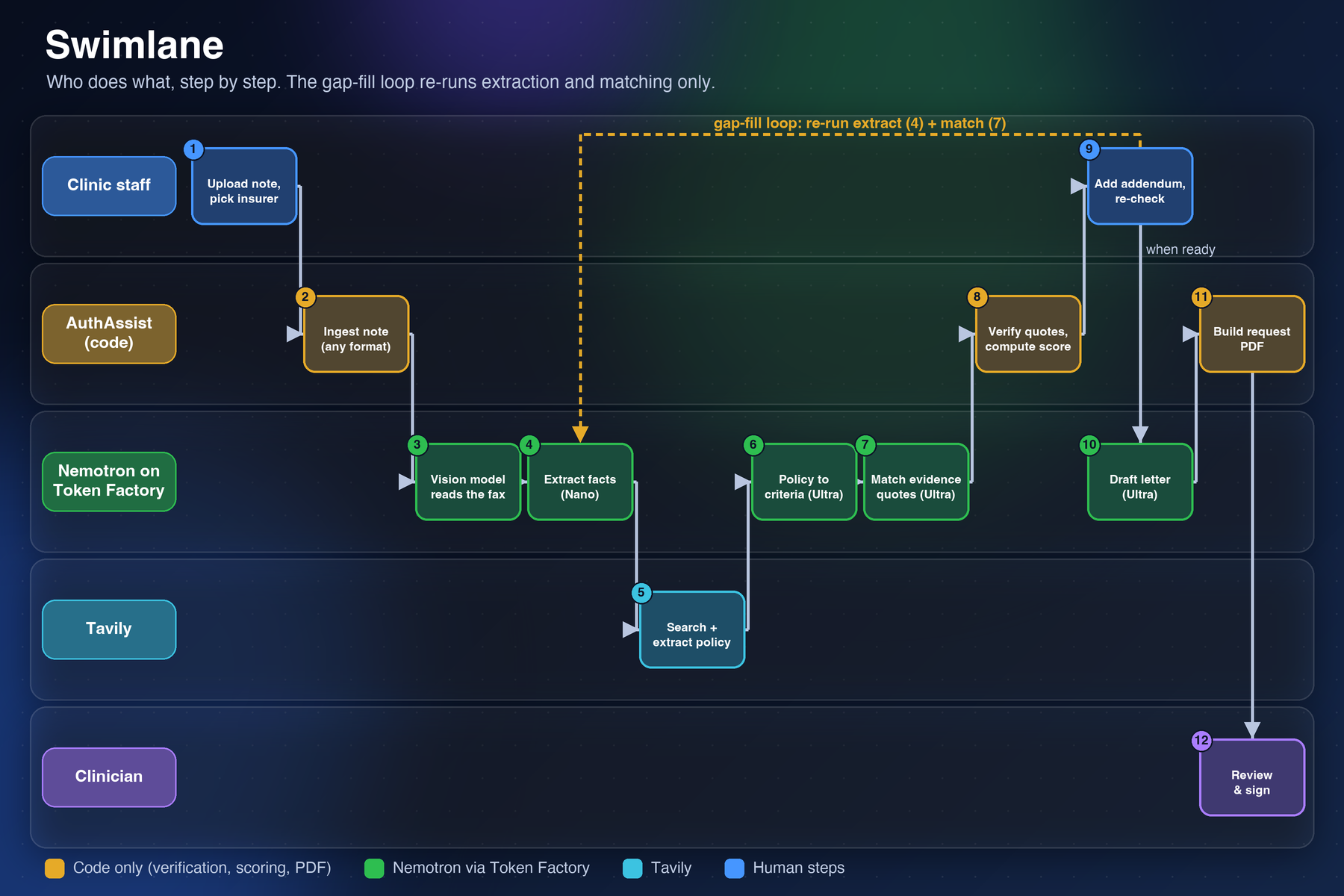
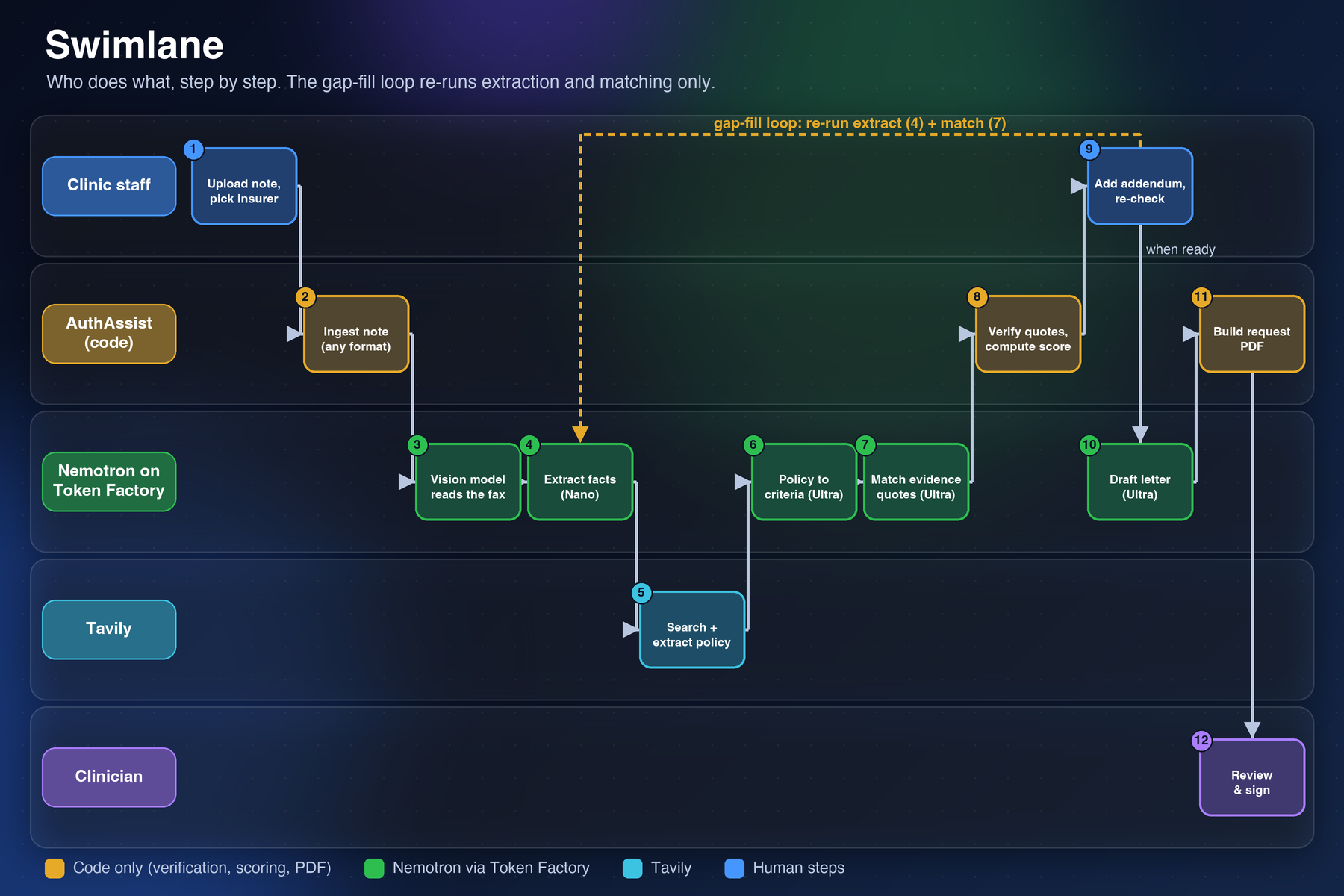
The swimlane diagram
-
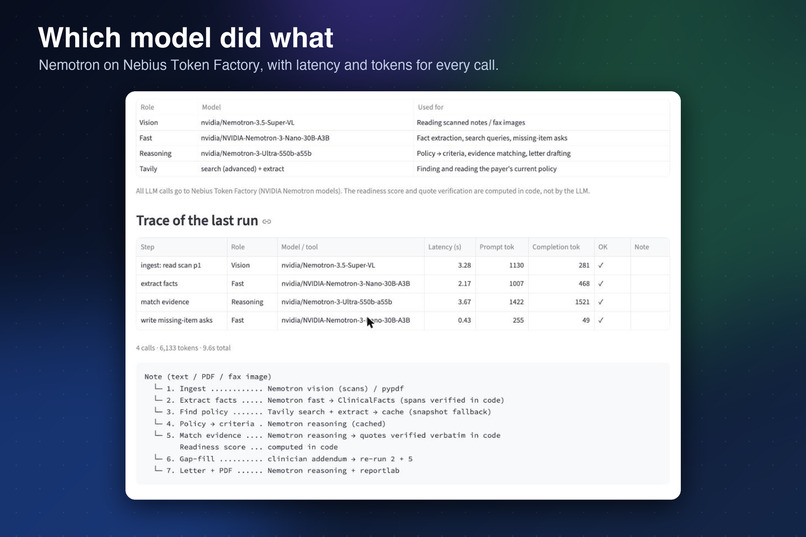
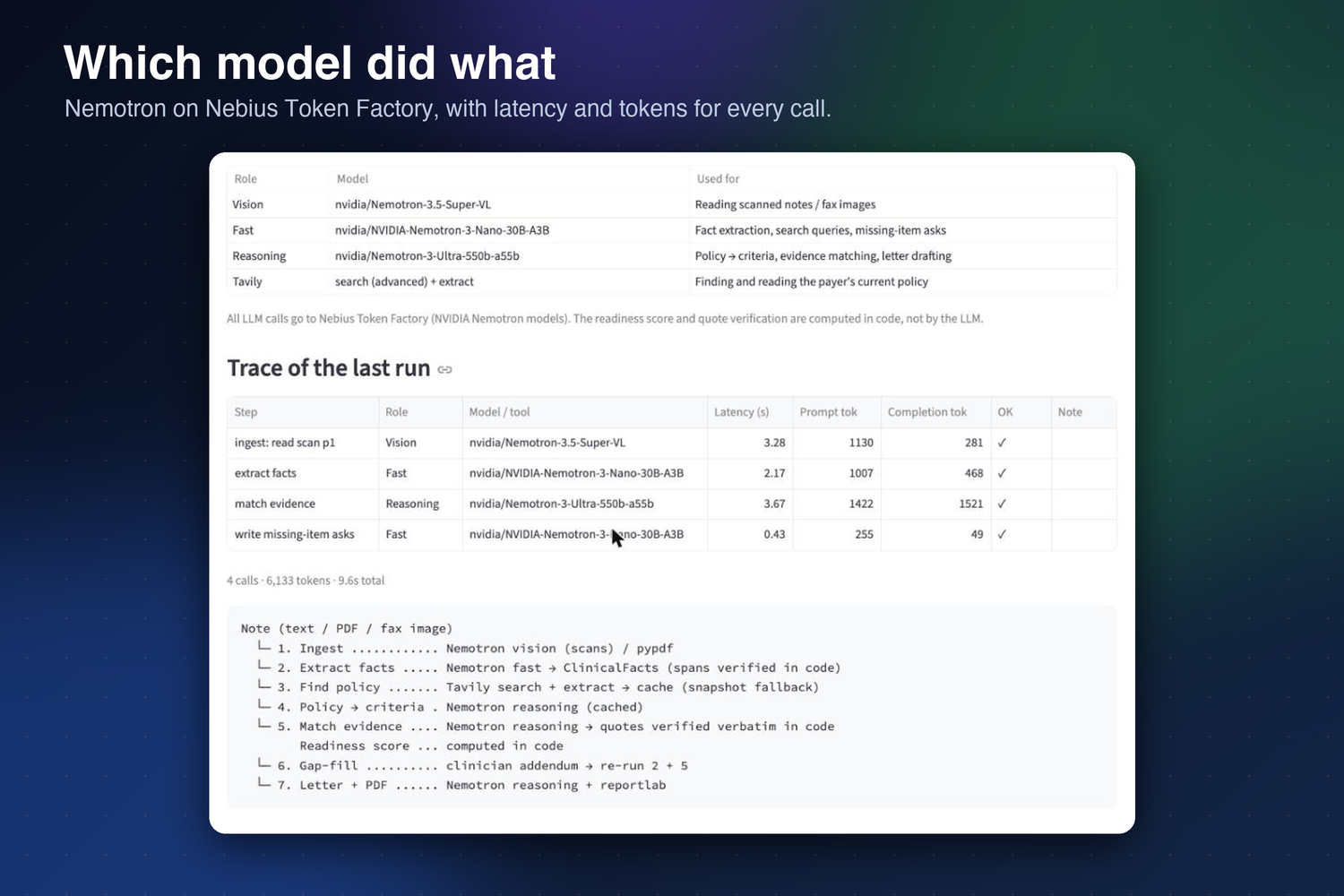
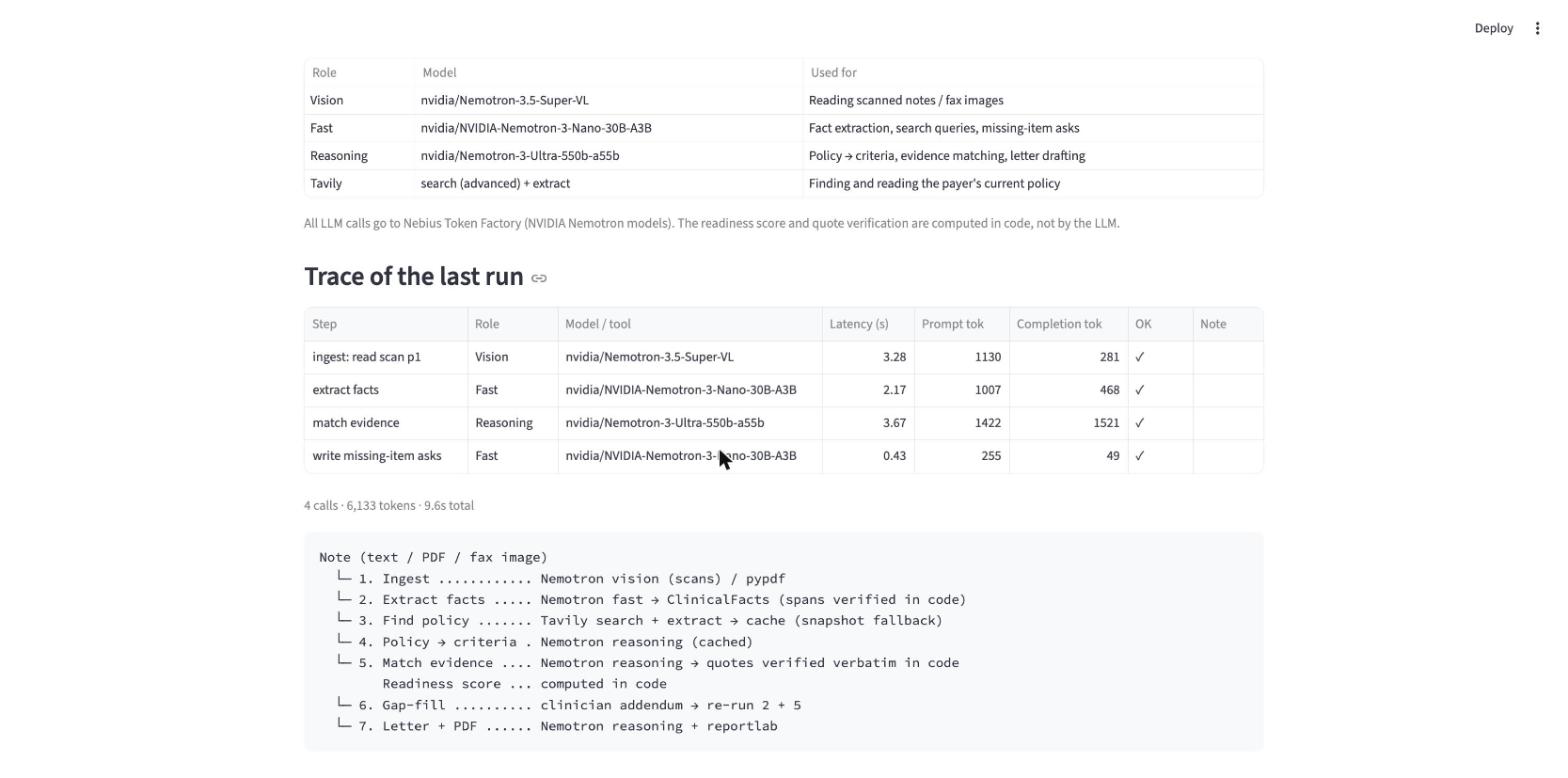
Which Nemotron model did each step, with latency and tokens
-
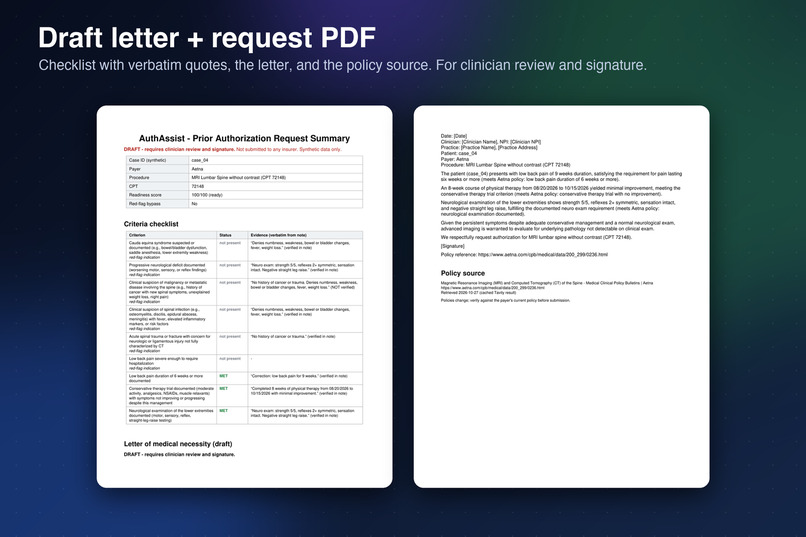
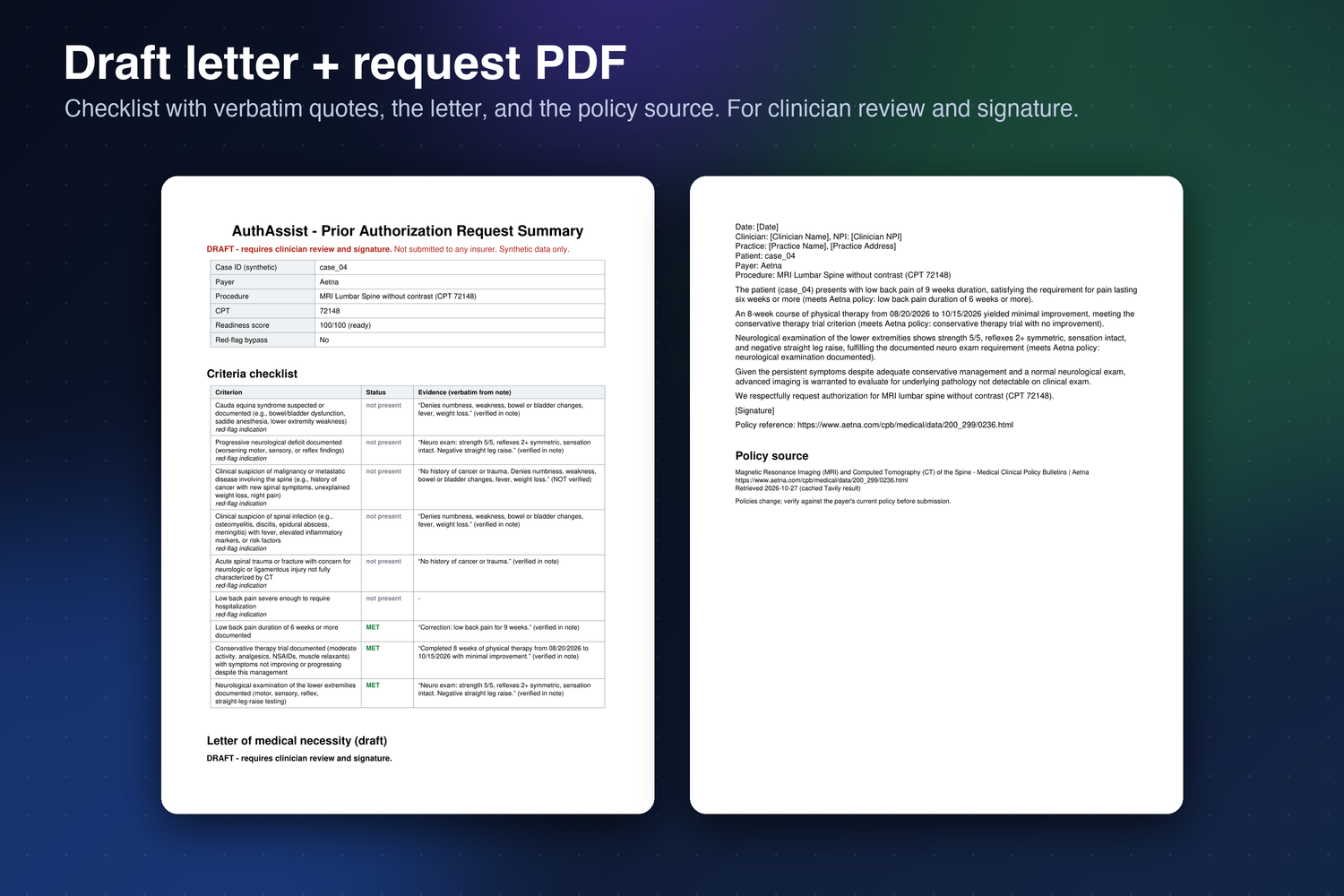
The generated request PDF: checklist and draft letter
-
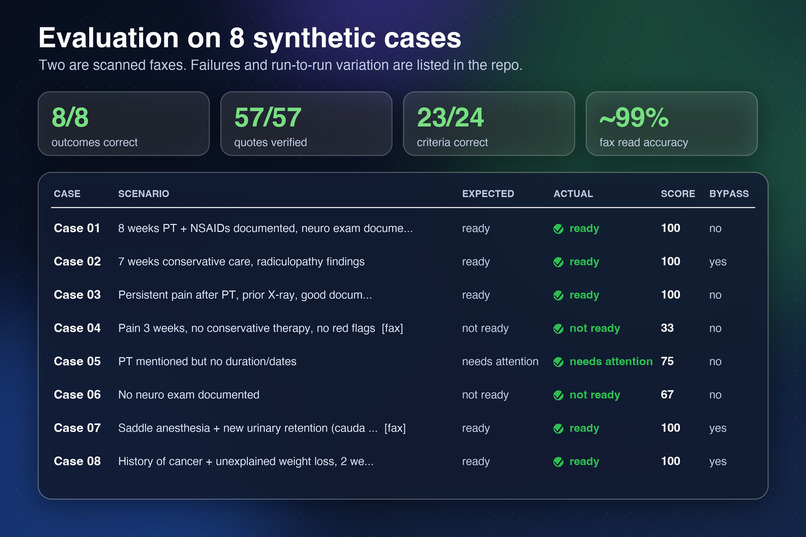
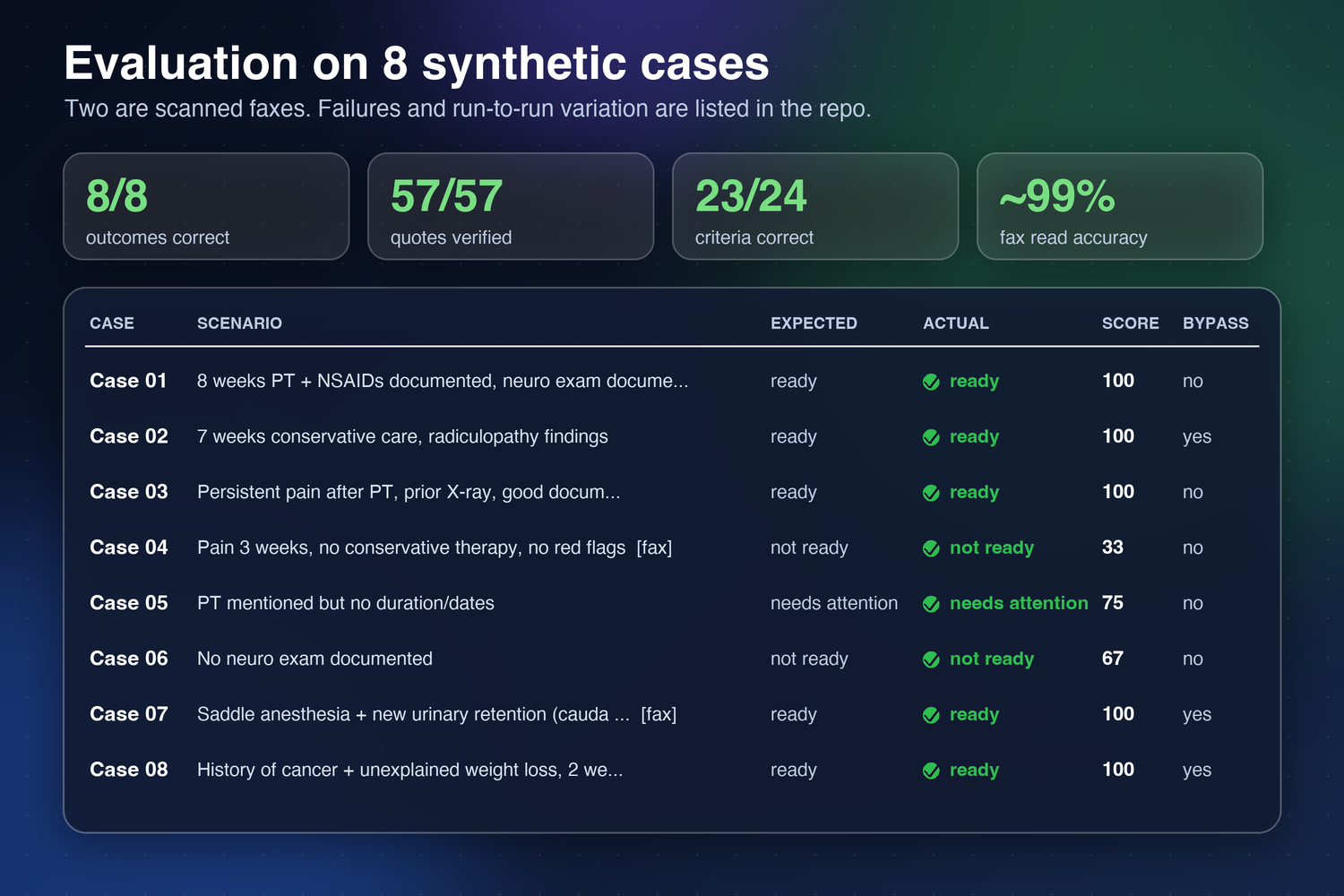
The eval table: 8/8 outcomes, 57/57 quotes verified, per-case results
Inspiration
Before many procedures, US clinics need the insurer's approval first. Staff lose hours each week hunting for each insurer's rules and gathering evidence, and many requests are denied for an avoidable reason: the evidence existed in the chart but was never documented against the insurer's criteria. We wanted a tool that catches that gap before the insurer does.
What it does
AuthAssist checks a clinical note against the insurer's current published policy and shows exactly what's missing.
- Reads the note: typed, PDF, or a faxed scan (a Nemotron vision model transcribes it).
- Extracts structured facts: symptoms, duration, treatments, red flags, exam findings.
- Finds the insurer's policy with Tavily search + extract, and turns it into a checklist.
- Matches each criterion to an exact quote from the note. Code verifies every quote appears word-for-word; anything unverifiable is downgraded.
- Computes a readiness score in code (never by the LLM) and lists what to add.
- Gap-fill loop: staff add the missing detail as a labeled addendum, re-check, and watch the score move (e.g. 33 → 100).
- Drafts a letter of medical necessity and a request-summary PDF for clinician review and signature. Nothing is ever submitted to an insurer.
Scope: MRI lumbar spine without contrast (CPT 72148) for low back pain, with Aetna, Molina and a Medicare fallback. More procedures are a config file away.
Every piece of evidence is highlighted in the note and checked word-for-word. Green is met, red is missing, and anything the model quotes that isn't really in the note is downgraded automatically.
How we built it
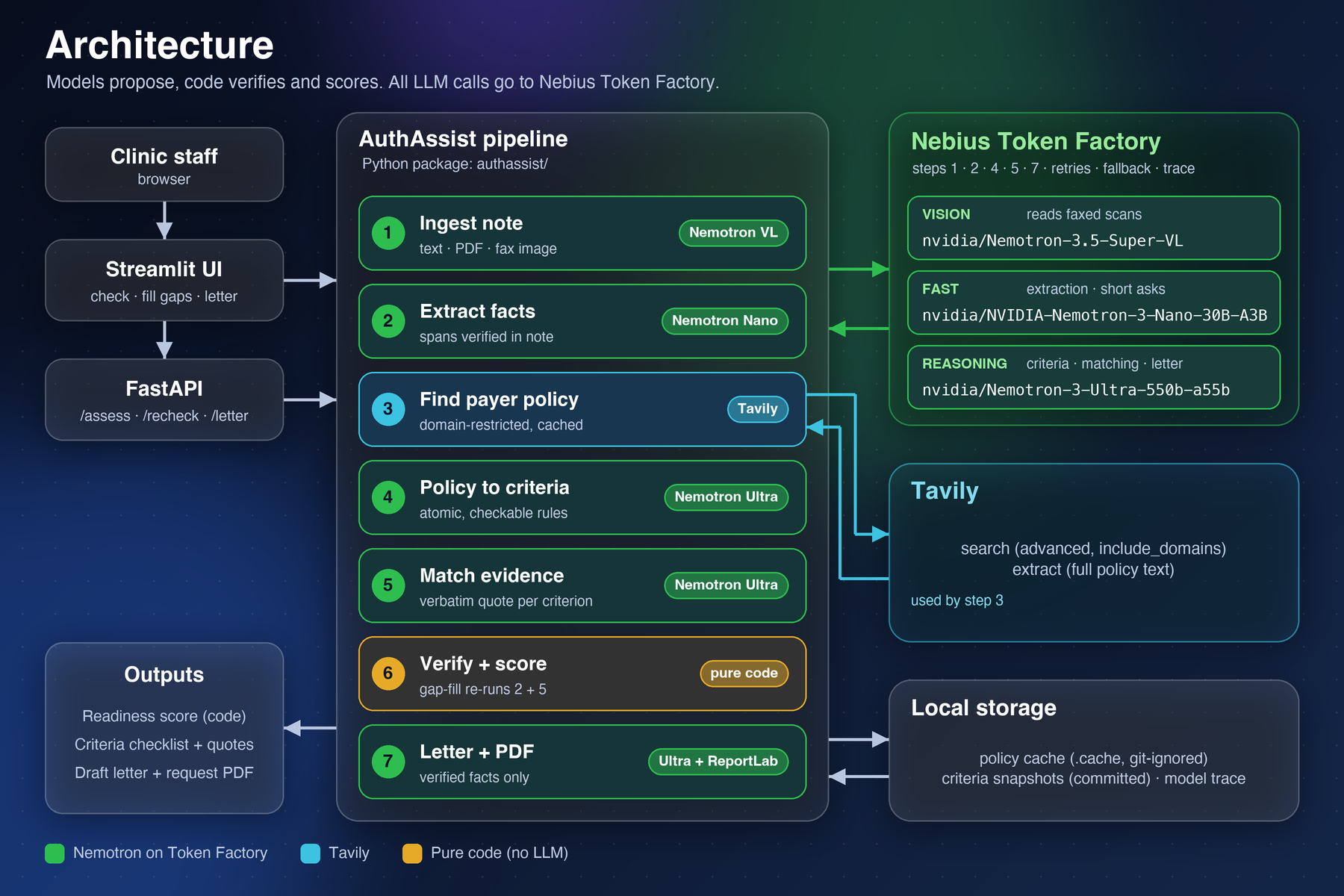
- All AI runs on Nebius Token Factory with NVIDIA Nemotron, routed by role:
- Nemotron 3 Ultra for the heavy reasoning (policy → criteria, evidence matching, the letter).
- Nemotron 3 Nano for fast, frequent calls (fact extraction ~3s, short asks <1s).
- Nemotron 3.5 Super VL to read faxed scans (~99% transcription accuracy on our noisy test faxes).
- Tavily supplies the live policy: domain-restricted search so results come from the insurer's own site, then extract for the full text. Policies and criteria are cached, with a committed criteria snapshot as a safety net.
- Trust by design: the model proposes evidence, code verifies it, and code scores it. A per-step model trace in the UI shows which Nemotron model did what.
- Python, FastAPI, Streamlit, Pydantic, ReportLab, Docker.
Who does what, step by step (the dashed line is the gap-fill loop):
The UI shows which Nemotron model did each step, with latency and tokens:
Challenges we ran into
- Nemotron's hidden reasoning ate the token budget. With thinking on, Nano spent all 3,000 tokens reasoning and returned empty content. Turning thinking off for extraction and vision roles fixed it and cut extraction to ~3s.
- Policies list alternative pathways. Our first extraction made things like "required hospitalization" mandatory, so ordinary cases scored low. We taught the extractor to treat sub-population pathways as red flags instead.
- Vague evidence. "Did some physical therapy" was marked as met when the policy needs 6 weeks. A quantity-aware matching rule fixed it.
- Model API IDs differ from catalog names, and the spec's preferred vision model was dedicated-endpoint only, so we adapted to Nemotron 3.5 Super VL.
Accomplishments we're proud of
On 8 synthetic cases (2 of them scanned faxes): 8/8 correct outcomes, 100% of evidence quotes verified verbatim, ~99% fax transcription accuracy, including two red-flag bypass cases. We also publish the failures: results vary slightly run to run, and one case triggers a bypass because Molina's own policy lists abnormal reflexes as an indication.
What we learned
Letting a model propose and code verify is a simple pattern that makes LLM output trustworthy enough for a regulated workflow. Matching Nemotron model size to the job keeps the app responsive and credits stretched.
What's next
HIPAA controls and BAAs, EHR/FHIR integration, payer prior-authorization APIs (required of many payers from Jan 1, 2027 under CMS-0057-F), more procedures, and a policy watcher that flags when a payer's policy changes.
Track: Best Apps and Agents. Built during the Submission Period as a new project. Synthetic data only; drafts require clinician review.


Log in or sign up for Devpost to join the conversation.