-
-
Autex
Inspiration
Modern vehicles generate thousands of data points every second, yet most drivers have no visibility into their car's health until a warning light appears on the dashboard. We were inspired by aviation telemetry systems and racing pit crew dashboards — tools that give operators real-time, high-density insights into complex machinery. We asked ourselves: why shouldn't everyday drivers and mechanics have that same level of clarity? AUTEX was born from the desire to democratize vehicle diagnostics through an elegant, real-time interface that feels as precise as it is accessible.
What it does
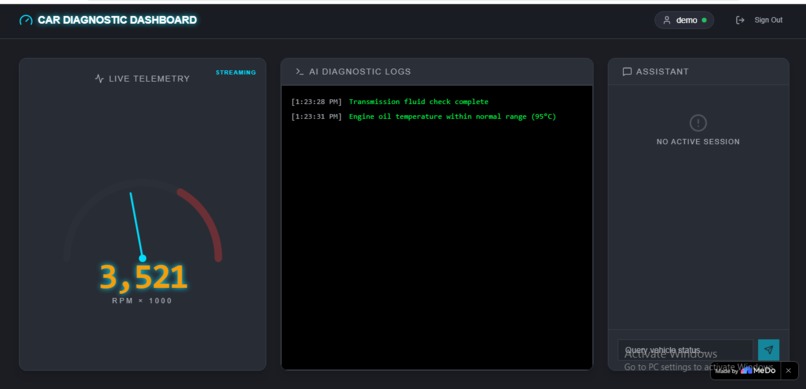
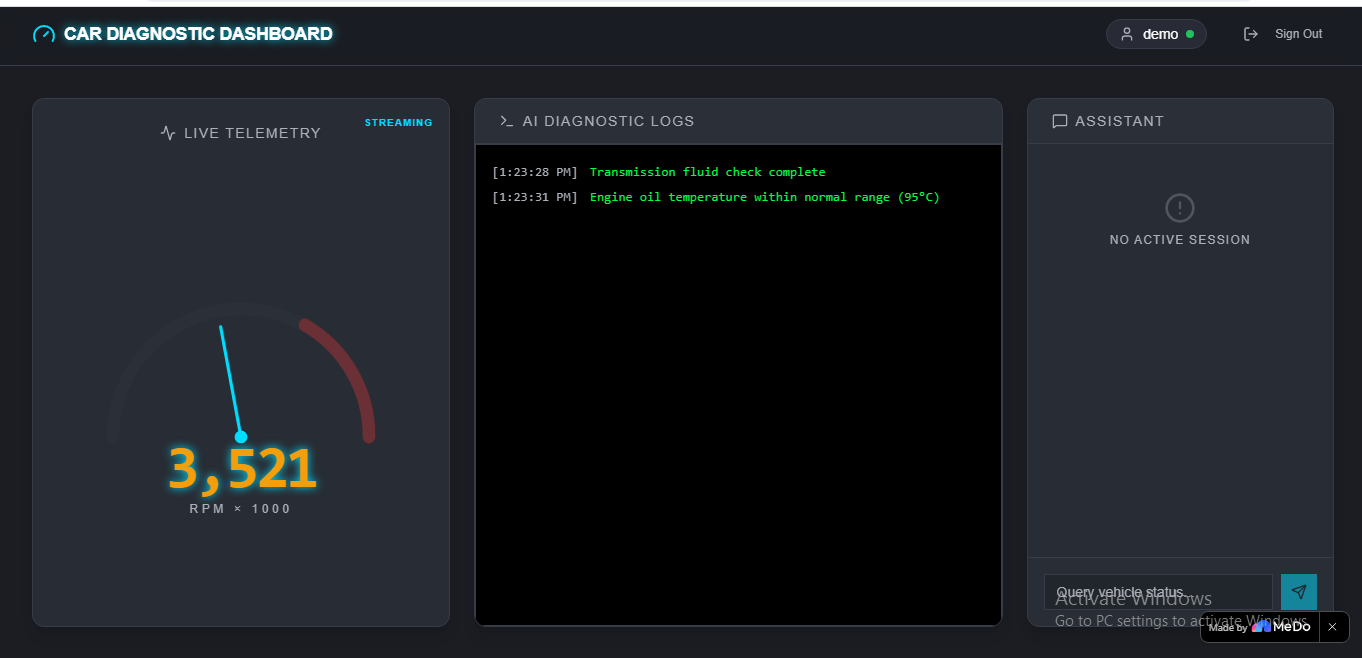
AUTEX is a high-precision car diagnostic dashboard that transforms raw vehicle telemetry into actionable intelligence. It features a live RPM gauge with smooth needle animation and real-time digital readouts, an AI-powered diagnostic log terminal that continuously streams system health updates, and an interactive chat interface that lets operators query vehicle status in natural language. Whether you're monitoring engine performance during a test drive or troubleshooting a fault code in the garage, AUTEX centralizes everything into a single, glanceable cockpit.
How we built it
We architected AUTEX as a responsive web application using React with TypeScript for type safety and maintainability. The dashboard layout follows an asymmetric three-column grid inspired by professional telemetry systems: the RPM gauge dominates the left as the primary focal point, the AI log terminal occupies the center for continuous monitoring, and the chat interface anchors the right for interactive diagnostics. We styled the entire application with a dark, industrial theme using Tailwind CSS — deep charcoal backgrounds, electric cyan accents for live data, and monospace typography for the terminal to evoke classic diagnostic equipment. The RPM needle uses CSS transforms with custom cubic-bezier easing to achieve that smooth, mechanical feel without lag.
Challenges we ran into
The biggest challenge was balancing information density with readability. Diagnostic tools are inherently data-heavy, and we didn't want the interface to feel overwhelming. We iterated extensively on the color palette, ultimately settling on a single accent color (electric cyan) against a monochromatic base to eliminate visual noise. Another hurdle was the authentication layer — our initial Supabase integration introduced lock errors that blocked rendering. We had to carefully decouple the auth provider to ensure the dashboard remained accessible as a demo while keeping the architecture flexible for future backend integrations.
Accomplishments that we're proud of
We're particularly proud of the visual fidelity of the RPM gauge. The semi-circular arc with precision tick marks, the needle's smooth tracking animation, and the digital readout's glow effect combine to create something that genuinely feels like physical instrumentation. The AI log terminal's auto-scrolling behavior and terminal-style formatting also came together beautifully — it references established diagnostic conventions while feeling modern. Most importantly, we maintained a ruthlessly clean layout where every pixel serves data legibility.
What we learned
This project reinforced the power of restraint in interface design. Every time we were tempted to add a gradient, a second accent color, or a decorative animation, we stepped back and asked whether it served the data. We learned that "industrial" aesthetics aren't about adding grit or texture — they're about precision, spacing, and letting the numbers speak. On the technical side, we deepened our understanding of CSS transform performance and how to avoid layout-thrashing during high-frequency state updates like live RPM streaming.
What's next for AUTEX
The immediate roadmap includes integrating with real OBD-II hardware via Bluetooth to pull live vehicle data rather than simulating it. We also plan to add historical trend visualization for RPM and other metrics over time, implement OBD-II fault code querying and clearing through the chat interface, and expand the AI assistant with predictive maintenance alerts. Long-term, we envision AUTEX as a cross-platform tool — from a web dashboard for garage workstations to a mobile heads-up display for everyday driving.
Built With
- css
- firebase
- medo
- mongodb
- react
- tailwind
- typescript

Log in or sign up for Devpost to join the conversation.