-
-
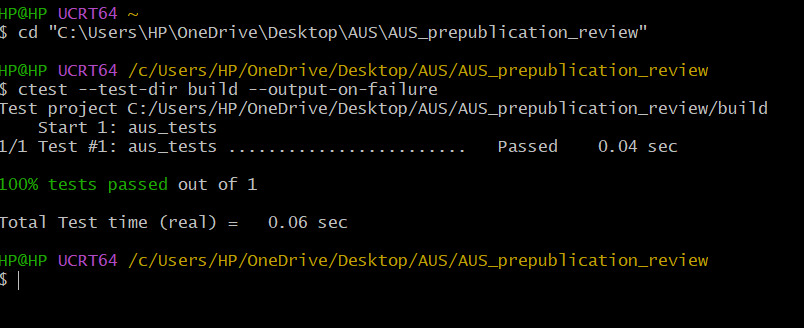
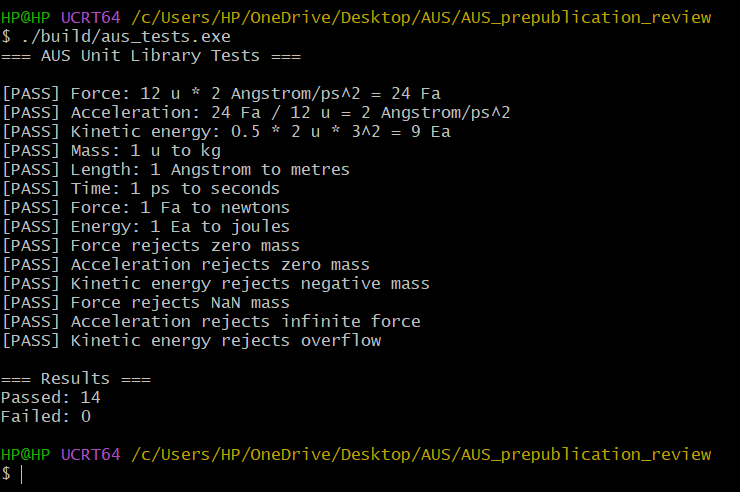
AUS Test
-
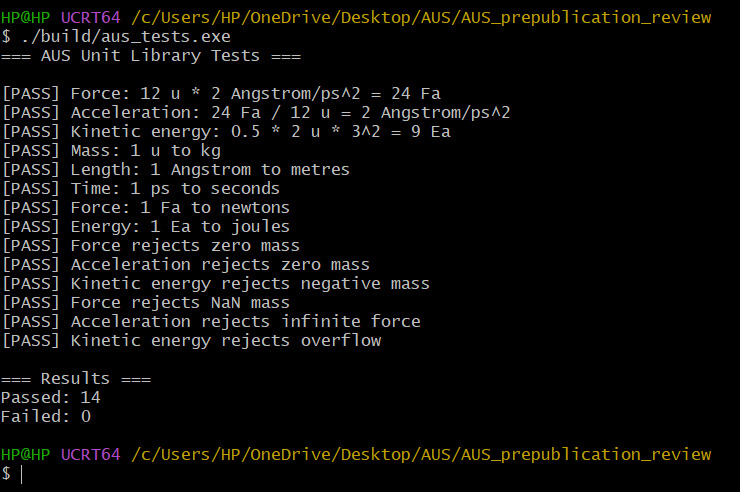
AUS Build Test
-
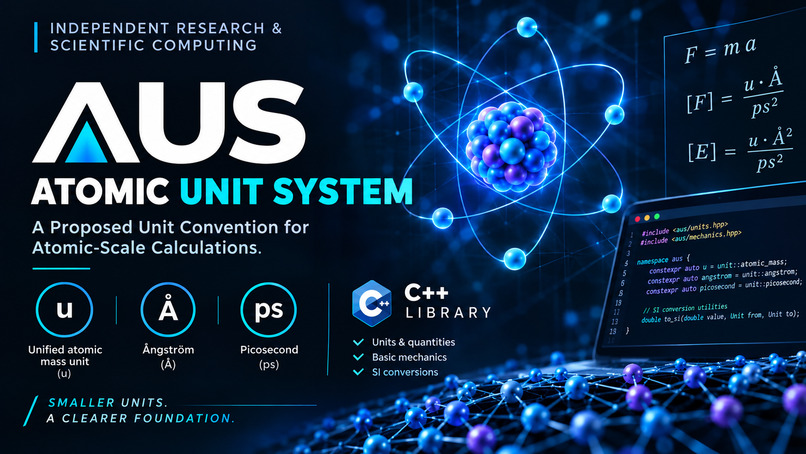
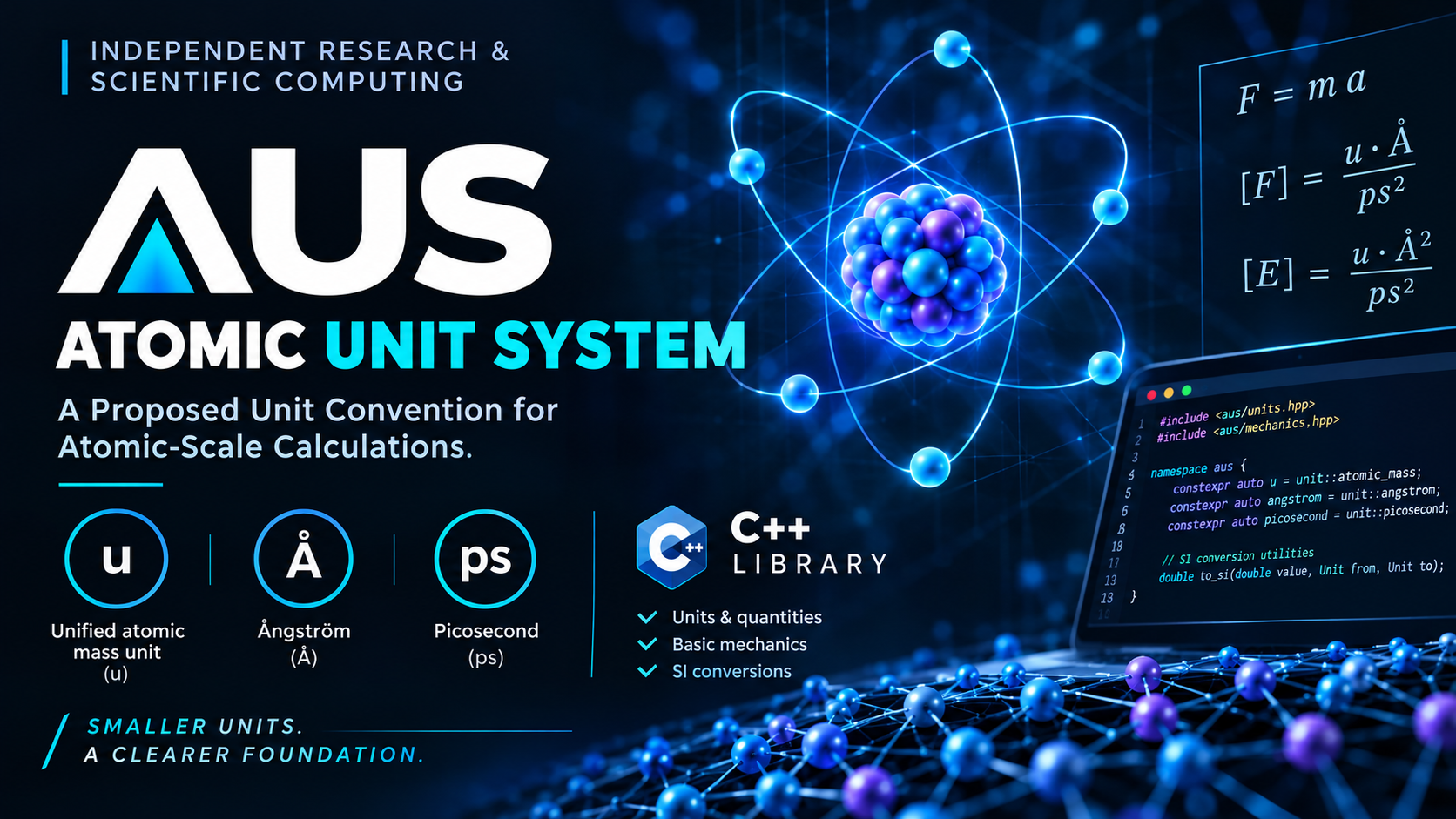
Thumbnail
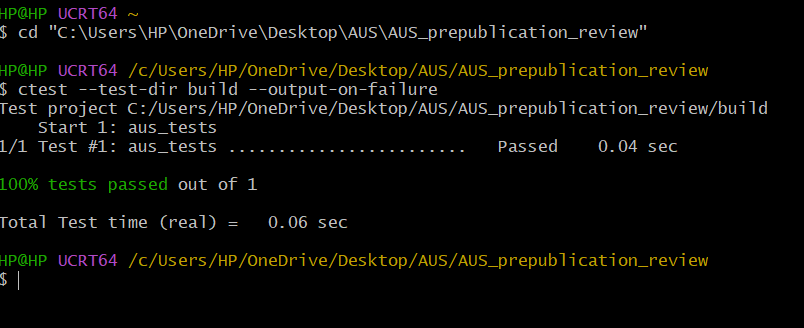
Inspiration
Inspiration
The idea behind the Atomic Unit System (AUS) began with a simple question: What is the mass of an atom in kilograms?
I thought about carbon-12, whose mass is approximately 12 unified atomic mass units (u), and wondered what that would look like in kilograms. Converting it gave me a very small numerical value, and that sparked another question: if representing something as fundamental as atomic mass in SI units involves such small numbers, what would happen when we used them repeatedly to calculate forces, energies, and other physical quantities at the atomic scale?
That curiosity led me to explore whether calculations could be made more intuitive by using atomic-scale quantities such as atomic mass units (u), angstroms (Å), and picoseconds (ps) as the foundation for a consistent system of units. From there, I began deriving corresponding units for quantities such as force and energy.
Initially, my goal was simple: make atomic-scale calculations easier for humans to understand and work with. As I explored the idea further, I began considering its potential computational benefits. Keeping quantities closer to the natural scales of atomic systems might help make numerical representations more manageable and could potentially reduce certain numerical issues in some computational workflows. However, these possibilities need to be tested rather than assumed.
Eventually, the idea grew beyond a unit convention into a proposed framework for molecular dynamics (MD) simulations, with the aim of performing calculations natively in AUS rather than repeatedly converting between atomic-scale quantities and SI units.
During my research, I discovered that established simulation tools, including LAMMPS with its metal unit style, already support unit conventions designed for particular simulation contexts. Initially, this made me question how novel my idea really was. But I came to see that the existence of related approaches did not mean I had to abandon the project. Instead, it gave me a more concrete direction: develop AUS as an independent, open-source unit and mechanics library, investigate what it can offer, and compare its performance and numerical behaviour against established approaches.
Today, the project is evolving from an initial curiosity about atomic mass into a broader exploration of how we represent and compute physical quantities at the atomic scale. Through controlled benchmarks, I aim to determine whether AUS offers practical advantages in numerical handling, computational performance, and usability—and, just as importantly, where it does not.
For me, AUS is not about claiming that existing systems are inadequate. It is about asking a question, exploring a different approach, and letting mathematical consistency and experimental evidence determine its value.
What it does
How we built it
Challenges we ran into
Accomplishments that we're proud of
What we learned
What's next for AUS — Atomic Unit System
Built With
- c++
- cmake
- cpp
- hpp
- overleaf

Log in or sign up for Devpost to join the conversation.