-
-
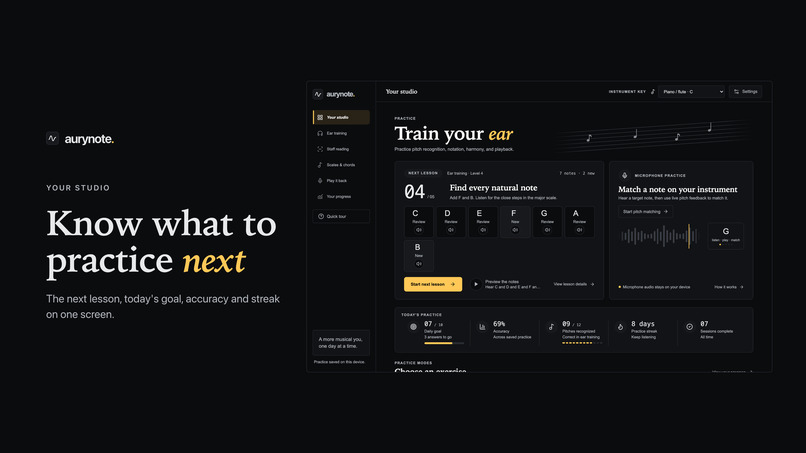
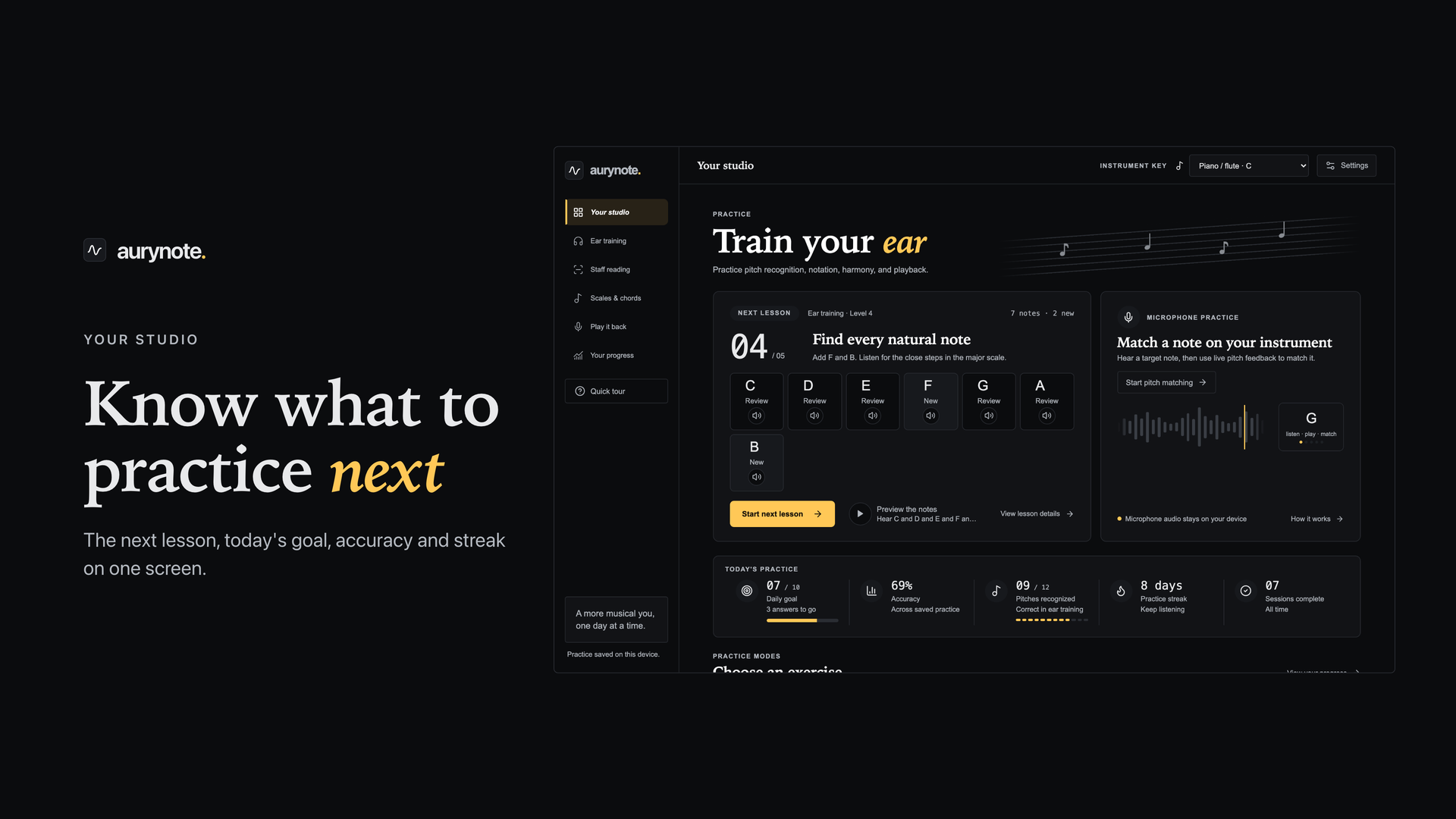
Main Interface: Features available exercises, daily progress, and overall available options.
-
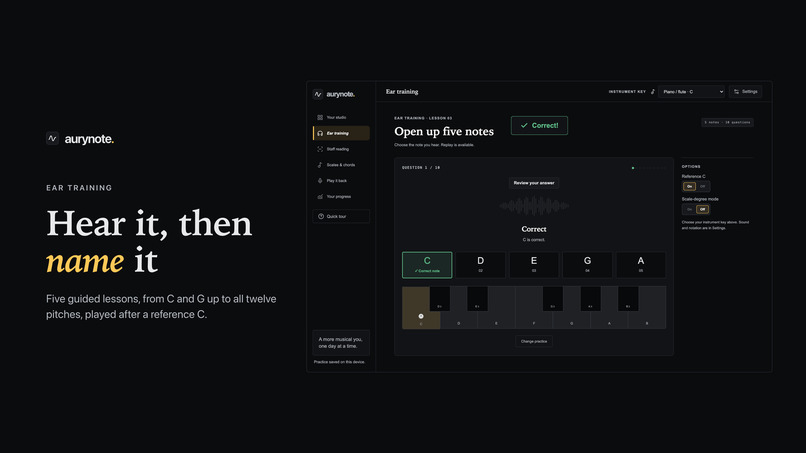
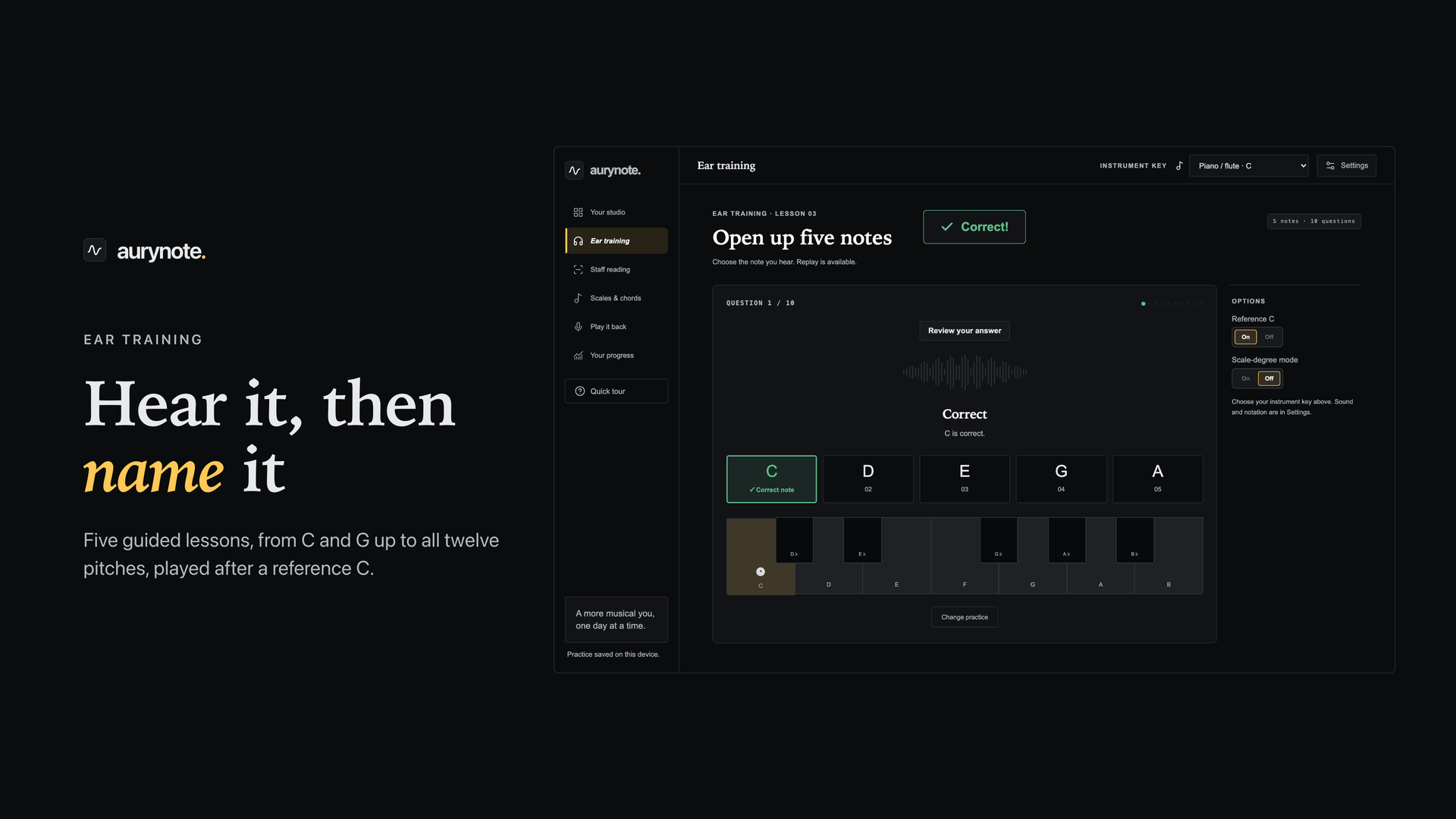
Ear Training: Tap a note to listen, start the session with any number of note combinations, listen, and select the proper note.
-
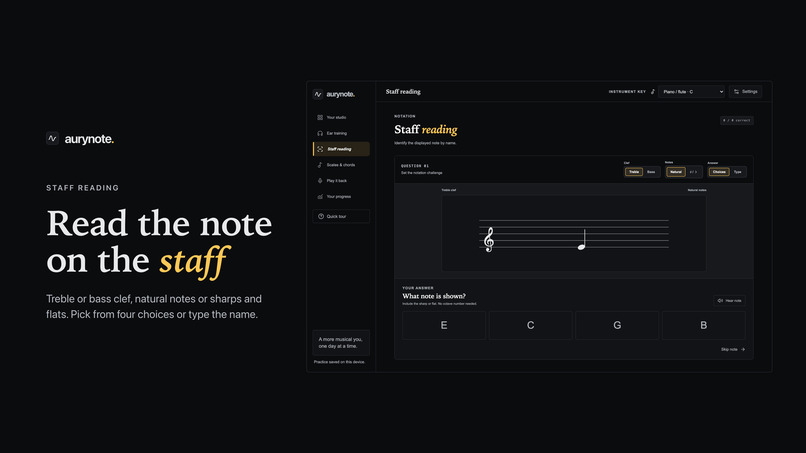
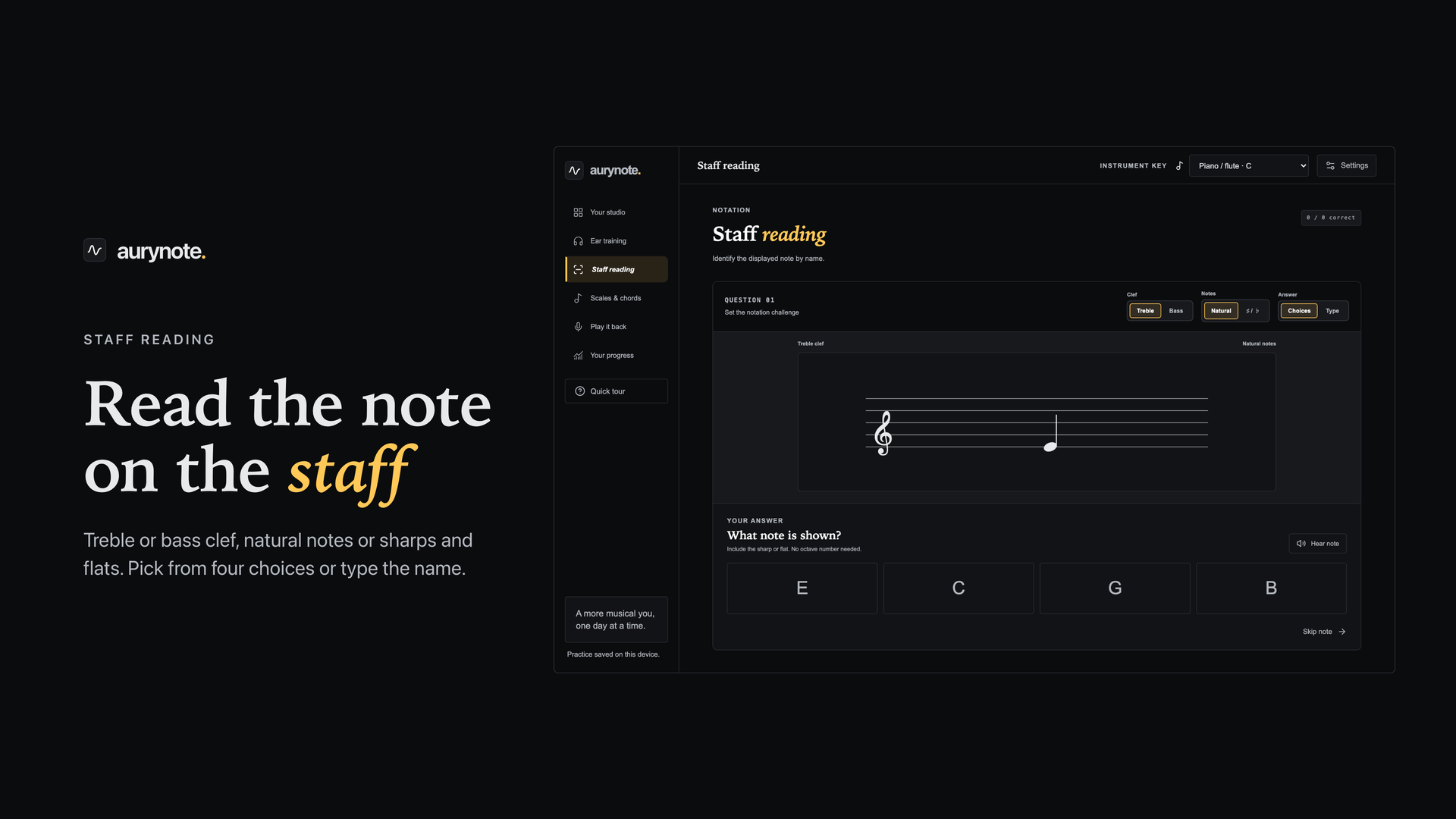
Staff Reading: Choose a clef, accidentals, and answer choices. Based on the note displayed, select the proper note.
-
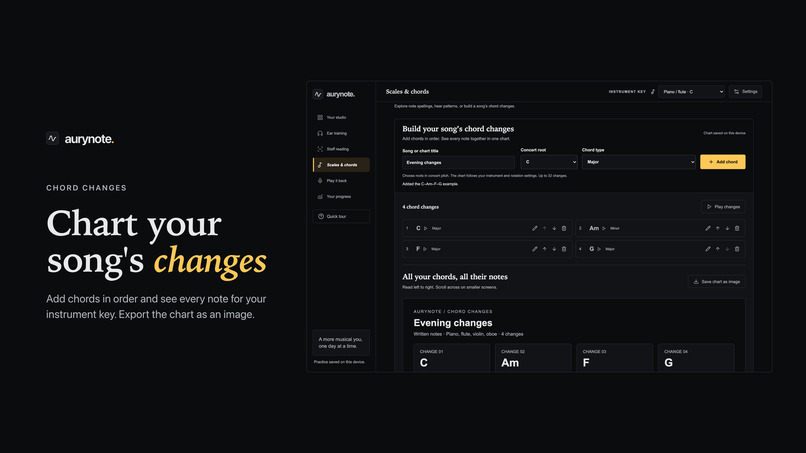
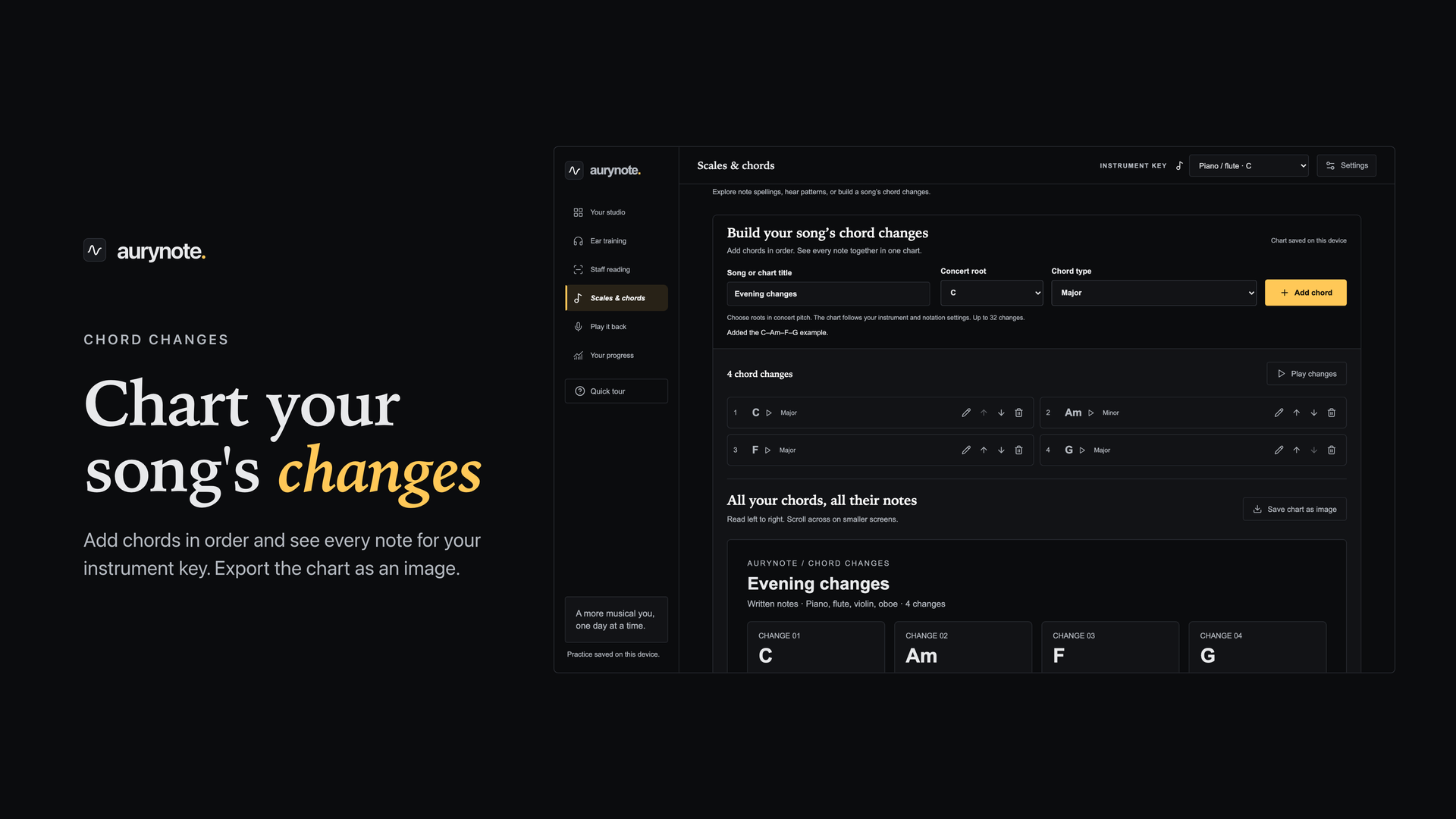
Scales & Chords: Play through scales, practice new chords.
-
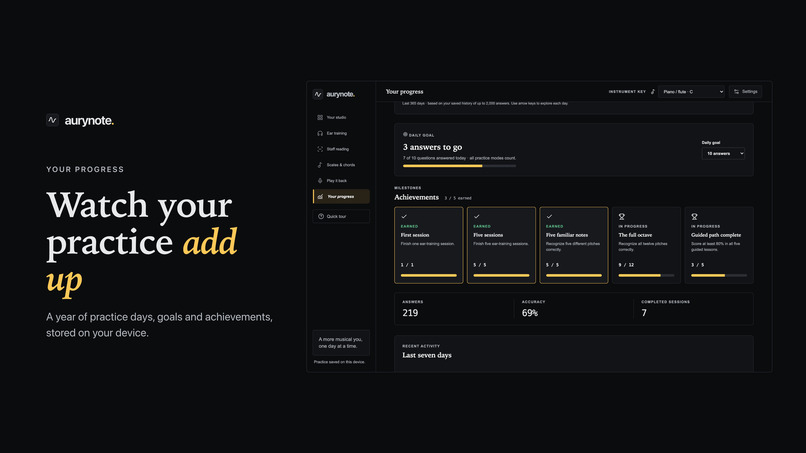
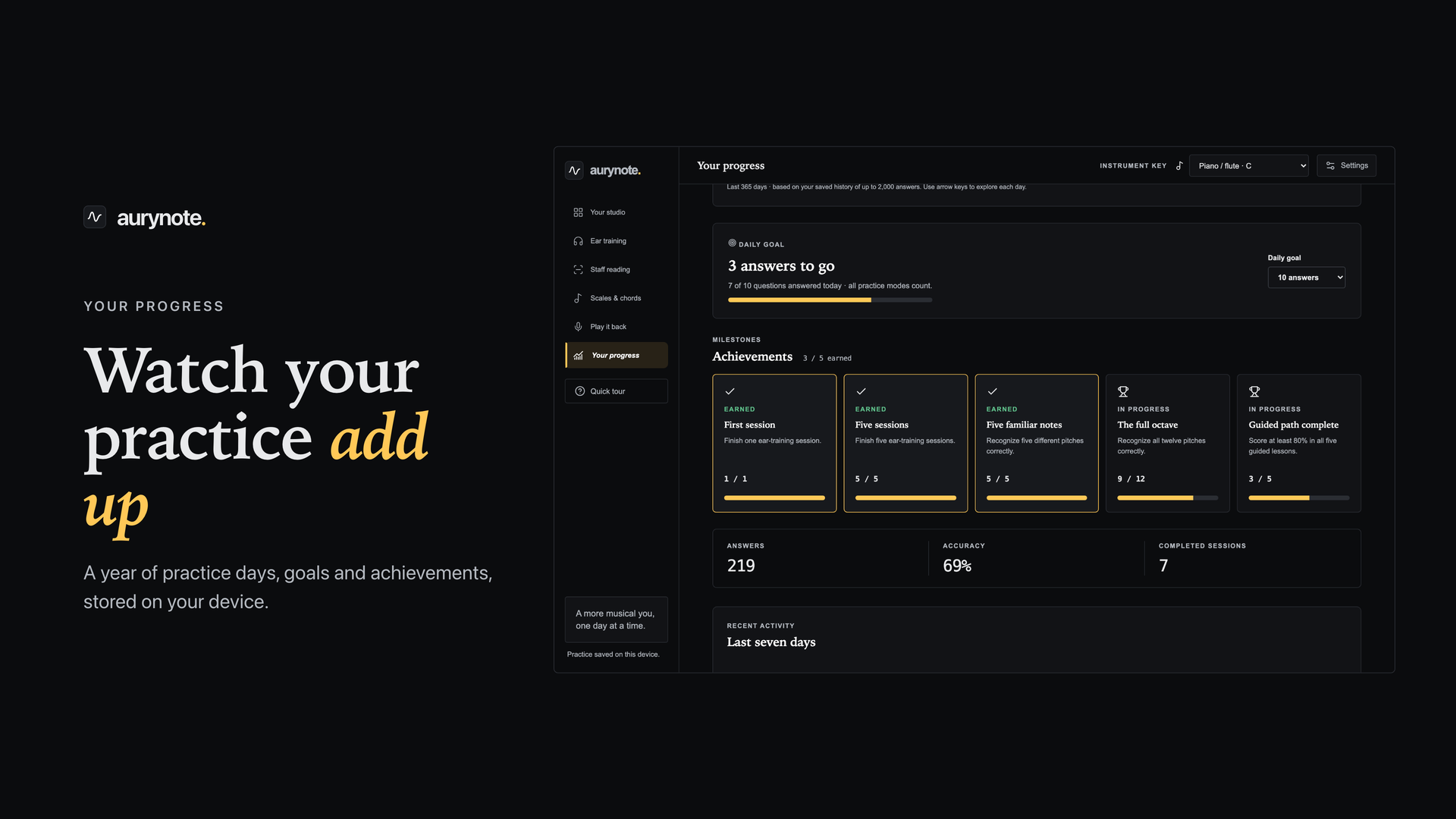
Progress: Displays your activity over the year, daily goals, achievements, statistics, and more information.
Inspiration
As veteran wind instrument performers, both with experience in classical band, orchestra, and jazz, we've had an extensive interaction and progression within a musical context. Through many years, we've ranged from beginners to regional performers, and decided to channel our musical passion towards assisting younger first time musicians and experienced performers--to aid their processes, as well as inspire new journeys. To do this, we decided to create an interactive and accessible platform, assisting in learning new scales, reading notes, etc.
What it does
Aurynote is an web application practice studio for beginner musicians. It combines guided ear training, music-reading exercises, scales and chords, microphone pitch matching, and saved progression. Aurynote is a complete product, showcasing all features within one platform. The product features several different tabs to organize the various modes, through a minimalist interface designed for user friendliness. Upon entering the website, you will interact with the main interface, before locating to the sidebar for said various modes, including note reading, pitch detection, and more.
How we built it
As seen in the hackathon-overhaul branch, we rebuilt the original Java Swing application using Electron, React, TypeScript, and Vite. Web Audio handles synthesized notes for displayed pitches, as well as device microphone pitch analysis. Vitest is used for the project's music theory, pitch detection, audio synthesis, and saved progression. Playwright tests practice flows, or automated running tests, as well as microphone activation and Electron web technology. Next, we decided to convert the software into a website using github pages, and consistently worked on its functionality as a web page.
Challenges we ran into
Key challenges included microphone detection, in terms of consistent translation into proper pitching, our design of feedback based on each mode or lesson, and microphone testing, based on quality, clarity, distance, and precision of the microphone. We overcame these issues through repeated testing, changing variable values and recording results of microphone detection, as well as consistent collaboration and communication regarding feedback and programming structure.
Accomplishments that we're proud of / What Stands Out
We're proud of compiling our creation, consisting of many different products, into one site. Often times, webpages and applications will be separated by each of our product's components, such as note reading, auditory scales, pitch detection, and more. Rather, we combined these various elements into one functioning completed product. We're also proud of various elements implemented that improve the quality of the experience, such as saved progression, feedback, and keyboard shortcuts.
What we learned
We learned music software requires extensive testing, ensuring that technical accuracy is fully accurate. We also further improved our experience in programming languages, already having strong prior knowledge, yet expanding our applied skills of CSS and TypeScript, in a combined environment.
What's next for Aurynote
We plan to implement further testing, improving microphone detection as much as possible, with many various instruments. We also plan to expand the lessons, adding an increased progression track, and improved user feedback. Then, we will further tweak our UI, to ensure constant modernity.
After these various changes, we plan to expand our product, including upload to a public domain, online promotion, review feedback, etc.
Target Audience
With Aurynote, we plan to cater to musicians of a wide variety, including beginner, experienced, skilled, and professional. We also include support for various types of instruments, making the product widely accessible.
Problem Solved
Many musicians don't have the proper support or tools to expand their musical prowess, or their learning experience. Thus, with Aurynote, we have established all the necessary tools into one free product, hoping to give all musicians the support they need to help create a lasting communal impact.
What we Built
We built our entire product during the hackathon timeline, having brainstormed an idea prior, and using the hackathon as an opportunity to accomplish our goals. We created the UI, functionality, and all code during this time. No templates, outside code, or any other section of our product was created prior to this timeline. General information on the project is included under sections: What it Does, and How we Built it.
AI Usage Disclosure
We used AI tools during the development of Aurynote as a supporting resource for programming, debugging, brainstorming, and refining parts of the user interface. AI assisted us with tasks such as identifying potential solutions to technical issues, suggesting code improvements, explaining unfamiliar concepts, and helping us iterate on design ideas. All major decisions regarding Aurynote’s concept, features, structure, visual design, and implementation were made by our team. We reviewed, modified, tested, and integrated any AI-assisted code or suggestions ourselves rather than directly relying on generated output. In particular, features involving music theory, audio synthesis, microphone pitch detection, and practice functionality were tested by us to verify that they behaved correctly.
Team Members
The creators of this product are Matvii Tsariuk and Dries Schoenly, the two contributors listed under the github project description.


Log in or sign up for Devpost to join the conversation.