-
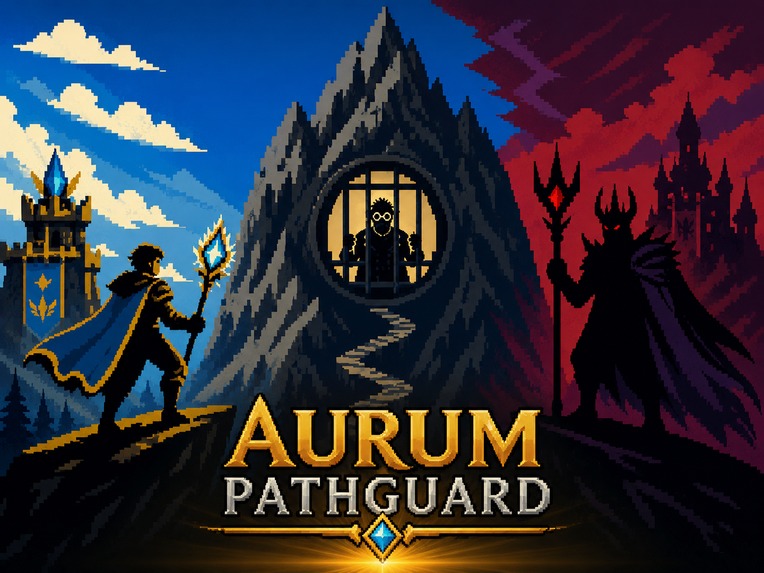
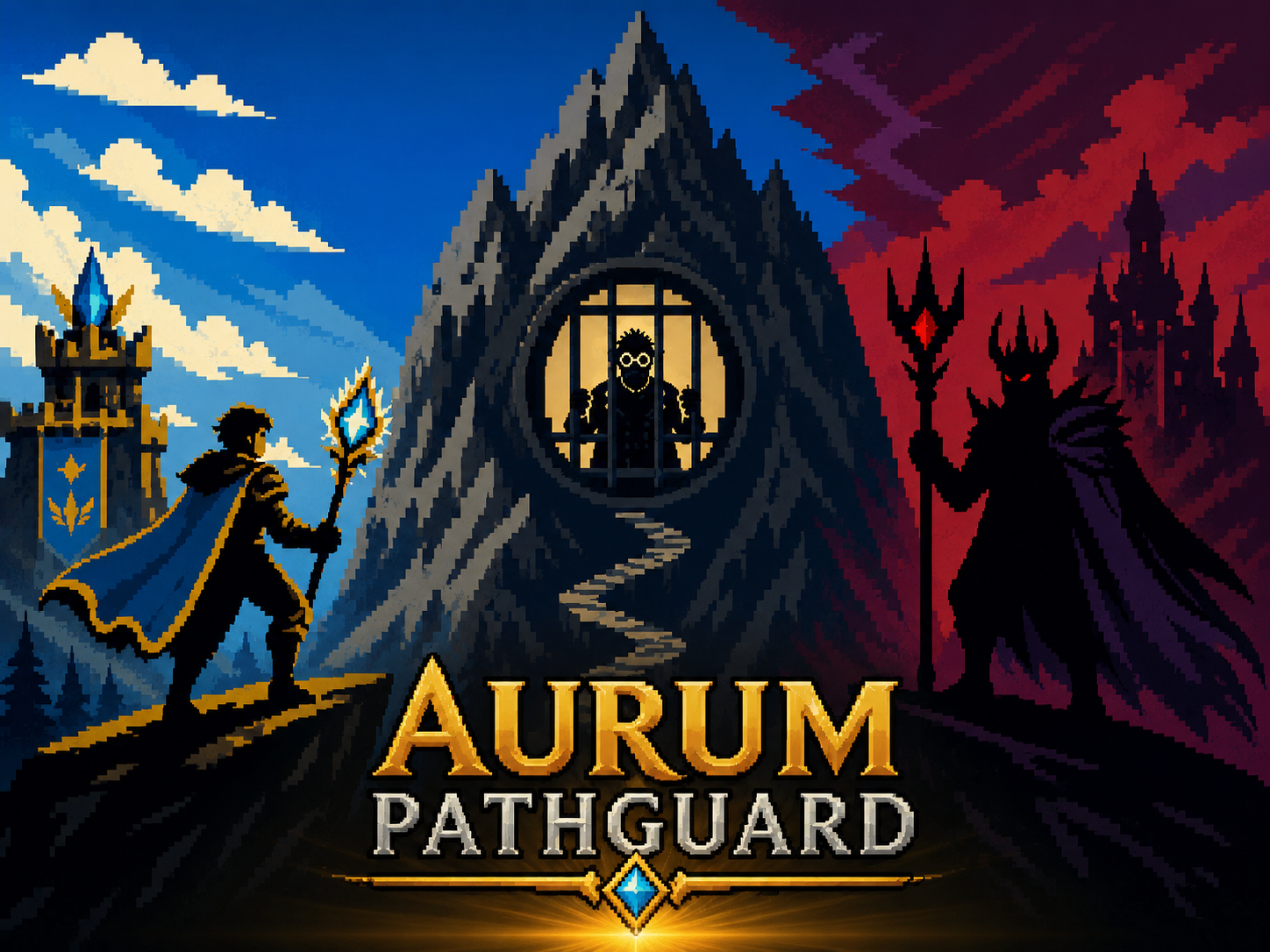
Rescue the imprisoned scientist, uncover the Living Mountain's secrets, and stop Veyr Malgor's conquest.
Inspiration
Aurum Pathguard was inspired by the idea of combining exploration, action combat, tower defense, and cooperative gameplay into a single adventure. I wanted players to feel like guardians of a living world rather than passive defenders of a base.
The game's setting is the Living Mountain, a legendary mountain filled with treasures, magical relics, hidden routes, and ancient secrets. The story follows a scientist who discovers the mountain's mysteries and is imprisoned by a tyrant seeking to conquer the world using its power. Players must rescue the scientist, uncover hidden paths, and stop the tyrant before the mountain falls into the wrong hands.
What it does
Aurum Pathguard is a cooperative action-defense adventure where players explore the Living Mountain, collect resources, build defensive structures, and protect key routes from enemy assaults.
Players can:
- Explore hidden chambers and treasure routes
- Build and upgrade magical defenses
- Defend multiple attack lanes
- Discover relics and powerful abilities
- Use Aurum Waylinks to travel between defensive structures
- Coordinate with teammates during large-scale assaults
- Progress through a story-driven campaign
The game combines exploration, strategy, combat, and teamwork into a unified experience.
How we built it
The project was designed around three core pillars:
- Exploration
- Defense
- Cooperation
We created systems for resource collection, tower construction, enemy assaults, progression, and multiplayer teamwork. The Aurum Waylink system was developed as a unique traversal mechanic that connects existing defensive structures and allows players to rapidly respond to threats across the battlefield.
Accessibility and usability were also considered throughout development, including adaptive HUD options, customizable controls, subtitle support, reduced-motion settings, and scalable interface elements.
Challenges we ran into
One of the biggest challenges was balancing active player combat with tower-defense mechanics. Defensive structures needed to feel impactful without removing player involvement from encounters.
Another challenge was ensuring multiplayer cooperation remained meaningful while still allowing solo play. We addressed this by designing systems that scale naturally between single-player and cooperative sessions.
Creating clear information on mobile devices was also challenging. This led to the development of adaptive HUD systems, contextual prompts, accessibility features, and simplified visual communication.
Accomplishments that we're proud of
We are particularly proud of:
- Creating a world that encourages exploration and discovery
- Combining action gameplay with strategic defense mechanics
- Designing the Aurum Waylink traversal system
- Supporting both solo and cooperative playstyles
- Building accessibility features into the core design
- Creating a progression system that gradually introduces new mechanics
These features help distinguish Aurum Pathguard from traditional tower-defense experiences.
What we learned
This project reinforced the importance of introducing mechanics gradually and ensuring that every system contributes to the overall player experience.
We learned that mobility, exploration, and cooperation can significantly enhance traditional defense gameplay. We also gained valuable experience designing systems that remain engaging for both solo and multiplayer players while maintaining accessibility for a wide audience.
What's next for Aurum Pathguard
Future development plans include:
- Additional campaign regions within the Living Mountain
- New defensive structures and upgrades
- Expanded cooperative gameplay features
- Advanced Aurum Waylink upgrades
- Additional enemy factions and bosses
- Seasonal challenges and replayable encounters
- Enhanced social and progression systems
Our goal is to continue expanding the Living Mountain while preserving the core pillars of exploration, defense, and cooperation that define Aurum Pathguard.
Built With
- chatgpt


Log in or sign up for Devpost to join the conversation.