
Inspiration
Financial markets generate enormous amounts of information every second. Investors must interpret price movements, historical trends, financial news, market sentiment, and risk before making decisions.
We were inspired by a simple question:
What if multiple specialized AI agents could work together like a quantitative research team to analyze markets, challenge trading ideas, evaluate risk, and make more informed trading decisions?
This idea led to AURUM AI, an AI-powered quantitative research and paper-trading platform designed for both Indian and US equity markets.
Our goal is to make sophisticated market research more accessible, transparent, and explainable while prioritizing responsible trading and risk management.
What AURUM AI Does
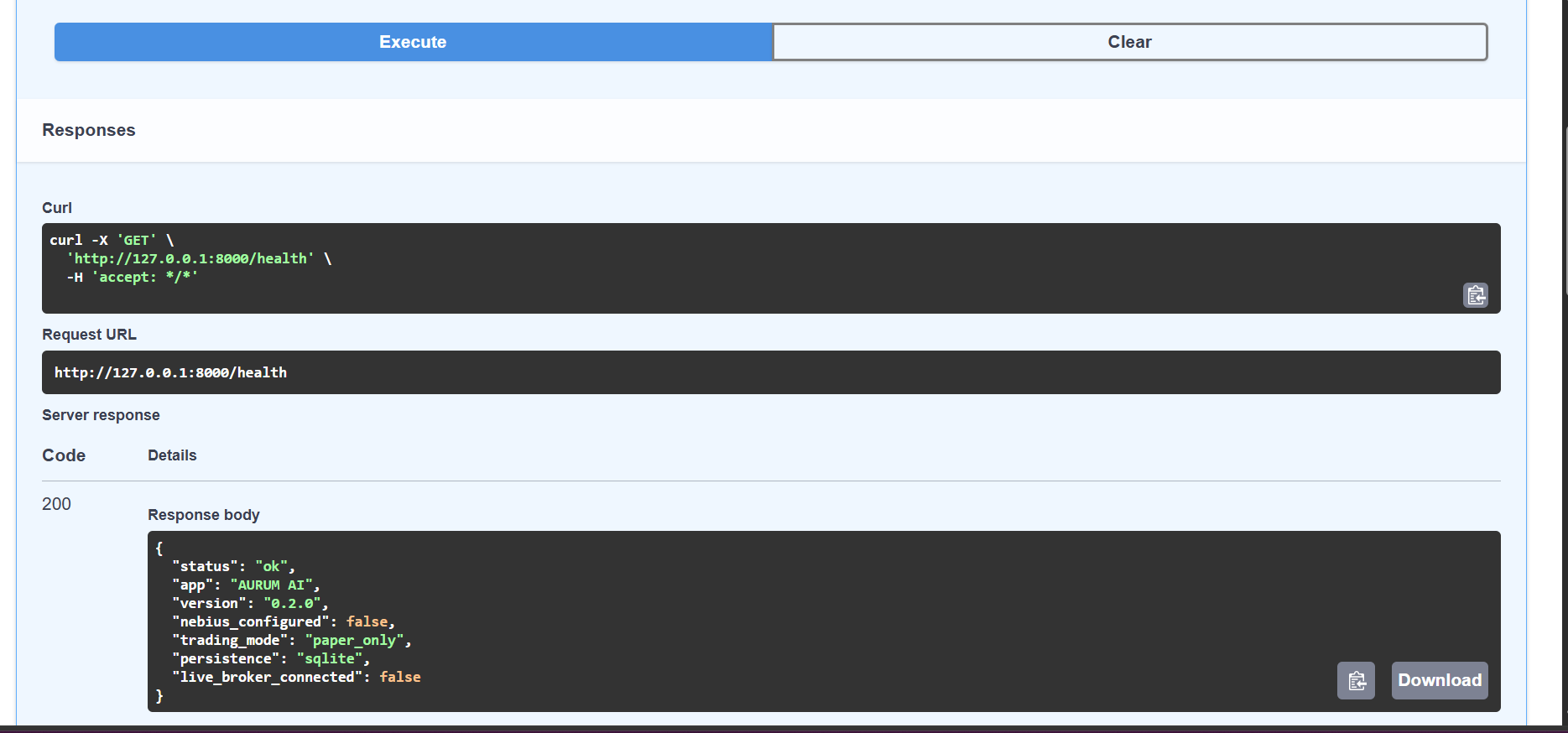
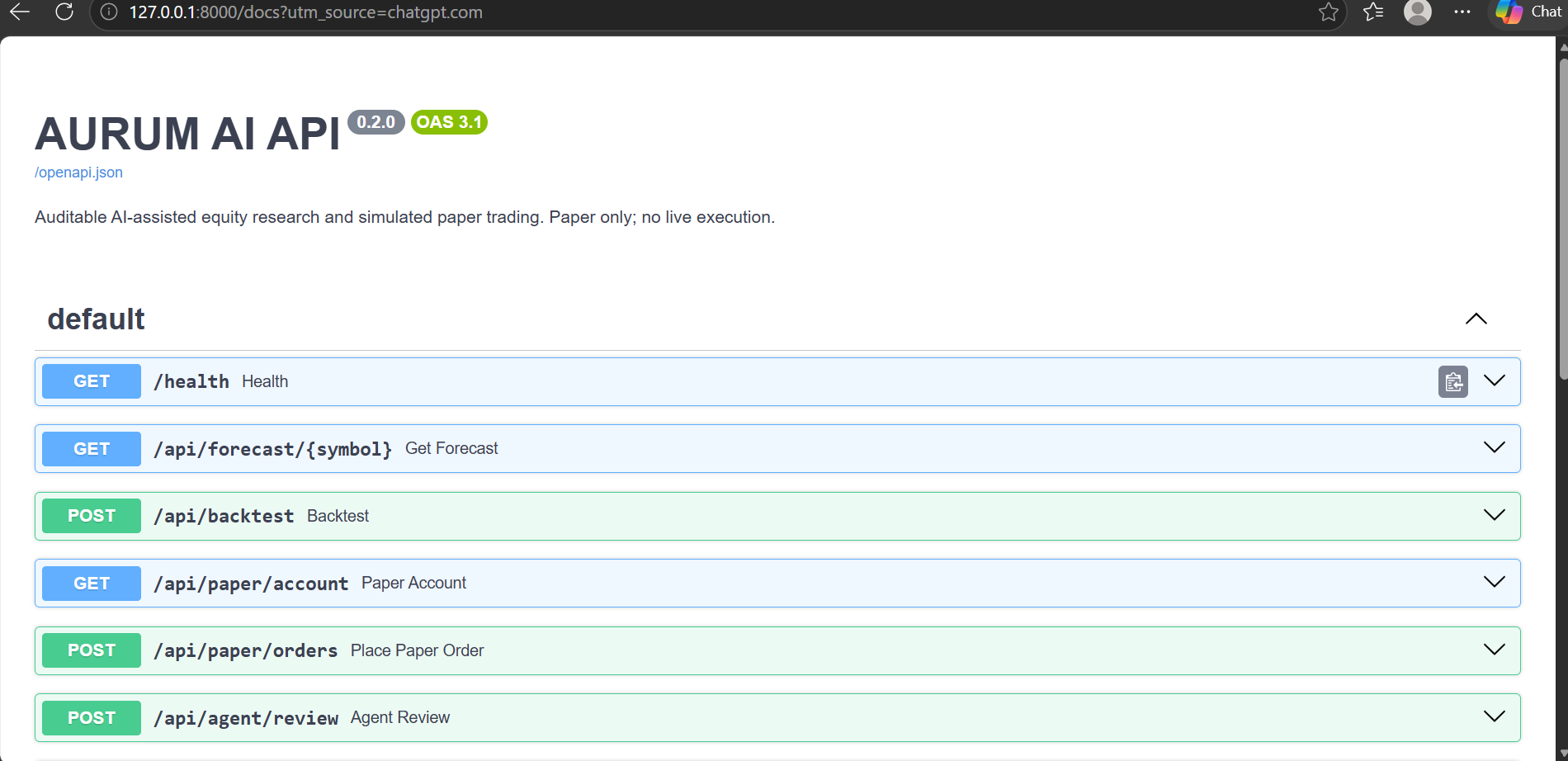
AURUM AI brings quantitative analysis, AI-assisted research, portfolio management, and simulated trading into one platform.
Its core capabilities include:
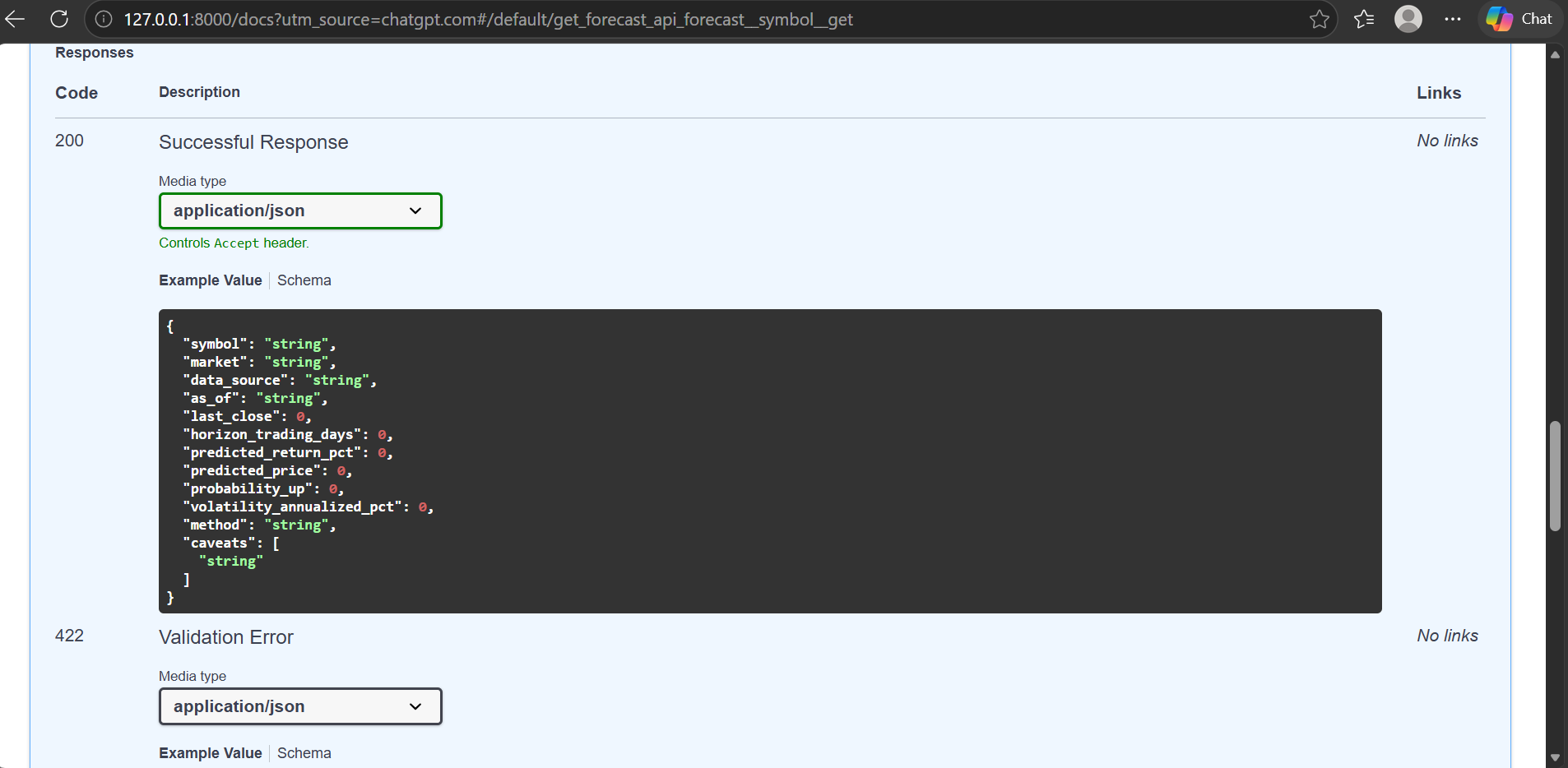
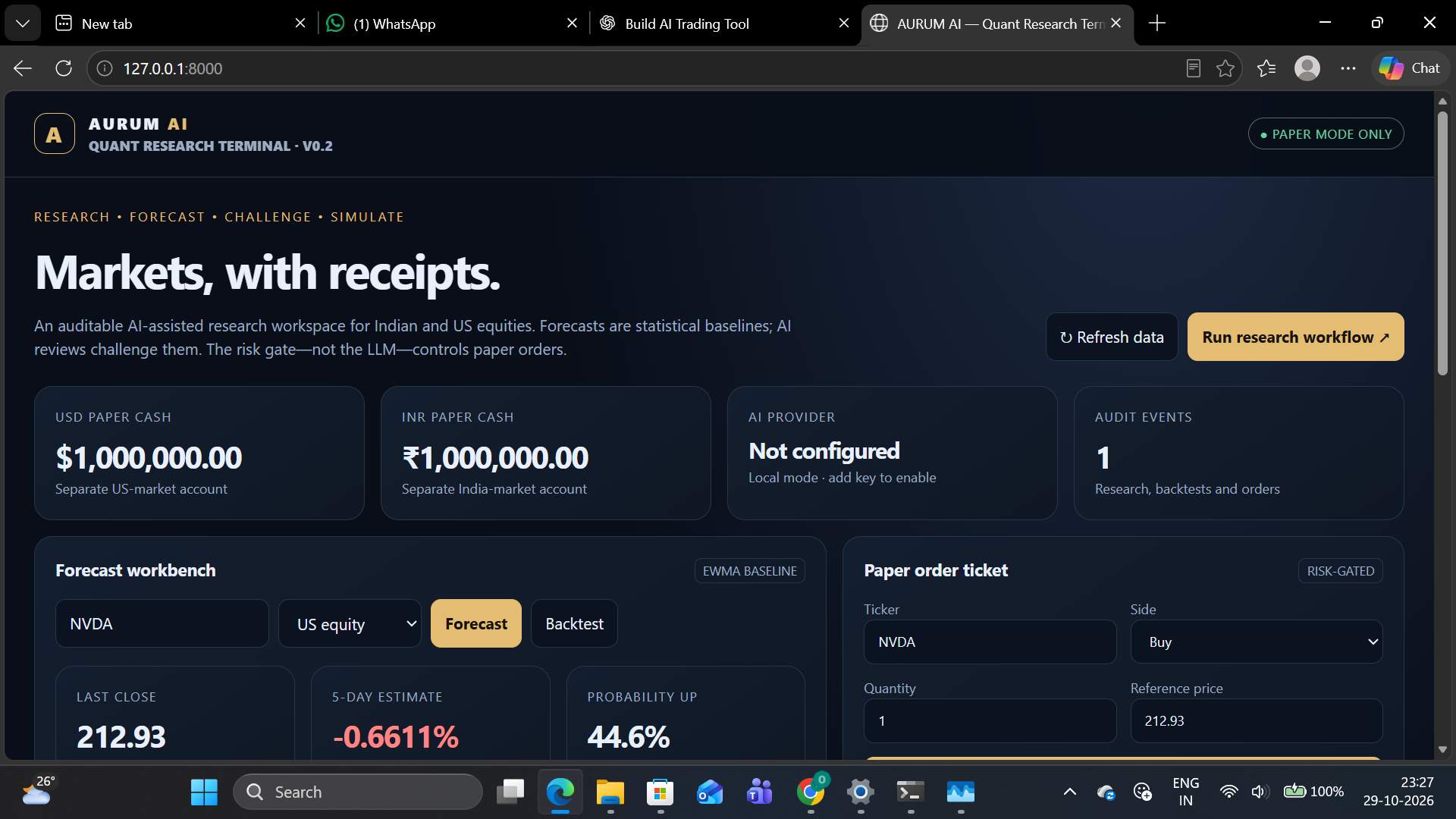
- Quantitative Forecasting: Analyzes historical market prices and generates short-term return estimates.
- AI Market Research: Uses an agent-oriented architecture to interpret market information and challenge proposed trading decisions.
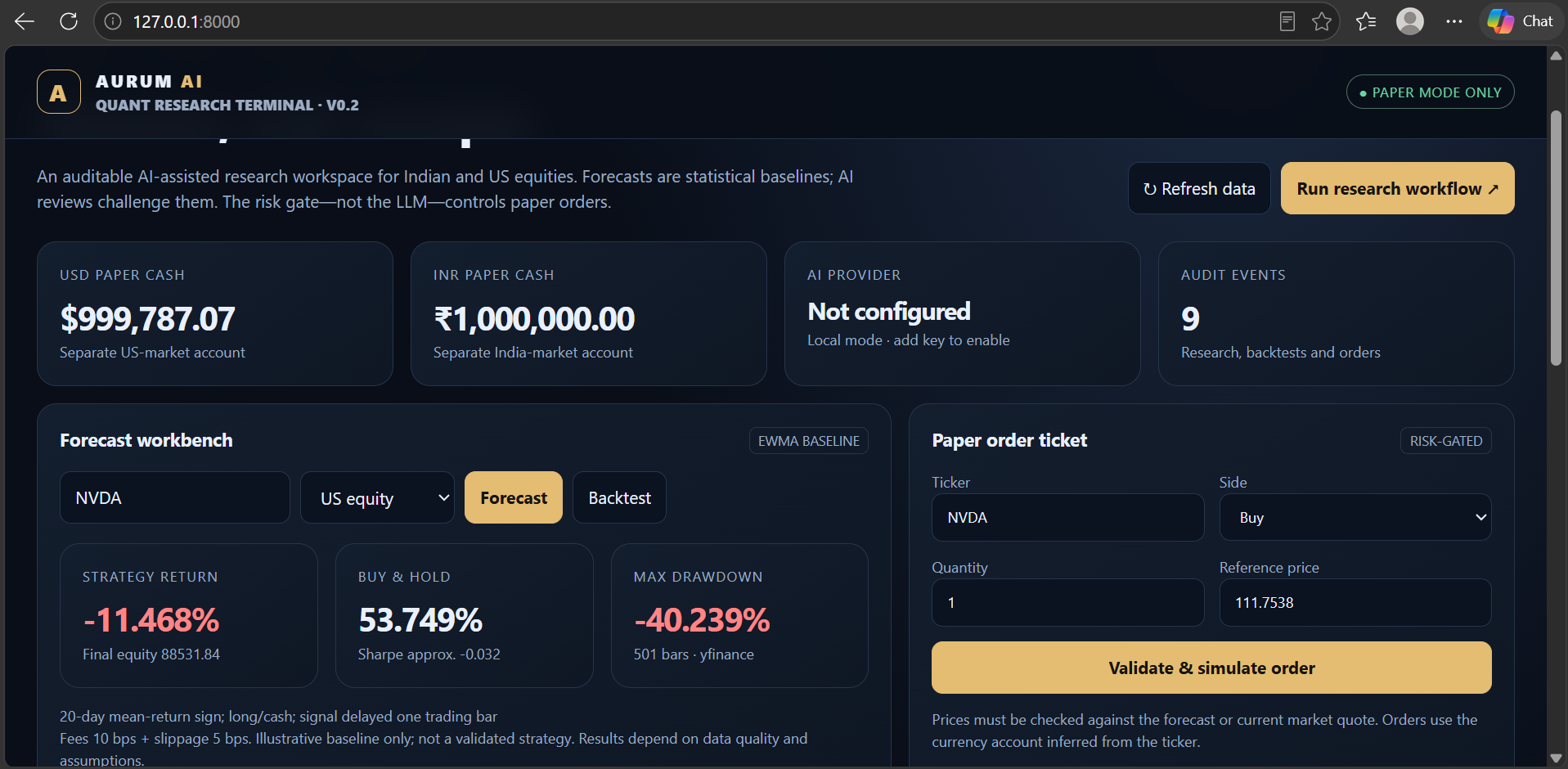
- Strategy Backtesting: Evaluates trading strategies against historical data and benchmarks.
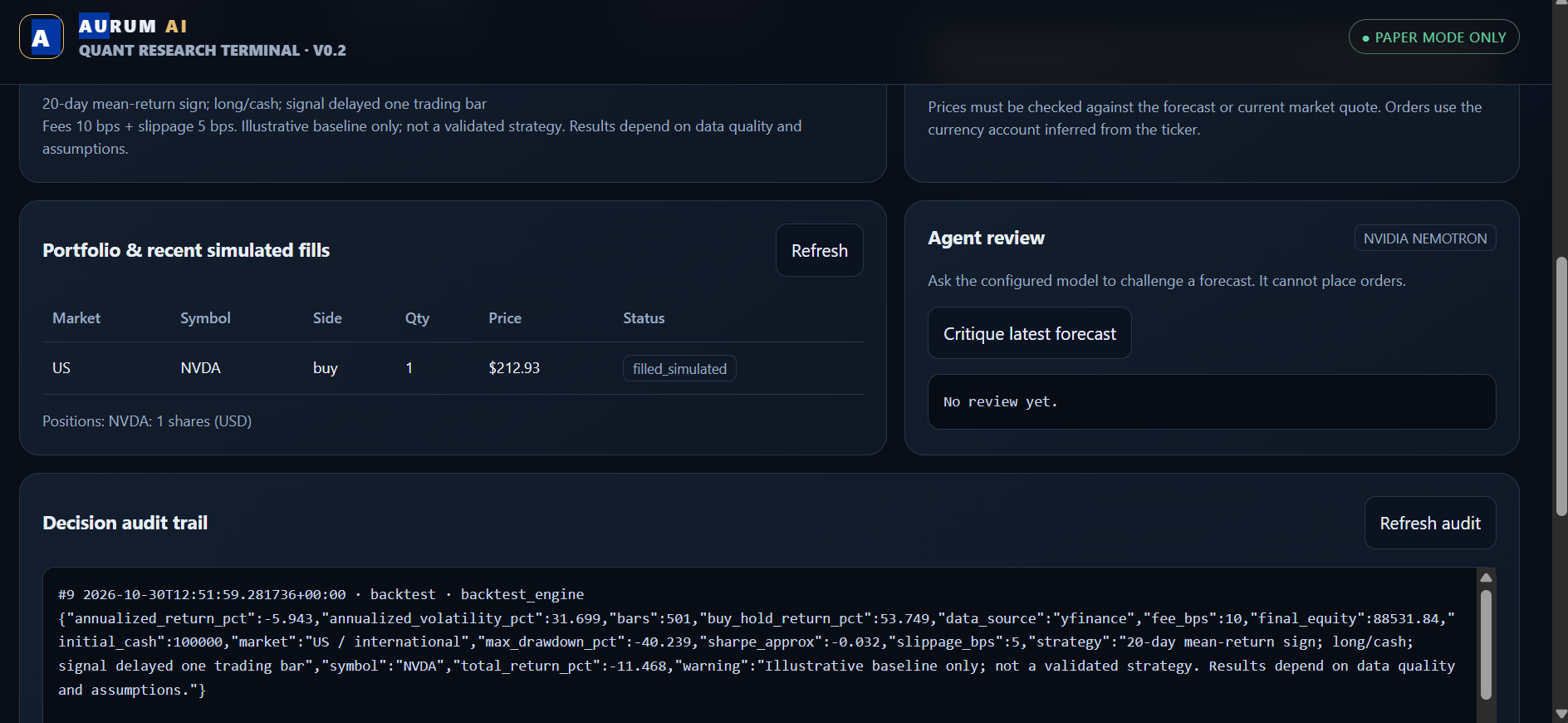
- Intelligent Risk Management: Applies deterministic checks for position sizing, available capital, exposure, and order limits.
- Paper Trading: Simulates orders and portfolio activity without risking real money.
- Cross-Market Support: Designed for Indian and US equities, with separate INR and USD accounting.
- Decision Auditability: Records forecasts, research assessments, risk decisions, and simulated orders.
How We Built It
We designed AURUM AI using a modular architecture that separates quantitative computation, AI reasoning, risk management, and trade execution.
Technology Stack
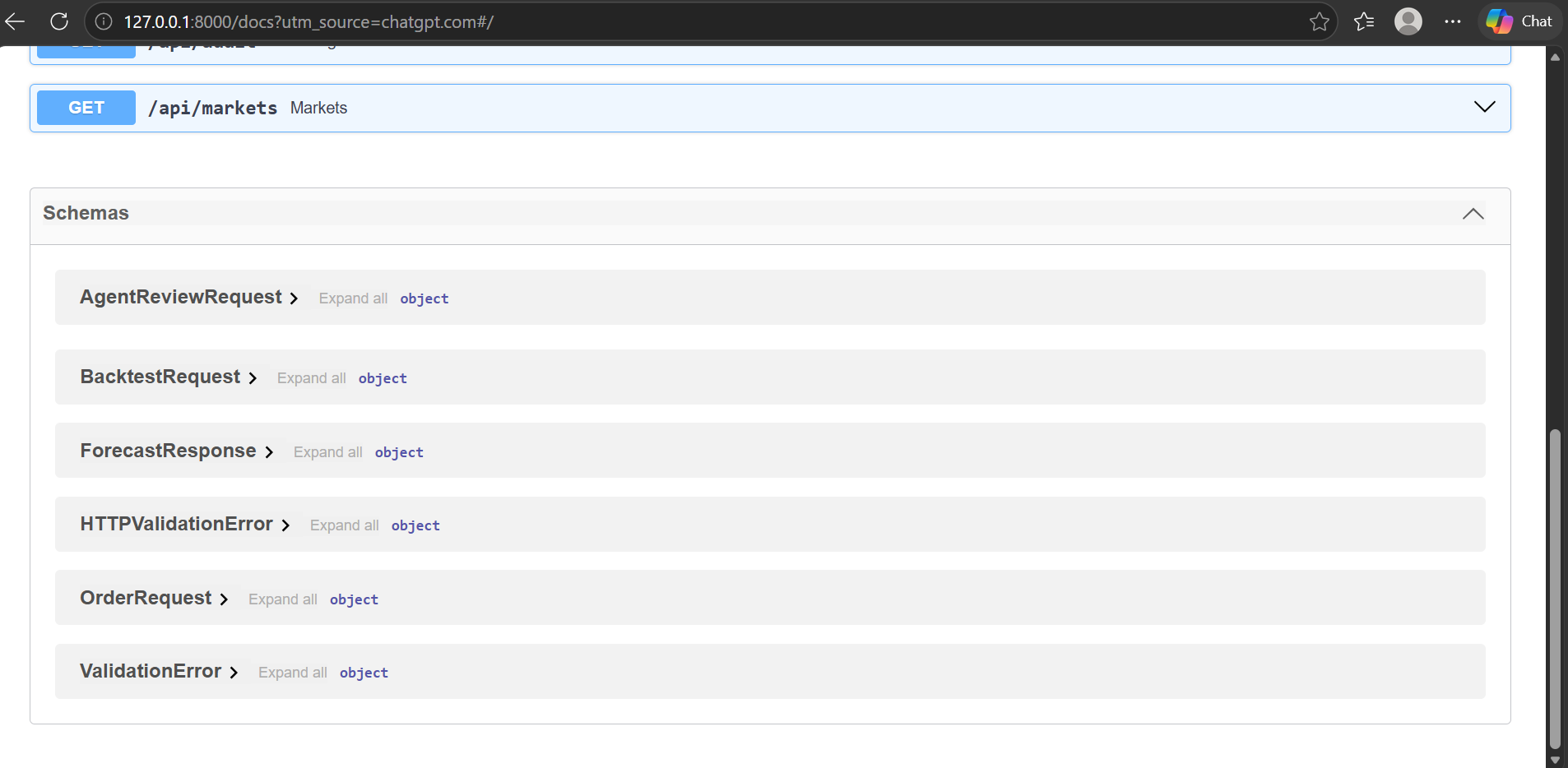
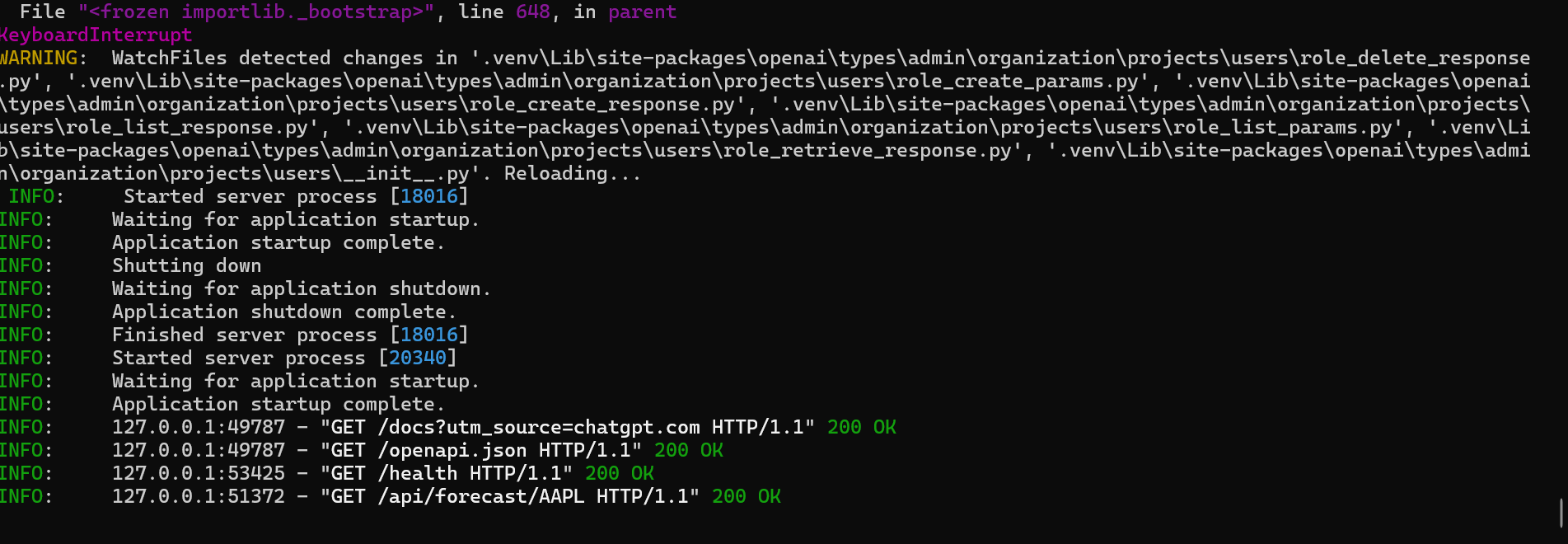
- Python and FastAPI: Backend services and API development.
- Quantitative Libraries: NumPy, pandas, and scikit-learn for data processing and forecasting.
- NVIDIA Nemotron: Planned reasoning and research model integration.
- Nebius Token Factory: Intended inference infrastructure for accessing NVIDIA models.
- PostgreSQL: Persistent storage for portfolios, forecasts, and trading records.
- Next.js and TypeScript: Web dashboard architecture.
- Paper Trading Engine: Simulated order execution and portfolio accounting.
Multi-Agent Workflow
Our intended intelligent research workflow consists of four specialized roles:
- Market Research Agent: Collects and interprets relevant market information.
- Quantitative Analysis Agent: Evaluates historical data and produces quantitative forecasts.
- Critic Agent: Challenges proposed trading decisions and identifies uncertainty or contradictory evidence.
- Risk Management Agent: Evaluates exposure, position sizing, and trading constraints.
The workflow then passes through a deterministic risk gate before a simulated order can be executed.
A key architectural decision is that the language model does not directly control trading execution. Quantitative calculations and risk controls remain independently implemented and auditable.
Quantitative Intelligence
AURUM AI treats forecasting as a statistical estimation problem rather than assuming that AI can predict markets with certainty.
For a forecast horizon of (h) trading periods, the estimated return can be represented as:
$$ \hat{R}_{t,h} = f(X_t) $$
where (X_t) represents the information available at time (t).
We aim to evaluate forecasts using out-of-sample testing, transaction costs, slippage, maximum drawdown, and benchmark comparisons.
This helps distinguish genuine predictive value from misleading historical performance.
Challenges We Faced
Building a platform for two different equity markets introduces several challenges:
- Market Differences: Indian and US markets have different trading calendars, currencies, and market conventions.
- Data Reliability: Historical and real-time market information must be validated before being used in forecasts.
- Backtesting Integrity: Avoiding look-ahead bias and unrealistic transaction assumptions is essential.
- AI Reliability: Language models can generate convincing but incorrect conclusions, so their outputs must be evaluated and constrained.
- Risk Management: Trading decisions must remain subject to independent rules, even when an AI agent recommends an action.
- Infrastructure Integration: Connecting NVIDIA models through Nebius requires appropriate API configuration and runtime validation.
These challenges shaped our modular architecture and our emphasis on transparency and deterministic safeguards.
What We Learned
Through this project, we explored how quantitative models and generative AI can complement one another.
We learned that an effective financial AI system should not rely exclusively on a language model. Statistical forecasting, historical validation, data quality, risk controls, and explainability are equally important.
We also learned that multi-agent systems become more useful when each agent has a defined responsibility and its decisions can be independently evaluated.
What's Next
Our roadmap includes:
- Verified NVIDIA Nemotron inference through Nebius Token Factory.
- Expanded agent collaboration and research capabilities.
- Reliable live market-data integration.
- More advanced walk-forward forecasting and strategy evaluation.
- Enhanced portfolio analytics and interactive visualizations.
- Stronger deployment, authentication, and audit infrastructure.
Our long-term vision is to develop AURUM AI into a transparent, intelligent quantitative research platform that helps users understand market opportunities and risks before making investment decisions.
Responsible AI and Trading
AURUM AI is designed as a research and paper-trading platform, not a guaranteed-profit system.
All forecasts are uncertain, historical results do not guarantee future performance, and simulated trades are not equivalent to real-world execution.
AURUM AI — Research intelligently. Challenge every trade. Manage risk first.
Built With
- ai-agents
- algorithmic-trading
- artificial-intelligence
- data-science
- docker
- fastapi
- financial-technology
- generative-ai
- machine-learning
- multi-agent-systems
- nebius
- nebius-token-factory
- next.js
- numpy
- nvidia
- nvidia-nemotron
- pandas
- paper
- postgresql
- python
- quantitative-finance
- react
- scikit-learn
- stock-market
- typescript

Log in or sign up for Devpost to join the conversation.