-
-
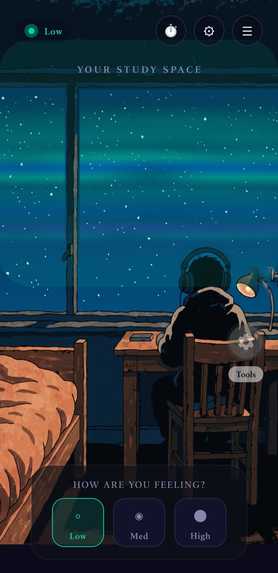
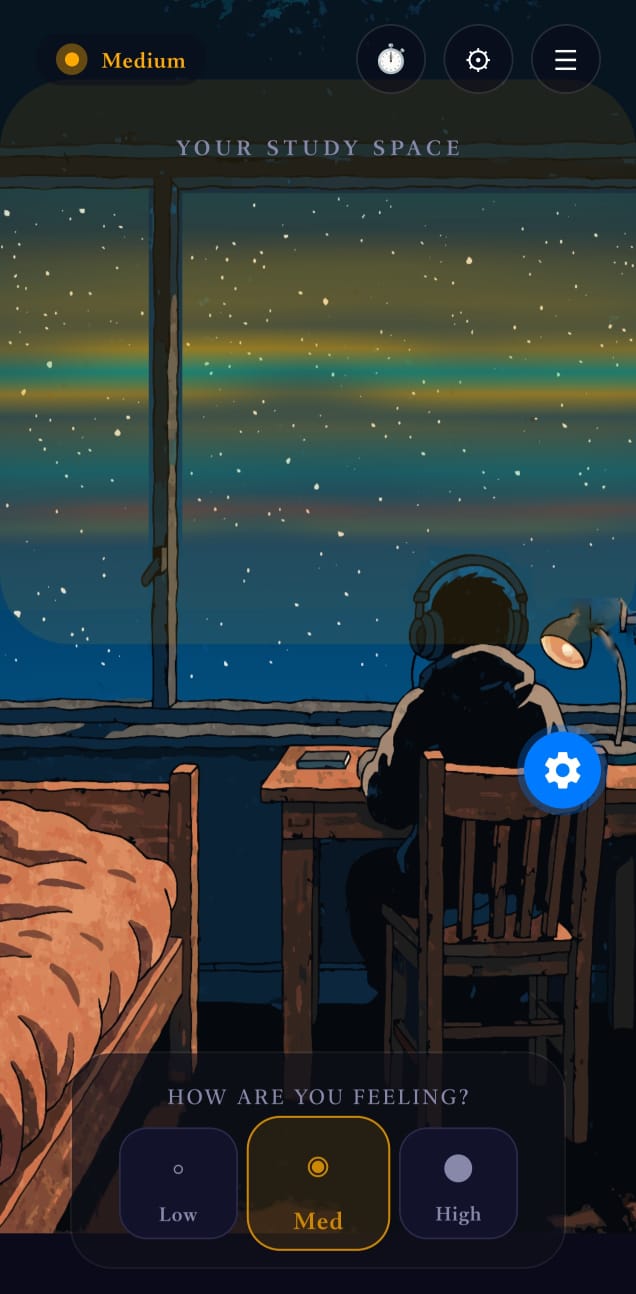
Low stress aurora-soft glow with low speed movement
-
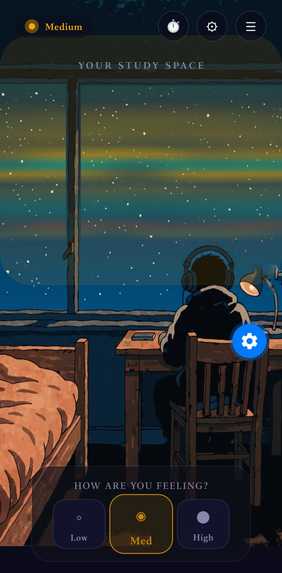
Medium stress with a slightly intense glow
-
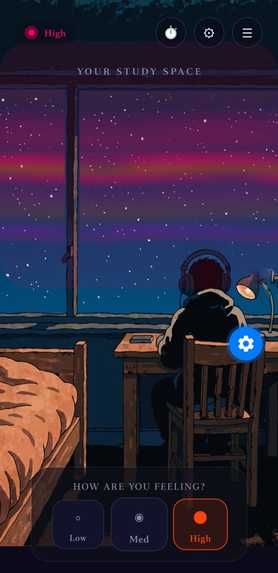
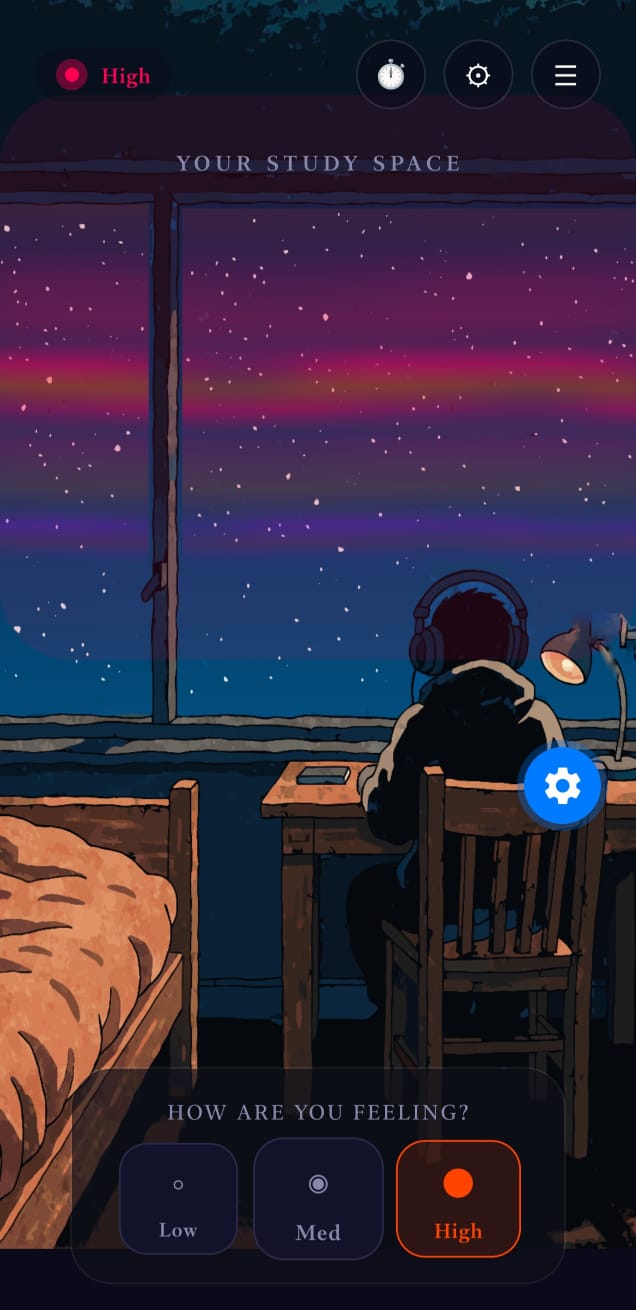
High stress aurora with the brightest and the fastest movement.
-
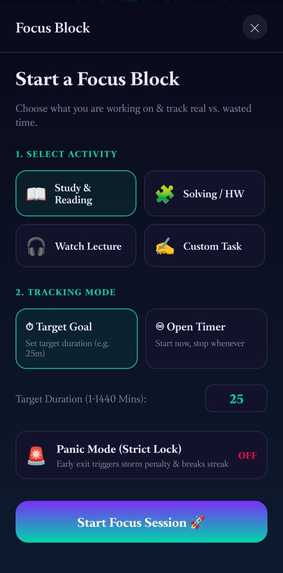
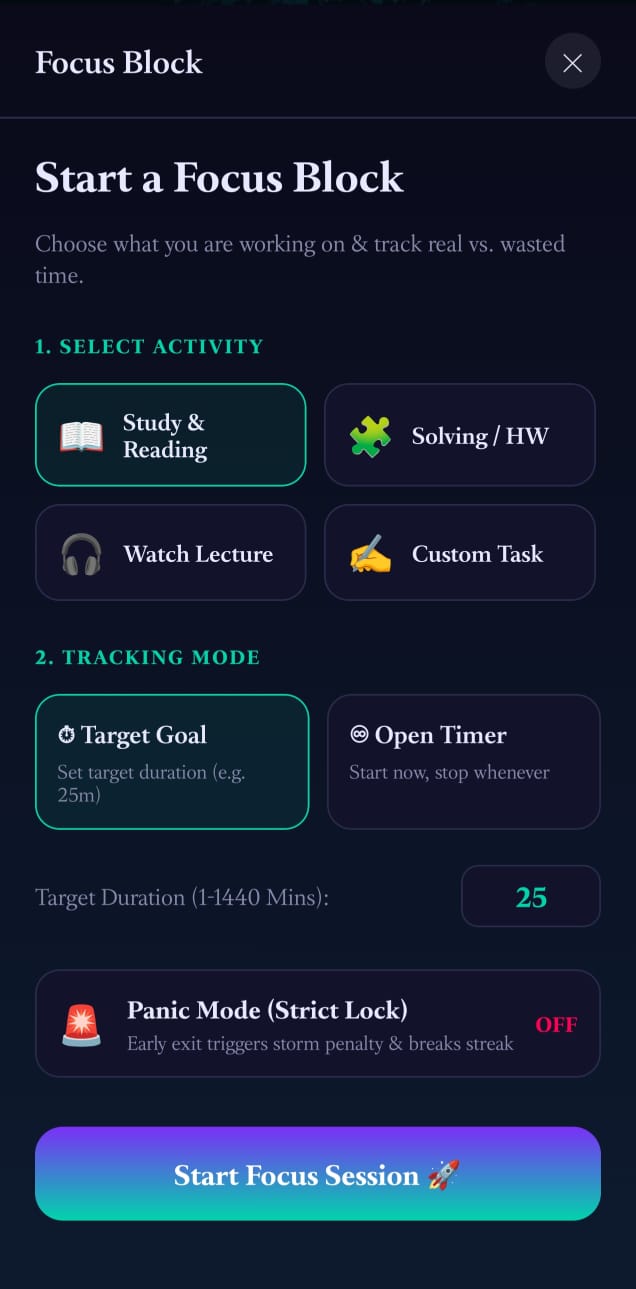
Focus block with timer and stopwatch.
-
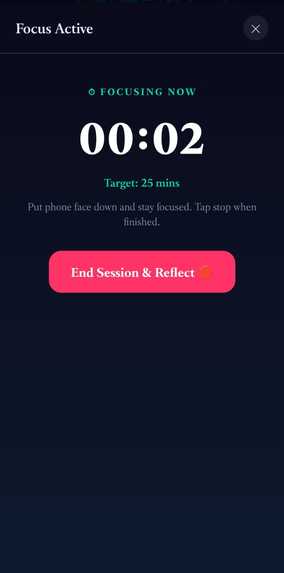
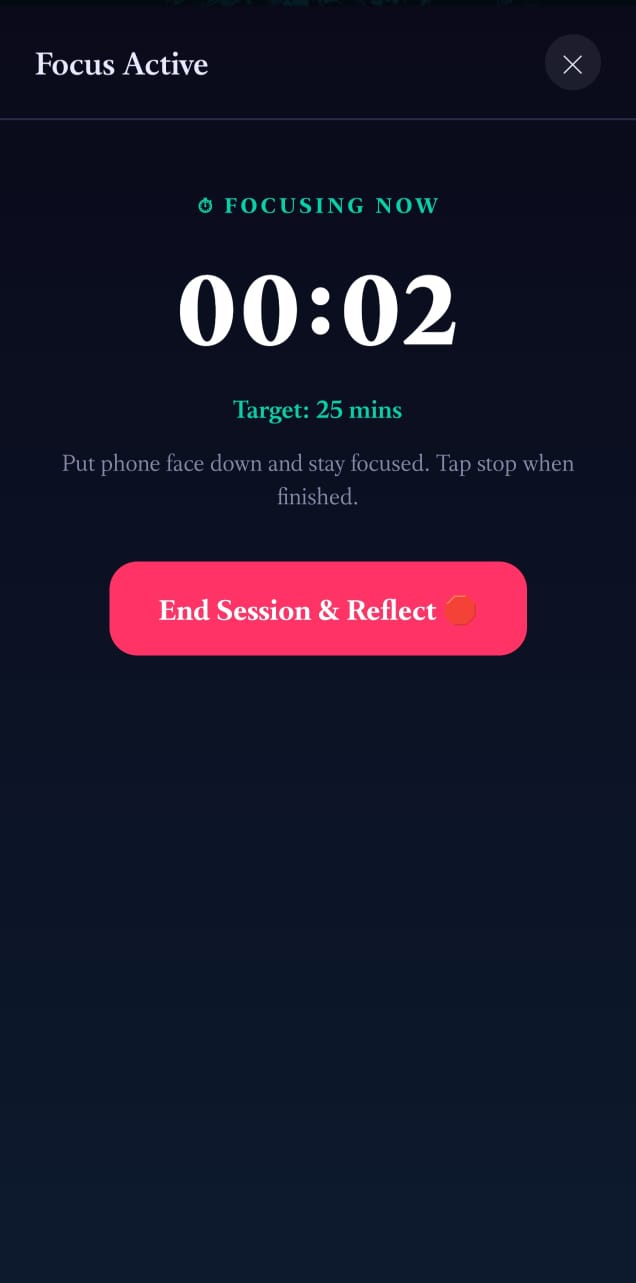
Timer
-
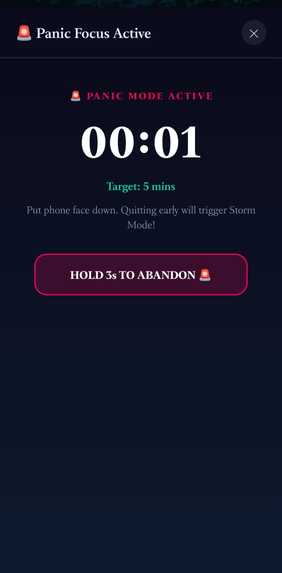
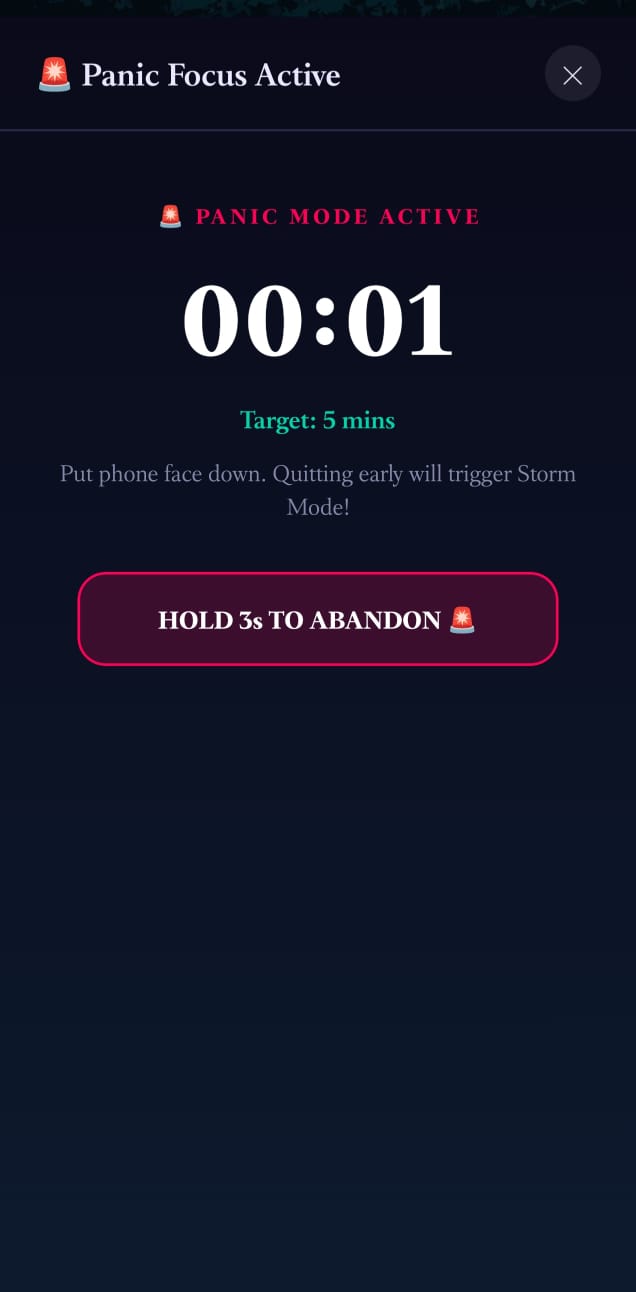
Timer with panic mode
-
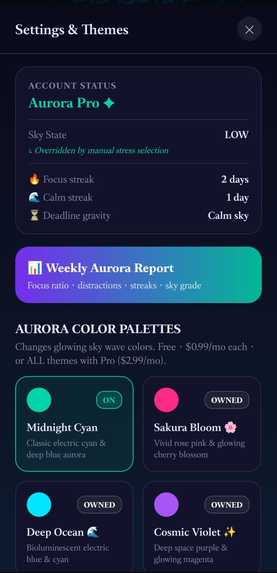
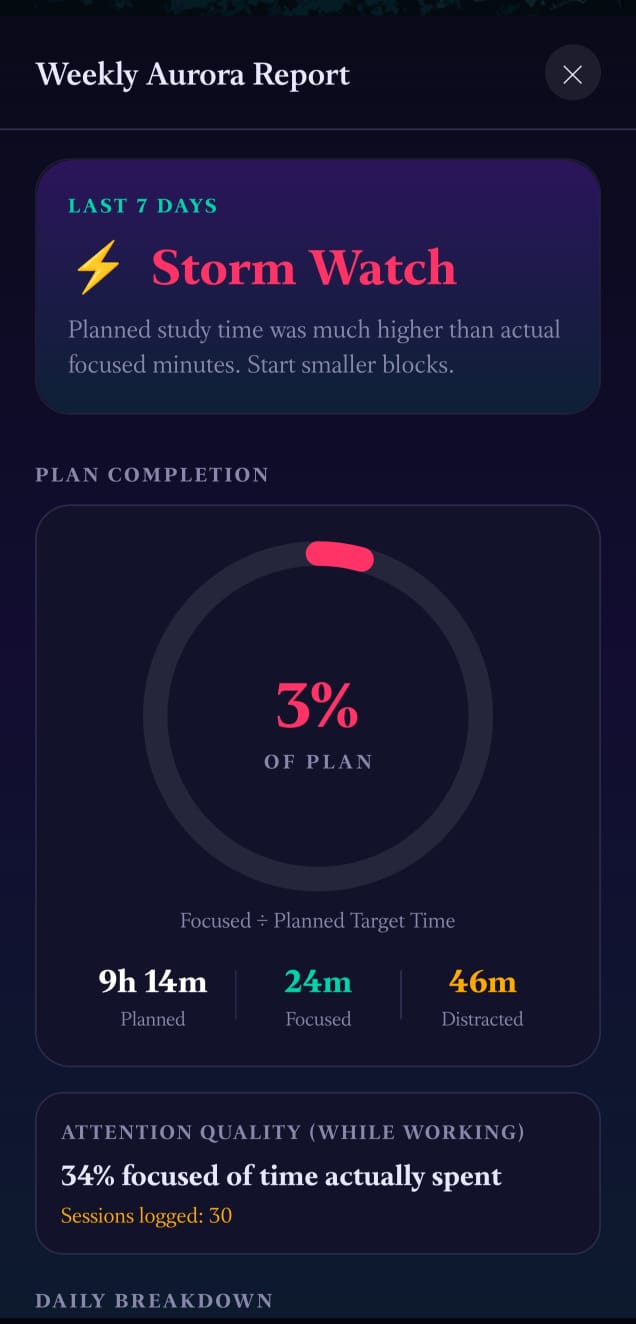
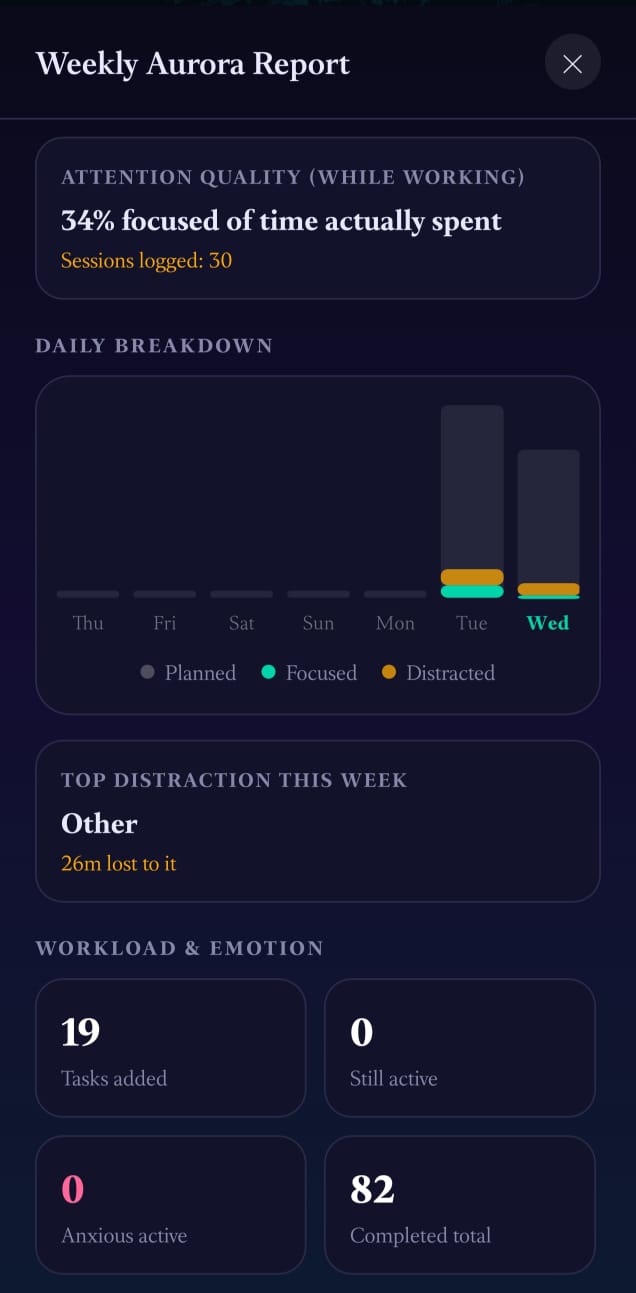
Weekly aurora report dashboard
-
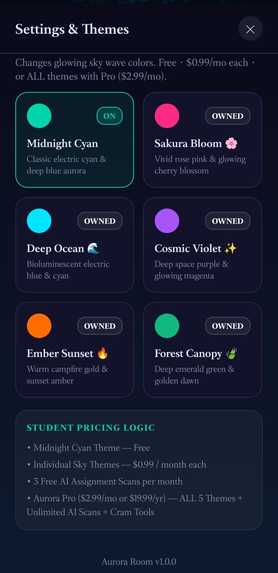
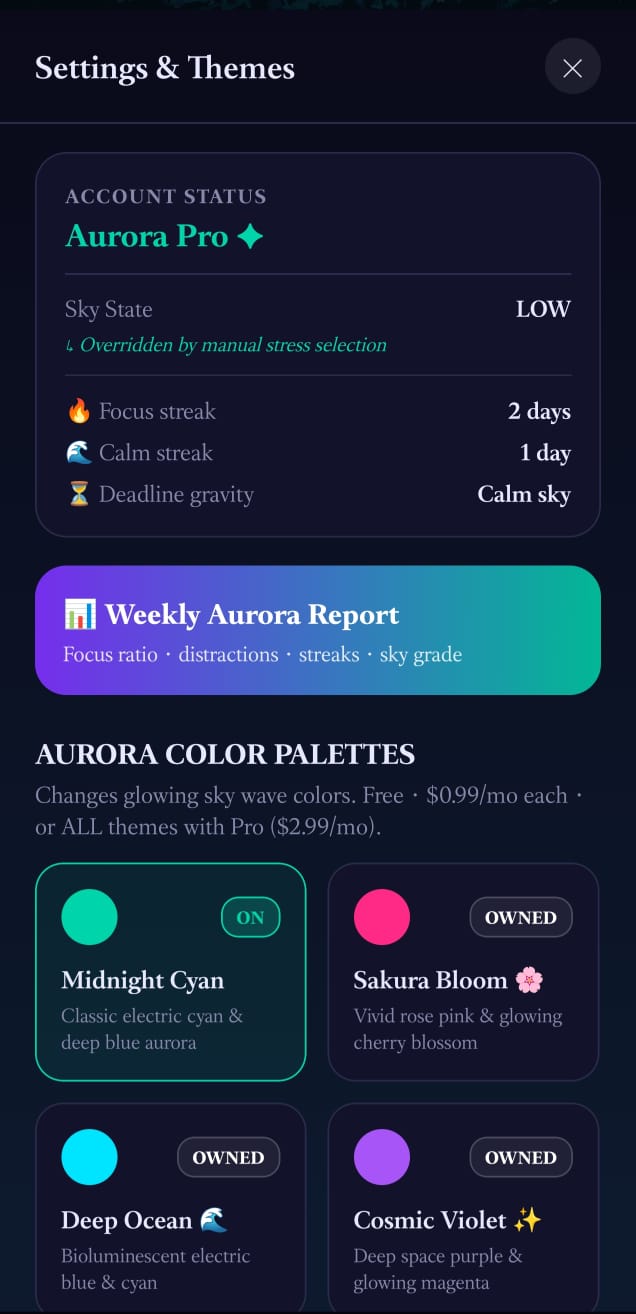
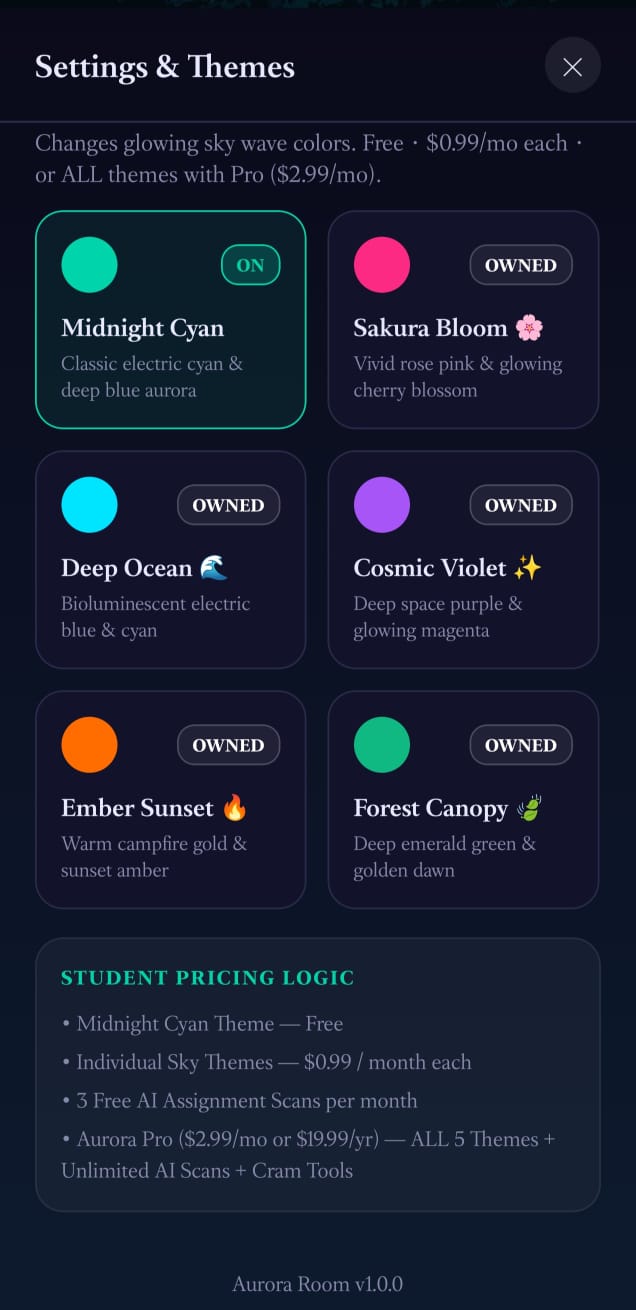
Aurora color palettes for pro subscriptions.
-
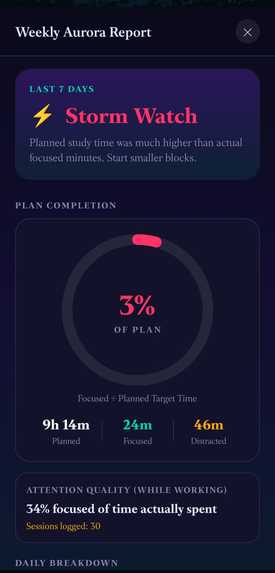
Weekly report with an activity ring.
-
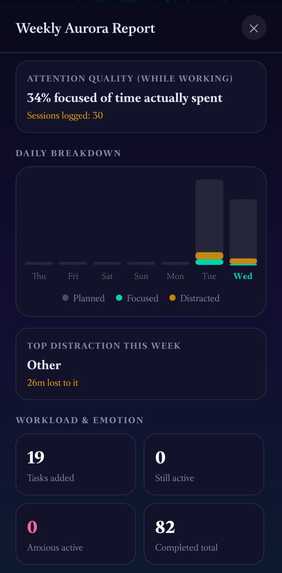
Report representation using bar graph.
-
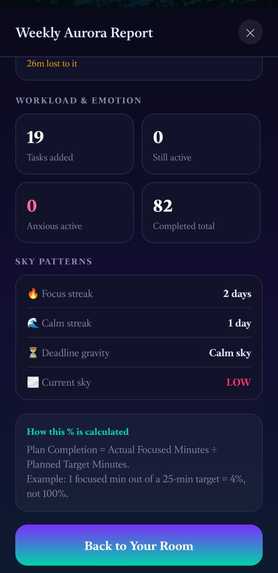
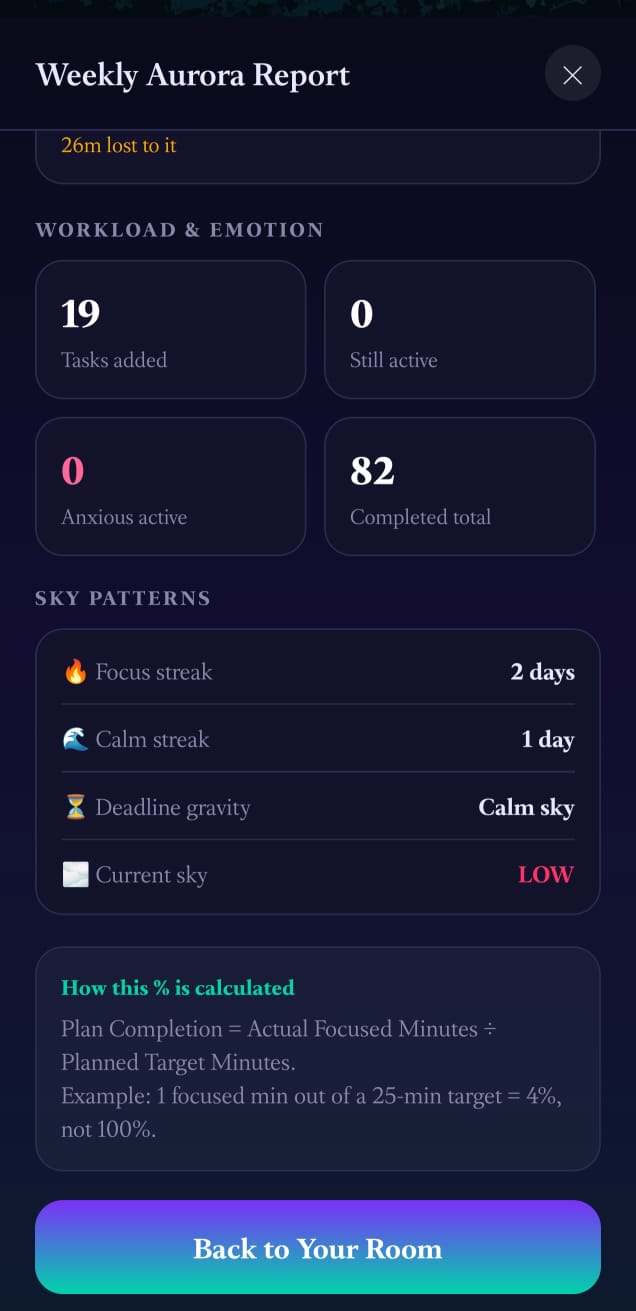
Report showing the focus streaks and the calm streaks.
-
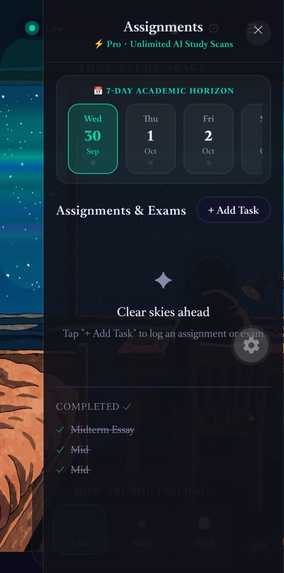
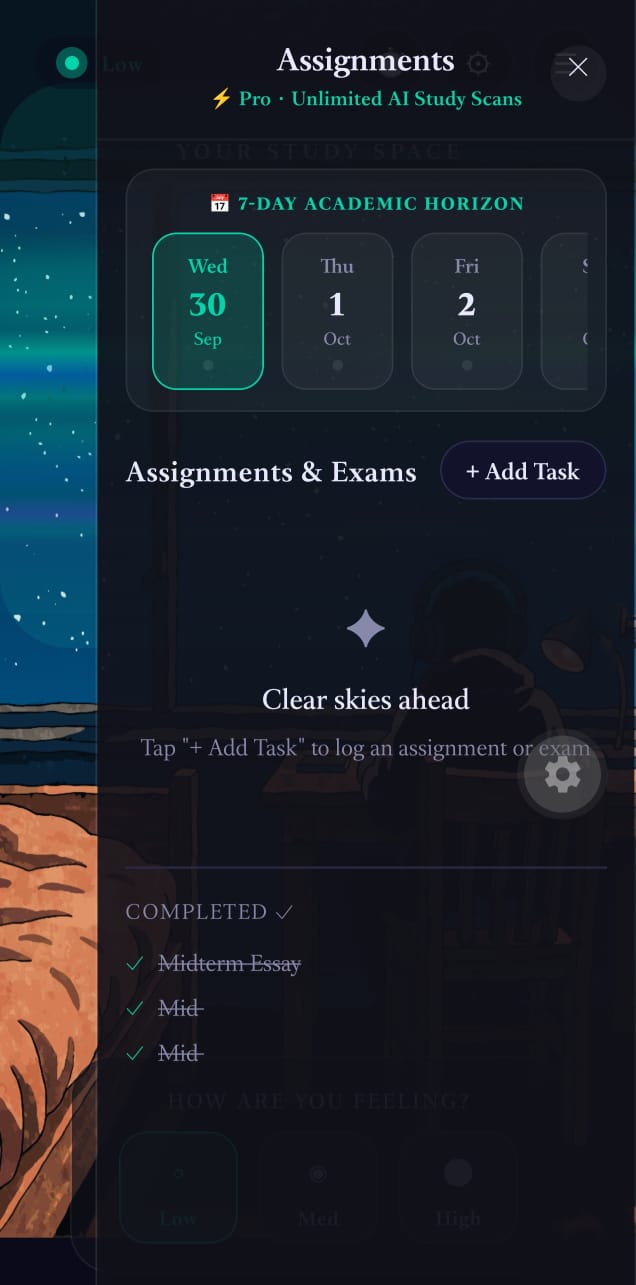
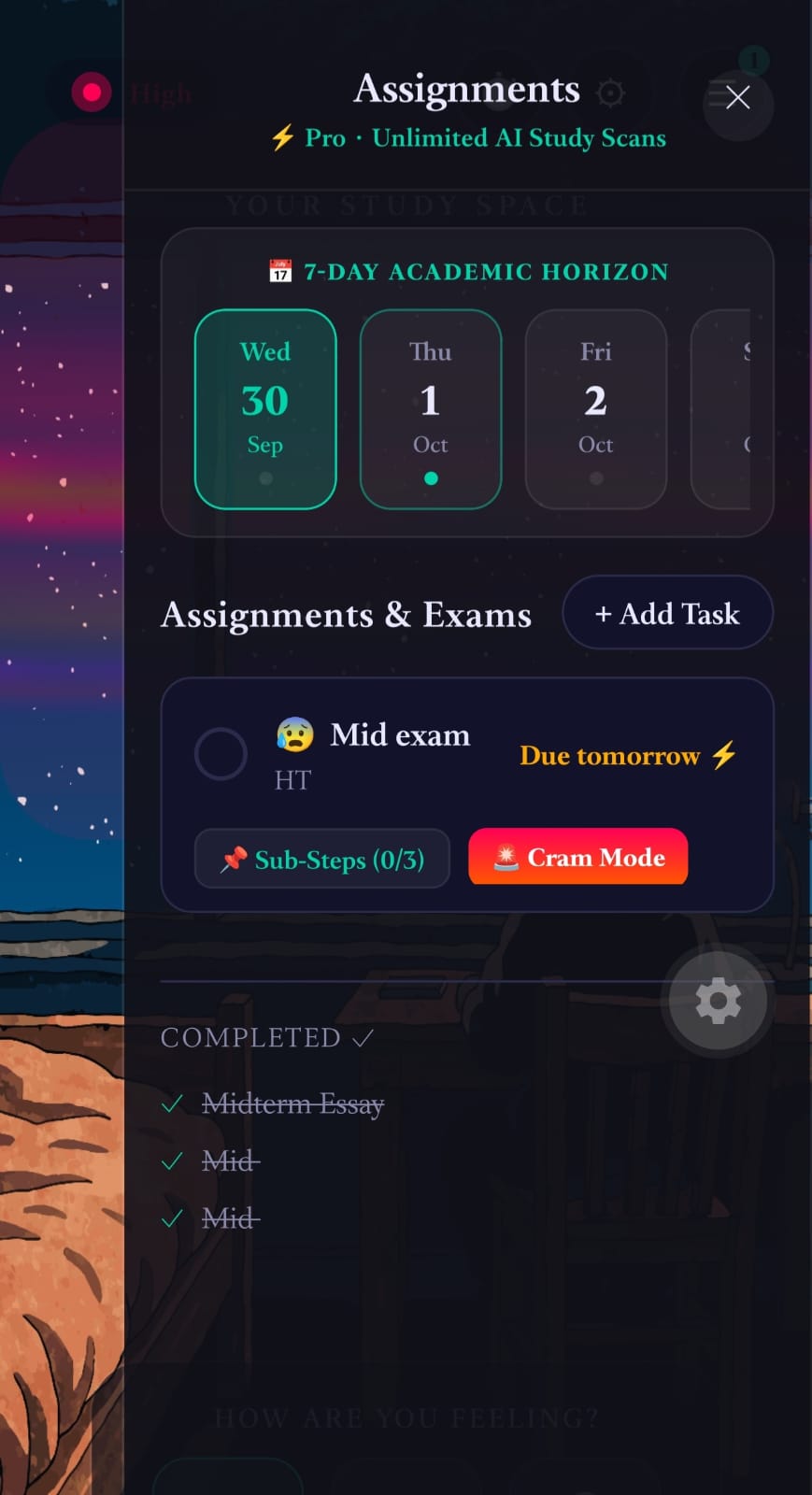
7 Day deadline horizon
-
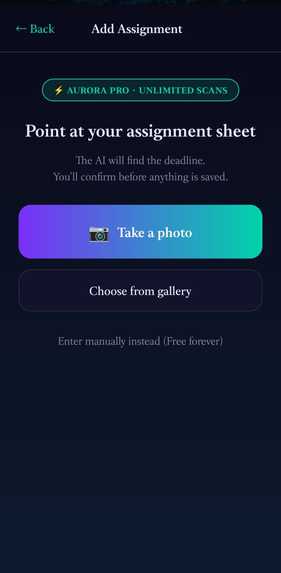
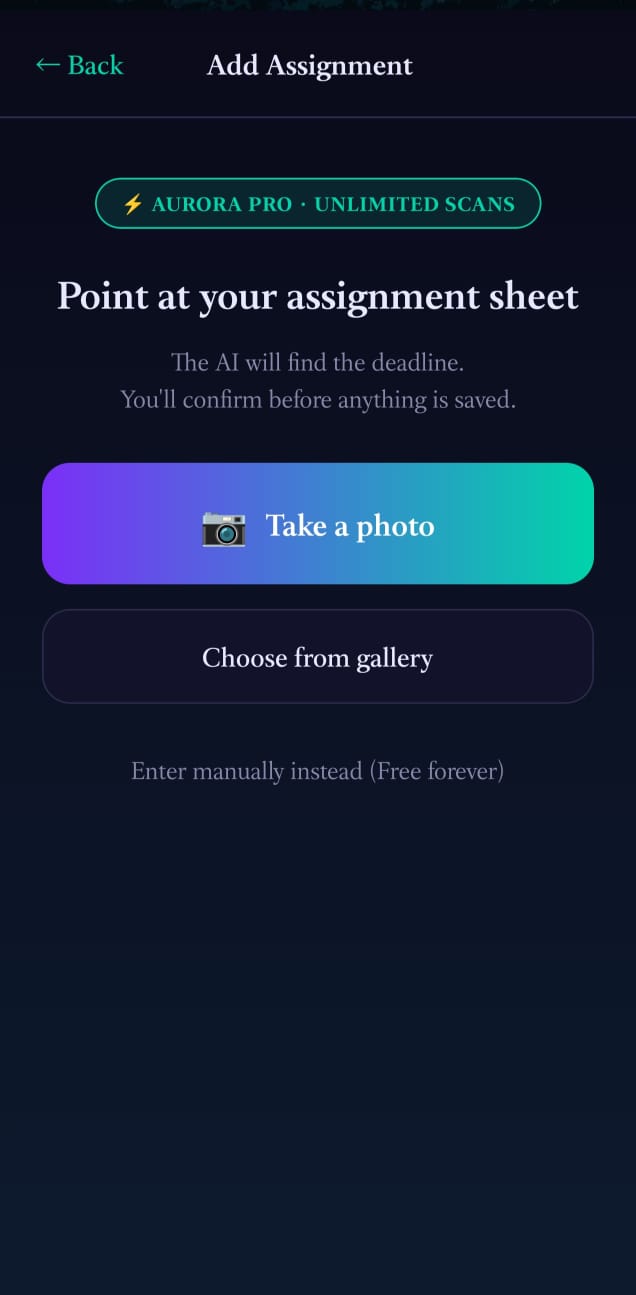
Assignment scanner(3 Free scans and unlimited for pro subscribers)
-
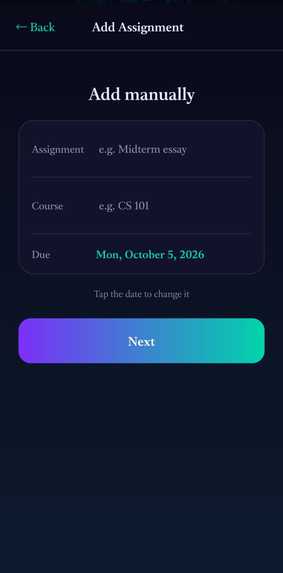
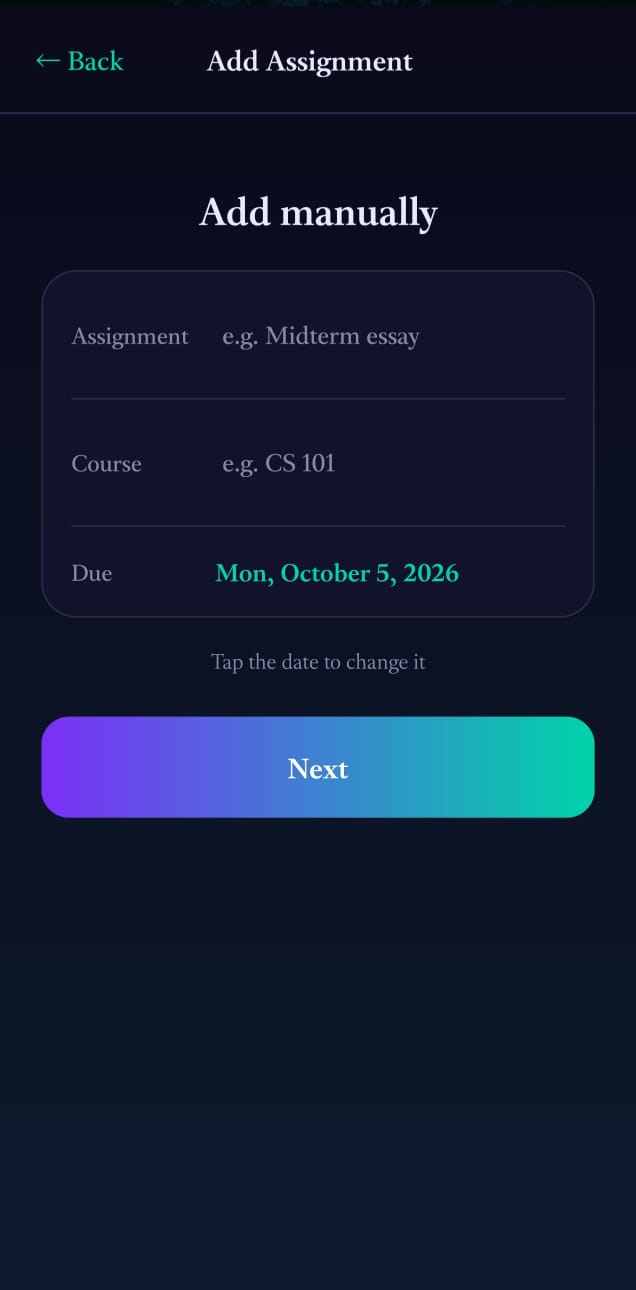
Manual assignment addition.
-
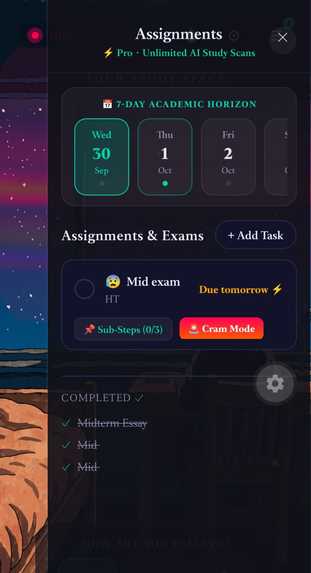
Assignment list with deadlines and cram mode option.
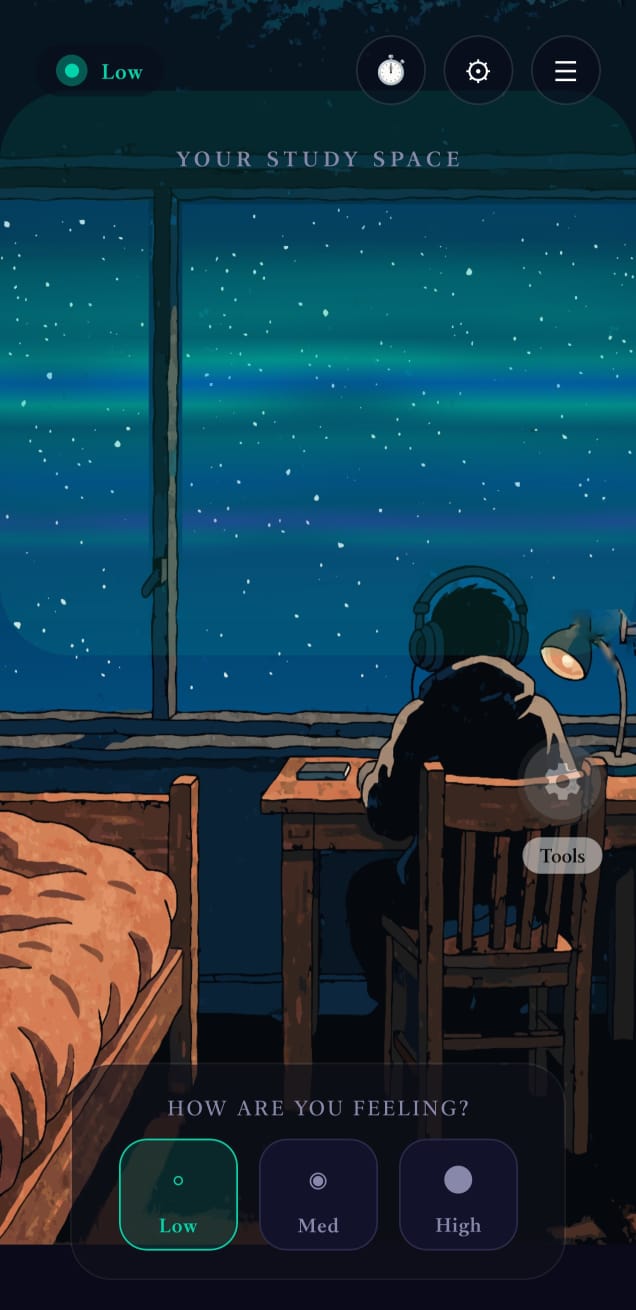
Inspiration
As Chemical Engineering sophomores returning from summer vacation, we were hit with a massive wall of heavy problem sets, assignments and upcoming mid sem date all at once. Going from zero to a hundred overnight gave us severe deadline anxiety. Staring down pages of heat transfer and fluid mechanics homework, traditional productivity apps just felt like cold, corporate spreadsheets that made our stress worse. We realized students don't need another generic task list-we need a sanctuary. So,we built "Aurora Room" to create a cozy, ambient lo-fi study space that understands heavy academic workloads, visualize deadline urgency through a stress reactive sky, and keeps students focused when late night problem sets get intense.
What it does
Aurora Room transforms your device into an ambient , stress aware study sanctuary with tools designed for heavy academic workloads: -Stress Reactive Aurora Sky: The sky's ambient colour , wave animation speed and pitch darkness dynamically adjust based on active assignment deadlines, feelings of anxiety and upcoming exams. -7-Day deadline horizon:A horizontal calendar strip in the assignment drawer that visualizes upcoming homework, lab report, and pinned campus dates. -Emergency Cram Scheduler:Tapping cram mode on high priority deadlines due within 48 hours instantly generates a stress calibrated , hour by hour study and rest timetable. -Strict Panic Mode:An anti doomscroll focus lock that enforces study sessions with a 3 second hold to quit penalty. Abandoning early triggers Critical Storm mode in your room. -Weekly Report:Features an animated focus ring that calculates actual focus time against your planned target time, tracking true study completion and top distractions. -Honest Introspection Check:Prompts students after every session to reflect on actual focused vs wastes doomscroll minutes. -Powered by Revenuecat: Integrates the RevenueCat SDK to manage live offerings , package fetching , and subscription entitlements for Aurora Pro($2.99/mo or $19.99/yr) -Free Tier: Default Midnight Cyan sky theme, 3 free AI assignment scans, 1 course tracking, and 1 tap emergency cram tools. -Aurora Pro Subscription($2.99/mo or $19.99/yr):Unlocks all 5 premium glowing aurora sky paletes, individual $0.99/mo theme passes, unlimited AI document scans, and full study vault storage. -6 Glowing Aurora Sky palettes: Customize your study space with distinct sky theme palettes(Midnight Cyan, Sakura Bloom, Deep Ocean, Cosmic Violet, Ember Sunset, Forest Canopy). Each theme dramatically transforms the sky wave colours across all 4 stress levels.
How we built it
Coming from Chemical Engineering background, neither of us knew how to write mobile app code when shipaton 2026 started. But as ChemE sophomores drowning in Heat transfer and Fluid mechanics assignments ,we had a clear product vision for the exact app we needed to survive. To bring "Aurora Room" to life , we embraced modern AI assisted development. We conceptualized every UX flow, designed the student psychology loops, and used AI models prompting to generated React Native code blocks, which are carefully integrated , tested , and iterated on in VS Code. Tech Stack and Architecture: -Frontend Framework: Built with React Native(Expo) to run cross platform on Android and iOS. -Animations:Powered by React Native Reanimated 3 to render the 60 FPS continuous Aurora sky waves, glowing ambient overlays, and animated report rings. -Charts and indicators: Custom SVG rendering with react native svg for the 7 day deadline horizon and weekly progress reports. -State and local storage:Centralized state using React Context(AuroraContext) and 'AsyncStorage" to persist tasks, streaks and study logs locally on device. -Monetization Infrastructure:Integrated the official RevenueCat SDK to handle the entitlement checks(pro) , live package fetching, paywall display, and subscription restores.
Challenges we ran into
As non cs ChemE students with no coding background, building a complete mobile app from scratch was a really hectic and annoying process ,every step was a steep learning curve: -AI Prompting and architecture limits: Translating our exact vision into working code required endless trial and error. Making AI understand complex React Native state logic , 60 FPS reanimated sky wave math, and custom context took dozens of prompt iterations. -Debugging red screens: Fixing crash logs , expo go native module limits, and android permission errors without formal CS training was really hard. API limits and environment issues: Managing AI rate limits and keeping local storage clean forced us to pivot away from fragile network dependencies toward 100% reliable, zero crash local logic.
Accomplishments that we're proud of
We actually shipped!: As chemE majors who literally couldn't write a line of code, even entering a massive global hackathon felt crazy. Going from zero knowledge to a fully working app is wild. Mastering RevenueCat SDK: Successfully integrating the 'react native purchases' SDK, setting up paywalls, and handling Pro memberships without a CS background felt like a huge win. Building something we need: We built Aurora Room for ourselves, and it' genuinely helping us survive our hectic ChemE courses. Smooth vibe, Zero Crashes:Making an app that looks dark, cozy, runs at 60 FPS and actually works on our phones without crashing.
What we learned
Building Aurora Room taught us how to take a raw idea and turn it into a real , working product. We leaned how to think like product designers, turn student deadline into clean UX loops, and prompt AI effectively to build complex app logic. Wiring up the RevenueCat SDK showed us how real world app monetization and subscriptions work, and debugging endless screens taught us serious problem solving patience. Most importantly , we proved to ourselves that two ChemE sophomores can overcome technical hurdles and ship software we're proud of.
What's next for Aurora Room
-3-D Customizable Lo-Fi Room engine: Our original vision was an interactive, fully customizable 3D room with unlockable desk items, lava lamps and pets that double as monetization features. Due to our limited technical background, time constraints, ad resources, we settled for our current 2D frame engine, but building a real 3D room builder is the next goal. -Deeper canvas and moodie integration:Automatically syncing deadlines and syllabus changes directly from student university portals. -Refined UI and app polish: Smooth sound effects, custom widget support for phone home screens, and an even sleeker, stress free user experience. -Expanded RevenueCat Paywalls: Adding custom A/B testing paywalls, students discount tiers, and expanded theme packs through RevenueCat.
Built With
- async-storage
- expo.io
- javascript
- react-native
- react-native-reanimated
- react-native-svg
- revenuecat


Log in or sign up for Devpost to join the conversation.