-
-
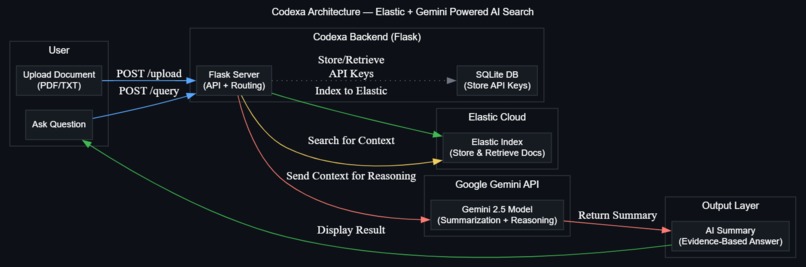
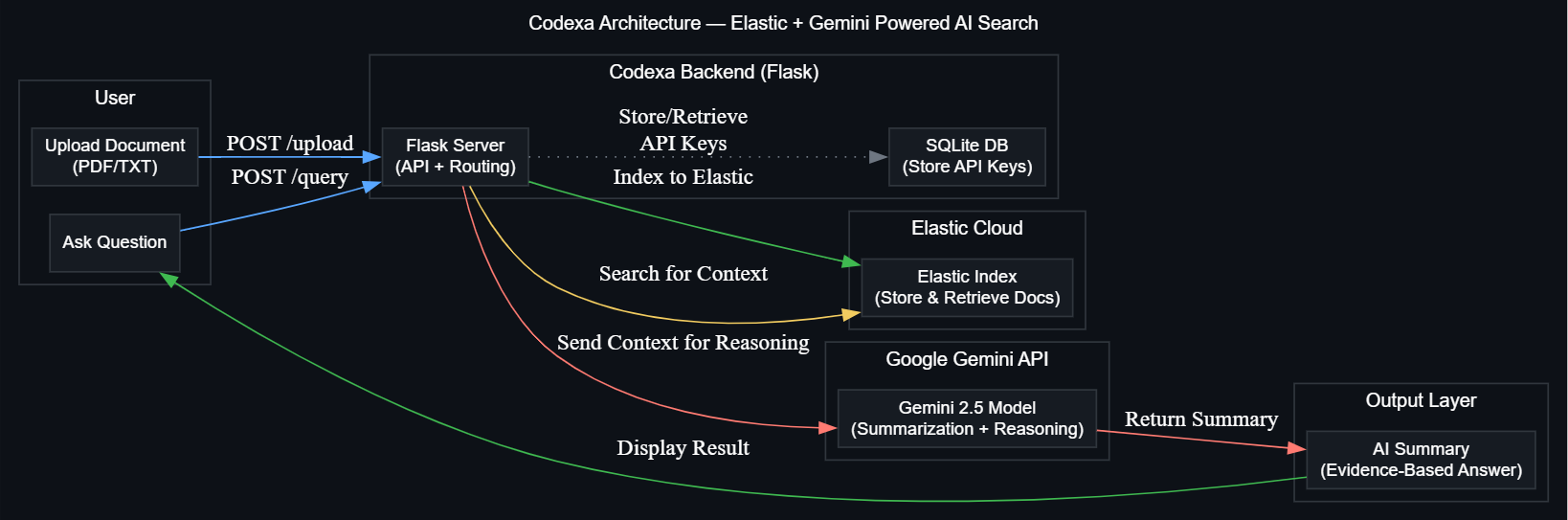
Codexa-Architecture
-
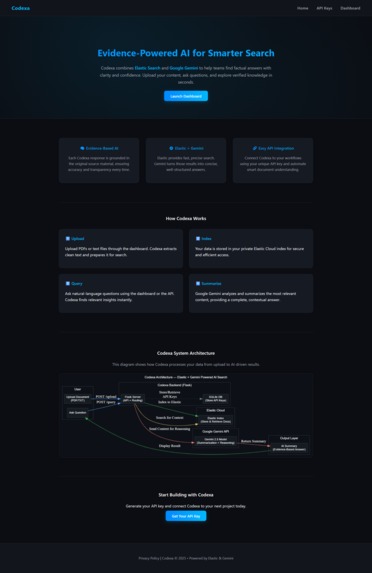
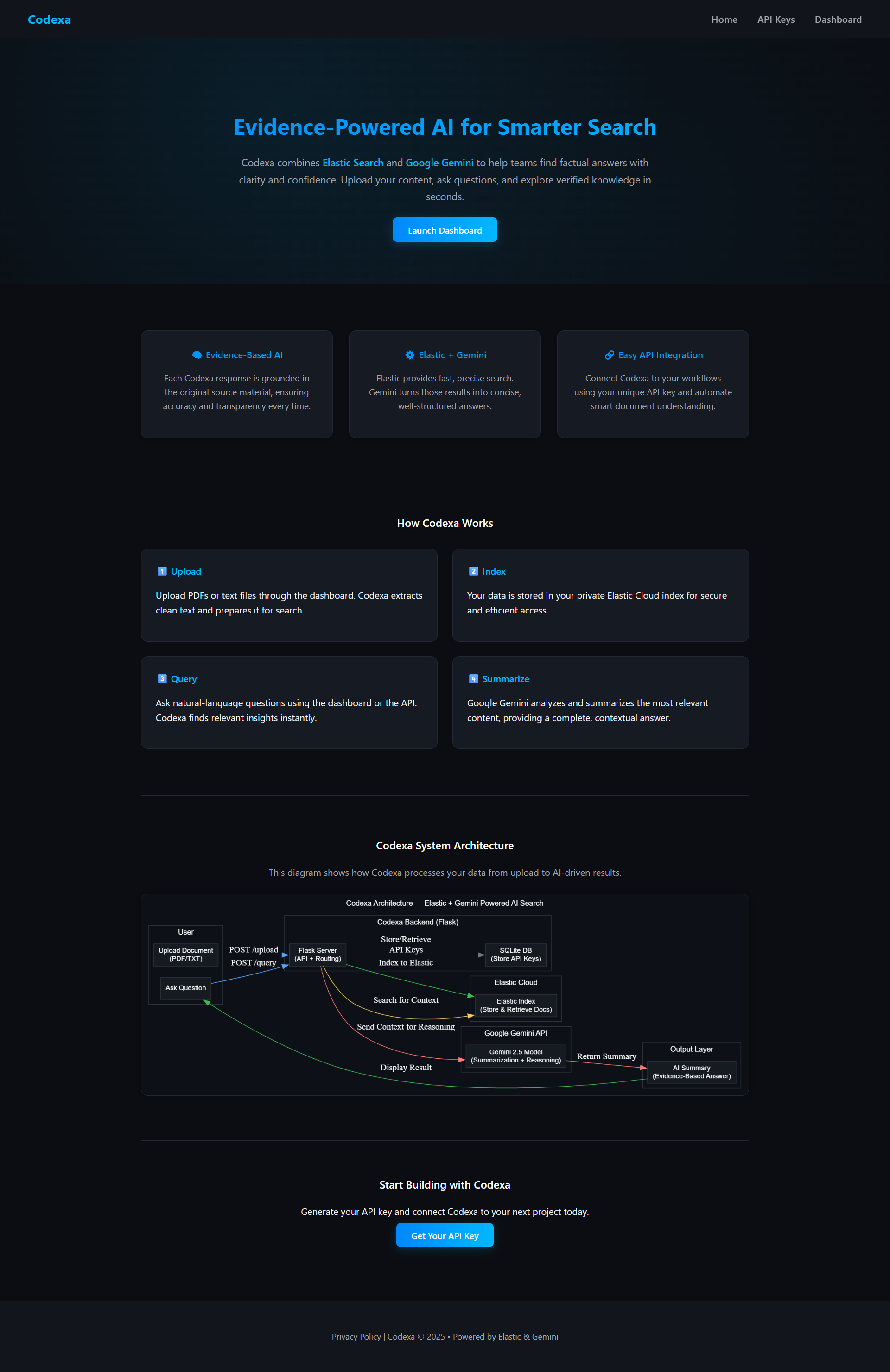
Codexa-Homepage
-
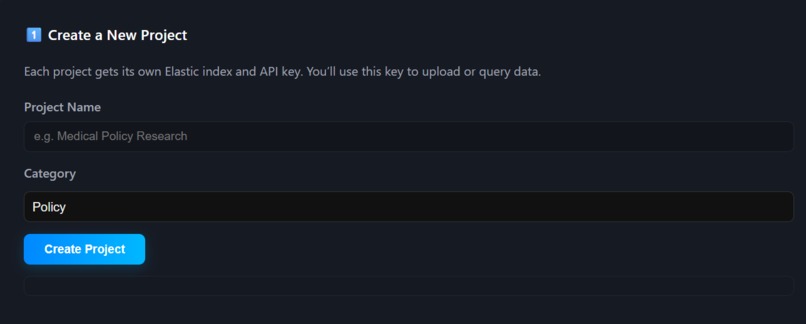
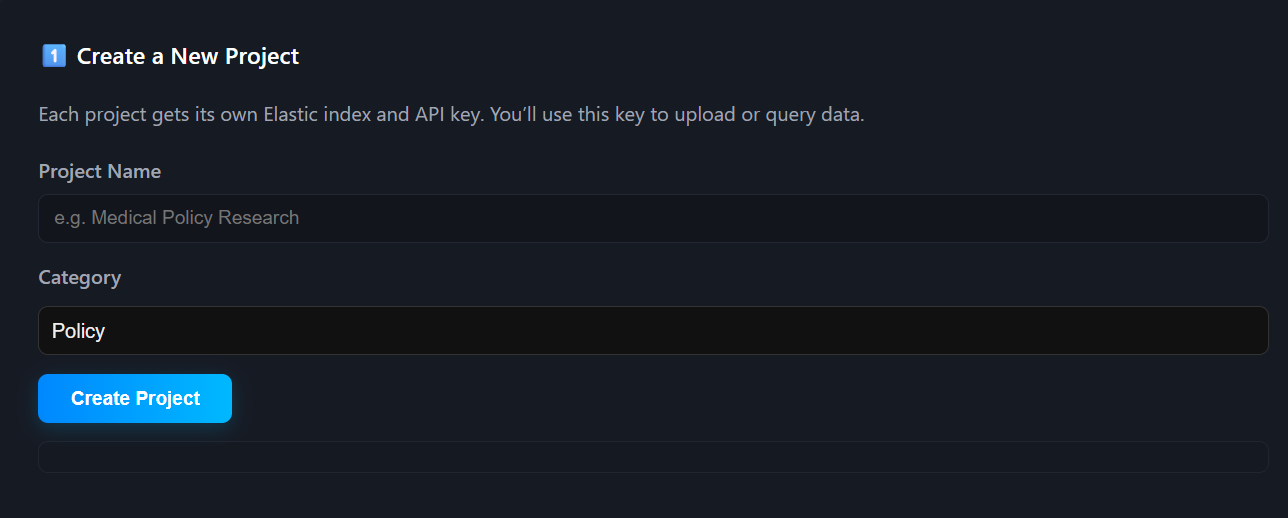
Codexa-Create
-
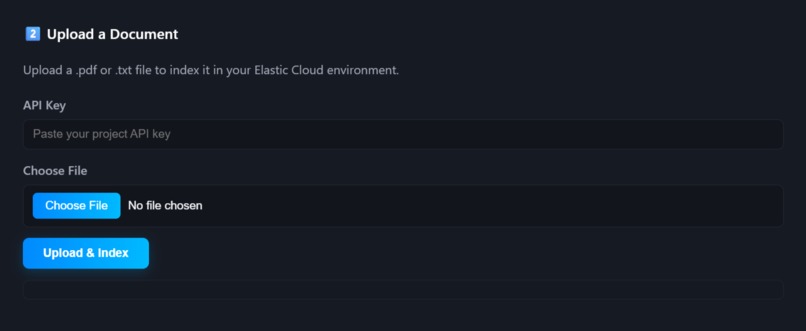
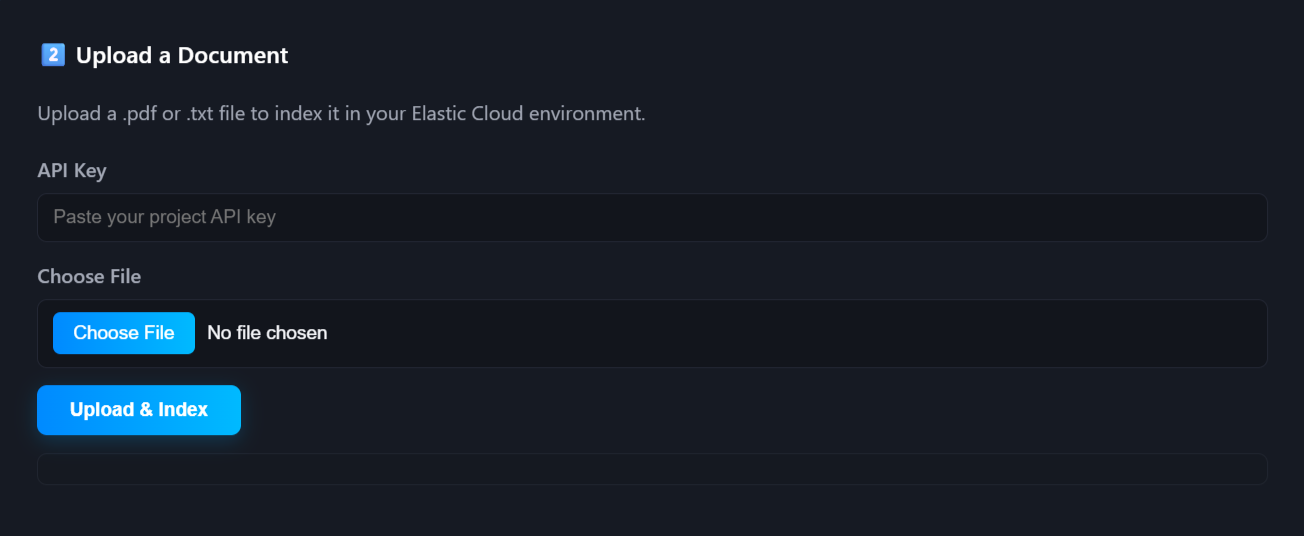
Codexa-Upload
-
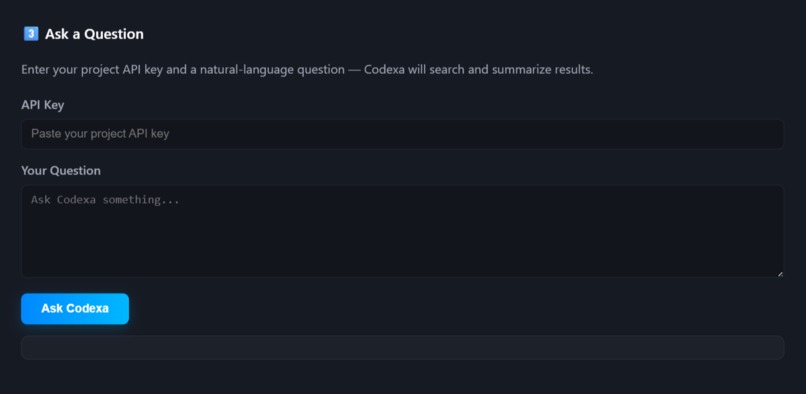
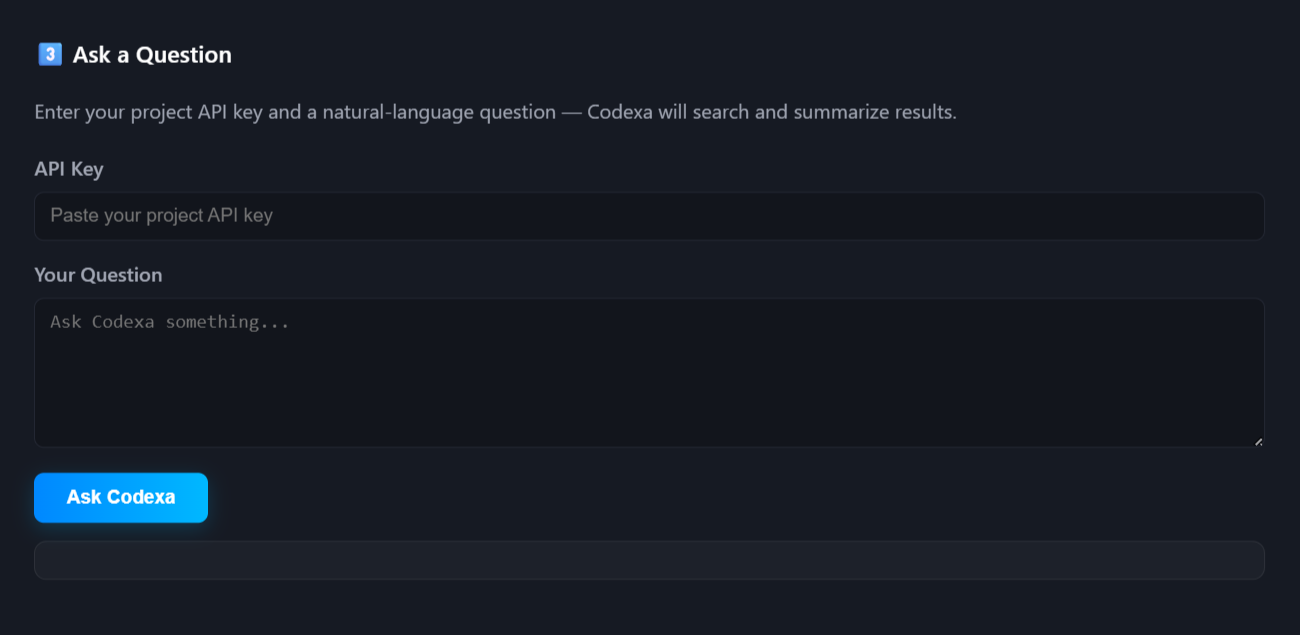
Codexa-Ask
-
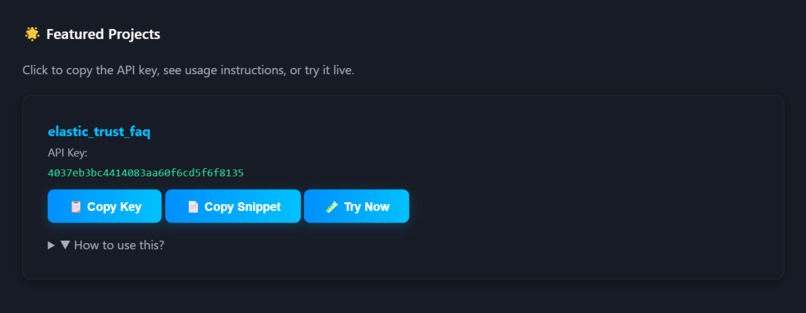
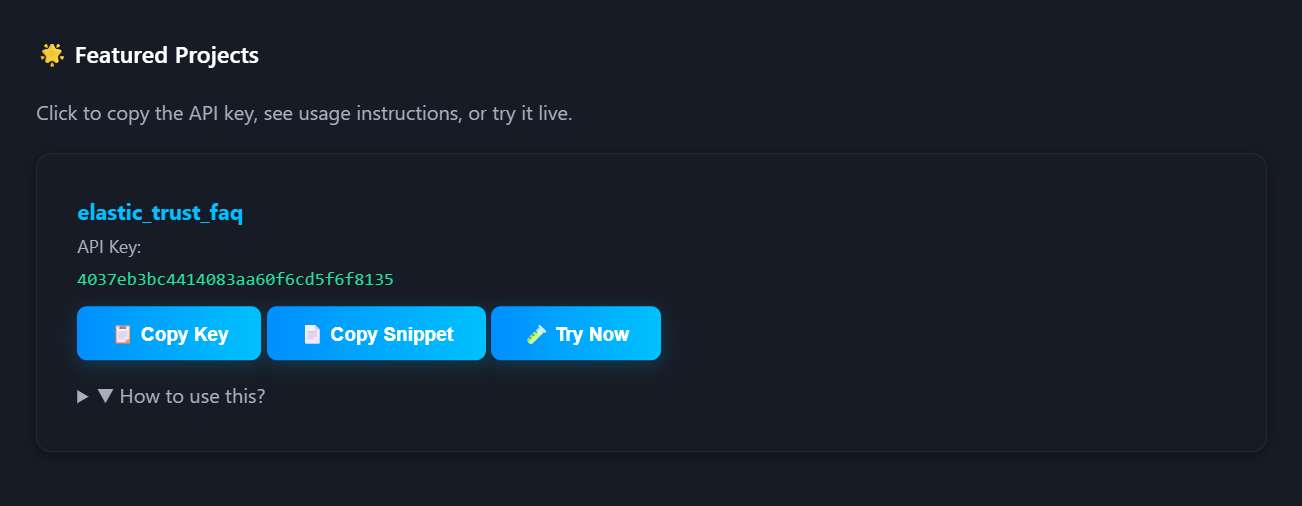
Codexa-API
-
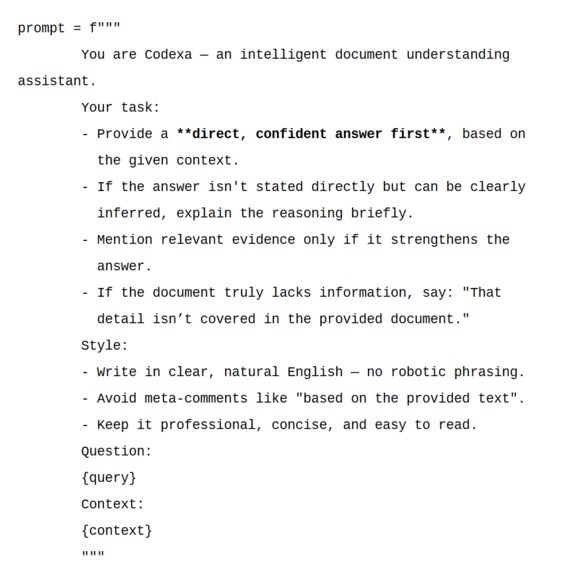
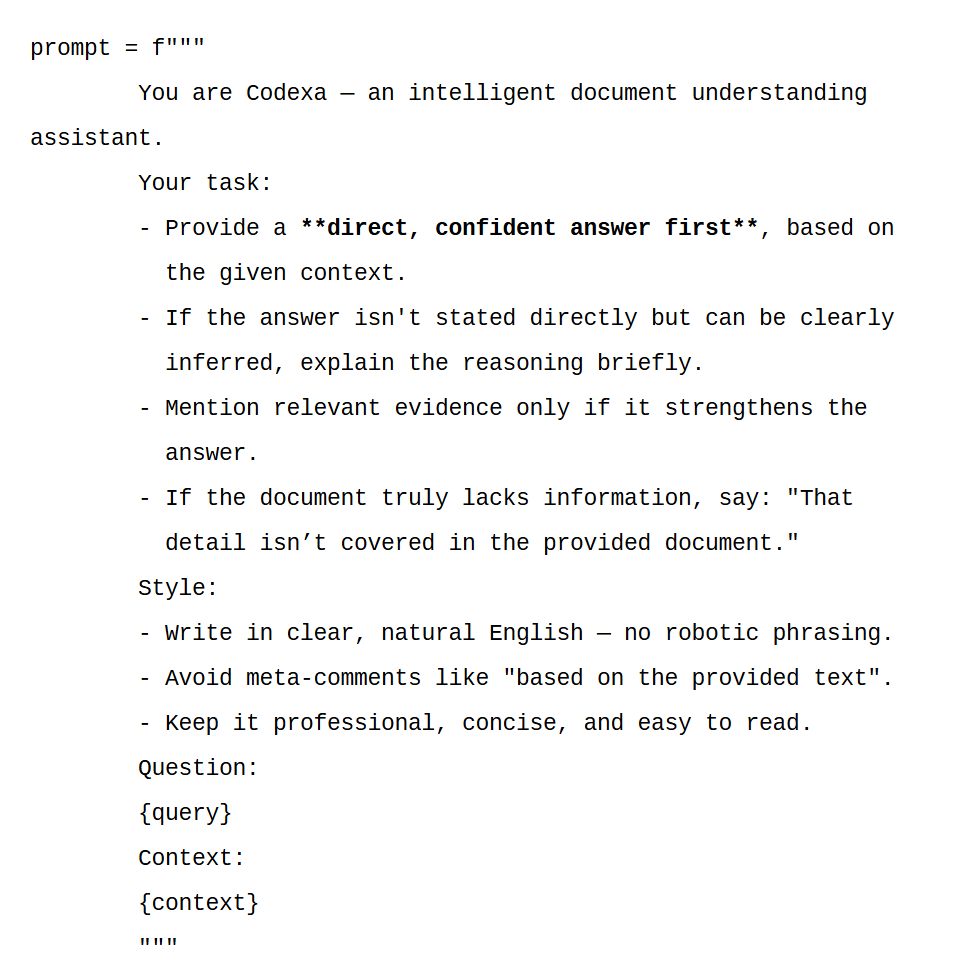
Codexa-Prompt
Inspiration
We love AI, but we don’t love when it confidently gives the wrong answers. Codexa was born from a simple idea: AI should be trustworthy. Instead of guessing, it should lean on real information that users provide.
What it does
Codexa lets you upload PDFs or text files and then ask questions about them. It uses Elastic Search to find the right content and Google Gemini to summarize it into a clear answer with proof. Every result is backed by the actual source text. No guesswork.
How we built it
- Flask for backend and routing
- Elastic Cloud for indexing and search
- Google Gemini 2.5 API for reasoning
- SQLite for storing API keys
- HTML + CSS for the dark, minimal UI
- PyPDF2 for PDF text extraction
Local Deployment
Run it easily on your computer:
- Clone the repo
- Install dependencies
- Add your Elastic and Gemini API keys
- Run
python app.pyand open http://127.0.0.1:5000
Challenges we ran into
We had to balance Elastic’s powerful search with Gemini’s context limits and make sure everything stayed fast. Handling large files and keeping the UI intuitive were also important design challenges.
Accomplishments we’re proud of
We built a fully working retrieval and reasoning pipeline that feels smooth to use. The UI is clean. The answers are backed by real evidence. And it already feels like a tool that could ship to real customers.
What we learned
We learned how to properly coordinate search and generative AI. We improved our skills in Elastic optimization, API orchestration, and prompt design focused on factual accuracy.
What’s next for Codexa
- Add user accounts and usage analytics
- Support multi-document search
- Highlight citations inside AI summaries
- Deploy Codexa publicly on Render or Vercel
Links
- GitHub: https://github.com/GokhanCey/Codexa
- Website: https://thecodexa.com
- YouTube Demo: Demo Video

Log in or sign up for Devpost to join the conversation.