-
-
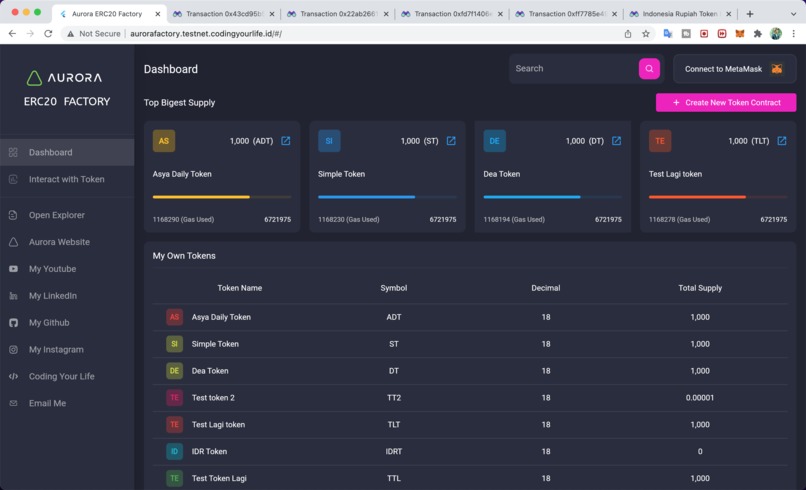
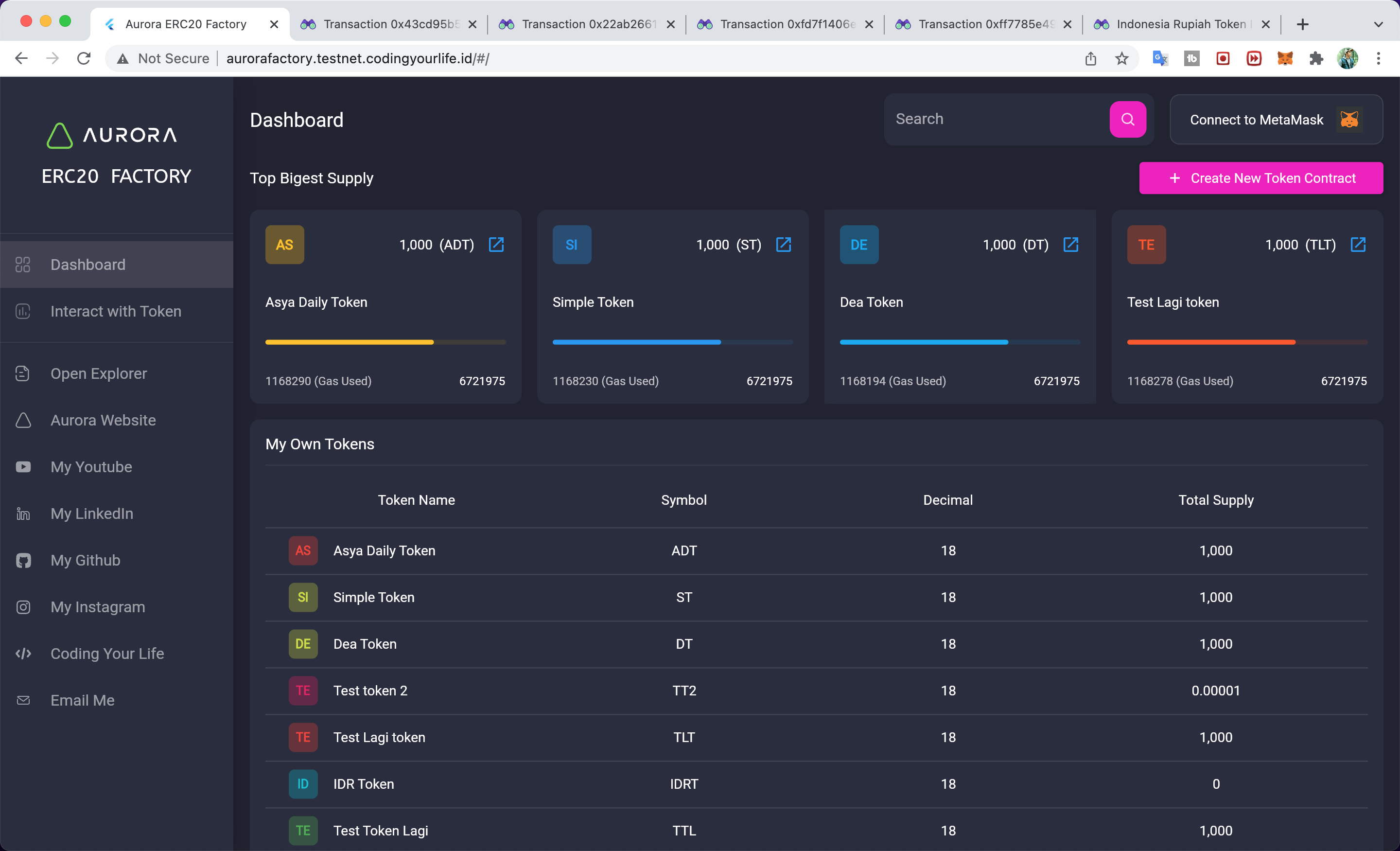
Home Screen
-
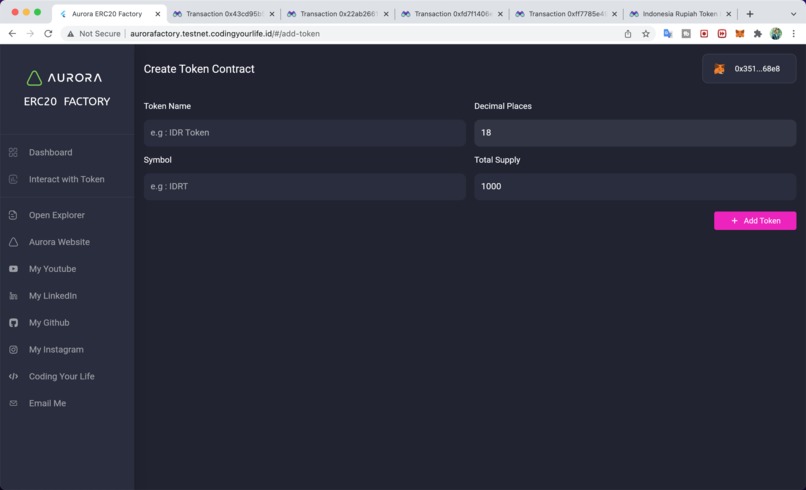
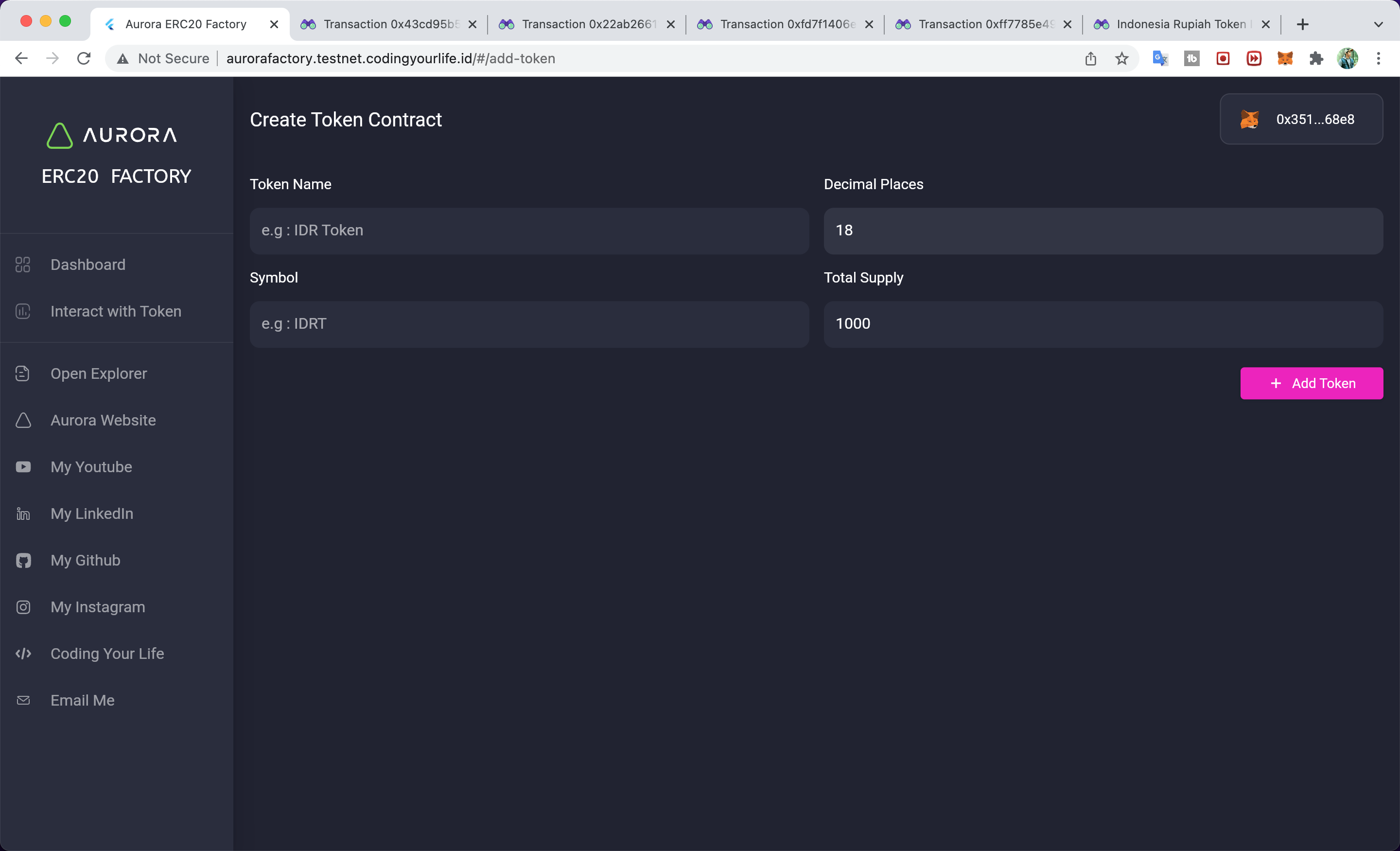
Add Token Screen
-
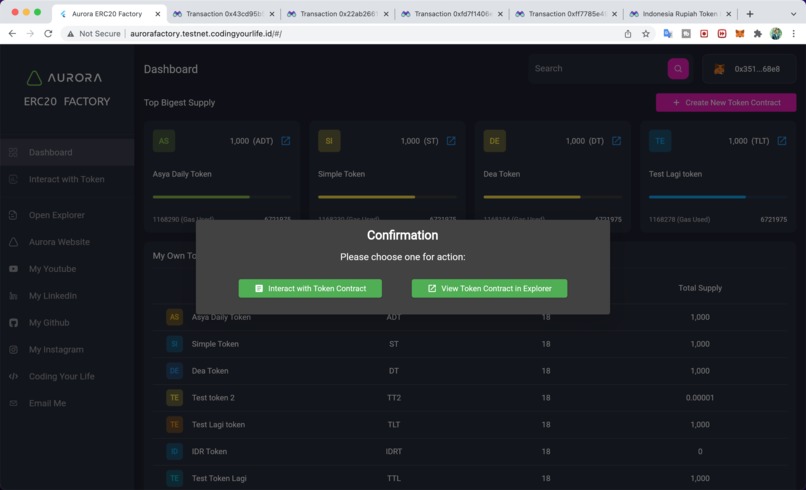
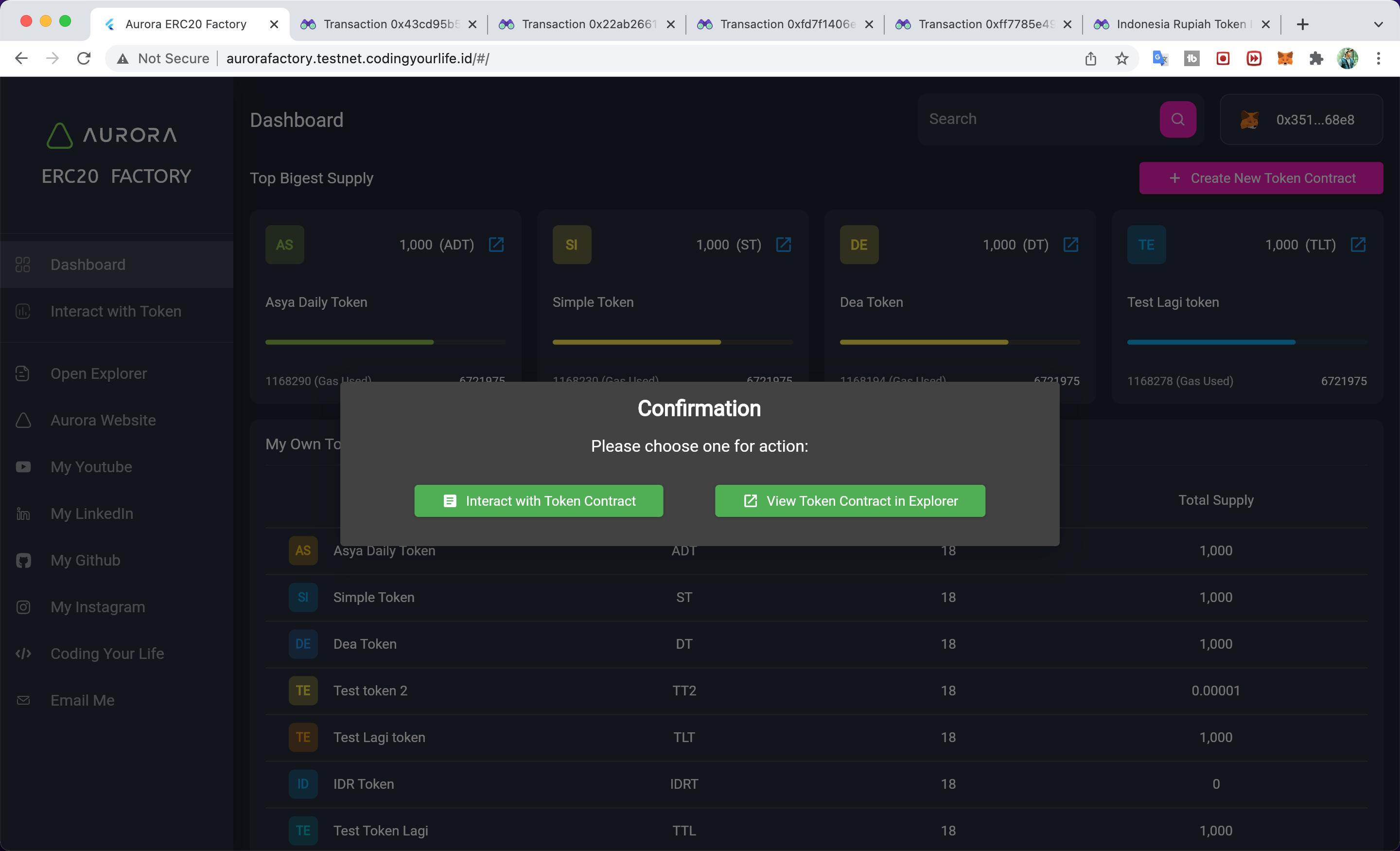
Popup to Interaction
-
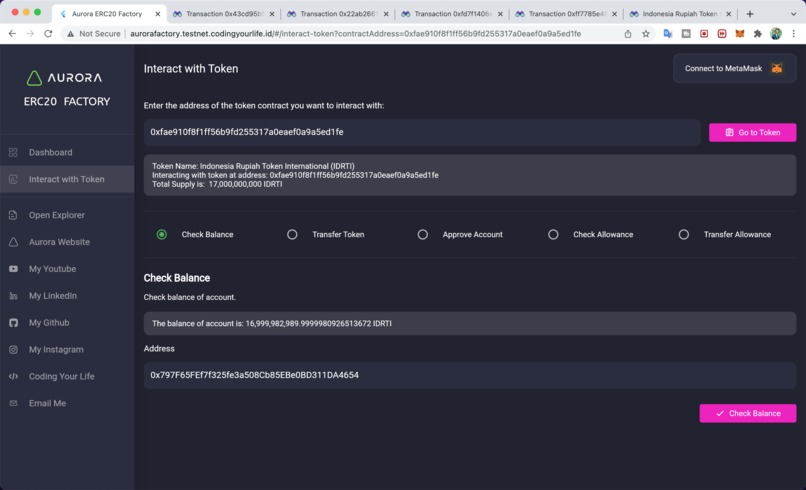
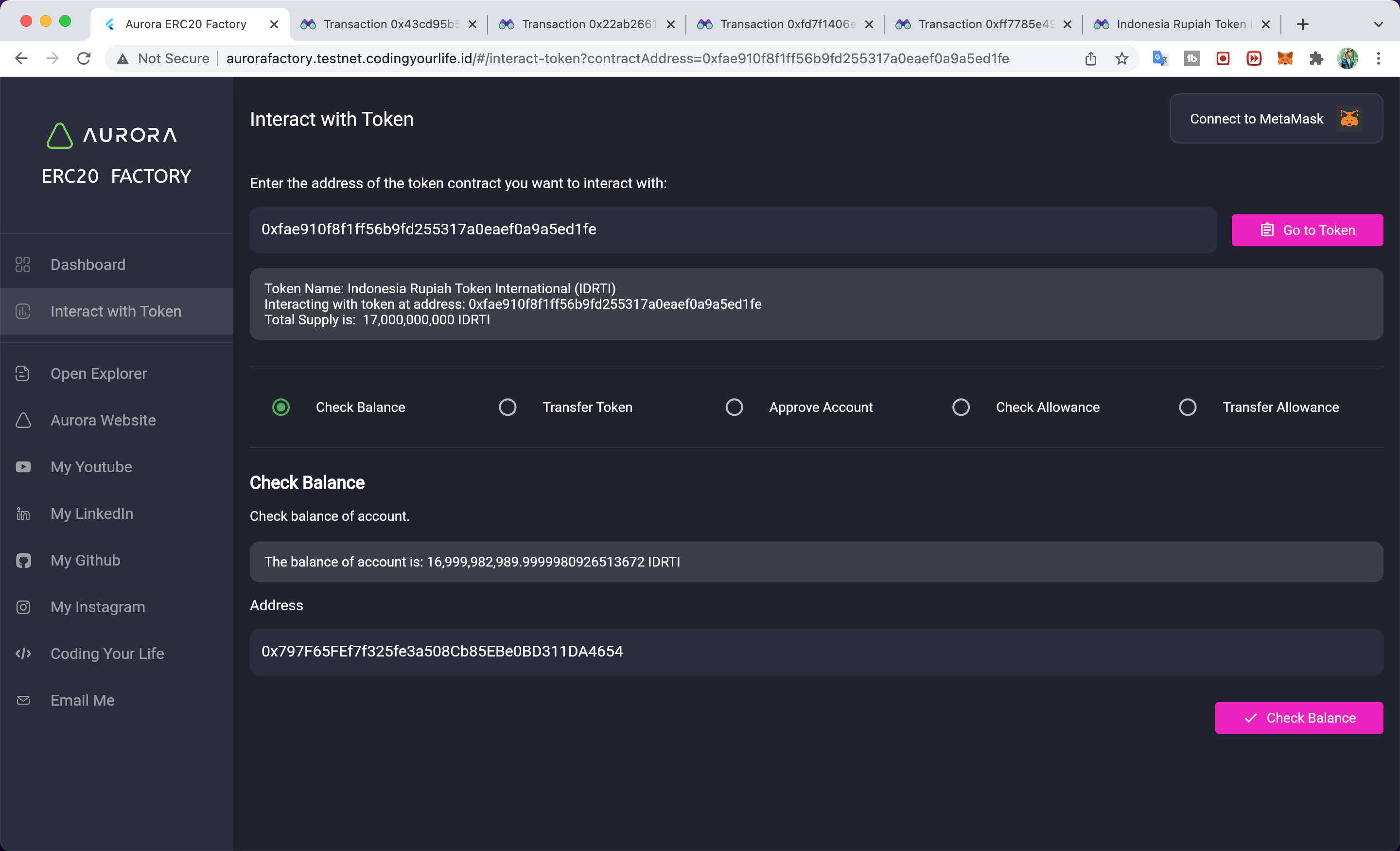
Check Balance Screen
-
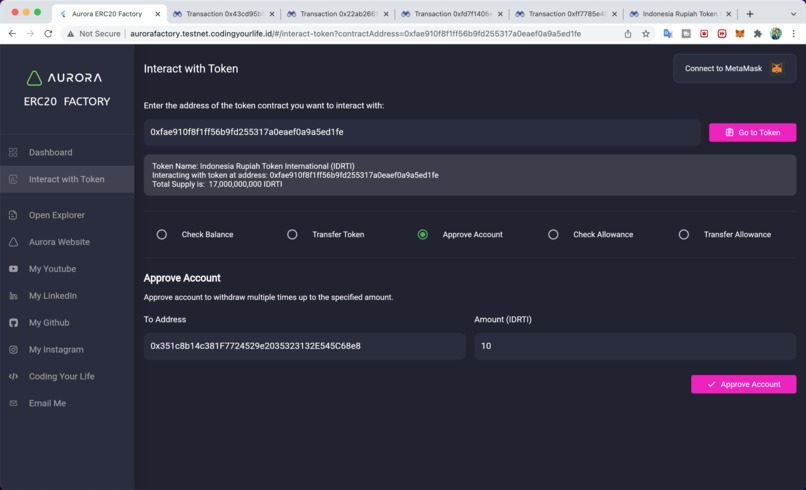
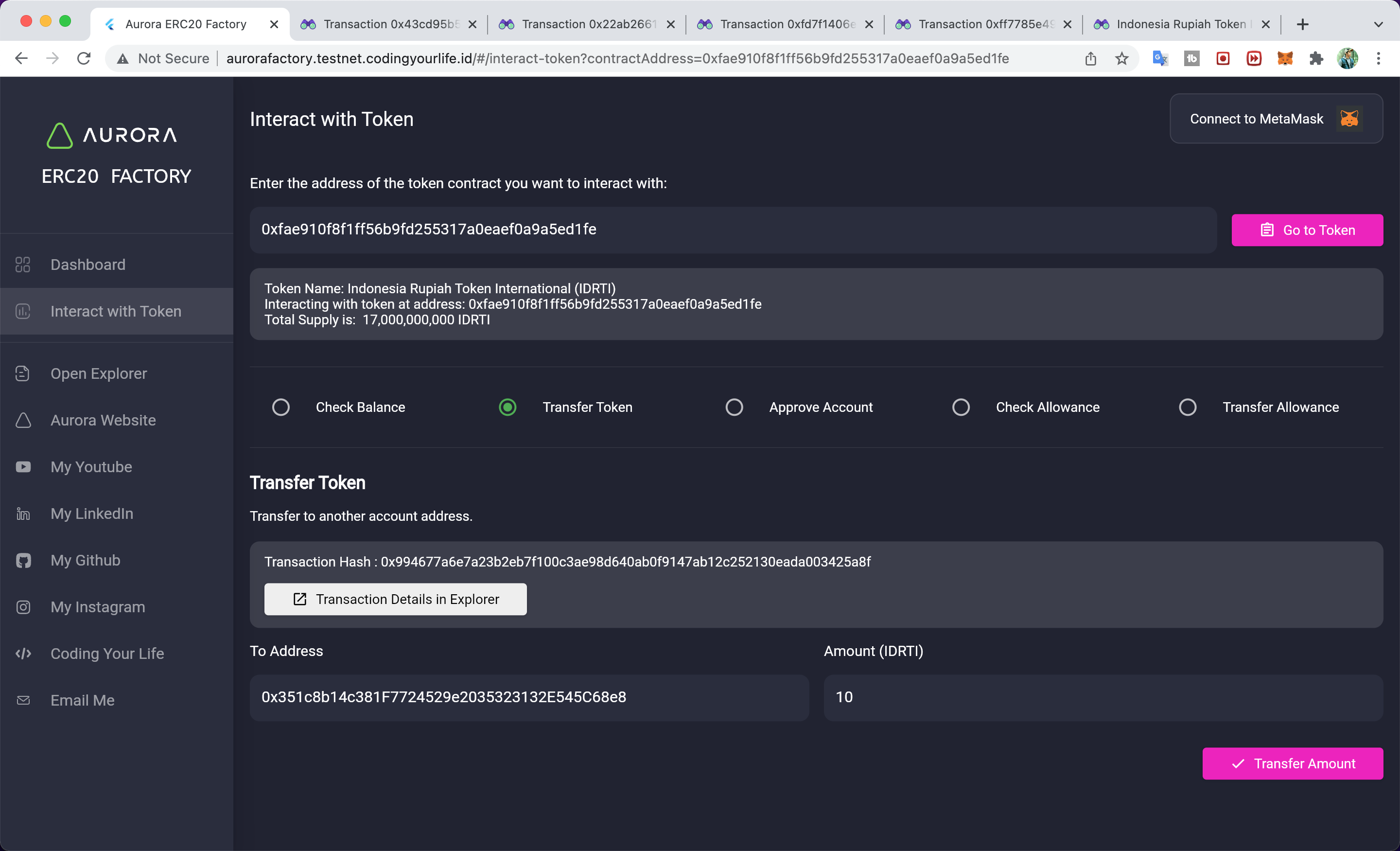
Transfer Screen
-
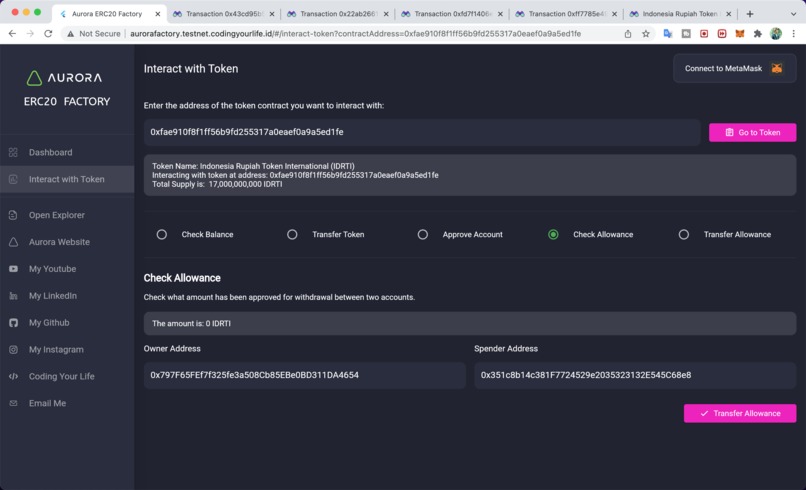
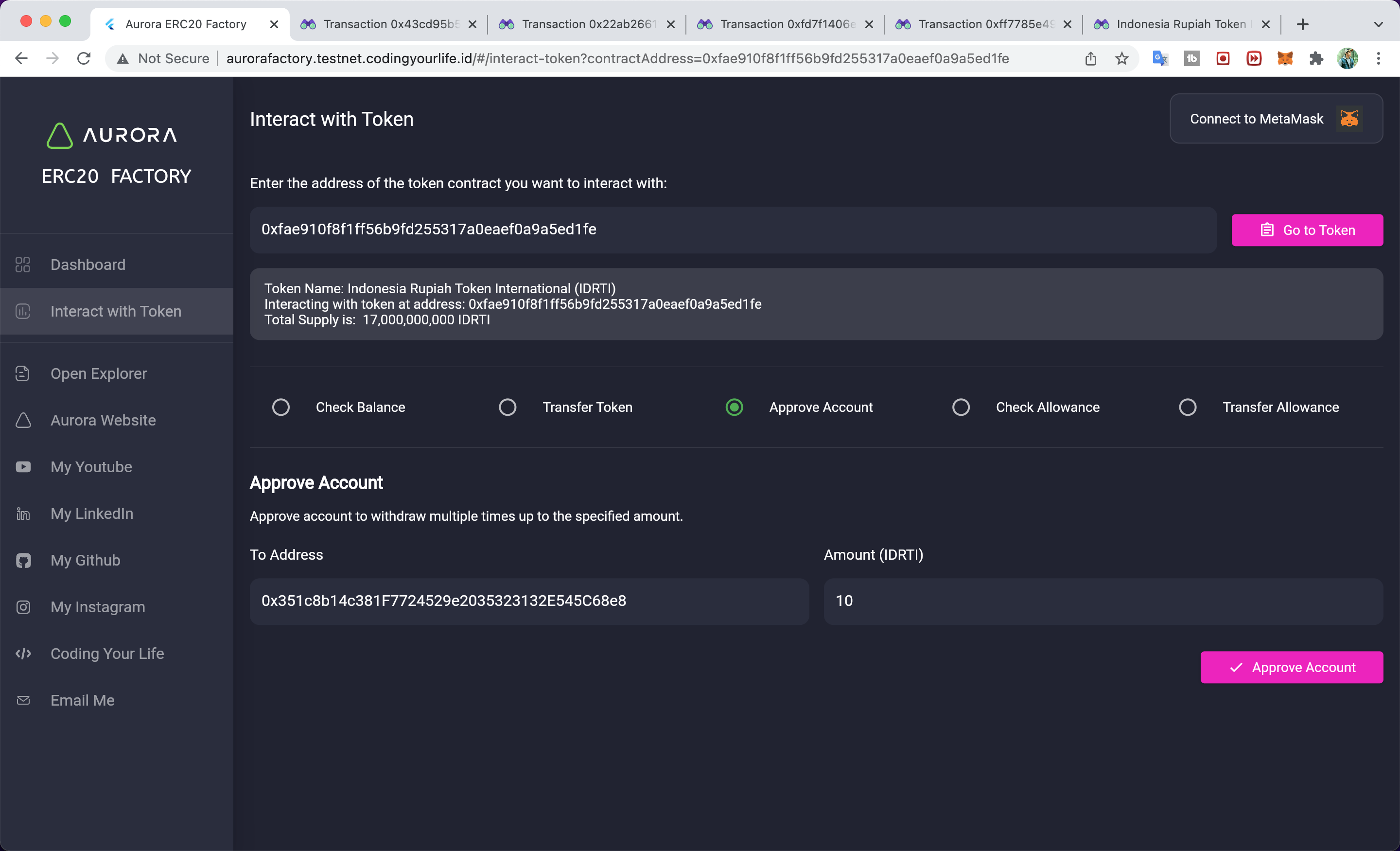
Approve Account Screen
-
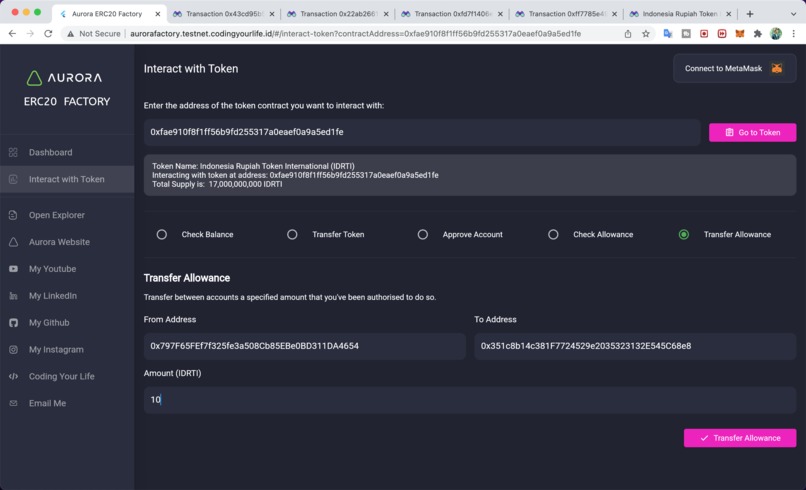
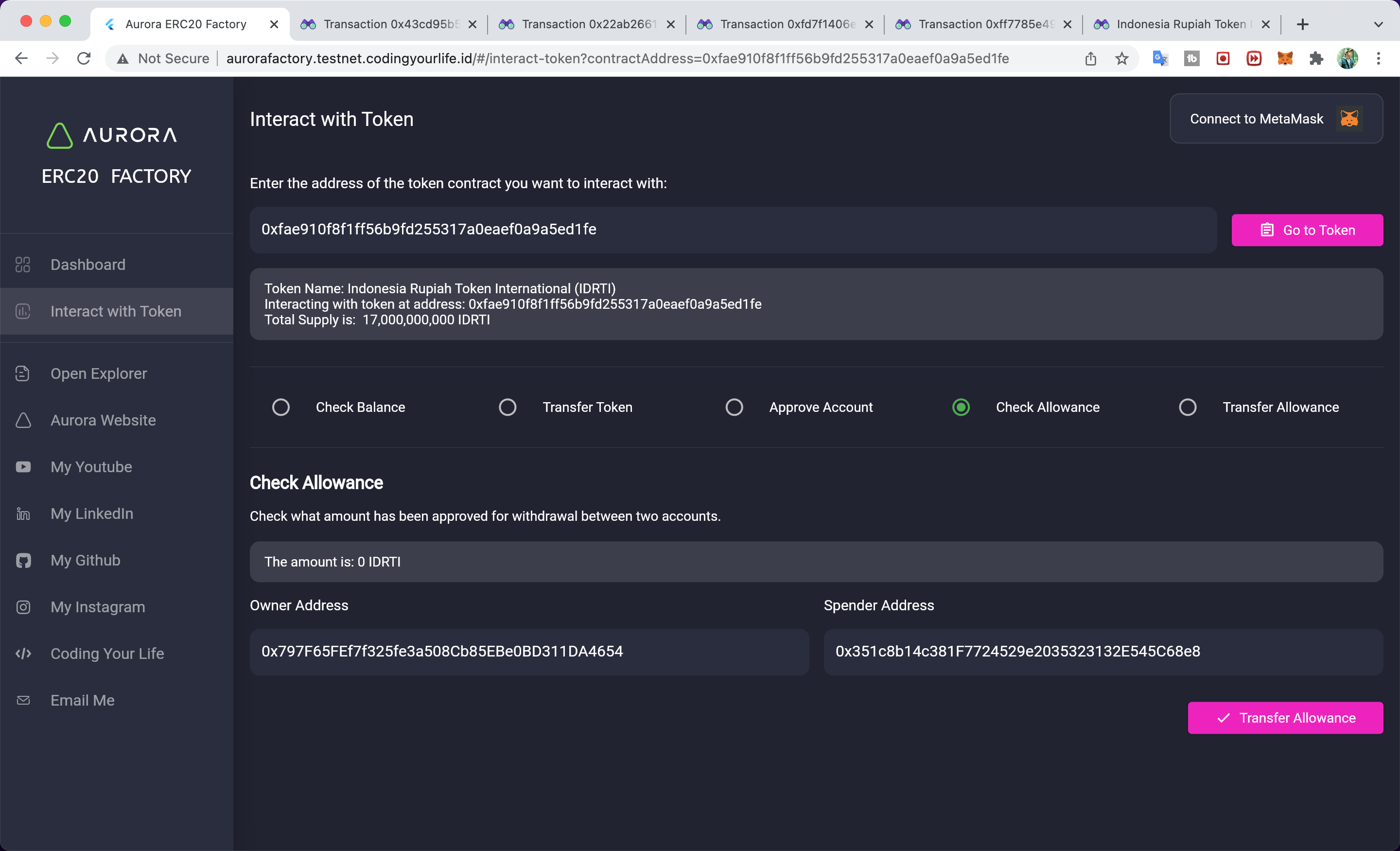
Check Allowance Screen
-
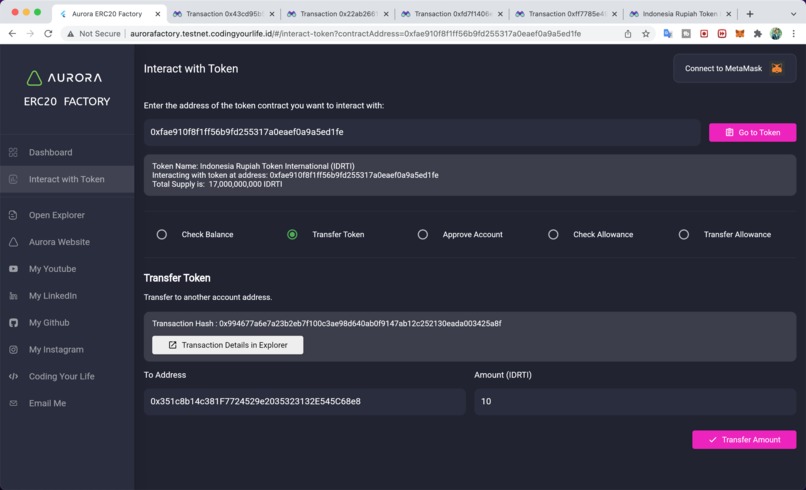
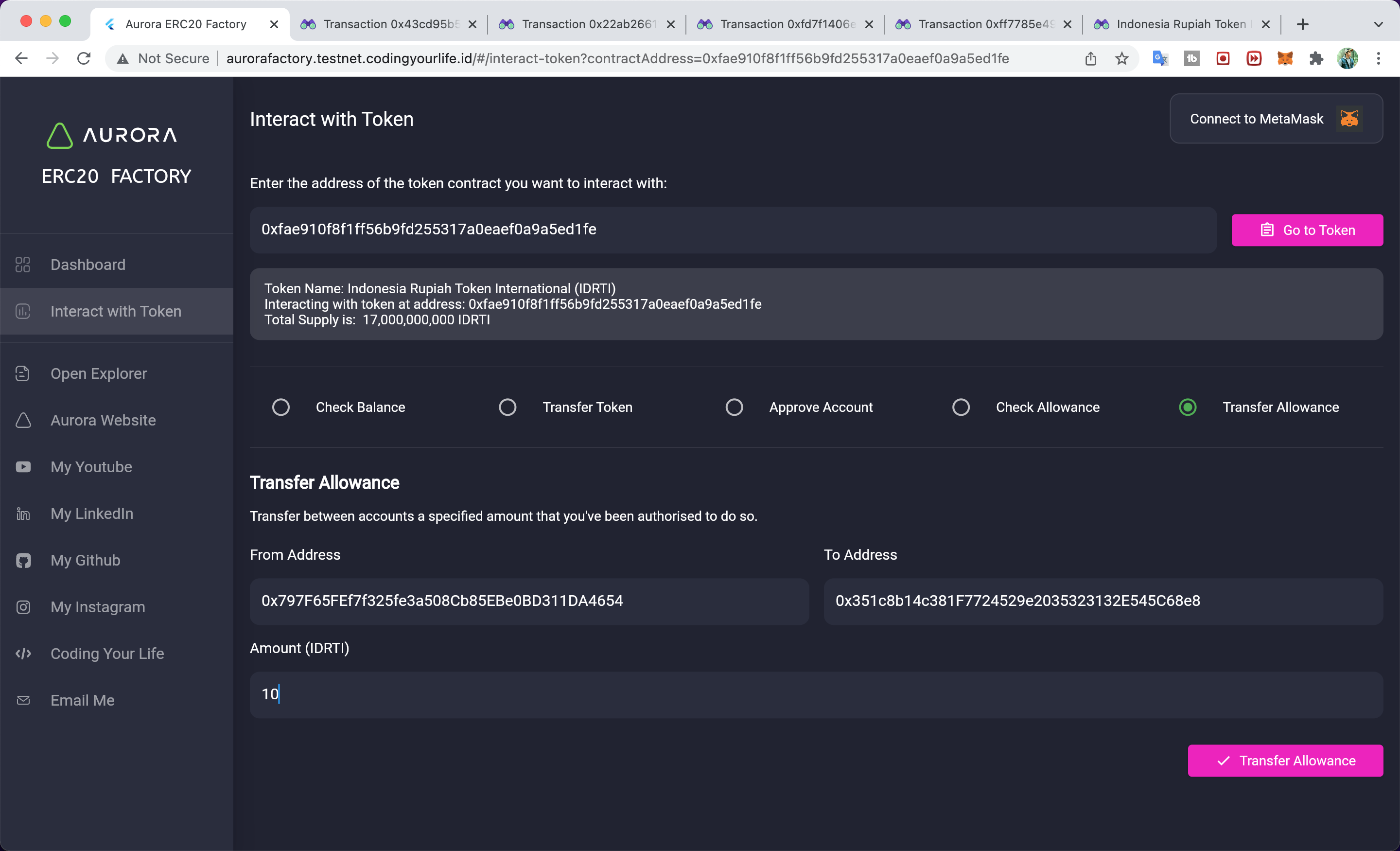
Transfer Allowance Screen
What it does
Allows creation of personalized ERC-20 tokens through an easy-to-use user interface, for people that are not familiarized with programming. Shows information of an existing ERC-20 token, given its contract address. Interacts with the smart contract directly from the DApp.
How we built it
I used Remix to create an ERC-20 token template. I compiled it and copied the ABI, bytecode and flattened source code so that I can use them in the dApp. I created a Flutter application to interact with the Aurora network in order to deploy the ERC-20 contract with the parameters provided by the user and interact with an existing contract in the blockchain.
Challenges we ran into
I created functionality to verify a contract after its creation, however, I wasn't able to get it to work in a reliable manner. I am not sure if the problem comes from the API itself or by the way I am trying to do it. Sometimes it works, especially when testing with very simple contracts, but not always. The idea was to provide different types of smart contracts and get the ABI directly from the API so that the interaction form is created dynamically. This is the way it is created right now, however, I am using always the template ABI, so only interaction with ERC-20 tokens is supported.
Accomplishments that we're proud of
I managed to create my first Flutter app and one of my first interactions with Solidity (I had only played a bit with it).
What we learned
- How to use Flutter, Solidity, & Truffle.
- How to deploy a smart contract from a web client.
- How to interact directly with the ABI in order to get its function data.
What's next for Aurora ERC20 Token Factory
- Solve the issue with the contract verification feature.
- Allow interaction with different types of smart contracts.
- Add more configuration parameters to the ERC-20 token creation.


Log in or sign up for Devpost to join the conversation.