Inspiration
In Pakistan, the literacy rate is around 58%. The one main contributing factor in such a high illiteracy ratio is out of school children. One reason for children being out of schools is the unavailability of schools in some remote areas. However, a huge percentage of children in urban and developed areas also remain out of school. Pakistan has the second-highest number of out-of-school children in the world. There are two main reasons for children of developed areas being out of school. Children do not enjoy school and get demotivated. When the same children have families who are lenient on the matter of pursuing education, they choose to leave it. Some children are the breadwinners of their family, and going to school brings financial problems for their family. They are left with no choice but to leave education.
What it does
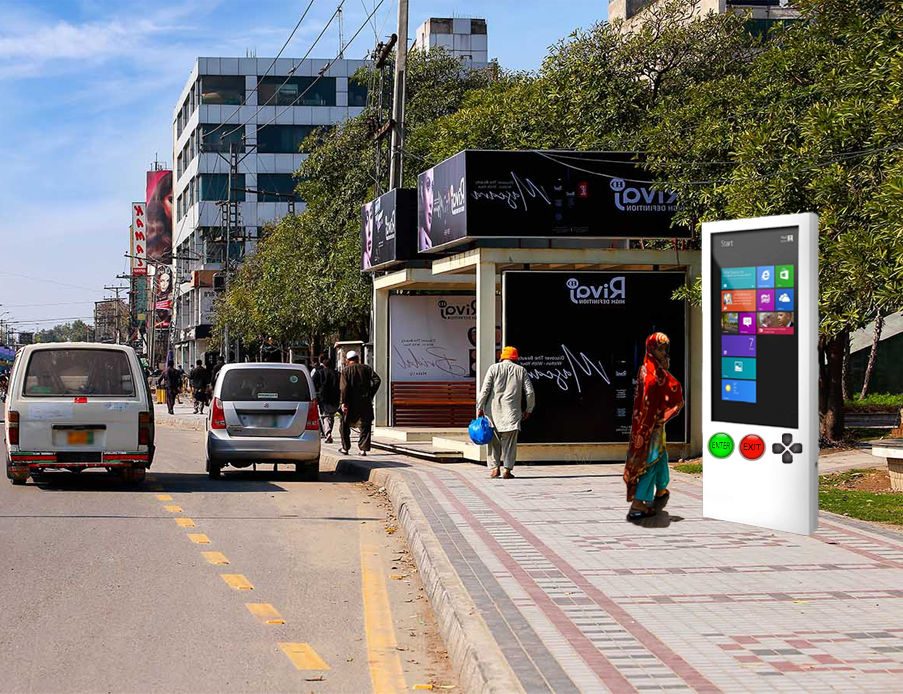
We deploy roadside screens which educate children through gamification. The street children such as those working on workshops, or ragpickers use our screens to learn things very fast. They are taught while they are getting entertainment. This way they are learning without putting financial pressure on their family.
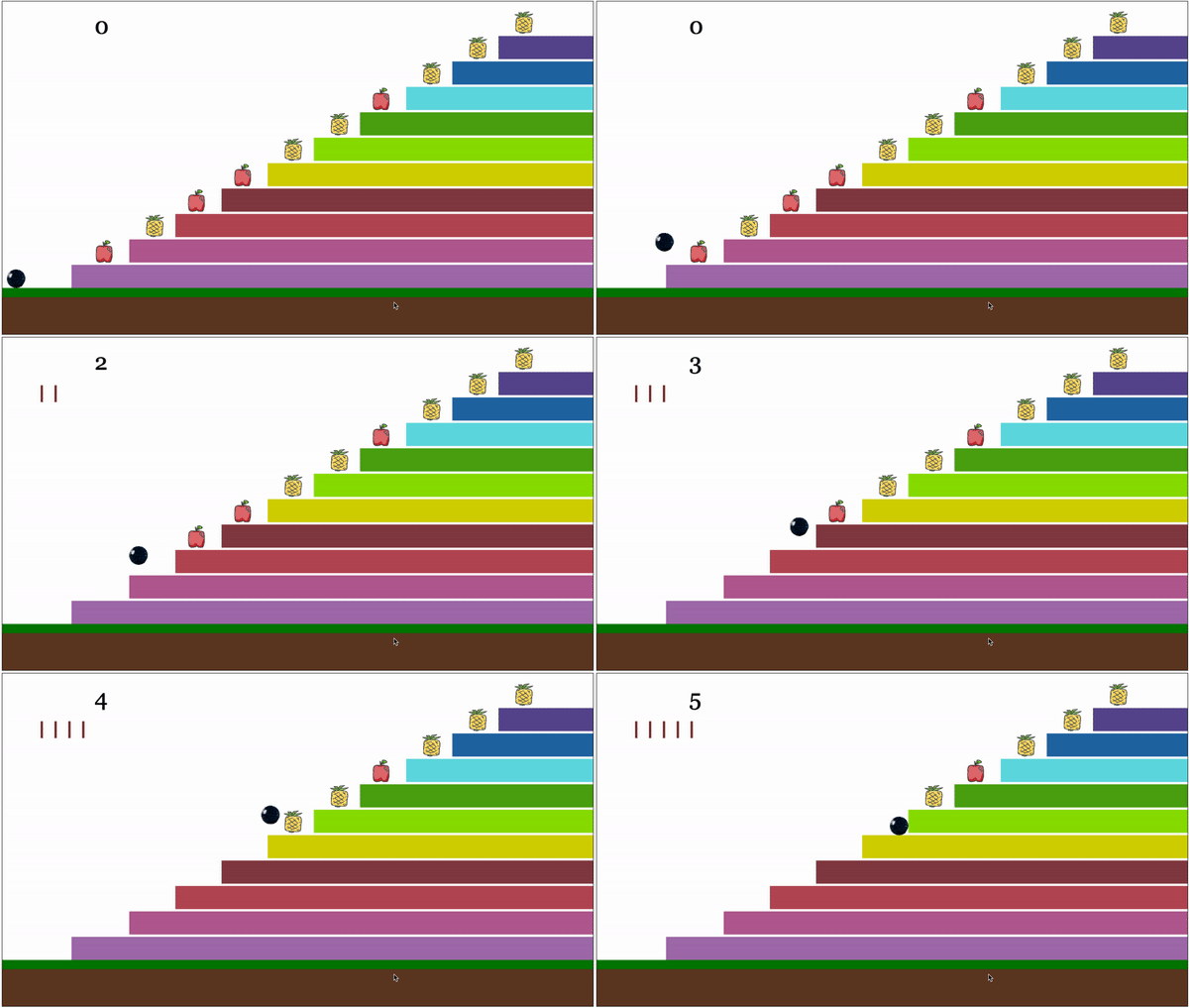
The system consists of short videos and interactive games which helps children to learn and have basic skills of reading, writing, and arithmetic. Besides the educational things, the system teaches them the basic etiquette of hygiene that other children learn from schools or the internet. The system gets activated by pressing the button or using the fingerprint sensor. The system stores the data of all the children who have already used the system and keeps a log of their progress.
When idle, the screens show advertisements. These advertisements help generate revenue which helps in the self-sustainability of the system. This also helps cover costs such as running costs, maintenance costs, and installation costs.
Following are the reasons to choose gamification for education:
- Motivate students who are out of school due to lack of interest in studies.
- Fast curve of learning for street children who work.
How we built it
We are using 32-inch LED screens as our primary displays. These displays are mounted in a billboard-support casing. The casing can be mounted on the ground and provides rain shelter to the display and other equipment involved. Attached with the display is an Android Box which will provide Android OS’s functionality to the LED display. Some specific controls required in gaming such as joystick keys, and forward/backward keys are mounted on the front side of the casing and connected to the android box. As a result of this, the games being played at the display can be controlled by the keys exposed on the casing.
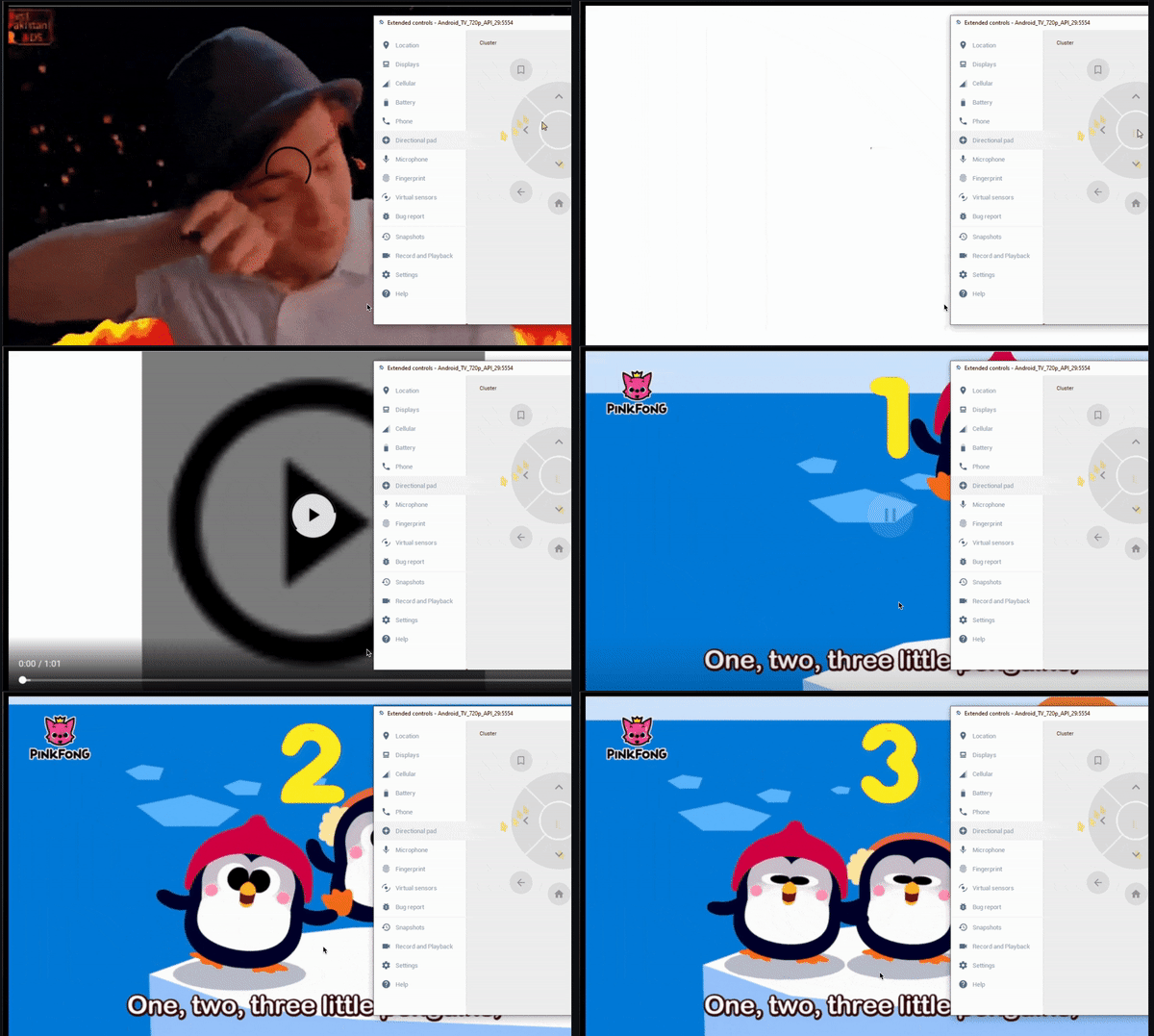
We also have an Android TV application which is installed into the system. This application has the following features. It keeps playing advertisements until someone presses a key on the casing. When any key is pressed or a finger is placed on the fingerprint sensor, a lesson is shown in the form of a video that teaches the required skills for playing the game. After the lesson ends, users are forwarded to the game where they can play the game and test their knowledge they just learned in the lesson. Upon completion of the game, or the game being idle for too long, the system turns on the advertisements again and continues them, waiting for other kids to come.
Challenges we ran into
Sustainability
Initially, the idea was of mounting screens at the roadside for educational purposes and teaching through games. However, the cost of screens, the installation costs, and maintenance costs were high, making the system not self-sustainable. Such a system had to always rely on external funding as long as it is working.
To solve this problem, we introduced the advertising model for revenue generation. As these screens are mounted at public locations, they can prove to be good locations to put up advertisements. So, we attract marketers to put their digital advertisements on our screens. This starts revenue generation which then helps our system achieve its goal of self-sustainability.
User experience
One of the many concerns was “would the children be able to use this system?” What if children would not be able to play the games despite having a user-friendly interface.
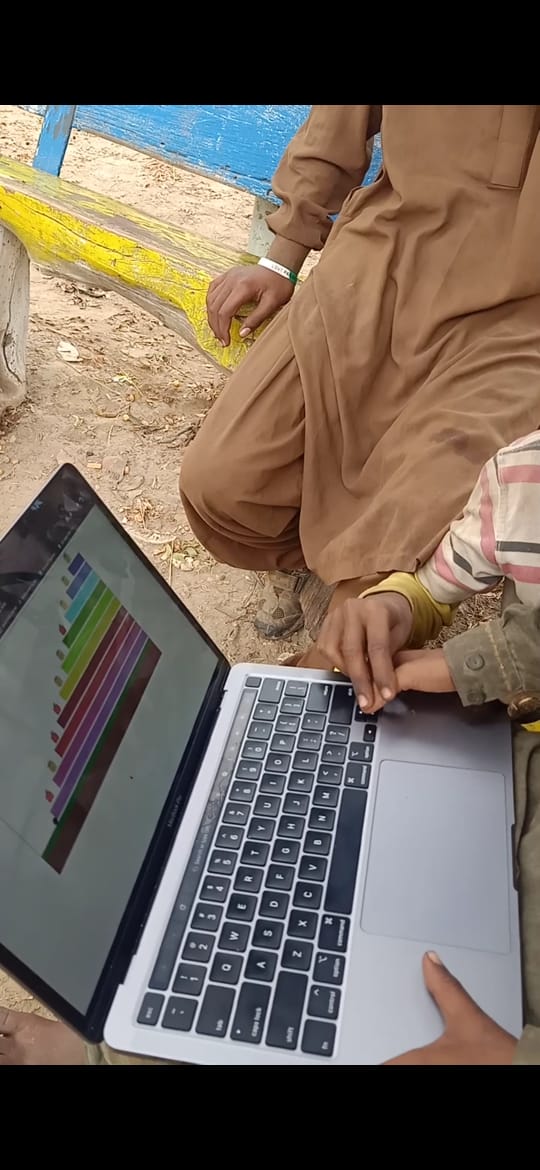
To clear this confusion, we did a survey and made some ragpicker children play the games by providing them our laptops. The children seemed to enjoy it and learned things very quickly. To support our own experiment, we looked into an experiment done in 1999 in a slum area of India. A computer was placed in the wall outside an office and children who interacted with it were observed. Many children came, despite them using the computer for the first time, they were able to browse it and learn the English words like “file”, “copy”, “edit”, etc on their own. The results of the experiment concluded that children can teach themselves if provided access to content. The details can be seen in this blog: The Hole in the Wall Project.
Prototype testing
We tested our game on some rag picker children. We met with three kids, they told us they never went to school and they will like to learn if they are provided with things where they can learn in a short time and continue their jobs too. They first watched the video on a laptop and then played the game. Two of them readily learned to use the keys and played the game very well, then they helped the third kid to play the same game. They were really excited to play the game and learned to count quickly.
Content
We started with creating our own content for teaching basic things such as counting, and colors. Also, we contacted different foundations like Knowledge Platform, Sabaq foundation for sharing their content with us to help out of school children.
Moderator
One of the main concerns raised by our team members and mentors was that such a system would need a moderator which will guide children on how to use the system and teach them skills necessary to play the games.
Adding a moderator with each unit of our system would increase the costs exponentially, so instead, we chose to include pre-recorded videos of the training and lessons which will help children understand what to do and how to play the games.
Accomplishments that we're proud of
We completed the Android TV app including an interactive game in a timeframe of 4 days after the inception of this Hackathon. We tested the application on TV devices as a prototype of our system. We made children use our system to assess how well they get along with it and we observed very good feedback.
What we learned
Self-Sustainability is the key to the long-term success of any model. Choice of content and curriculum is an important step while delivering education to out of school children. Feedback from end-users is the most important part of any product development.
Finances
The finances of the systems are listed in the given link: AuroEducative Finances
What's next for AuroEducative
The system we are deploying is targeting only out of school children. In the future, it can be expanded to the primary schools as well so children can learn fastly and enjoy while learning. It will decrease the dropout rate of children from schools.


Log in or sign up for Devpost to join the conversation.