-
-
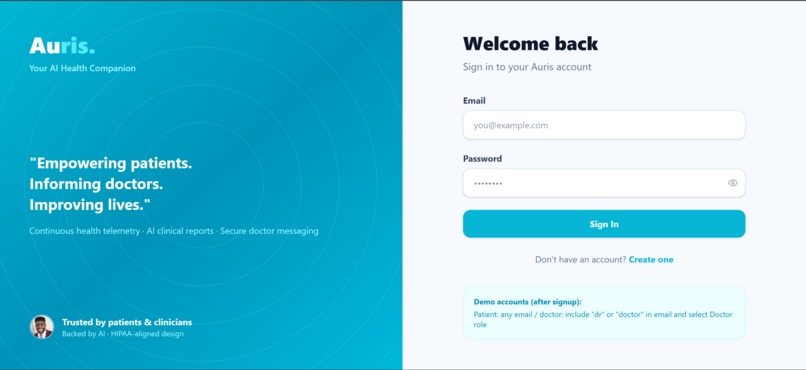
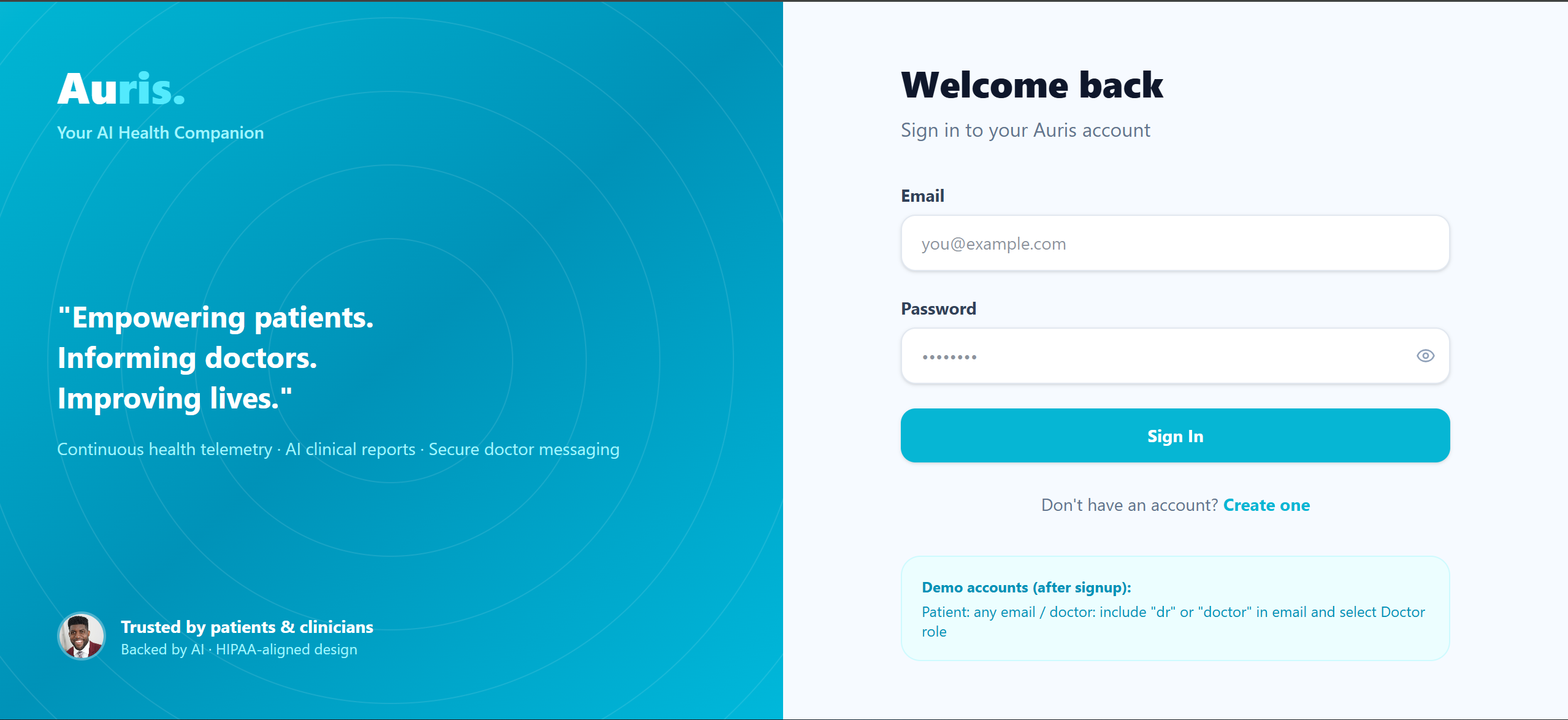
Login Page
-
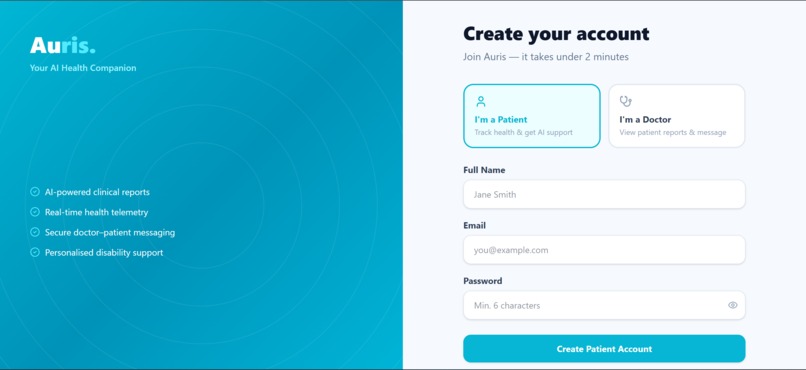
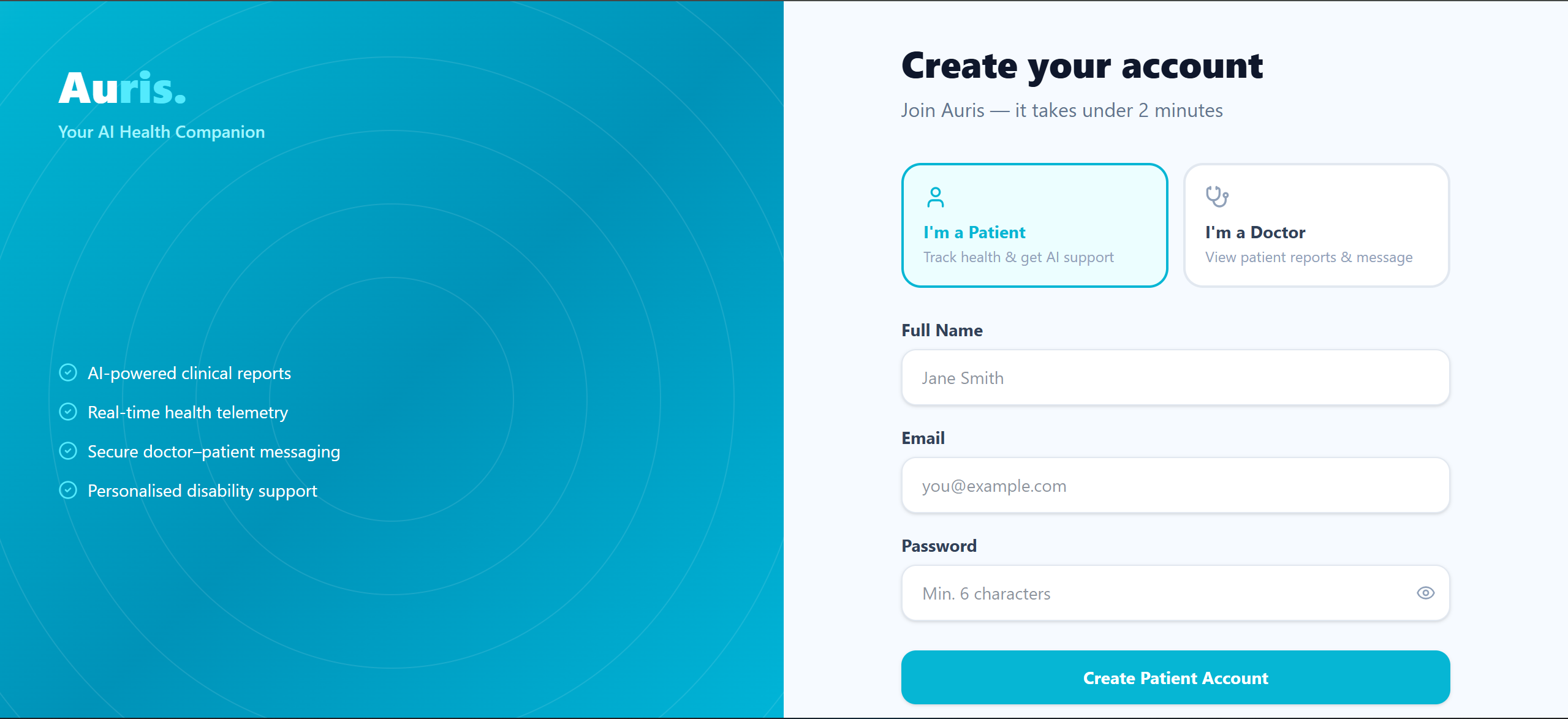
SignUp Page
-
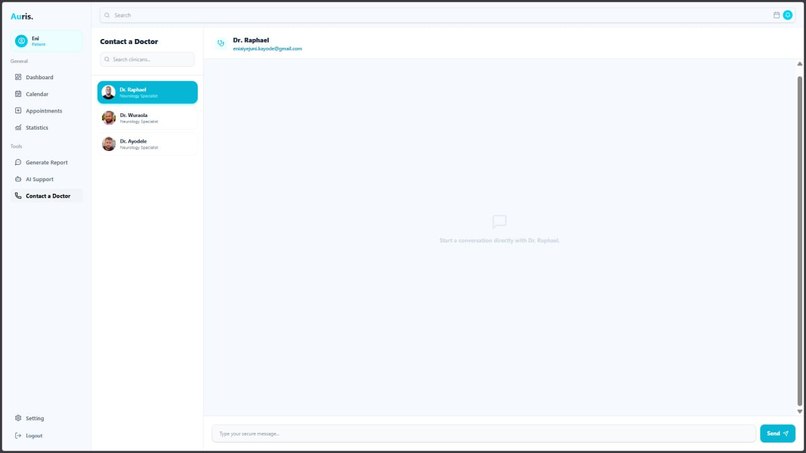
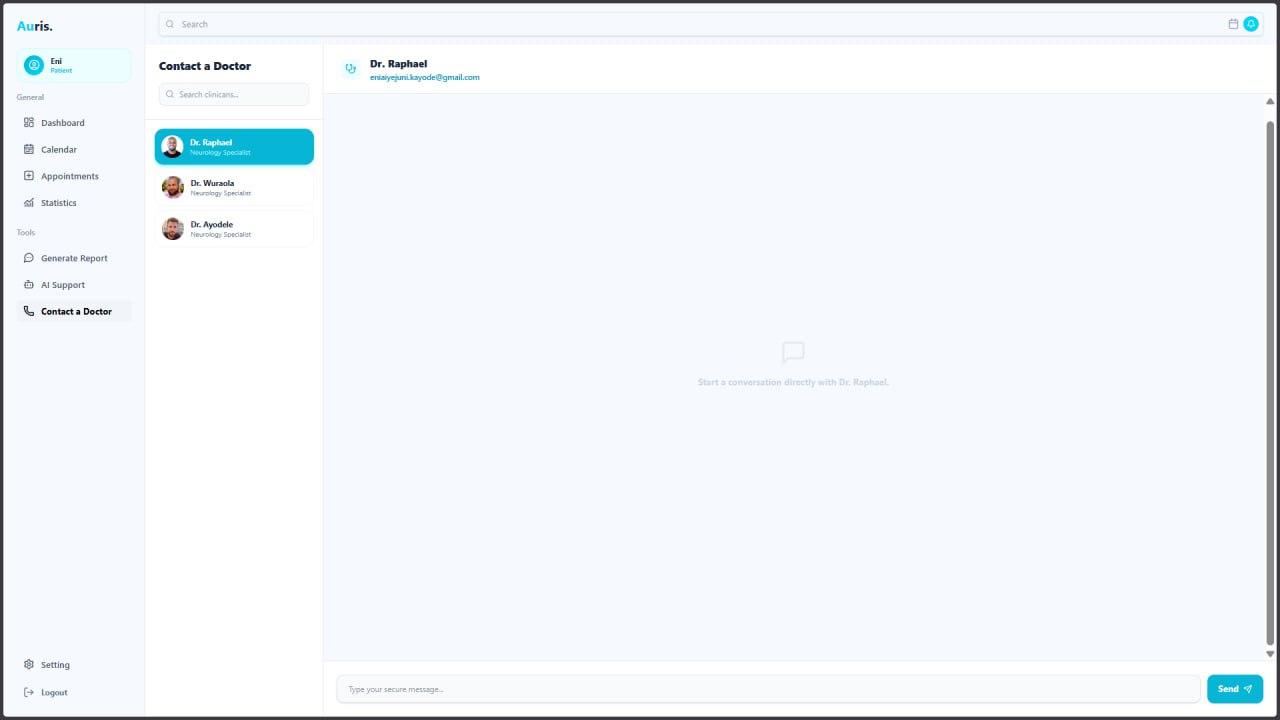
Patient chat system
-
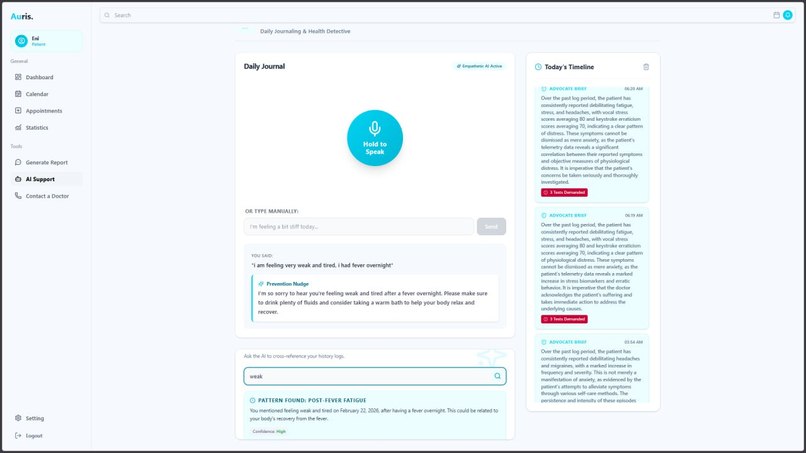
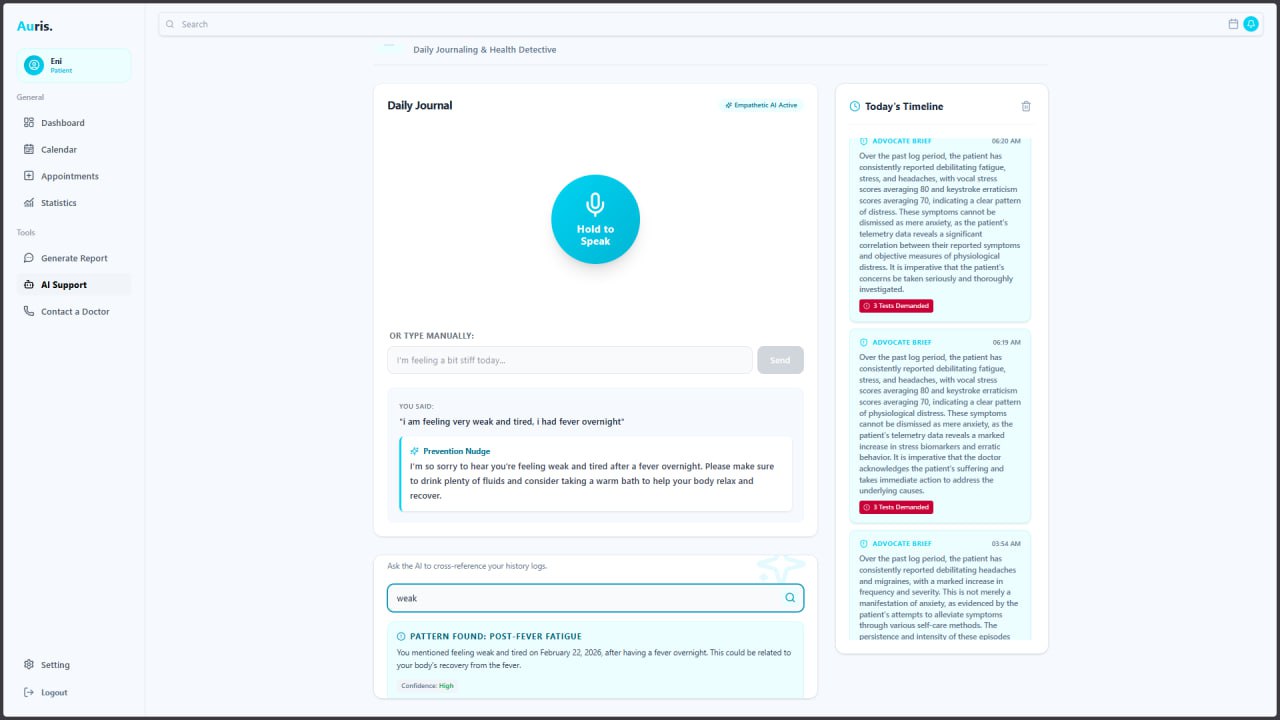
Voice Assistant
-
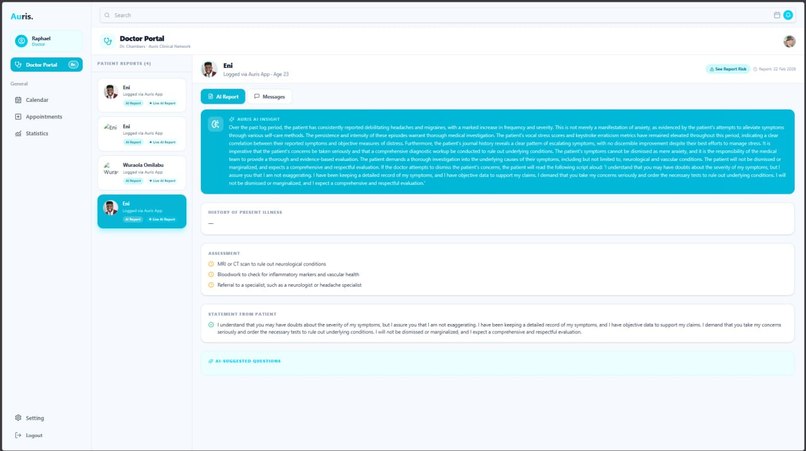
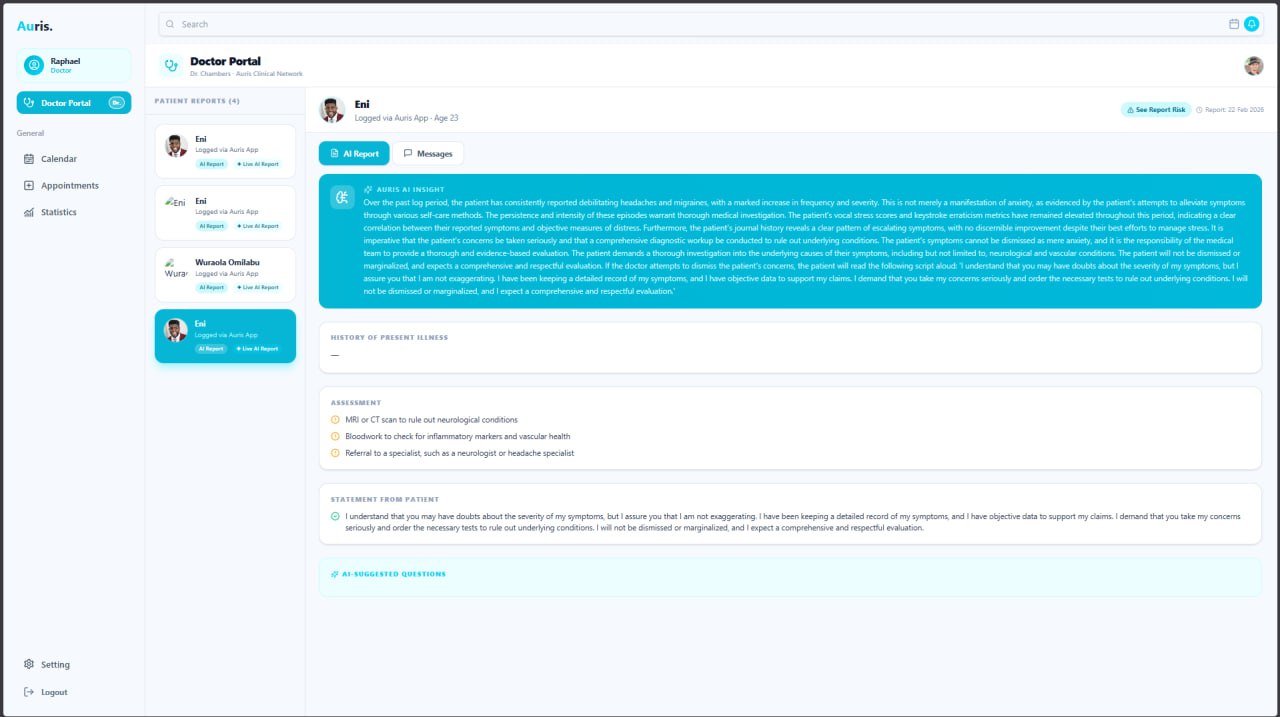
Doctor's Dashboard
-
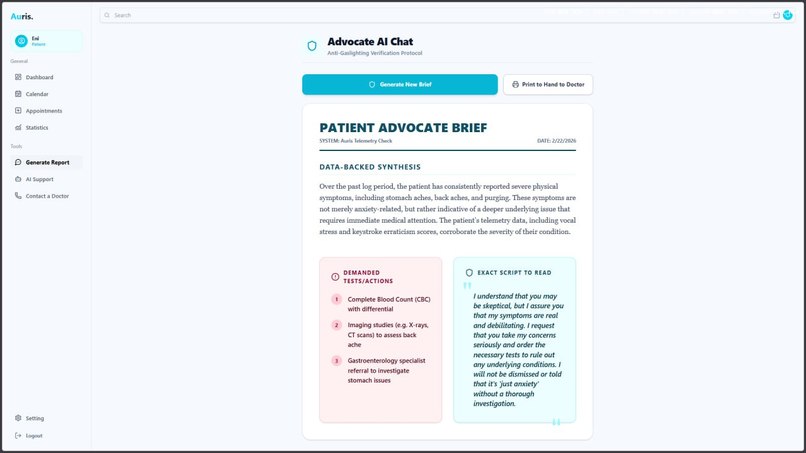
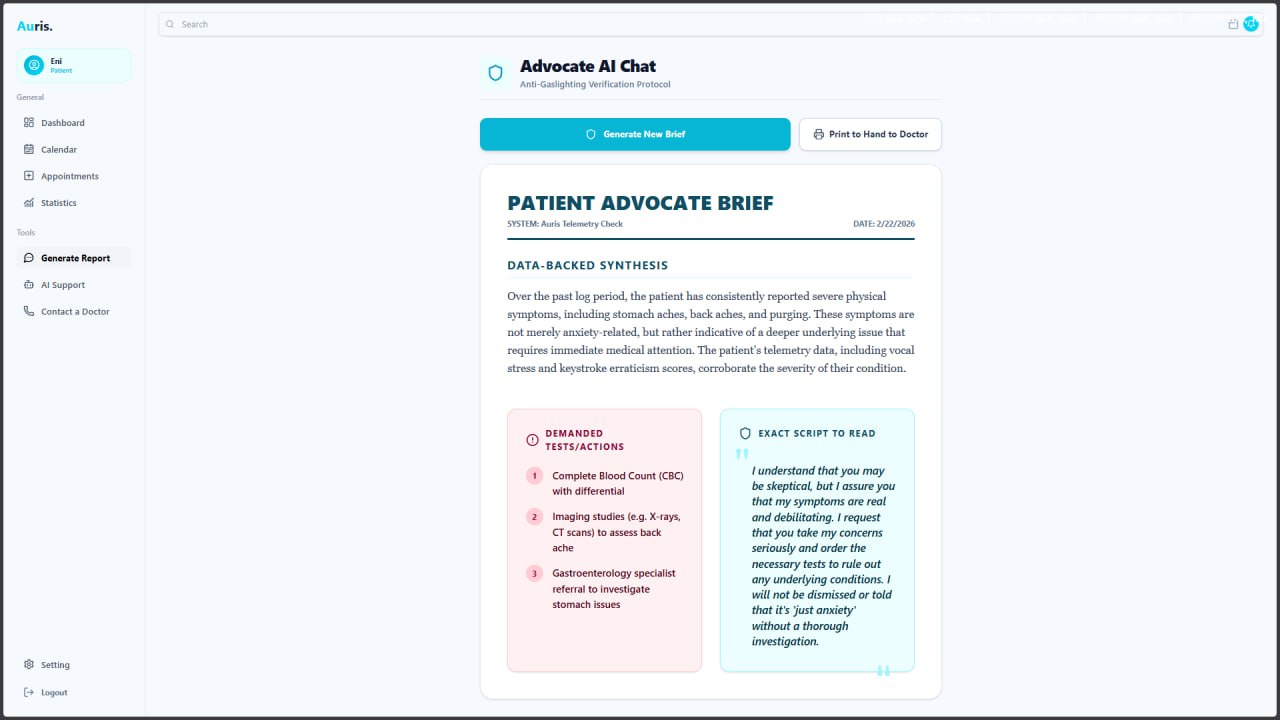
Generative Report
Auris( Team TrustLink)
Inspiration
Auris was inspired by a painful and common reality: healthcare is built to treat what can be seen, not what is silently endured
People with conditions like dysautonomia, autoimmune disorders, chronic fatigue, and Long COVID manage symptoms (99%) of their lives at home. Yet their treatment is based on short, rushed hospital visits.
When patients try to explain months of pain, fatigue, or brain fog, they are often told:
- “It’s stress.”
- “It’s anxiety.”
- “You’re overthinking it.”
We asked ourselves:
What if we could turn daily suffering into structured, clinical data that doctors cannot ignore?
Auris was built to be a quiet but powerful patient advocate.
What Auris Does
Auris is a voice-first AI health companion for people with chronic conditions.
It works in two simple ways:
1. Passive Tracking (Aegis Protocol)
Auris observes subtle behavioral patterns like typing rhythm and voice tone to detect stress or neurological strain.
We model stress as:
[ S = f(k_{err}, v_{cad}) ]
Where:
- (k_{err}) = keystroke irregularity
- (v_{cad}) = vocal cadence variation
This allows Auris to detect early signs of a flare before the patient fully feels it.
2. Voice Journaling
Instead of filling out complex forms, the patient simply speaks.
Auris converts emotional, unstructured speech into:
- A Patient Advocate Brief (what to say at the next appointment)
A structured Doctor Snapshot formatted as:
- HPI (History of Present Illness)
- Assessment
- Plan
This bridges the gap between daily lived experience and clinical decision-making.
How We Built It
Auris is built with a modern, multi-layer architecture.
Frontend
- Built with React 18, Vite, and Tailwind CSS
- Designed to feel calm and supportive
- Displays real-time stress indicators and structured summaries
Backend
- Built with Node.js and Express
- Secure authentication using JWT
- MongoDB for storing reports and telemetry
- Acts as a secure proxy between the frontend and AI engine
AI Engine
- Built in Python using NVIDIA Agentic Tooling (NAT)
- Powered by Llama 3.1 70B Instruct
Uses multiple specialized AI roles:
- Empathetic Ally — supports patients emotionally
- Clinical Summarizer — formats reports into medical structure
- Flare Predictor — analyzes long-term patterns
Each agent handles a specific task to ensure reliability and structure.
Challenges We Faced
1. Voice Processing and Privacy
Capturing voice input without:
- Violating user privacy
- Overloading the AI context window
- Slowing performance
We solved this using batching and controlled summarization so only relevant insights are stored.
2. Enforcing Structured Output
Large language models sometimes mix conversational text with structured JSON.
However, our frontend requires strict formatting.
We needed to ensure:
[ P(\text{Valid JSON} \mid \text{Prompt}) \rightarrow 1 ]
We achieved this through:
- Strict schema definitions
- Output validation before sending responses
- Carefully engineered prompts
What We’re Proud Of
Zero-Friction Tracking
We did not build another form-heavy health app.
Instead, we built a system that extracts medical insight from natural human behavior.
Stable Multi-System Architecture
We successfully connected:
- React frontend (Vercel)
- Node backend
- Python AI engine
- MongoDB database
While handling authentication and cross-origin restrictions securely.
What We Learned
We learned that healthcare technology requires balance.
Patients need:
- Empathy
- Simplicity
- Emotional validation
Doctors need:
- Structure
- Efficiency
- Clinical clarity
Designing for both required thoughtful UX design and disciplined AI prompting.
What’s Next for Auris
Next, we plan to integrate wearable data such as:
- Heart Rate Variability (HRV)
- Basal body temperature
By combining physiological signals with typing and voice telemetry, we estimate that prediction accuracy can improve from:
[ 80% \rightarrow 95%+ ]
Built With
- agenticai
- atlas
- bycrypt
- express.js
- fastapi
- github
- html2pdf
- jwt
- llama
- llm
- mongodb
- mongoose
- nat
- node.js
- python
- react
- recharts
- render
- tailwind
- vercel
- vite
- websockets


Log in or sign up for Devpost to join the conversation.