-
-
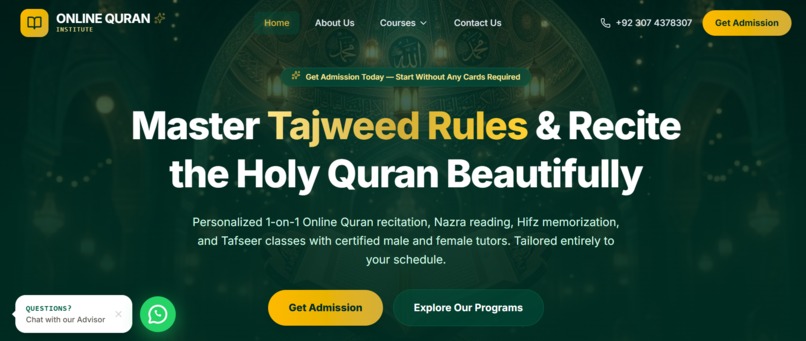
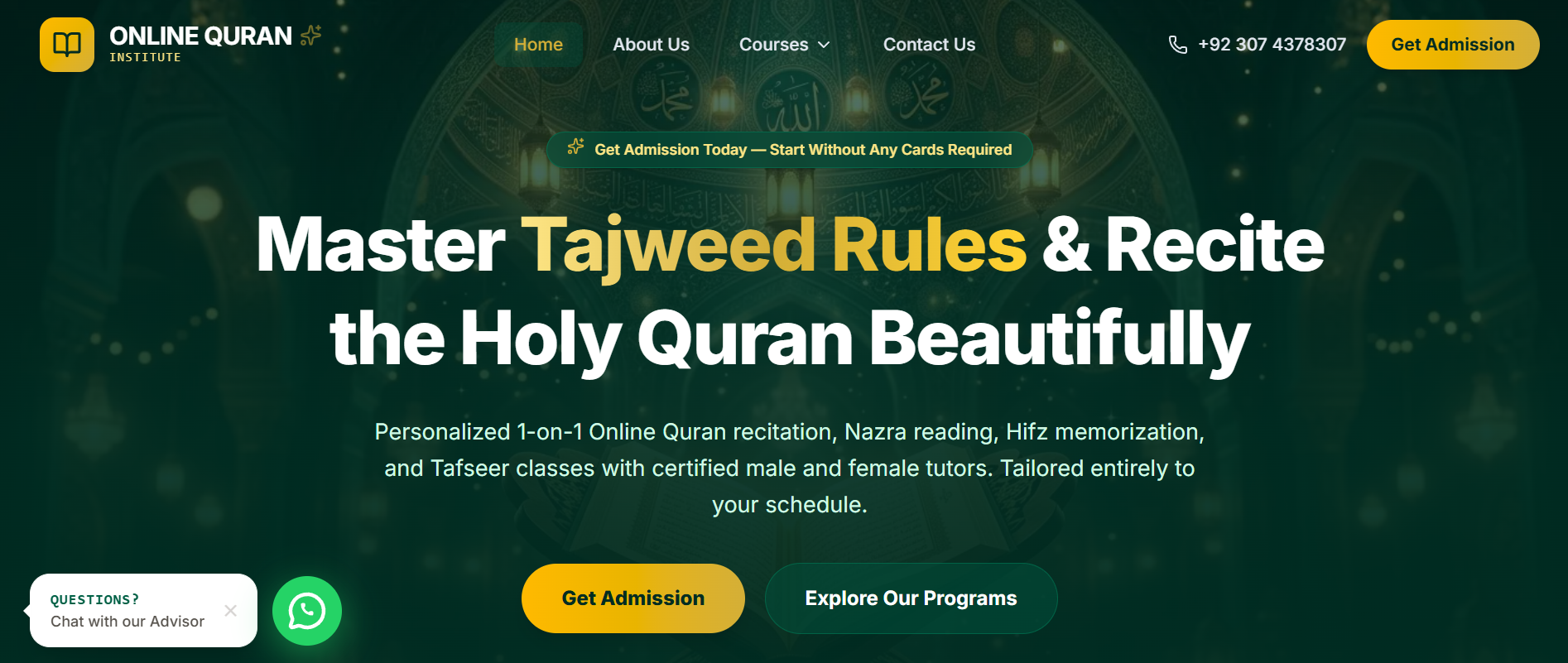
Hero Section
-
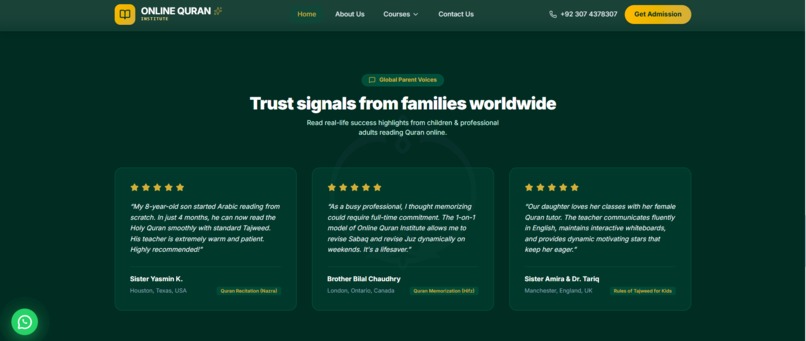
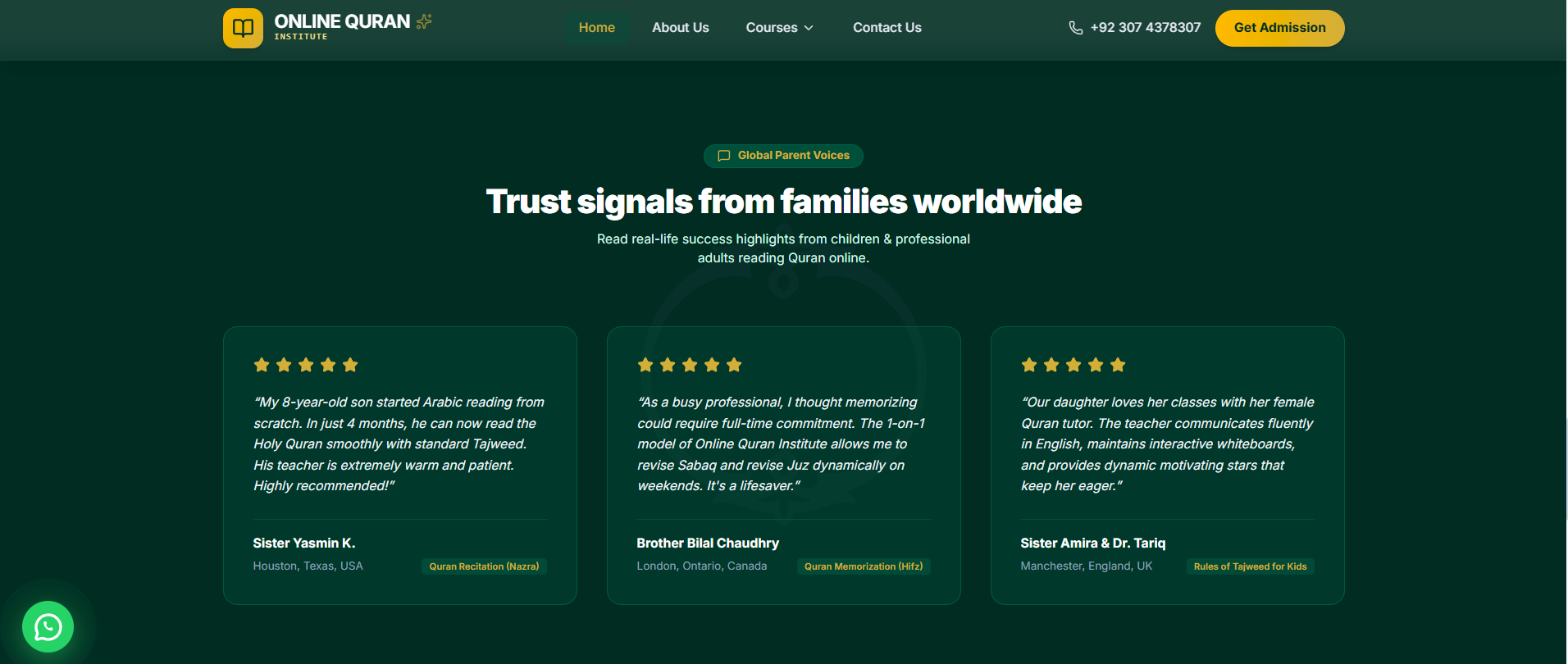
Testimonials section
-
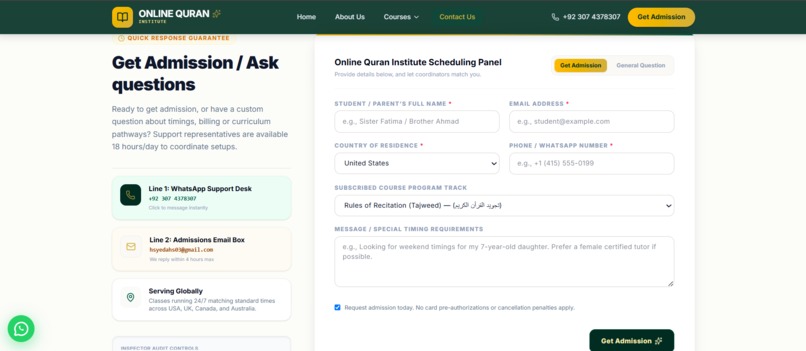
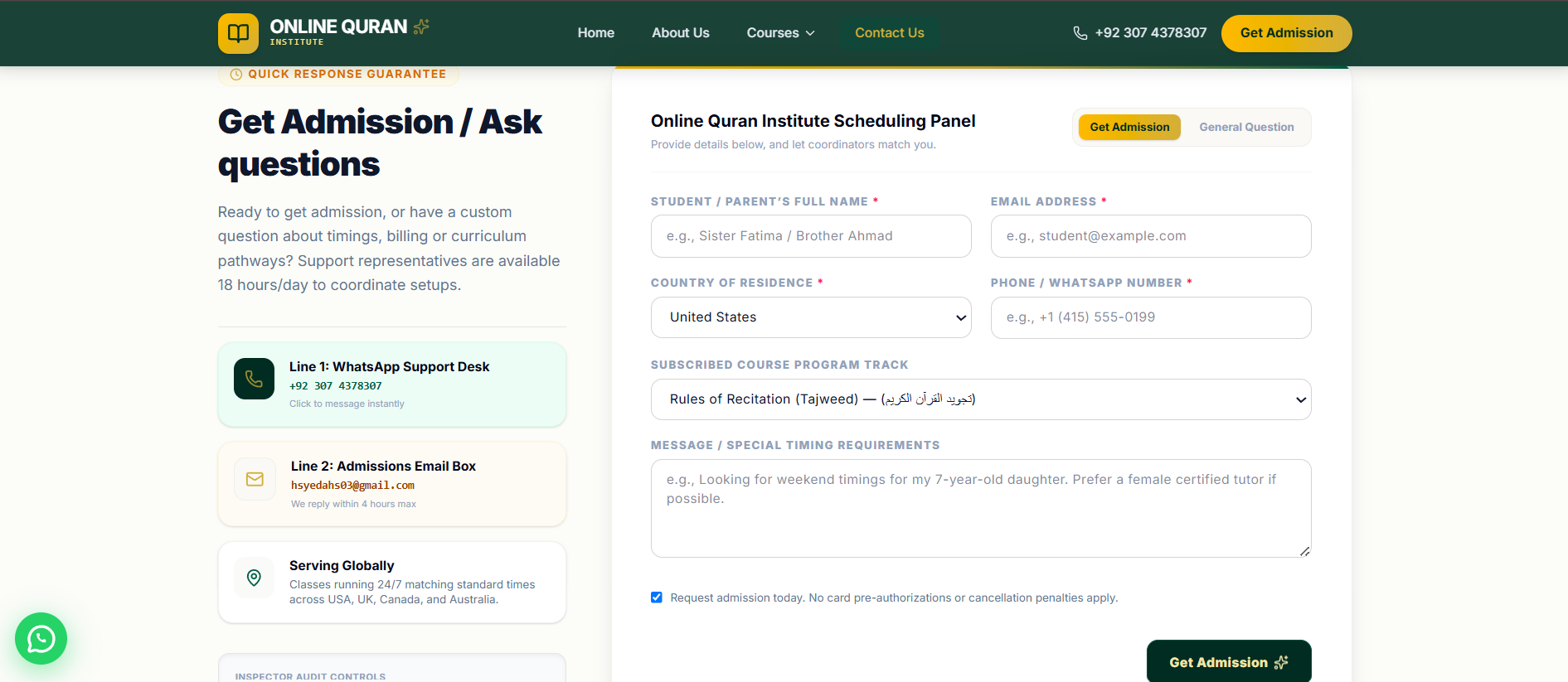
Admission Section
-
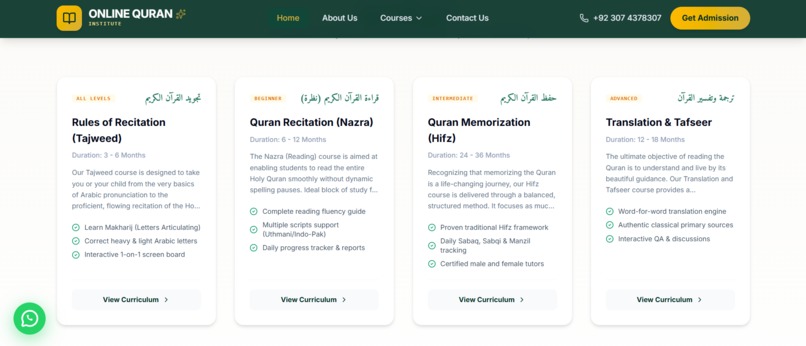
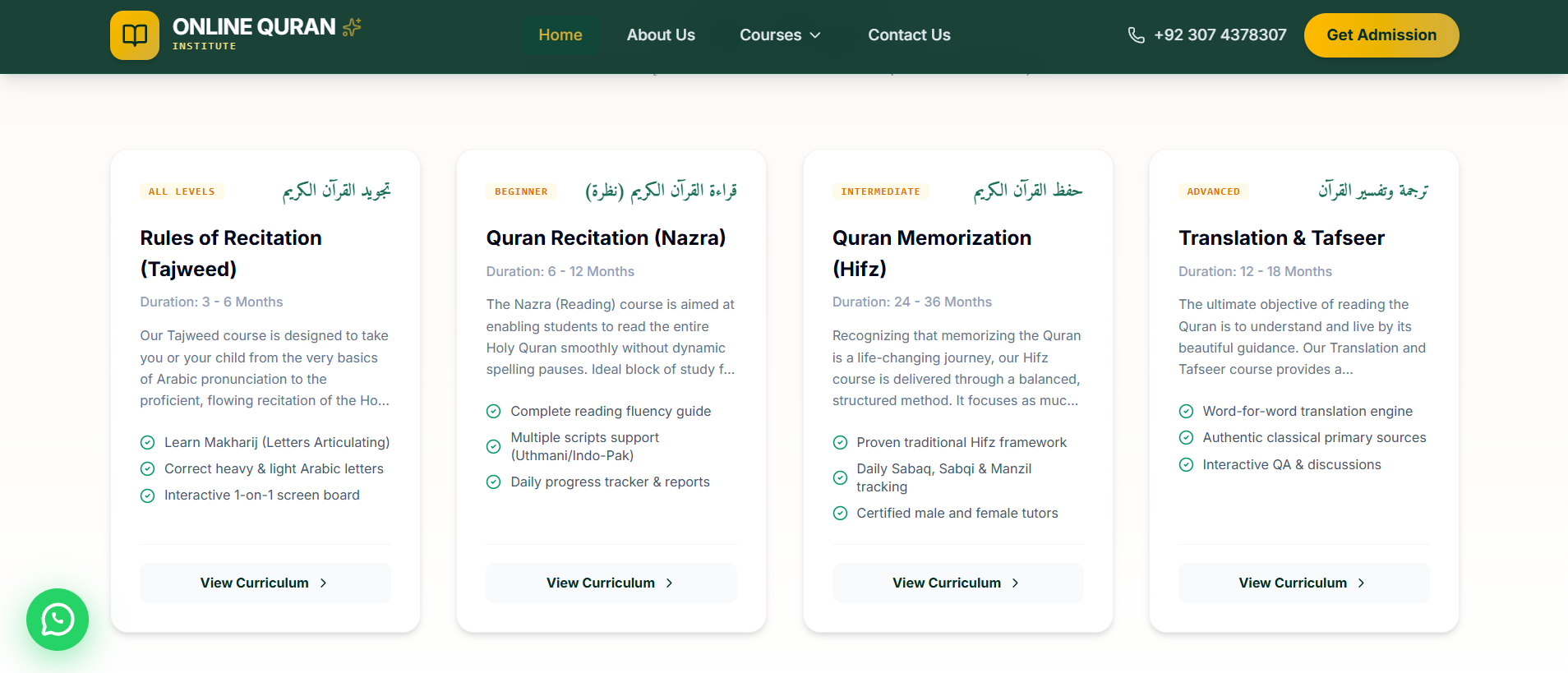
Courses Section
Inspiration
The inspiration behind Online Quran Institute came from the need for accessible, structured, and trustworthy Quran education in the digital age. Many people want to learn Quran, Tajweed, recitation, memorization, and Tafseer but struggle to find qualified teachers, flexible schedules, and a reliable learning platform.
I wanted to create a modern online Quran learning experience that connects students with qualified tutors while making Quran education more accessible regardless of location, schedule, or background.
What it does
Online Quran Institute is a modern digital platform for learning the Holy Quran online.
The platform provides:
- 📖 Quran learning and recitation programs
- 🎙️ Nazra and Quran reading classes
- 🕌 Tajweed and pronunciation courses
- 🧠 Hifz and Quran memorization programs
- 📚 Tafseer and Islamic learning
- 👨🏫 Qualified male and female tutors
- 🌍 Flexible worldwide learning options
- 📱 WhatsApp-based communication for easy admission and support
- 📝 Online admission/application forms
- 📋 Detailed course information and syllabi
- 💬 Direct contact and student inquiry support
- 📱 Responsive experience across devices
My goal is to make starting Quran education as simple as discovering a course, submitting an admission request, and connecting with the institute.
How I built it
I built the platform using a modern web development stack with a focus on performance, responsiveness, and a professional user experience.
Technology used:
- Google AI Studio — AI-assisted development, iteration, and implementation
- TypeScript / TSX — Core application development
- React-based frontend architecture — Interactive and reusable UI components
- Supabase — Backend services and data management
- GitHub — Source-code management and version control
- Vercel — Deployment and production hosting
I designed the interface around a clean Islamic visual identity, combining deep green, gold accents, spacious layouts, responsive components, and clear calls-to-action.
I developed the website with a mobile-first mindset so students and parents can easily access courses, contact the institute, and submit admission information from different devices.
Challenges I ran into
One of the biggest challenges was balancing traditional Quranic education with a modern digital experience.
I needed the platform to feel respectful and trustworthy while still being visually engaging and easy to navigate.
Other challenges included:
- Designing an Islamic-inspired interface without making it feel outdated
- Structuring multiple Quran courses and their information clearly
- Creating a simple admission process
- Connecting the frontend with Supabase
- Making the website responsive across different screen sizes
- Maintaining a fast and smooth user experience
- Integrating WhatsApp communication into the admission/support workflow
- Iterating quickly while developing with AI-assisted tools
- Deploying and testing the production version through Vercel
Accomplishments that I'm proud of
I am proud that I transformed the idea of an online Quran institute into a functional, deployed, and publicly accessible web platform.
Some accomplishments I am particularly proud of are:
- 🚀 Successfully deployed the website on Vercel
- 🔗 Connected the project with GitHub for development and version control
- 🗄️ Integrated Supabase for backend/data functionality
- 🎨 Created a professional and modern Islamic visual identity
- 📱 Built a responsive experience for different devices
- 📚 Organized Quran programs into clear learning paths
- 📝 Created a structured online admission process
- 💬 Added direct WhatsApp communication for easier student support
- 🤖 Used Google AI Studio to accelerate development and iteration
- 🌍 Created a platform that can potentially serve students internationally
Most importantly, I created something that goes beyond a static website — it provides a foundation for a complete digital Quran learning ecosystem.
What I learned
This project taught me that building a meaningful product is not only about writing code. It is also about understanding users, simplifying their journey, and designing technology around a real-world problem.
I learned:
- How to use AI-assisted development effectively
- How to structure a modern TypeScript/TSX web application
- How to integrate Supabase into a real project
- How to manage development through GitHub
- How to deploy and maintain a production website with Vercel
- How important responsive design is for real users
- How to structure an admission workflow around user needs
- How to combine traditional educational content with modern UX
- How to rapidly iterate on a product using AI tools
The biggest lesson I learned was that AI becomes much more powerful when it is used as a development partner rather than simply a code generator.
What's next for Online Quran Institute
My next goal is to evolve Online Quran Institute from a website into a complete online Quran learning platform.
Future plans include:
- 👤 Student and parent accounts
- 📊 Personalized student dashboards
- 👨🏫 Tutor dashboards and management tools
- 📅 Automated class scheduling
- 🎥 Integrated live Quran classes
- 📝 Online assignments and assessments
- 📈 Student progress tracking
- 🏆 Quran memorization and Tajweed progress tracking
- 🔔 Automated class and lesson notifications
- 💳 Online payment and subscription management
- 🌐 Multilingual support
- 🤖 AI-powered Quran learning assistance
- 📖 Interactive Quran reading and practice tools
- 📊 Admin analytics and institute management
- 🔐 Stronger authentication, security, and role-based access
My long-term vision is to build a trusted digital ecosystem where students anywhere in the world can find a qualified teacher, enroll in a program, learn consistently, track their progress, and strengthen their connection with the Quran.
Built With
- css3
- github
- google-ai-studio
- html5
- javascript
- react
- supabase
- tsx
- typescript
- vercel


Log in or sign up for Devpost to join the conversation.