-
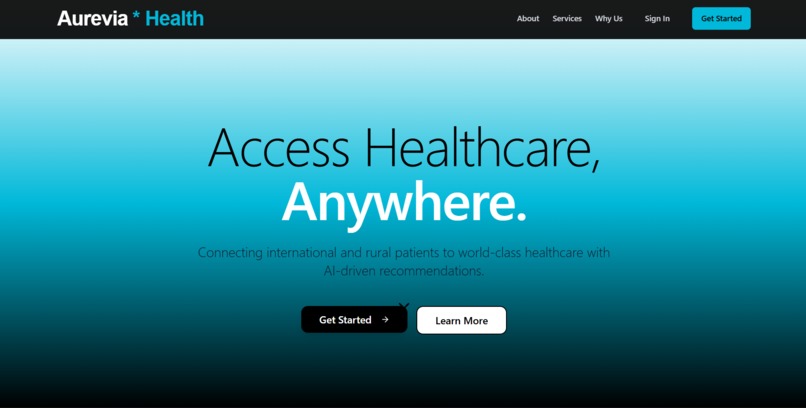
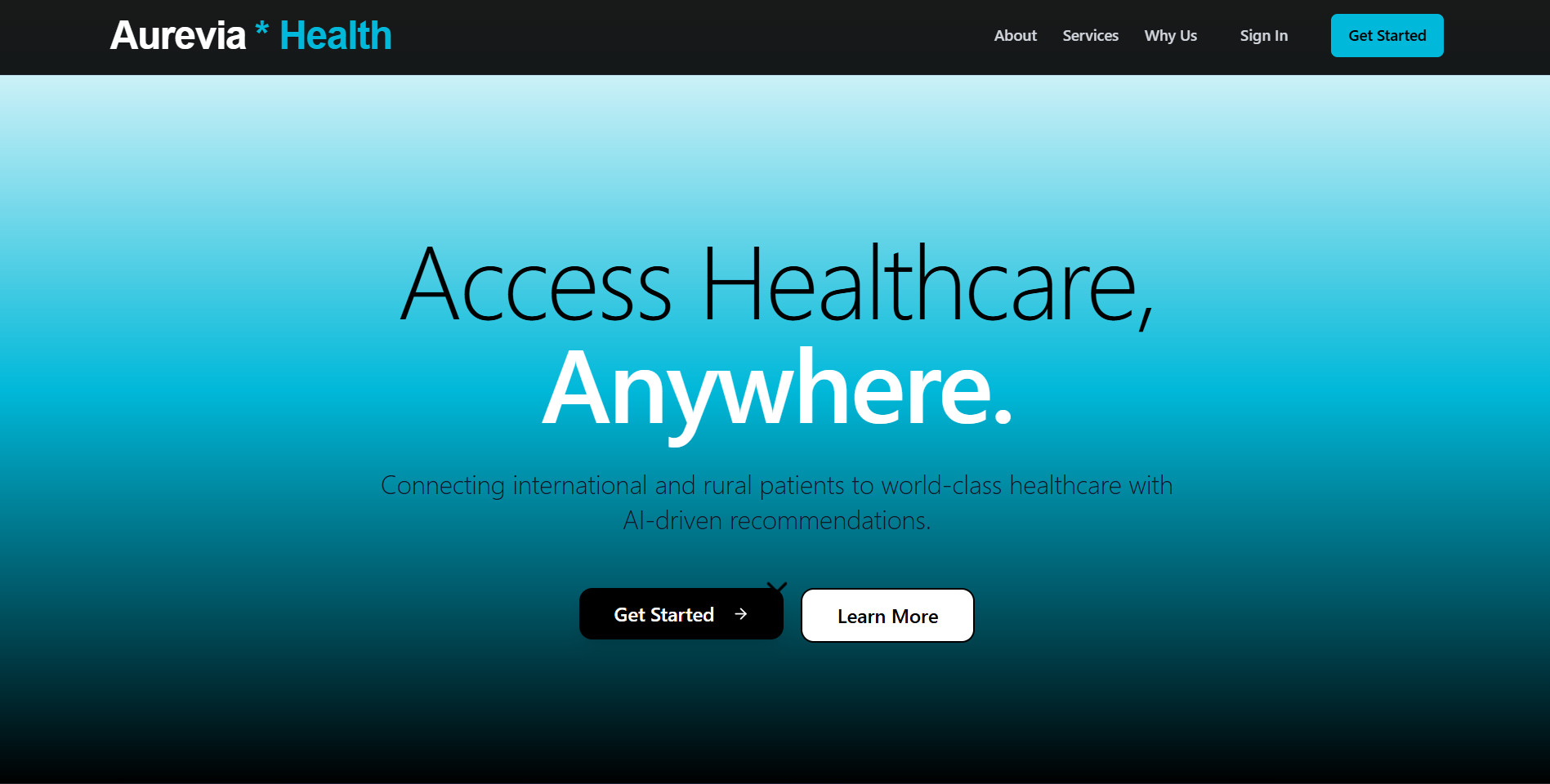
Landing Page first impressions
-
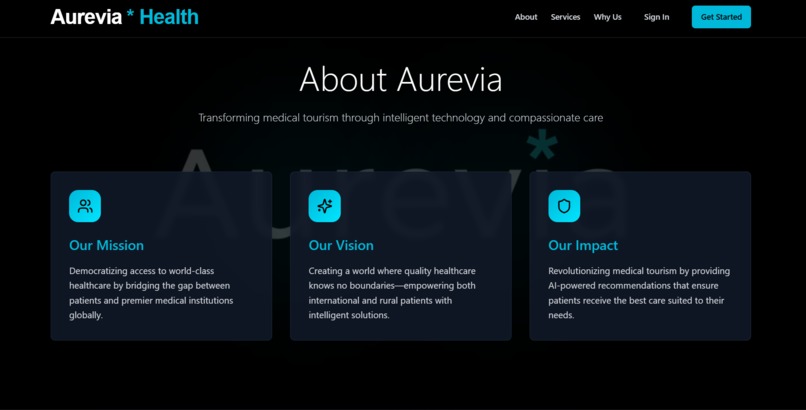
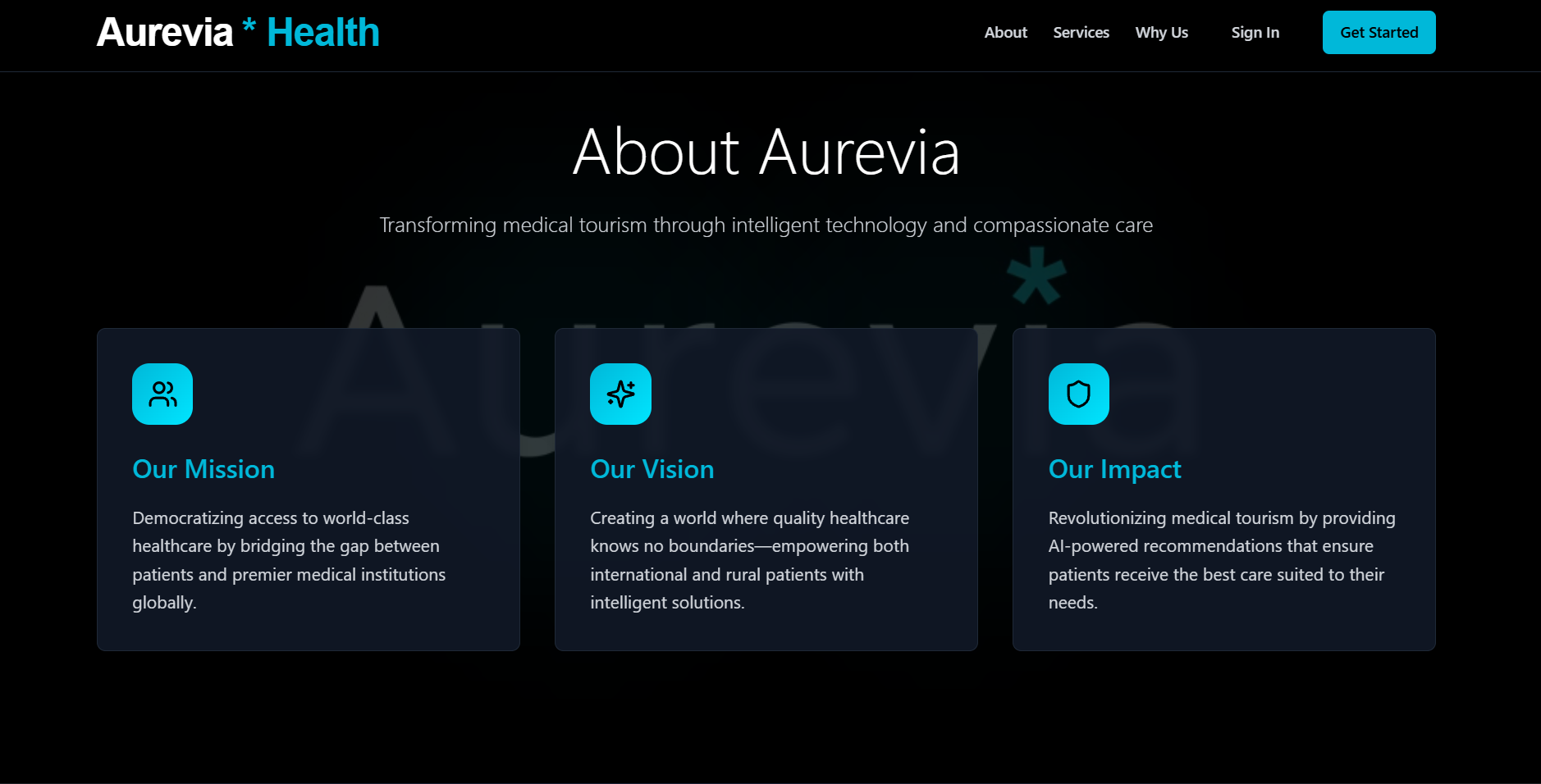
About us - Landing Page scroll down
-
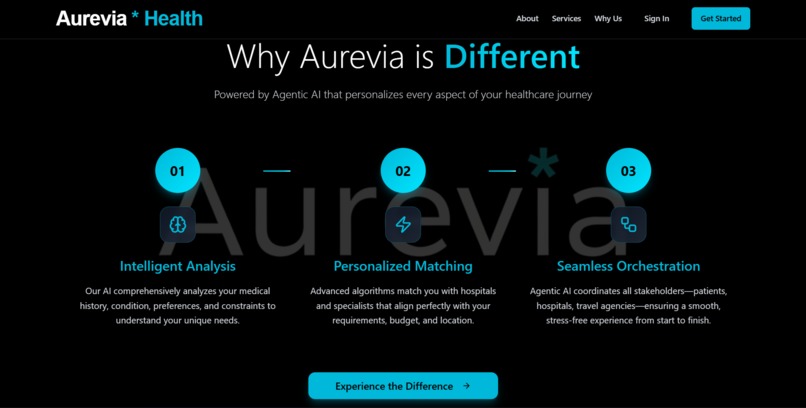
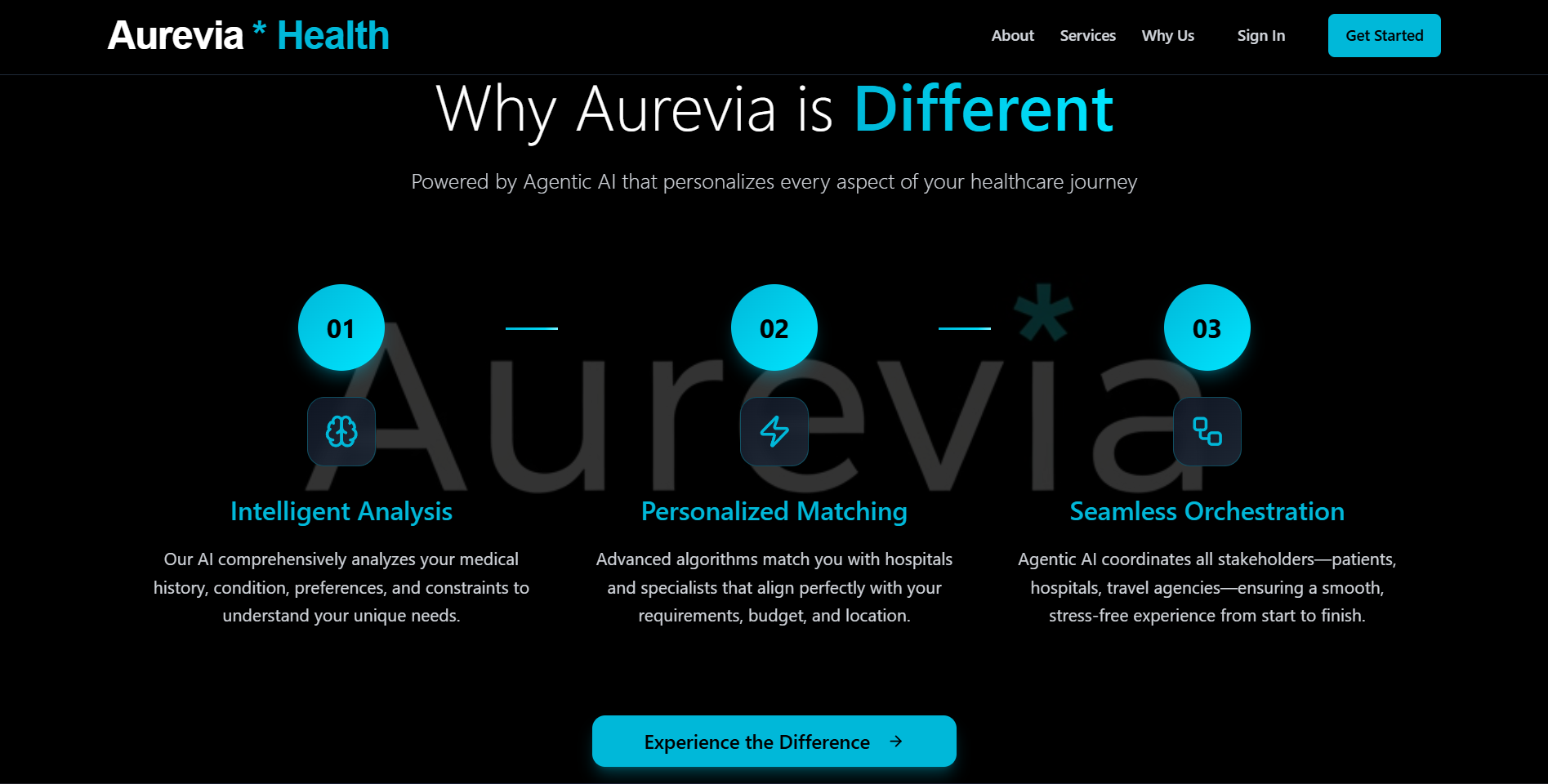
Why Aurevia is Different - Landing Page scroll down
-
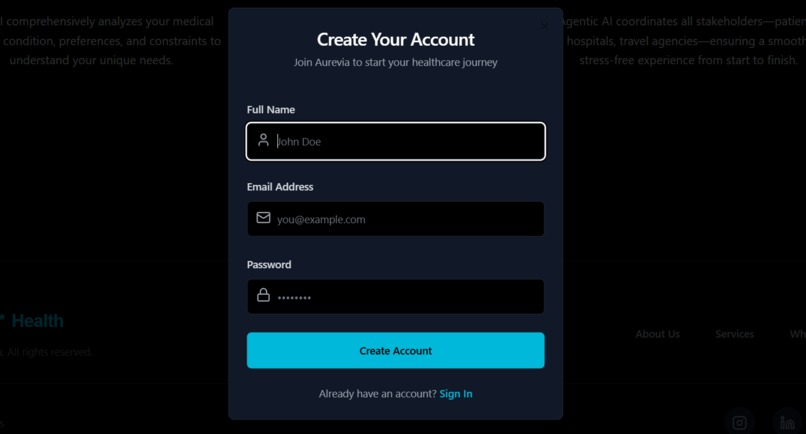
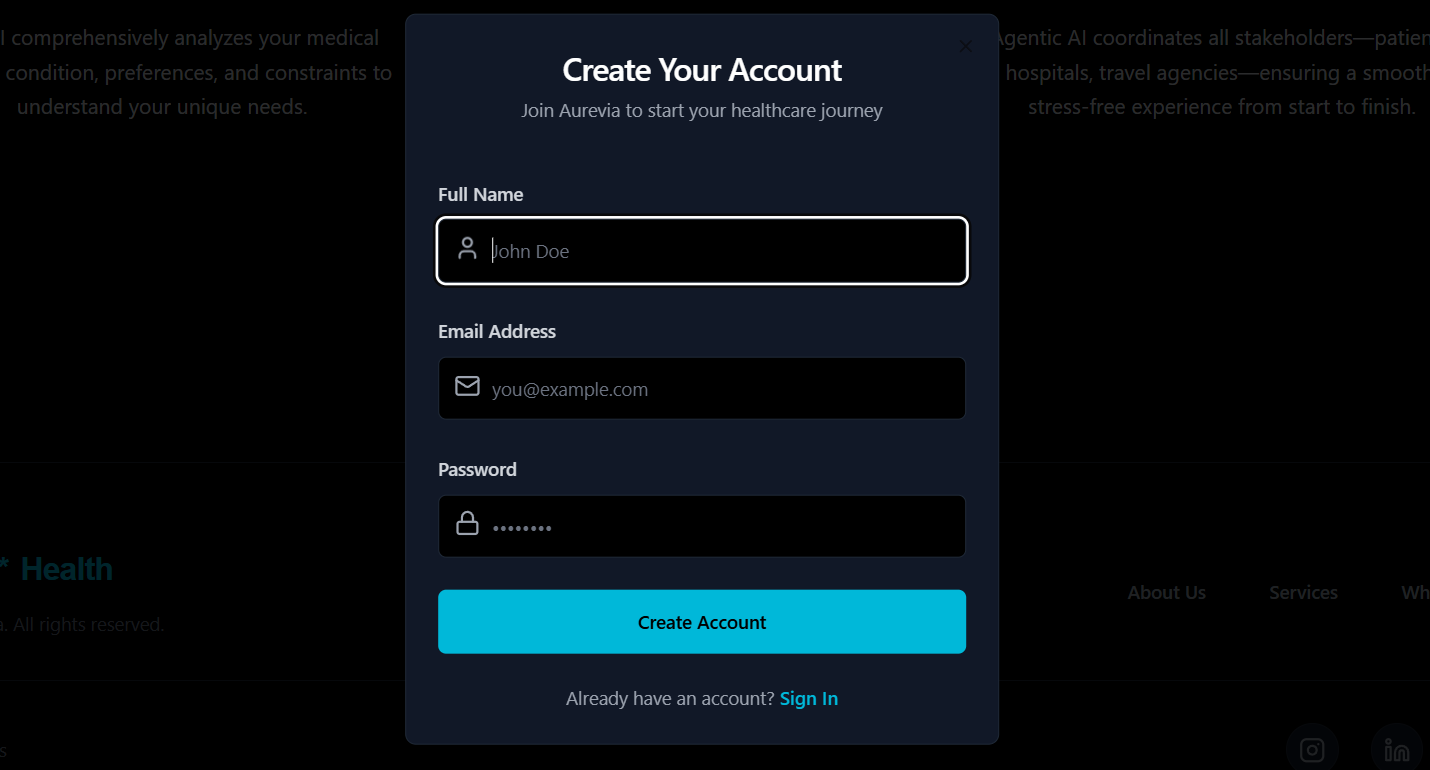
Login/Sign up
-
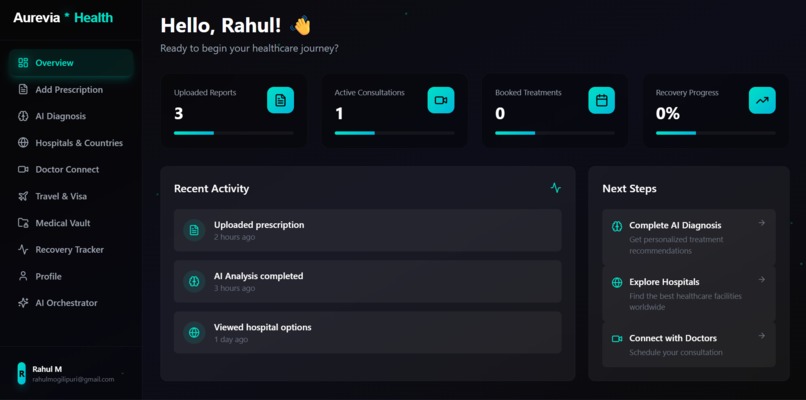
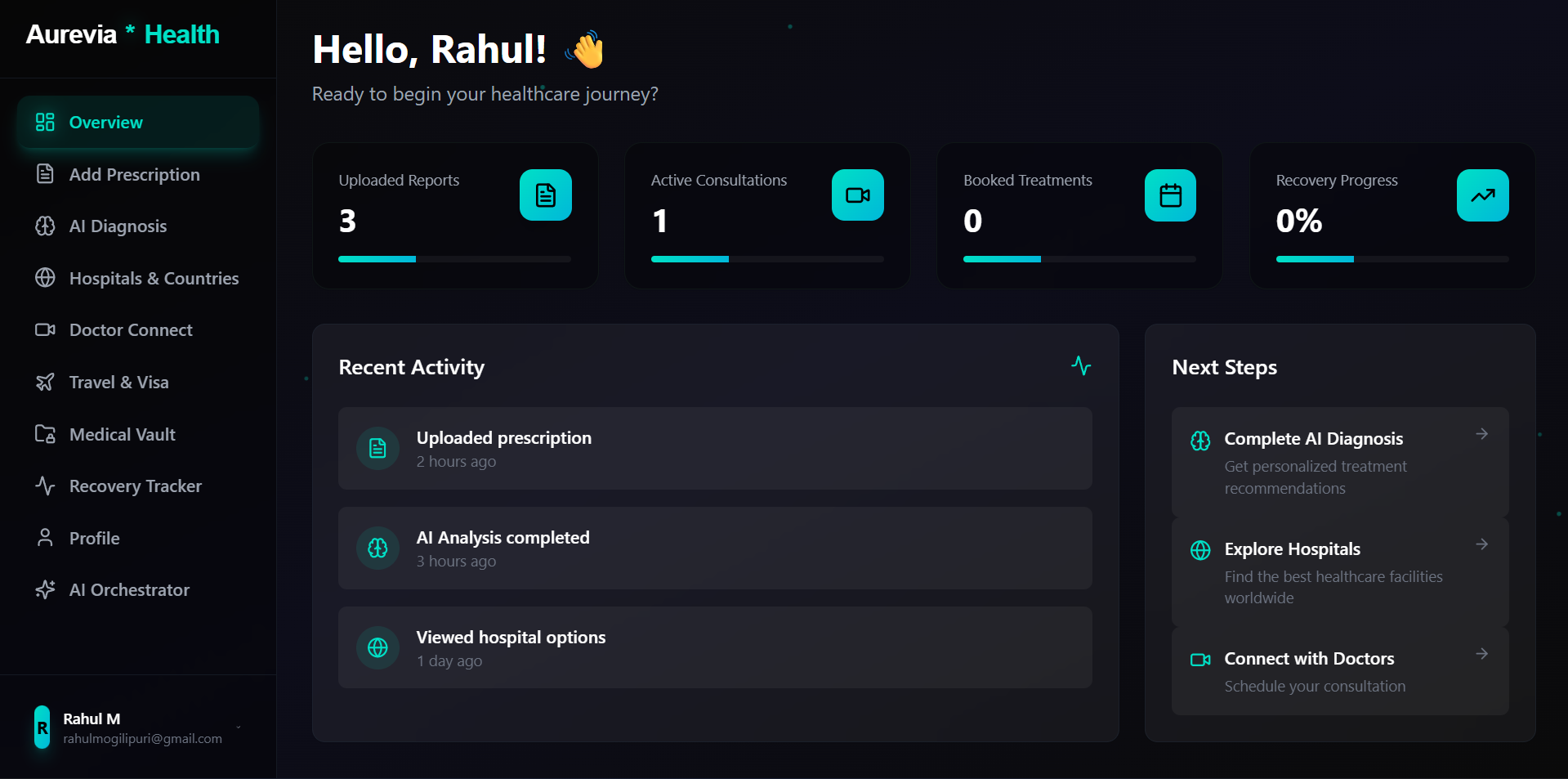
Dashboard
-
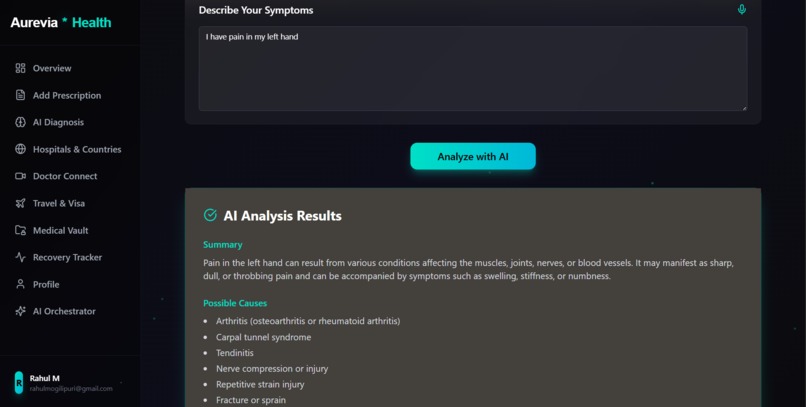
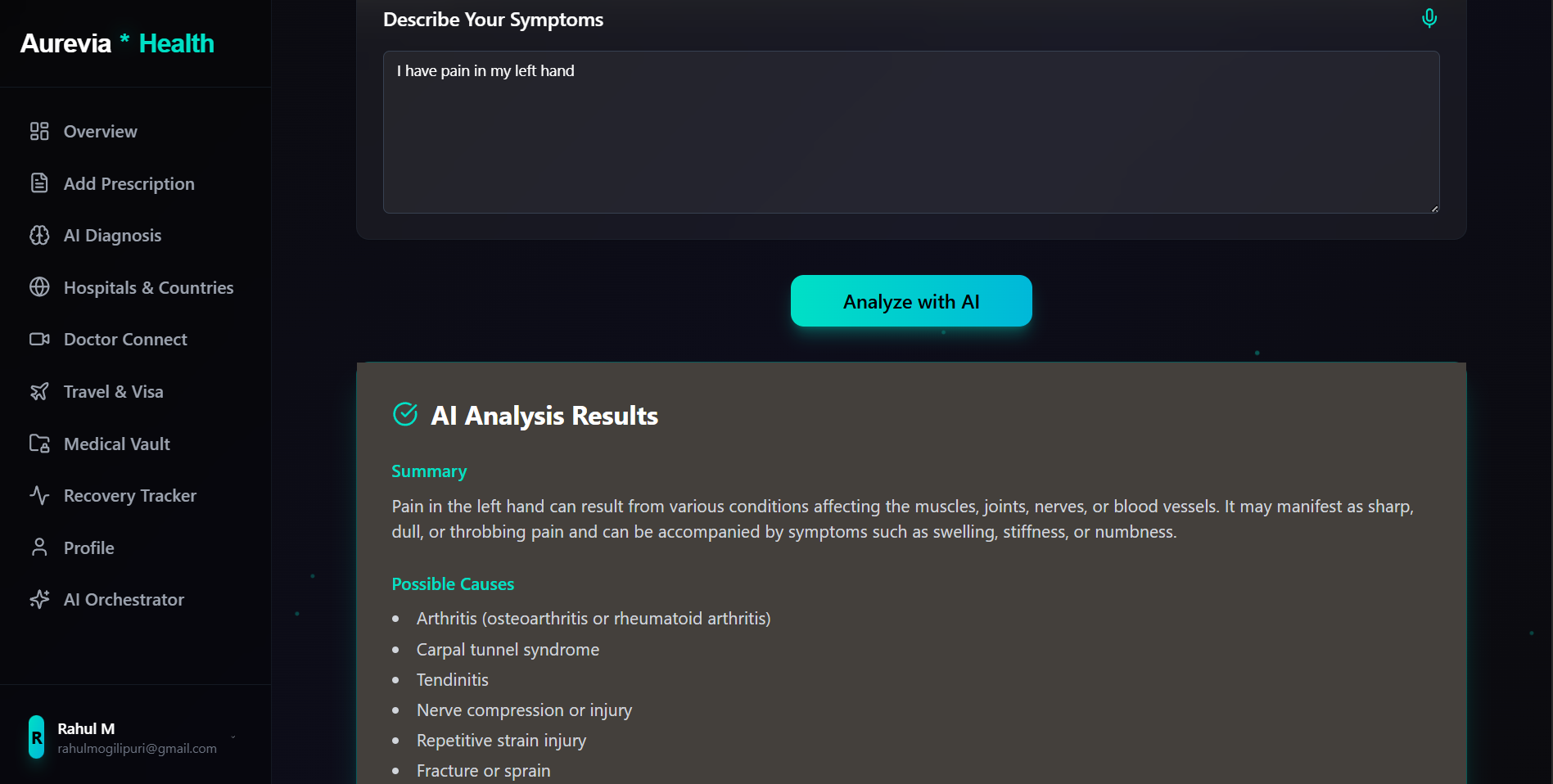
Ai analysis
-
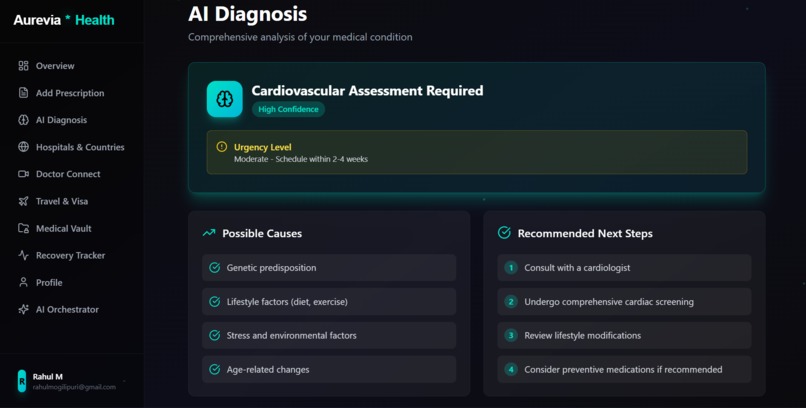
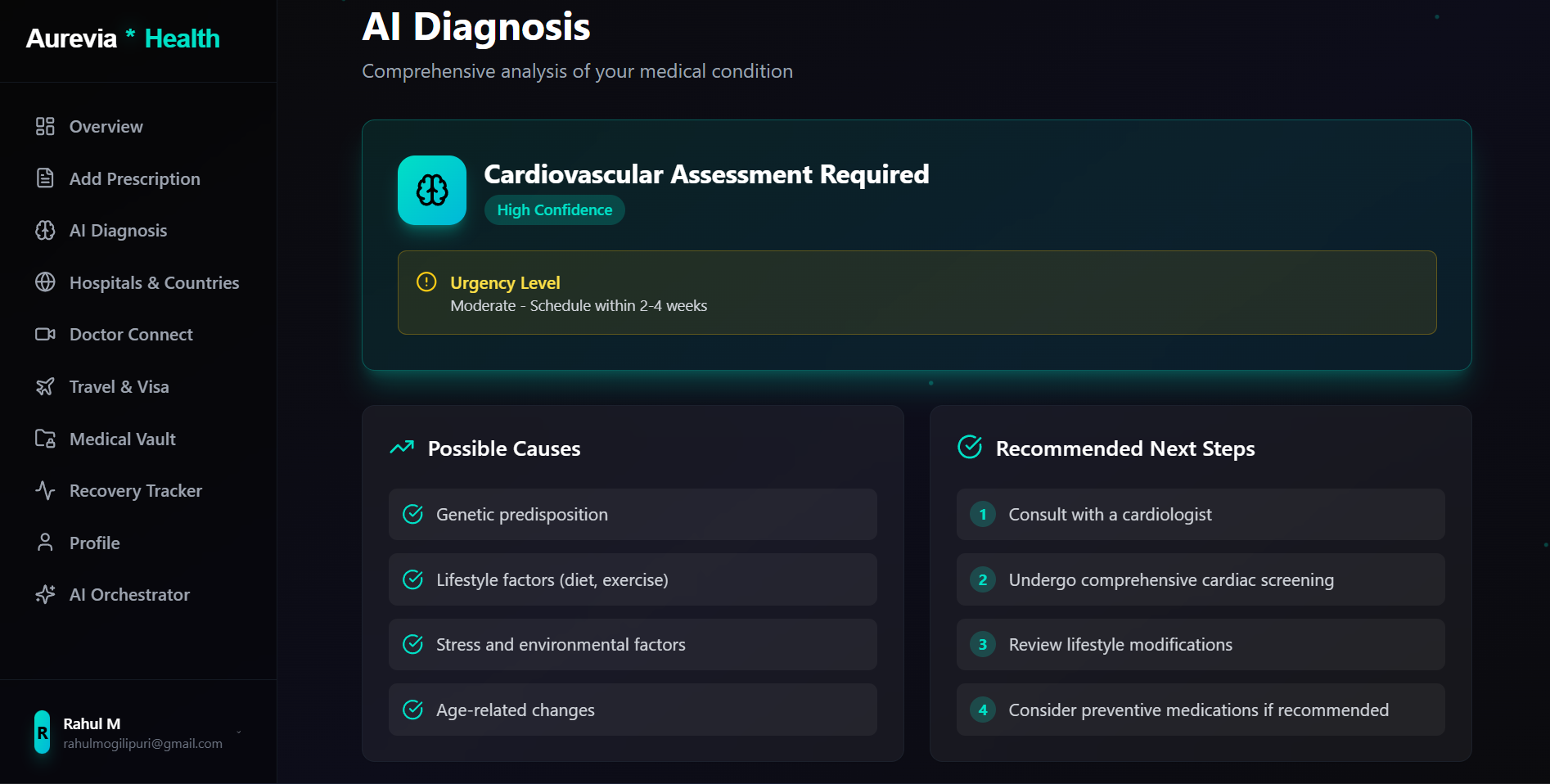
AI Diagnosis
-
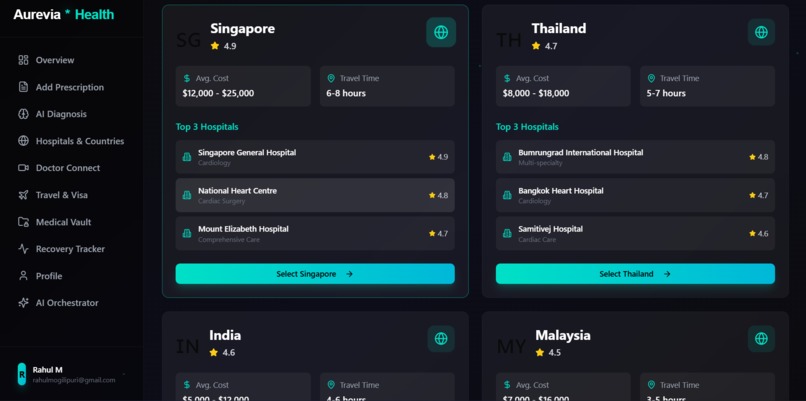
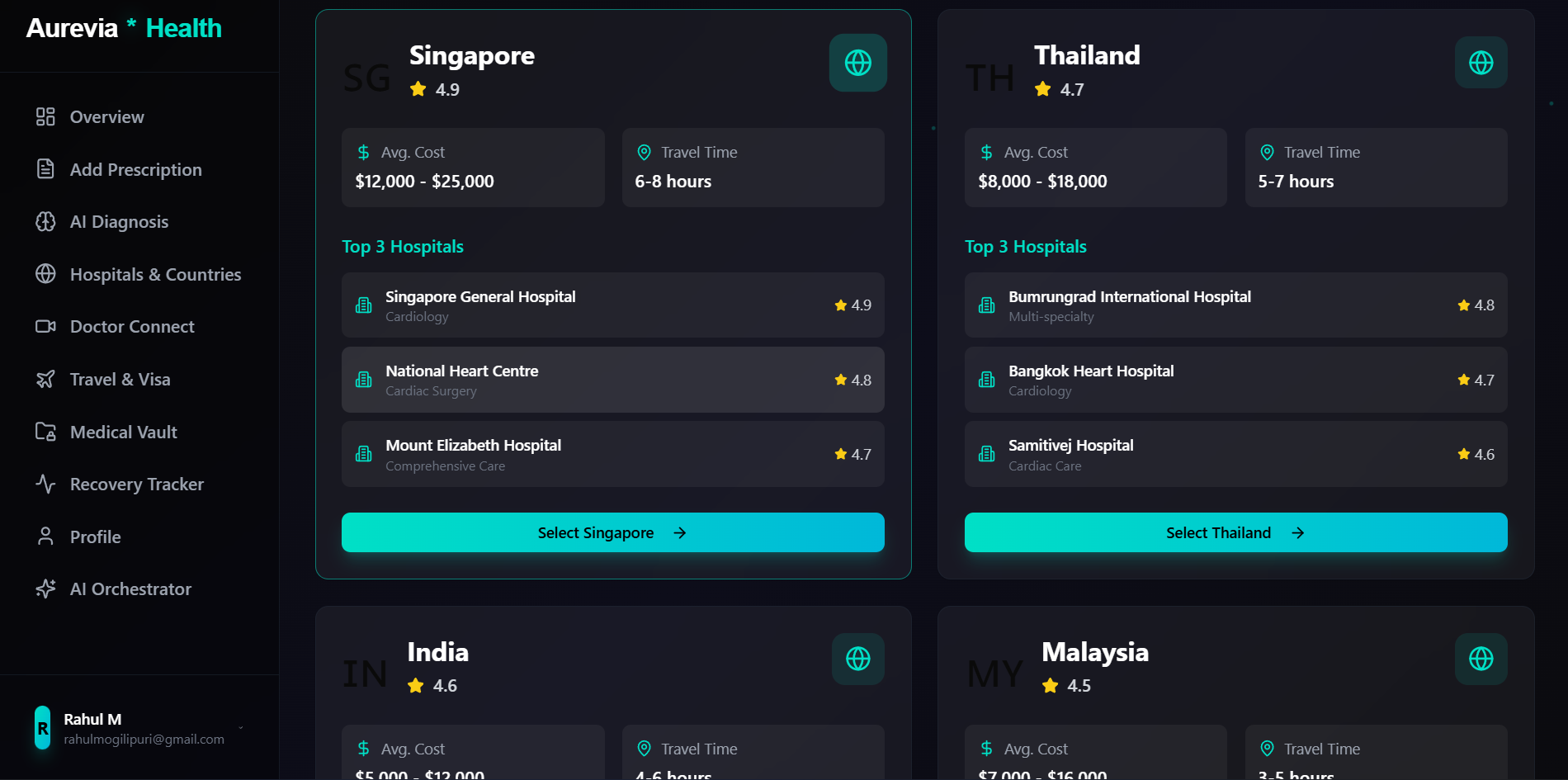
Hospitals and countries
-
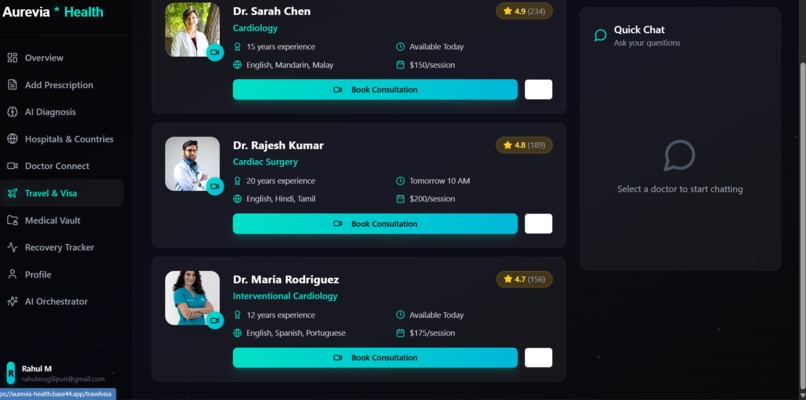
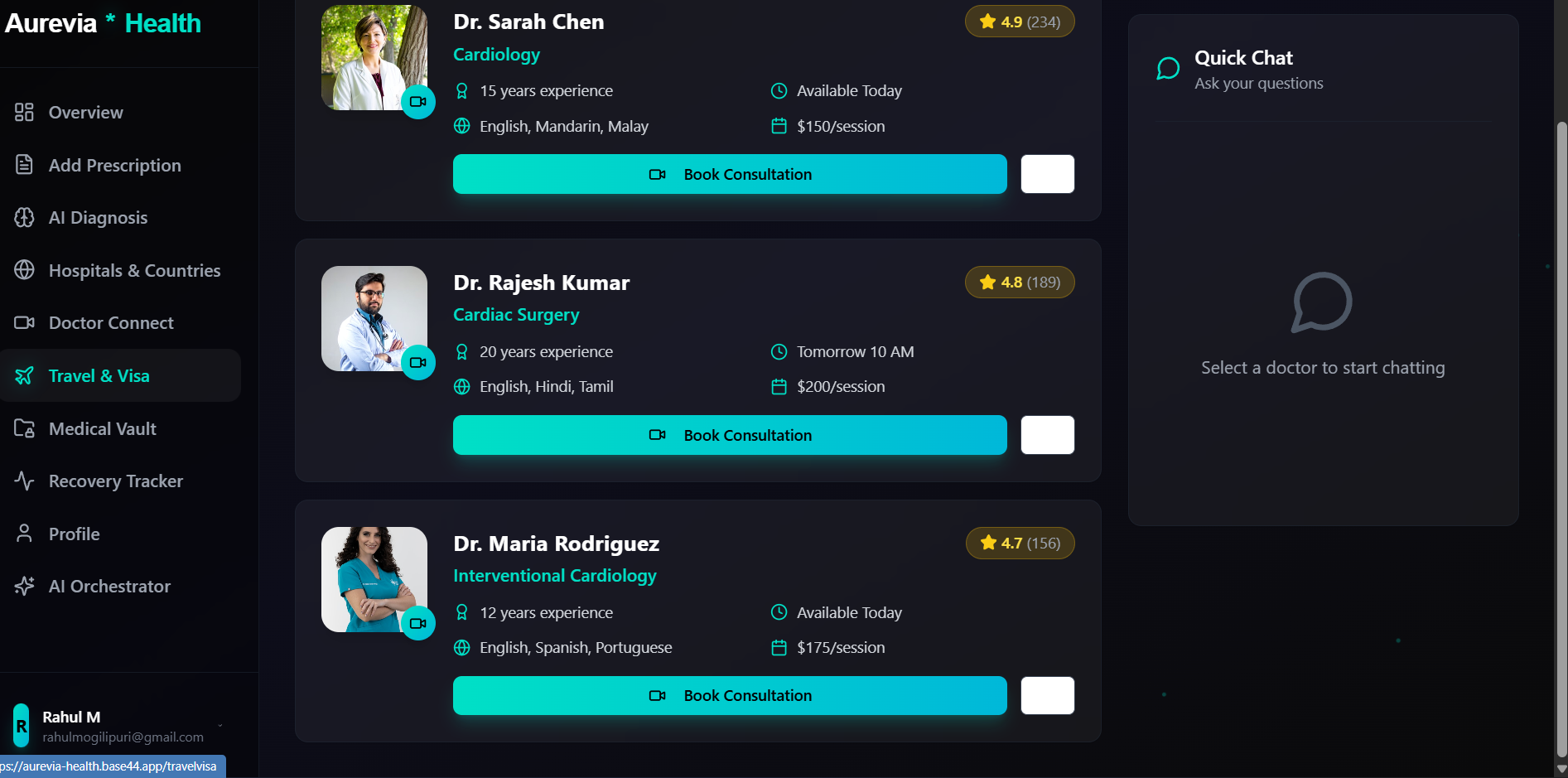
Doctor Connect
-
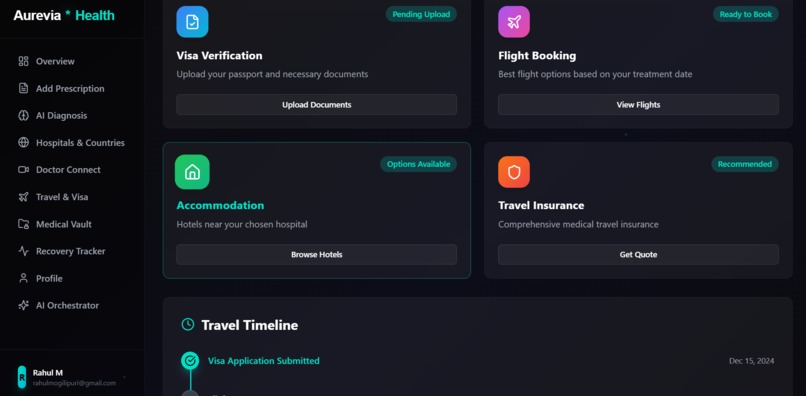
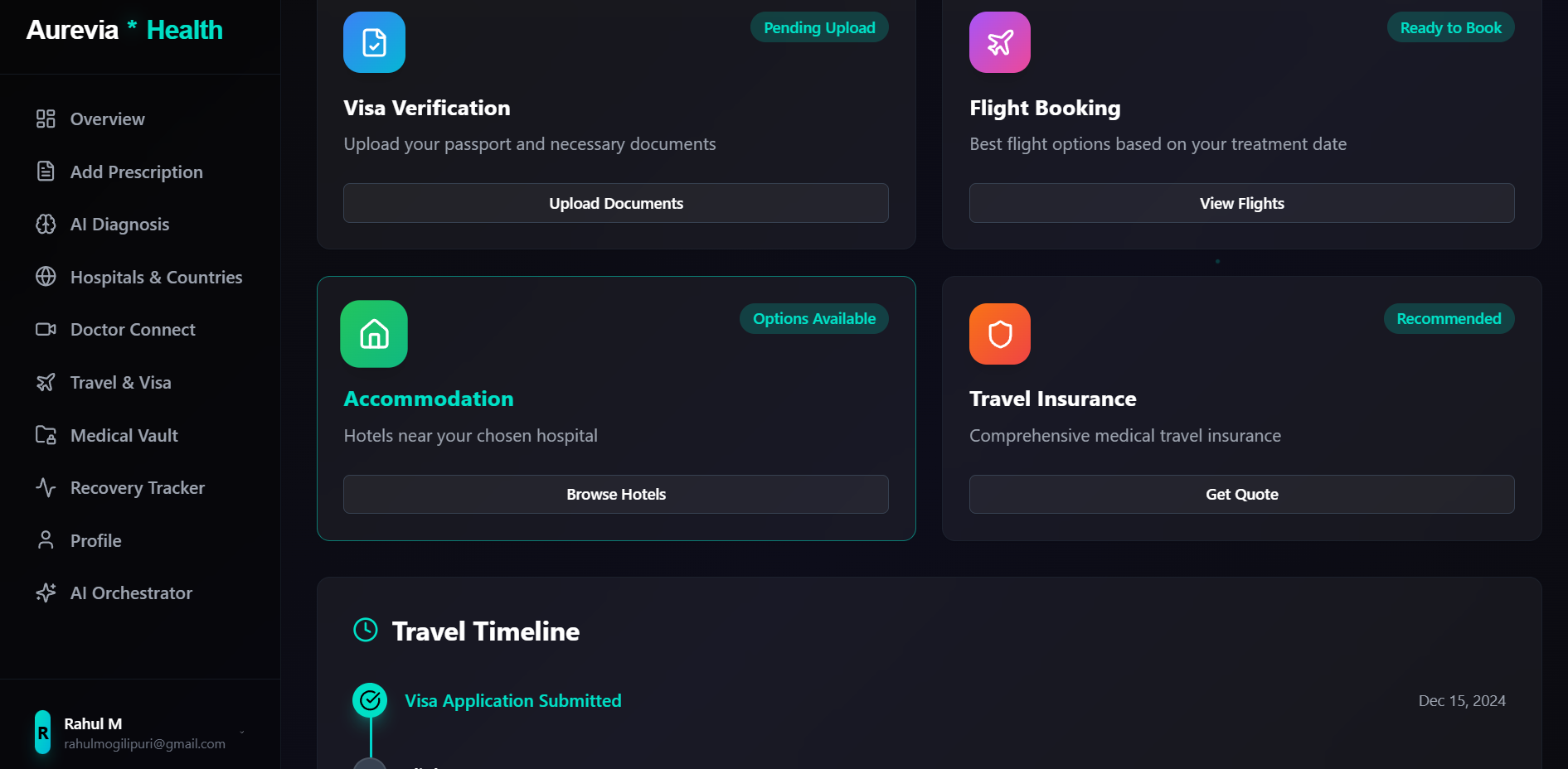
Travel and Visa
-
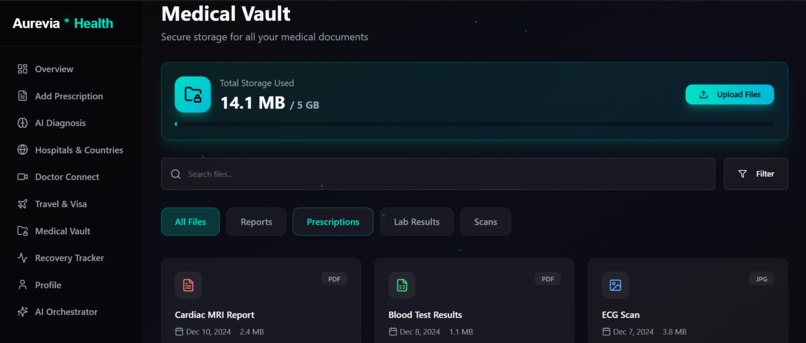
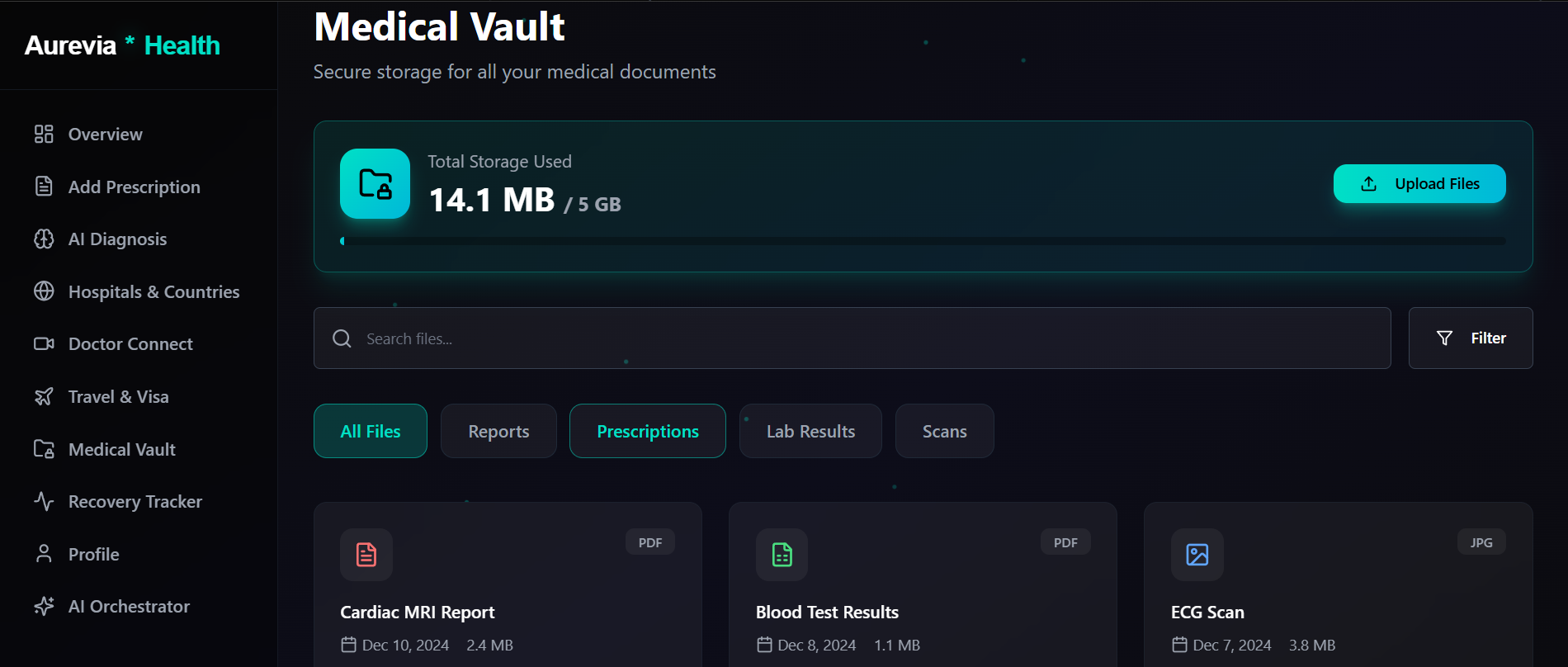
Medical Vault
-
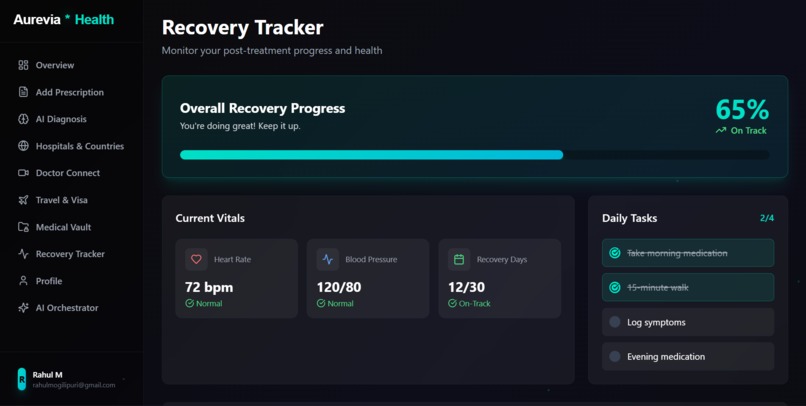
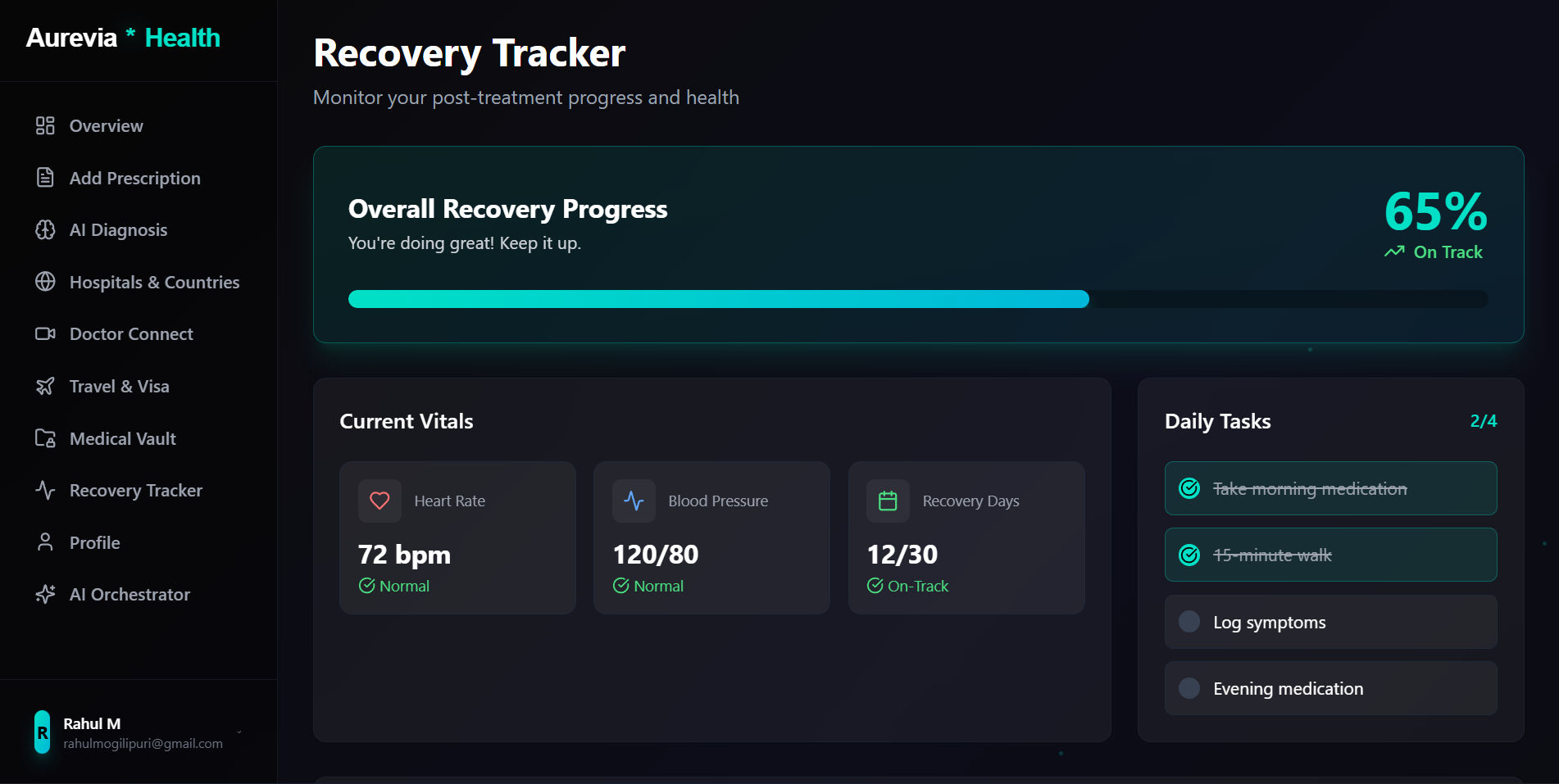
Recovery Tracker
📝 Project Story — Aurevia
🌟 What Inspired Me
The idea for Aurevia came from observing how difficult it is for people in underdeveloped and rural regions to access quality healthcare. I was deeply impacted by stories of families selling their assets to travel internationally for treatment, only to face confusion, hidden costs, language barriers, and poor coordination.
I realized that medical tourism should not feel like a gamble—it should feel guided, transparent, and human. This inspired me to imagine a system where AI could act not just as a chatbot, but as a thinking, planning assistant that helps patients make the right decisions.
That vision became Aurevia.
📚 What I Learned
Building Aurevia helped me learn several important concepts:
How Agentic AI systems differ from normal chatbots by taking initiative and planning actions.
How global healthcare systems lack a unified digital bridge.
How to structure real-world problems into clear, step-by-step digital workflows.
The importance of design clarity, trust, and emotional experience in healthcare technology.
I also gained stronger understanding of:
User Experience
Trust + Clarity + Simplicity User Experience=Trust+Clarity+Simplicity
And how system design follows:
Impact ∝ Accessibility × Intelligence Complexity Impact∝ Complexity Accessibility×Intelligence
🛠️ How I Built the Project
I approached Aurevia like a real startup prototype:
I designed a clean, professional landing experience.
I built a structured dashboard flow that moves the user step-by-step through:
Uploading reports
AI medical understanding
Country and hospital selection
Doctor connection
Travel and visa guidance
I simulated Agentic AI behavior by designing decision flows that feel autonomous and intelligent.
I created a consistent UI and user journey that feels enterprise-grade and reliable.
The system was built with a focus on clear logic, realistic workflows, and a strong emotional experience rather than over-engineering.
⚠️ Challenges I Faced
The hardest part of building Aurevia was balancing ambition with feasibility.
Some major challenges were:
Designing a flow that felt real without having real hospital or government integrations.
Making the AI feel agentic and intelligent instead of just reactive.
Handling the complexity of medical tourism while keeping the user experience simple.
I also had to learn how to prioritize features, since the vision is large but the prototype needs to stay focused.
Mathematically, I treated the challenge like this:
Buildable Scope
Vision − Real-World Constraints Buildable Scope=Vision−Real-World Constraints 🎯 What This Project Means to Me
Aurevia is more than a hackathon idea. It represents a future where technology reduces suffering instead of adding confusion.
I learned that powerful ideas don’t come from showing complexity they come from making complex systems feel simple, humane, and accessible.
🏁 Final Thought
Aurevia was built with one mindset:
Healthcare should not be limited by geography, language, or privilege and with the right intelligence, it doesn’t have to be.
Also fill up the type form in the Try it out section below to share feedback... We would love to hear from you.
Built With
- base44
- chatgpt
- gemini
- prompt

Log in or sign up for Devpost to join the conversation.