-
-
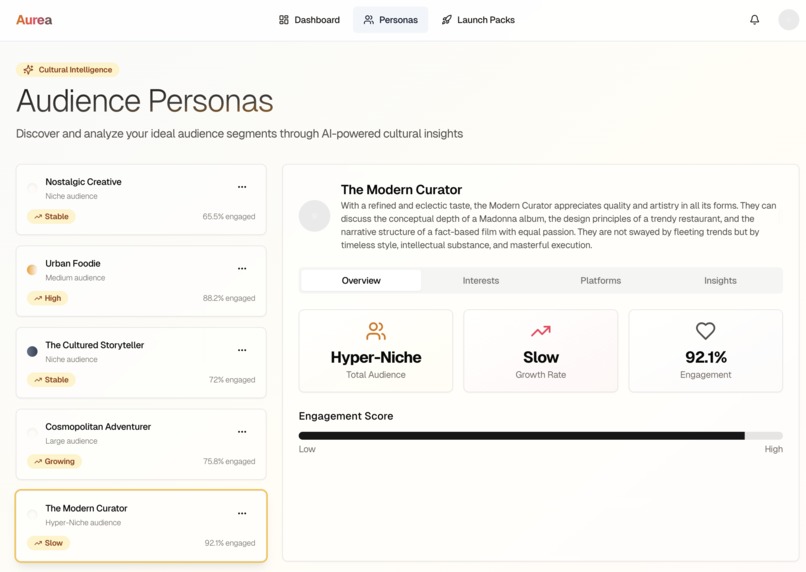
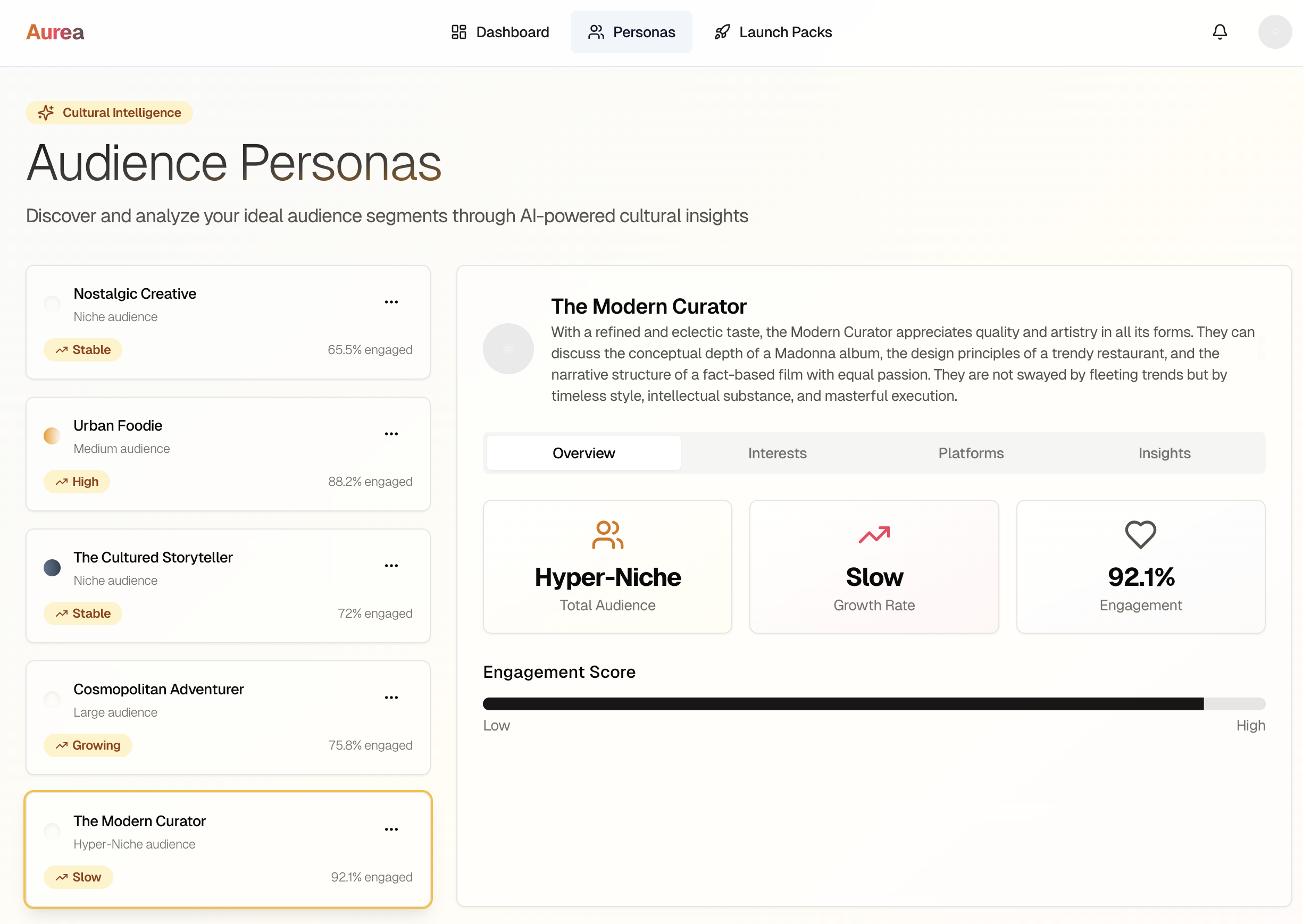
Personas page
-
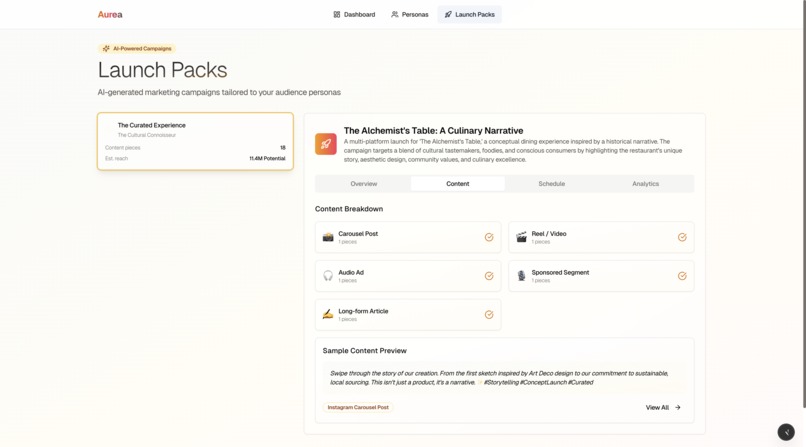
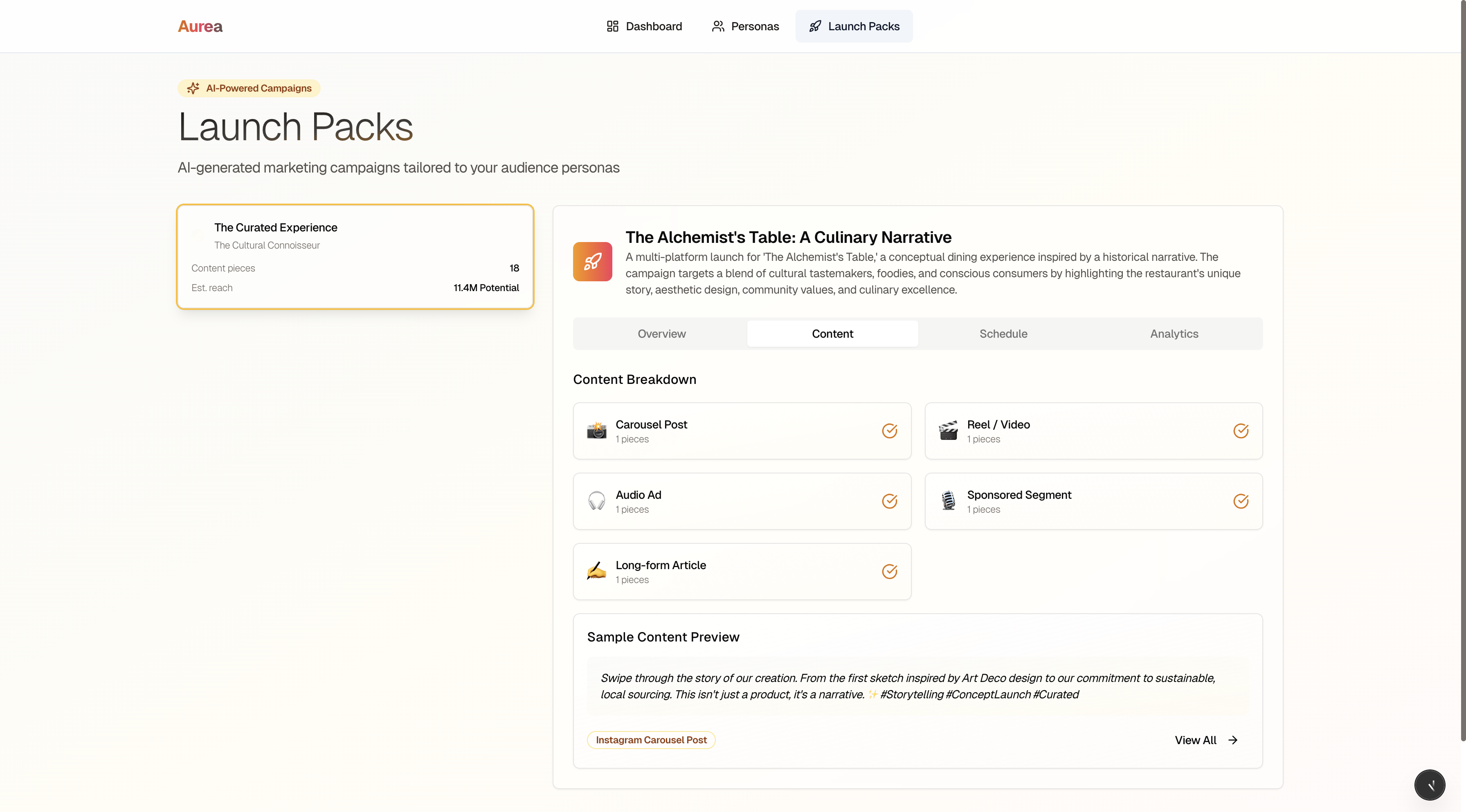
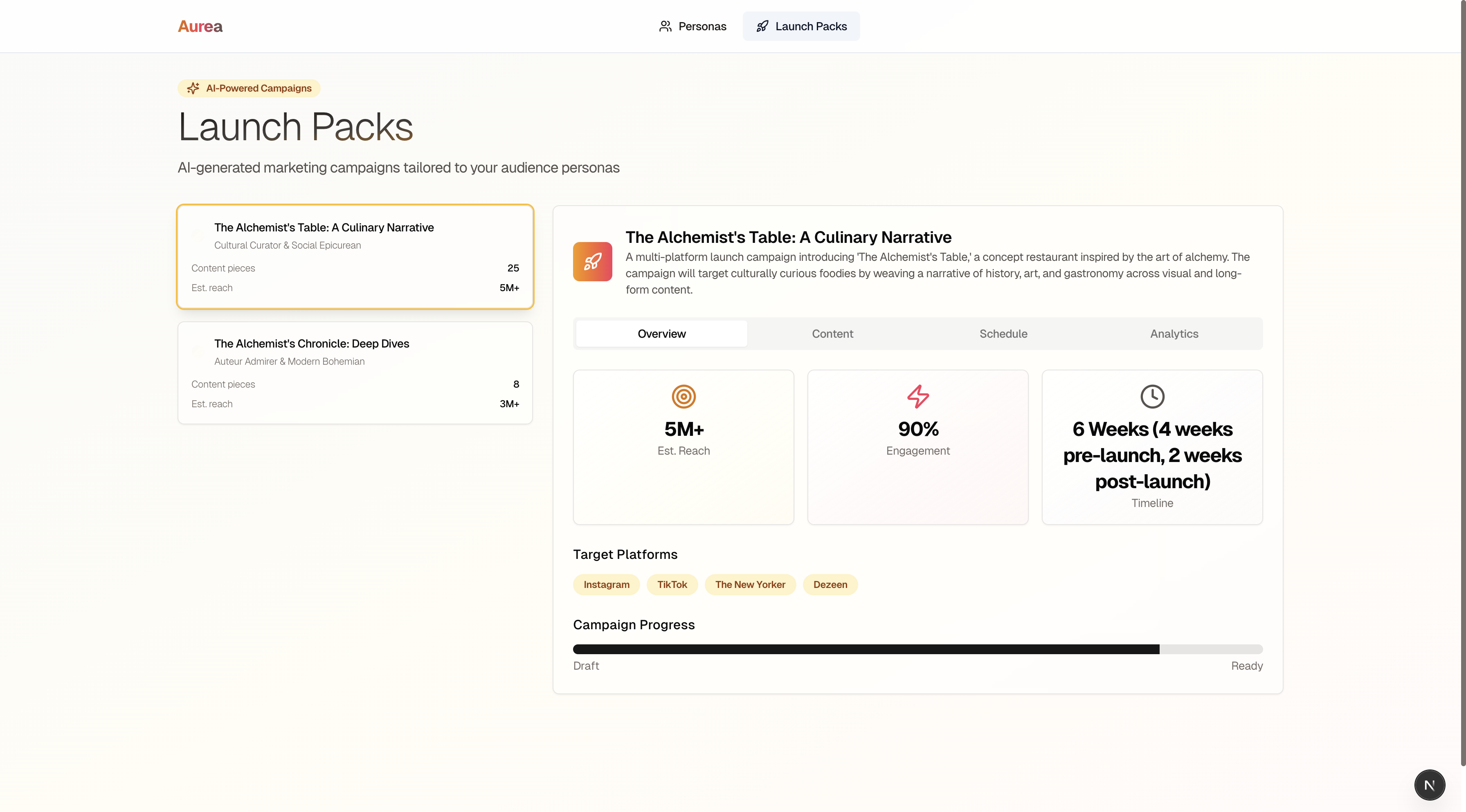
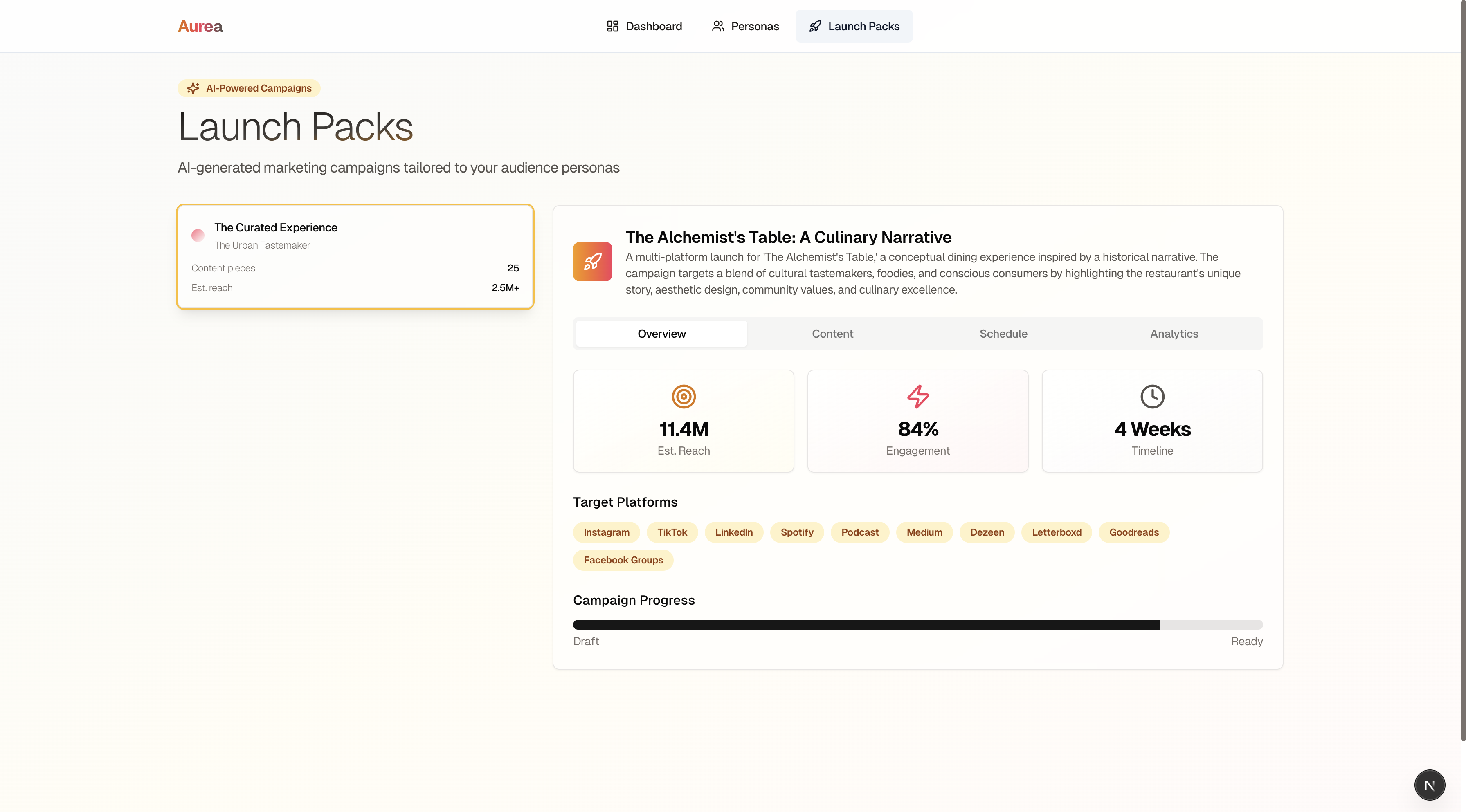
Launch Packs page
-
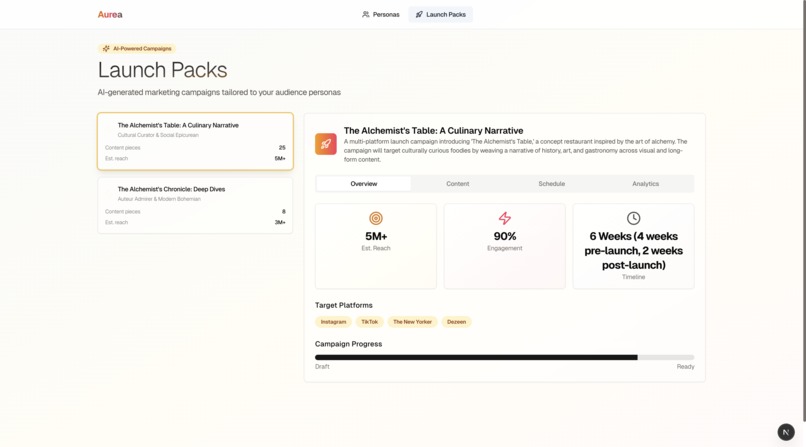
Launch Packs
-
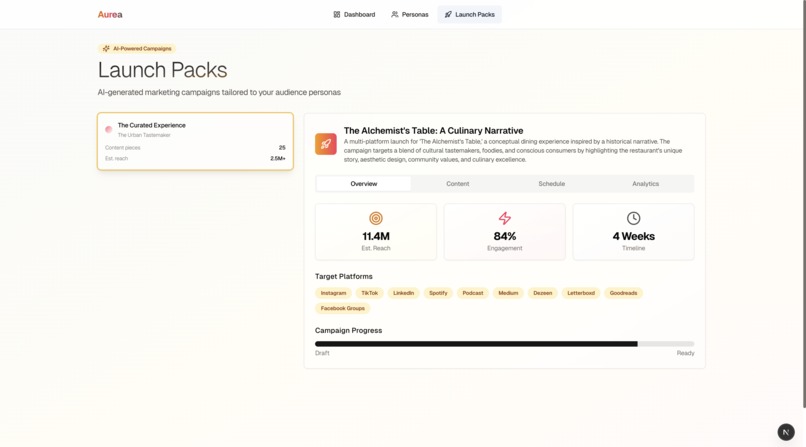
Aurea
AI-Powered Cultural Intelligence. Discover your ideal audience using taste data and cultural intelligence. A creative assistant for indie creators and niche brands.
How we built it
Built with Next.js 15 and TypeScript, using server actions for AI processing and cookie-based state management to avoid database writes during development. Implemented chunked cookie storage to handle large persona and launch pack data within browser limits. Used Zod schemas for type safety and shadcn/ui components for the interface. The AI pipeline processes user input through entity insights to generate detailed personas, then creates comprehensive marketing launch packs with platform-specific content.
Data Source
Initially, I misunderstood the API structure and attempted to use single entity concepts with the insights endpoint, which resulted in large enormous data, almost unusable even. I realised the entity search endpoint (/search) accepts sentences; the data flow processes user input through Qloo's entity search to identify relevant entities and provide apt dataset which is then sent to the AI model (Google Gemini 2.5 Pro) to generate detailed personas with behavioral patterns and platform preferences. Qloo's entity-based approach provided the cultural context needed to create realistic, data-driven personas rather than generic AI-generated profiles.
Challenges we ran into
- Cookie size limitations: Had to implement chunking system to store large AI-generated data (8KB+) across multiple 4KB cookies
- Server-side state management: Needed to persist data between server actions and components without a database
Accomplishments that we're proud of
- Developing well-detailed UI to properly represent & present appropriate data for product owners
- Managing complex nested data structures between AI responses and UI components
- Generating image via Gemini 2.0 flash preview image representation for each persona and storing to Pinata IPFS cloud
Features
- Lazy loaded dynamic icon from Lucide react via an LLM
- Generate personas' images via Gemini 2.0 flash preview image generation model
- Upload image to Pinata cloud
- Generate personas via Gemini using the entity endpoint as the data source
- Generate launchpacks
What we learned
Chunking strategies are so handy; it solves storage limitations while maintaining data integrity
Built With
- aisdk
- gemini
- next.js
- shadcn/ui
- tailwindcss
- typescript
- zod

Log in or sign up for Devpost to join the conversation.