-
-
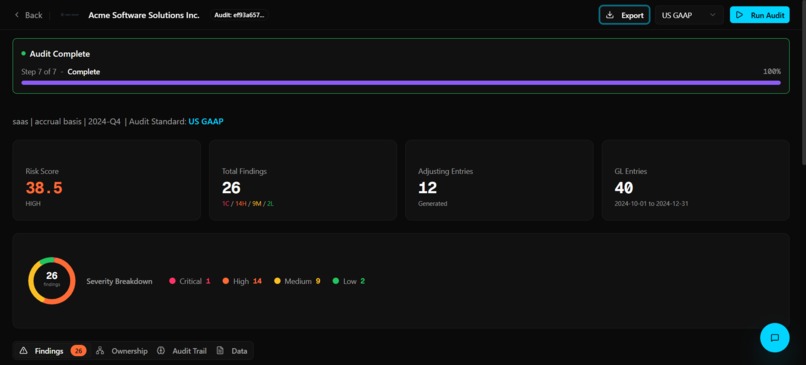
AI-powered Audit Process
-
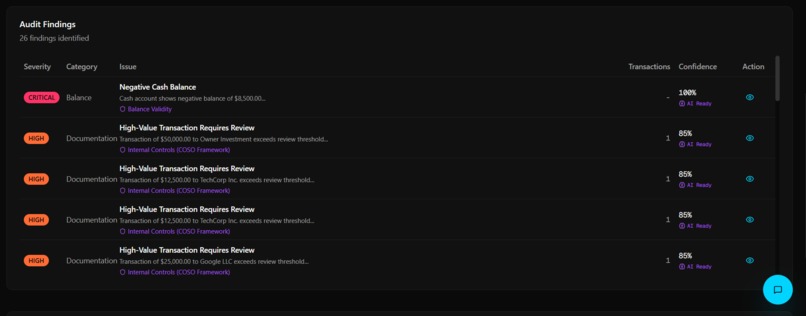
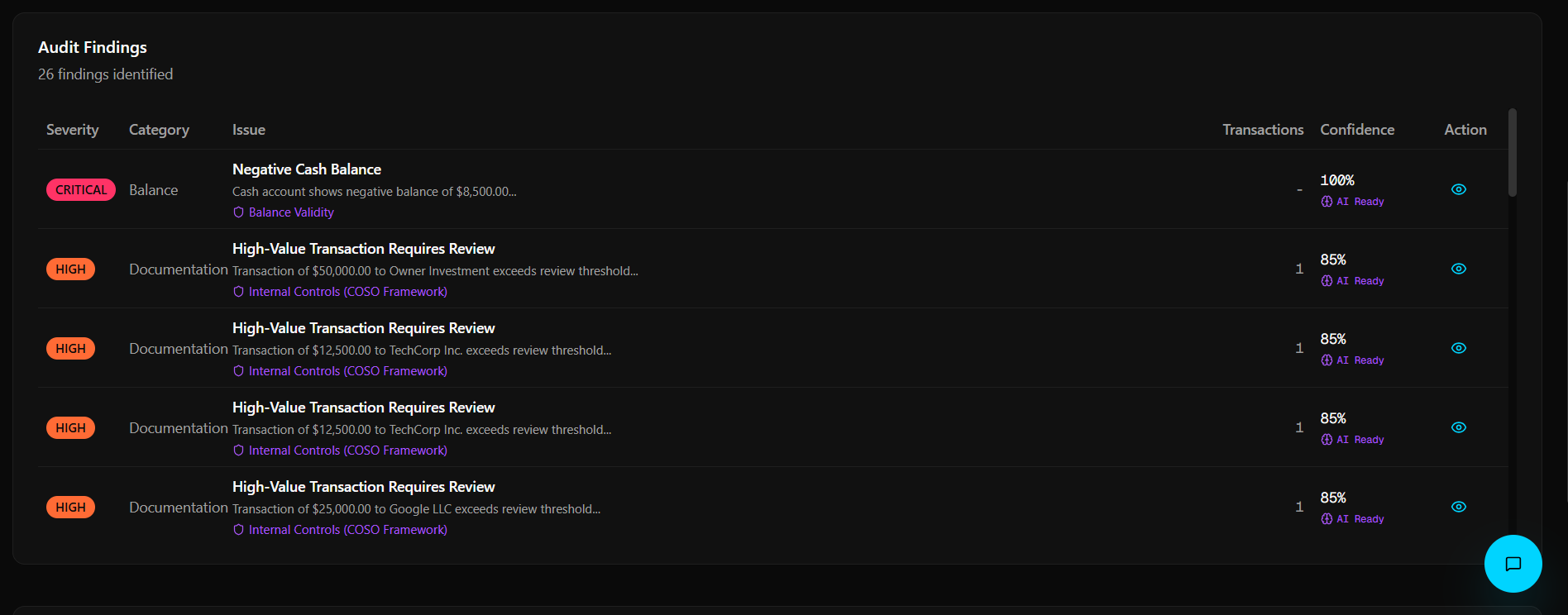
Audit findings example
-
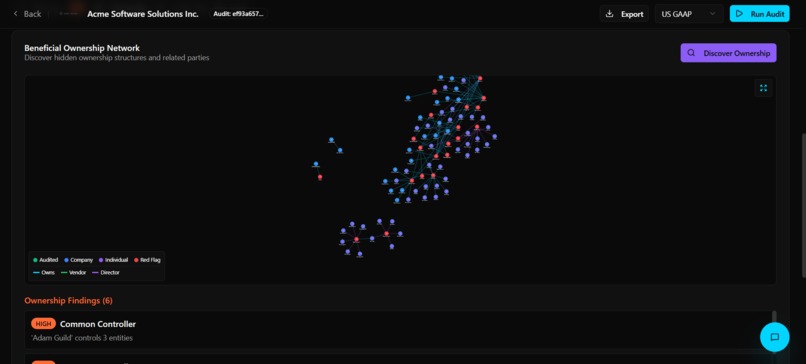
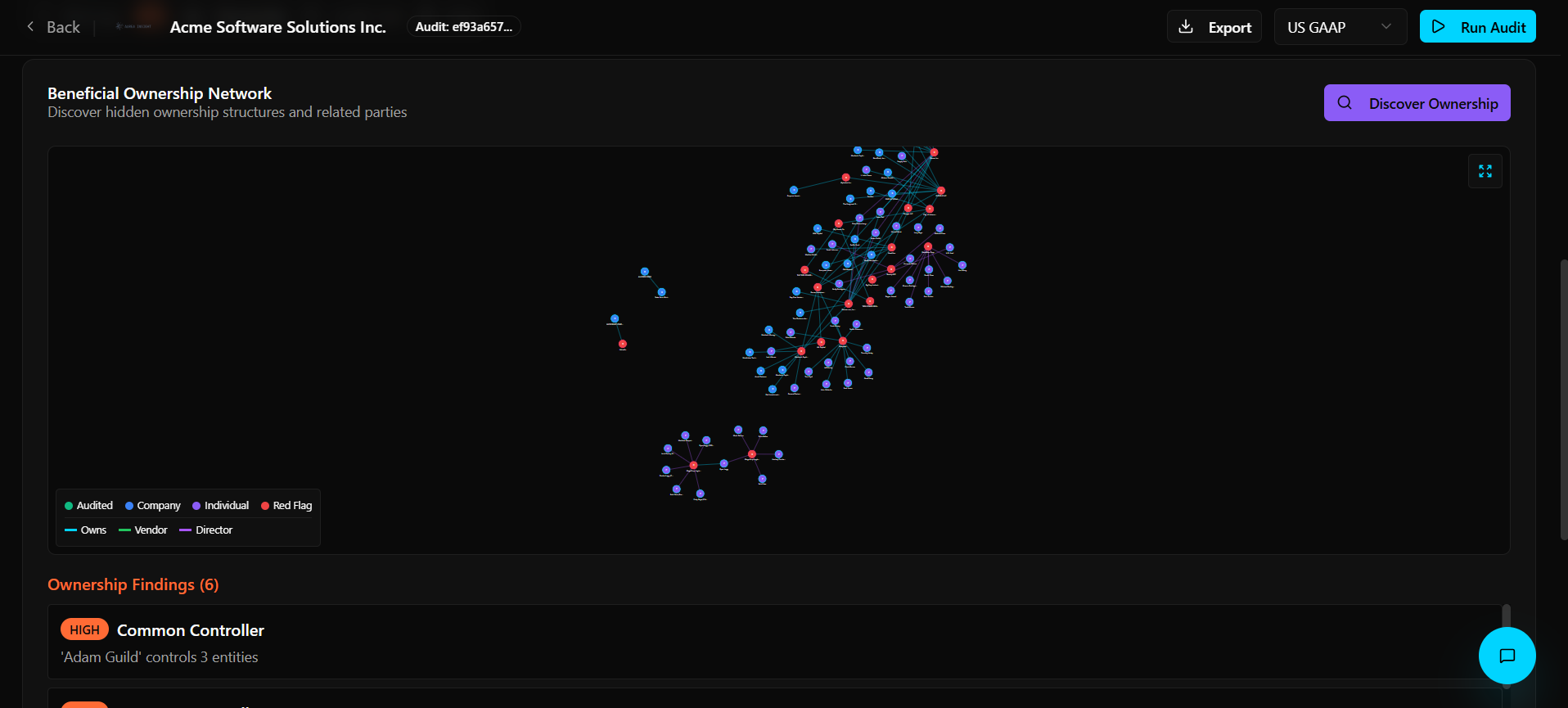
Beneficial Ownership Example
-
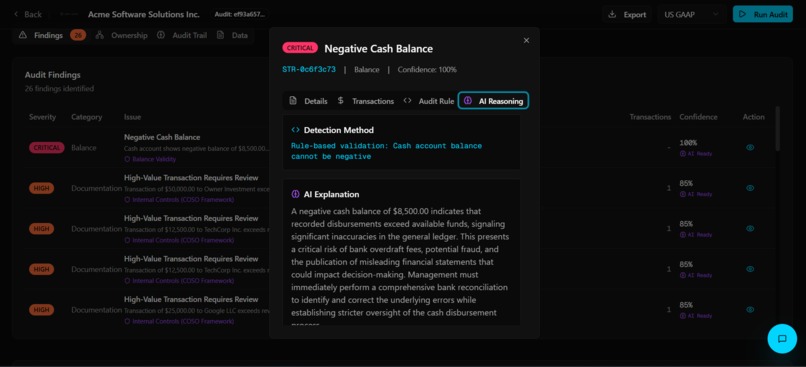
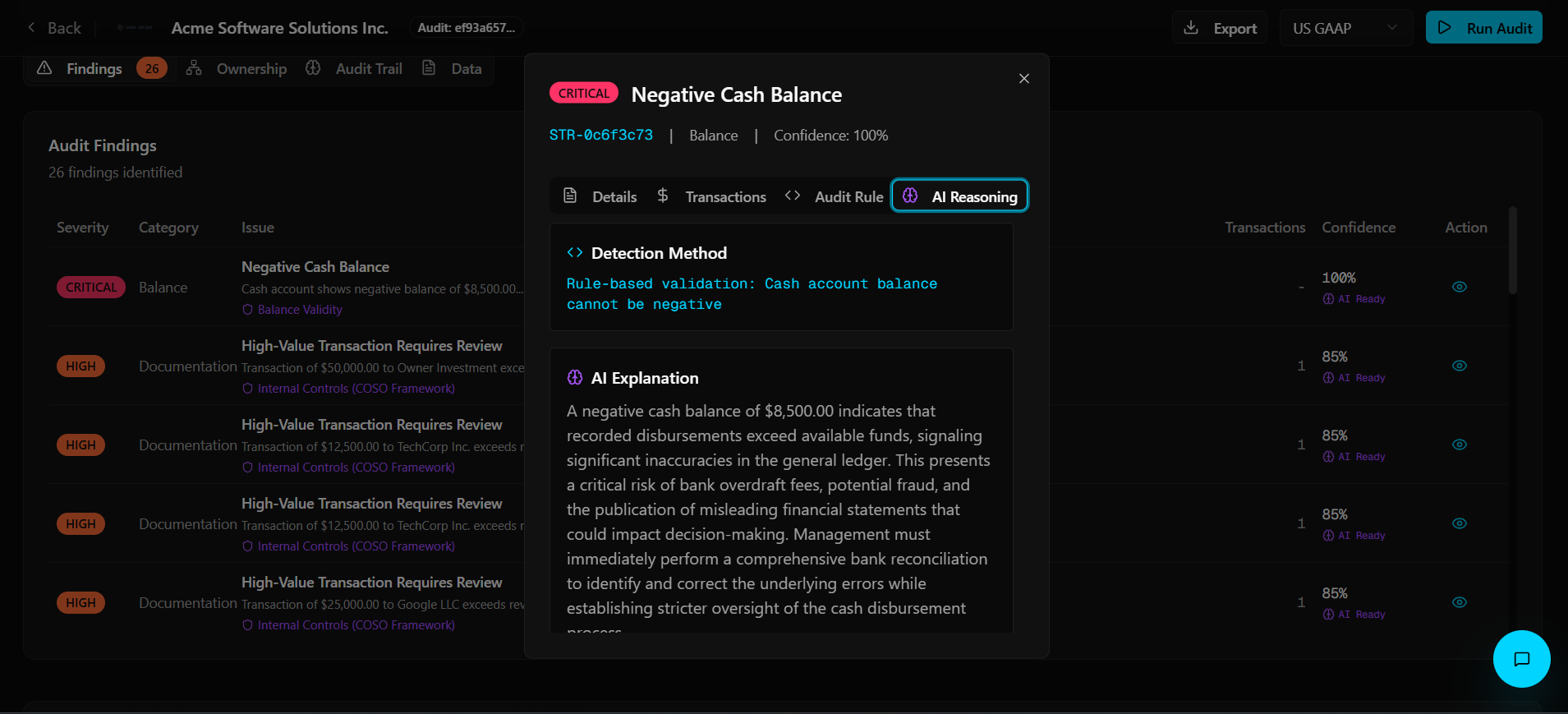
Details of audit findings - AI reasoning example
-
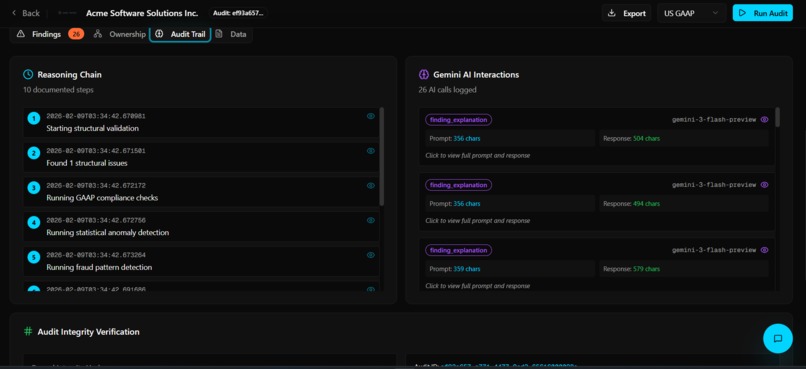
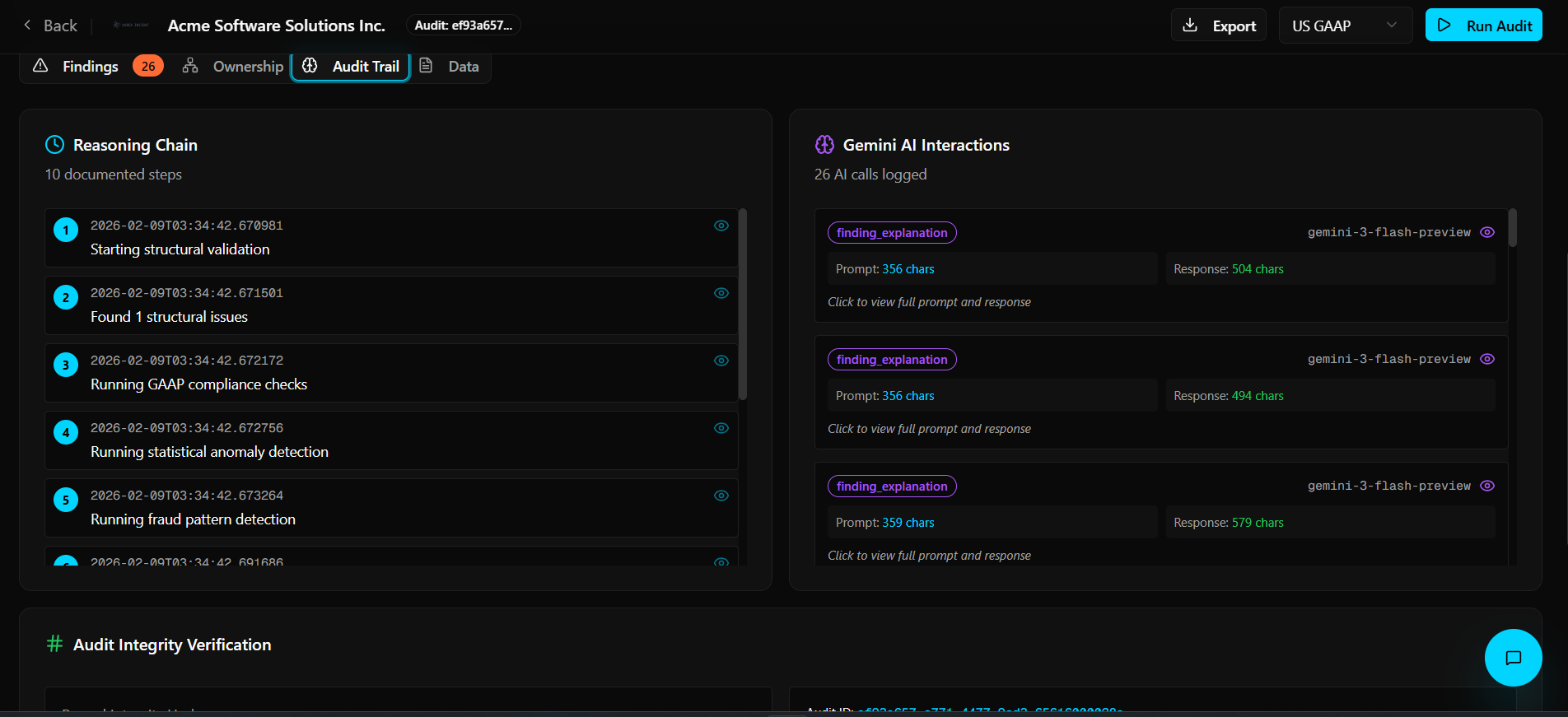
Audit trail
-
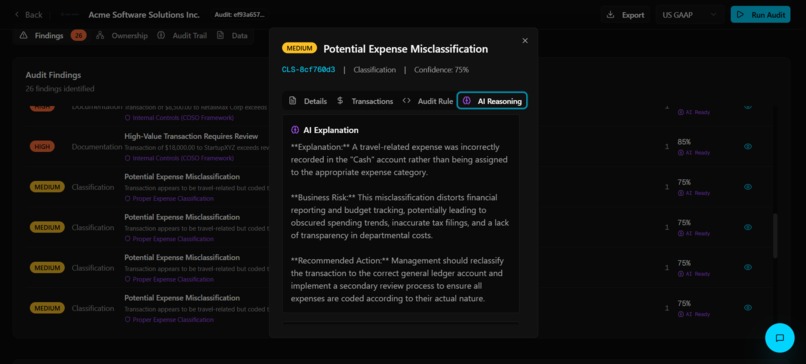
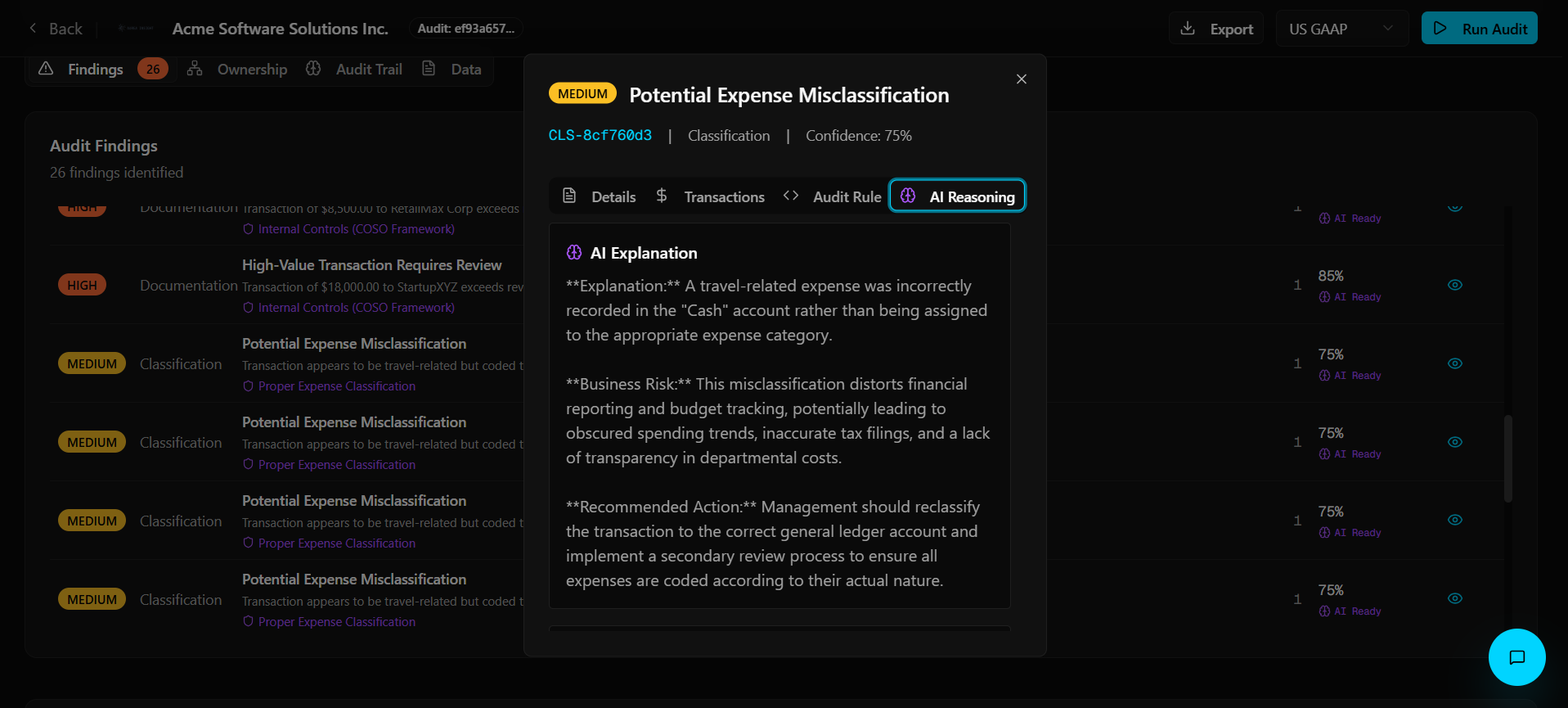
Details of audit findings - AI reasoning example #2
-
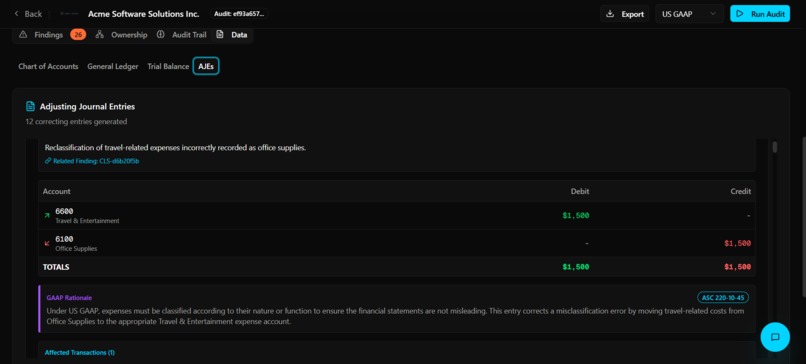
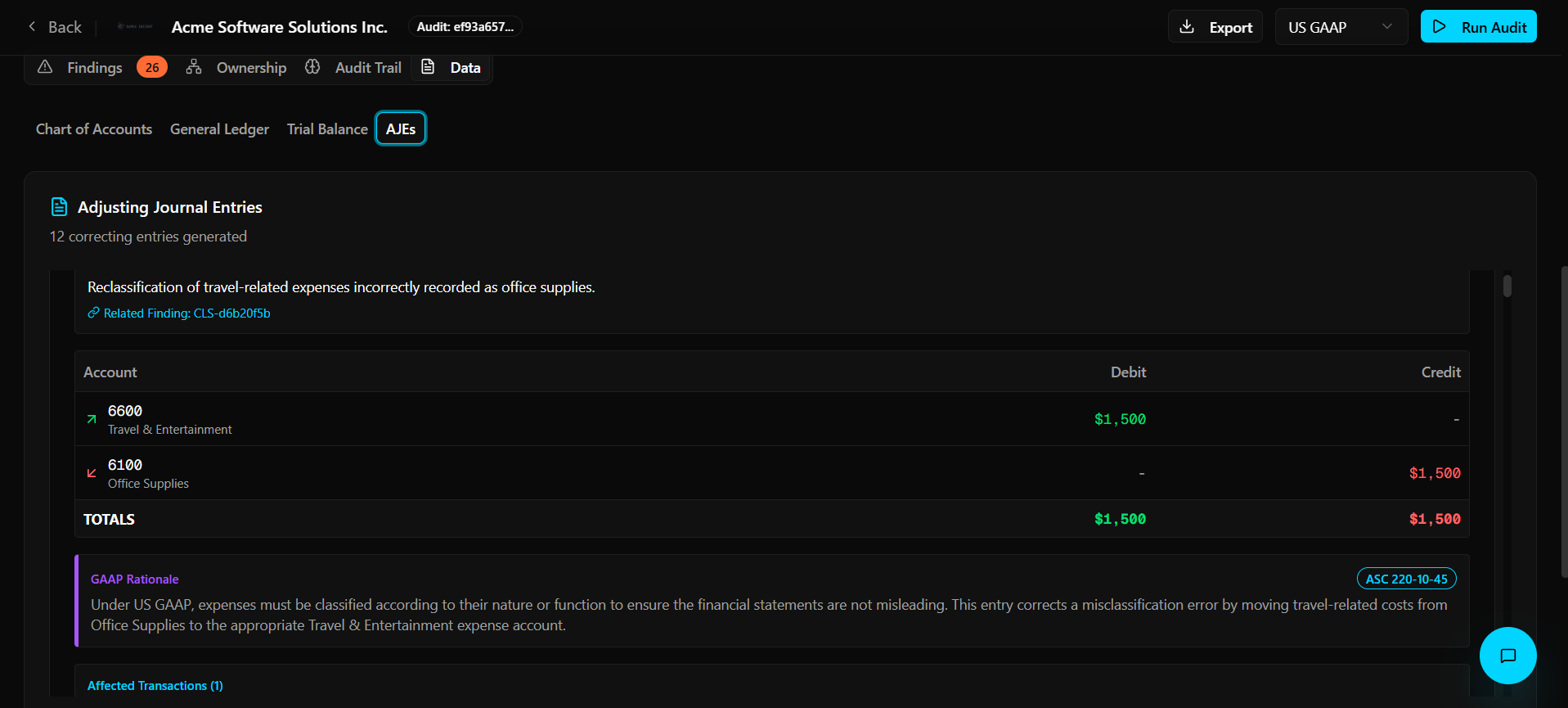
Adjusting Journal Entry Example
-
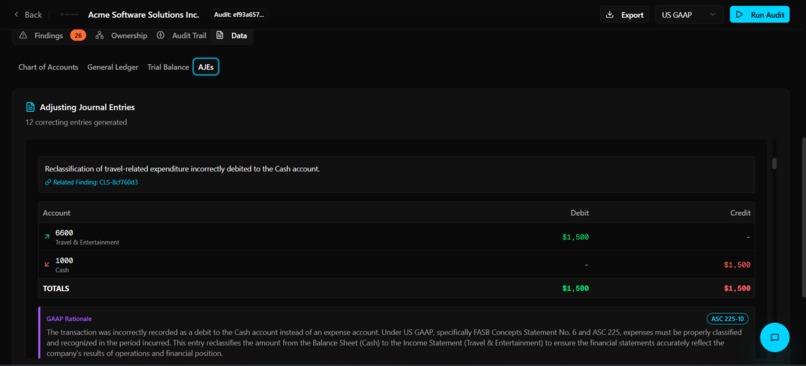
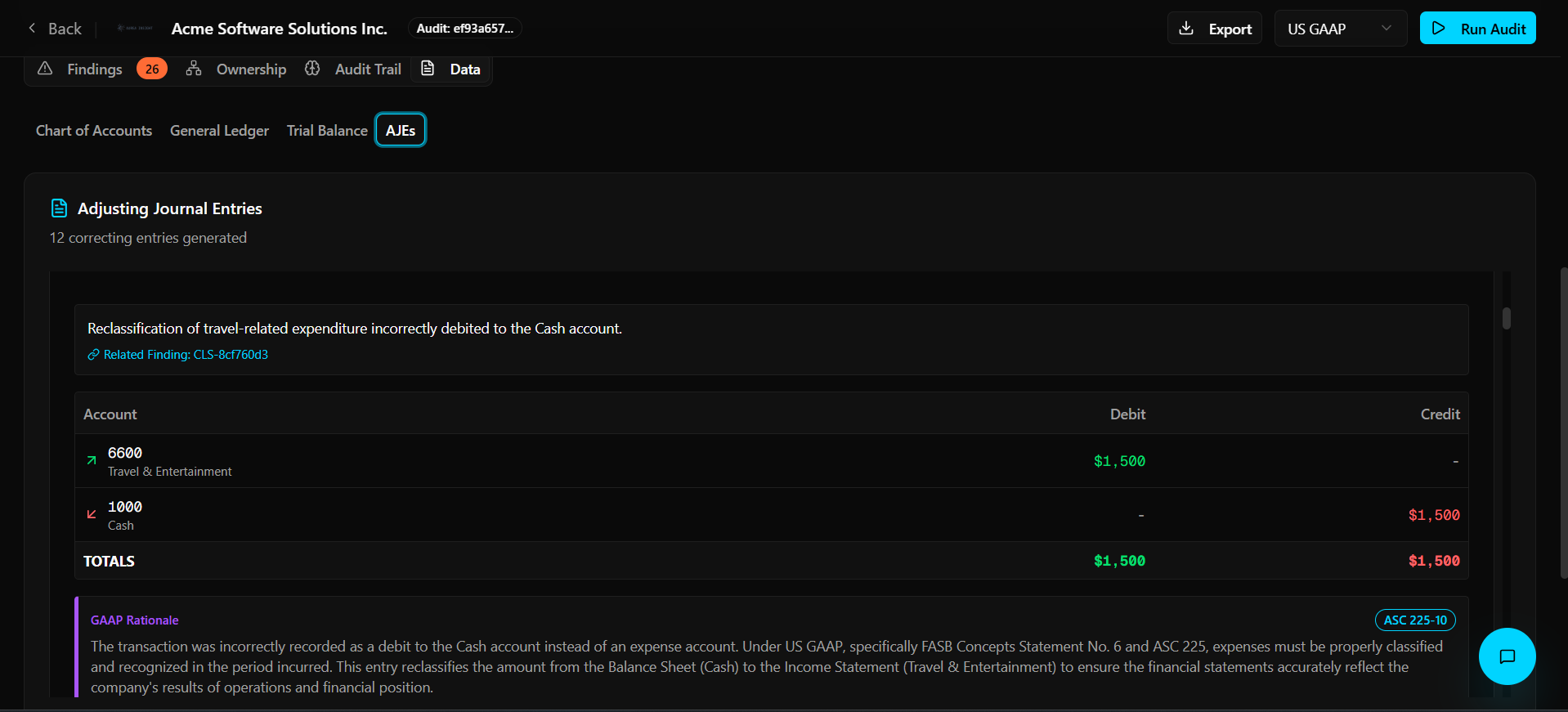
Adjusting Journal Entry Example #2
-
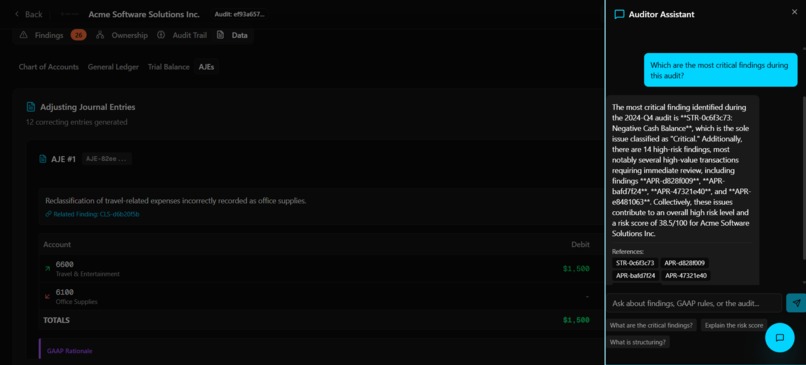
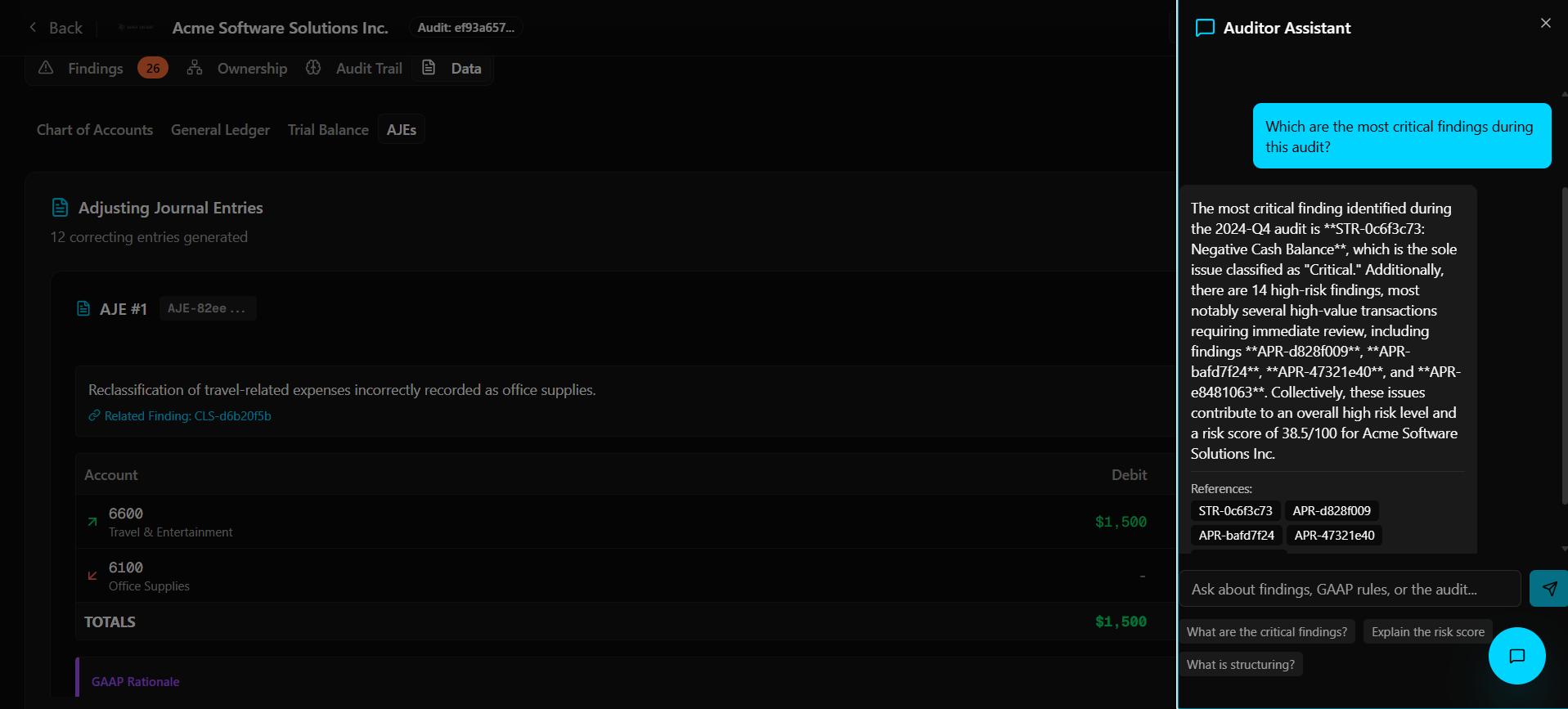
AI assistant ready to explain findings example
-
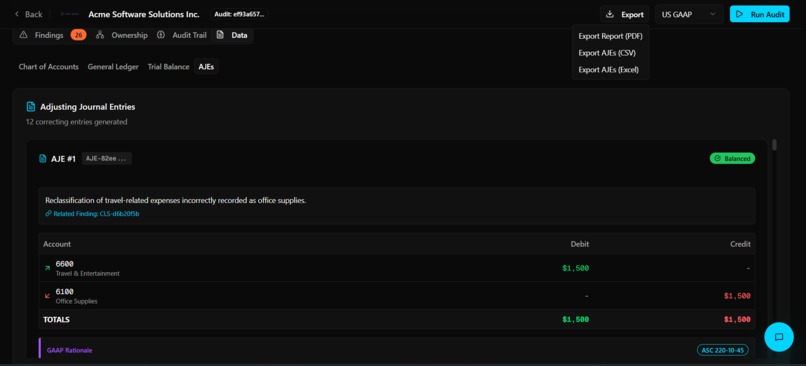
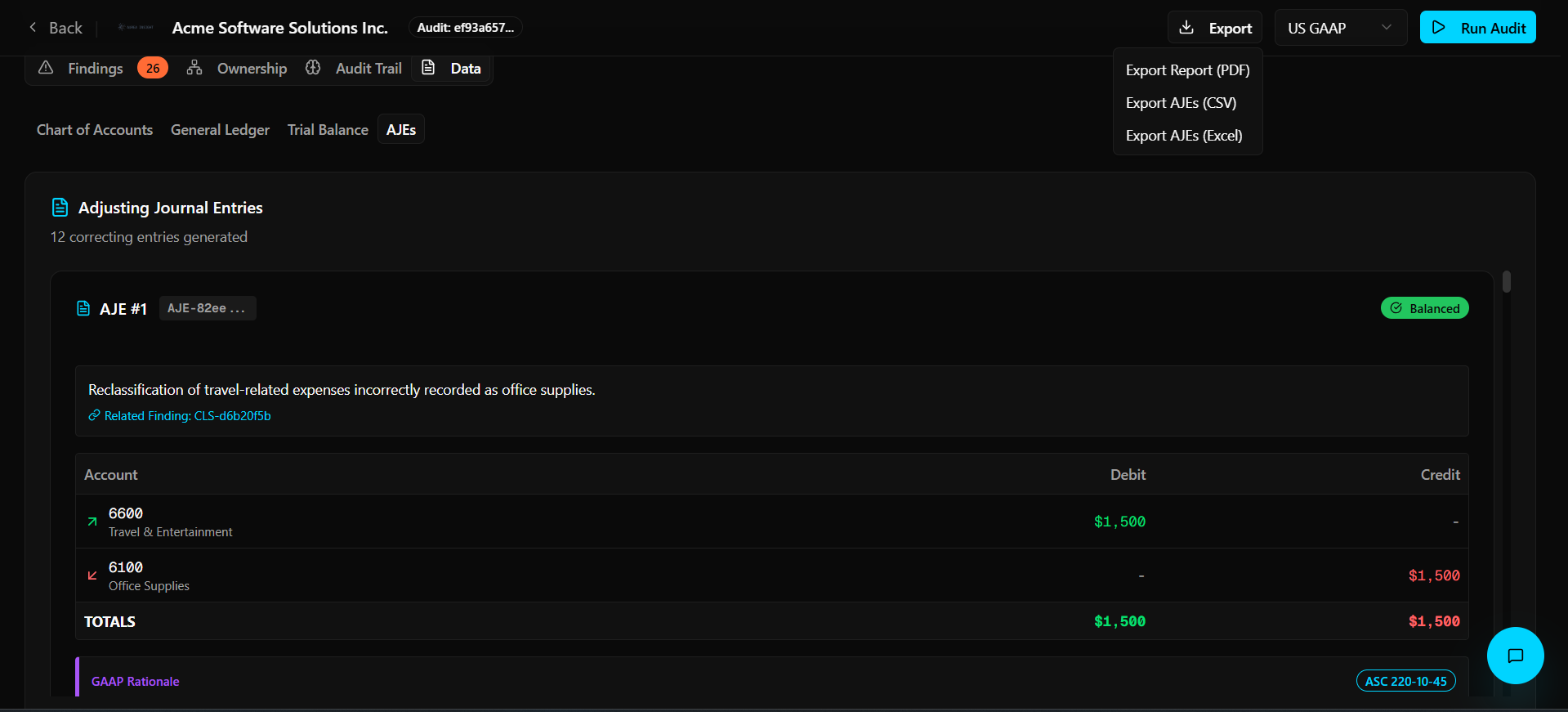
Export options and accounting standard selector
Inspiration
Aurea Insight came from direct experience inside large audit firms.
We work in enterprise multinational audit environments. In practice, a significant portion of audit work is spent on repetitive, manual tasks: reviewing general ledgers, reconciling trial balances, checking ownership structures, and documenting issues that are already well understood by the profession.
The problem is not lack of accounting knowledge. The problem is that audits must be traceable, defensible, and reproducible, which forces teams to rely on slow, manual processes even when the data is already digital.
AI is often proposed as a solution, but most AI tools behave like black boxes. They may flag anomalies, but they cannot explain their reasoning in a way that would stand up to regulatory or internal review.
Aurea Insight was inspired by a simple idea: AI can assist auditors only if it follows the same discipline auditors are held to.
What We Built
Aurea Insight is an AI-powered financial audit platform designed to simulate and audit complete company accounting environments.
The system can:
- Generate internally consistent synthetic companies, including chart of accounts (COA), general ledger (GL), and trial balance (TB)
- Ingest real accounting data from CSV or Excel files
- Apply accounting logic that respects cash and accrual basis differences
- Detect structural, timing, classification, and fraud-related issues
- Discover beneficial ownership relationships using public registry data
- Generate adjusting journal entries (AJEs) for identified findings
- Maintain a complete audit trail covering inputs, reasoning, and outputs
Every finding produced by the system is explainable and traceable back to source data and applied rules.
How We Built It
We built the platform as a modular, production-style system rather than a scripted demo.
- Frontend: Next.js with a dark, data-dense dashboard style suitable for enterprise review workflows
- Backend: Python + FastAPI for orchestration, accounting logic, and audit workflows
- AI Layer: Gemini 3 for reasoning, explanation, and AJE drafting, with strict validation on outputs
- Data Layer: Structured storage for COA, GL, TB, findings, and generated adjustments (in memory for hackaton purpose for now)
- Audit Trail: Full logging of AI prompts and responses, tied to input snapshots and outputs
Instead of asking the model to "audit the company" in one shot, we decomposed the workflow into auditable steps:
- Build or ingest company accounting data
- Validate structure and balancing (TB integrity, debit/credit consistency)
- Apply basis-aware checks (cash vs accrual logic)
- Run anomaly and fraud heuristics (duplicates, outliers, structuring, round-tripping indicators)
- Enrich analysis with ownership discovery where relevant
- Produce findings, explanations, and corrective entries
- Log the complete chain for reproducibility
Challenges
The hardest problem was not generating findings. The hardest problem was making the system behave like an audit tool instead of a chatbot.
Key challenges included:
- Internal consistency: synthetic data must balance and behave like real accounting systems
- Explainability: each finding must include reasoning that can be reviewed and reproduced
- Validation: adjusting journal entries must always balance (total debits equal total credits)
- Ownership uncertainty: registries can be incomplete or inconsistent, so confidence must be surfaced honestly
- Auditability: every AI interaction must be captured and linked to inputs and outputs
What We Learned
We learned that AI is most useful in audit contexts as a force multiplier, not a black-box decision maker.
- It accelerates analysis and documentation
- It reduces human fatigue on repetitive checks
- It improves consistency in how issues are described and corrected
- It only works in regulated workflows if its reasoning is captured and reviewable
The core lesson: in audit, trust comes from traceability, not from confidence.
Why This Matters
Audits are expensive largely because they are careful and documentation-heavy.
By automating mechanical work like normalization, anomaly surfacing, ownership mapping, and draft adjustments, auditors can spend more time on judgment, interpretation, and client communication.
This project demonstrates a realistic direction for enterprise adoption: AI that produces results with a full trail, suitable for review, not magic.
Limitations
We state these explicitly:
- The demo uses synthetic and simplified data
- This is not a substitute for a statutory audit
- You may upload your own general ledger and trial data to test
- Registry data may be incomplete
- Fraud signals can produce false positives
- Human review is required for conclusions and sign-off
What is next for Aurea Insight
This project is a working foundation, not a concept demo.
The next steps are focused on turning it into a production-grade enterprise platform:
- Expanding real-data ingestion and normalization across common ERP exports
- Hardening ownership discovery with additional registries and jurisdiction-specific logic
- Introducing long-running audit agents that monitor changes over time, not just point-in-time snapshots
- Adding reviewer workflows so human auditors can approve, override, and annotate findings
- Integrating stronger governance controls for enterprise and regulatory environments
Our goal is to reduce audit friction without reducing audit rigor, and to bring explainable, traceable AI into real financial control workflows used by enterprises and audit firms globally.
Built With
- cryptographic
- csv-export-apis-and-registries:-opencorporates-api
- cytoscape.js-document-processing:-csv-and-excel-parsers
- docker
- languages:-python-3.12
- networkx-(in-memory-graph-analysis)-data-processing:-pandas
- numpy-graph-visualization:-d3.js
- pdf-parsing-via-gemini-vision-reporting:-pdf-generation-with-weasyprint-/-reportlab
- rest-based-api)-ai-platform:-google-gemini-3-api-databases:-postgresql-(structured-accounting-data)
- sec-edgar
- security
- shadcn/ui-backend-framework:-fastapi-(async
- tailwind-css
- typescript-frontend-framework:-next.js-16-(react-19)
- uk-companies-house-(with-mock-data-fallback)-infrastructure:-docker

Log in or sign up for Devpost to join the conversation.