-
-
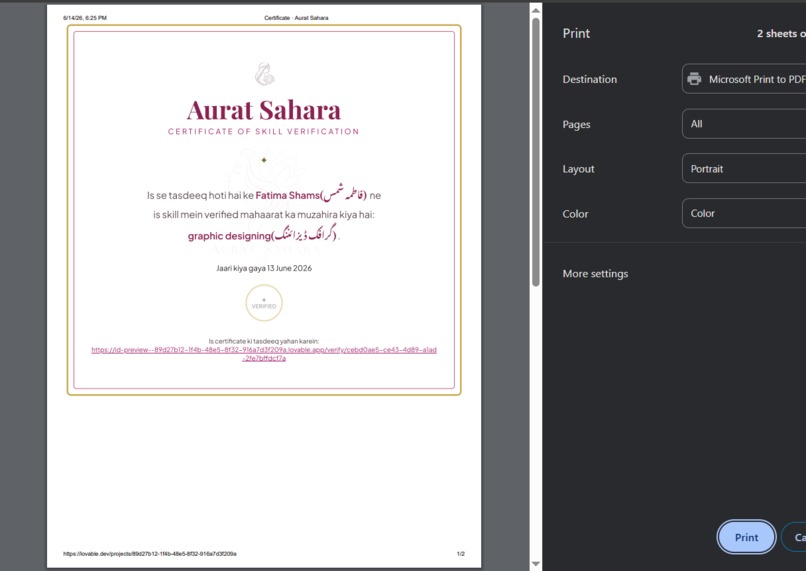
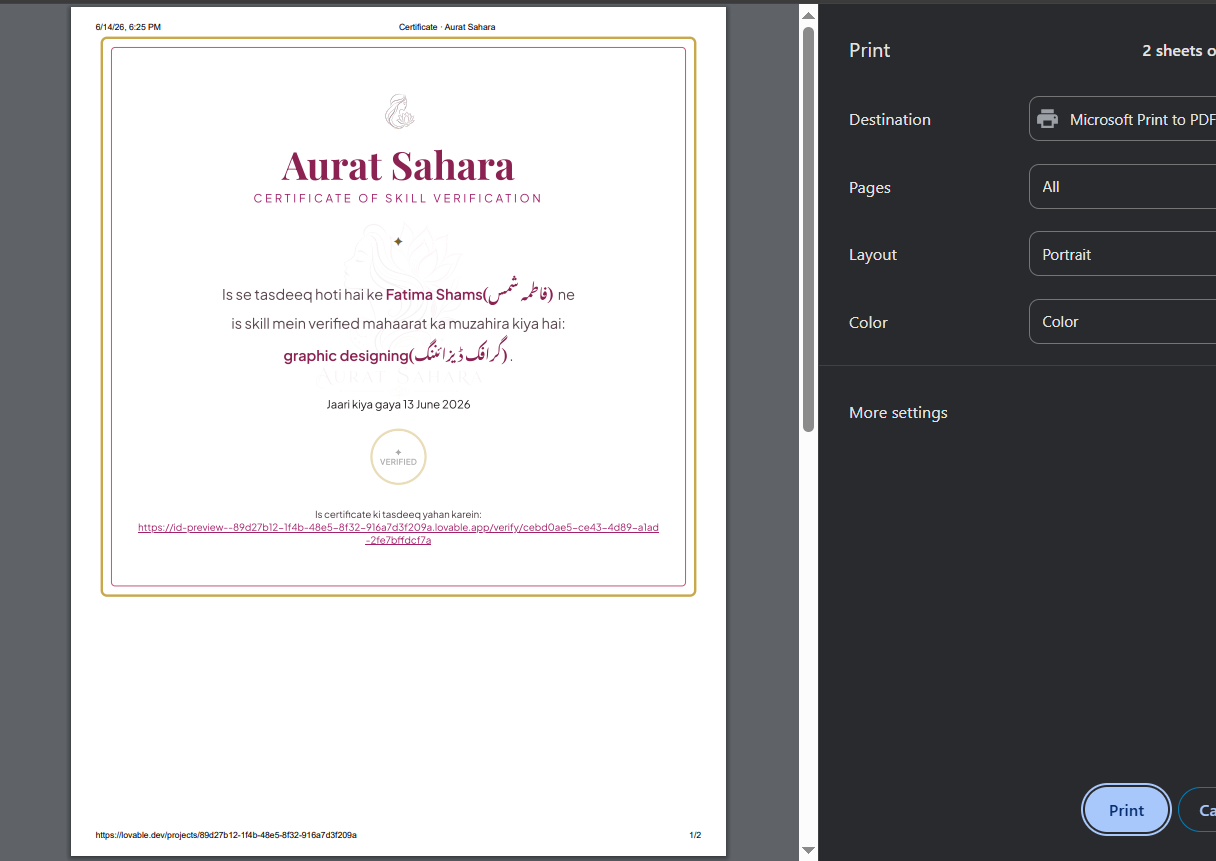
certificate
-
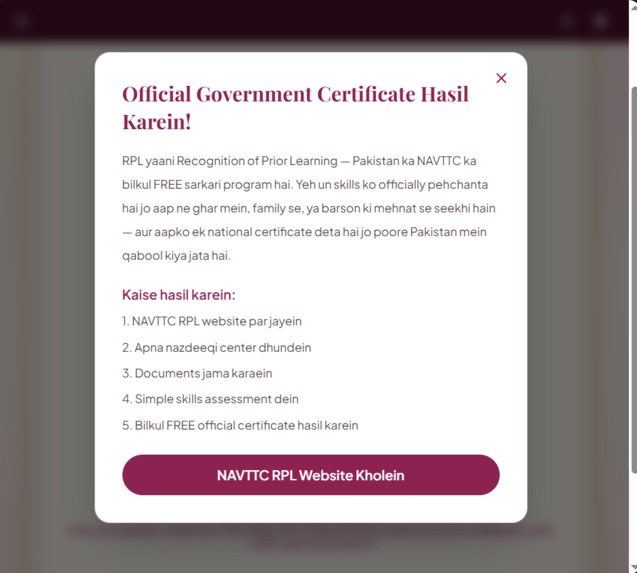
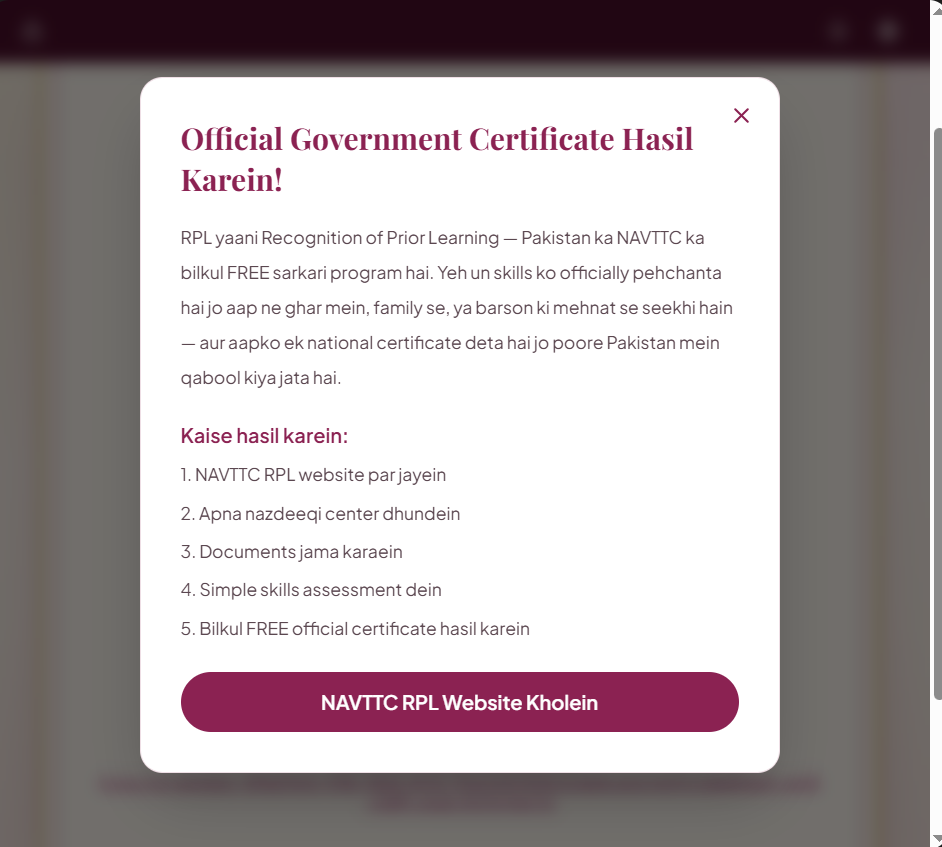
Government RPL site link
-
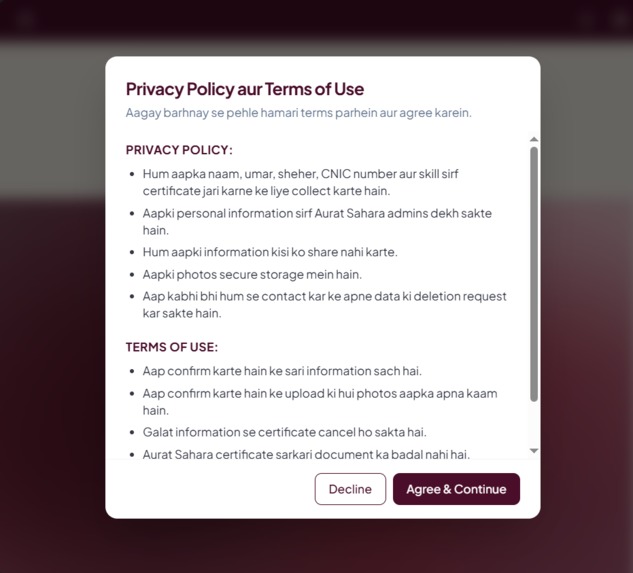
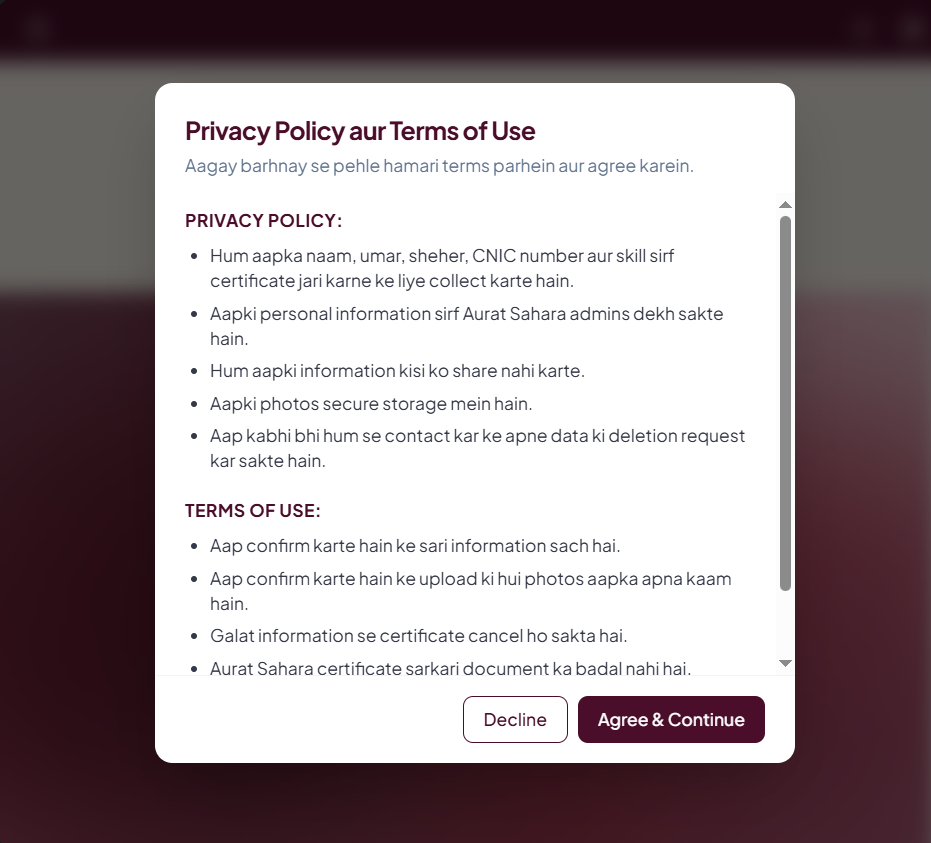
Terms and policies
-
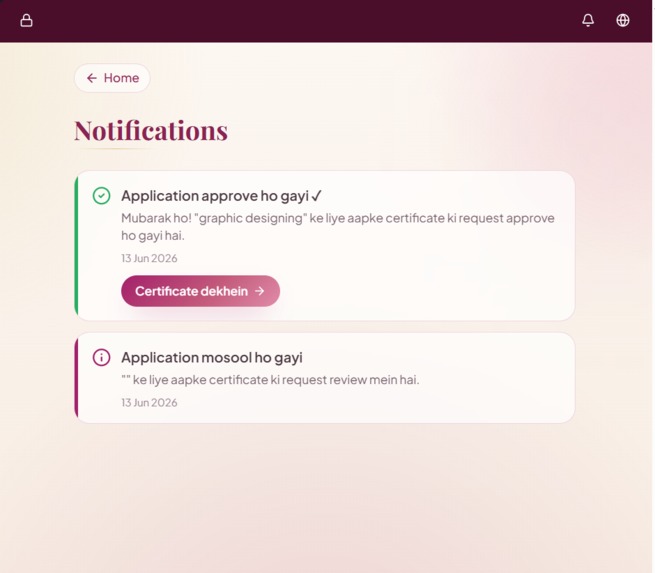
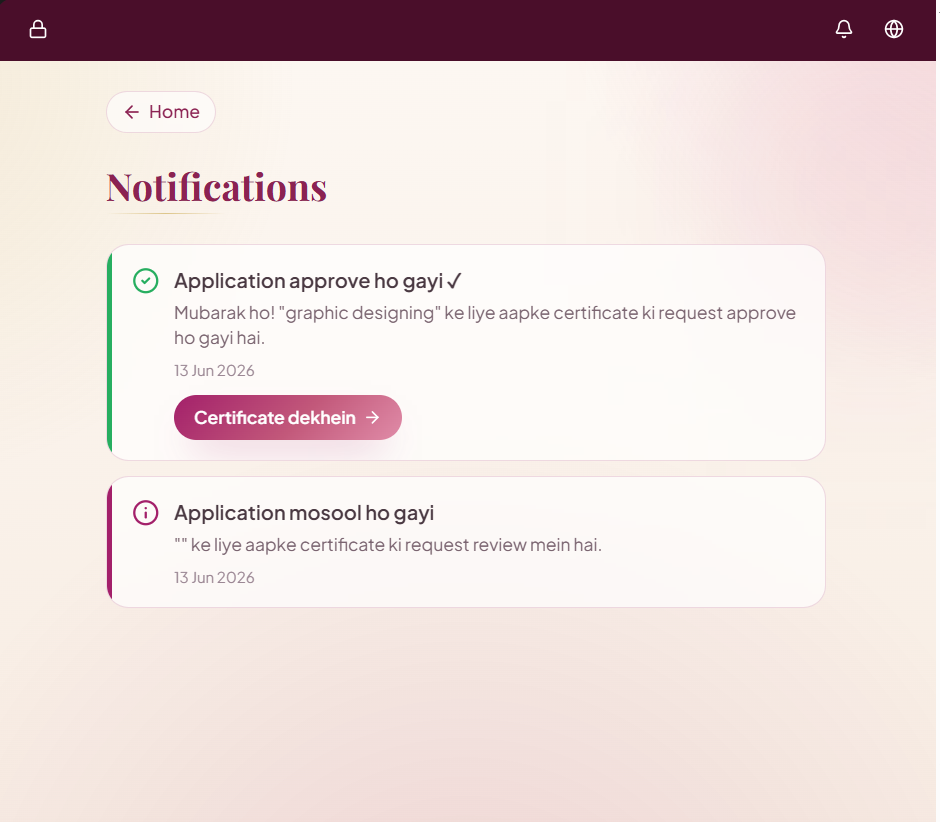
notification
-
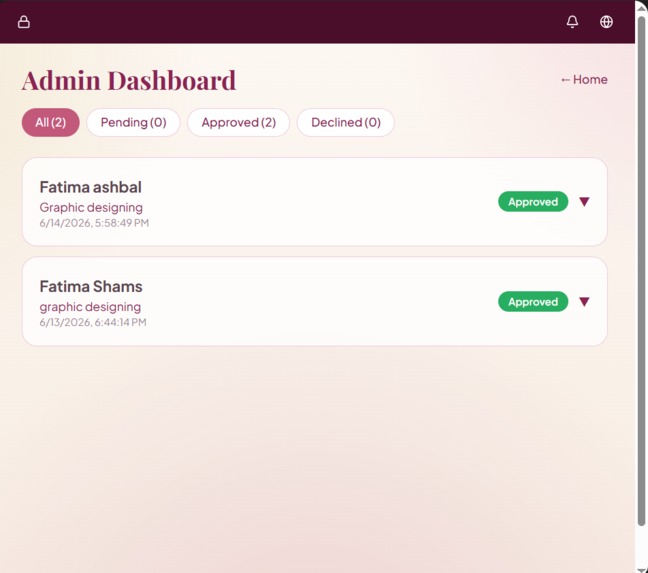
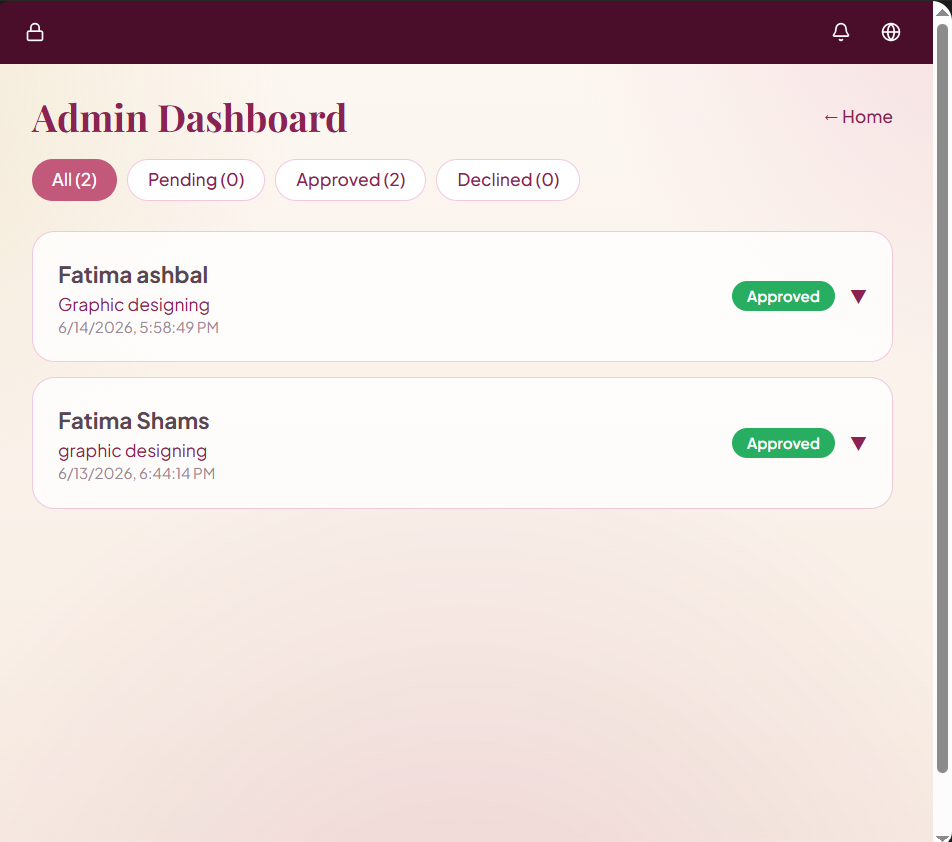
admin dashboard
-
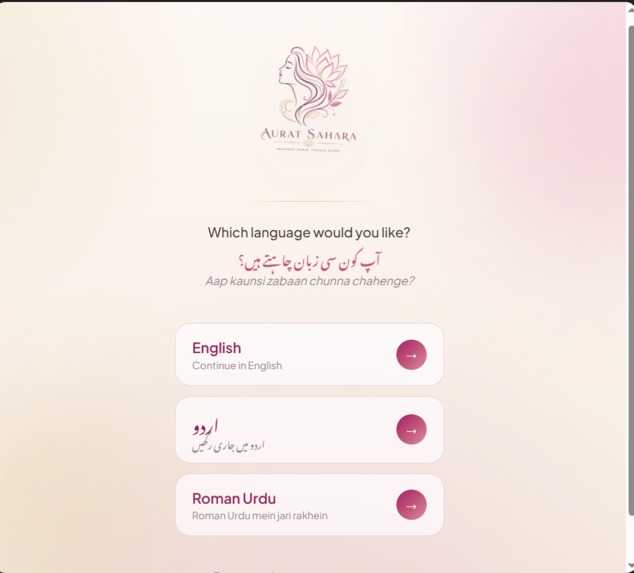
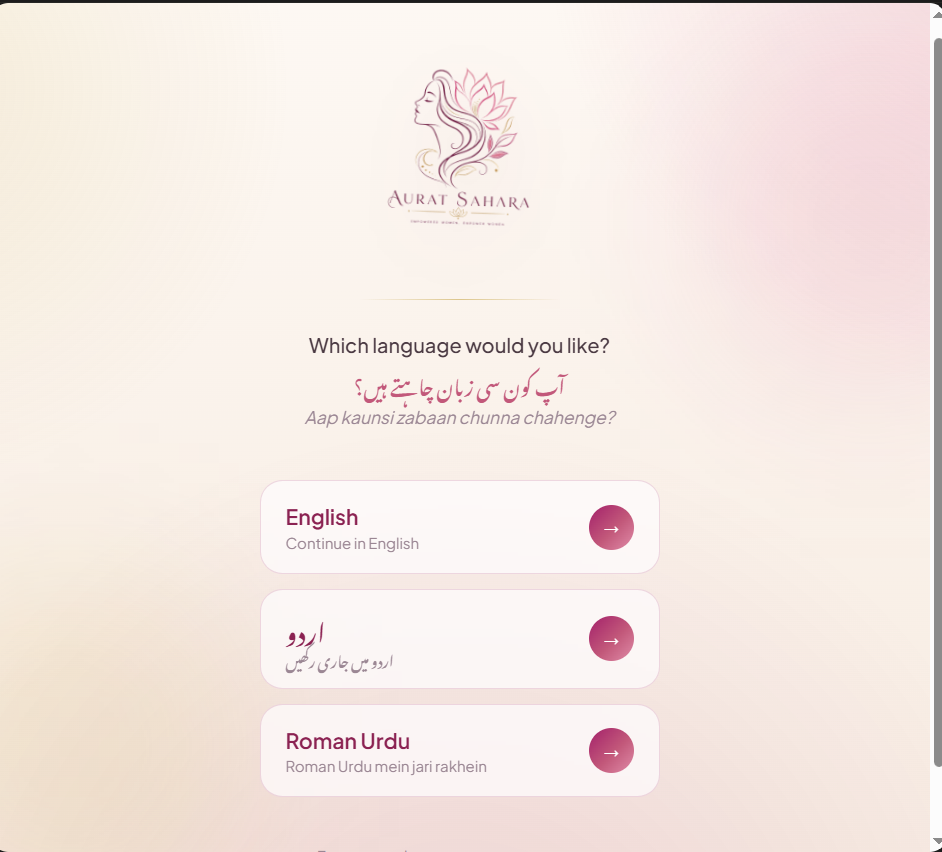
language selector
-
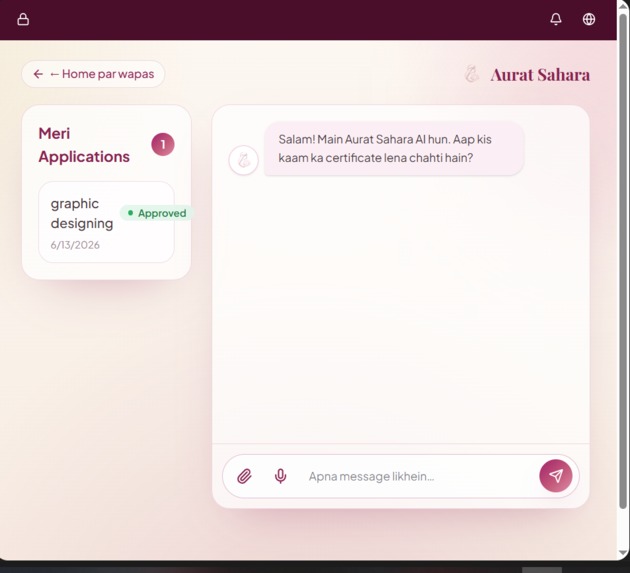
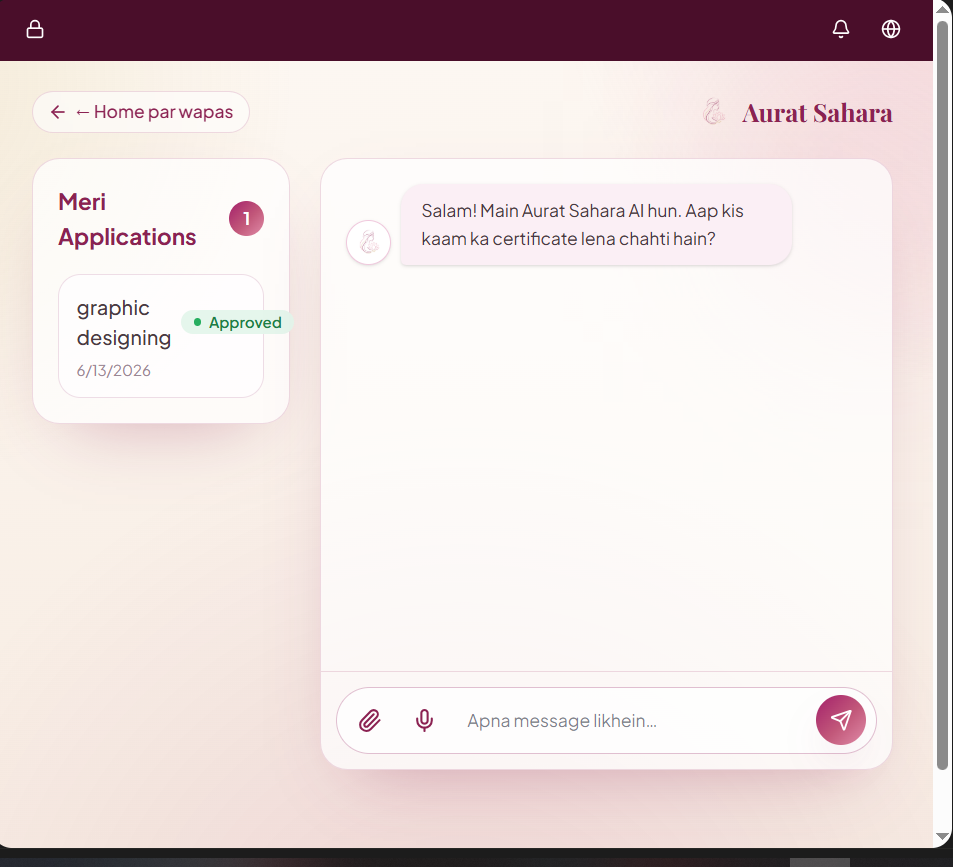
Aurat Sahara AI chat
-
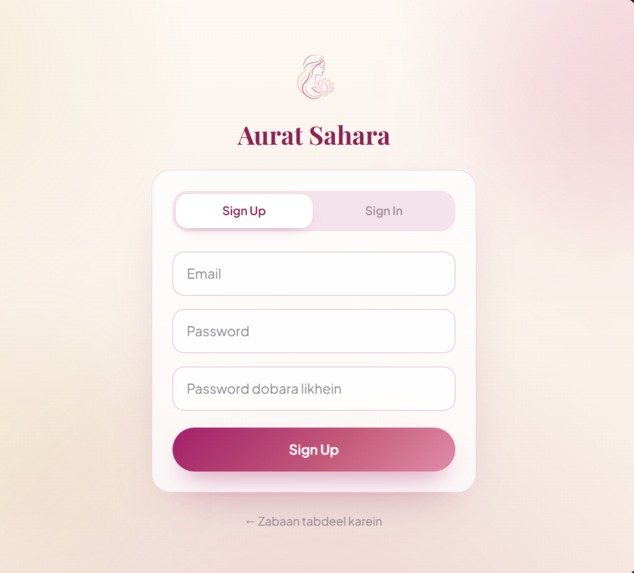
credentials
-
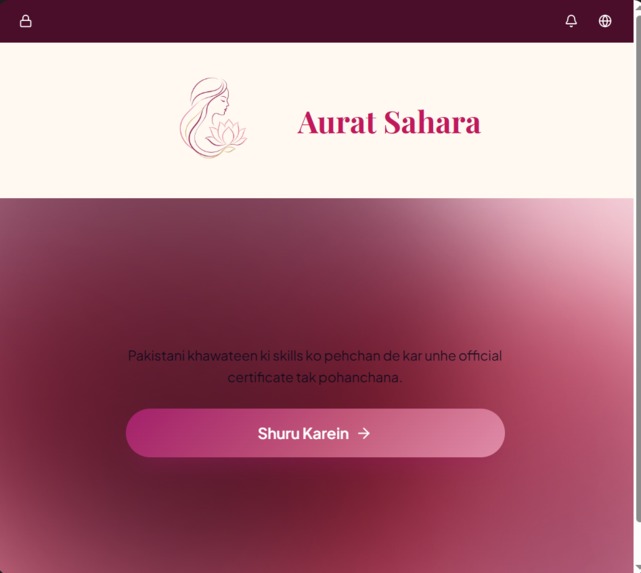
home or landing page
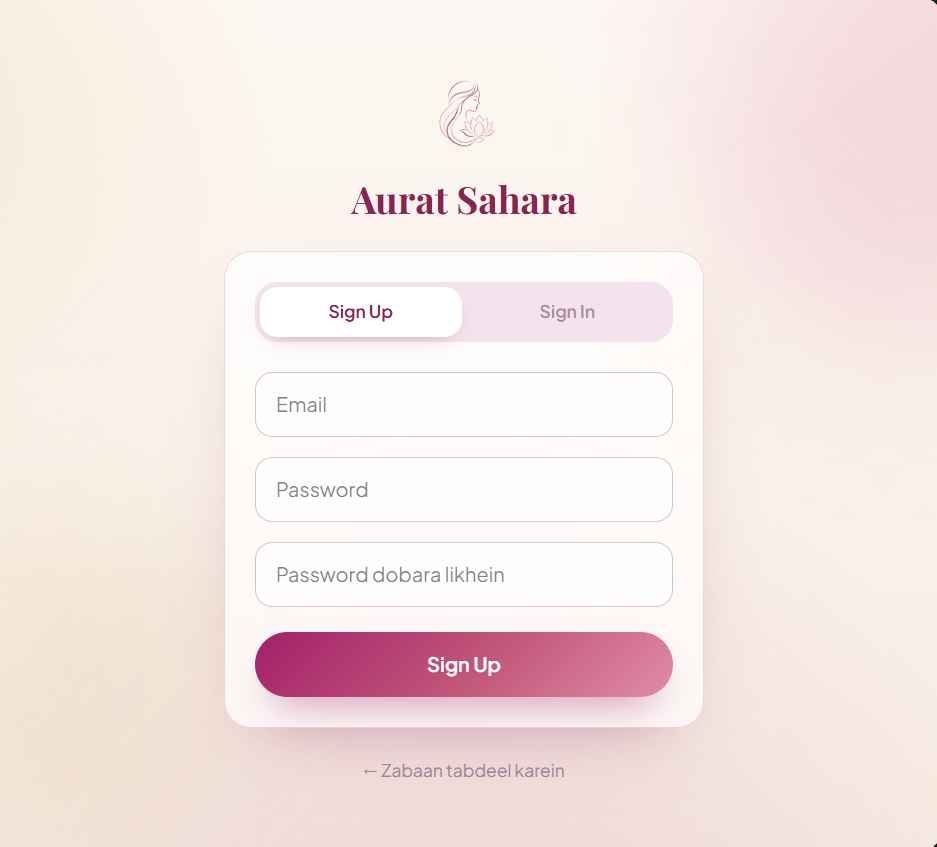
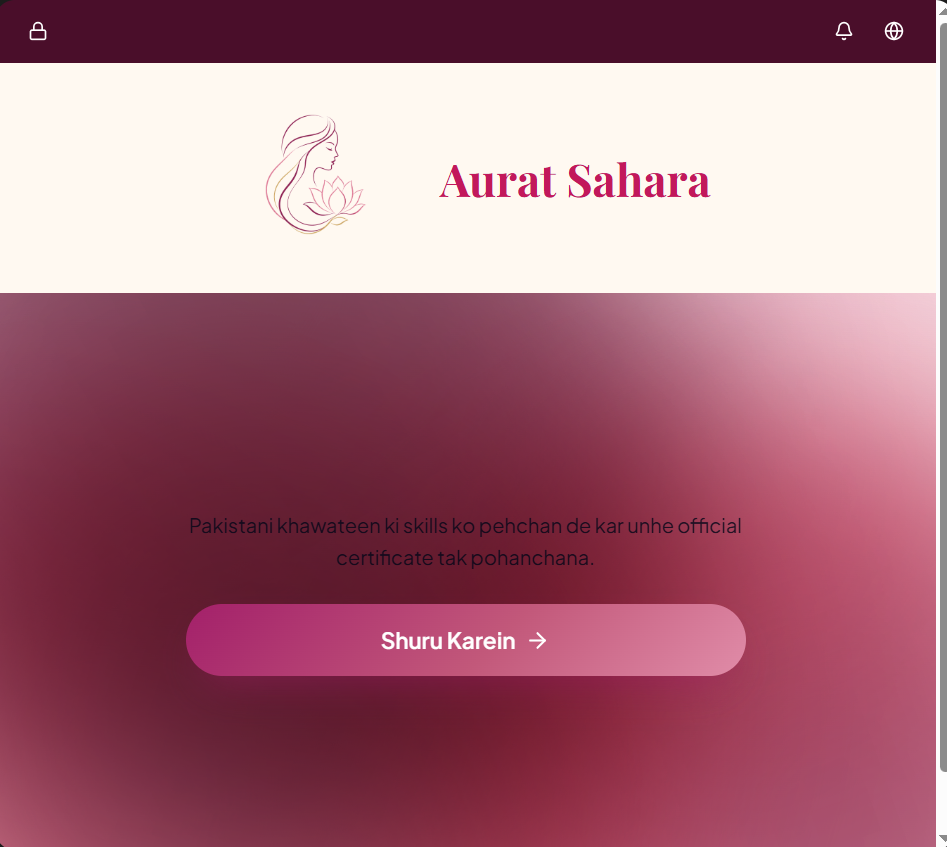
Aurat Sahara — عورت سہارا
💡 What Inspired Us
It started with a simple discovery that shocked us.
Pakistan's NAVTTC runs a free government program called RPL (Recognition of Prior Learning) — designed specifically to certify people who learned their skills informally, at home, from family, or through years of practice.
In all of FY 2023-24, only 3,700 people were certified across the entire country.
We shared this with our classmates. Nobody had heard of it. We told our professor. He hadn't heard of it either.
If university students and professors don't know — what chance does a woman in Hyderabad who has been tailoring for 20 years have of knowing her skills can be officially recognized, for free?
That gap — between a government solution and the people it was built for — is what Aurat Sahara was built to bridge.
🌸 What We Built
Aurat Sahara is an AI-powered civic tech platform that helps Pakistani women document, verify, and certify their informal skills — and then connects them directly to Pakistan's official RPL certification pathway.
How it works:
- User selects their language (English, Urdu, or Roman Urdu)
- Signs up with email
- An AI chatbot guides them through a friendly conversation — collecting skill details, experience, and work photos
- Application goes to admin for review
- Approved users receive a verified Hunar Sanad digital certificate
- Certificate includes direct link to NAVTTC RPL — their path to a free, government-approved national certificate
🛠️ How We Built It
We built Aurat Sahara in under 48 hours using:
- Loveable — AI-powered frontend builder
- Supabase — Authentication, database, and file storage
- Groq AI and API Integration — AI chatbot via Loveable AI Gateway
- TanStack Start — Full-stack TypeScript framework
- lucide-react — Icon library
- Termly __ a free site from where we selected and and Privacy policies, Terms and uses. We started with the core problem and worked backwards. What does a woman with no tech literacy need? A conversation, not a form. So we built the entire application flow as an AI chat — warm, simple, in her language.
🚧 Challenges We Faced
1. Language support Getting the platform to truly switch between English, Urdu script, and Roman Urdu — not just the UI but the AI responses too — was harder than expected. We had to carefully store language preference and pass it through every component and API call.
2. Voice input We wanted voice-to-text in Urdu. Browser Web Speech API doesn't support Urdu properly. We had to make a tough call — English and Roman Urdu voice input only, with typed input for Urdu script users.
3. Credits and constraints We built this on Loveable's free tier — 5 credits per day. Every prompt had to be precise and purposeful. No room for trial and error. This actually made us better — we planned more, built smarter.
4. Keeping it human The biggest challenge wasn't technical. It was making sure a woman who has never used a web app, who may have low literacy, who may distrust technology — feels safe, respected, and understood by our platform. Every word in the chatbot, every notification, every error message was written with her in mind.
📚 What We Learned
- AI can be a bridge, not just a tool — when designed with empathy
- The best civic tech solves for people who weren't in the room when it was designed
- Pakistan has more civic infrastructure than people know — the problem is awareness, not absence
- Two people, 48 hours, and a clear problem statement can produce something real
🔮 What's Next
- Hub B — Rights and documentation guidance chatbot (civic rights, CNIC, nikahnama, inheritance)
- NAVTTC Partnership — Direct integration with RPL assessment centers
- NGO Admin Accounts — Local organizations as community verifiers
Built with love, purpose, and very few credits.
Maham Lodhi & Farhan Shoukat AI for Civic Innovation Hackathon 2026 Code for Pakistan × FAST NUCES Islamabad
Built With
- google-gemini-ai
- groq
- loveable
- lucide-react
- react
- speech
- supabase
- tailwind-css
- tanstack-start
- typescript
- web


Log in or sign up for Devpost to join the conversation.