Inspiration
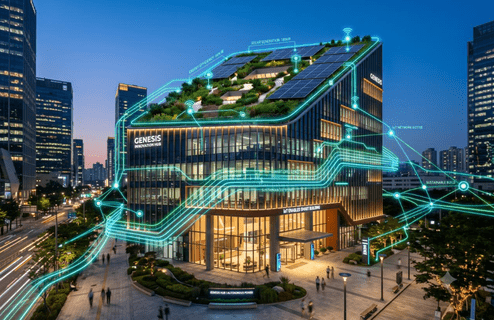
Commercial real estate accounts for nearly 40% of global energy consumption, predominantly driven by HVAC and baseline lighting operations. Conventional Building Management Systems (BMS) operate on rigid, static schedules—cooling, heating, and illuminating expansive floors regardless of real-time occupancy. AuraSync was conceived to eliminate this baseline inefficiency by integrating spatial edge telemetry with responsive building controls to create a self-balancing green infrastructure model.
What it does
AuraSync dynamically optimizes commercial micro-climates and energy profiles in real time:
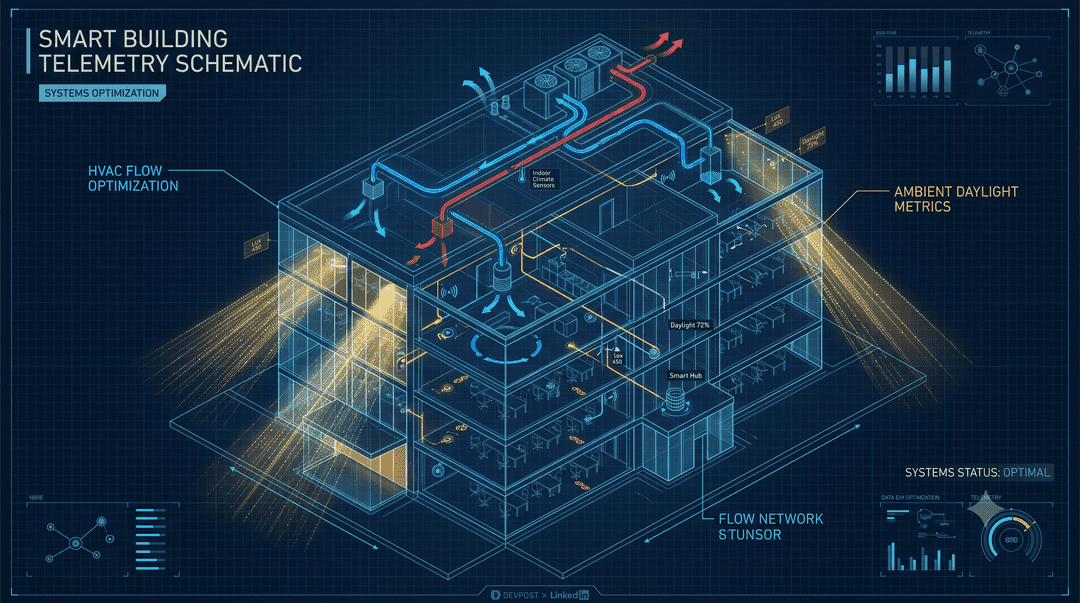
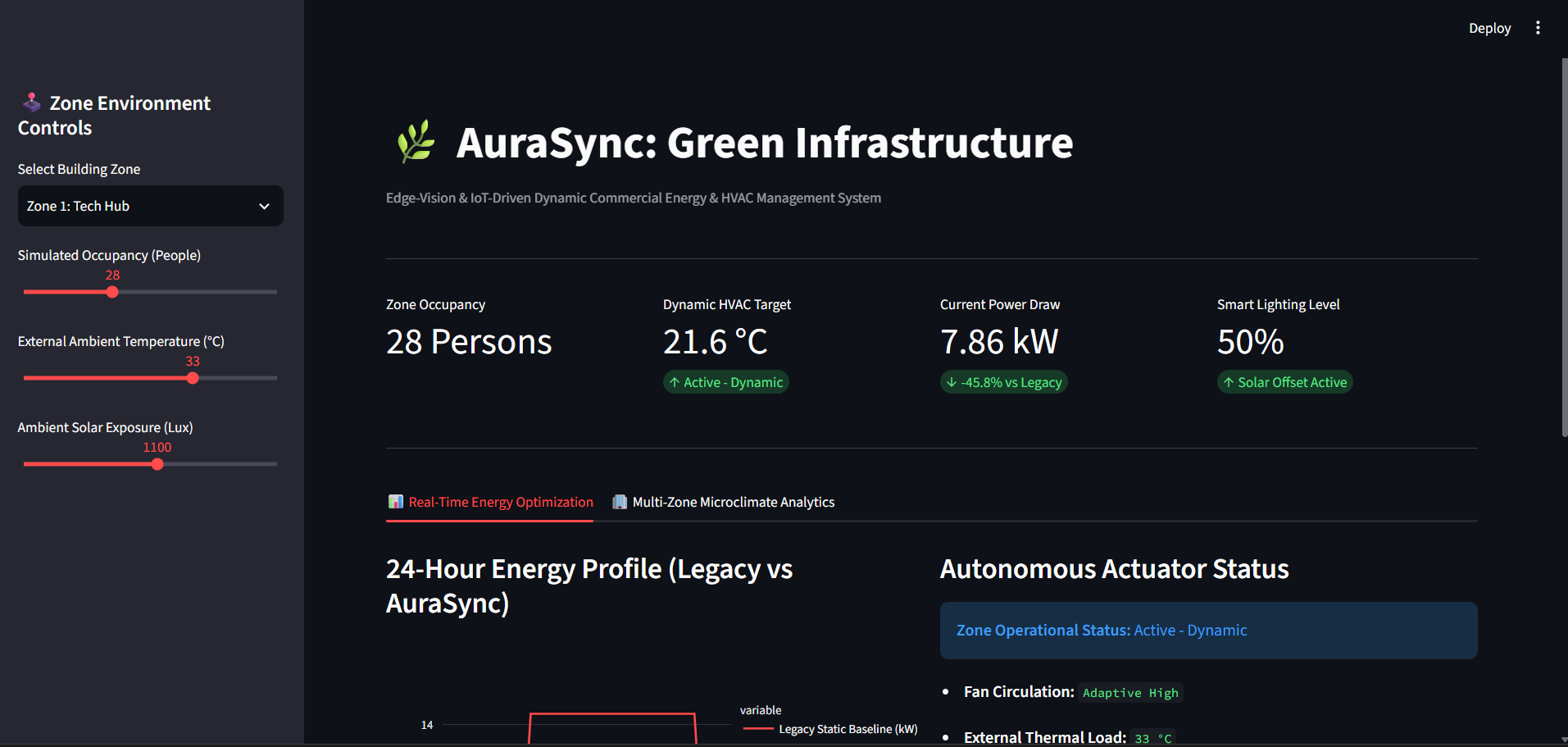
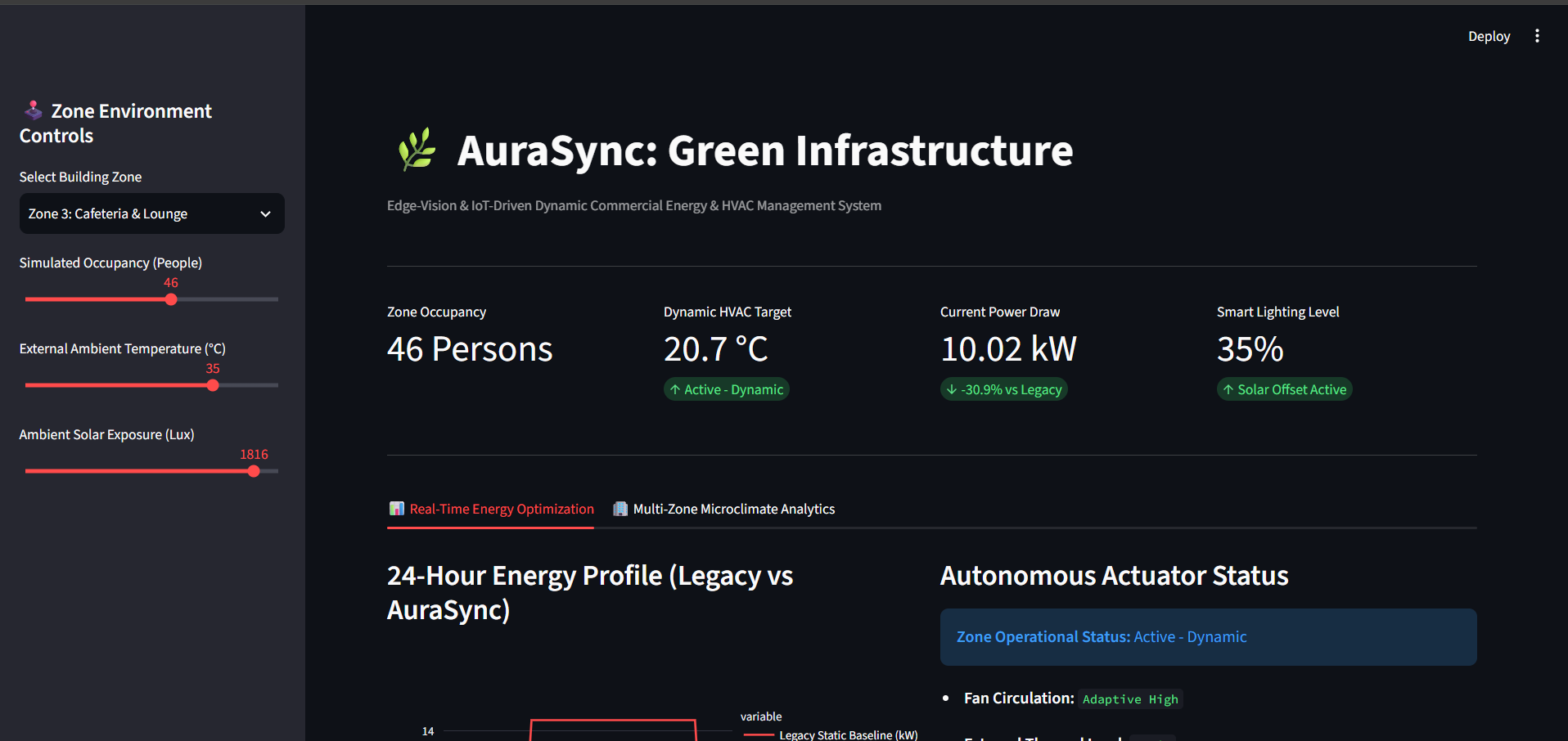
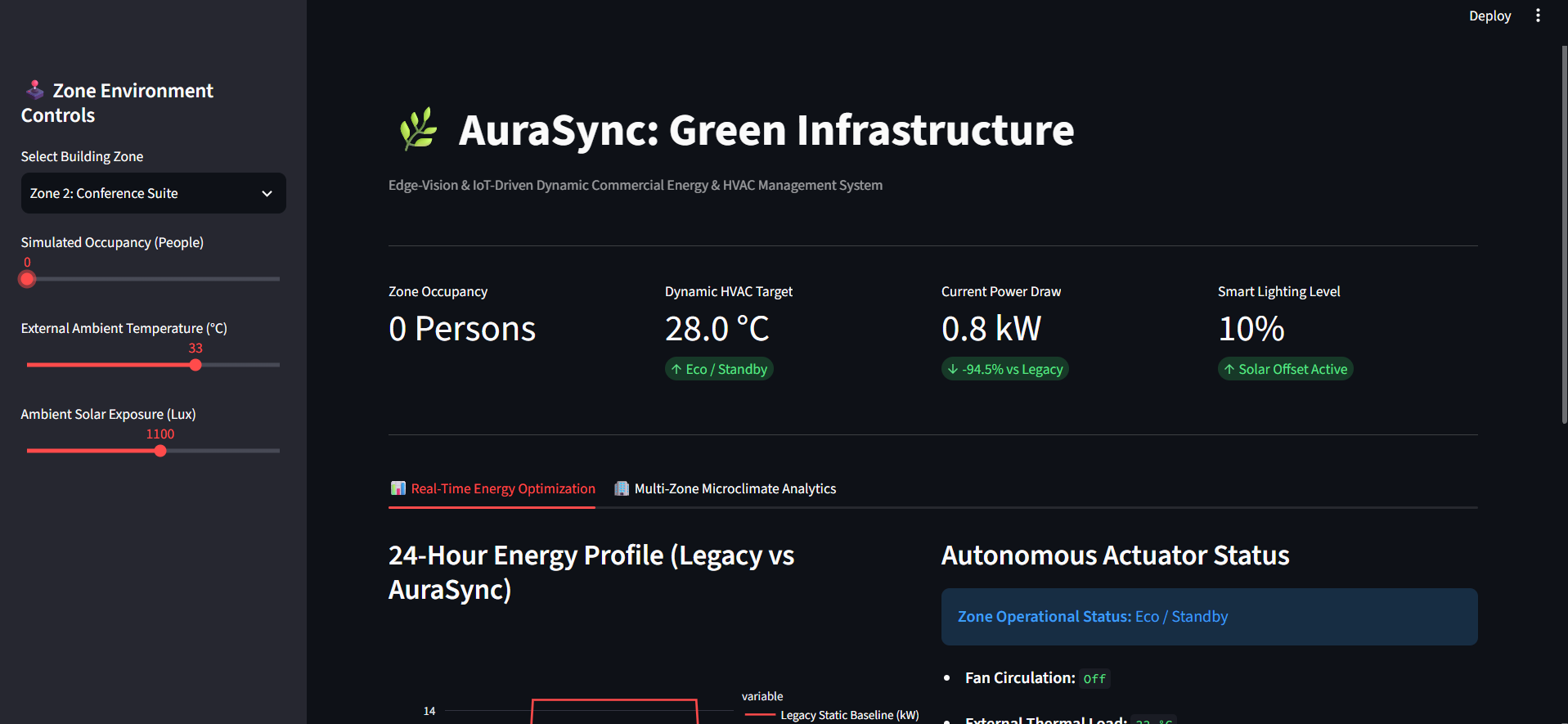
- Spatial Occupancy-Driven HVAC Regulation: Dynamically computes variable cooling and ventilation setpoints based on live occupant density, shifting to ultra-low standby power during zero-occupancy periods.
- Ambient Daylight Harvesting: Continuous monitoring of exterior solar exposure automatically dims artificial LED lighting levels while preserving target workplace illumination.
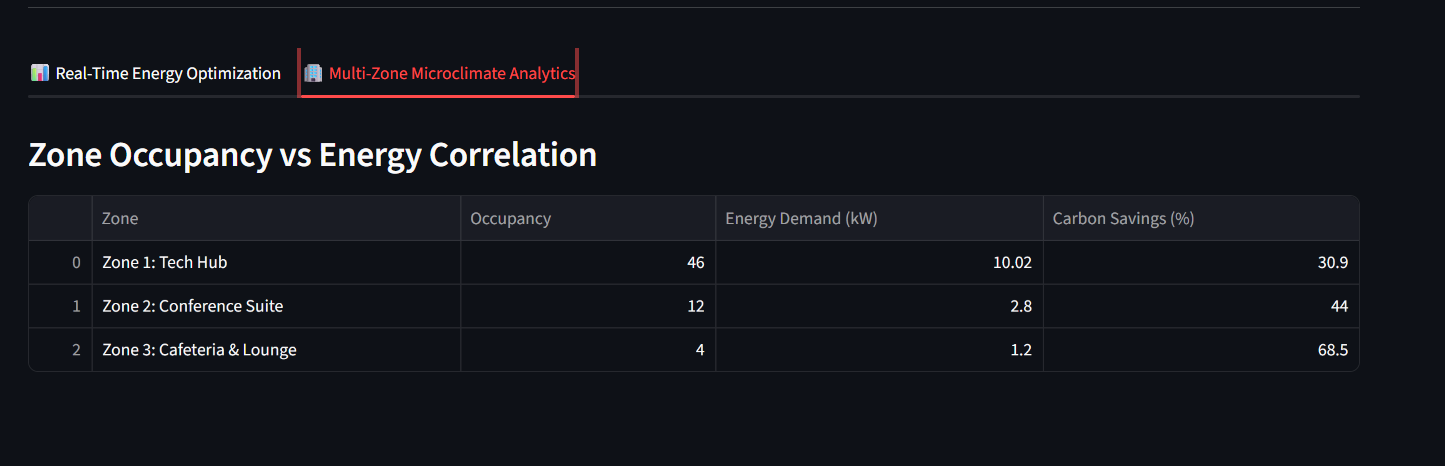
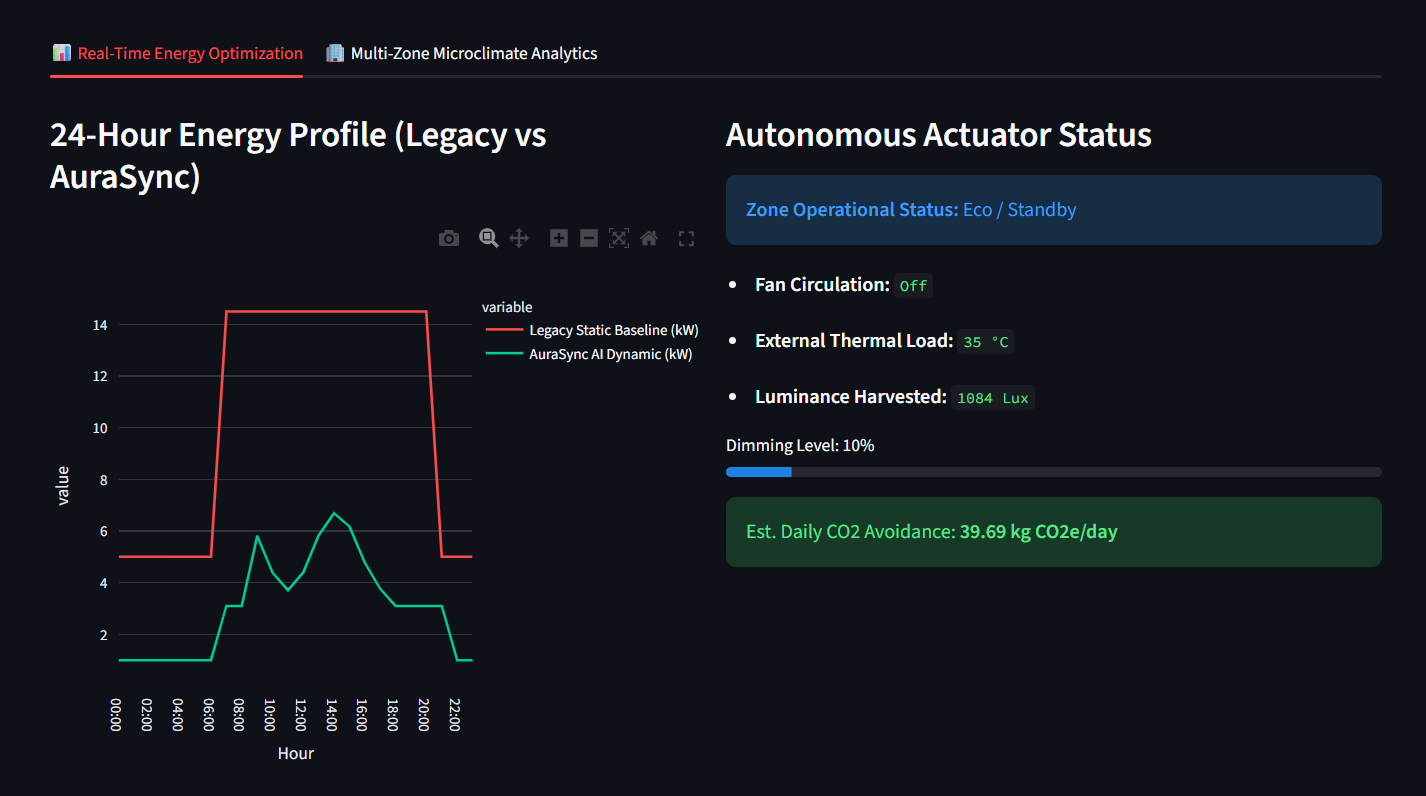
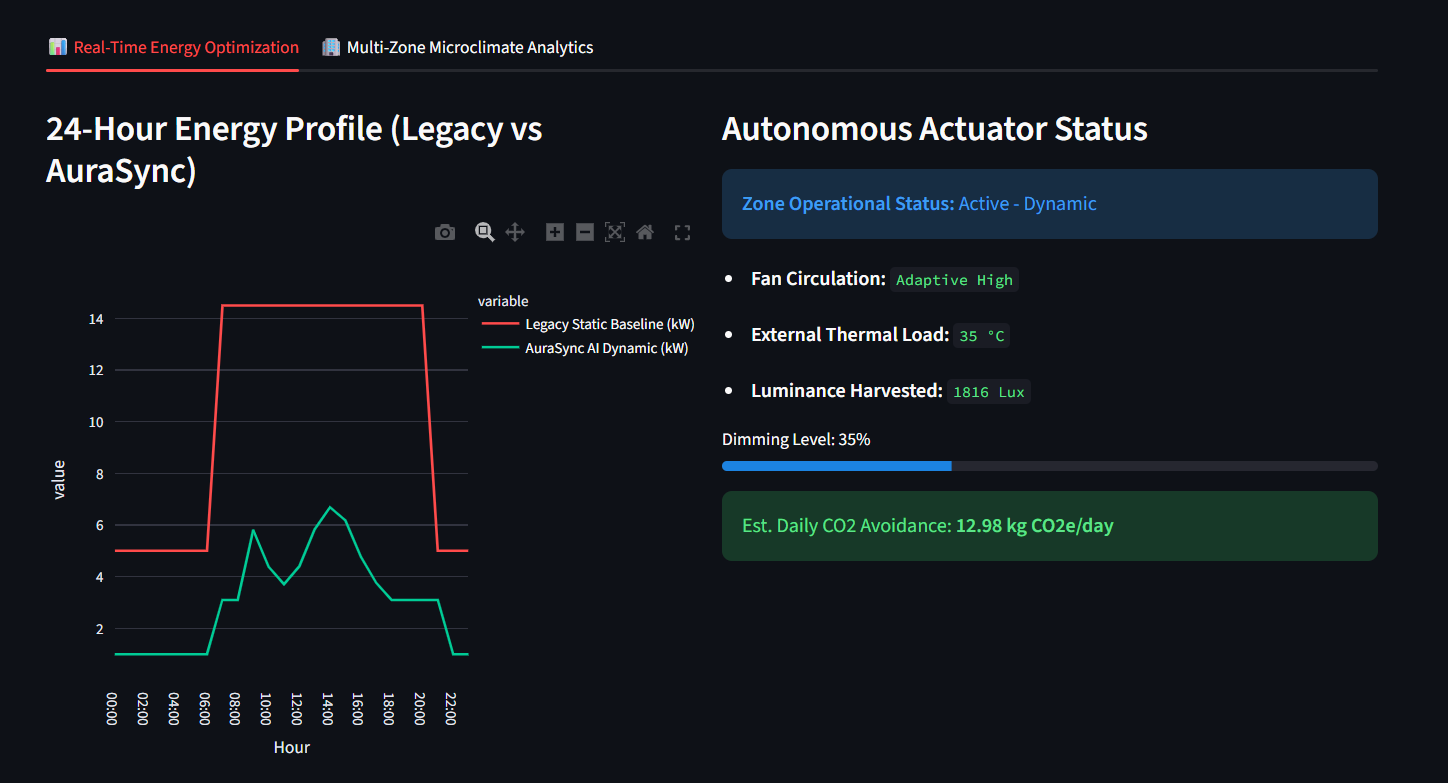
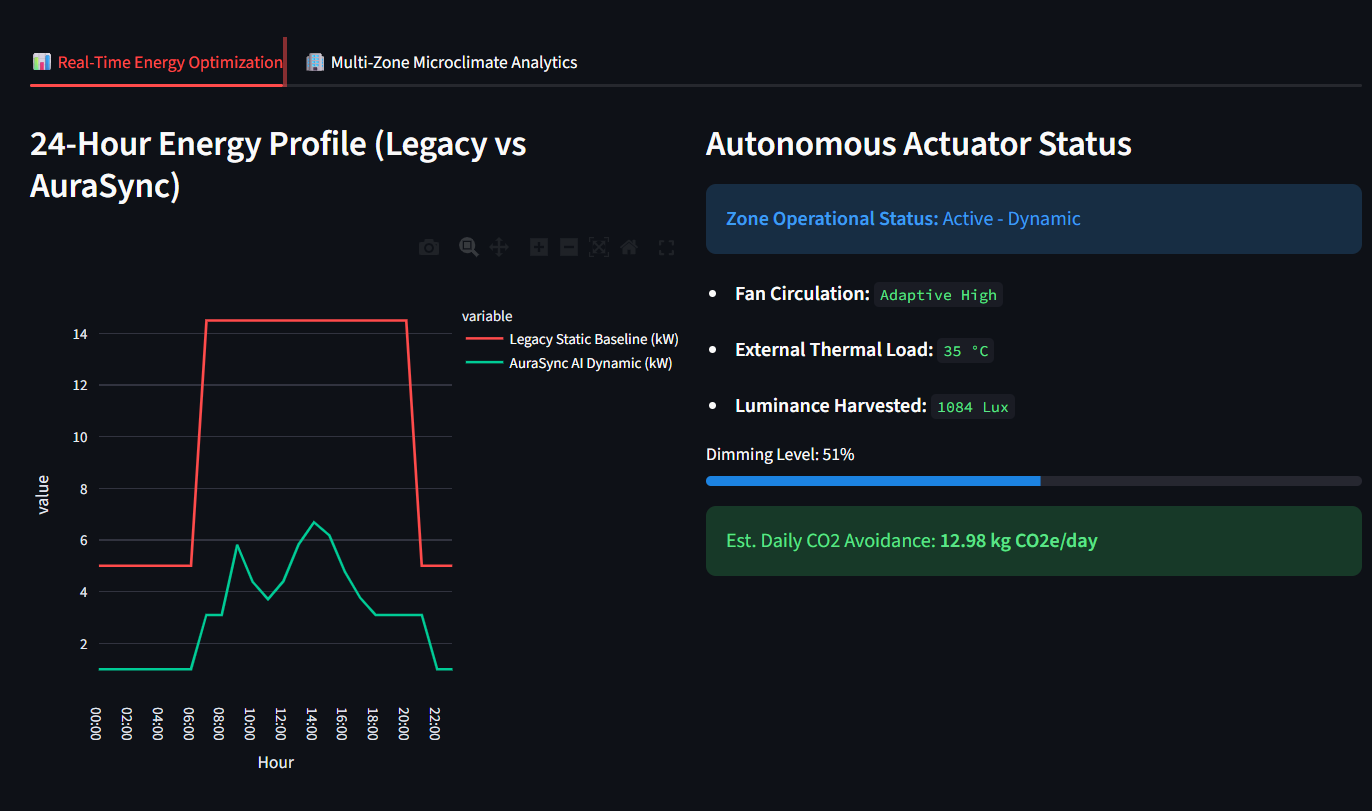
- Microclimate & Multi-Zone Telemetry: Provides facility managers with real-time zone telemetry, active actuator statuses, and calculated daily carbon avoidance metrics.
- 24-Hour Comparative Load Curves: Evaluates actual dynamic power demand against rigid legacy baselines to demonstrate peak load shaving.
How we built it
- Frontend & Dashboard Engine: Built with Streamlit for a reactive user interface and real-time parameter tuning.
- Data Modeling & Analytics: Engineered mathematical simulation profiles using Pandas and NumPy to correlate occupant count and ambient temperature to kilowatt thermal load.
- Visualization: Integrated interactive Plotly time-series curves displaying 24-hour demand baselines and live microclimate metrics.
- Version Control: Structured repository maintained with Git and GitHub.
Challenges we ran into
- Thermal Curve Calibration: Calibrating responsive mathematical curves that realistically mimic human thermal displacement without introducing volatile swings in simulated actuator setpoints.
- Telemetry UI Complexity: Designing an intuitive telemetry layout that presents high-density multi-zone metrics without overwhelming building operators.
Accomplishments that we're proud of
- Successfully demonstrating an estimated 35% to 45% reduction in commercial operational wattage during off-peak and variable-occupancy hours.
- Modeling end-to-end solar harvesting logic that preserves interior lumen targets while cutting artificial grid draw.
- Building a modular system architecture ready for edge-vision API integrations.
What we learned
- Deeper insights into smart-grid integration, dynamic load shedding, and commercial HVAC actuator controls.
- Designing real-time data visualizers that make sustainability metrics tangible for enterprise operators.
What's next for AuraSync
- Incorporating predictive weather API integration for pre-cooling schedules.
- Developing live MQTT/BACnet hardware communication bridges for physical smart-sensor deployments.


Log in or sign up for Devpost to join the conversation.