-
-
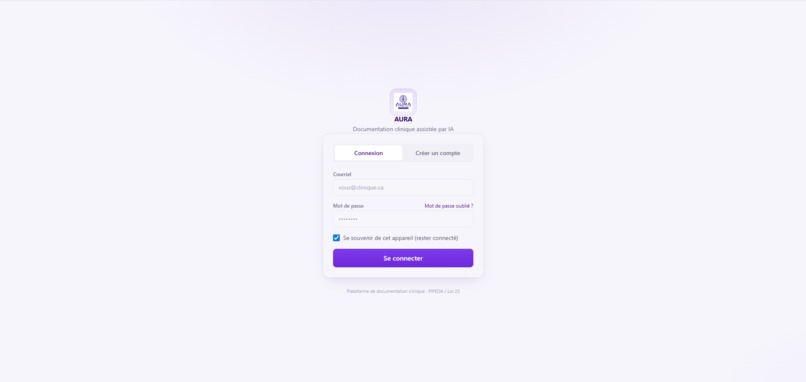
login & signup
-
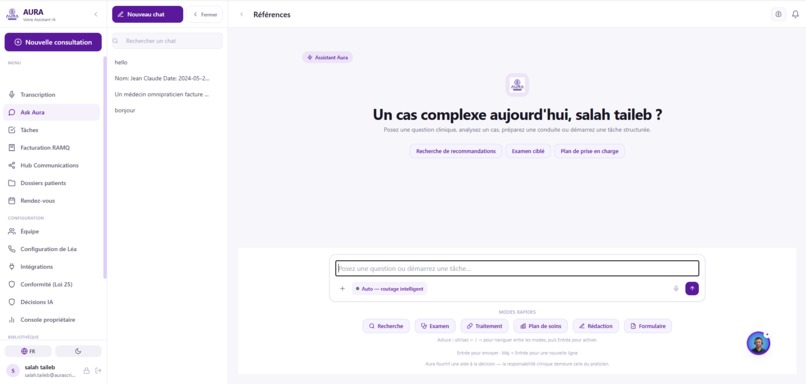
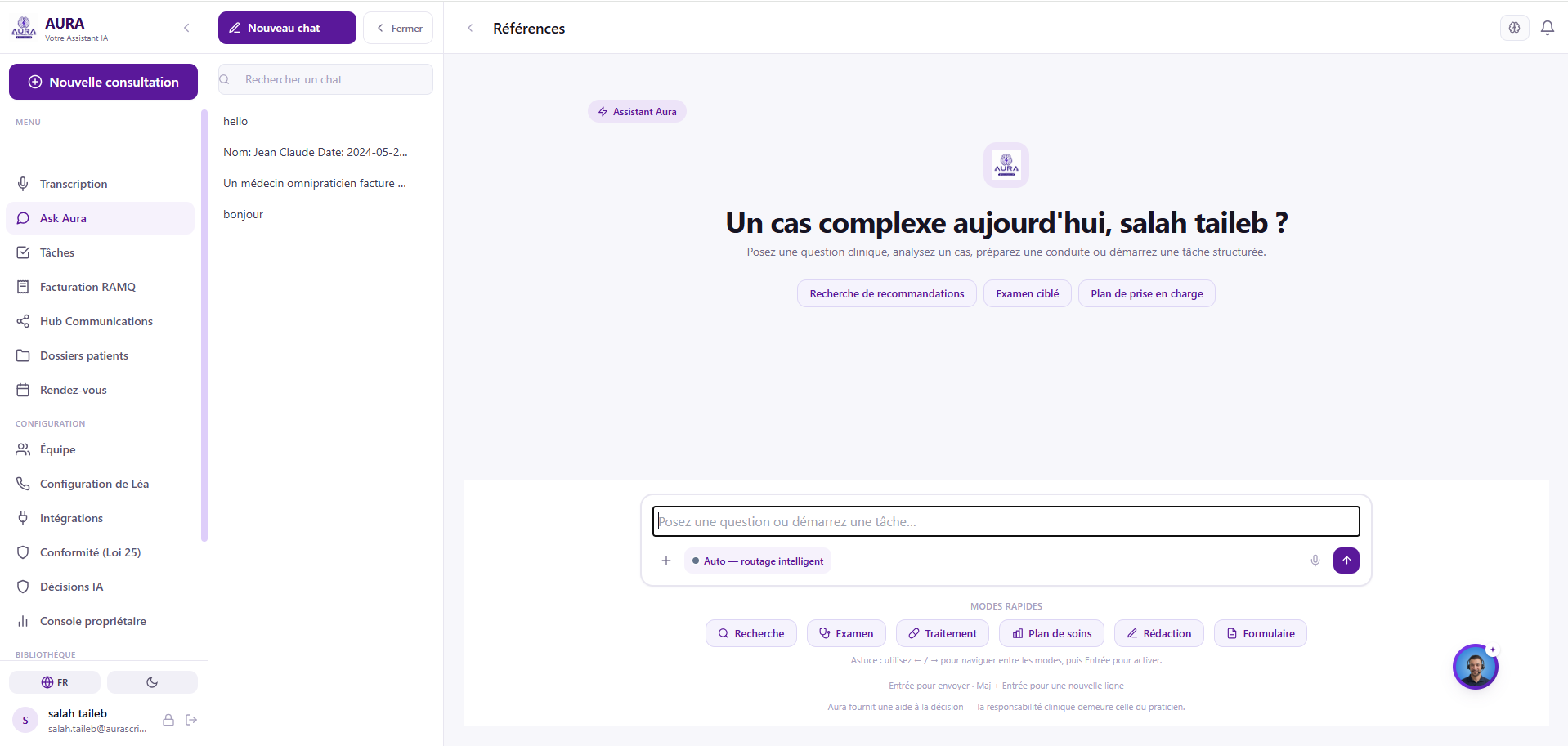
Ask Aura
-
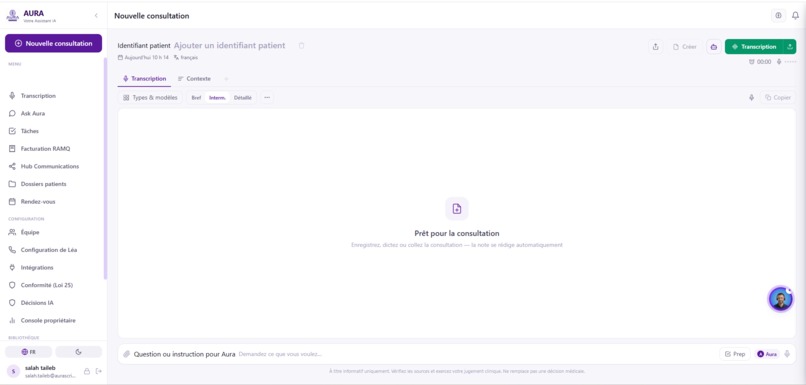
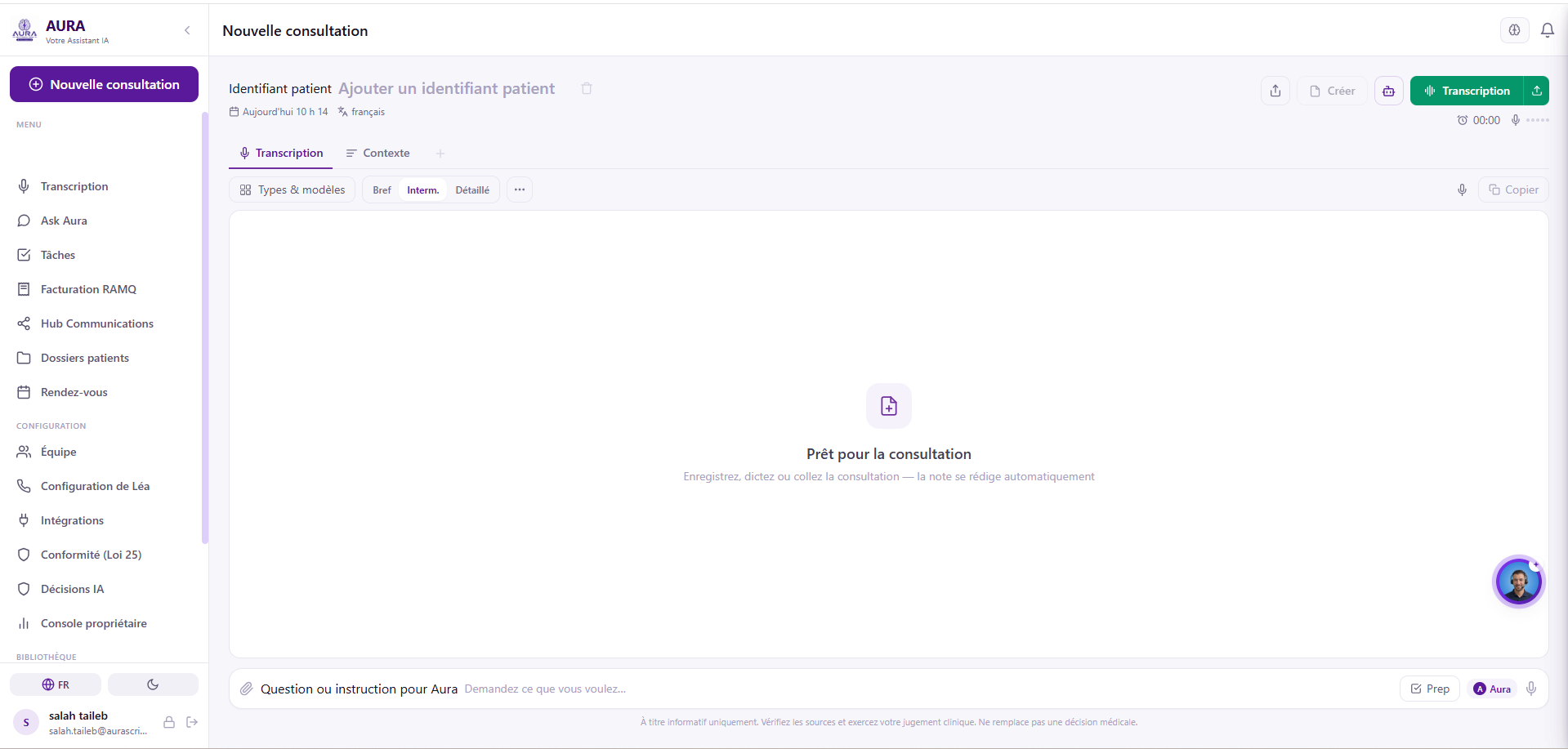
New Session
-
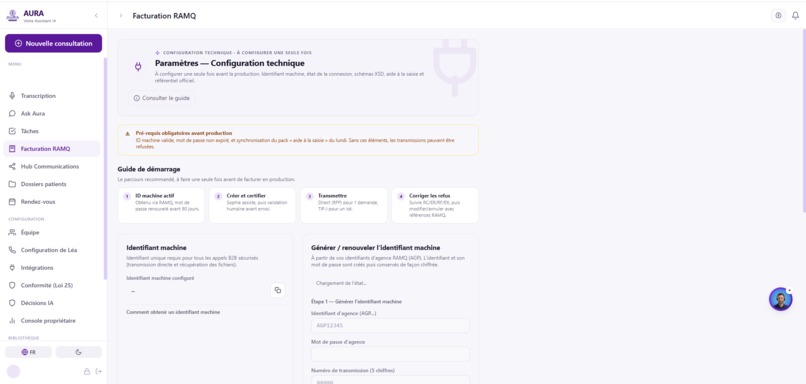
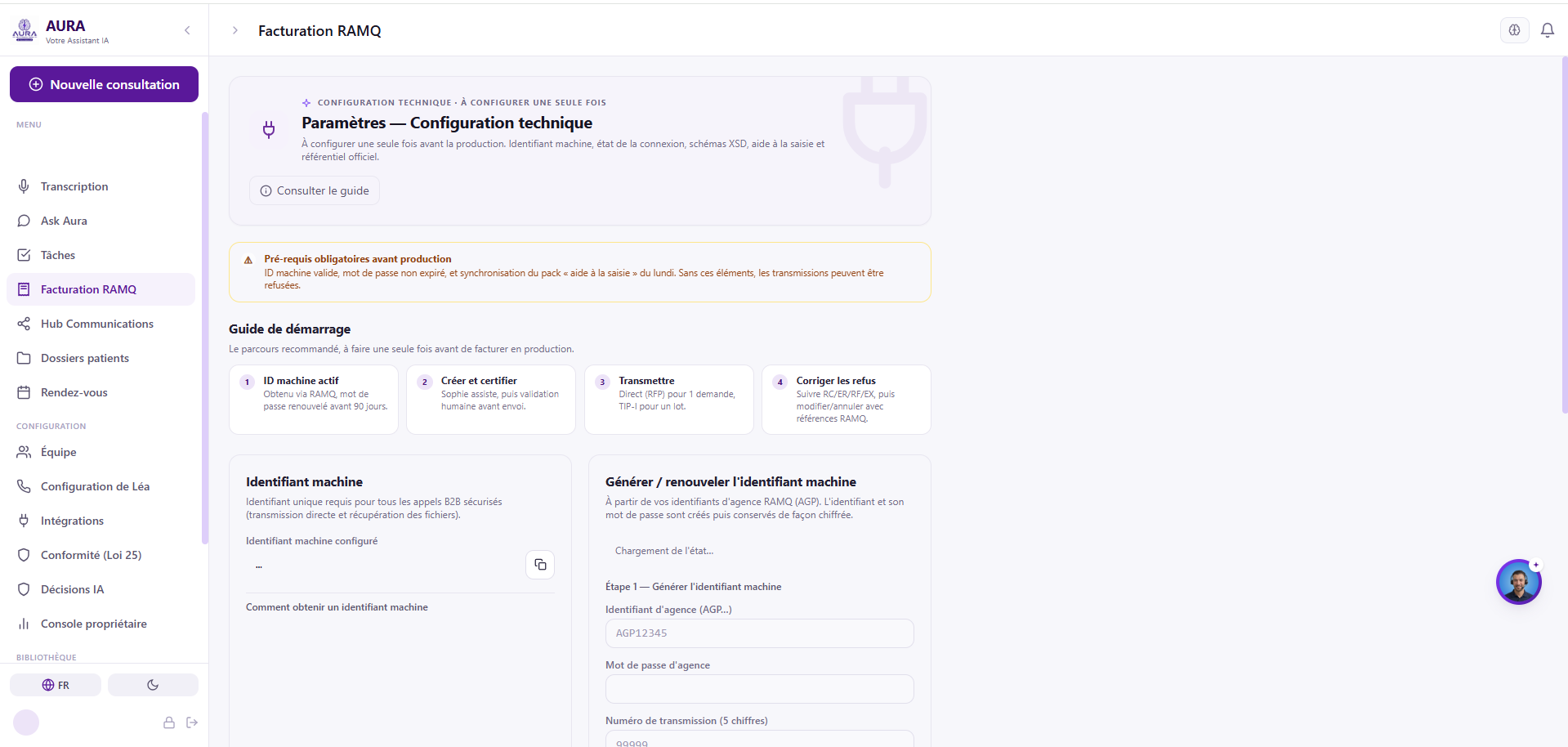
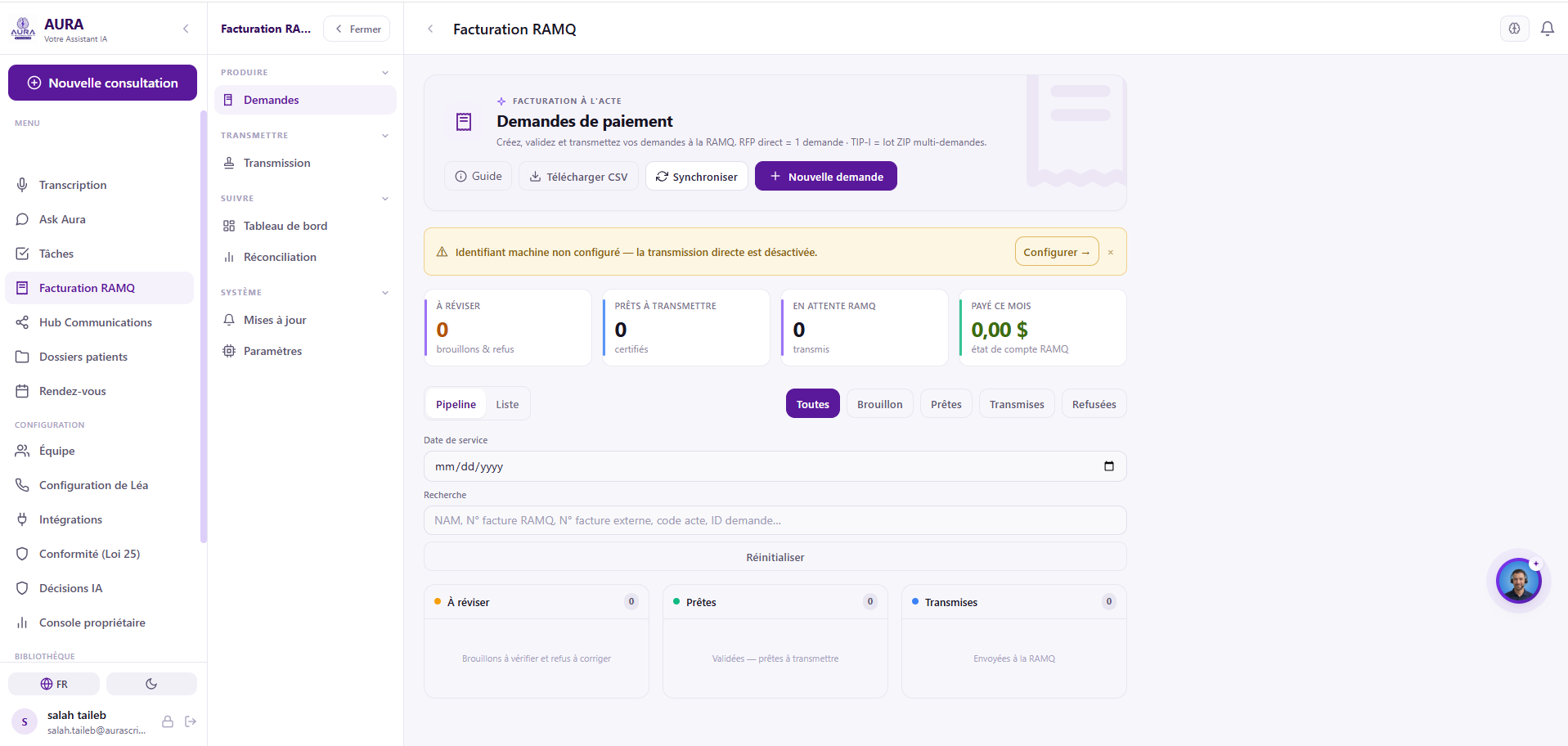
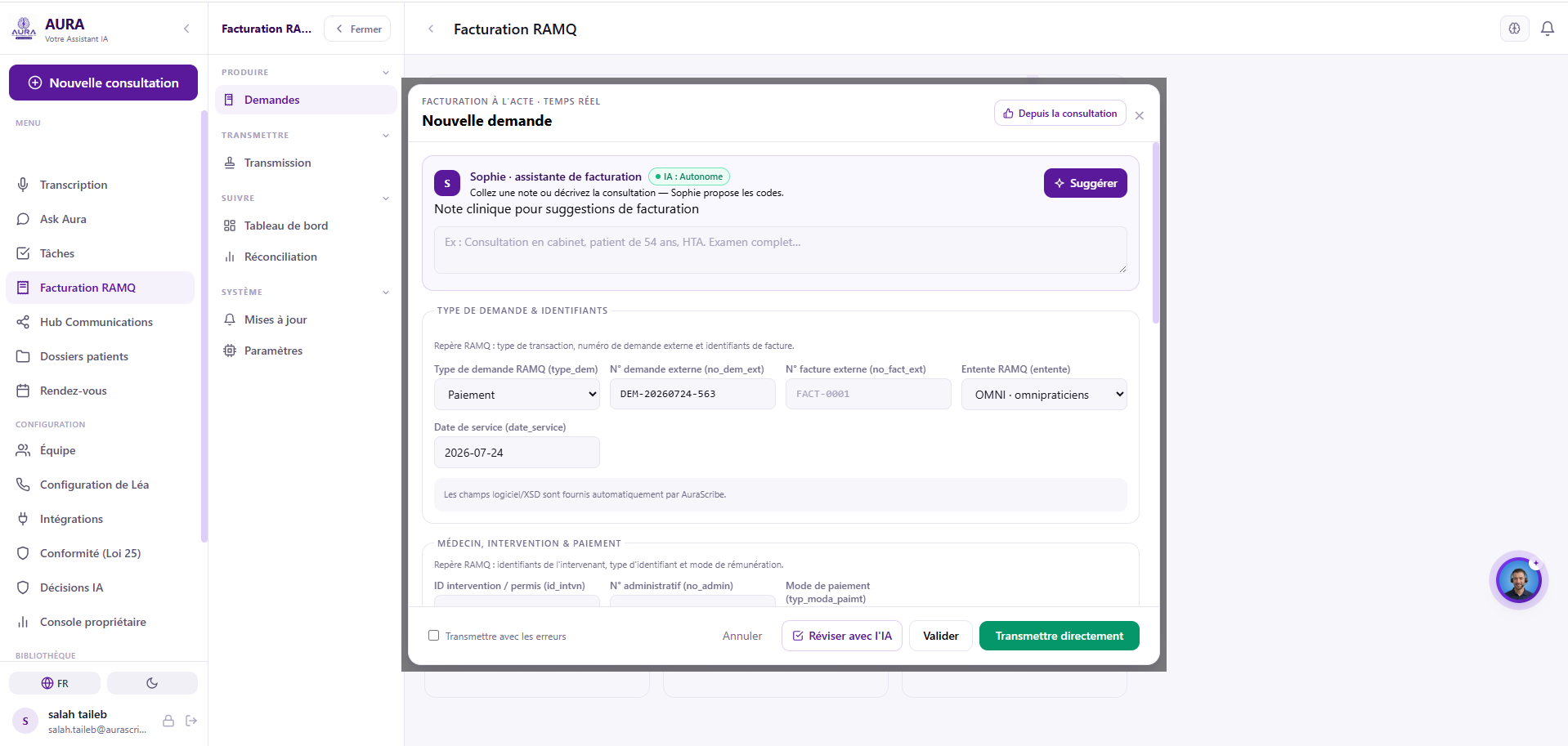
Medical Billing configuration
-
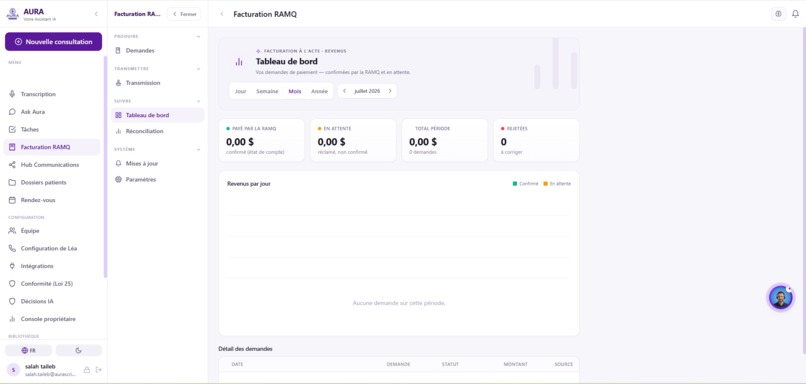
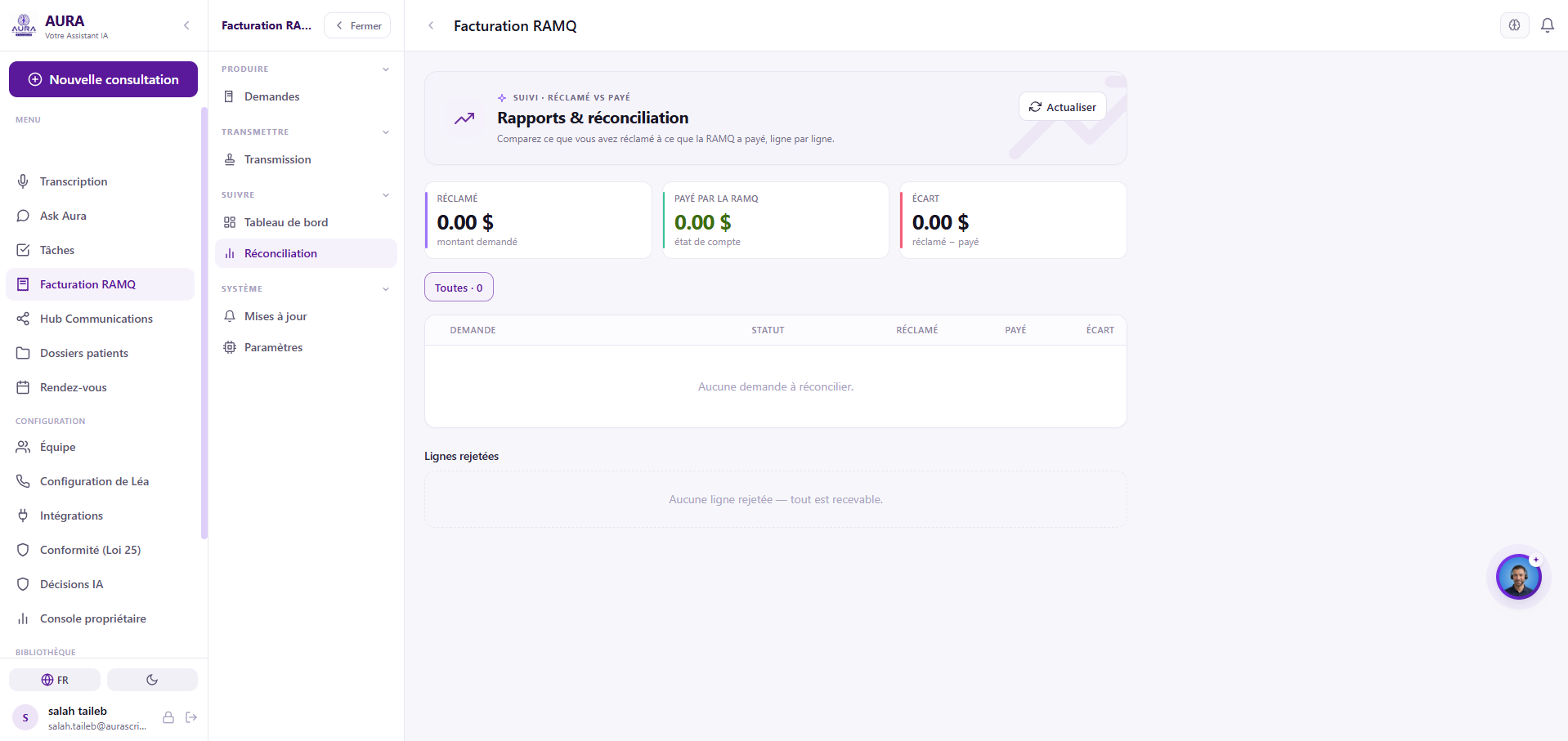
tracer
-
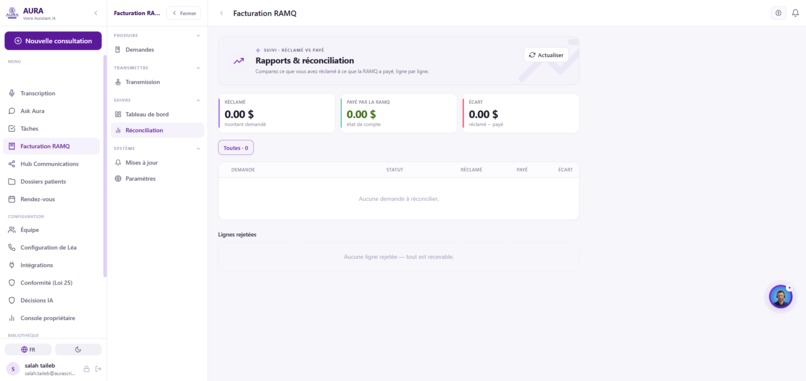
Dashboard for History
-
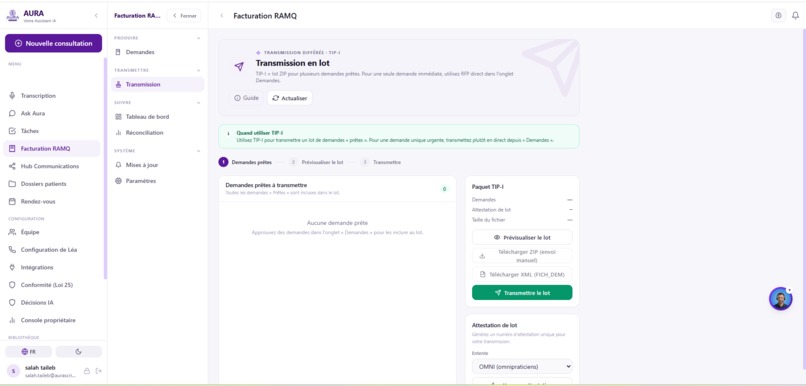
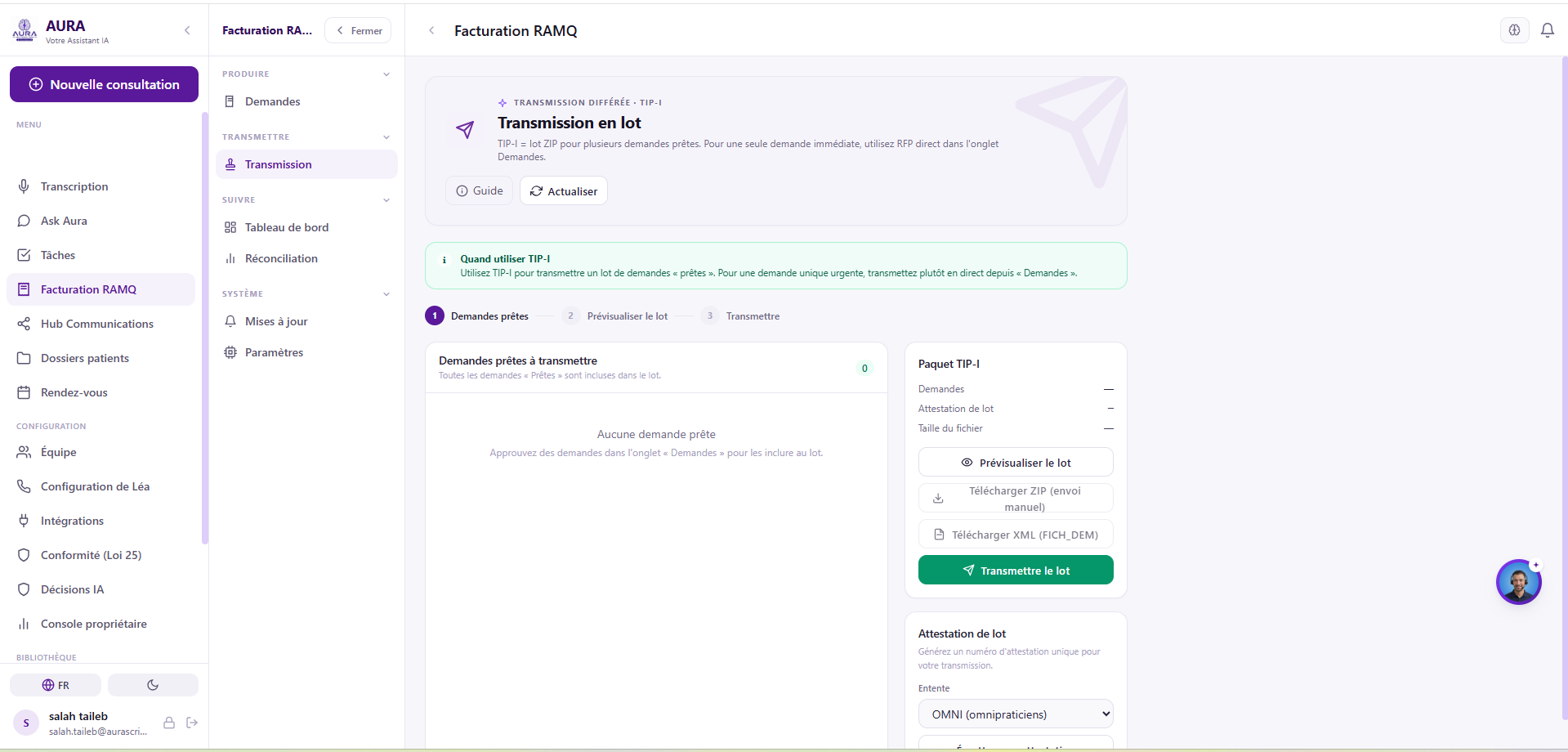
Billing Lot Submission
-
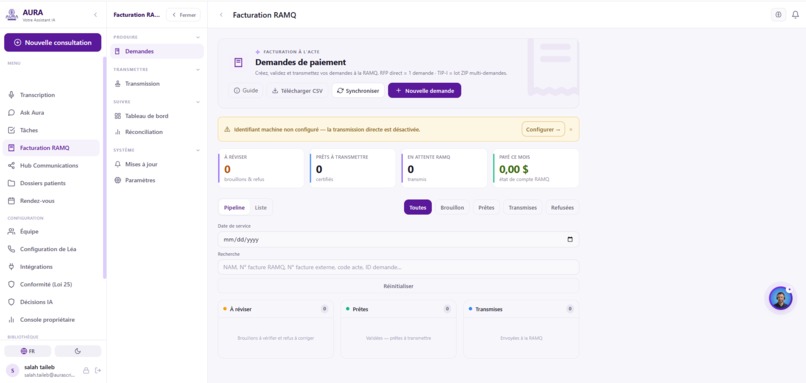
setup Medical Billing account
-
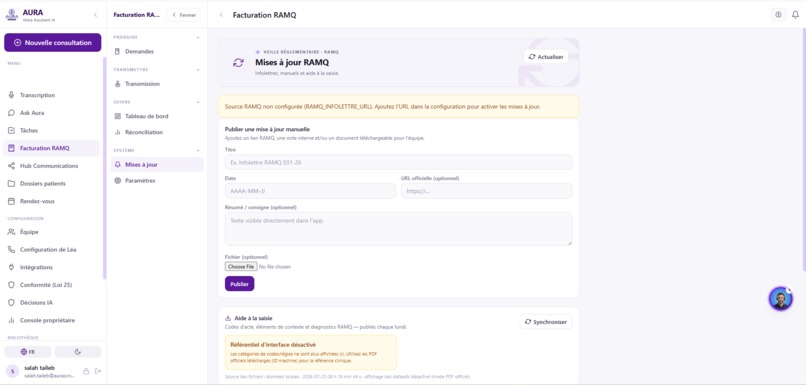
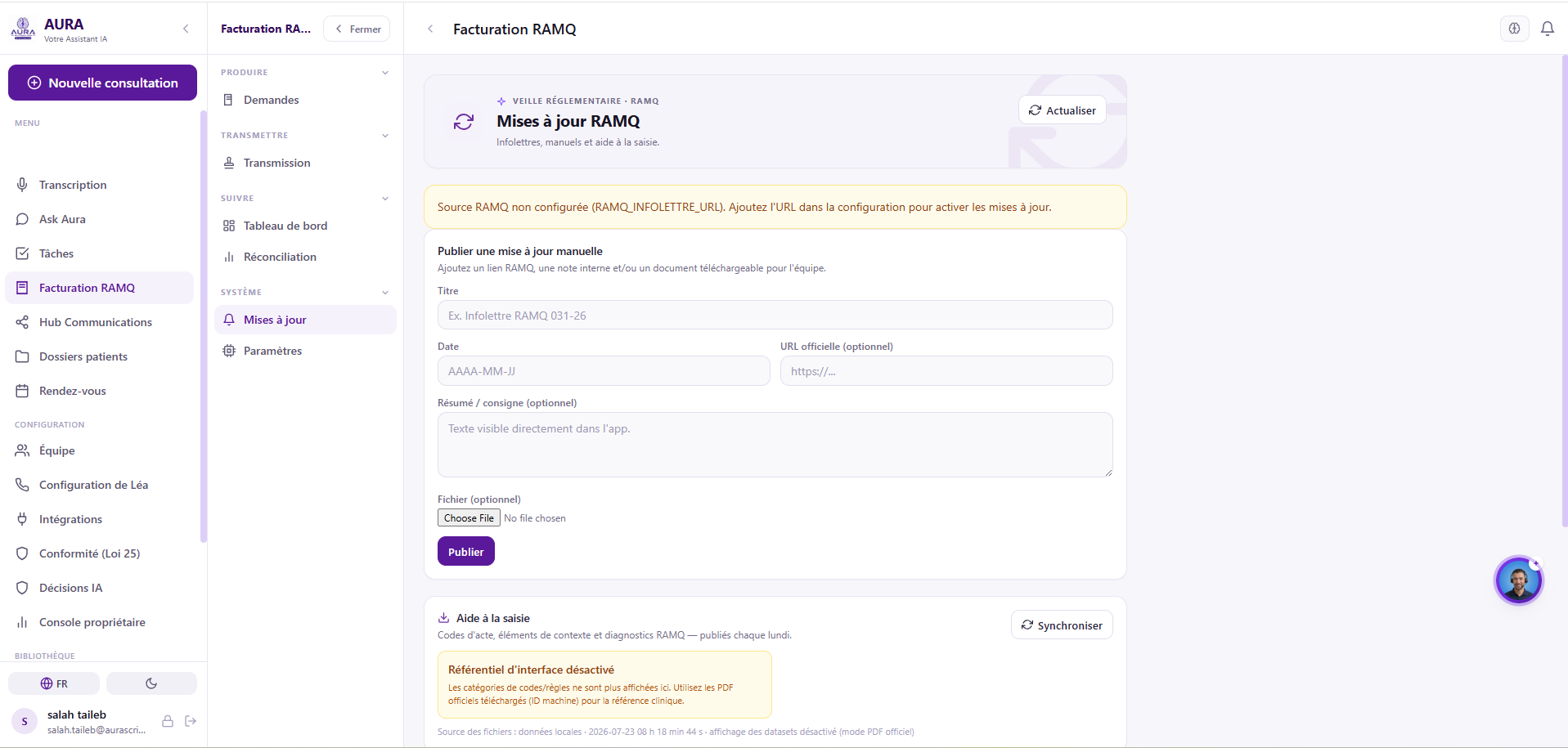
Hub Configuration
-
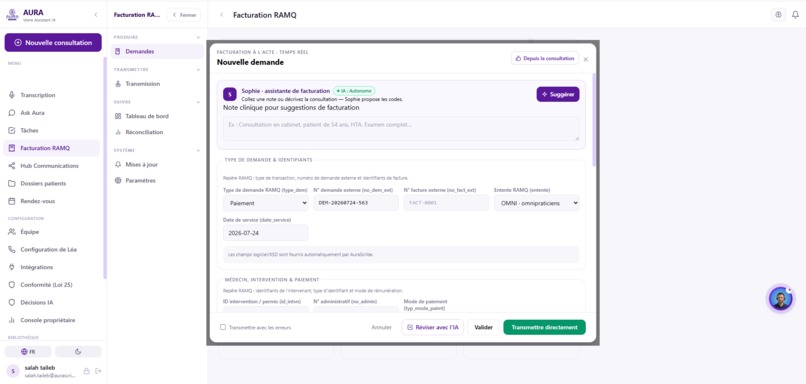
Medical Billing suggestion
-
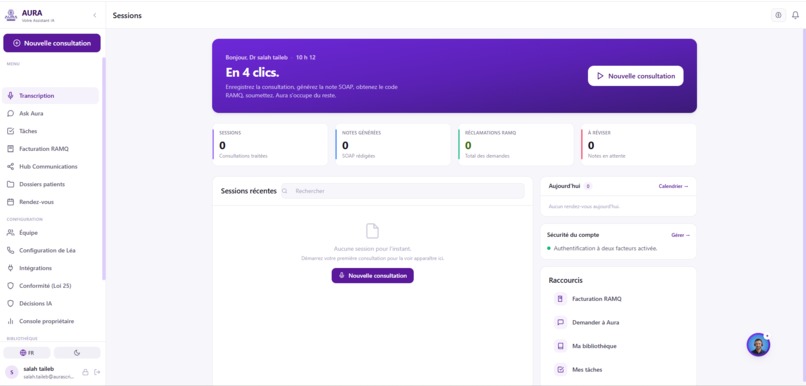
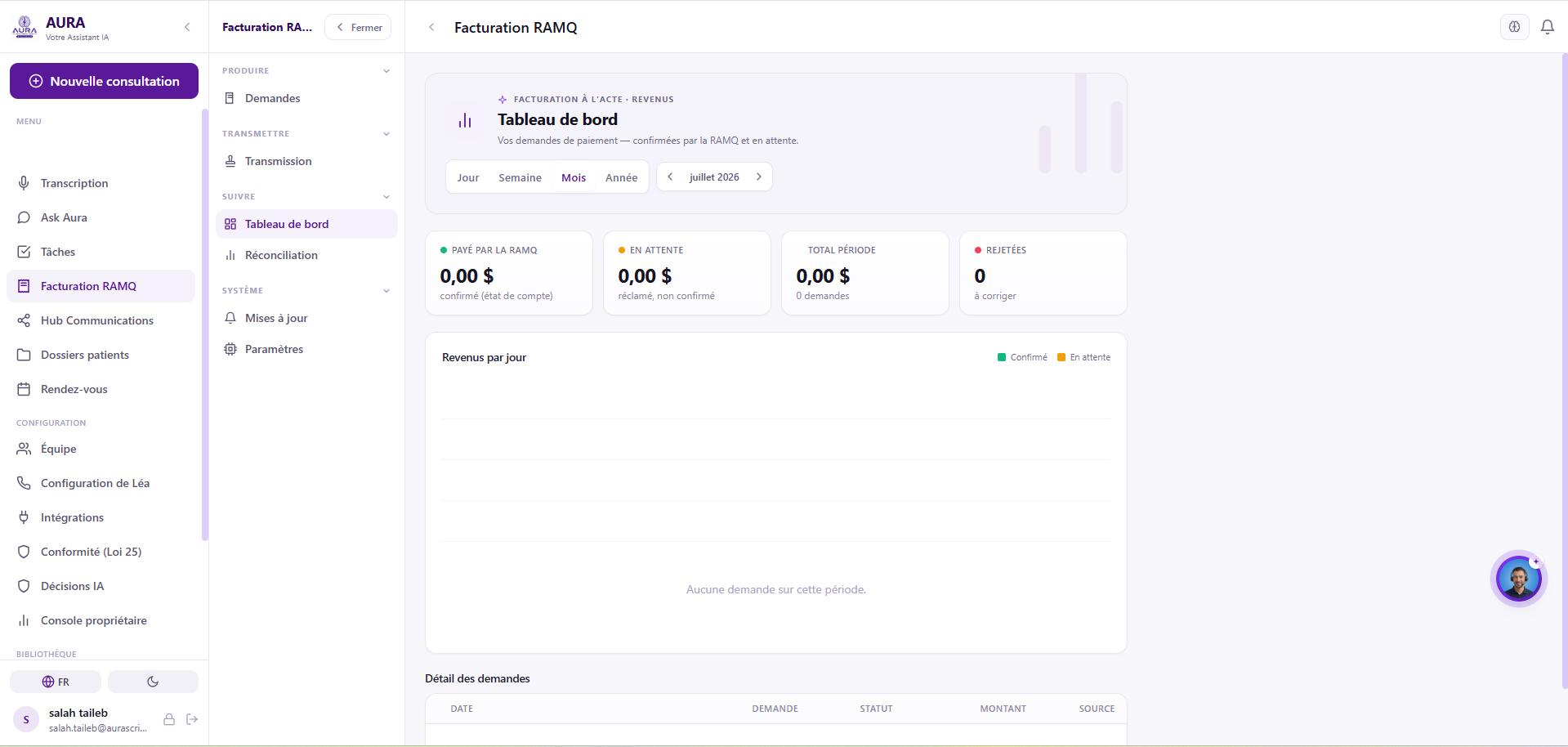
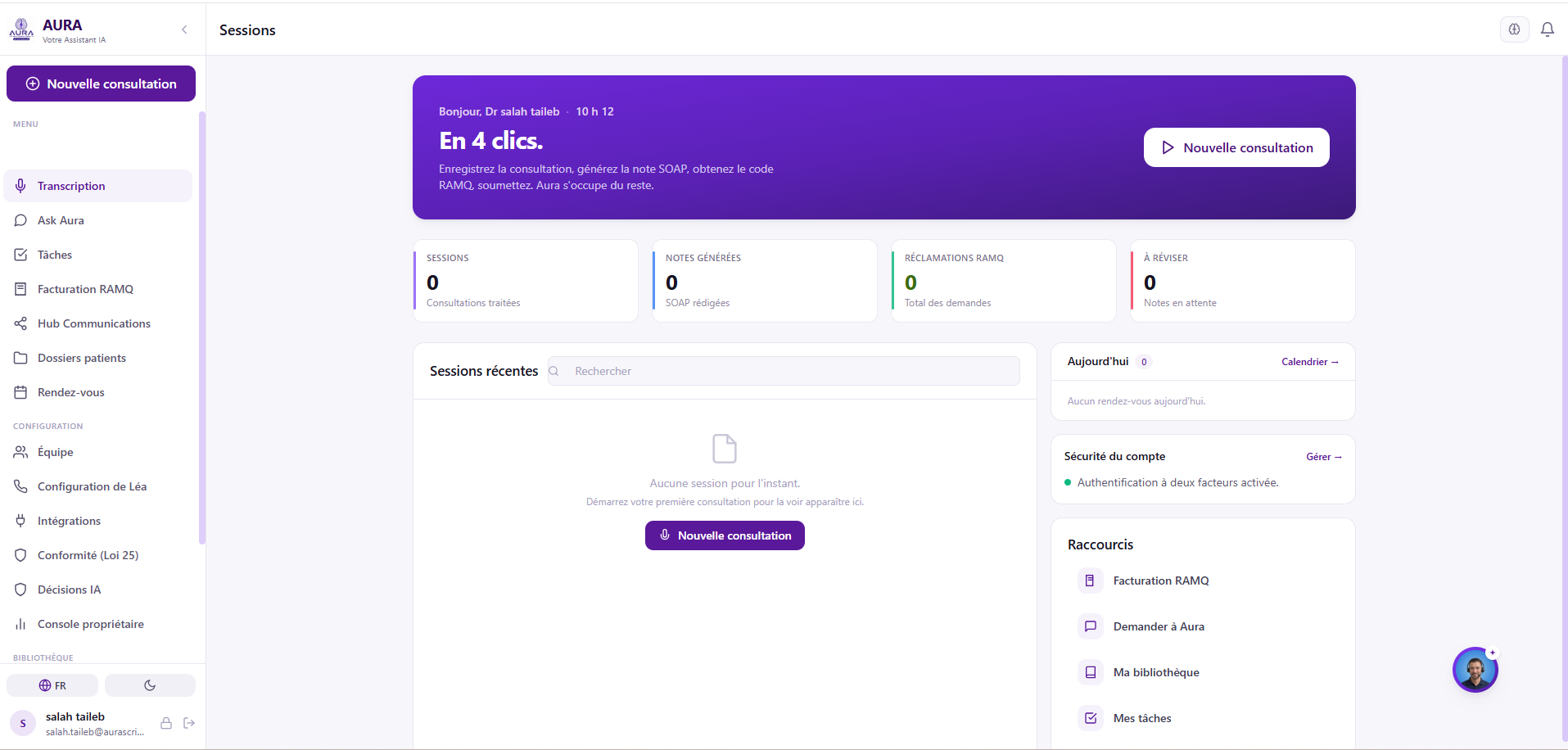
DashBoard
What it does
Aurascribe is an end-to-end clinical companion SaaS that transforms ambient doctor-patient conversations into structured SOAP notes, automates medical billing codes (ICD-10 & CPT), and manages patient communication workflows in real time.
By utilizing Google’s Gemini API, Aurascribe turns unstructured clinical dialogue into structured SOAP notes and instant billing suggestions—eliminating manual EHR entry and saving providers 2 to 3 hours of charting time every day.
Key Impact: Reduces physician charting time by over 70%, accelerates billing cycles, and restores face-to-face focus in patient care.
Inspiration
Healthcare providers are burning out under the weight of administrative overhead. For every hour spent with a patient, clinicians spend up to two additional hours entering notes, selecting billing codes, and managing follow-up communications. Existing transcription tools only capture raw text; they fail to structure clinical data or bridge the gap between documentation and medical billing.
When we evaluated Google's Gemini API, we saw an opportunity to rethink clinical workflows. Gemini’s high-speed multimodal processing and structured JSON schema capabilities made it possible to analyze multi-turn spoken dialogue on the fly—parsing complex medical jargon, identifying billable procedures, and drafting patient follow-ups simultaneously.
How we built it
Aurascribe is architected as an ambient, asynchronous hub that processes audio streams, generates structured charts, maps ICD-10/CPT codes, and builds patient summary notifications in a single pipeline. [Ambient Patient Encounter] │ ▼ (Audio Stream) [Aurascribe Frontend (Next.js / React Mobile)] │ ▼ (WebSocket Streaming) [ Python Orchestrator] ──► [Gemini 2.5 Flash end point] │ ┌─────────────────────────┴─────────────────────────┐ ▼ ▼ ▼ [Structured SOAP Note] [ICD-10 / CPT Billing Codes] [Patient Care Summary & SMS]
Technical Stack & Gemini Integration Frontend: React / Next.js with Web Audio API for ambient background recording and real-time audio chunking. Core Intelligence (Gemini API): We use gemini-2.5-flash for real-time streaming, speech parsing, and initial note drafting, and gemini-2.5-pro for complex multi-specialty differential diagnosis mapping and ICD-10 validation. Structured JSON Outputs: To ensure generated notes fit standard EHR formats (e.g., FHIR / HL7 targets) and billing software without schema failure, we pass rigid target structures directly into Gemini system prompts. Mathematical Formulation of Coding Probability To extract diagnosis codes (ICD-10) and procedure codes (CPT) with high confidence, we model the probability of selecting optimal coding candidate sets $C = {c_1, c_2, \dots, c_k}$ given the clinical dialogue transcript: $$P(C \mid T) = \prod_{j=1}^{k} P(c_j \mid T, c_1, \dots, c_{j-1})$$ Gemini's contextual understanding evaluates clinical indicators against official coding guidelines, outputting confidence scores along with the underlying clinical evidence used to justify each code.
Challenges we ran into
Medical Jargon & Multi-Speaker Diarization: Distinguishing between doctor and patient voices while accurately capturing complex drug names, dosages, and medical conditions required careful prompt design and custom vocabulary grounding within Gemini’s system instructions.
Zero-Tolerance Schema Compliance: Billing systems reject records with missing fields. We leveraged Gemini's structured output controls alongside strict schema validation to guarantee every output contains complete Subjective, Objective, Assessment, and Plan (SOAP) blocks, as well as properly formatted ICD-10/CPT codes.
Latency in High-Volume Clinics: Doctors require notes immediately after an encounter ends. Routing audio processing through gemini-1.5-flash kept end-to-end processing times under 10 seconds per encounter.
Accomplishments that we're proud of & ## What we learned
Native Multimodality Simplifies Clinical Pipelines: Instead of chaining separate Speech-to-Text, NLP, and Summarization models, passing clinical audio streams directly to Gemini reduces latency and preserves context lost during intermediate text conversions.
Context is Key for Medical Coding: Generic NLP algorithms often misinterpret rule-out conditions (e.g., "patient does not have chest pain"). Gemini’s deep context understanding dramatically improved differential diagnosis accuracy and billing precision.
Automation Restores Human Connection: Reducing keyboard interactions allows doctors to maintain eye contact with patients, significantly improving the overall care experience.
What's next for AuraScribe
[ ] Direct EHR Integrations: Expanding native browser extension hooks for Epic, Cerner, and Athenahealth.
[ ] Real-time Prior Authorization Assistant: Using Gemini to pre-populate prior authorization forms directly from clinical notes.
[ ] Offline-First Ambient Recording: Enabling local audio caching for remote or low-connectivity clinical settings.


Log in or sign up for Devpost to join the conversation.