-
-
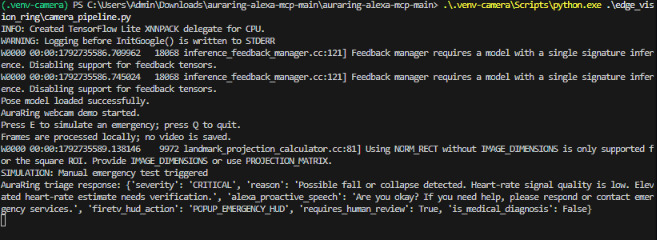
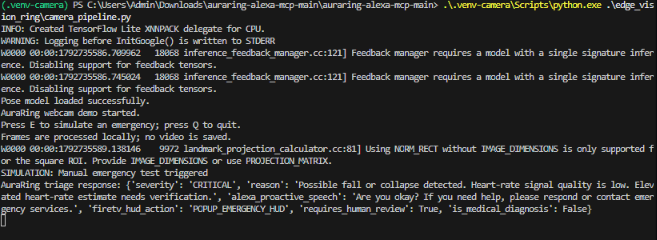
Output for the webcam terminal
-
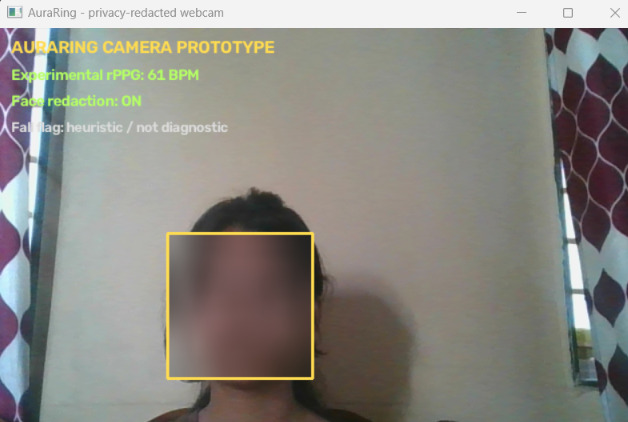
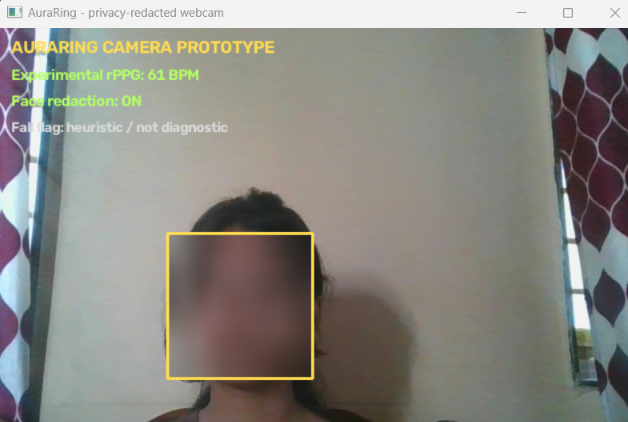
AuraRing’s webcam pipeline in action — real-time visual processing powering a smarter emergency-response prototype.
-
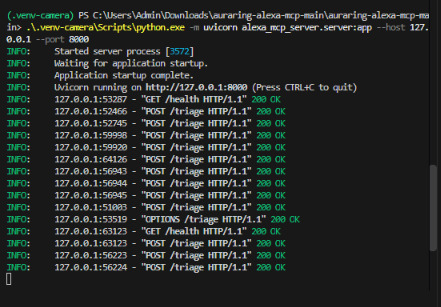
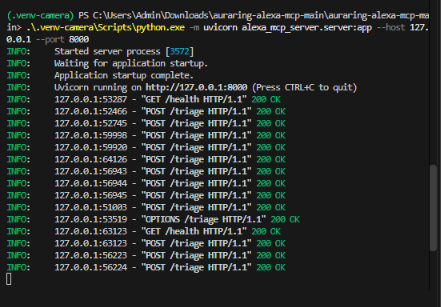
AuraRing API: connecting intelligent triage with real-time emergency alerts, turning detection signals into actionable insights.
-
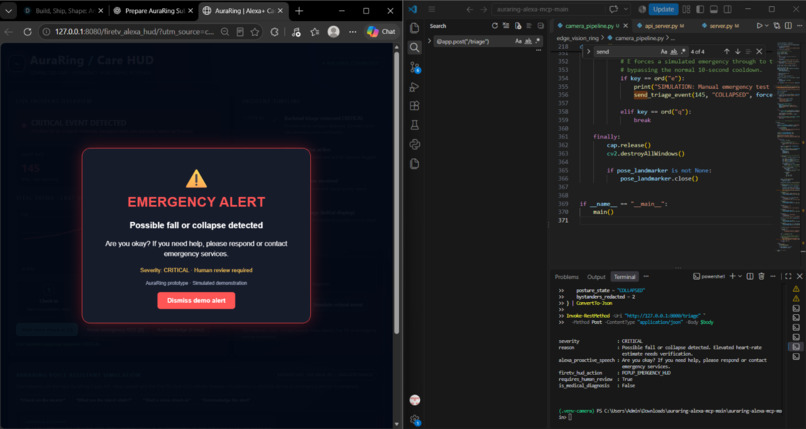
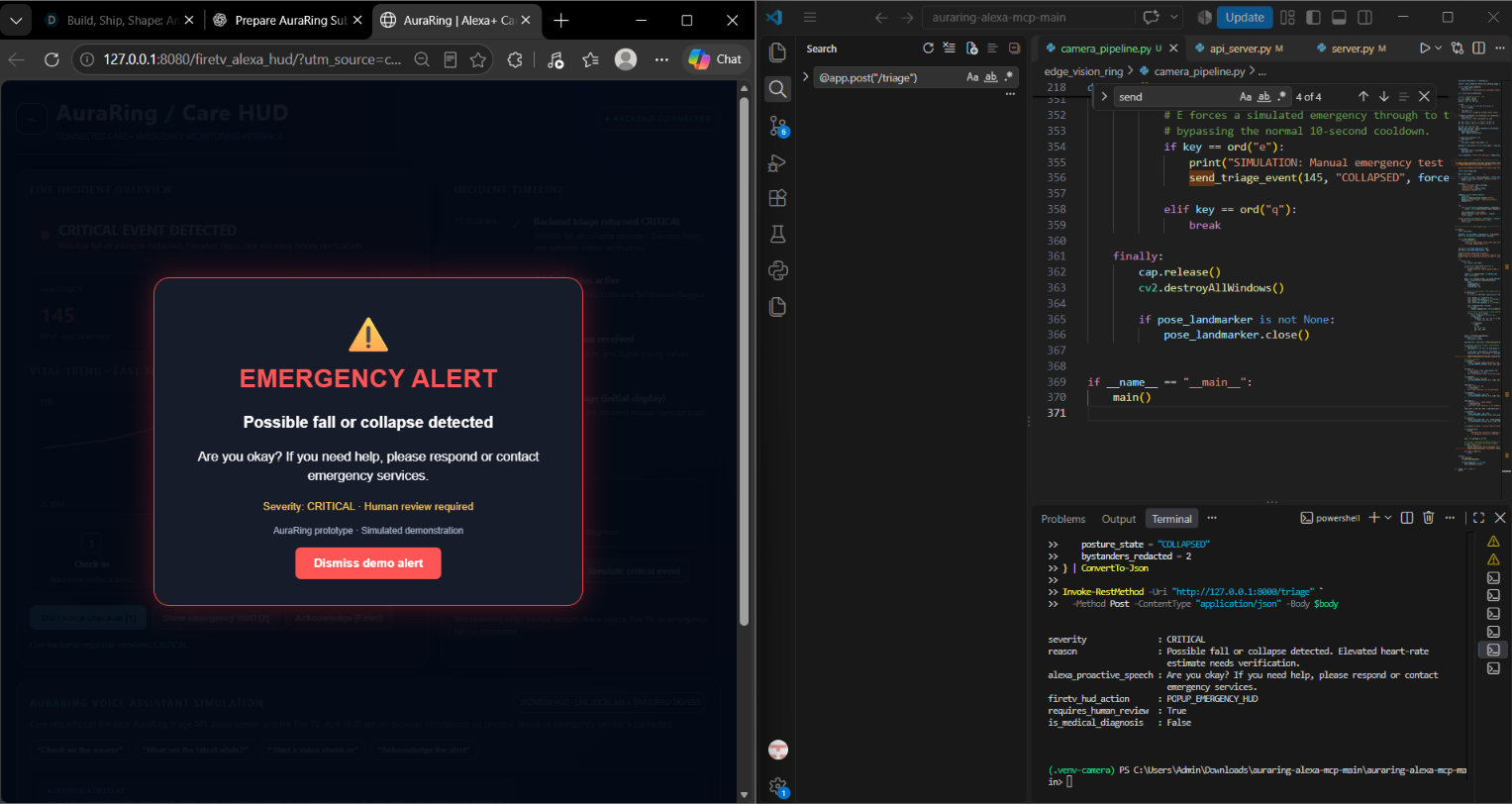
AuraRing AI-powered alerts that bring attention to potential emergencies when someone doesn't respond. Detect. Alert. Escalate.
-
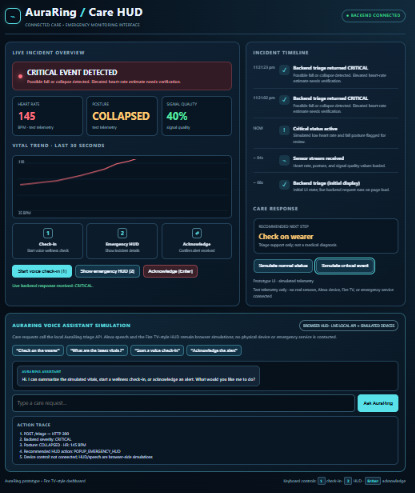
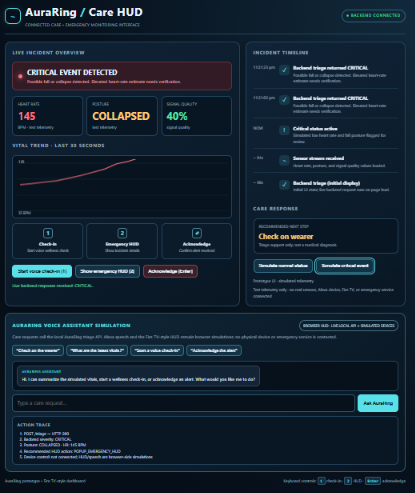
AuraRing Dashboard — turning live signals into clear alerts, real-time insights, and smarter emergency-response monitoring.
-
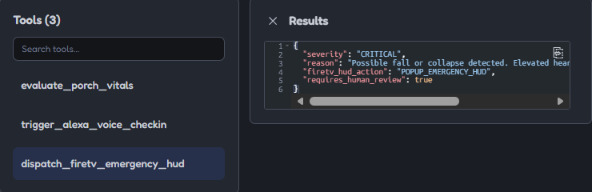
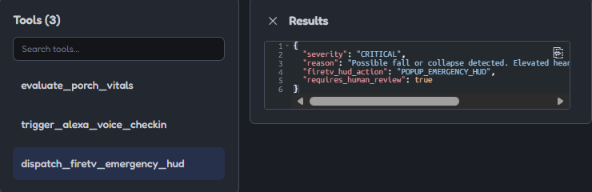
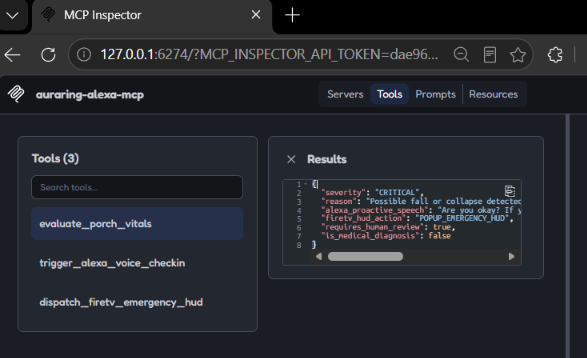
MCP Inspector Test 3: `dispatch_firetv_emergency_hud` — Testing the emergency HUD payload to display a clear alert on the dashboard.
-
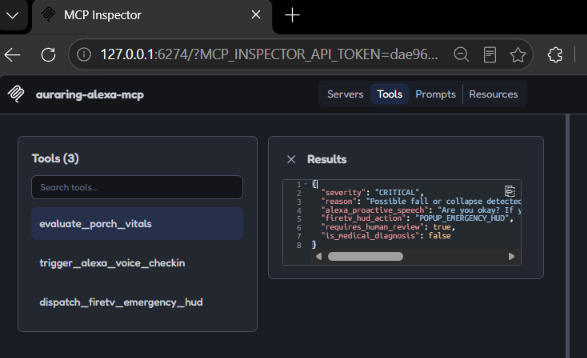
dispatch_firetv_emergency_hud — Testing emergency alert delivery to the dashboard HUD.
-
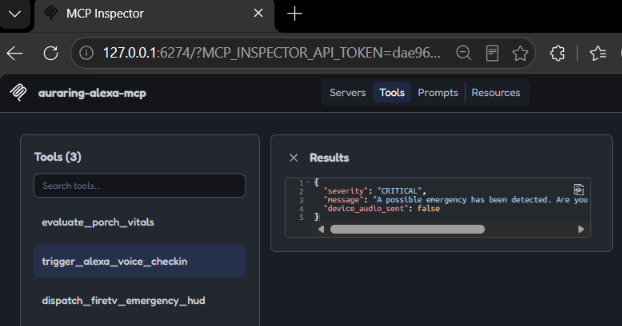
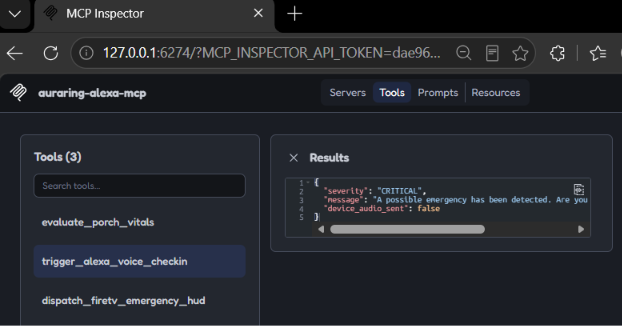
trigger_alexa_voice_checkin — Testing a voice prompt to check whether the person responds.
AuraRing: Intelligent Emergency Detection & Response
Inspiration
An emergency can become more dangerous when a person is unable to ask for help or when nobody responds to an alert. We wanted to explore how computer vision, health-related signals, and an intuitive dashboard could support faster awareness of potential emergencies.
What it does
AuraRing is a wearable-inspired safety prototype that demonstrates a possible emergency-monitoring and response workflow. Its webcam-based vision pipeline explores visual signals, while a backend API processes triage information and a browser dashboard displays alerts. The prototype also demonstrates how an emergency alert could be escalated when a person does not respond.
How we built it
We used Python for the backend and vision pipeline, OpenCV and MediaPipe for computer-vision processing, FastAPI for API endpoints, and a browser-based dashboard for presenting alerts. We also developed an MCP server component as part of exploring assistant integration.
Challenges we faced
One challenge was bringing together computer vision, backend communication, and a responsive dashboard into a single workflow. We also had to consider what should happen when an alert receives no response, including how to represent unresolved emergencies and possible escalation.
What we learned
We learned how different software components can work together to demonstrate an emergency-response workflow, and why clear alerts, reliable communication, and explicit failure states matter in safety-oriented systems.
Current limitations
AuraRing is a prototype, not a validated medical device or a production emergency-response service. Its vision-based estimates are experimental, and emergency escalation is demonstrated at prototype level. Real wearable sensors, verified vital-sign monitoring, automatic contact notifications, and emergency-service integration should not be assumed unless separately implemented and tested.
Built With
- artificialintelligence
- computervision
- css
- fastapi
- html
- javascript
- mcp
- mediapipe
- opencv
- python
