💡 Inspiration
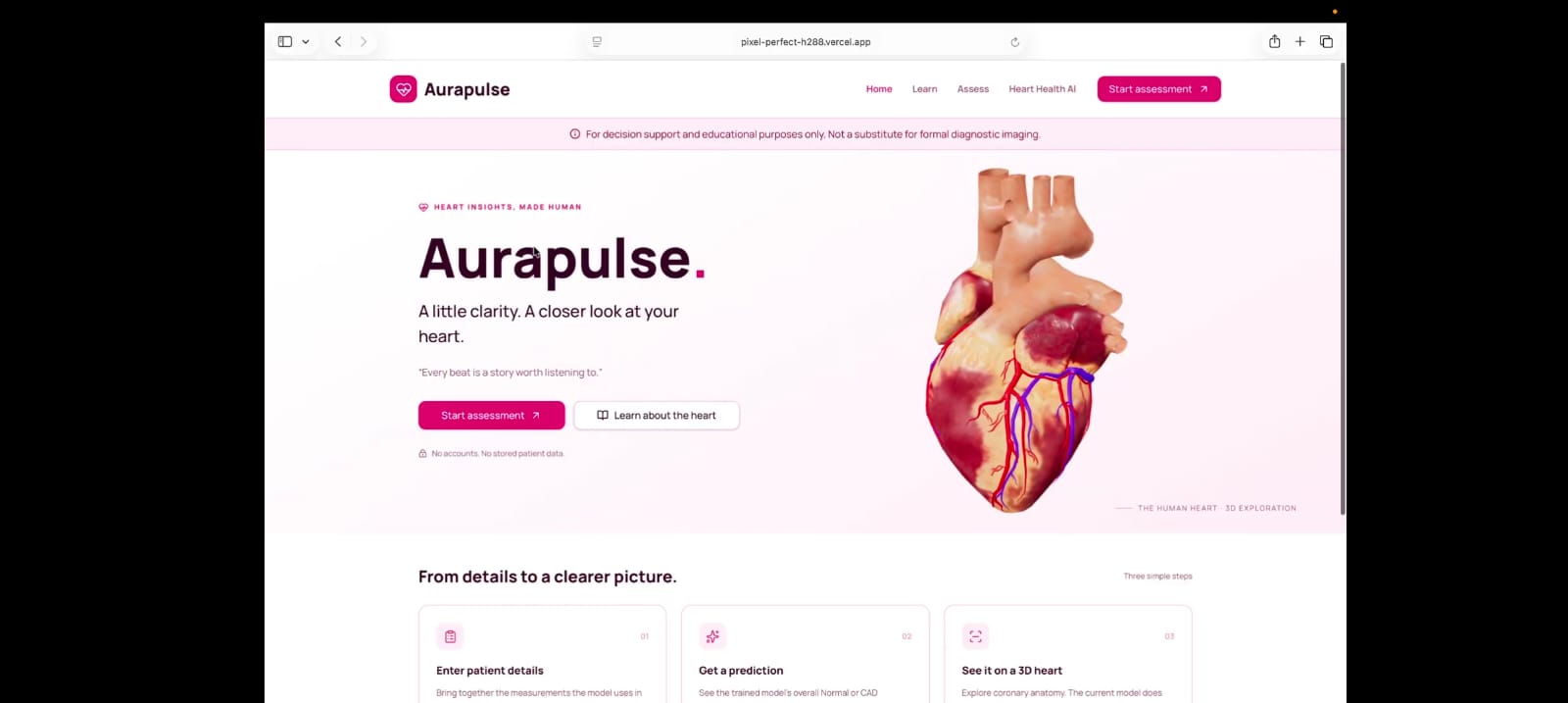
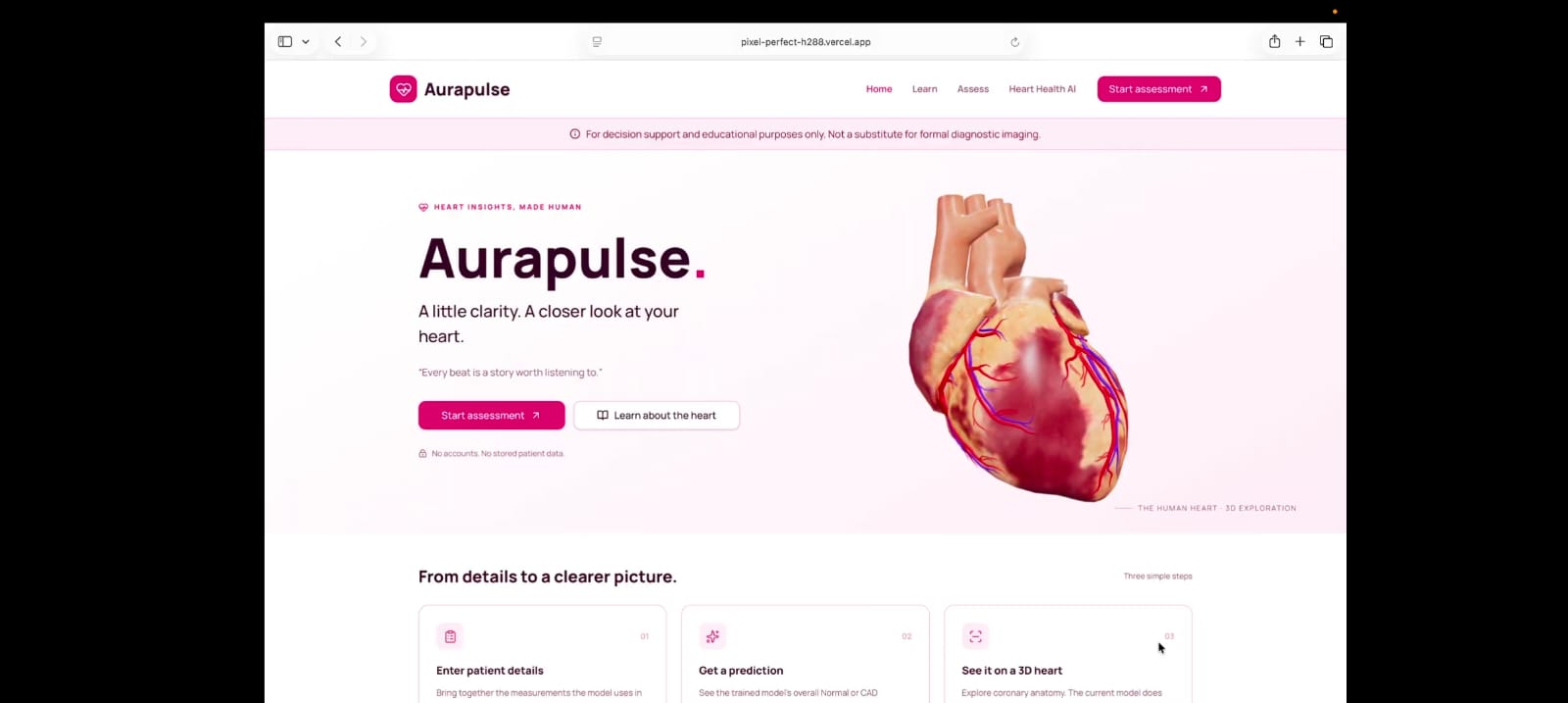
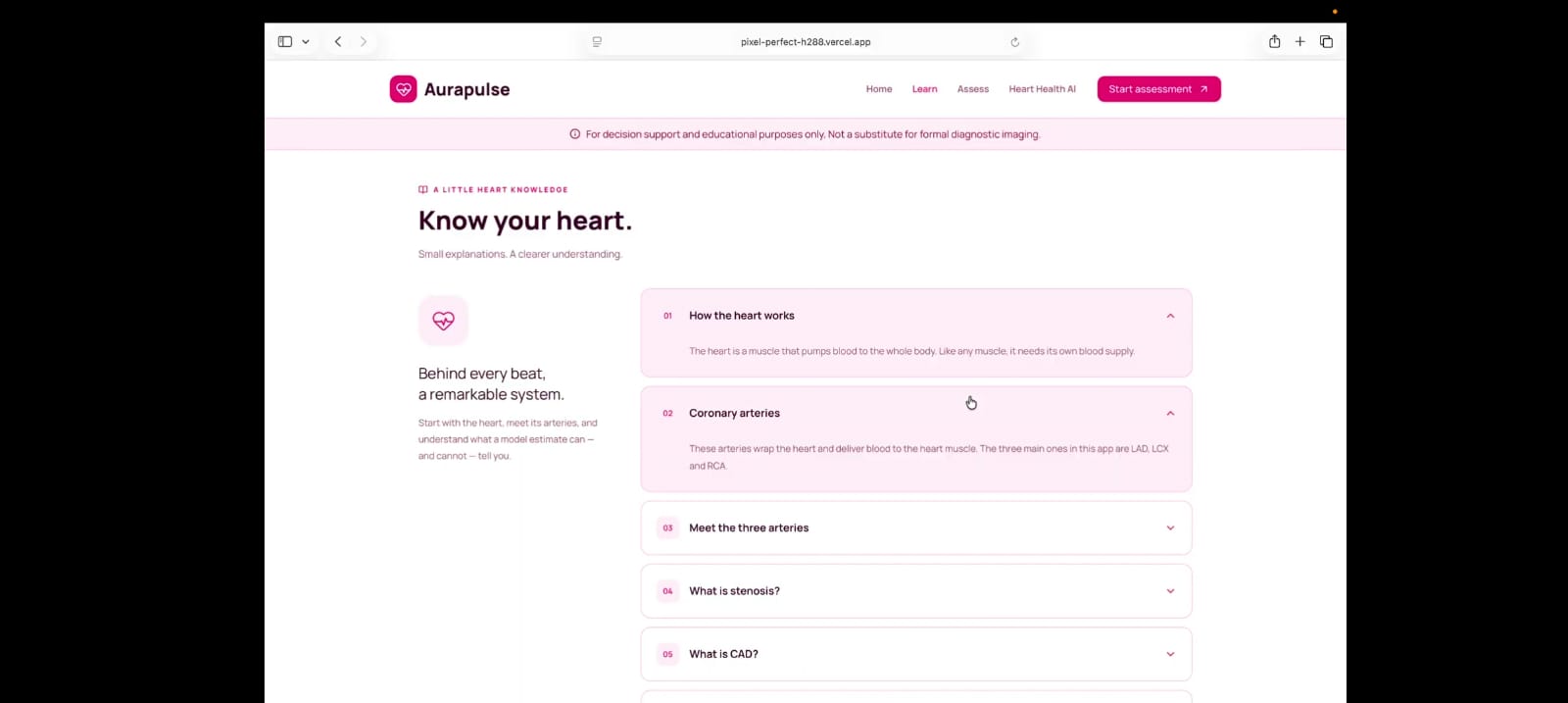
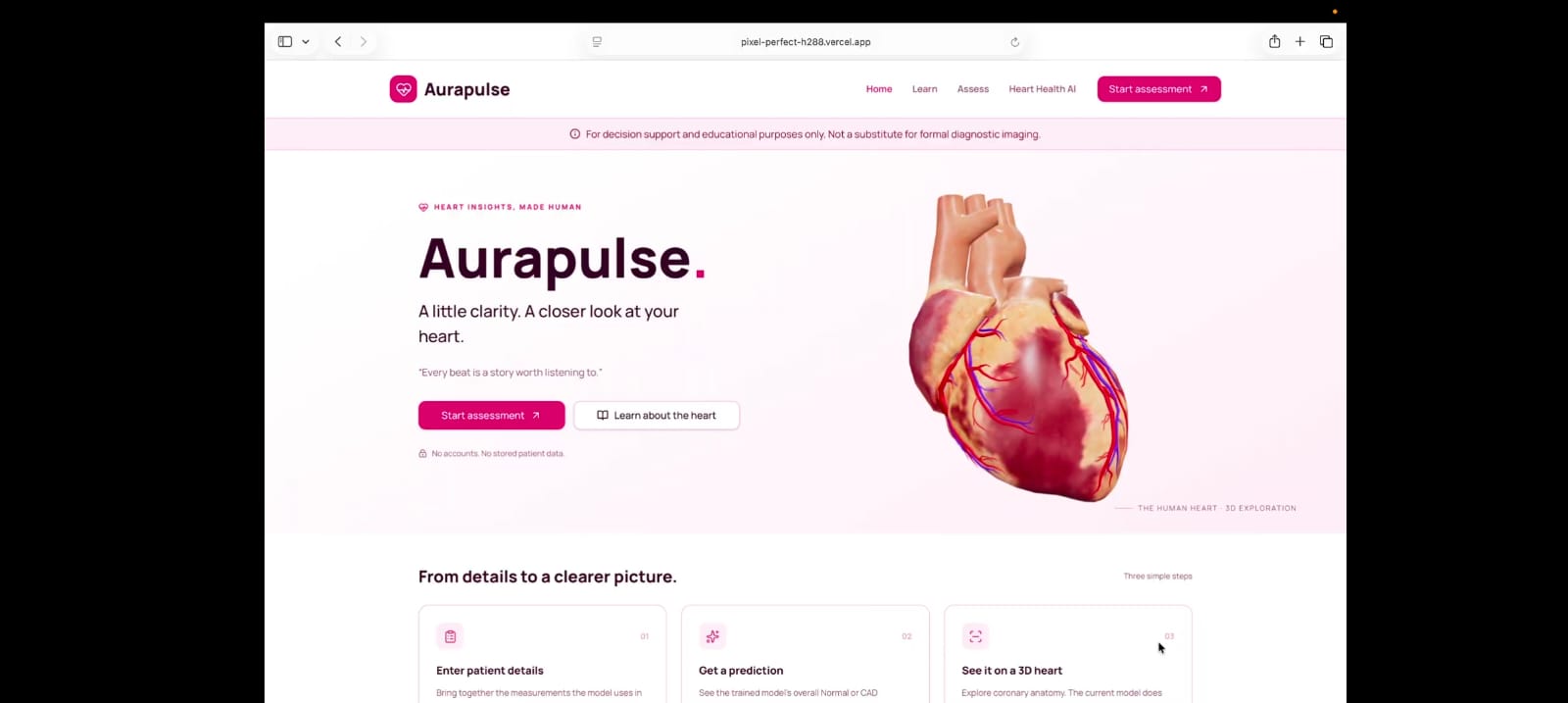
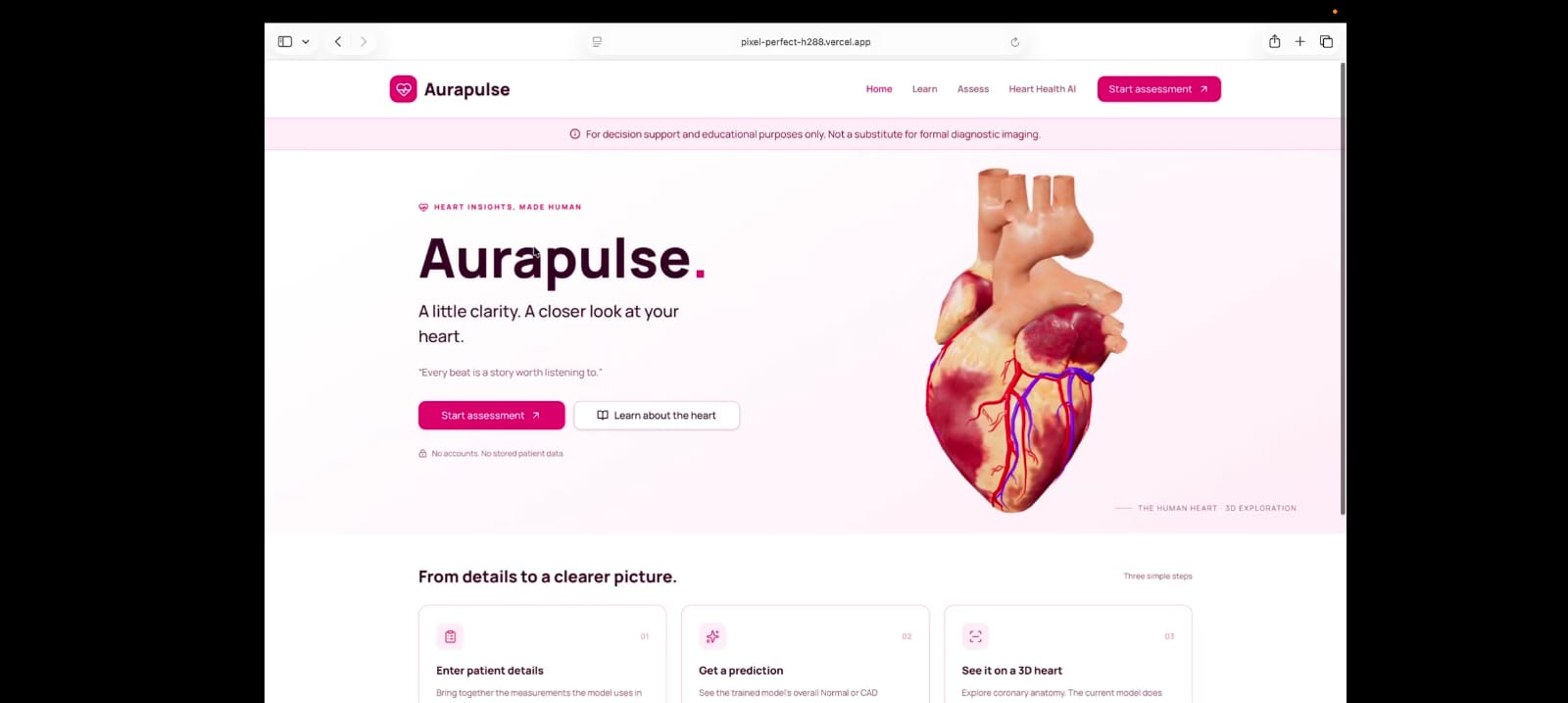
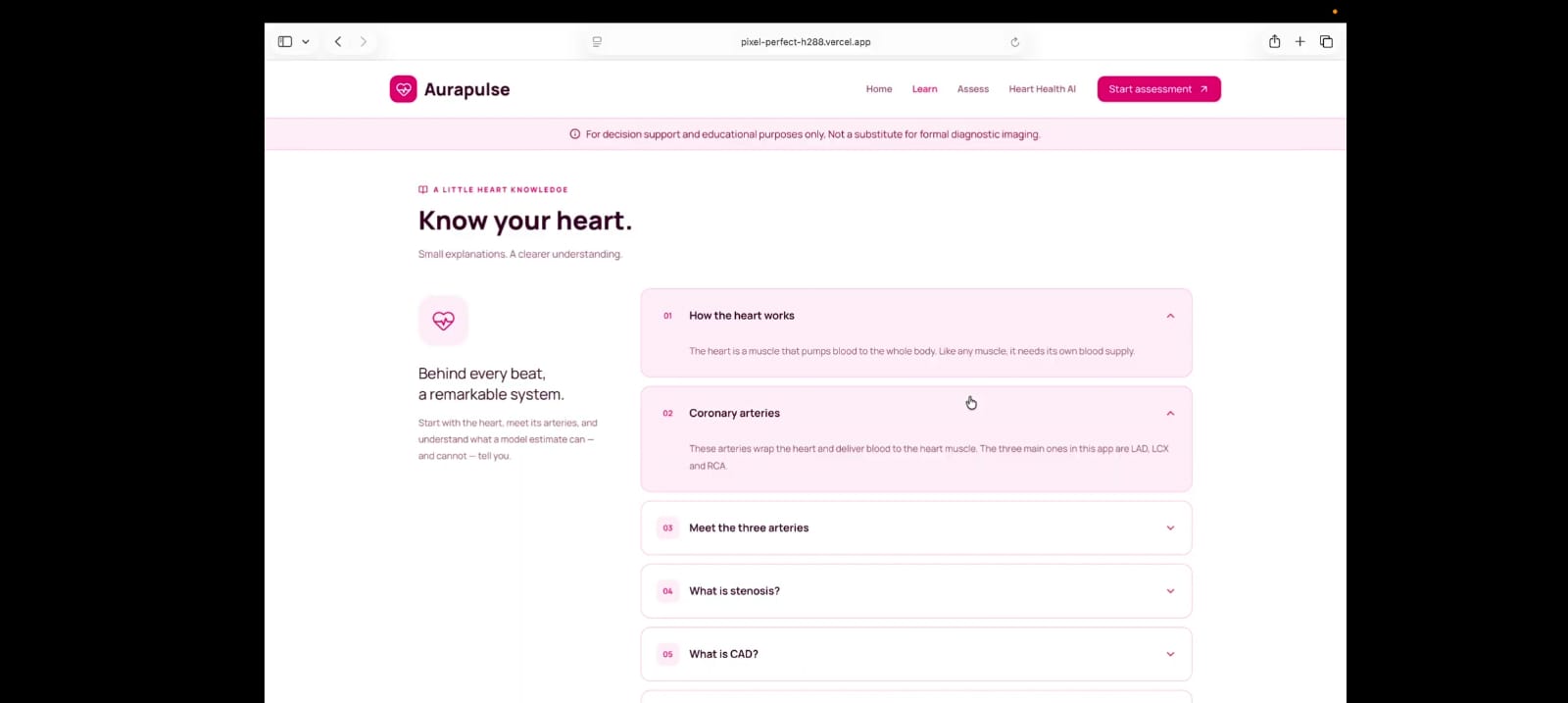
Heart health data can be complex, and understanding coronary artery disease risk is not always easy. We created Aurapulse to turn patient measurements into clearer, more meaningful insights.
🚀 What It Does
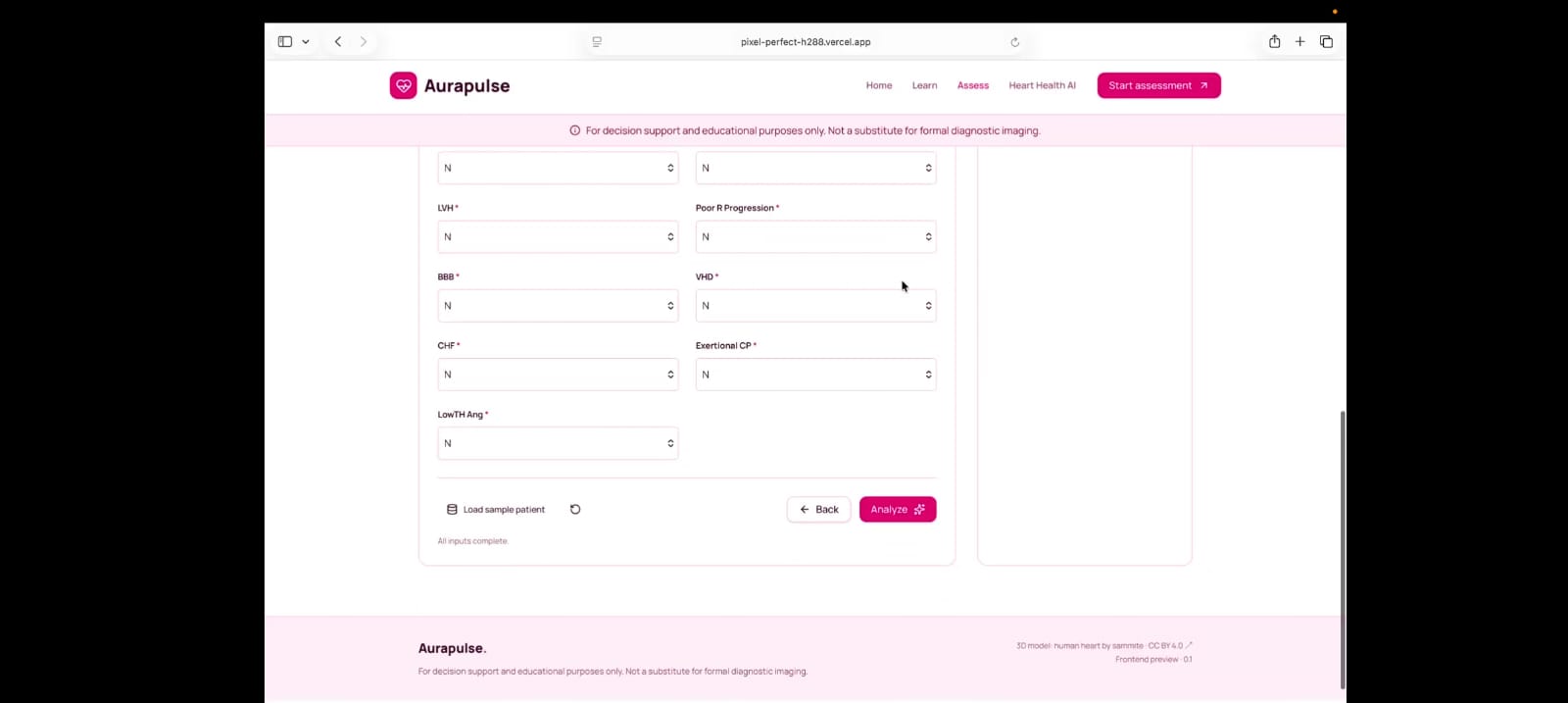
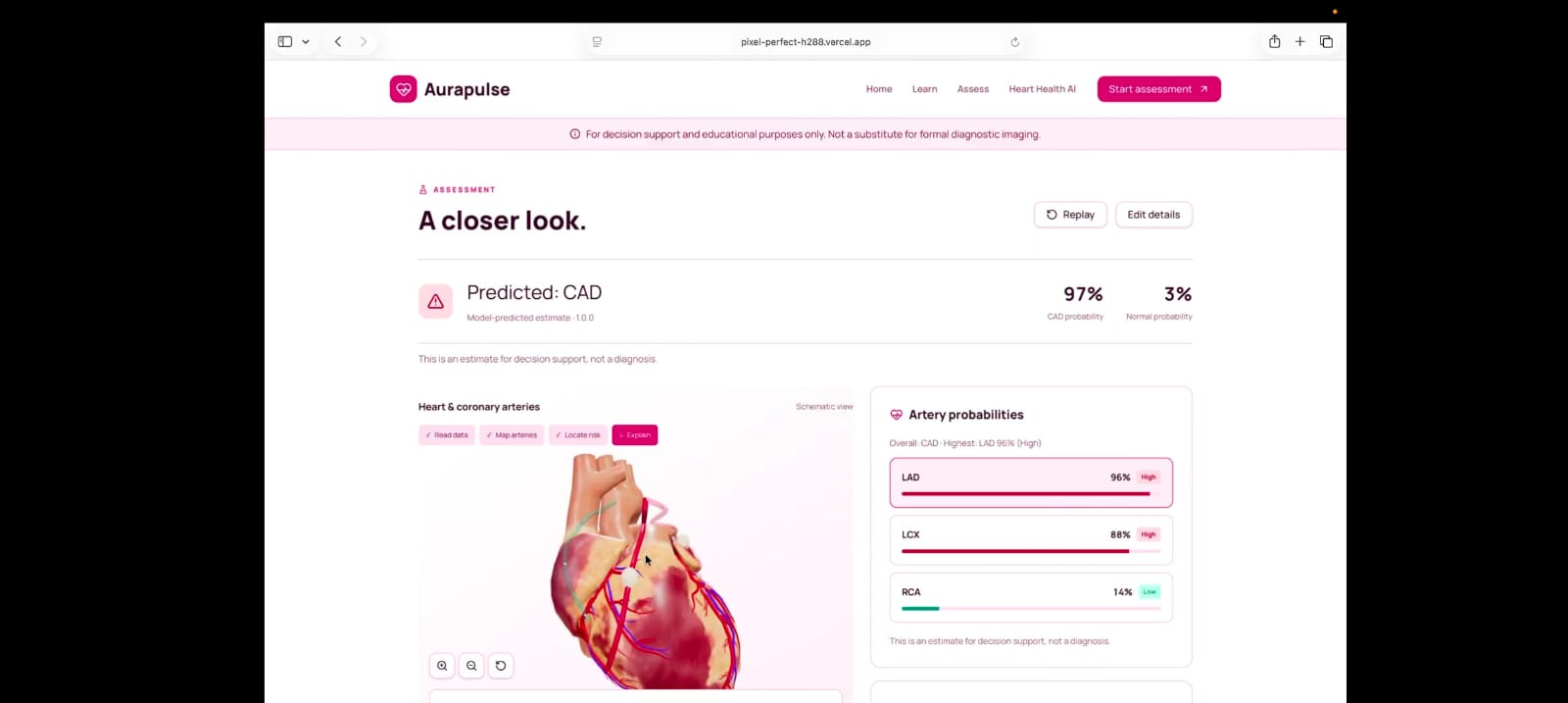
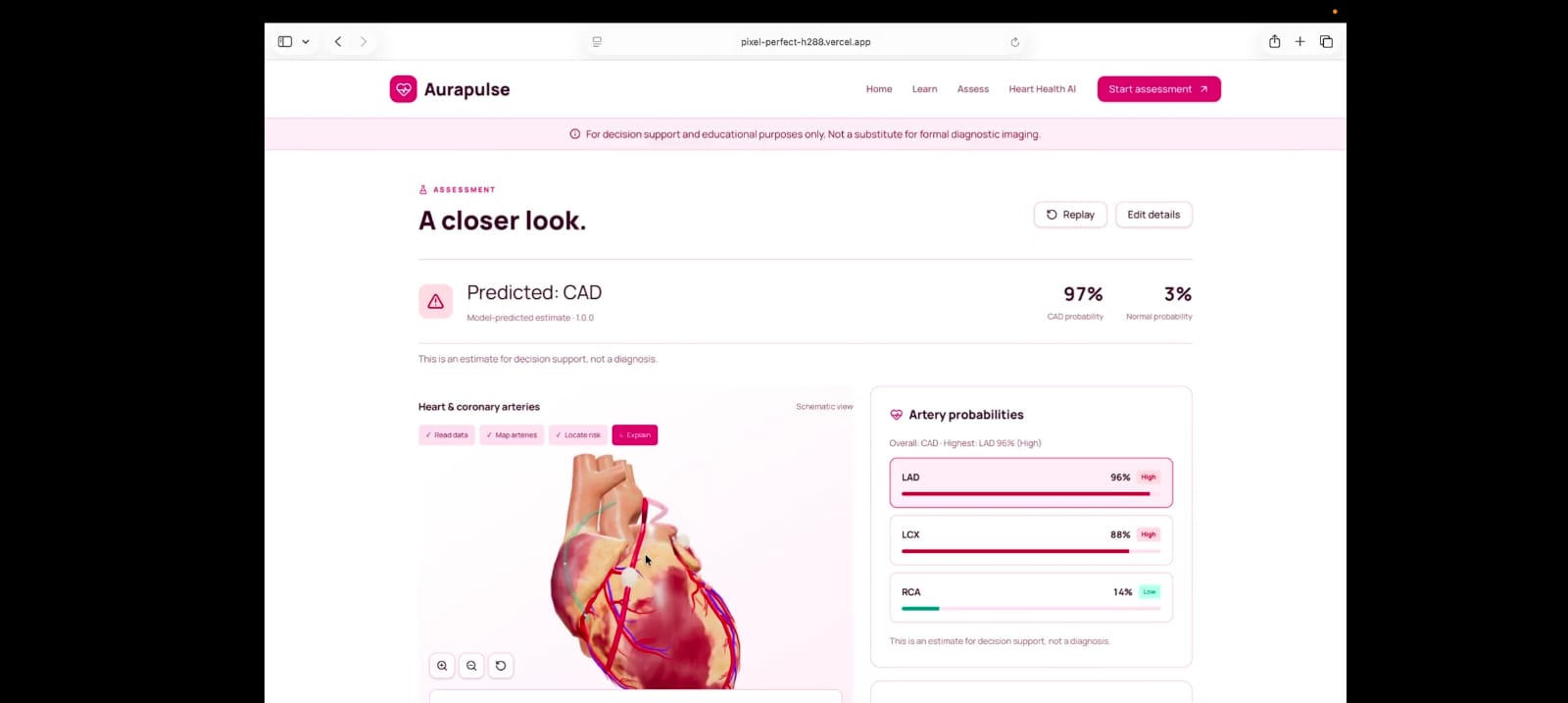
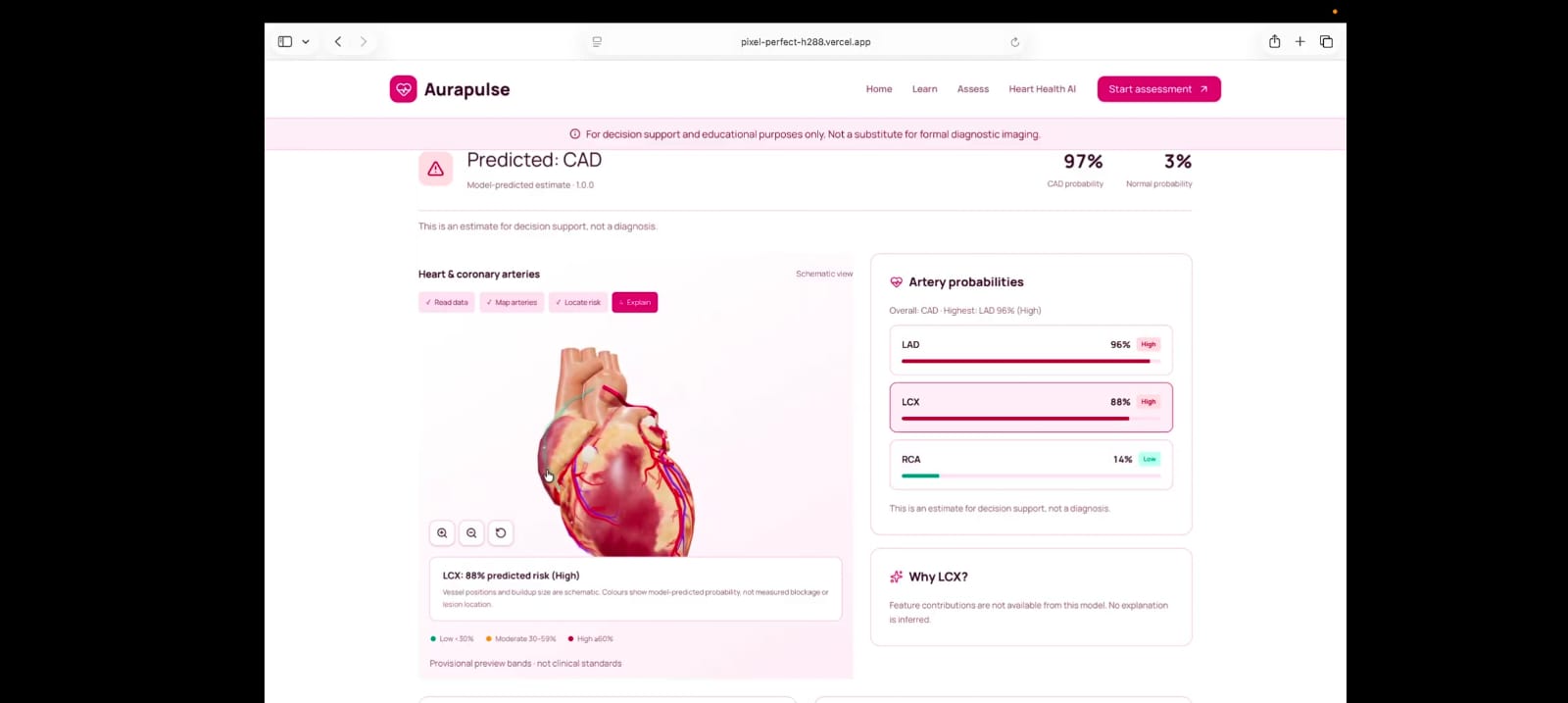
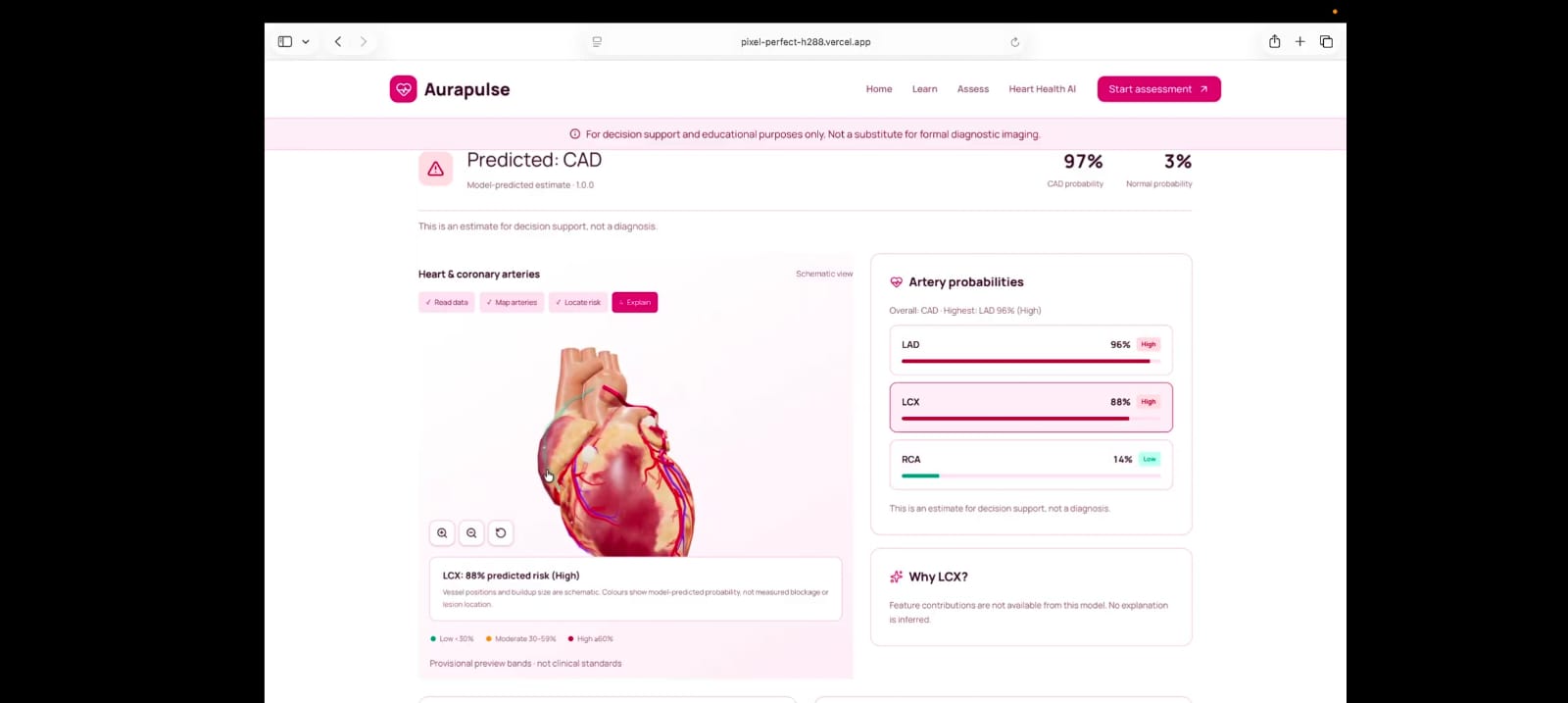
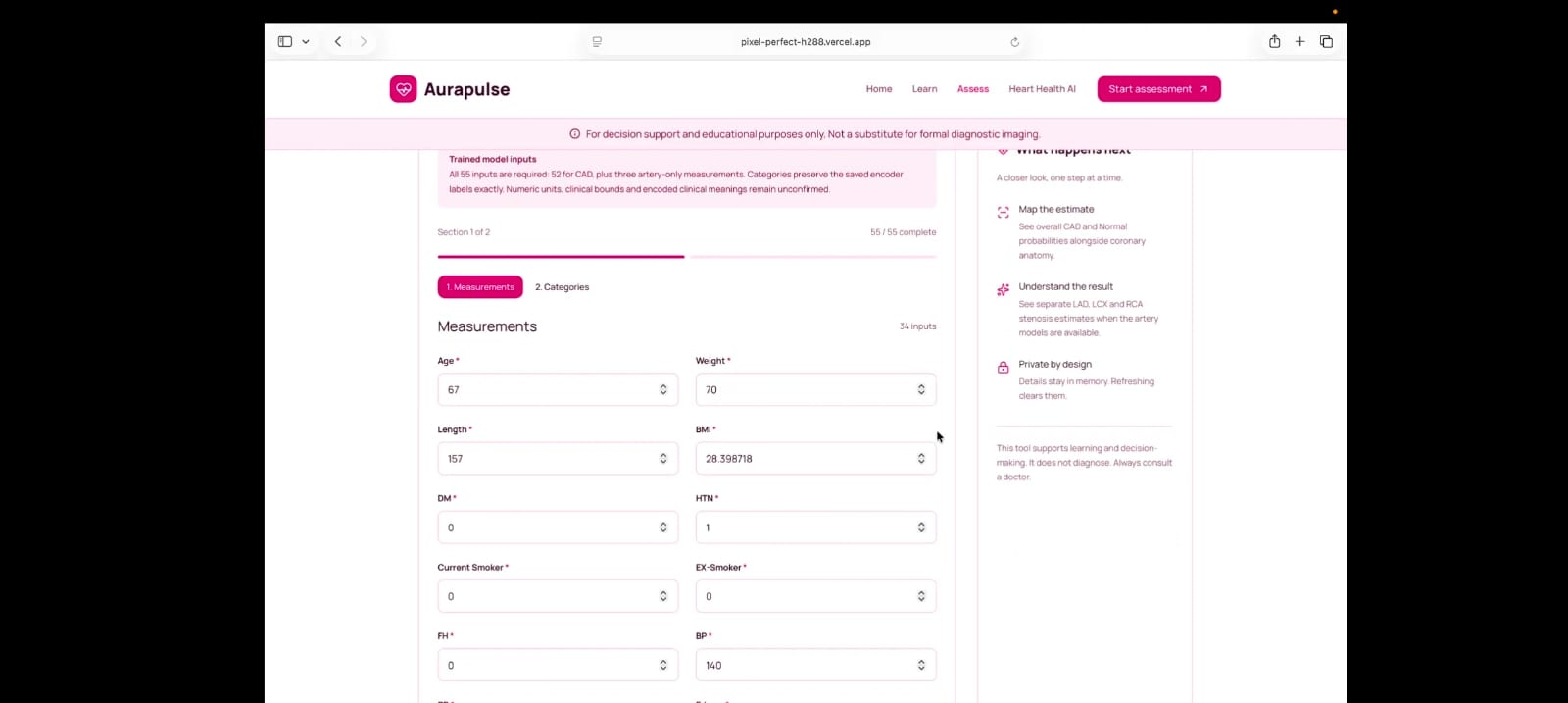
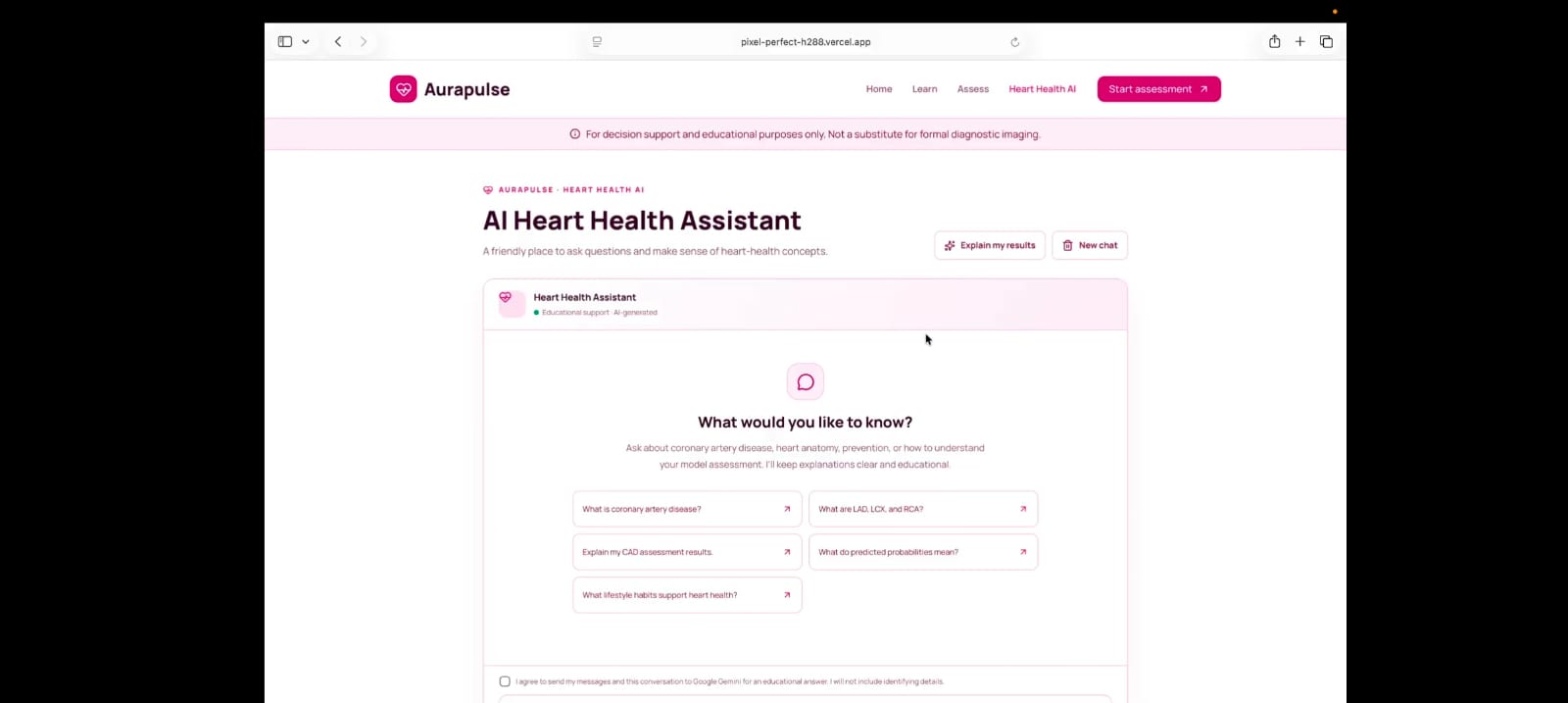
Aurapulse uses machine learning to estimate overall CAD risk and assess LAD, LCX, and RCA artery stenosis probabilities using three separately trained models. Its intuitive interface aims to make complex results easier to understand.
🛠️ How We Built It
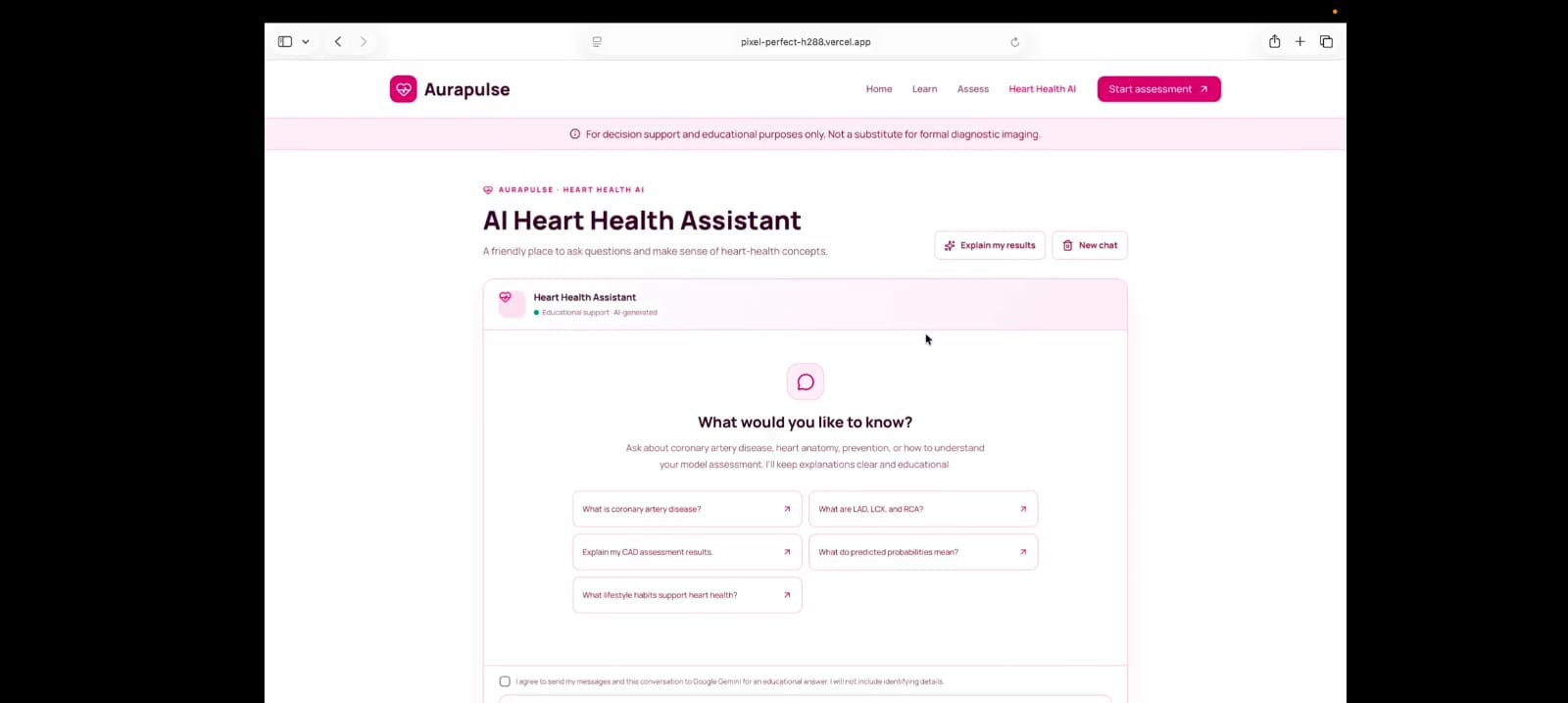
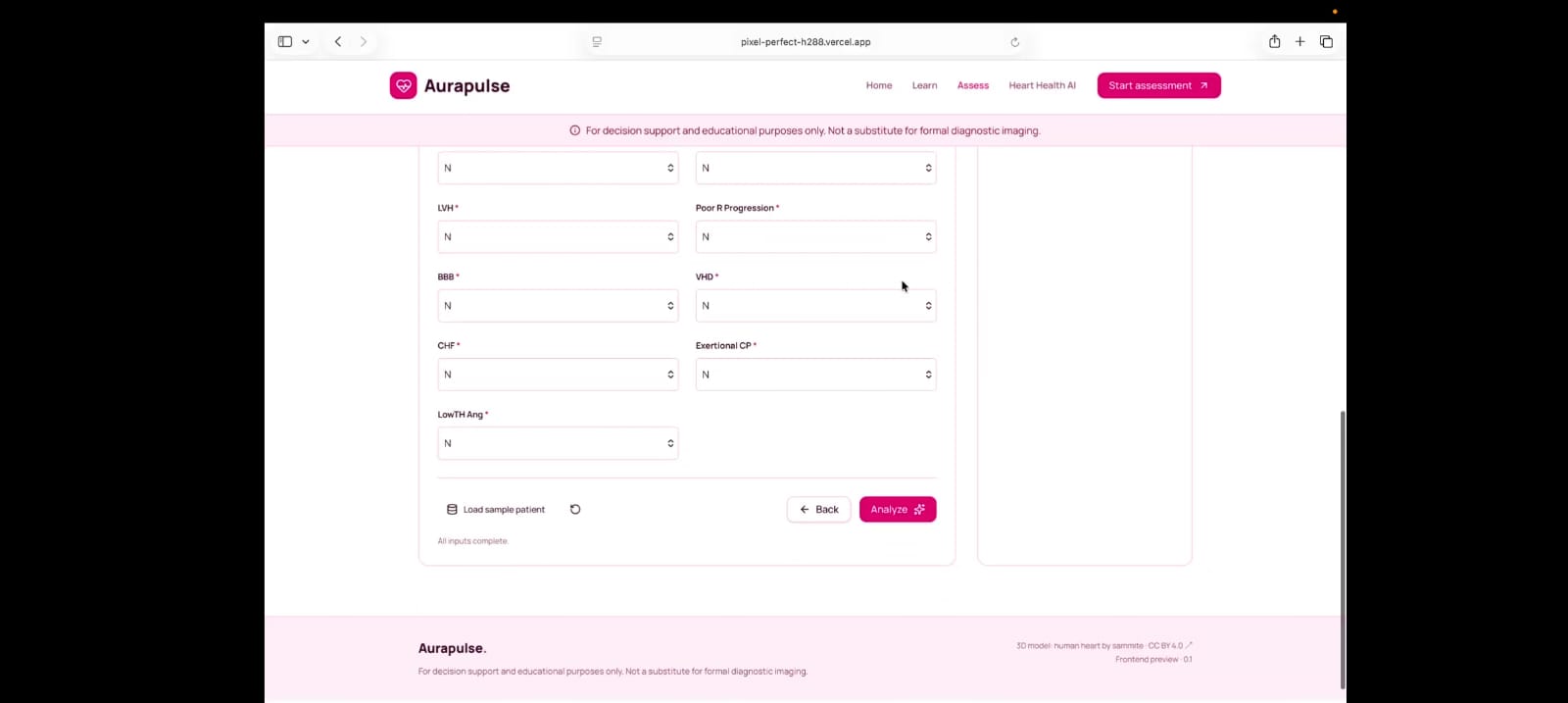
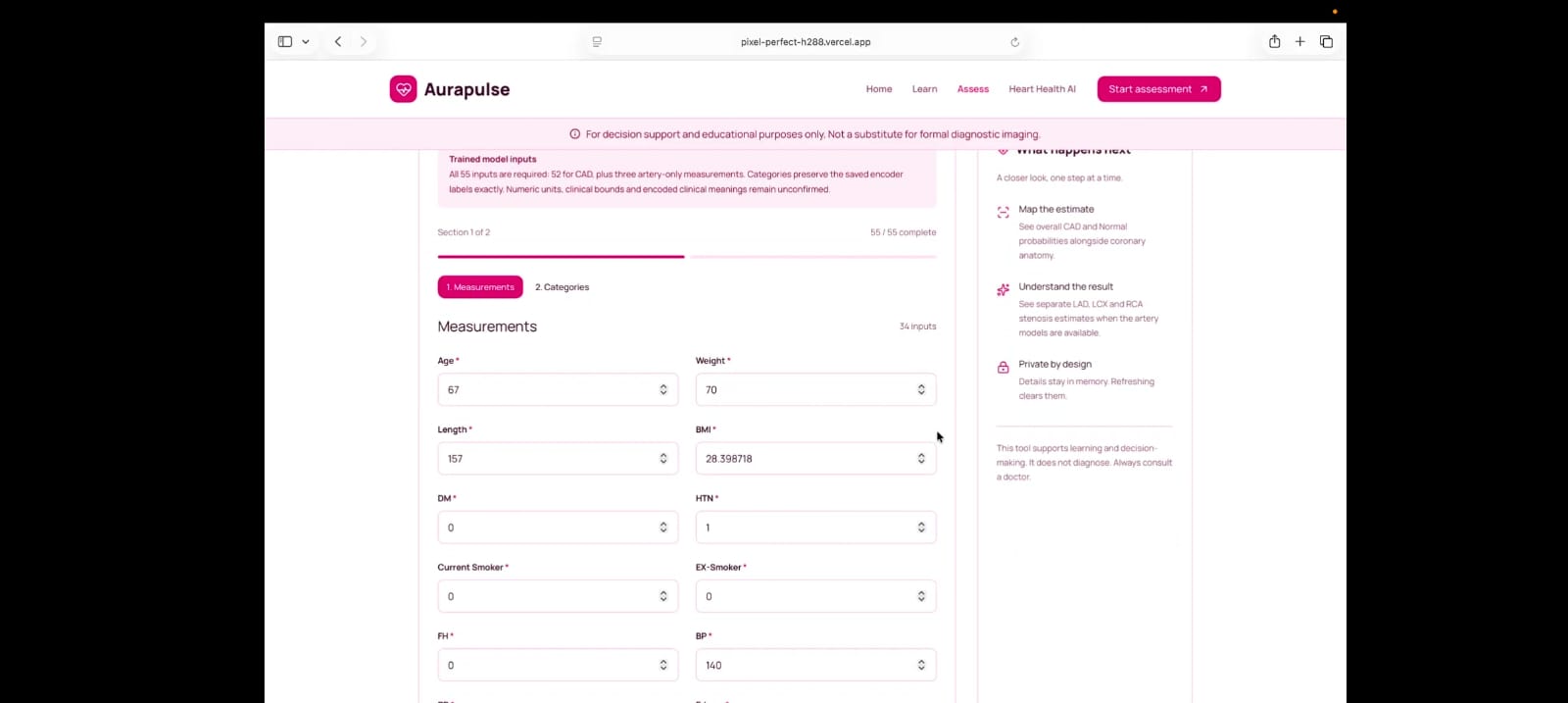
We developed an interactive frontend with Lovable, built a FastAPI backend, and trained separate artery classification models using Python, Pandas, and scikit-learn. The models are integrated into the backend to deliver predictions from patient inputs.
🧩 Challenges We Faced
Integrating trained models with the backend, matching feature requirements, resolving CORS issues, and connecting the deployed API to the frontend challenged us to debug systematically and improve our end-to-end workflow.
🌟 What We Learned
We learned how to prepare datasets, train and evaluate machine-learning models, build APIs, deploy services, and connect a frontend with a real prediction backend.
🔭 What's Next
We aim to improve model validation, strengthen reliability, and make cardiovascular insights more accessible. Aurapulse is a decision-support prototype, not a substitute for professional medical diagnosis.
Built With
- fastapi
- google-colab
- joblib
- lovable
- machine-learning
- numpy
- pandas
- python
- react
- render
- scikit-learn
- tailwind-css
- typescript
- vite
- xgboost

Log in or sign up for Devpost to join the conversation.