-
-
App icon (1024 x 1024)
-
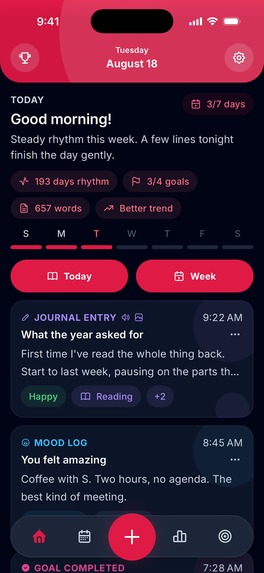
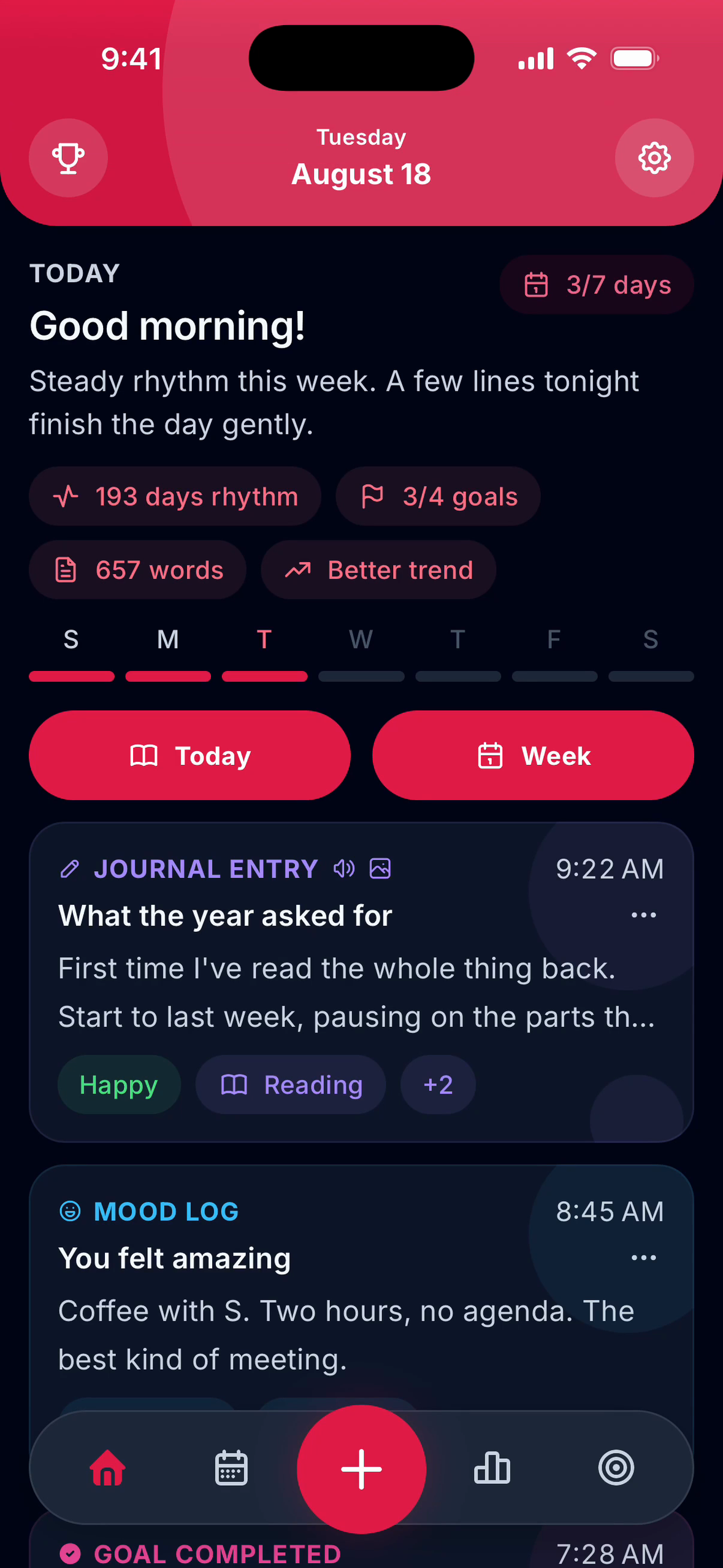
Home screen with sample journal data. 1179 x 2556, without a device frame.
-
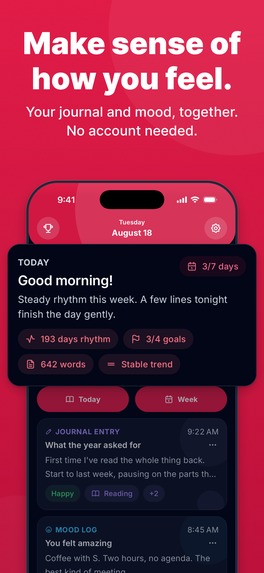
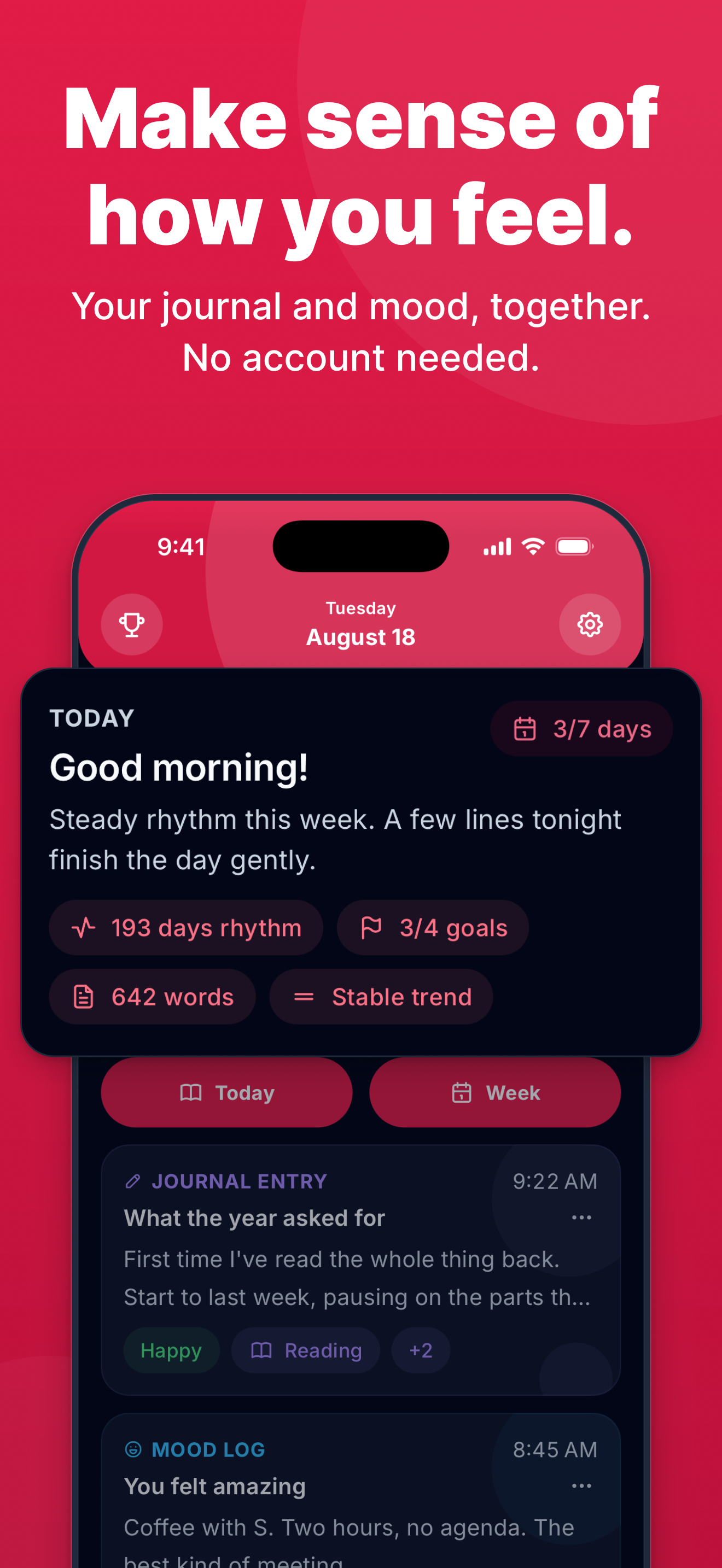
A private journal to make sense of how you feel. Analysis runs on your phone. Sample journal history.
-
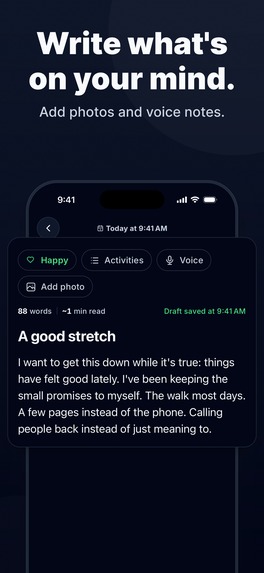
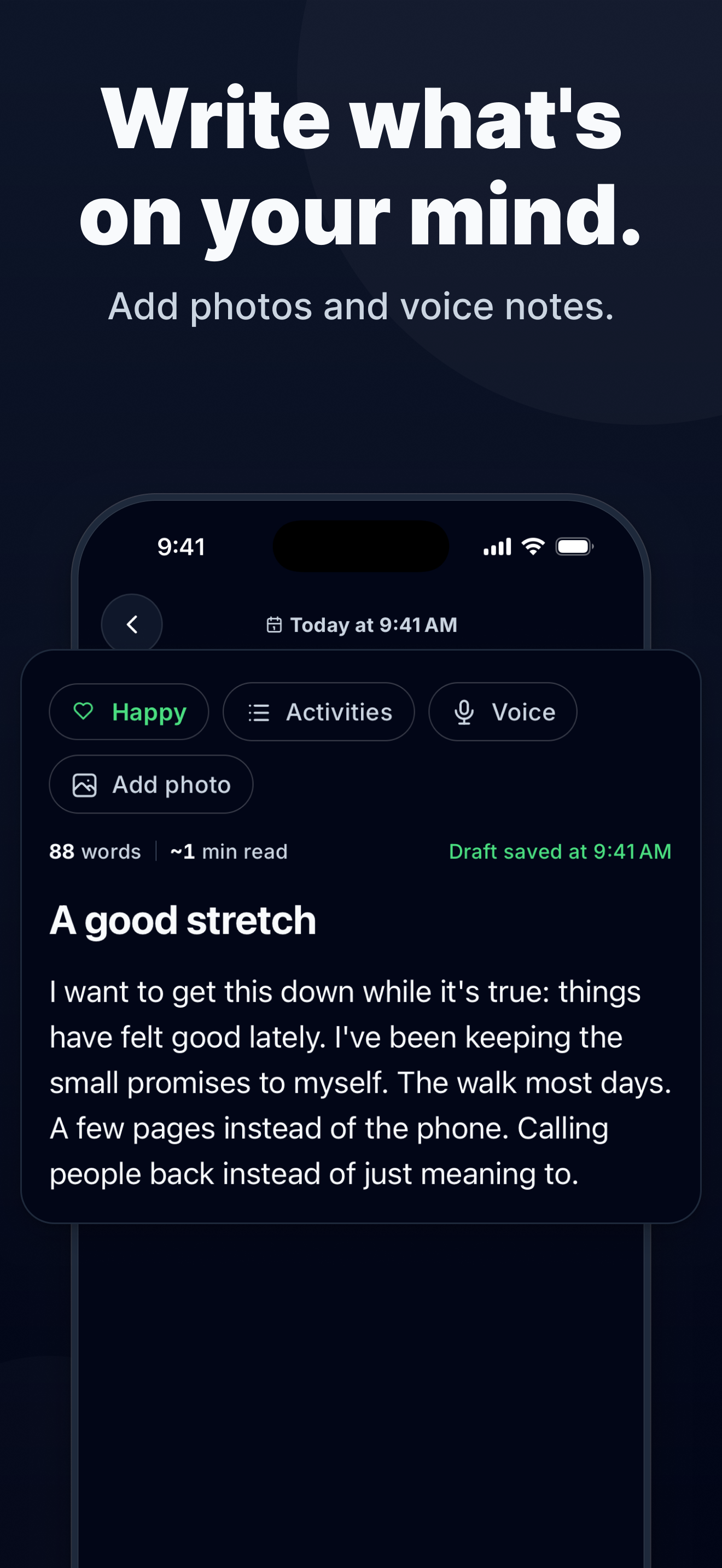
Write freely, with optional photos and one voice note per entry. Sample journal entry.
-
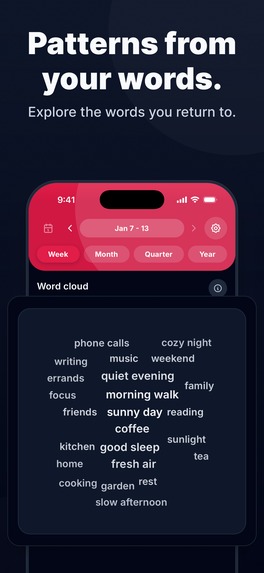
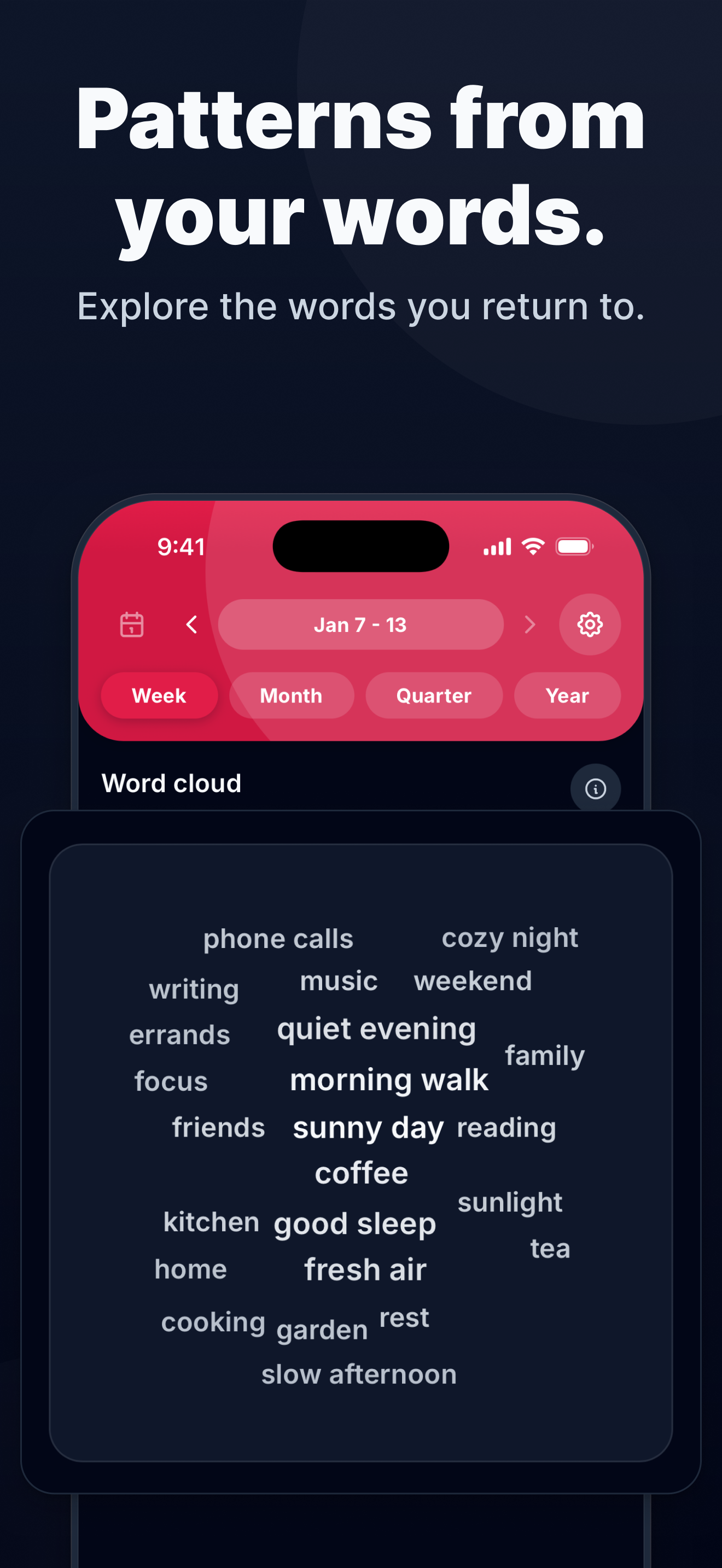
Explore recurring words with the free Week word cloud. Shown with sample journal history.
-
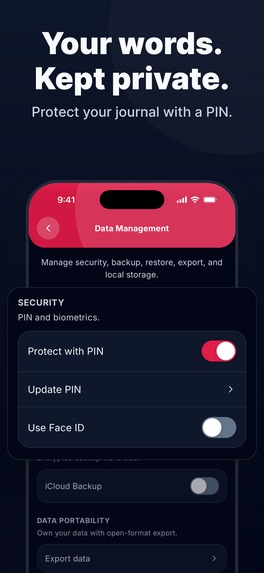
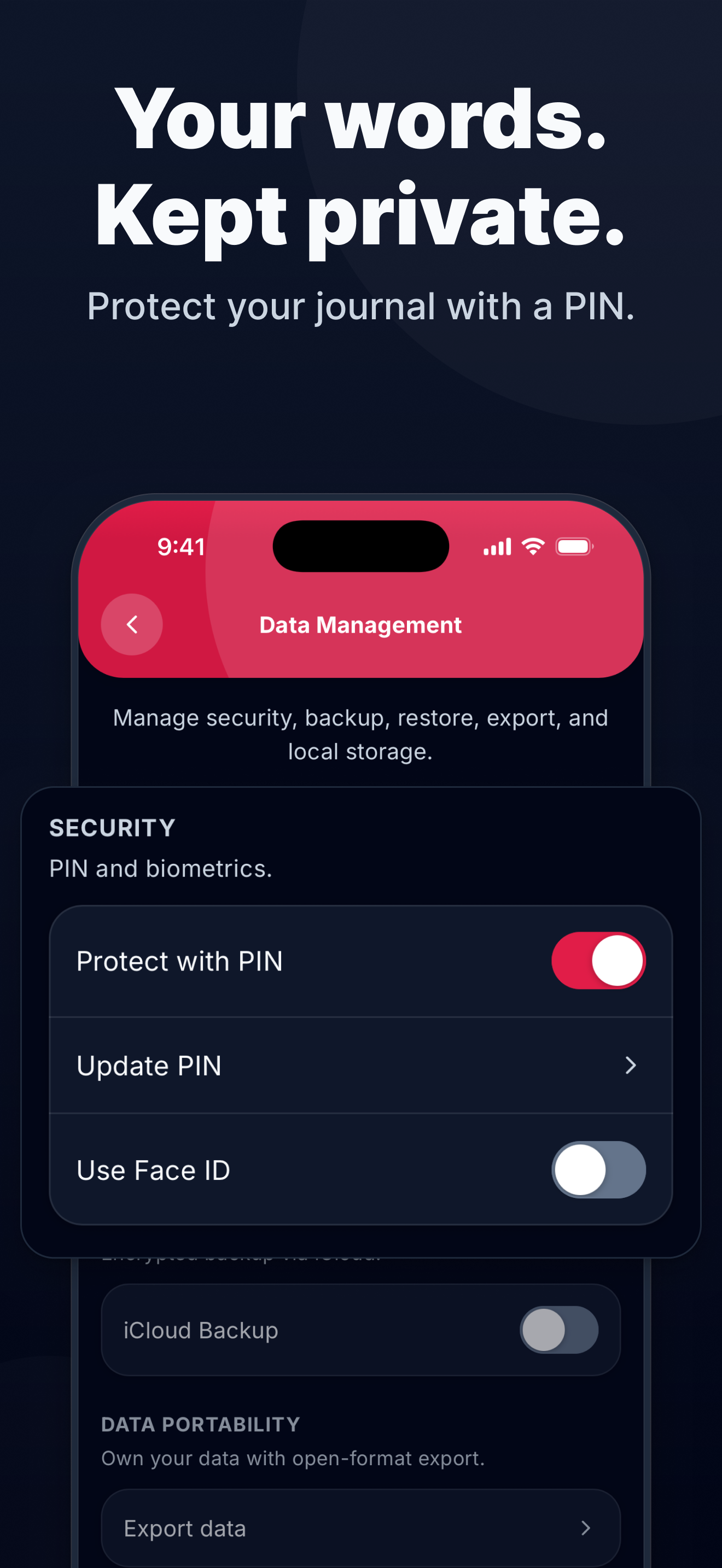
PIN protection is free. Auramenta+ adds optional iCloud backup, encrypted before upload.
-
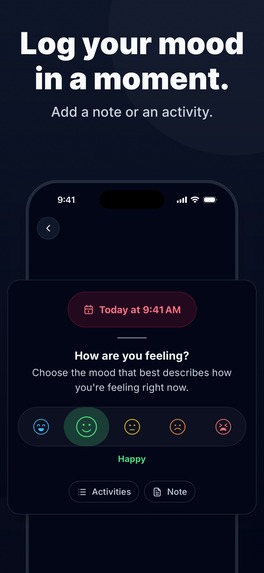
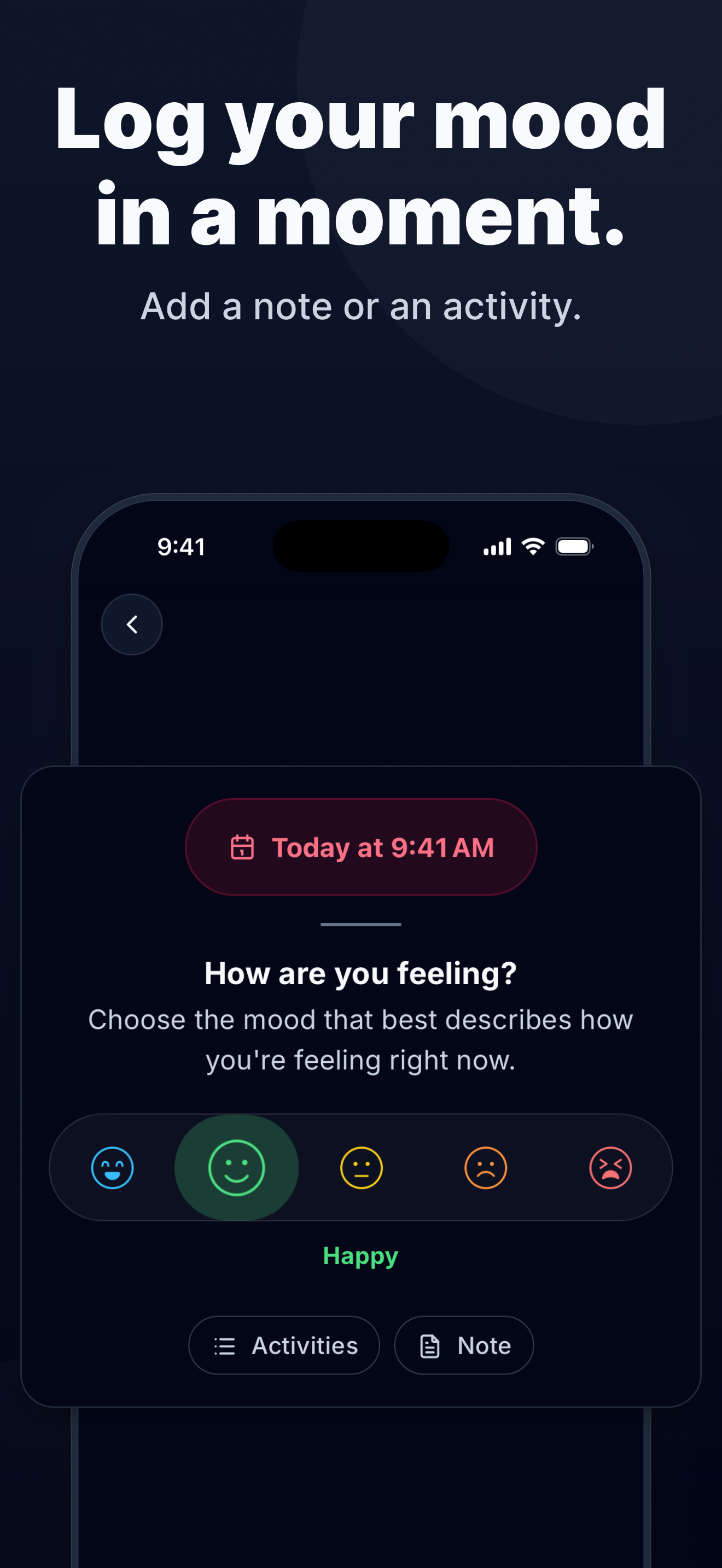
Log a mood on its own or add a note and activities about your day.
-
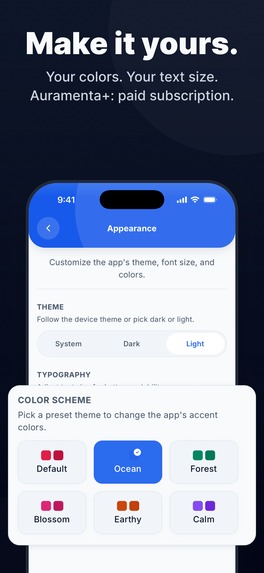
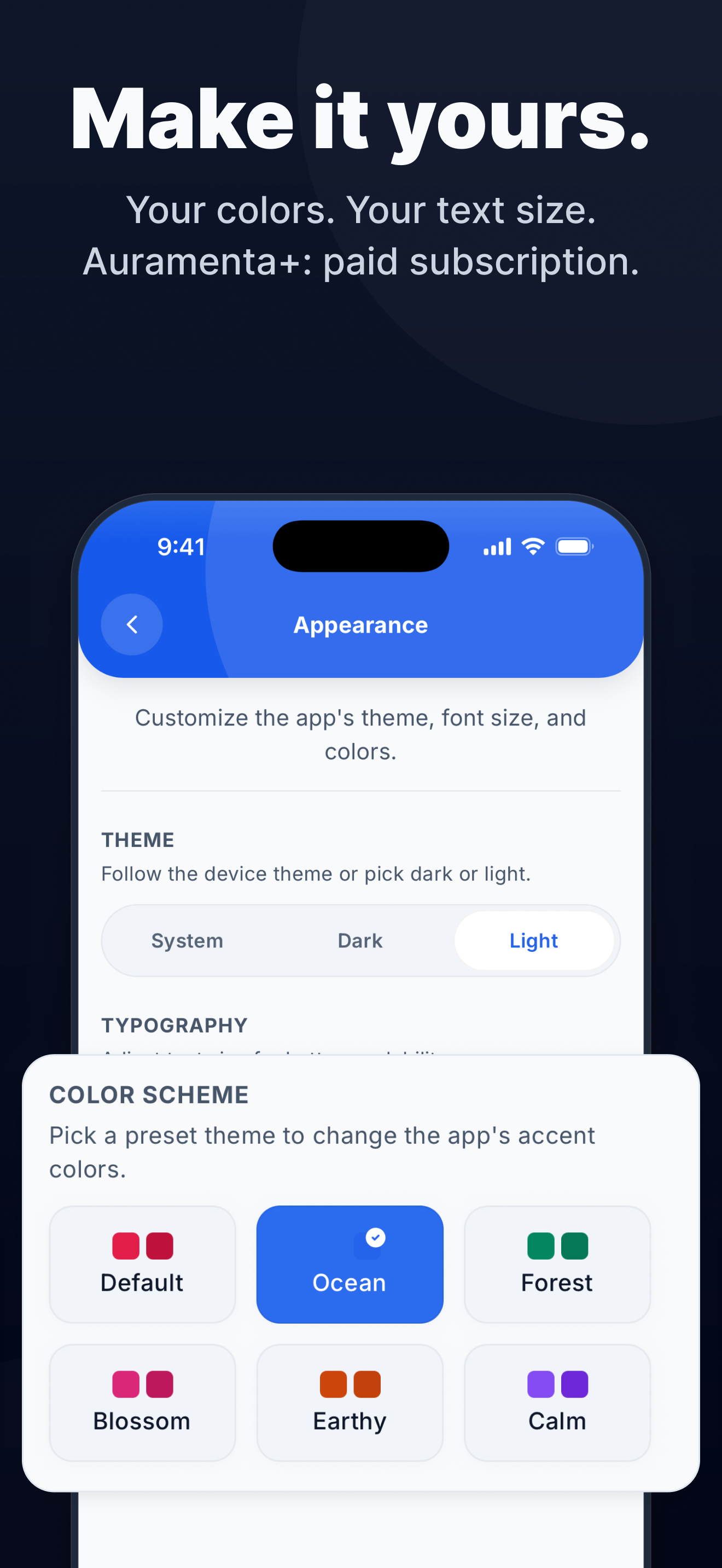
Choose light or dark. Auramenta+ adds accent colors, text size and compact layout controls.
-
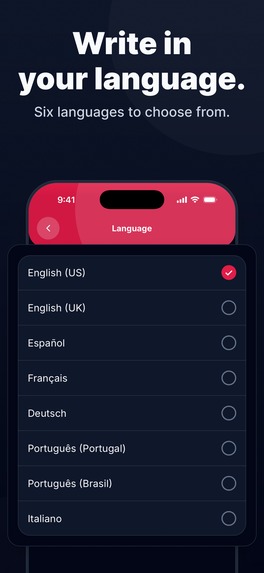
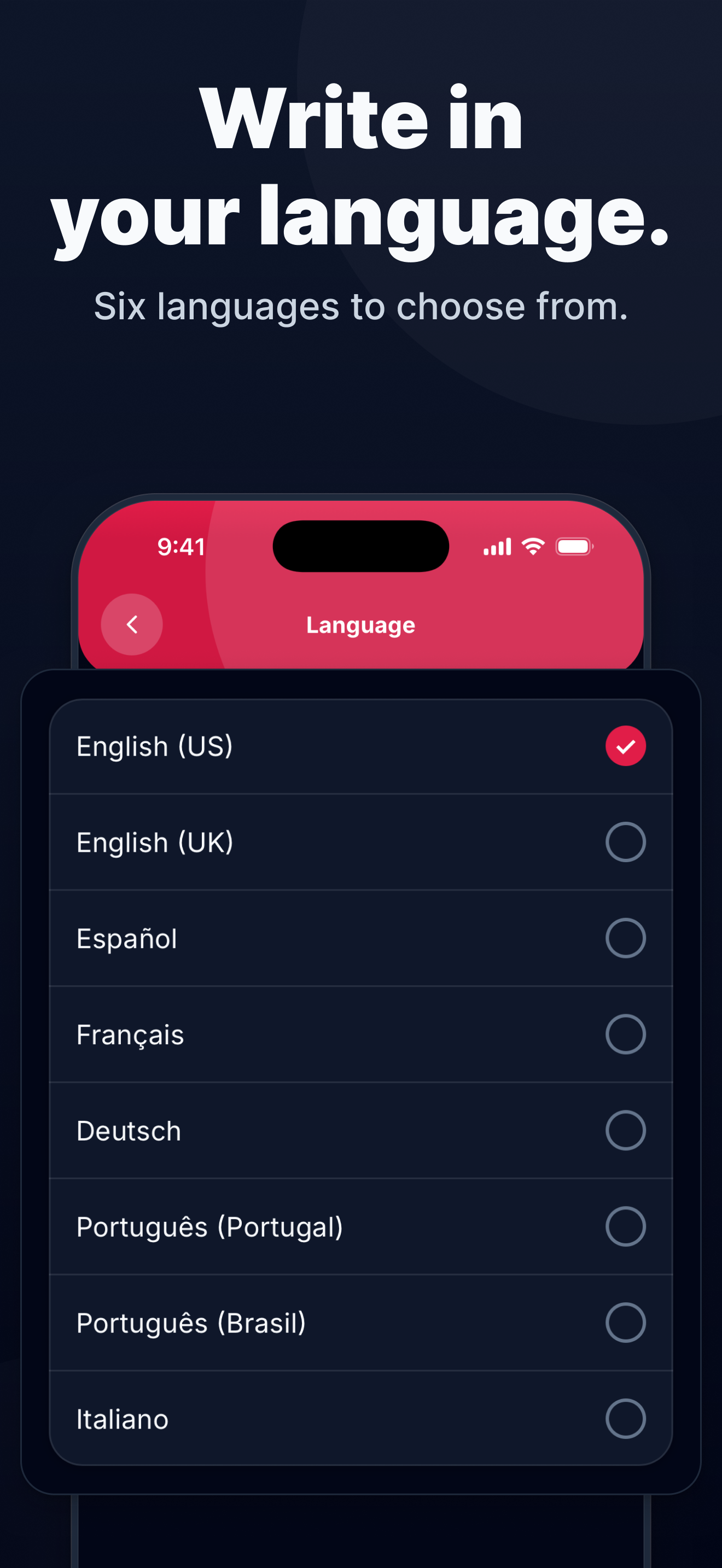
Six languages in eight regional variants. Shared analysis code with language-specific vocabulary and rules.
-
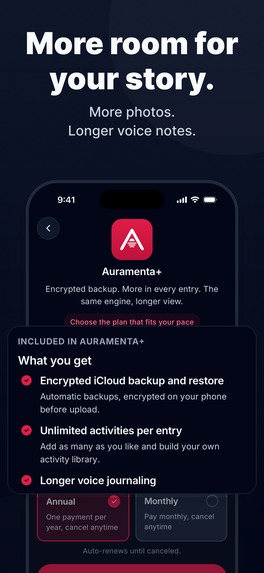
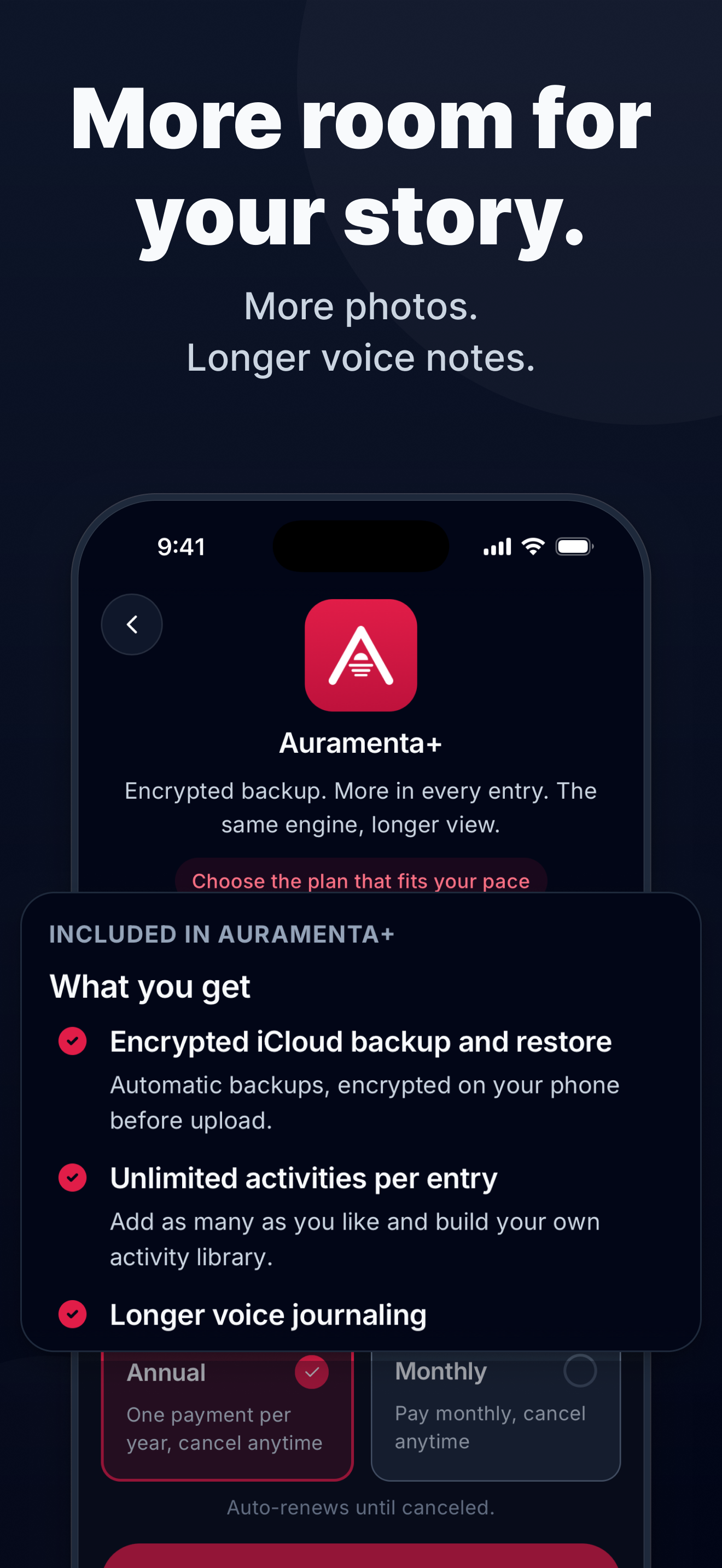
Auramenta+ adds deeper analysis, richer entries, appearance controls and optional encrypted iCloud backup.

Inspiration
I started Auramenta during a difficult year. I wanted somewhere to write freely, then look back and notice what kept coming up.
What it does
Auramenta is a private journal for iPhone. Write an entry, record a voice note, add a photo, or log a mood. The app highlights recurring words and patterns over time, including associations between logged activities and mood.
Analysis runs on your phone. Journal text is stored in an encrypted database, and no account is required. Photos and voice notes stay in local files. Auramenta+ includes optional iCloud backup, encrypted before it leaves the device. Your journal entries are not sent to me.
The app supports English, Portuguese, German, Spanish, French, and Italian, with separate US and UK English and European and Brazilian Portuguese settings. The demo uses fictional journal history recorded in the app. Its charts are calculated from those sample entries. A fresh installation starts without that history.
How I built it
I built Auramenta with React Native, Expo, custom native modules, TypeScript, and Redux. SQLite with SQLCipher stores the journal. The analysis uses hand-written phrase rules, shared code, and language-specific vocabulary. Regional rules account for differences such as British idioms and Brazilian Portuguese. Journal analysis does not call an LLM or an external AI service.
RevenueCat manages the Auramenta+ monthly and annual subscriptions. Writing and the core pattern features are free. The subscription adds deeper analysis, more customization, and encrypted iCloud backup.
Challenges I ran into
Language was the hardest part. A phrase can change meaning with a negation, a quotation, or the words around it. Regional vocabulary needed its own rules and tests. Shared code helped keep the behavior consistent without treating every language as English with different labels.
I also had to decide how much to show. A pattern based on a few entries needs context. The app shows observations and confidence where available, leaving room for the person writing to decide what matters.
Accomplishments that I'm proud of
I built and shipped Auramenta alone over three years, around a day job. The first public version reached the App Store on August 17, 2026. Version 1.0.5 is now available, with 30 free writing prompts, a free weekly word cloud, and fixes for writing, backups and restoring purchases. PIN protection, complete open-format export, deletion, and crisis resources are available without a subscription.
The launch received coverage from MacMagazine on September 3 and The Next Big Idea on September 7. That article was republished by SAPO / 24 Notícias on September 17. On September 18, PCGuia featured Auramenta as App do Dia, and I joined RTP Mundo's Isto Faz-se Por Cá for a 17-minute interview about the app. These Portuguese-language pieces cover the launch and the idea of private journaling. I do not yet know whether they brought in paid subscriptions.
On September 22, iPhoneItalia published a review by Giuseppe Migliorino. The Italian-language article covers private journaling, on-device analysis and Auramenta+.
Public feedback also changed the app. In the Product Hunt launch discussion, a participant pointed out that a local helpline could be listed but outdated. I made the worldwide directory available alongside local numbers and posted an August 19 follow-up. Version 1.0.1 shipped that change on August 24.
What I learned
I learned to test the installed build, especially purchases, permissions and restoring a backup. For language analysis, I also needed tests for phrases the app should leave alone, such as a quotation or a negated statement.
What's next for Auramenta
Android is planned for Q4 2026. On iOS, I am working through early feedback and testing how I explain the app on its store page. I also need to learn how many people keep using it after their first few entries.
Built With
- expo.io
- ios
- natural-language-processing
- react-native
- redux
- revenuecat
- sentry
- sqlcipher
- sqlite
- typescript

Log in or sign up for Devpost to join the conversation.