-
-
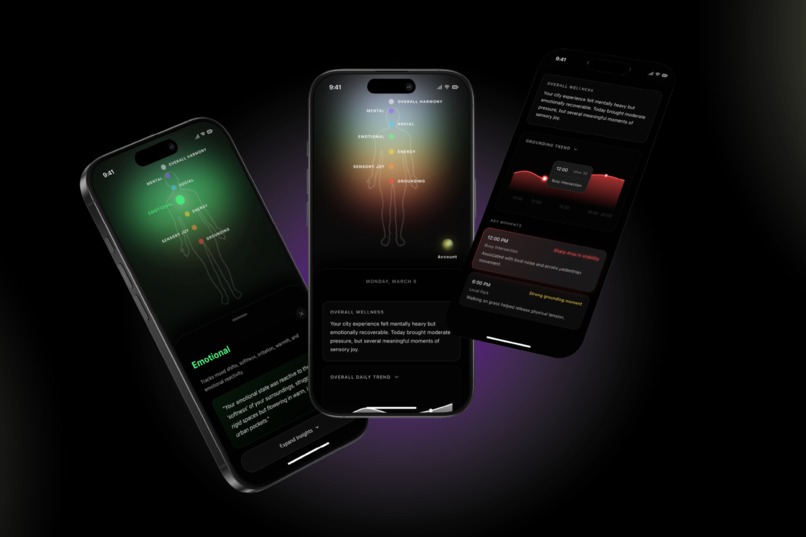
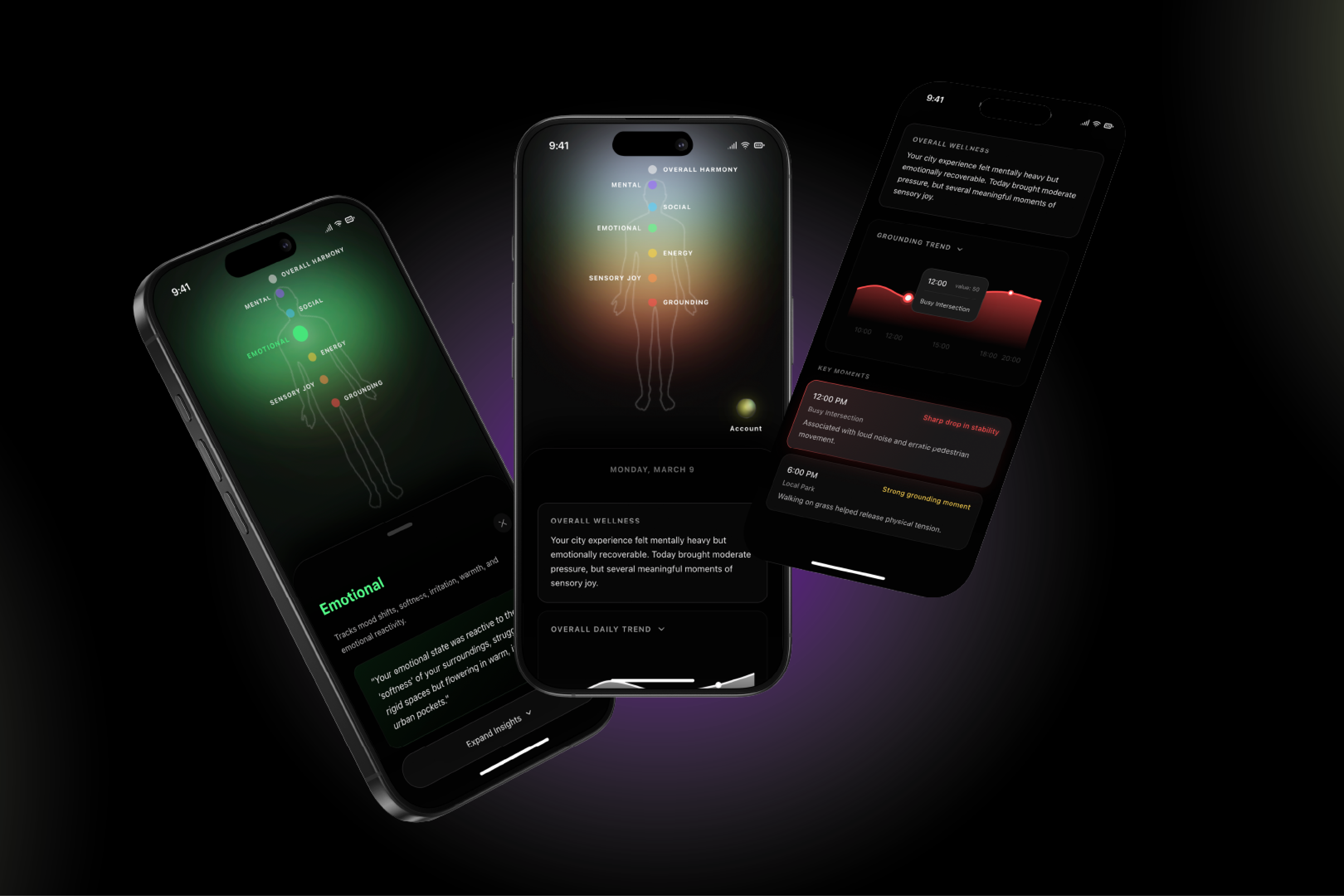
The companion app transforms moments into patterns, helping users reflect on emotional triggers, restorative places, and daily wellbeing.
-
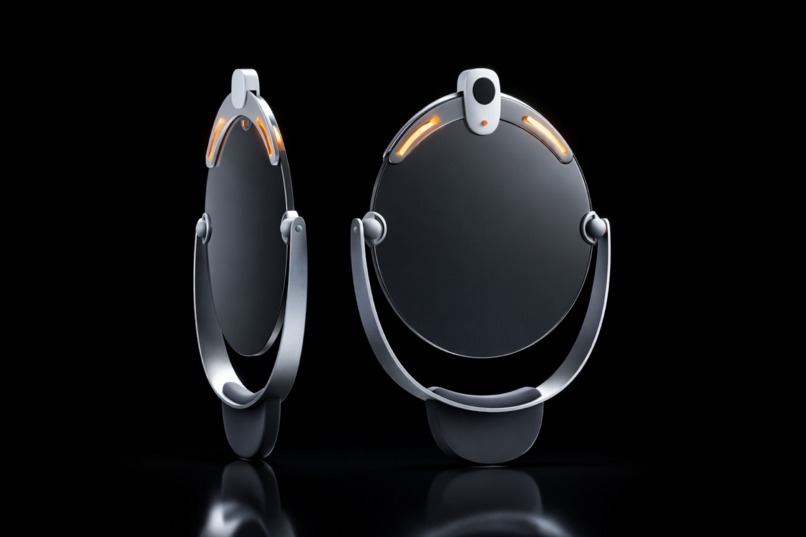
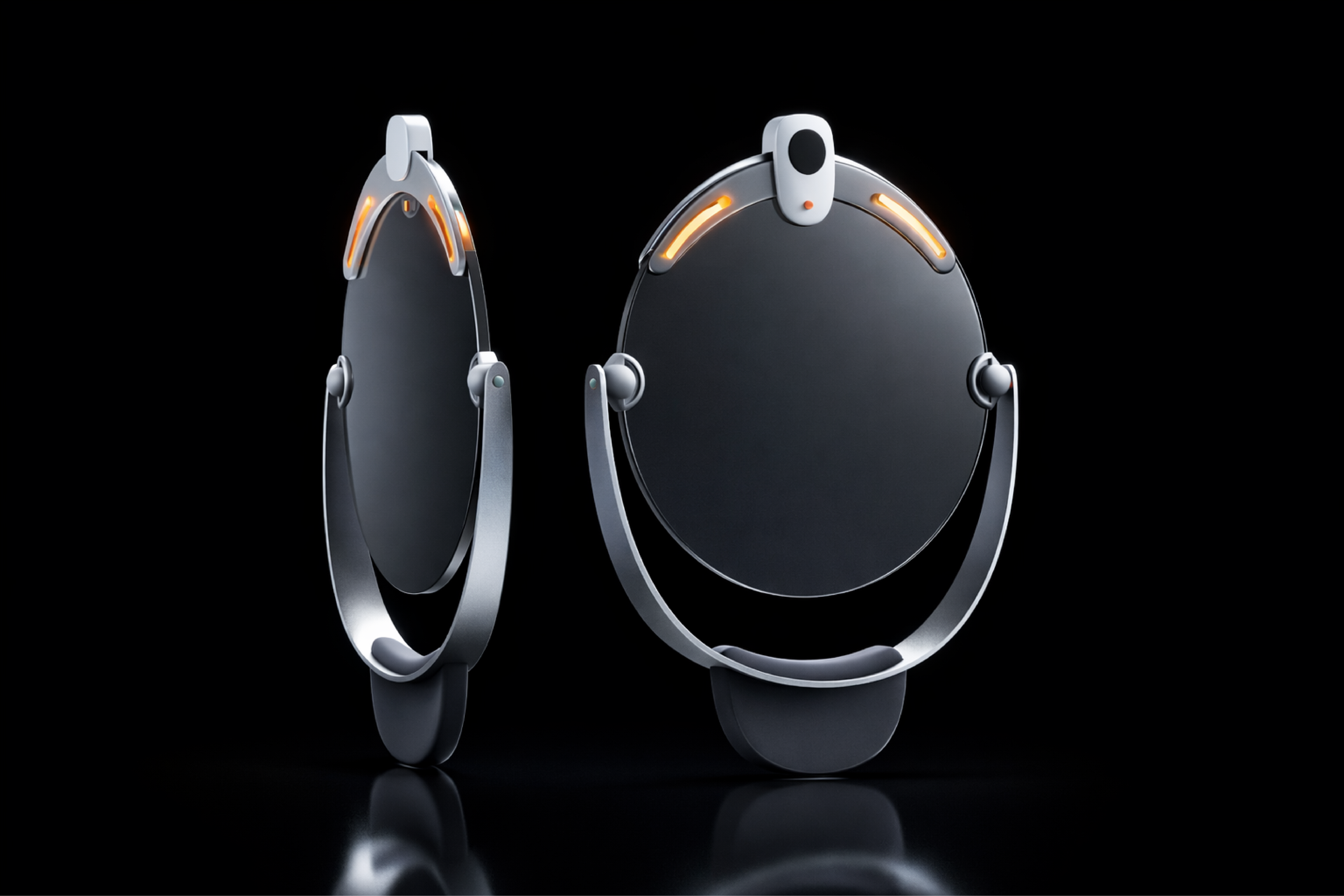
Auralens device design. A handheld emotional-sensing lens that reads subtle biofeedback and visualizes environmental resonance in real time.
-
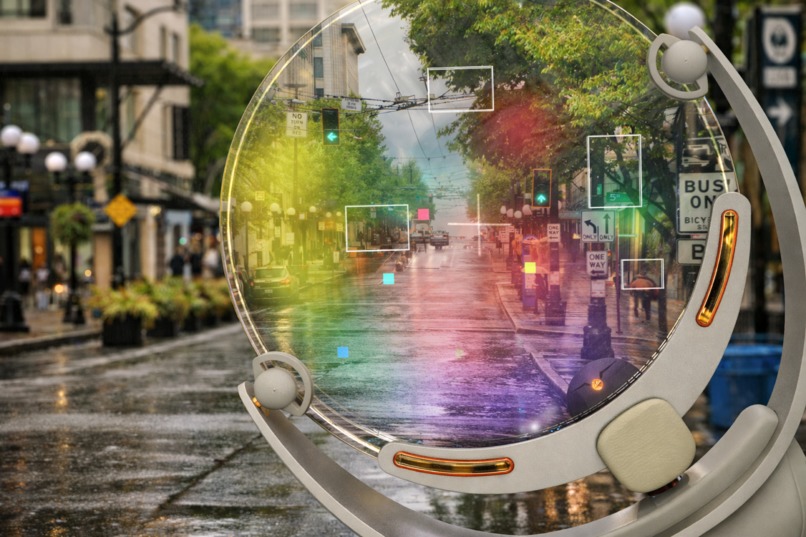
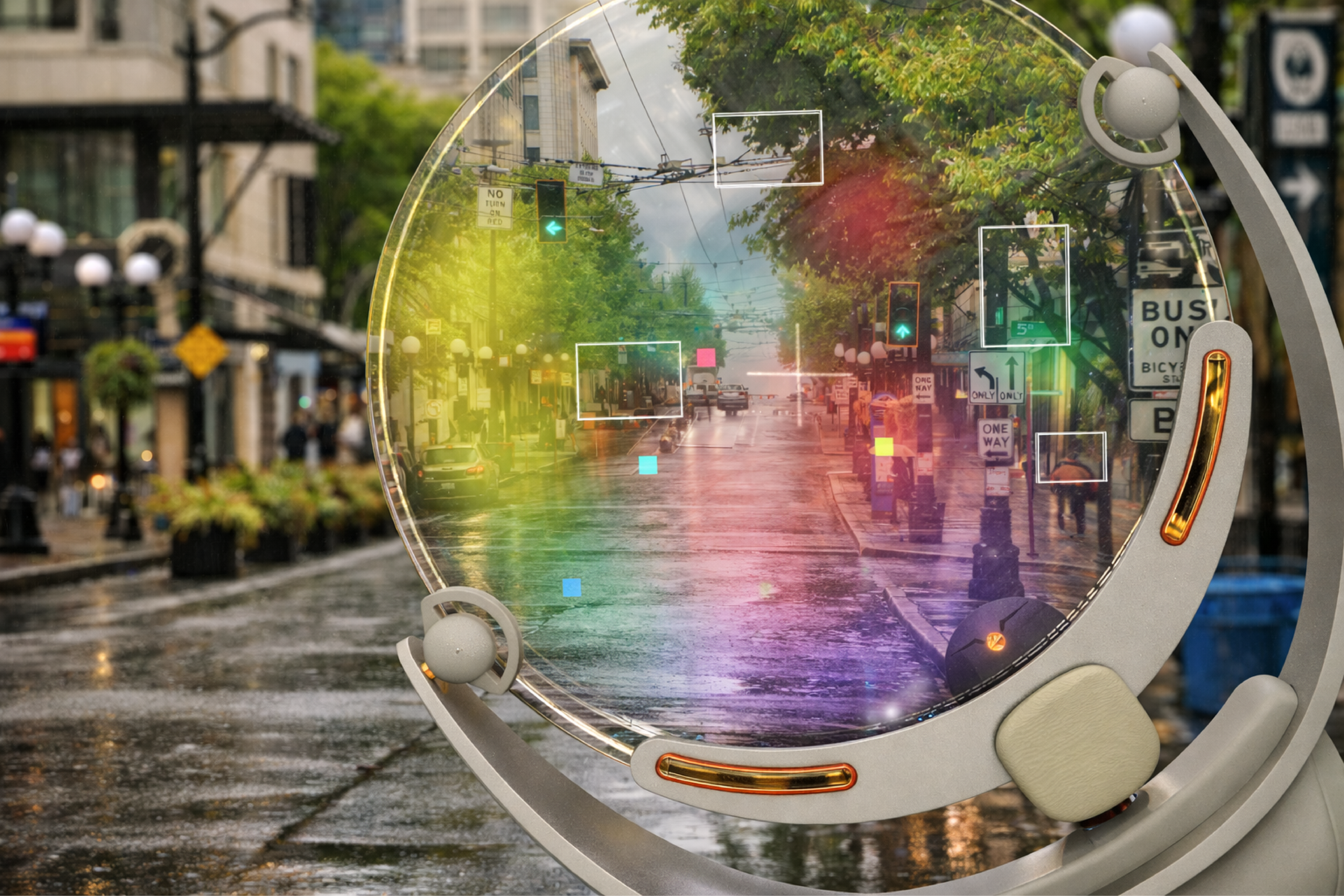
Auralens reveals the emotional resonance between body and place, translating subtle signals into a soft aura layered over the city.
-
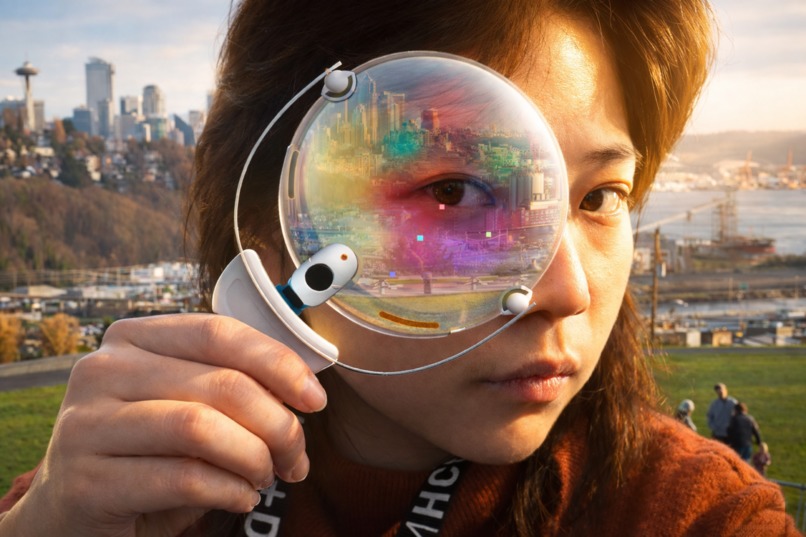
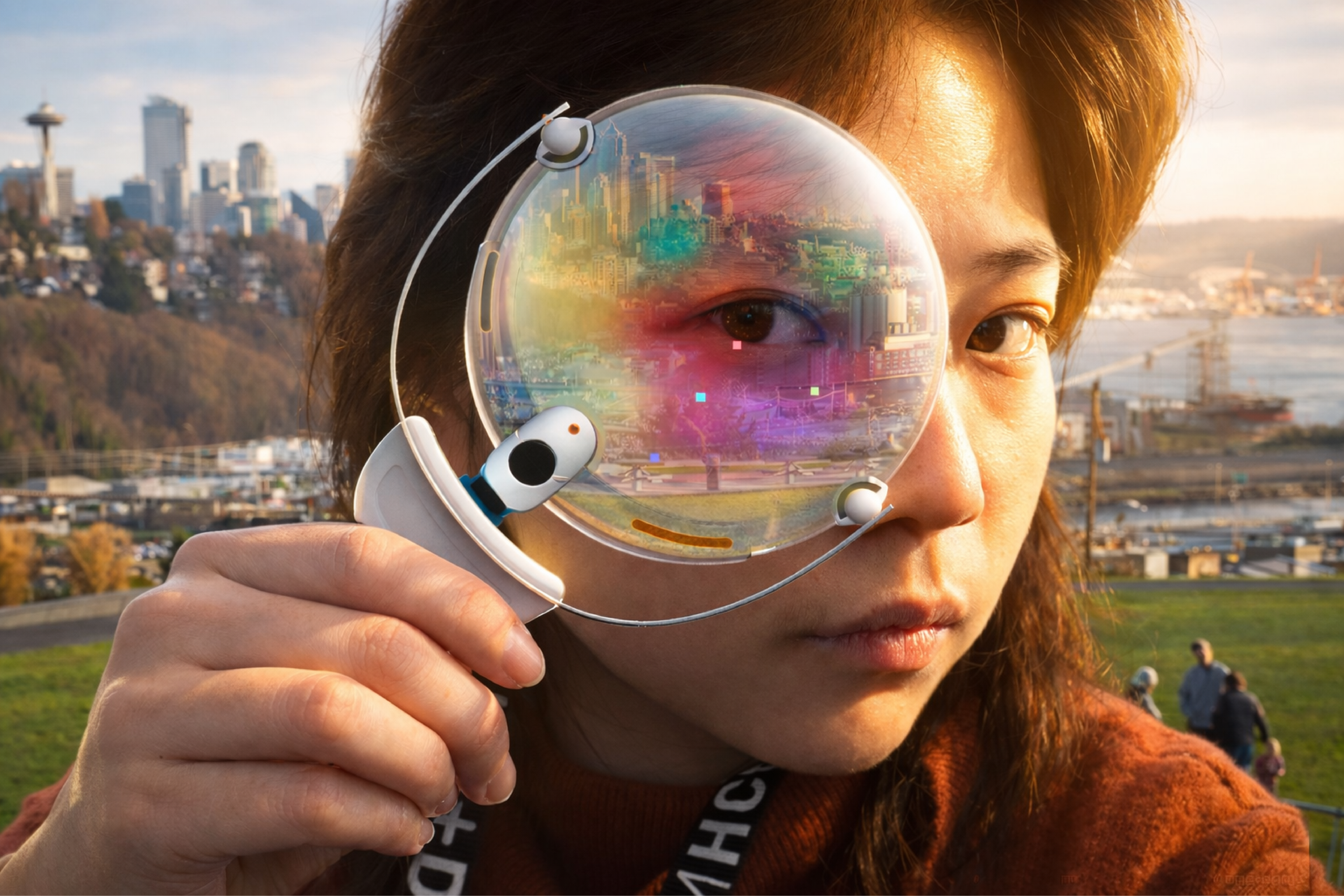
Raise the lens and see how the environment feels. Auralens turns invisible emotional signals into a visual layer you can perceive instantly.
Inspiration
Urban environments constantly shape how we feel, but we usually notice it only after stress or fatigue has already accumulated. Young adults move through crowded campuses, streets, and transit systems every day without a clear way to recognize how those spaces affect their emotional state. We were inspired by the idea that our bodies detect environmental changes before our minds do, through signals such as heart rhythm, tension, and temperature. Auralens explores how these invisible signals could be visualized, helping people become aware of how different places influence their wellbeing in real time.
What it does
Auralens is a speculative wellness device that reveals a person’s emotional resonance with their environment. The handheld lens reads subtle physiological signals and visualizes them as a soft aura layered over the real-world scene. Instead of presenting complex data, it translates bodily responses into intuitive visual cues. A companion mobile app stores these moments and later helps users reflect on patterns in their daily life, such as stressful environments, calming spaces, or recurring triggers. The system helps people notice how places affect them, and encourages more intentional choices about where they spend their time.
How we built it
We approached Auralens as both a physical interaction concept and a digital reflection system. The device concept combines several components:
- A handheld optical lens interface that overlays visual signals onto the environment an emotion sensor module that reads physiological signals such as pulse, skin temperature, and heart rhythm
- An aura visualization camera that converts biofeedback into atmospheric color fields
- Arotary power switch integrated into the physical lens form
- On the software side, we designed a companion app that connects to the device via Bluetooth and organizes emotional signals into daily reports, trend graphs, and key moments. To explore the interaction, we created visual prototypes showing how the aura changes across different emotional states, such as overstimulating urban scenes, neutral environments, and restorative natural spaces.
Challenges we ran into
One challenge was translating complex physiological signals into a visualization that feels intuitive rather than technical. Showing too much data could overwhelm users and distract them from the real-world experience. Another challenge was designing the system responsibly. Because the device deals with emotional signals, we needed to ensure it encourages self-awareness rather than surveillance or judgment of places and people. We addressed this by keeping the feedback soft, personal, and private, and by separating real-time perception from deeper analysis in the companion app.
Accomplishments that we're proud of
We are proud of creating a concept that bridges physical interaction, emotional sensing, and reflective data visualization. The project successfully explores a new way of perceiving environments not through objective measurements, but through the body’s own signals. We also developed a coherent system including a physical device concept, a visual overlay interaction, and a companion app that supports longer-term reflection on emotional patterns. Together, these components demonstrate how technology could support everyday emotional awareness without interrupting the user’s experience of the world.
What we learned
Through this project we learned how challenging it is to design interfaces around emotional data. We discovered that subtle feedback often works better than explicit analysis when people are moving through real environments. Immediate experiences should stay simple and perceptual, while deeper interpretation can happen later. This separation between real-time sensing and reflective understanding became one of the key design principles of the system.
What's next for Auralens
Next, we would like to explore more realistic sensing methods and validate the concept through user testing. Future work could include: integrating wearable sensors for more accurate physiological data improving the visualization language of the aura so it communicates emotional states more clearly studying how users interpret these signals over longer periods of time We are also interested in exploring how Auralens could help people understand relationships between environments, routines, and wellbeing across different cities or neighborhoods.
Built With
- figmamake


Log in or sign up for Devpost to join the conversation.