Inspiration
Mental health is frequently sidelined in fast-paced technological environments. AuraHealth AI was inspired by United Nations Sustainable Development Goal #3: Good Health and Well-being. The core objective was to develop more than just a sentiment analyzer; the goal was to create a secure, enterprise-grade diagnostic tool for preventing professional burnout. In high-pressure roles, specialists require an assistant that provides a first line of emotional defense while ensuring absolute data confidentiality.
What it does
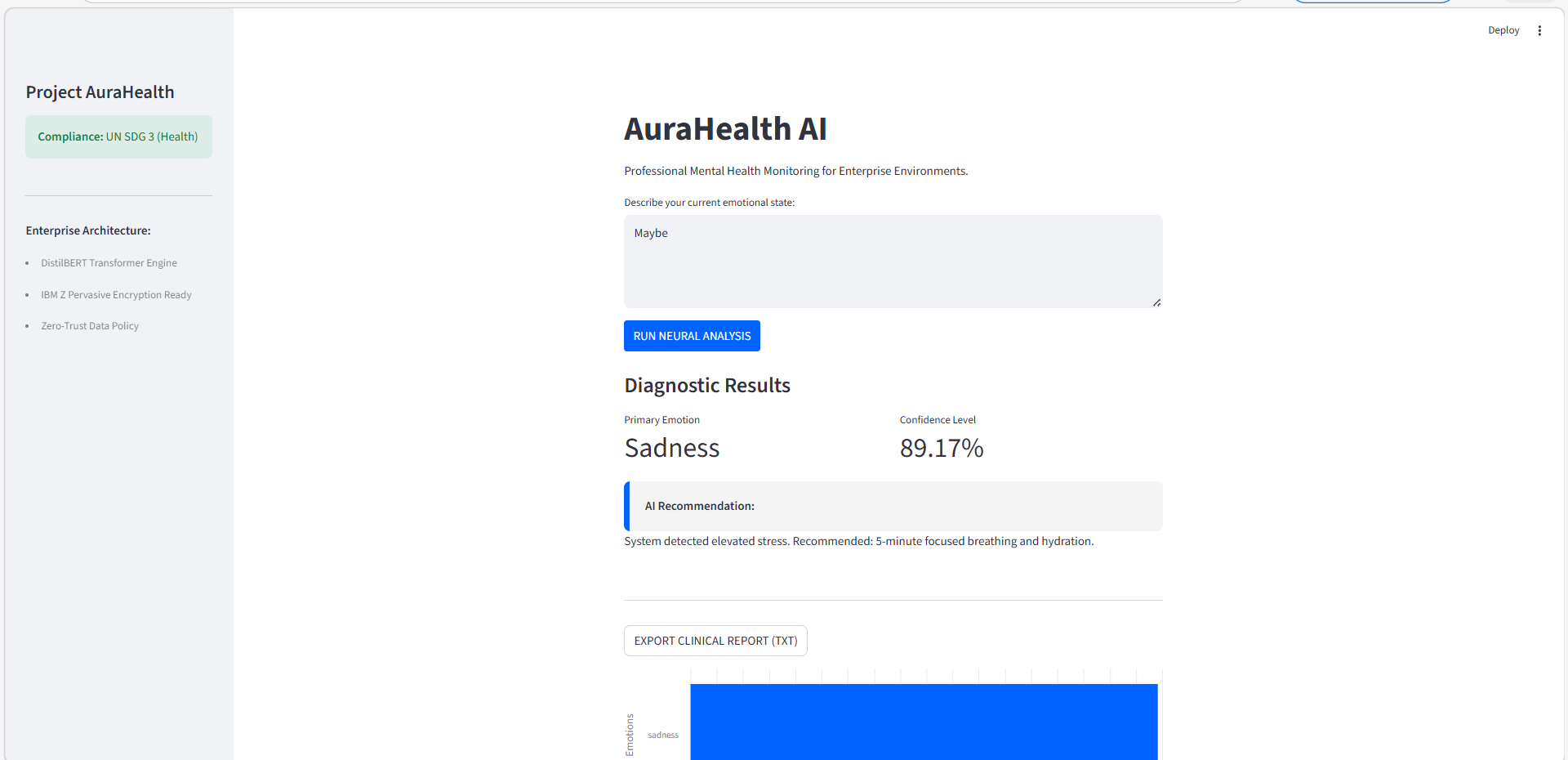
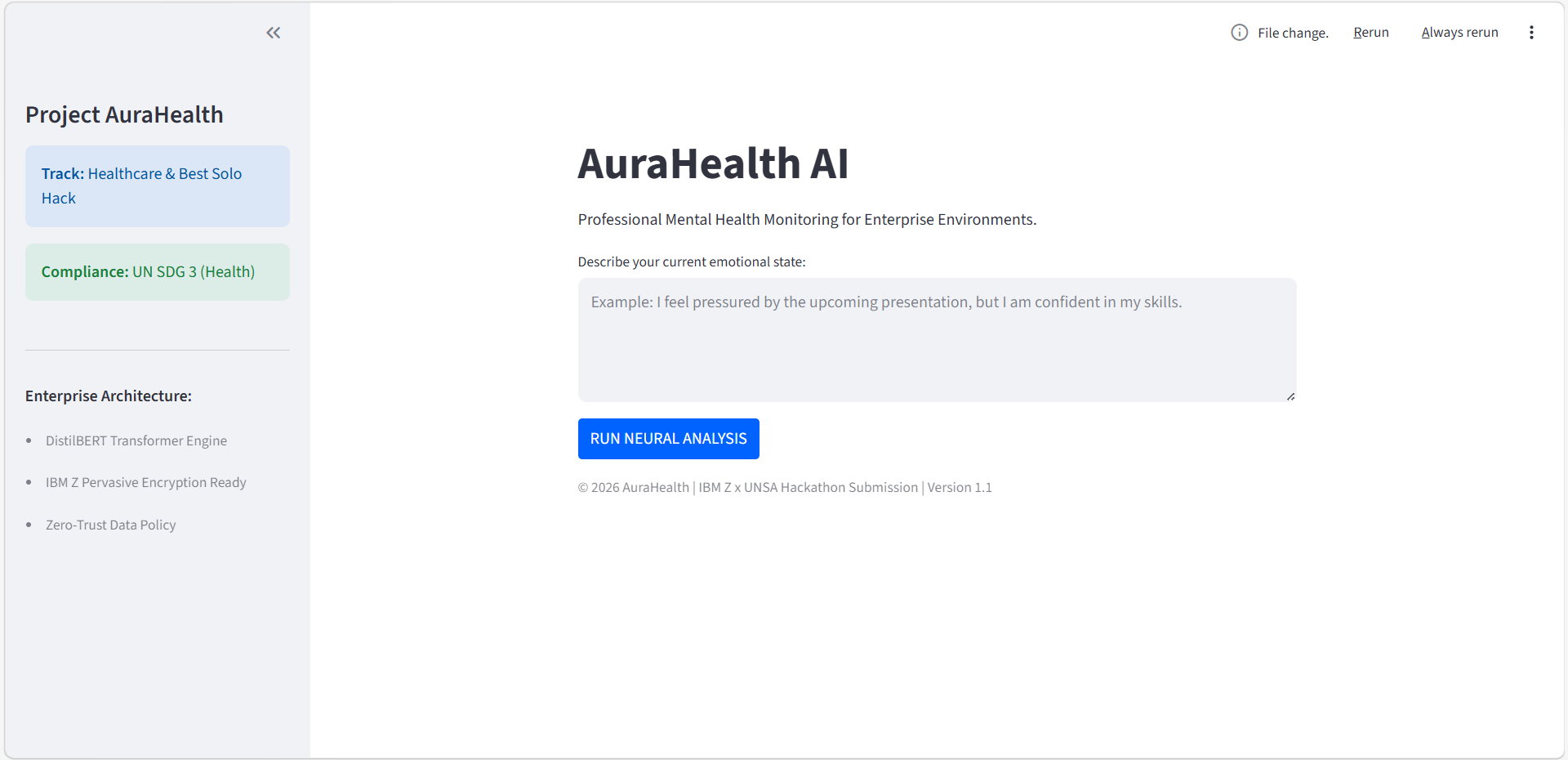
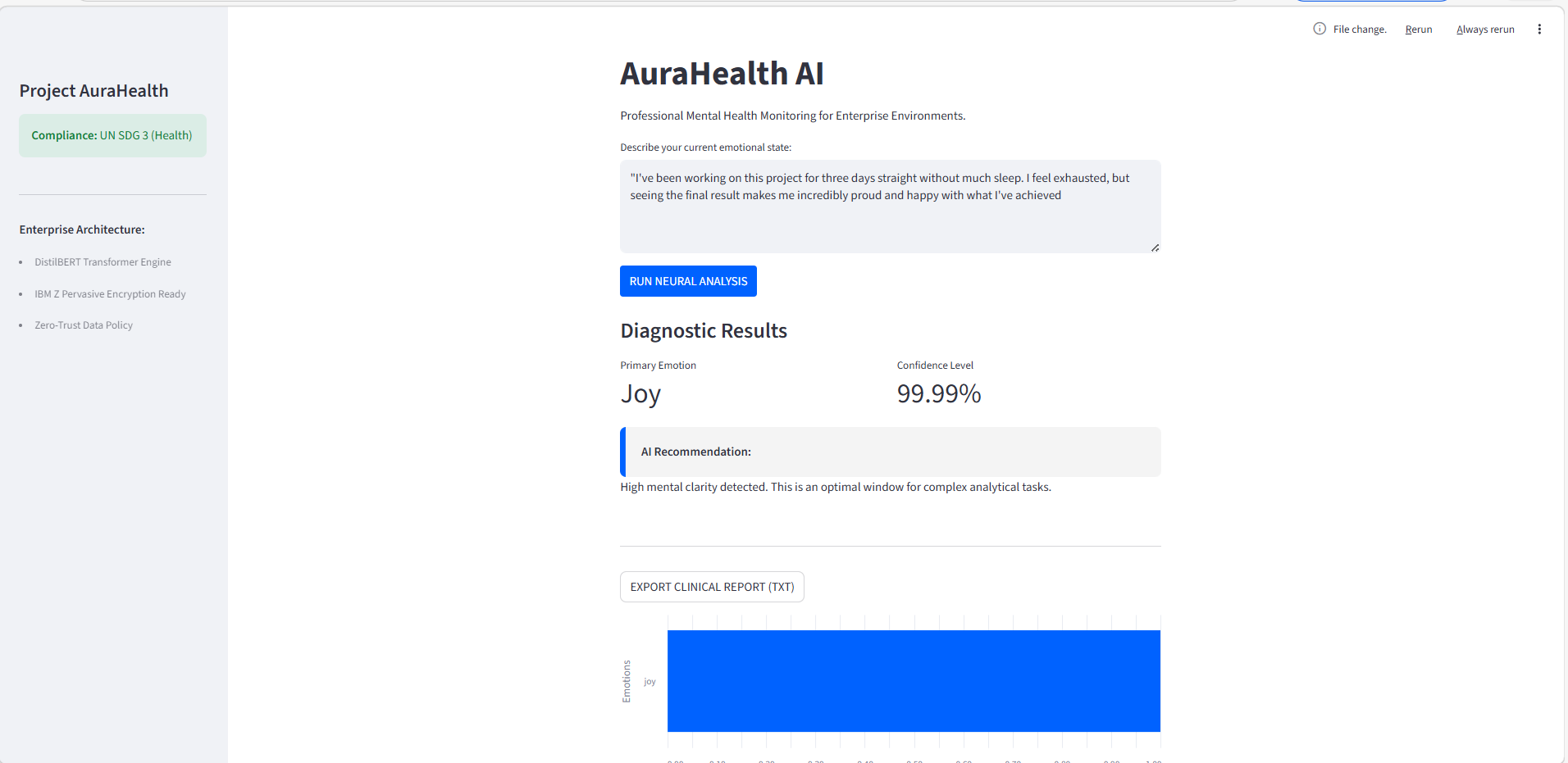
AuraHealth AI serves as a personal emotional diagnostic layer. Users input their current thoughts or feelings, and the system utilizes a Deep Learning engine to categorize the input into specific emotional states. Beyond simple classification, the application:
Provides an AI Confidence Score to ensure diagnostic transparency.
Offers Actionable Clinical Recommendations based on the detected emotional state.
Generates Professional Reports that can be exported for personal tracking or clinical consultation.
Ensures a Privacy-First experience by processing data through local inference logic.
How we built it
The technological core of AuraHealth AI is based on the DistilBERT Transformer architecture. This model was selected for its optimal balance between accuracy and computational requirements, which can be represented by the efficiency formula:$$E = \frac{A}{C}$$where $A$ represents accuracy and $C$ represents computational cost. Using transfer learning techniques, the neural network was adapted to recognize six primary emotional states. The interface was developed using Streamlit, incorporating the IBM Design Language to provide a professional user experience.
Challenges we ran into
The primary difficulty involved environment configuration and dependency management. During development, critical import errors and version mismatches between PyTorch and Transformers occurred within the virtual environment. Resolving these technical issues required detailed analysis of system logs and manual environment reconstruction. Additionally, optimizing the model to run efficiently on standard CPUs without hardware acceleration required fine-tuning the data processing pipeline to minimize latency.
Accomplishments that we're proud of
We are particularly proud of implementing the Confidence Threshold logic. Unlike many AI tools that provide a "best guess" regardless of data quality, AuraHealth AI acts ethically by signaling when input is too ambiguous for a reliable diagnosis. Successfully bridging the gap between a complex Deep Learning backend and a clean, user-friendly interface in a limited timeframe was also a significant achievement.
What we learned
Developing this project provided deep insights into the Transformers library and the specifics of local neural network deployment. We gained experience in managing Python virtual environments and resolving dependency conflicts within deep learning frameworks. A critical lesson was the implementation of Ethical AI; ensuring the system is transparent about its own limitations is vital when dealing with sensitive topics like mental health.
What's next for AuraHealth AI
The next phase for AuraHealth AI involves moving toward Multi-modal Analysis, incorporating voice-tone recognition and physiological data from wearable devices. We also plan to explore full deployment on IBM Cloud Code Engine, leveraging the high-speed infrastructure of IBM Z to provide real-time emotional analytics for large-scale enterprise organizations while maintaining the highest standards of data encryption.


Log in or sign up for Devpost to join the conversation.