-
-
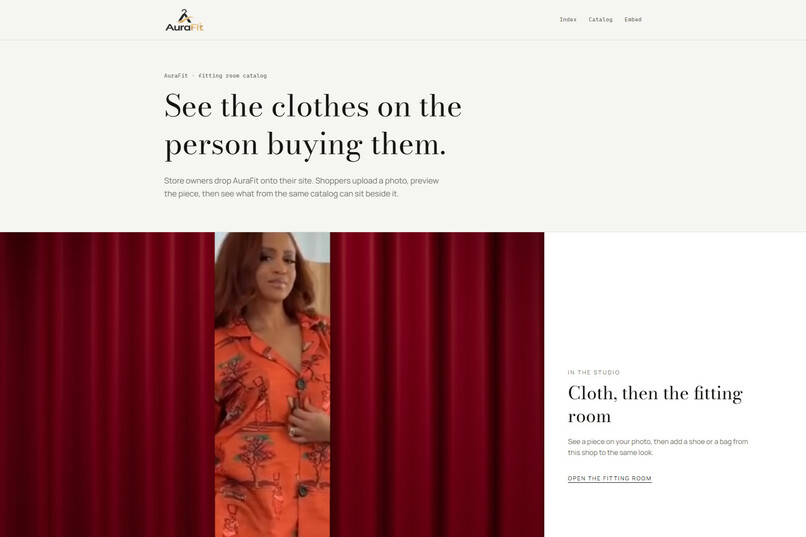
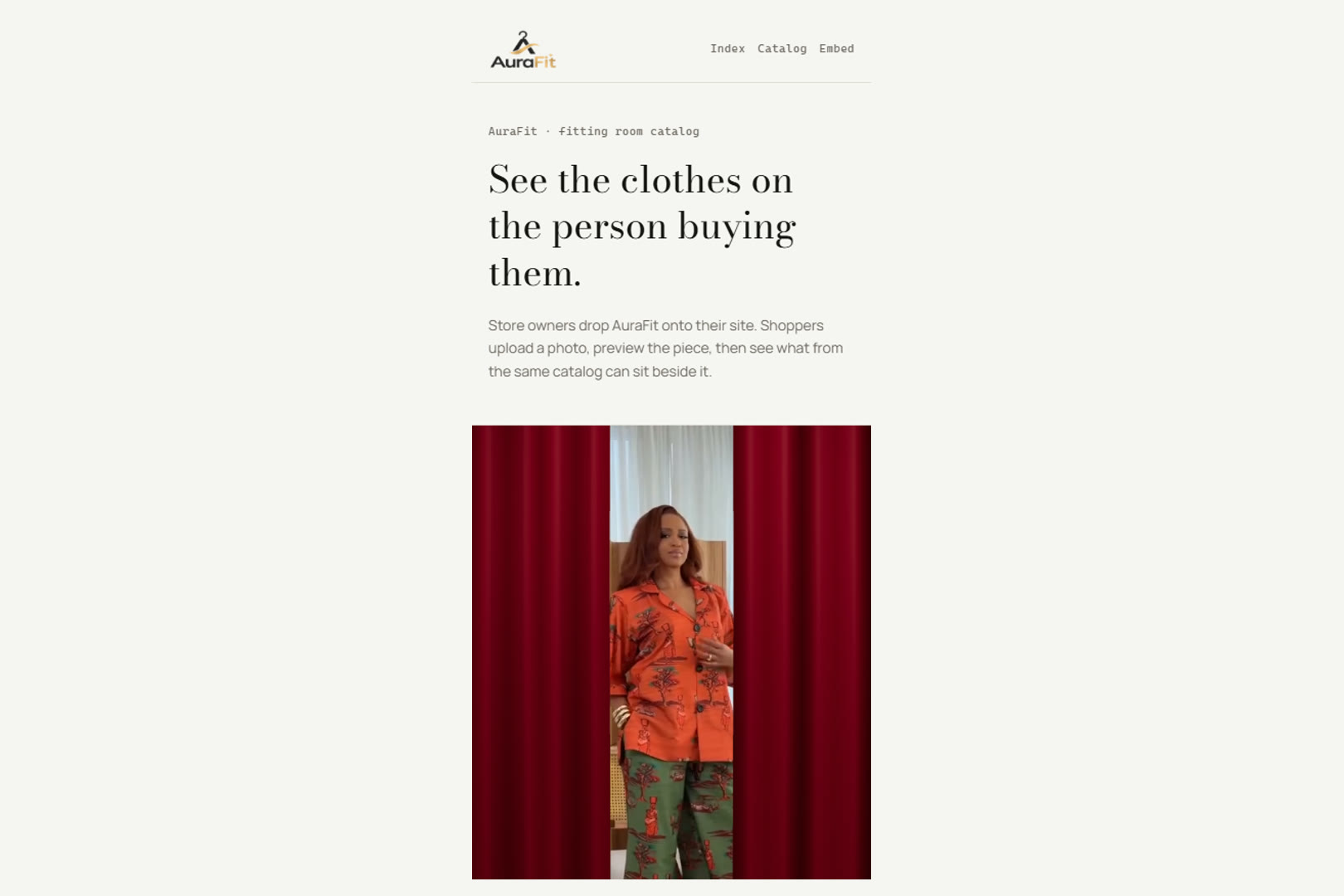
See the clothes on the person buying them
-
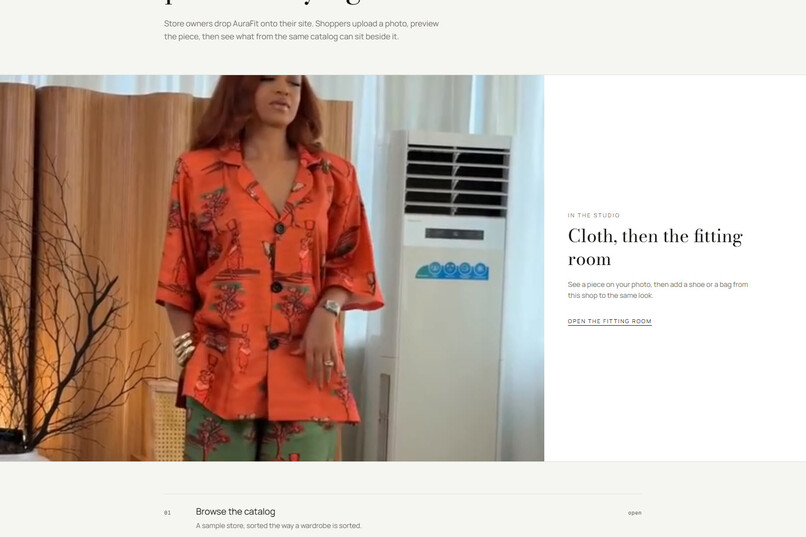
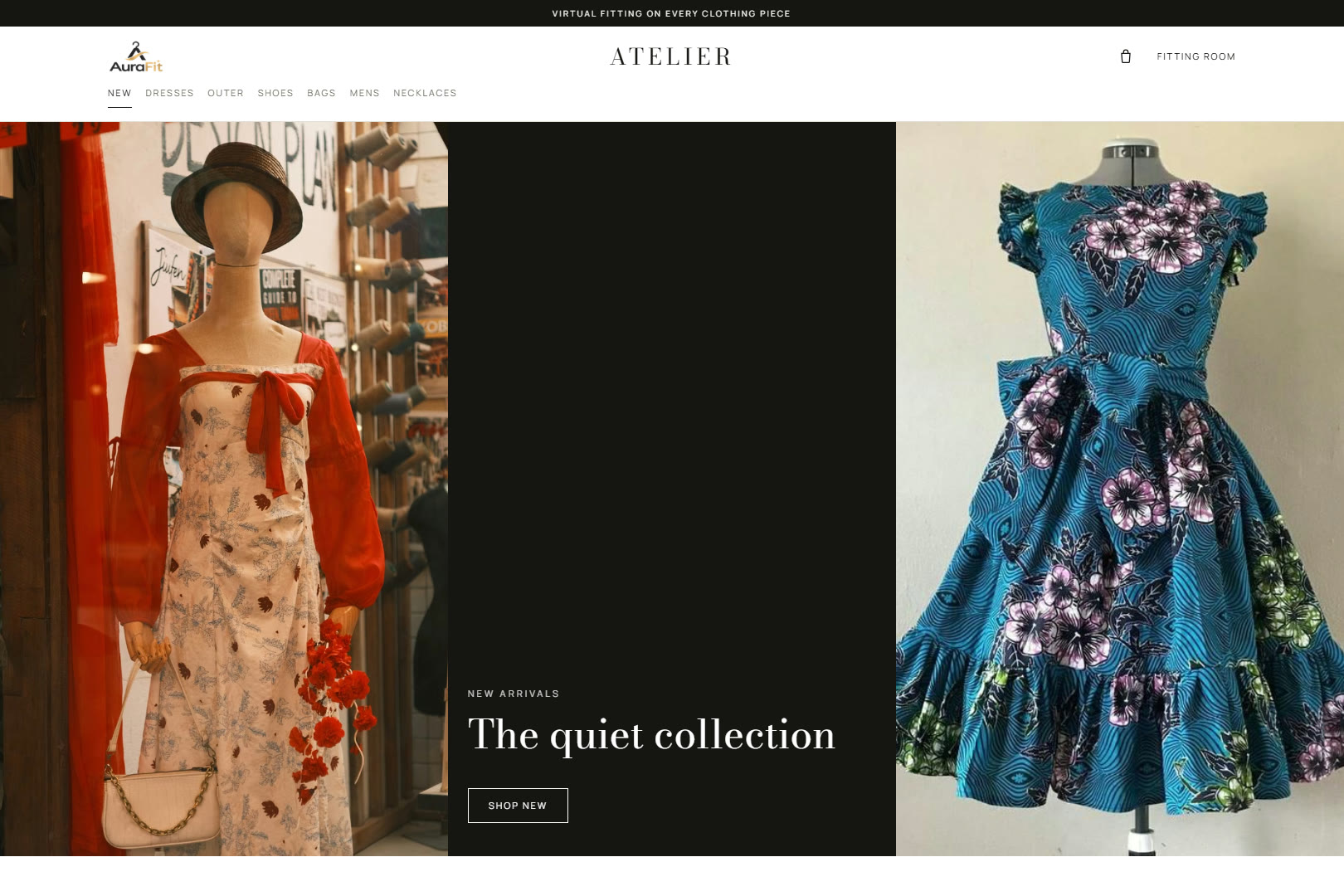
The fitting room opens on the shop's own cloth
-
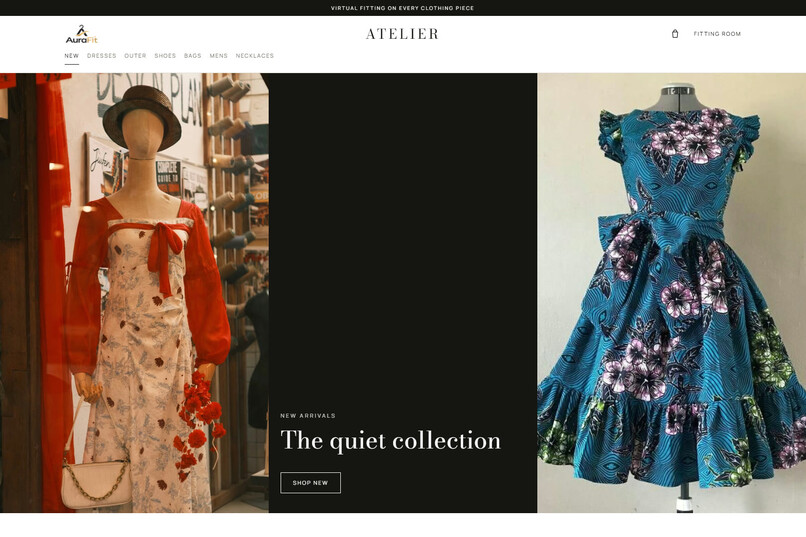
The store keeps its shop. AuraFit is the room they add
-
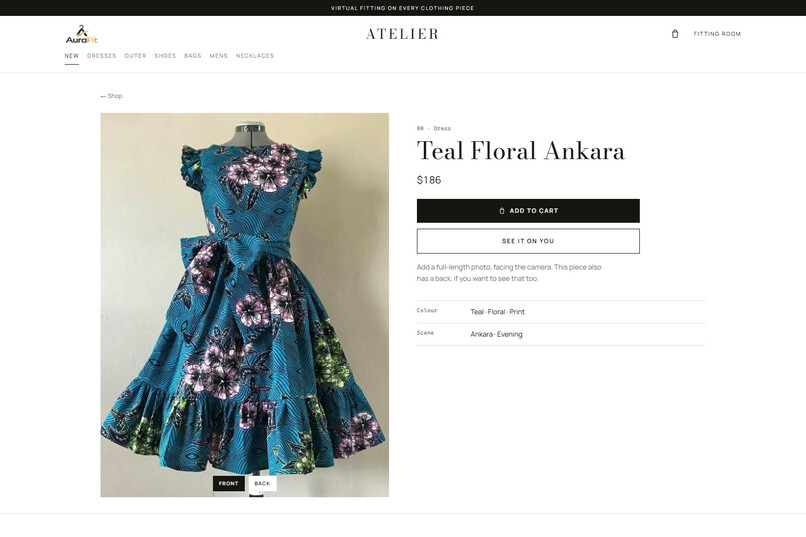
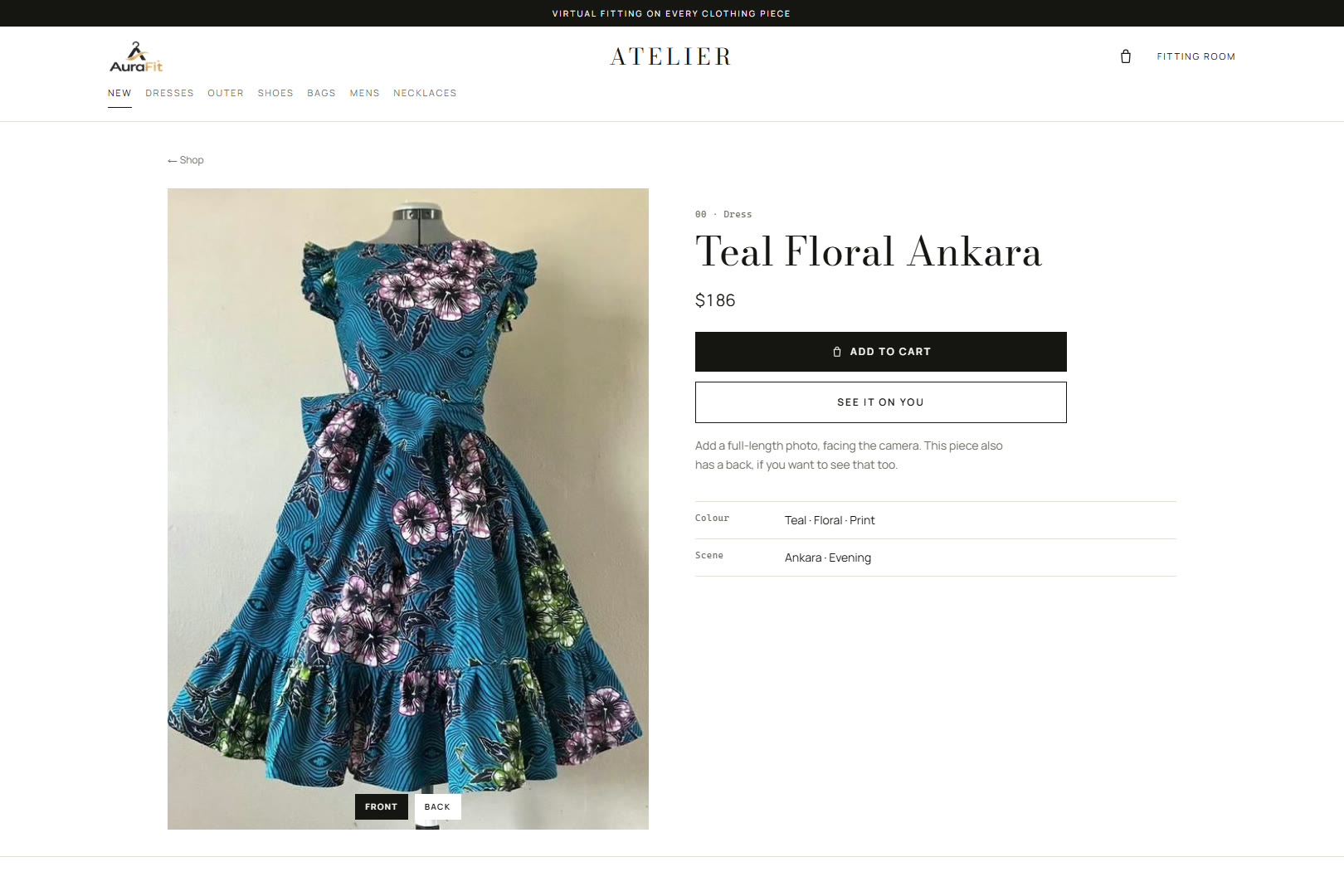
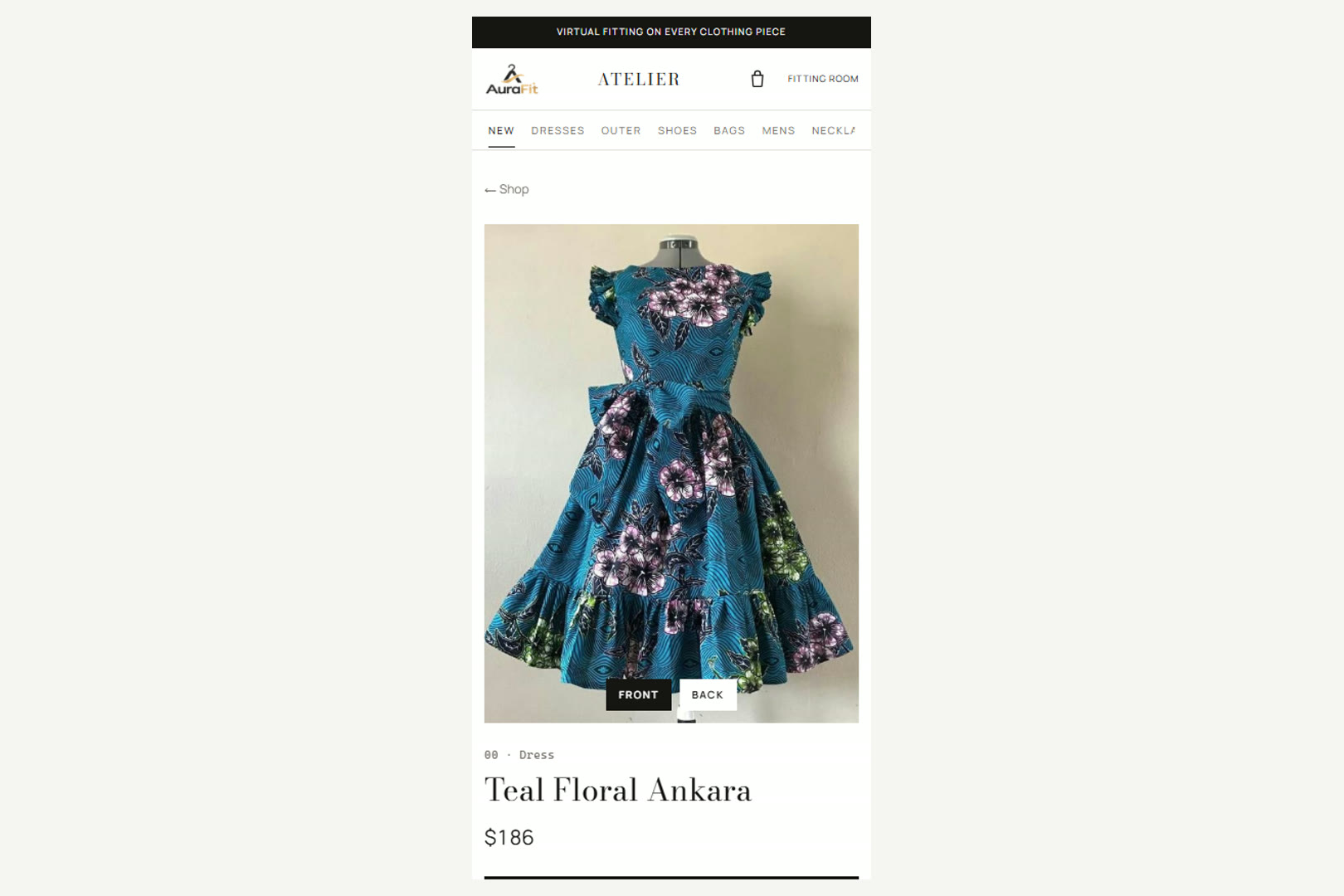
The piece, the price, and See it on you
-
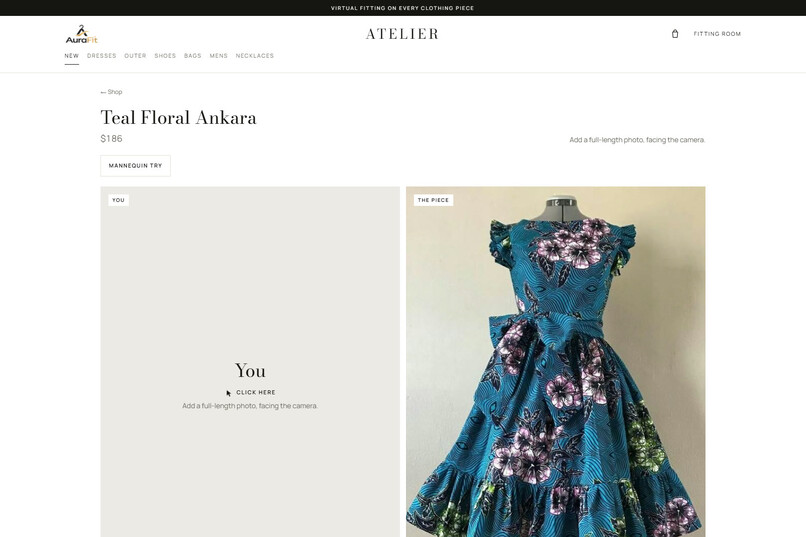
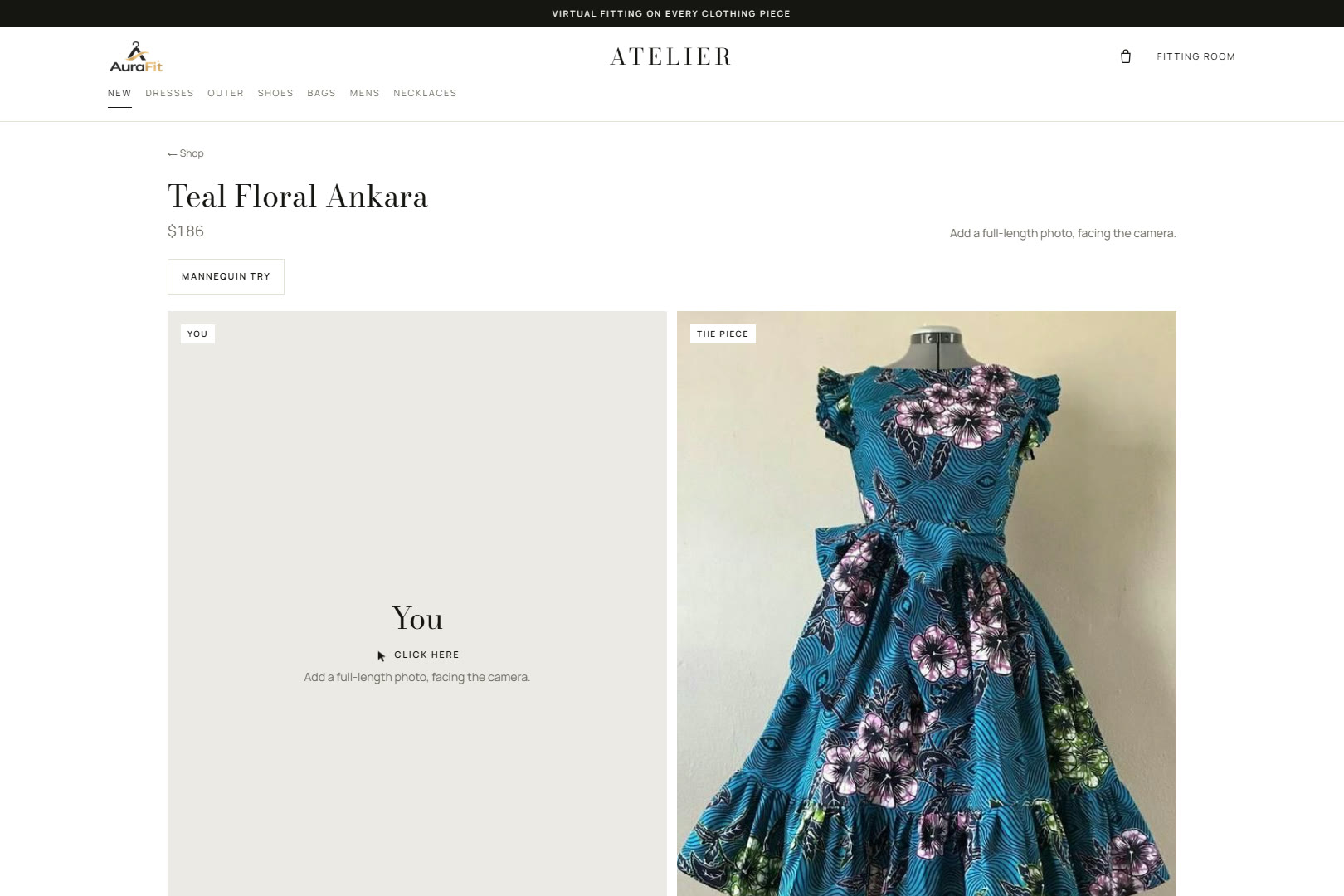
Their photo on the left. The garment from the shop on the right
-
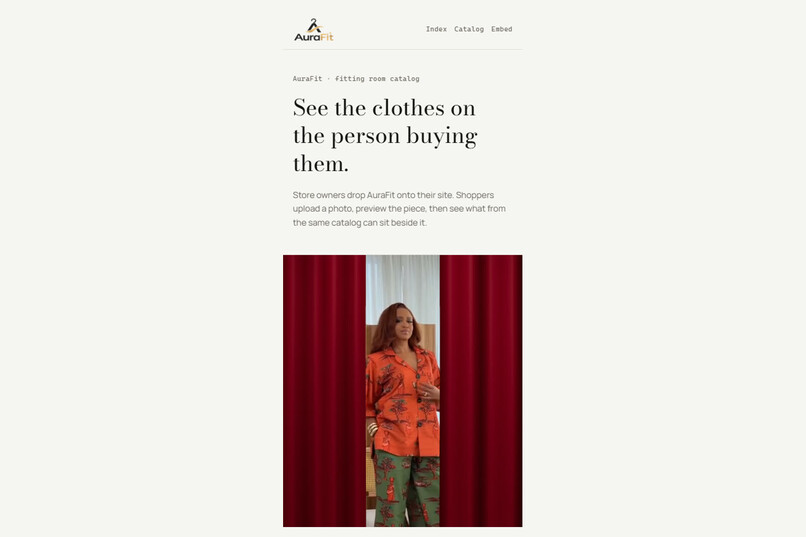
The same room, on a phone
-
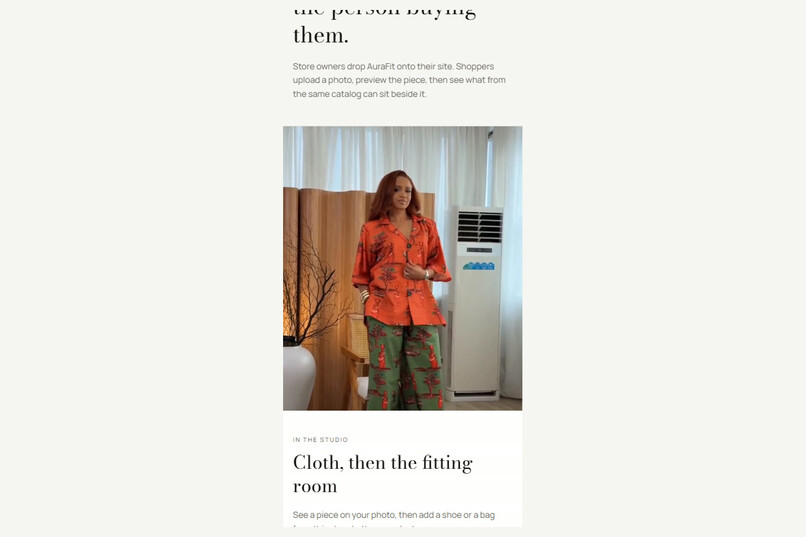
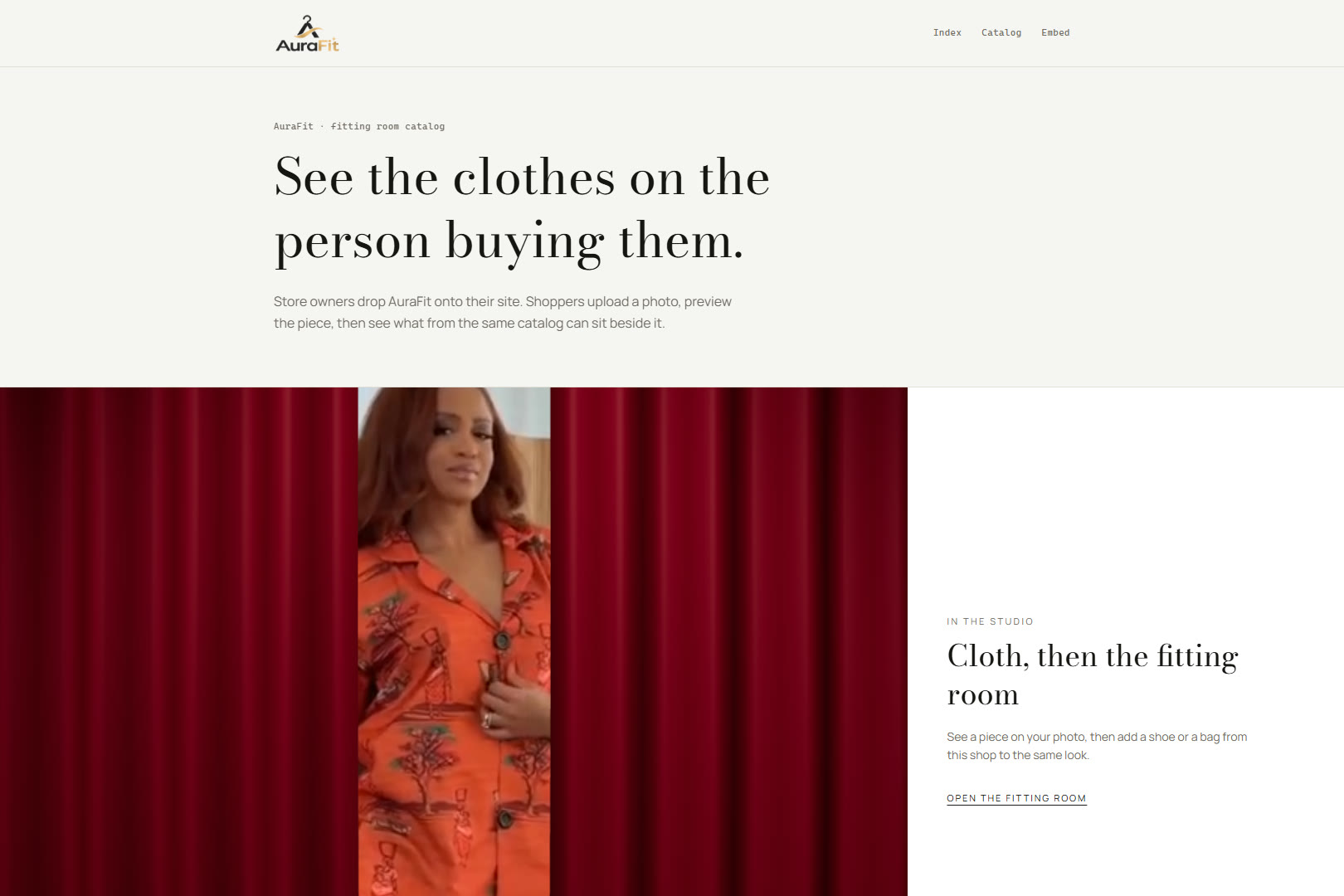
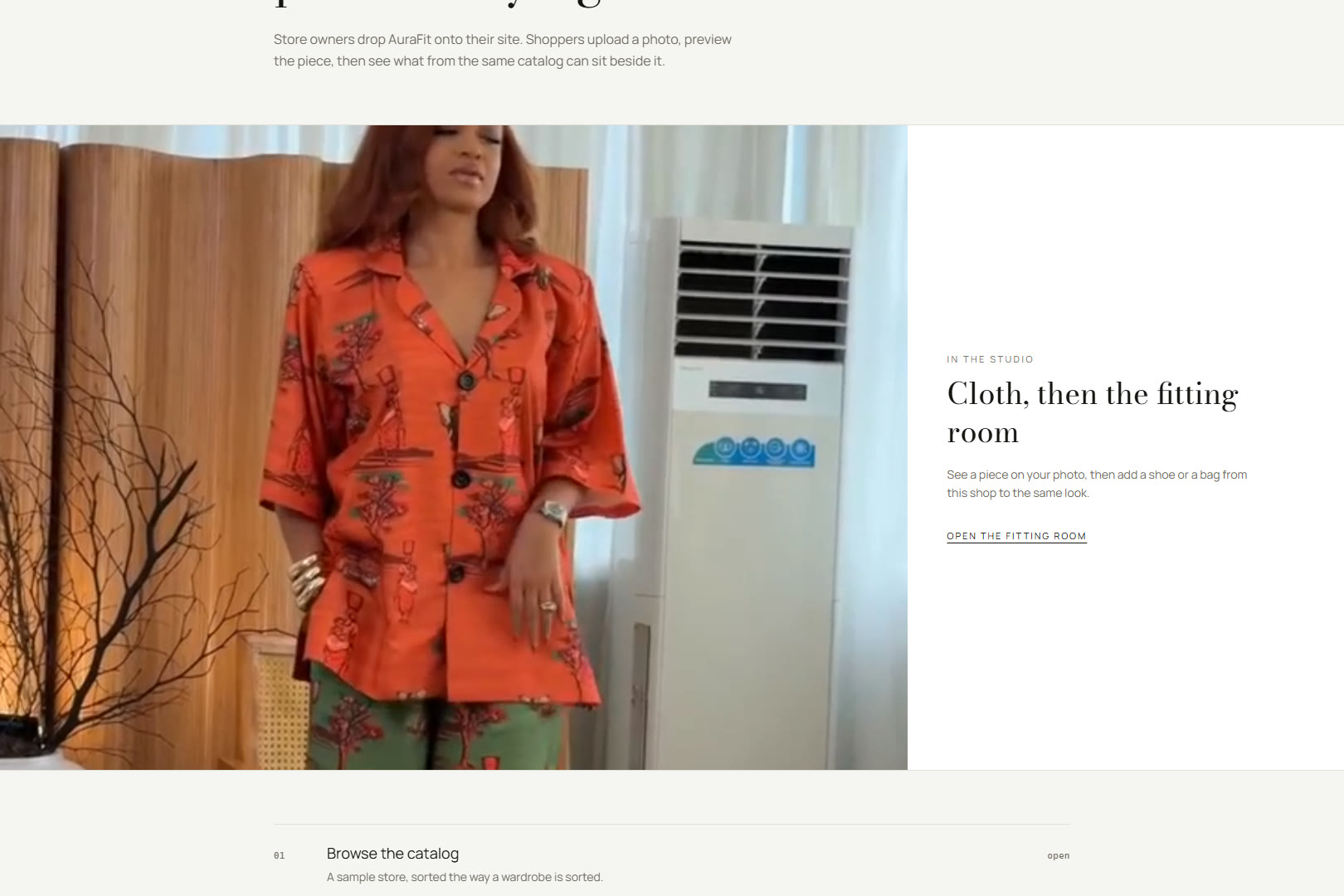
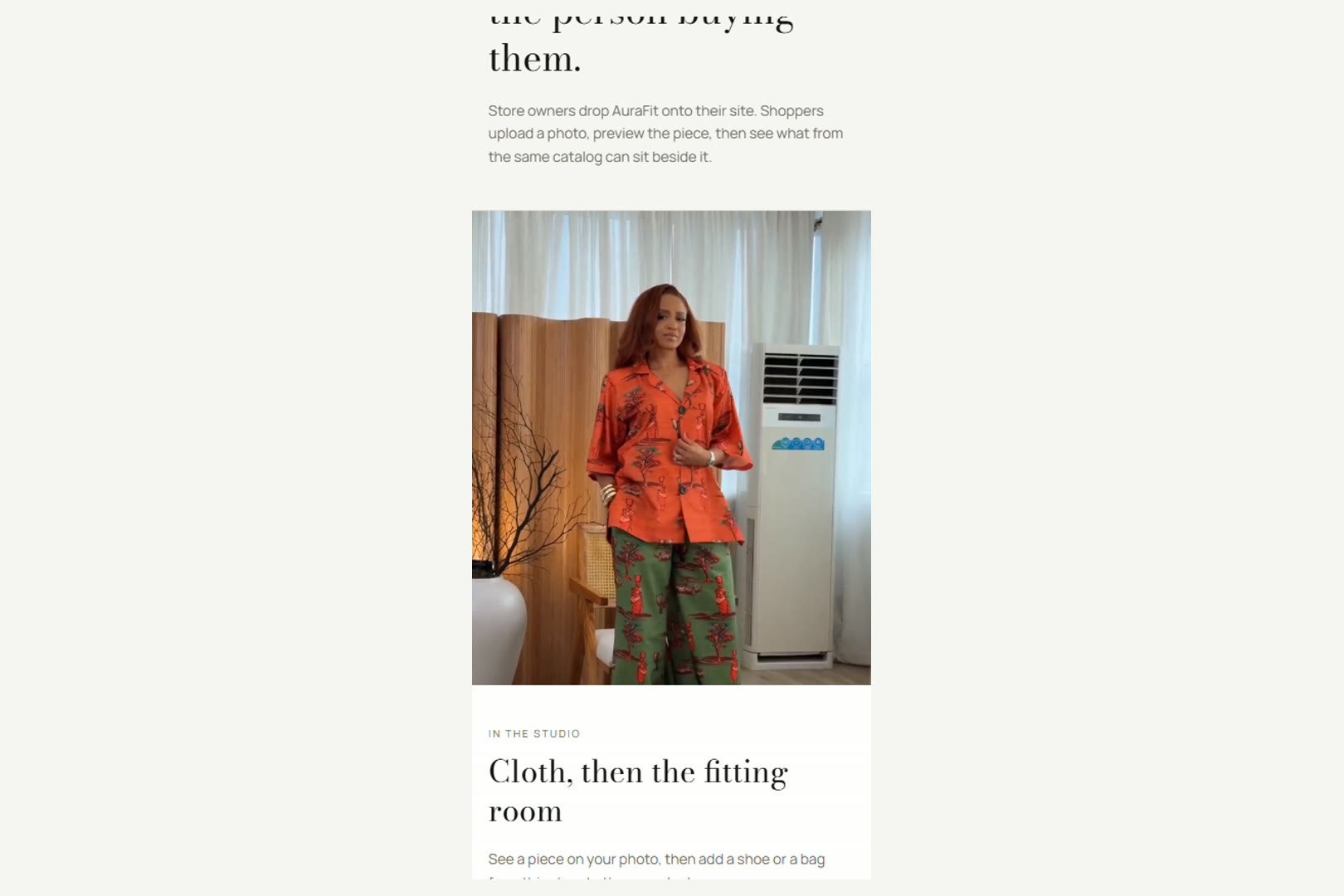
Cloth, then the fitting room
-
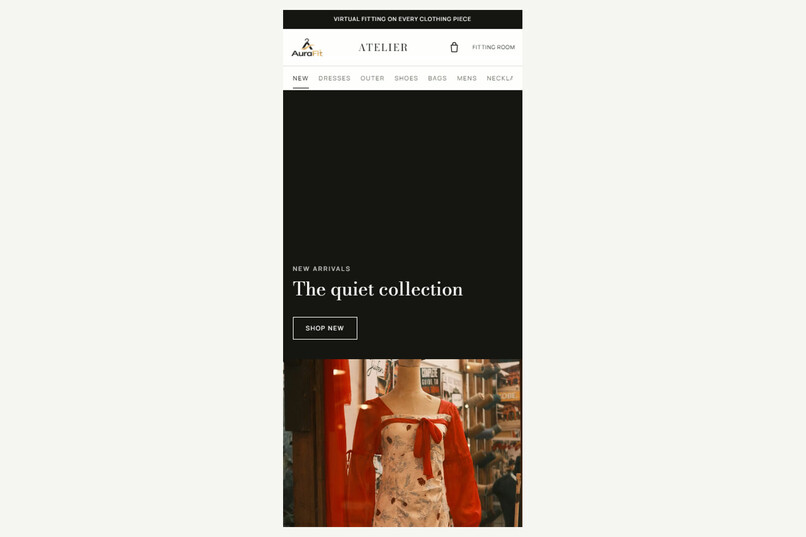
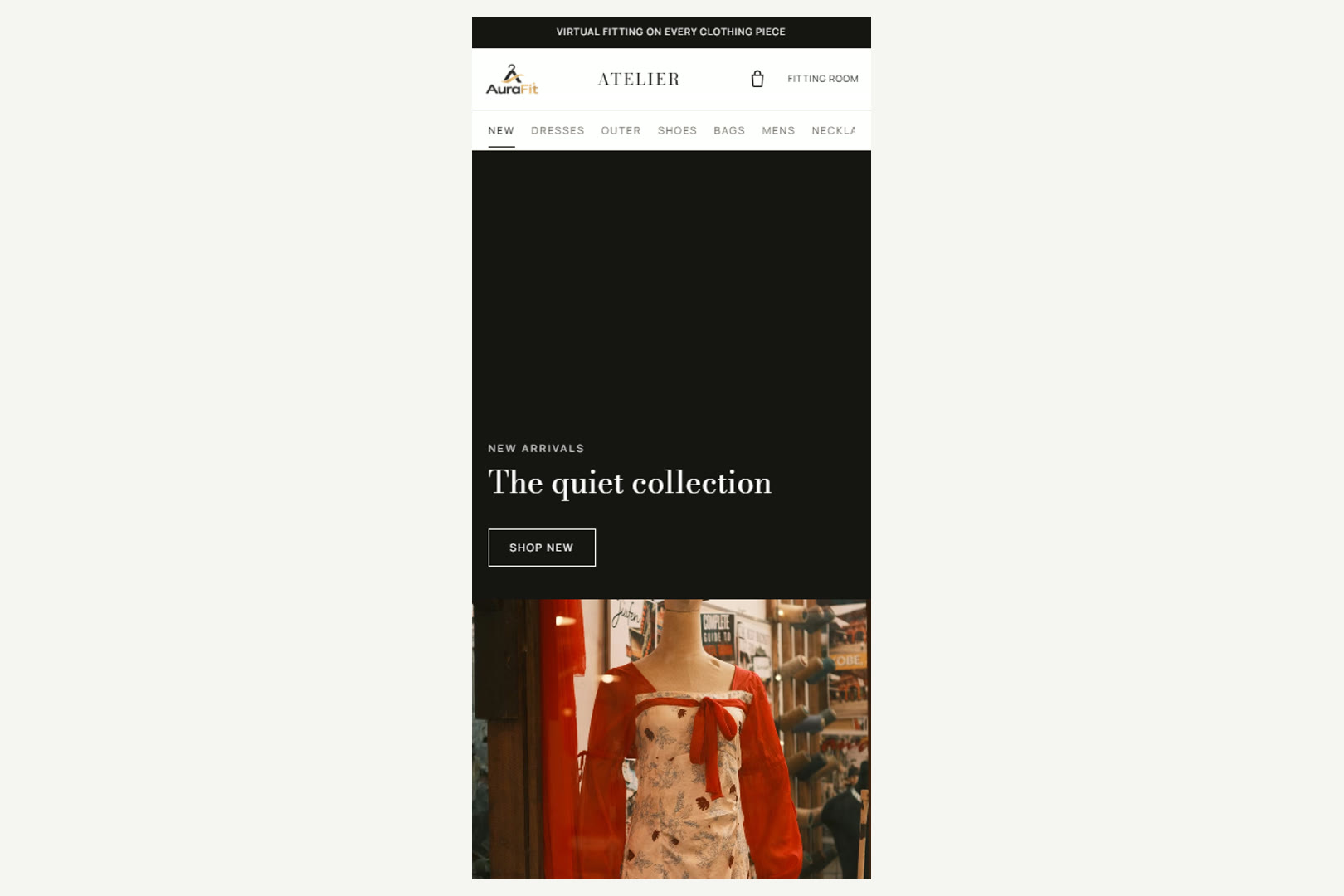
The quiet collection, on a phone
-
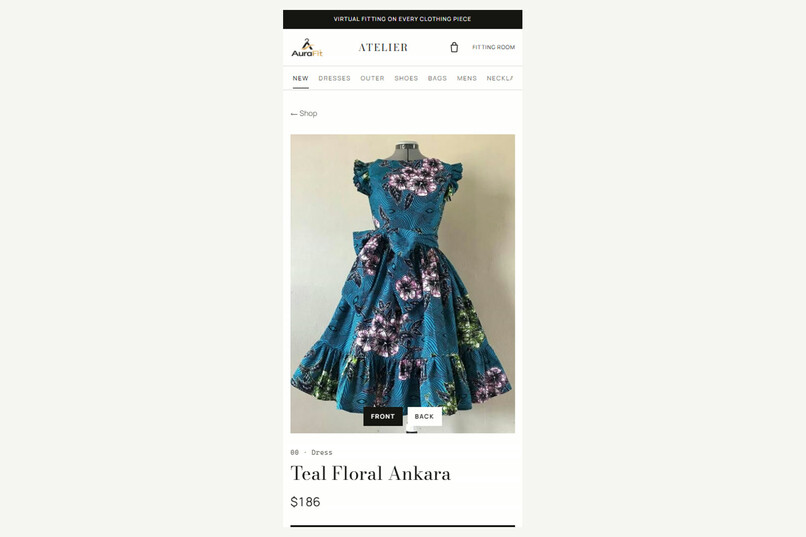
Teal Floral Ankara, ready to try from a phone
-
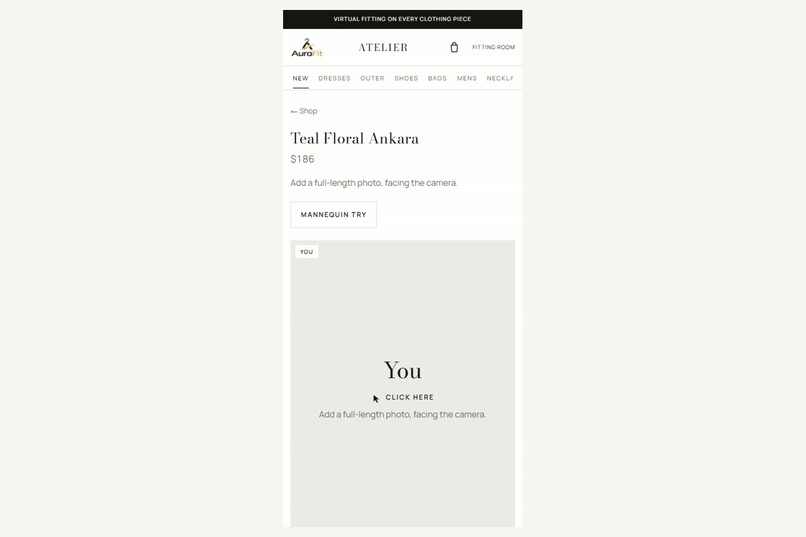
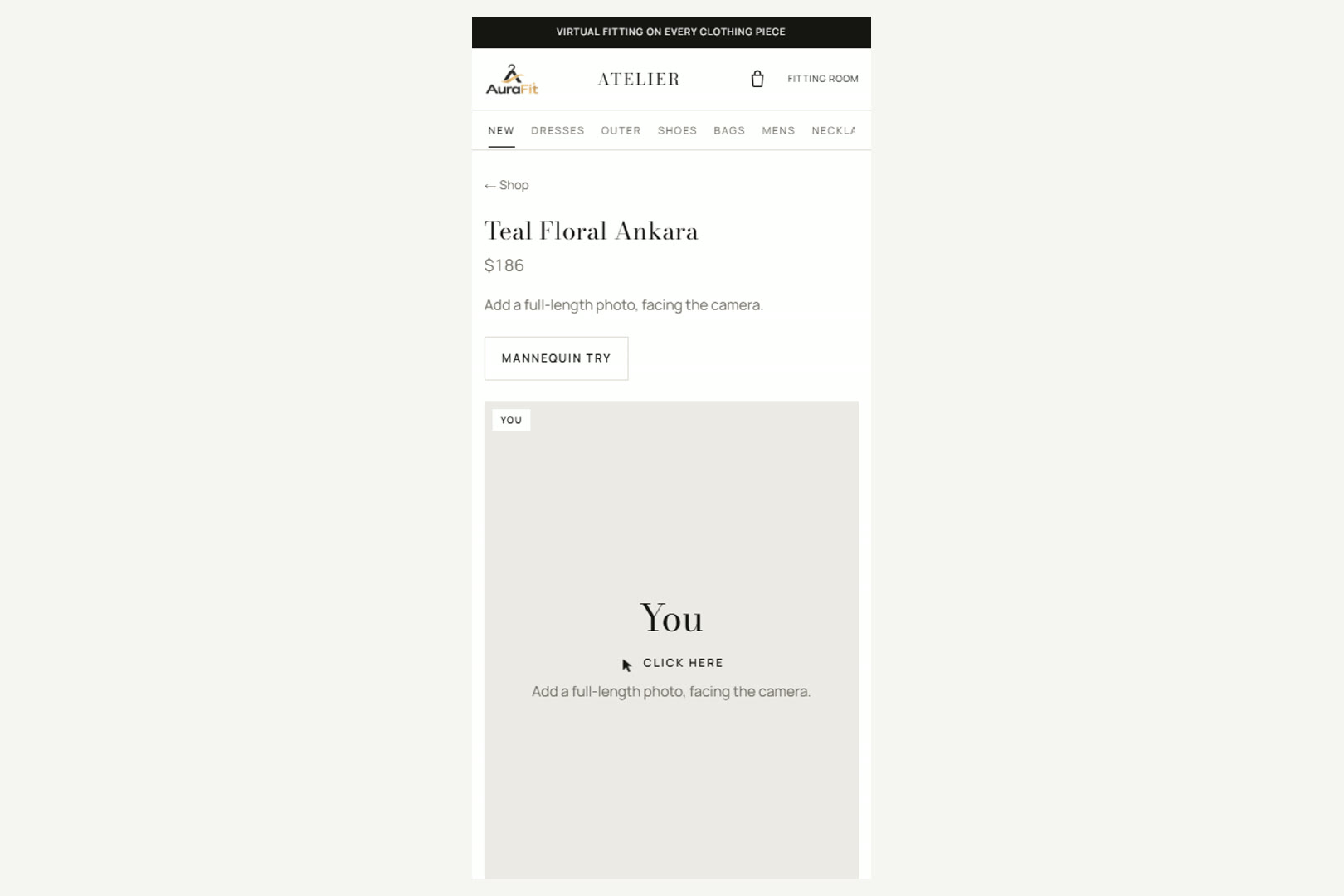
A full-length photo, or a mannequin
Inspiration
A local shop has the clothes and the customers, but the sale often stops at the product photo: How will this fit on me? AuraFit is the fitting room that the shop adds to the site it already has.
The problem, in business owner terms
A local shop already has the clothes and the customers. What it often lacks is a way for someone on their phone to see how a piece sits on a body before they pay. The buyer opens the product photo and stops: How will this fit on me? The owner cannot answer that from a flat image on a page, so the online sale never quite starts. They lose the buyer to hesitation or to a marketplace that promises try-on, while the shop they trust stays a picture and a price. Perfect Corp’s apparel try-on is built for exactly that moment: see the cloth on the person before the purchase. Most implementations sit inside a big brand app. AuraFit is the piece a small store drops onto its own site, so the shopper never leaves the shop they already trust.
What it does
- Connect the store. Embed from the dashboard; shoppers stay on the store’s pages.
- Try the piece. Photo or mannequin; loader until the listed garment is on the body—not the bare photo.
- Back honestly. Second task with a real back photo when the catalog has a back; no front-only guess.
- Complete the look. Shoes, bags, jewelry from this shop; try-on pieces (e.g. heel) layer on the same photo via the same API.
- Demo checkout. Sample order and “payment succeeded”; no card, nothing charged.
How we used the YouCam API
AuraFit is wired to YouCam Clothes Try-On v4, not a single “magic” client call. The Bearer key never reaches the browser.
Upload — Shopper photo and garment → POST /s2s/v2.0/file/cloth-v4 (our /api/youcam/upload)
Try-on — Start task → POST /s2s/v2.0/task/cloth-v4 (our /api/youcam/try-on)
Result — Poll → GET /s2s/v2.0/task/cloth-v4/{id} (our /api/youcam/task/[taskId])
The same path serves a real person and a mannequin upload. A back view is the same three steps again, with a real back photo and the garment’s back reference when the store provides one.
We also call YouCam Skin Tone Analysis (POST /s2s/v2.0/task/skin-tone-analysis) after a photo try-on when the upload supports it, to suggest wardrobe colors and makeup direction from structured API output, not from a generic vision model freelancing on the face.
Around the API: Next.js App Router, TypeScript, Tailwind, Supabase for sample orders (RLS on public tables, service role only on the server), and an embed (public/embed.js) so the store owner keeps their own shop.
Challenges
The result image arrives before it has painted. If the loader drops early, the shopper sees their bare photo and thinks that is the fit. The loader now stays until the garment image has loaded.
Next.js prerendering blocked the cart, checkout, and receipt routes. Those pages now render through a static shell, with the order work in a suspended child, so the production build finishes.
A hung database call on checkout looked like a payment failure. The route now fails in plain words and leaves the bag as it was.
What we learned
One clothes task covers a real photo and a mannequin. The part that makes the product honest is everything around that task: consent, a loader that waits for the garment, and a back that comes from a real back photo.
Impact
For the shop, AuraFit is a path to online sales when the blocker is “I can’t see it on me,” without handing the customer to another platform. For the buyer, it is an answer on the store they already use: the dress, the back, the shoe from the same catalog before they commit. For Perfect Corp, it is eCommerce VTO where the API is the engine and the merchant’s site is the storefront, including independent sellers, occasion wear, and tailors who today sell from a photo on WhatsApp or Instagram.
Try it
- Live shop: https://fshdress.vercel.app/
- Demo store: https://fshdress.vercel.app/stores/demo
- Demo video: https://www.youtube.com/watch?v=_lrt2Wt1AwM
- Code: https://github.com/Luluameh/aurafit
Built With
- next.js
- postgresql
- react
- supabase
- tailwindcss
- three.js
- typescript
- vercel
- youcam-api

Log in or sign up for Devpost to join the conversation.