Inspiration
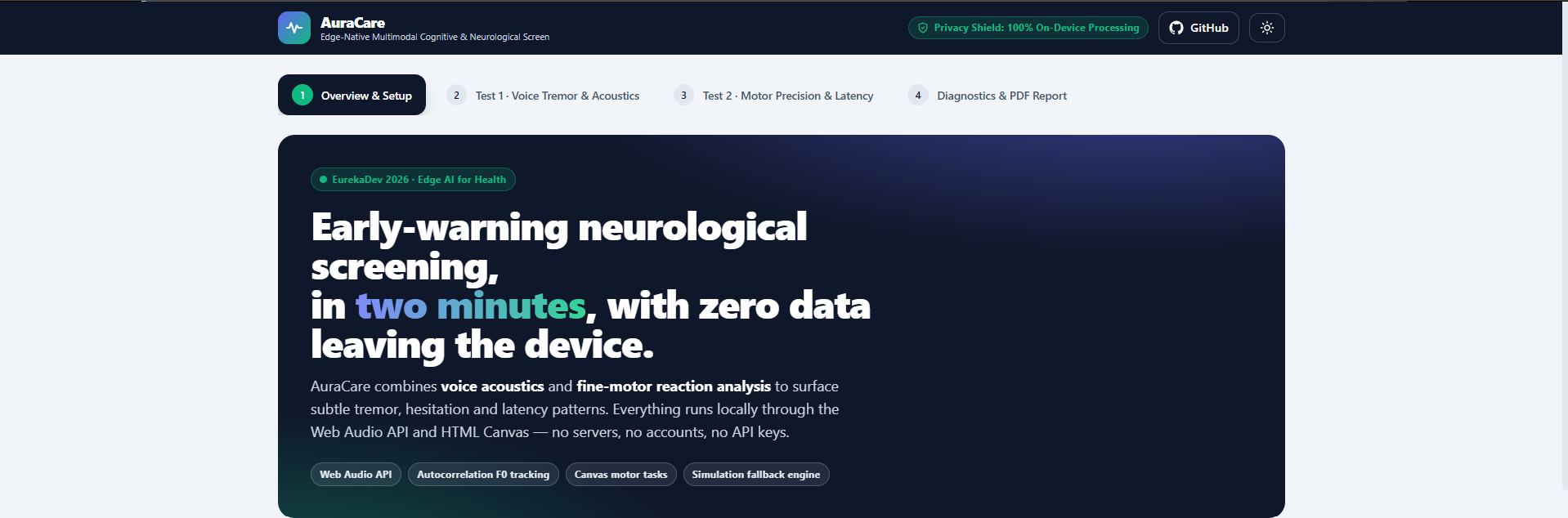
Early detection of cognitive and neurological conditions often requires specialized equipment and clinical visits that are inaccessible to many underserved communities. I was inspired to create AuraCare to bridge this gap by turning any standard web browser into an edge-native, non-invasive pre-screening tool that empowers individuals to monitor early vocal and motor indicators privacy-first.
What it does
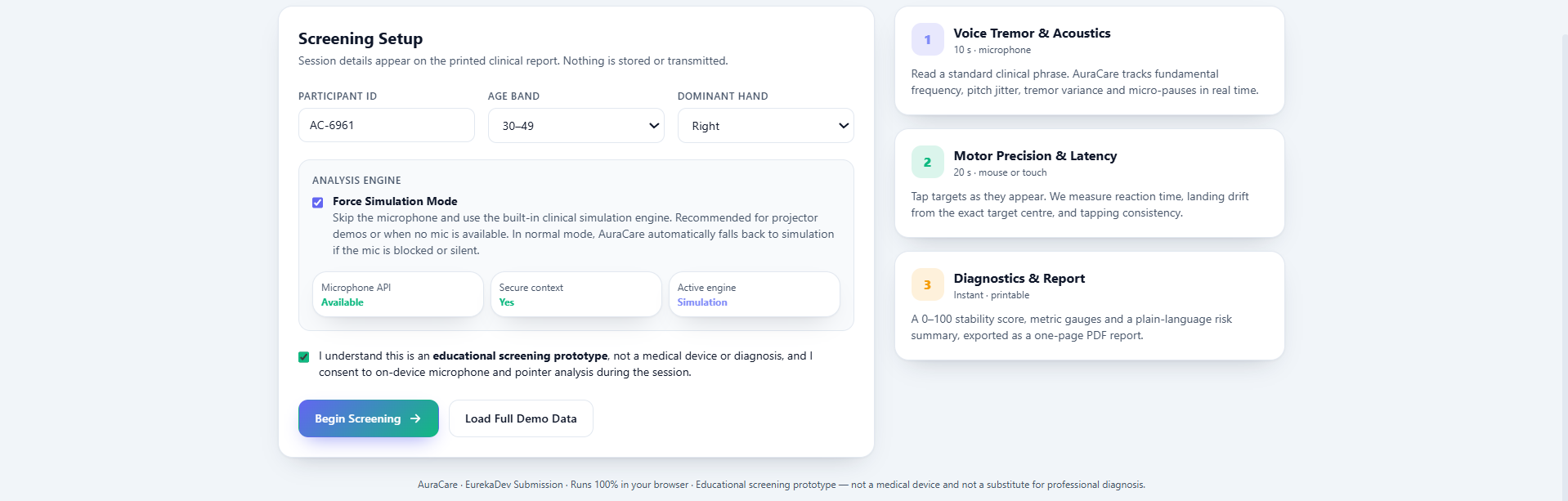
AuraCare is an edge-native web application that performs rapid multimodal neurological and cognitive pre-screenings directly in the browser:
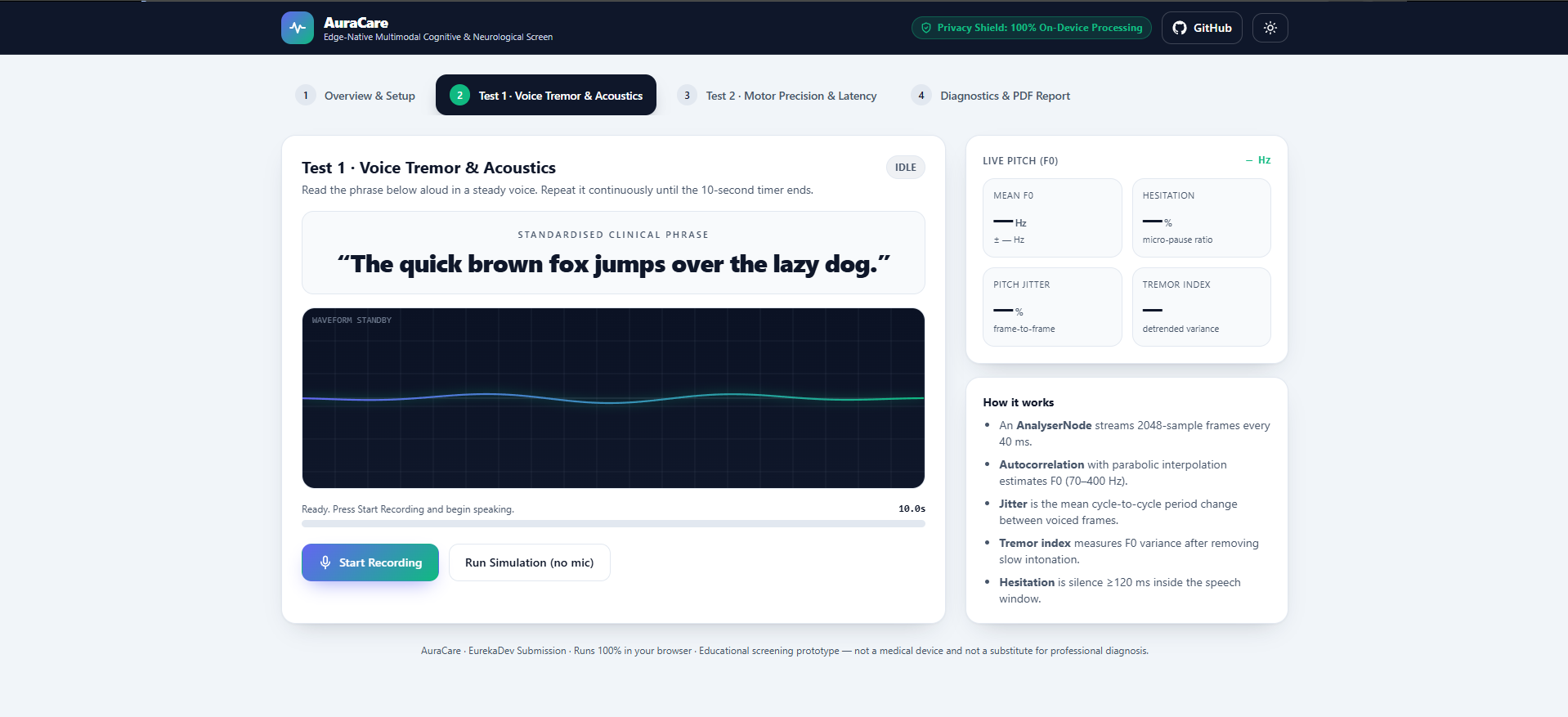
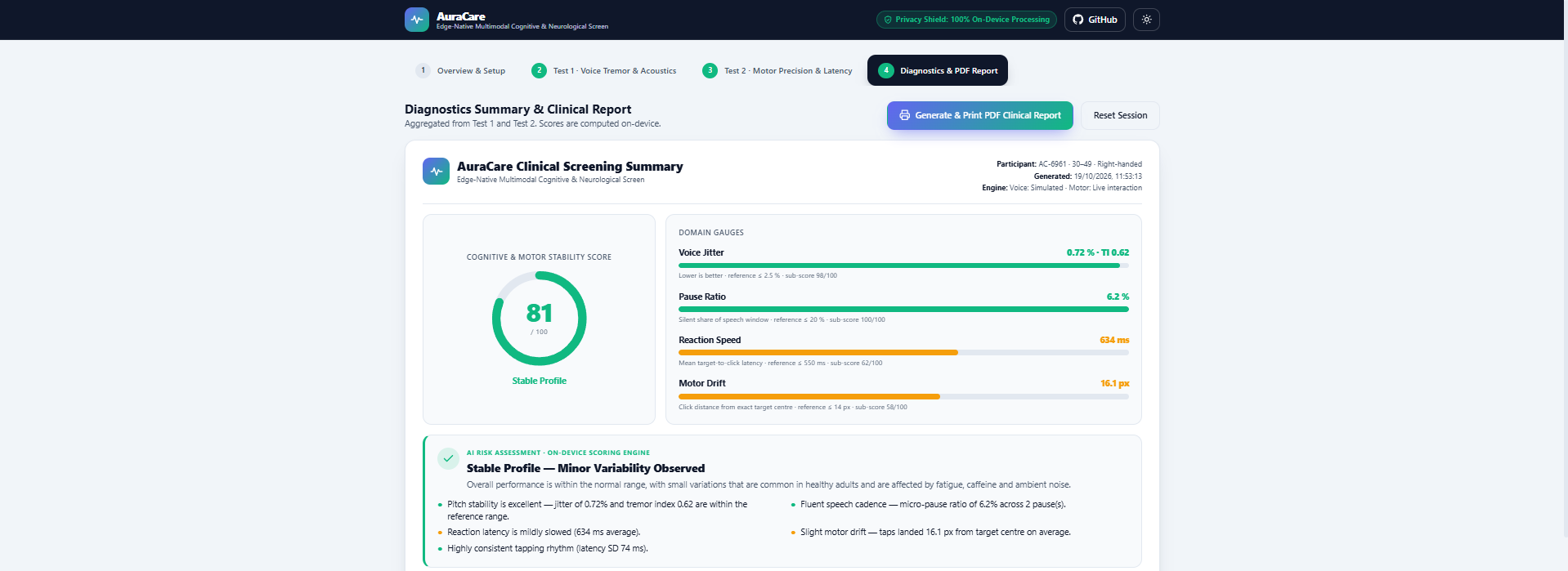
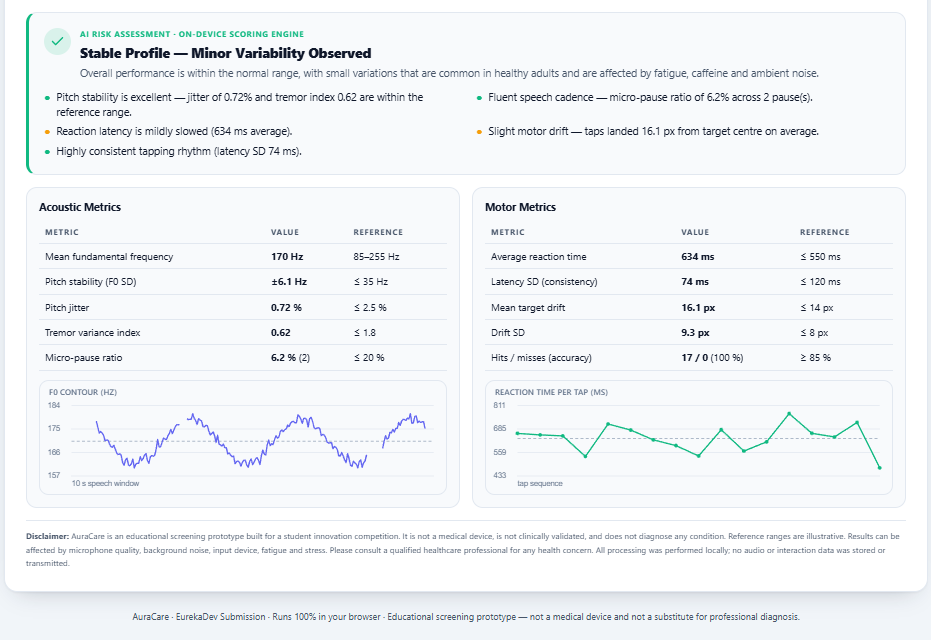
- Voice Tremor & Acoustics: Captures microphone audio to measure fundamental frequency stability, audio jitter, and micro-pause frequencies during speech tasks.
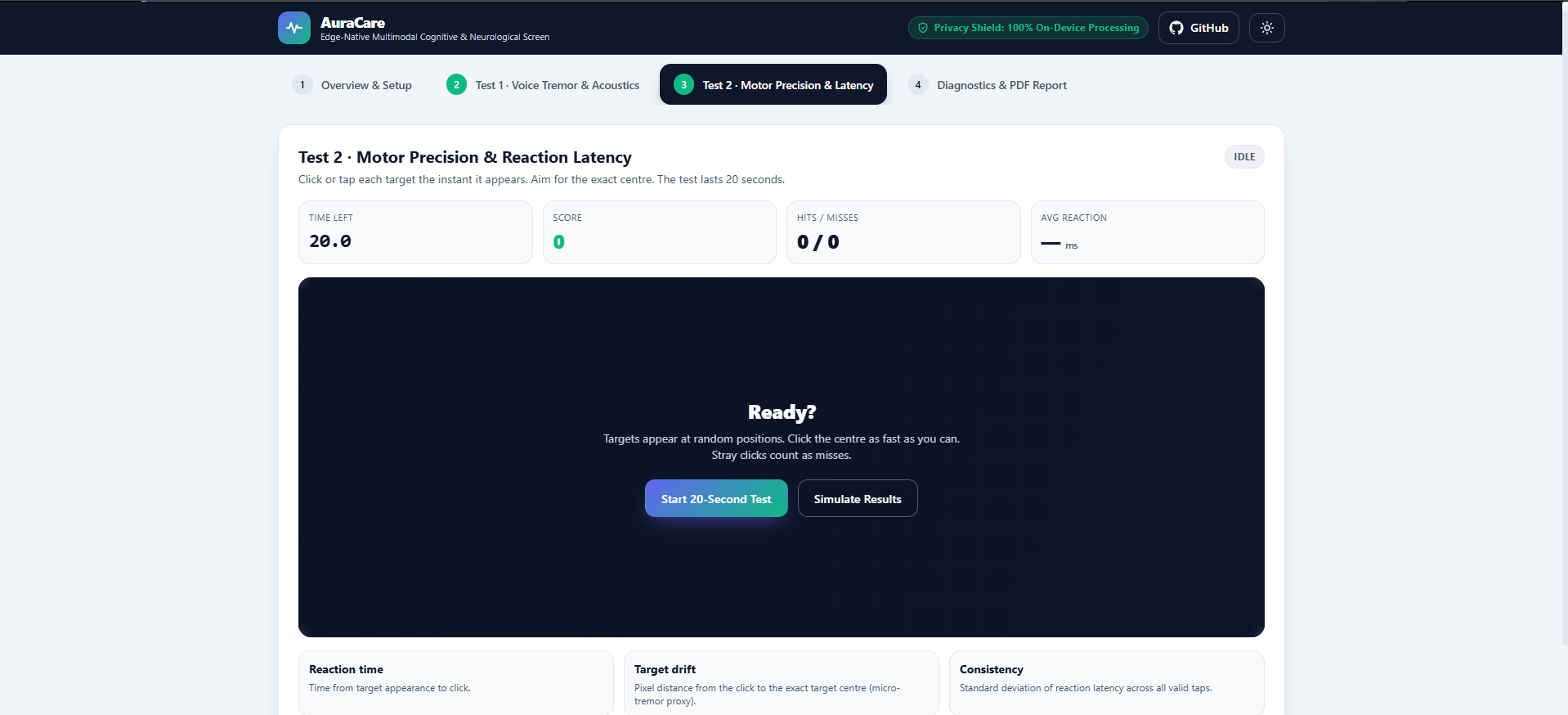
- Motor Precision & Reaction Latency: Uses interactive canvas-based target tracking to measure motor response speed, target drift, and tap consistency.
- Clinical Dashboard & PDF Report: Aggregates metrics into an intuitive stability score and generates downloadable summary reports.
How I built it
I built AuraCare using modern web technologies focused on client-side efficiency and security:
- UI/UX: Designed a clean medical dashboard using HTML, CSS, and Tailwind CSS.
- Audio Analytics: Leveraged the browser's native Web Audio API (
AnalyserNode) to compute real-time pitch variance and acoustic metrics. - Motor Assessment: Built an interactive HTML5 Canvas game to track motor micro-jitters and click latency.
- Privacy & Reliability: Engineered the entire system to run client-side with full mock/simulation fallbacks to ensure uninterrupted operation.
Challenges I ran into
- Real-time Signal Processing: Optimizing the Web Audio API to analyze acoustics smoothly without causing frame drops or UI lag on lower-spec hardware.
- Browser Compatibility & Permissions: Ensuring consistent performance across different web browsers while handling microphone permissions and fallback states gracefully.
- Balanced Scoring: Creating a transparent mathematical model to aggregate motor latency and audio tremor metrics into a meaningful stability score.
Accomplishments that I'm proud of
- Successfully built a fully client-side, zero-latency diagnostic interface without needing external servers or backend databases.
- Created a seamless, privacy-first UX where sensitive audio and interaction data never leave the user's device.
- Developed an automated, clean PDF report generator directly inside the browser using print stylesheets.
What I learned
- Deepened my knowledge of browser Web APIs (Web Audio API and Canvas API).
- Learned how to design resilient web applications with built-in mock fallbacks for network/device independence.
- Gained a better understanding of multimodal data aggregation for preliminary health screening models.
What's next for AuraCare
- Multi-language Audio Support: Expanding voice analysis models to support non-English phonemes and dialects.
- Computer Vision Integration: Incorporating MediaPipe-based facial symmetry and micro-expression tracking via webcam.
- Longitudinal Tracking: Adding encrypted local browser storage (IndexedDB) to allow users to track stability trends over time.
Built With
- ai
- canvas-api
- css3
- html5
- javascript
- machine-learning
- tailwind-css
- web-audio-api


Log in or sign up for Devpost to join the conversation.